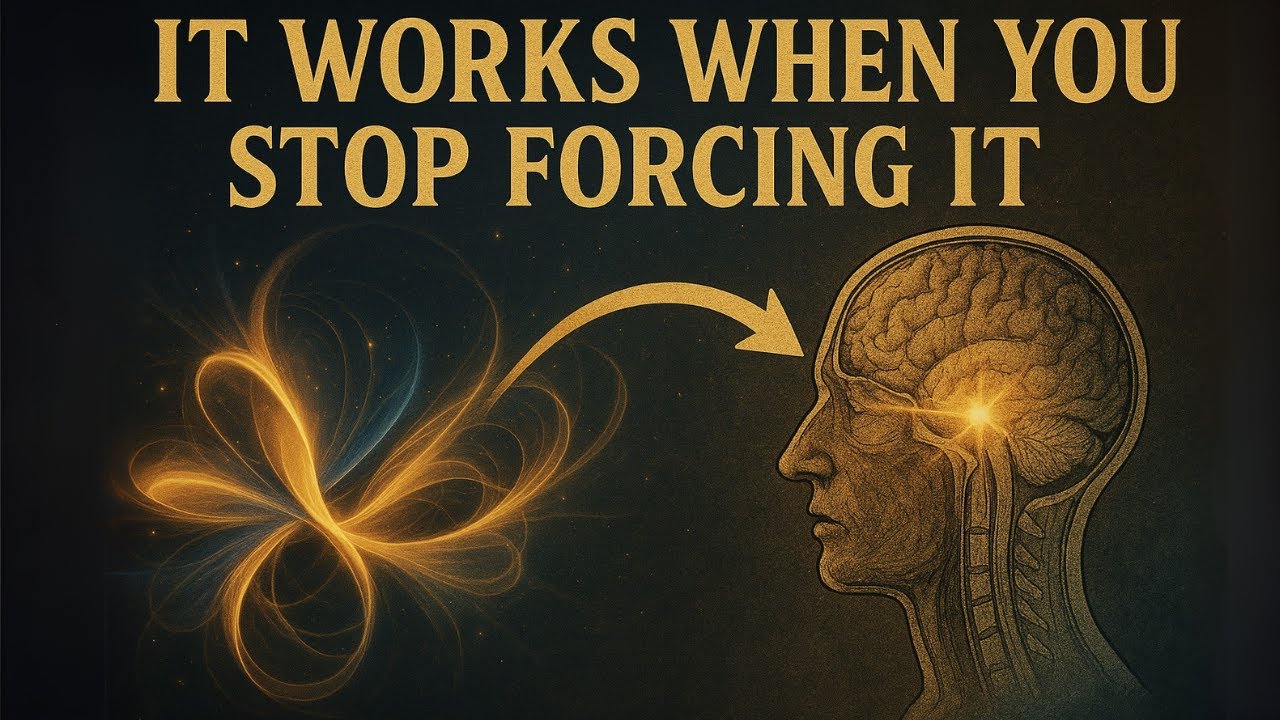
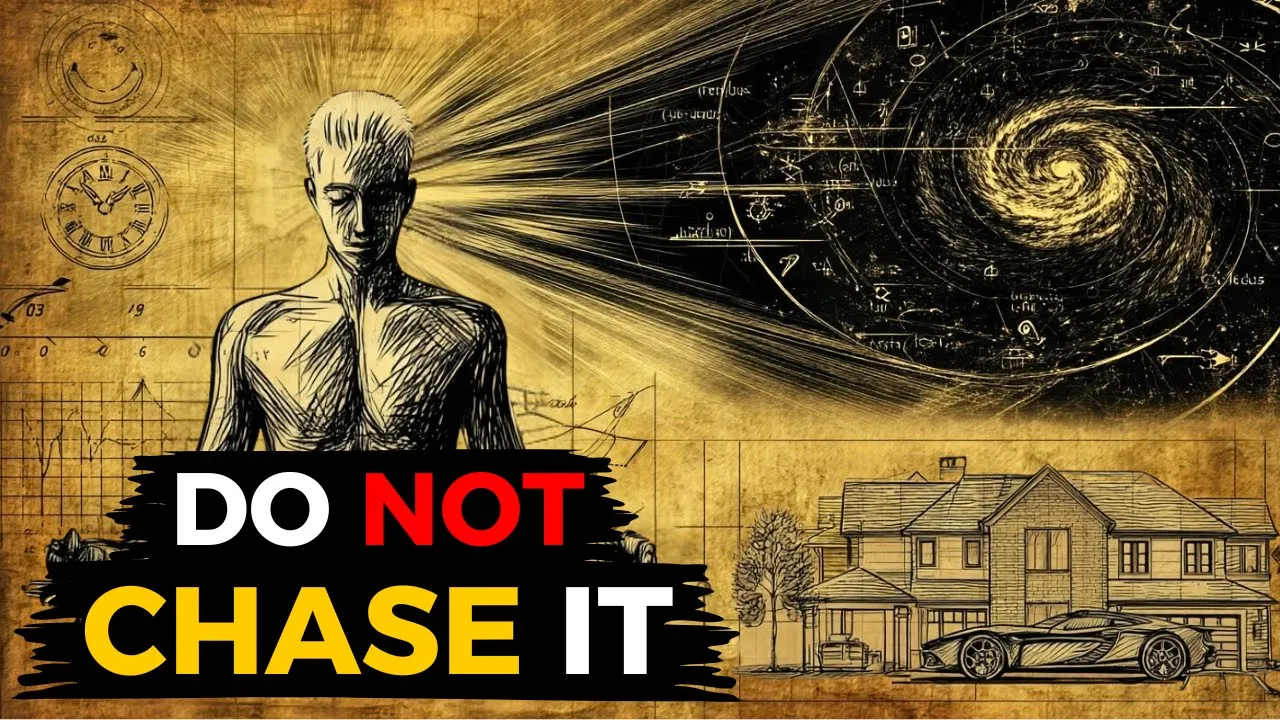
We all have the power to achieve everything we desire effortlessly without hurry and without the weight of control. This happens when you learn to surrender while keeping a clear intention. It's not about giving up on your dreams or not taking action, but about releasing the need to control how and when things happen.
Many believe that to achieve what they want, they must fight, force, and plan every step. But what few realize is that while trying to control the process, the true power lies in letting go. Surrender is not weakness, nor is it a passive submission to destiny.
On the contrary, it is one of the deepest ways to access your inner power. It acts as a silent force going beyond the control of the ego, allowing the universe to align with your intention in surprising ways. But why does the ego oppose this?
Well, the ego, our self-preservation mechanism, is only trying to ensure our survival. It fears the unknown. It fears the process of change because it doesn't know what will happen when it is not in control.
That's why it tries to control. It tries to block the flow, the trust in what we cannot see or touch. And when you surrender, you are challenging the ego.
It's like you are saying I trust I don't need to control everything. And what happens when you do that? You give yourself permission to live a life without resistance, without fighting against what is beyond your control.
You can keep your intention strong and clear, but without the weight of expectation. When you learn to surrender, you're not abandoning your intention or your desires. What changes is the attachment to the outcome which usually blocks the flow of life.
The intention when combined with surrender becomes a clear path but not a rigid one. And although they may seem like completely opposite things, they can coexist creating a balance where you still have a vision of what you want but allow things to happen in a more fluid way without the need for absolute control over the how or when. The ego in its essence is not a bad thing.
It is in fact a vital part of our being created to ensure our survival and protection. From the moment we are born, the ego begins to form as a self-preservation mechanism. Its main function is to keep us safe, to ensure our basic instincts are met and protect us from perceived threats.
It clings to familiarity to what is safe and comfortable because it knows that this is how we can at least control our environment and our experiences. However, the ego goes beyond physical survival. It starts expanding into more complex areas like our identity, desires and expectations.
And in this process, it creates a false sense of control. An idea that we must dominate everything around us in order to live safely. This manifests in many ways such as the fear of losing control, the need to plan every detail or the desire to force an outcome, believing that only then we will be successful.
The conflict that arises here is subtle but deep. The ego which wants to control collides directly with the need to surrender to the process of life. The conflict is a direct result of trying to resist this surrender.
This happens precisely because the ego fears the unknown and clings to the idea that if we don't control everything, chaos will set in. And this fear creates resistance. However, control comes at a price.
By trying to control every aspect of our lives, we distance ourselves from the natural flow that life offers. Control creates constant tension. When we try to force something to happen in a specific way, we even come into conflict with the natural laws of the universe.
The very act of trying to control blocks the flow of energy and prevents new opportunities, ideas, and solutions from manifesting naturally. In other words, when we cling rigidly to control, we are telling the universe that we don't trust its ability to guide us. Think, for example, of someone trying to organize every moment of their day, every step, they feel the need to know exactly what will happen and how.
The consequence of this is that instead of being present in the moment, they live in a constant state of worry trying to anticipate and shape the future. This not only generates anxiety but also blocks growth and evolution. Evolution requires flexibility and acceptance of change.
But when control comes into play, it creates a wall around new experiences and learning. Another clear example is when we try to control interpersonal relationships. Often the ego wants to shape the behavior of others expecting them to respond the way we imagine.
When someone doesn't meet our expectations, we may feel frustration or rejection because the ego creates a need for approval and validation. However, the act of trying to control people or situations around us ends up blocking genuine connection as we are projecting our own need for control onto others. And not only that, control also keeps us trapped in the past as we are always trying to recreate familiar and comfortable experiences instead of opening ourselves to new possibilities.
As I mentioned, the ego fears the new, the unknown because it cannot predict or control what will come. This fear of losing control limits our ability to live fully and embrace what life has to offer. This is where surrender comes in.
When we let go of the incessant desire to control, we allow the universe to guide us. Surrender does not mean resignation, but rather releasing attachment. When we surrender to the flow of life, we make room for new experiences, solutions, and connections to arise organically.
Control does not need to be completely abandoned. But it is important to recognize when it becomes a barrier to our growth. That's why understanding the ego and control is crucial to understanding how resistance arises in our lives.
The ego tries to protect us, but often it prevents our true evolution. Surrender is often misunderstood. In a world where we are taught to fight for what we want, the idea of letting go can seem passive, as if it were a form of submitting to inactivity.
However, surrender is an active and powerful practice, a conscious action of releasing control without abandoning the intention to achieve something meaningful. Surrendering to the flow of life doesn't mean giving up or not acting. Surrender means trusting.
trusting that what you desire is already in motion and that even if you can't see how things will happen, the process is already unfolding in the best way possible. Surrender is the release of attachment to the outcomes and the acceptance that the path to fulfillment may be different from the one you planned but equally valuable. To understand this more deeply, it's important to distinguish between surrender and passivity.
Passivity is when you disengage completely without intention or action. Surrender, on the other hand, is much subtler. It doesn't say do nothing, but rather act without the need to control.
You still have a vision, a clear intention, but you're not stuck to how or when it will happen. When you surrender, you're saying, "I trust that everything will happen at the right time and in the best way for my evolution. " The difference here is crucial.
You're no longer fighting against the process, but letting it unfold naturally and organically. This creates space for something greater than ourselves. When we surrender to the flow of life, we open ourselves to a higher energy, to the universal intelligence that is constantly moving, guiding us toward what is best for us.
The space we create by letting go of the need to control is exactly where the magic happens. The power of the universe can begin to act more fully, leading us to opportunities and situations we couldn't have predicted. Surrender creates space for true trust, allowing the universe's energy to manifest in ways that often are beyond our understanding.
Even if you have a goal in mind, a clear objective, a genuine intention, you can continue working towards that goal. But by surrendering, you release any attachment to the specific way it will happen. Maybe the result won't come the way you imagine.
Or maybe the universe has something even better aligned for you. Surrender allows you to stay open to those possibilities without limiting yourself to what you think is the only path. And this is what connects you to the natural flow of life which often knows better than we do what is necessary for our evolution.
It is in this release of control that you create the conditions for the universe to act in its entirety. When we talk about intention, we often associate it with the idea of a deep desire or a goal we want to achieve. But the true power of intention goes far beyond a simple wish.
At its core, it is a force that directs and channels our energy toward what we desire. A clear intention is like an internal compass that guides us. It gives us direction, helps us focus our energy and actions on what we deem important.
But it should not be confused with an obsessive desire or an effort to force outcomes. A true intention is different from a fixed goal. It doesn't depend on how or when, but on what, what you want to create, what you want to manifest in your life.
It is a way to create a clear vision but leaving space for the universe to adjust the details. However, many confuse intention with the desire to control. Intention if misunderstood can turn into a constant effort where a person starts trying to force things to fit into a rigid vision of the future.
What happens then is that you lose the natural flow of life by trying to push the result into something that fits your expectations. And that's where the conflict arises. Intention turns into control.
When this happens, you move away from the true essence of intention and start fighting against the current. Understanding the difference between having a true intention and forcing an outcome is key. Having an intention is being clear about what you want to achieve, staying focused and present without clinging to the exact path that will get you there.
On the other hand, forcing an outcome is trying to shape reality to fit your exact expectations and controlling every minute detail of the process, ignoring the fact that the universe might have other solutions for you, solutions that might be even better than what you imagined. Letting go of the how is the key. When you release the attachment to how things should happen, you open space for the universe to provide solutions in ways you can't anticipate.
The how is beyond our ability to control. It's not your job to force an outcome, but to direct your energy toward what you desire and allow the opportunities, people, and circumstances to align. Trusting that the universe will provide is trusting the process of life and the intelligence behind it.
This doesn't mean that you won't act or put in effort, but it means that you are no longer holding on to the idea of how things should happen. You trust that if your intention is true and aligned with what's best for you, the path will open up naturally. And when you direct your energy toward what you desire while maintaining an open and receptive posture, you connect with the flow of life and doors begin to open in ways you could not have predicted.
The true power of intention lies in maintaining clarity about what you want, but letting go of the rigidity of how things should happen. When you do this, you allow the universe to be part of the process. And when that happens, you realize that what comes to you is often more magnificent than you could have planned.
This is what it means to create without control. Focus on the vision, but surrender the rest to the natural flow of life. When we talk about surrender and intention, it might seem like these two forces are contradictory.
After all, surrender implies letting go of control, while intention suggests a clear direction for where we want to go. But as I mentioned, the true magic happens when these two forces come together harmoniously. The key to understanding how surrender and intention can coexist is recognizing that they can support each other.
Intention provides direction while surrender allows you to move toward that direction without the resistance of control. Imagine for example that you have a goal in mind, a clear vision of what you want to achieve. Intention is simply keeping that vision alive in your mind.
But for that vision to become reality, you need to allow the process to unfold without excessive interference. This is where surrender comes in. Surrender to the unknown and trust that the universe will do its part.
Having a clear vision of what you want to achieve doesn't mean you need to know exactly how things will unfold. Often we cling to the how. And when we do that, we limit what is possible.
Surrender, however, is the opposite of this. When we cling to excessive control over how things should happen, we generate resistance. Resistance to what's in front of us, resistance to change, and resistance to the time things need to manifest.
But when surrender enters the scene, this resistance begins to dissipate. When we talk about resistance, we are referring to one of the greatest blocks we can face on our transformative journey. It's often invisible, but its presence is deeply felt in our lives.
Resistance manifests whenever we try to control what we cannot control. Whenever we fight against what's happening or what's to come. The problem is that the more we try to resist, the stronger resistance becomes.
Like an invisible force, it feeds off our fear and our inability to accept the natural flow of life. Resistance prevents manifestation because it keeps us in a state of constant struggle. Instead of allowing things to flow naturally, we get stuck in the idea that we need to force circumstances to fit our expectations.
This creates constant tension, a stagnant energy that rather than helping blocks progress. And instead of allowing things to unfold according to the wisdom of the universe, we become prisoners of our own need for control. But it's important to understand that resistance is not just related to what's happening outside.
It is largely a reflection of our internal beliefs. Often the limiting beliefs we carry, many of which were formed since childhood, are what truly feed resistance. Beliefs like I'm not good enough.
I don't deserve this or I can't trust the unknown create invisible barriers that block the flow of life. These beliefs tell us that what lies ahead is dangerous or uncertain and so we cling to what is familiar even when it no longer serves us. This can create anxiety, doubt, and often a sense of being out of control.
The ego once again steps in trying to protect us from what it can't predict or control. But what we often fail to realize is that the unknown is not a threat. It is in fact the realm of infinite possibilities where the greatest transformations can occur.
But how can we overcome resistance and allow life to unfold more easily? The key to this lies in acceptance. When we accept that we cannot control everything and that often the best we can do is trust the process, resistance begins to dissipate.
Accepting what is without fighting against the reality of the moment creates space for things to flow more naturally. This doesn't mean giving up or not acting, but rather releasing attachment to the outcome and the need for control over everything. But overcoming resistance requires a shift in perspective.
For example, instead of seeing the unknown as something to be feared, start seeing it as an opportunity to grow. This openness to the unknown creates vibrant energy that attracts what's necessary for your growth without the need for control. To illustrate this, think of a time in your life when you felt completely resistant.
Maybe when facing a major change such as a career shift, a new relationship, or a personal challenge. Looking back, you might realize that resistance increased your suffering. The more you tried to control, the harder the situation seemed.
Now imagine if instead of resisting, you had accepted the change and trusted the process. What might have changed? Try to reflect on this not as a way to relive something that already happened and feel guilty but as a way to learn and gain self-nowledge.
Overcoming resistance is not about fighting it but about surrendering to what is trusting the process and opening up to the flow. When we do this, life begins to move with more ease and grace and opportunities arise more clearly. Resistance is often rooted in expectations.
those deep beliefs about how things should be, about what we must or must not achieve, and about how the world around us should behave. When we cling to these expectations, we create a narrow view of reality where life has to fit into a mold we've created. This limits our ability to see the opportunities life truly offers.
Expectations have a silent yet deep power over our lives. From the moment we wake up to the last thing we think about before we sleep, our expectations shape the experiences we live. Often we are not fully aware of it.
But expectations influence every interaction, every decision, and most importantly, how we perceive the reality around us. Expectations are formed from past experiences, our beliefs, and social, family, and cultural influences. For example, if you were taught to believe that life is hard and that you have to fight for what you want, you might expect that everything in your life involves effort and struggle.
When we project our expectations onto situations or others, we are in fact limiting our experience of life. Expectation creates a lens through which we see the world, a lens that often filters and distorts reality. When things don't happen as we expect, frustration and disappointment arise because our perception of reality has been challenged.
This can create a cycle of dissatisfaction and resistance where we can never see things as they really are, but only as we expect them to be. However, when we begin to let go of these expectations, we open up a new perspective, one where reality can reveal itself in unexpected and surprising ways. Letting go of expectations allows us to step out of the realm of resistance and into a space of acceptance where the true creation of our reality can happen more fluidly and naturally.
And it is precisely this movement of releasing control of letting go of the beliefs that hold us back that allows us to see the world and our interactions in a completely new way. Letting go of expectations is an act of trust. Reality begins to expand and life suddenly becomes full of possibilities.
What once seemed like frustration can now be seen as an opportunity for growth and learning. True reality creation happens when you free yourself from the limitations you place on it and allow the flow of life to happen without resistance. Integrating surrender and intention into everyday life doesn't have to be complicated.
There are a few simple practices that can help you balance these two powerful forces. The first practice is to set your intention clearly but without attaching to the how or the when. You can write down your intentions every day or simply reflect on them.
The key is to create a vision but leave the control aside. Whenever you feel the need to control something, whether it's an event, a person, or a situation, practice surrender. It can be as simple as taking a deep breath and affirming to yourself, I'm letting go.
Being present in the moment is also crucial. When you focus on the now, you begin to realize that circumstances are perfect the way they are, even if they don't exactly match your expectations. This will help dissolve control and open the path to new possibilities.
And finally, set aside a few minutes each day to connect with your intention. Visualize what you want to achieve, but without fixation. Simply feel that you are already on the right path, trusting that the universe will bring what is needed at the right time.
And most importantly, celebrate even the small victories. Every step you take is a confirmation that you're on the right path, strengthening your trust in the flow of life. These practices may seem simple, but when applied consistently, they allow surrender and intention to align powerfully, creating a lighter and more fluid path toward your goals.
Remember, what we resist persists. What we accept flows. Thank you for embarking on this journey with me.
If this video resonated with you, I invite you to like and subscribe to our channel. Share this video with others so they can benefit from this message. And don't forget to leave a comment below sharing your thoughts, reflections, and experiences.
Thanks again for watching and for joining me. Take care and see you soon.