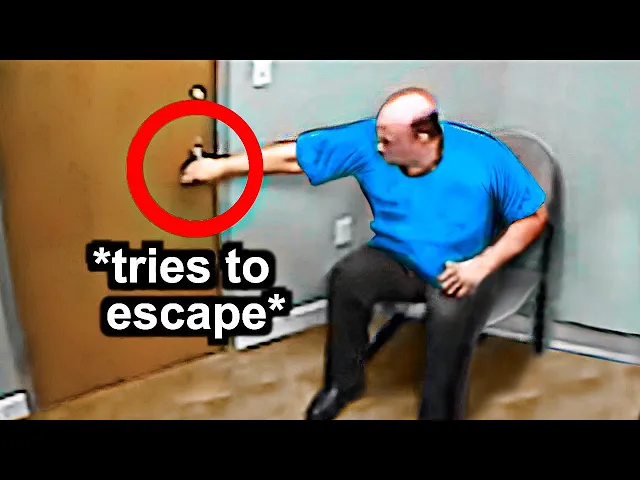
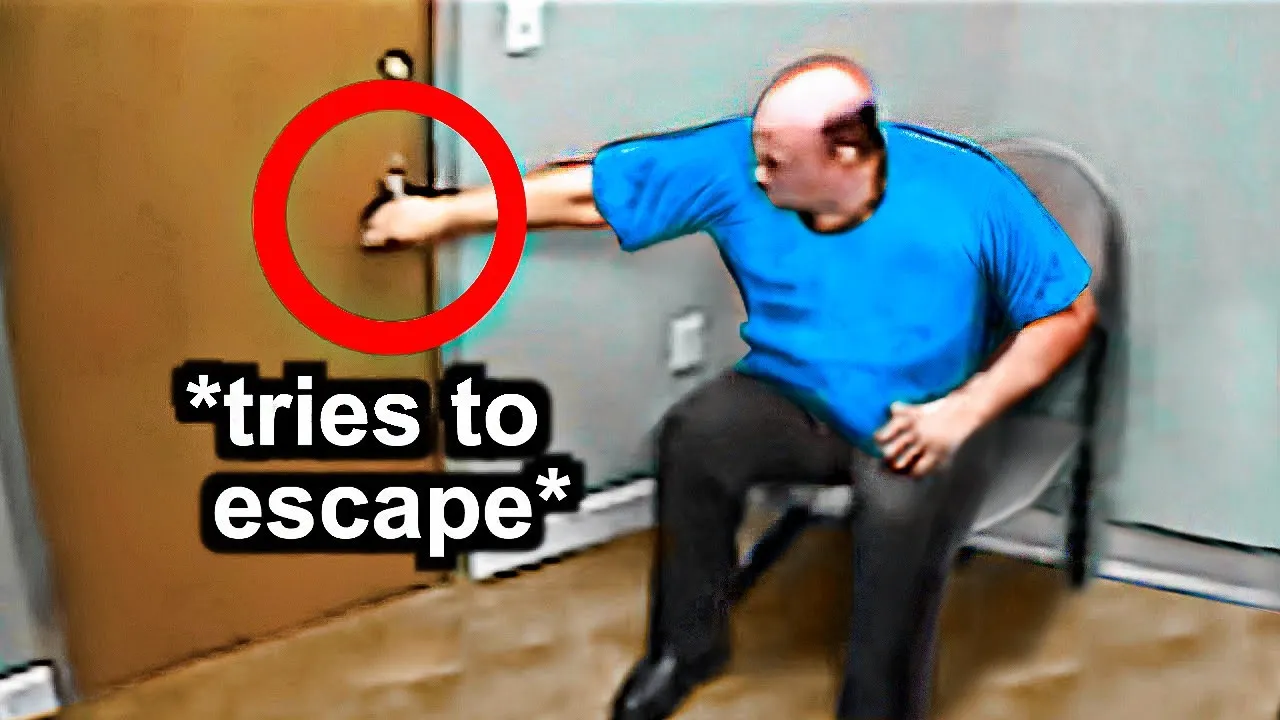
This is Grant Harden, a 50-year-old police officer hiding a horrifying secret. Grant has been apprehended on suspicion of murder, but as it would later transpire, his crimes and behavior were so bad that in his interrogation, he tried everything he possibly could to escape. On the 23rd of February, James Appleton had pulled into a parking lot on Ganidge Road to take a phone call with his brother-in-law.
Suddenly, a loud banging sound was heard over the phone, and the line went dead. A passer by had spotted a white Chevrolet Malibu parked behind James' car that immediately sped away after the loud noise. When the passerby went to check on James, he was lying dead at the wheel with a gunshot wound to the head.
Gateway, Arkansas is a small town of 400 people. So, the owner of the Chevy was quickly determined to be Grant Harden, a 50-year-old police officer who had lived in this town his whole life. Later that night, Grant's vehicle was stopped at a police roadblock after taking his family out for dinner, and he was quickly brought in for questioning.
But unfortunately for everyone involved, Grant's experience in law enforcement would prove to make this interrogation one of the most excruciating and difficult that Arkansas police had ever had to deal with. Detective Chamberlain, I know we have James Chamberlain. Okay.
Did you be a police officer somewhere? I recognize you, but I wasn't 100% sure where I knew you from, but somebody said that you used to be a police officer in Gateway or something like that. Okay.
The interrogation begins casually as Detective Chamberlain opens with questions about Grant's career. As they're both police officers, he assumes he can strike an immediate middle ground with him, building trust between them and hopefully getting him to relax so he'd give up information easier. A strategy that he'd soon find out had the opposite effect.
Grant has then read his rights, but decides this is where he's going to start making it difficult for the detectives. Here's the thing. I want to talk to you about what what you've done today.
Okay. Can you just take me through when you woke up this morning to when you got stopped by the police out there in what's the name of that road that you were on? I'm sorry.
I'm drunk again Ridge. I'm not going to say anything after I've been read those rocks yet. Okay.
Well, I don't know what's going on. I am kind of sickly to uh to what I'm here for and things. Up until this point, Grant hasn't been told what he's been brought in for and states that he's feeling sickly given the circumstances he's been put into.
Given his disturbing body language, he may also be feeling exposed and somewhat inferior due to being the suspect of a case instead of the detective for the first time in his life. So, you don't want to explain what you've done today? Did you?
Is there a reason behind that? What was the first thing said? I have the right to remain silent.
Okay, so you're telling me that you don't want to talk to me right now? Okay, cool. Hang tight right here for just a few minutes.
Okay. As is normal in a case like this, the detectives leave the room for a few minutes to talk about how they're going to handle the interview. And not only does it give them time to formulate their approach, but it also gives the suspects time alone to worry about what could be going on and form anxiety regarding their situation.
At the same time though, it may also give the suspect a moment to collect their thoughts and generate their own story and approach to the interview, putting the detectives on the back foot instead. [Music] By the way, I'm Detective Court. I think we met once before.
Okay. So, I I I don't know if I scared you at the beginning or or what, but that's why I was trying to I can't you see you see the position that I'm in. I can't tell you why you're here, but at the same time, I I need to rule you out into something.
Does that Does that make sense? When the detectives re-enter the room, they try an obviously different approach. This time, attempting to set granted ease, stating that they just need to clear him from any wrongdoing, and then he's free to go on his way.
Many people would, at least subconsciously, be inclined to open up a little more in an attempt to get out of there as soon as possible, but Grant has other ideas. Would you be willing to talk to me about your day knowing that I need to rule you out of something or like I'm just if you didn't do anything wrong today, you have nothing to worry about. Yes, I I would have liked to before Yeah.
the rights were read. So, not knowing what's going on. Yeah.
And you understand as a detective, we have we read those rights to everybody who comes in here. It's not just you. It it happens to everybody that walks through this room and talks to us.
As a former police officer, Grant is fully aware of all of this. He knows everybody that's interviewed, innocent or not, has to be read these rights, which essentially completely invalidates this as the real reason that he isn't talking. He's just using it as an excuse to refuse to talk and possibly to even stall for time.
I guess my question is this. Knowing what I just told you, I guess if it was me and I was, you know, if I was in your position, I'd be like, "Hey, James, I did this. I was at or Grant, I did this.
I was at, you know, here, here, here, and here. " And I would just be done with it. But at this point, like, I can't clear you from this because you could still potentially be a suspect.
I don't know if I'm explaining it right or or what. I just have to once the once the rights have been read, I have to It says I have the right to be silent. Yes.
Okay. Just tell me this. I know you're a police officer before, right?
You're you're a police officer in in Gateway. [Music] It's an easy yes or no. I I'm being silent.
Well, I can see that we can do this all night. I mean, it doesn't bother me. You're going to continue to be a suspect until I find out otherwise.
Okay. Unfortunately for the detectives, Grant is exercising perfect form within this interrogation. Refusing to talk greatly hinders the investigation as a whole and completely prevents the detectives from making progress, all while being completely legal.
This is why Detective Chamberlain is starting to appear visibly annoyed and decides to take a break from the interrogation, as letting emotions take control in an investigation like this can be extremely dangerous for the detectives. But once again, this time alone can also give the suspects the chance to come up with a plan. [Music] Hello.
I need to go. You need to go where? Home or get ready for work in a little bit.
Okay. We'll just have a seat and I'll get get it for you. Okay.
Okay. All right. Thank you.
Yes, sir. The other hospital. You want to talk to me again?
What's going on? I'm just ready to go. Okay.
And I'm not I'm not ready for you to go yet. So, you're not going to be able to go. I've got other things that I'm doing right now.
So, all right. I just want to Oh, you're not. Okay.
Yeah. No, you're not. Okay, perfect.
Thank you. Oddly enough, in many other investigations like this, now is around the time where an officer may attempt to come to a decision regarding the suspect. The interview is obviously at a complete standstill and no progress is being made in any direction.
The standard protocol would be to either gather the information needed to charge the suspect for a crime or release them based on a lack of evidence. But whether the detective thinks he can extract more information or if it was an ego-based decision, Grant is told to stay and continue the interrogation. The police then try to take some time to piece together more of the story, talking to witnesses to try and place Grant at the scene of the crime.
Despite his silence being perfectly legal and acceptable, it greatly increases the detective's suspicion towards him. Suspicion that's only heightened when Grant's wife says that his only alibi was that she thought he was spreading grass seeds at the time of James' death. All signs point towards Grant and Detective Chamberlain goes back in for round three.
Detective Cordier is talking to your wife right now. I talked to her a little bit, so I've kind of got a timeline on where you were and where you weren't today. Um, we all know what happened.
Okay, I'm not trying to get you in any trouble. I'm not trying to get her in any trouble. You got a little daughter, 16, who needs her parents.
Okay, I don't know if you've had a problem with this guy for a while or and this was an accident or you maliciously chased him down or or what happened. But if I don't get your side of the story, I won't ever know. We're writing a book.
You got chapter 1, you got chapter two, and chapter 3. Chapter 1 is what happened today, what started out today, how your day started. Chapter two is what led up to the incident.
And chapter 3 is you telling me about what happened to lead you up to that. I know you went to eat, you know, out tonight. I know what you said at dinner.
I know that you went to Lowe's afterwards. I know everything, but I don't know what caused the incident. And if I don't know that, I've got to assume the worst.
I'll let you think about it. I'm I'll give you one more chance here in a few minutes and I'm not I'm not going to talk to you anymore. I'm not telling you that.
Well, what happened? I know you know we have witnesses that put you there. They physically IDed you.
The two cars that drove by. Look, man, I'm not I I just want to know why it happened. I I'm going to sleep good tonight regardless.
I don't think you will. At the time of the murder, when the two cars were parked up beside each other, the man in the white Chevrolet waved to the passer by passed before the gun was fired. As they passed, they were able to get a good look at the driver.
And unfortunately for Grant, it was Andrew Tilman, another resident of the small town who had known him since he was a child and was hence able to undoubtedly place him at the scene of the crime as the gun went off. Both Grant and Chamberlain know without a doubt what happened to James. But Grant also knows that his only chance of escaping is to continue to remain silent and pray that they can't gather the evidence they need.
The detectives are now forced to try almost anything they can think of to get movement out of Grant. Starting with allowing him to see his wife and daughter in hopes that it will invoke some sort of emotional reaction within him and get him to talk. Your wife's about to leave.
She wanted to get you hug before she left. Are you good with that? [Music] Love you, too.
Okay. All right. I'll be back in a few minutes.
Unfortunately, even this doesn't work. So, instead, Detective Cordiero decides to return alone with a more calm and sympathetic demeanor in a second attempt to build trust with Grant. Often male suspects are more likely to build a subconscious connection with female detectives due to them often thinking that they're less threatening and more understanding.
Realistically, this is the last option the detectives have. All right. Think about laying down up on that desk.
Yeah. I don't know if you'll be any more comfortable up there than what you are now. Can you help me understand how we got to this point?
I don't know. I don't know, man. I remember being on patrol and running into you one night.
Help me out on a call. Back me up. Oh, it was way back in almost 3 years now.
Well, two. Yeah, something like that. You guys are always good to help us, help me, too.
Brad, you were always right there, man. Cordiierro opens up with an anecdote about how Grant apparently backed her up on a case 3 years ago. Even though he doesn't necessarily remember it, this will give him the idea that Cordiierro will be even more sympathetic and helpful towards him as he's done her a favor in the past.
It also allows them to continue reminiscing about their time on the Force and the people they've worked with, further strengthening the subconscious bond Grant will be creating. I just understand how we got to this point. Yeah, me neither.
You're willing to talk. Oh, I'm just ready to go to bed. I don't blame you.
Me, too. Me, too. I know we could do that.
You just talked to me. Well, I just have to since you read those rides, I have to state I have to do the ride. What What's the difference?
Know the difference? Regardless of something happened or not, and if it did, if it was an accident, tell me. Like, let me help help me help you.
Like, I want to know what I can do or what happened today to be able to explain it later. I I don't know what happened today. I just need to You know, people are going to have questions.
Your family. Well, I have questions. Well, exactly.
So, so why can't we figure this out together? Cordiero is making a conscious effort to use inclusive language such as, "We will figure this out together. " This and her open and expressive body language are both techniques she's using to make Grant feel more relaxed and as though he's part of the solution, not the problem.
She's also making every effort to be nice to Grant in hopes that maybe he'll finally open up to her or at least give her a way in. We insert from the very beginning. I mean, I know you probably slept in cuz you worked nights.
I worked nights. Trust me, I worked nights for almost 4 years. I understand how that sleep schedule is.
Yeah, I was sleep. So, messed up. Did you sleep in today?
Yeah, I bet you did. You could have got to work tonight, huh? Yeah.
Yeah. What time did you get up? Around noon.
That's usually what time I got up, too. Did you watch anything good on TV? Usually that's what I do.
I'd eat and watch TV. I woke myself up a little bit. Anything good?
See my old stuff. Oh, yeah. on TV.
You watch the same episode or like do you have a specific TV show you would wake up and watch? Well, we watched the filming My Life Always Has It On I can't remember what channel was called right now. TV Land.
Oh, okay. I haven't really watched any of that. I don't I couldn't even tell you what it was about whack like that.
Oh, yeah. I think she might watch other stuff, but that's all. It might not be about the case, but finally Grant is talking and Cordiero has found her way in.
If she can keep the flow of this conversation up, she might be slowly able to extract information from him, even without him knowing, talking about specifics such as TV shows and sleep schedules. Even that could lead to catching him in a lie and placing him in certain places at certain times. But most importantly, she's building a connection with him and continuing to let him talk, which increases the chance that he either slips up or decides to make it easier on the detectives and answer a question.
But predictably, as soon as Cordderero started asking him to talk about the case again, he shut down once more, refusing to answer any more questions and staying silent. I think you have a lot to live for. Beautiful family who I've had the privilege of talking to.
The way I look at it is you're a man. Men face their mistakes and they own up to them and they figure out what happened and figure out how to solve it and move on. Like I said, I'm I'm honestly here to help you.
I want you to understand that I wouldn't spend my time in here with you if I didn't and that something happened today that needs to be explained. Did you make a mistake today? Even after reminding him of his family, Grant doesn't move an inch.
Again, realizing that his only chance of being let off is to not speak and hope they don't find anything. I like you. I like this fella that was a detective here.
I know they all don't care about him and stuff. And I just don't know how to how to uh had this happen before being brought in and interrogated for something. So I don't I know you don't care, but I just don't know how to how to I think how to be silent sitting over here looking like a jerk.
No, you're not. Honestly, you were far from that. You're very polite.
Don't you know why you're here? I appreciate you guys and I'm just going to Can I get a lawyer? Yeah, it's up to you.
But you obviously something's going on and I need one. I just want to hear your side of it. I want to get a lawyer.
After hours of almost pointless back and forth, Grant finally asks for a lawyer, meaning the detectives can no longer question him and concludes the interrogation. But this is far from where the story ends. Between this interrogation and the final court hearing, Grant and his lawyer both realized that there was simply no way he was going to be released scot-free.
Not only was there a man at the scene of the crime who all but saw him pull the trigger, people were also starting to realize that he'd actually either been fired or resigned from three different police force jobs before becoming the chief of police in his hometown. So on October 16th, 2017, he pleaded guilty to the first-degree murder, but refused to reveal his motive, leaving each member of James Appleton's family without closure to this day. However, as Grant was being prosecuted, a shocking revelation was made that turned him, a murderer, into a senseless monster of a human being.
As his DNA was being taken, they realized it was already in the system under an unknown name for a crime committed almost 20 years ago. In November of 1997, a teacher at Frank Tiller Elementary School went to the teacher's lounge bathroom only to be met by a man brandishing a gun that forced her into a stall. The man then ripped her and fled, taking care not to touch anything or leave evidence behind, except for the he left on her clothes.
Local police did everything they could to identify the perp. But after 20 months of effort, the investigation went cold until 20 years later when Grant Harden's DNA was found to be a perfect match. And because Rogers police had obtained a John Doe warrant back in 2003, allowing them to arrest an unknown suspect and bypass the statute of limitations, he was hit with the 14-year sentence for his on top of the 21 years for the murder of James Appleton.
And as such, Grant Harden was sentenced to 35 years in prison, meaning that he'll likely live out the rest of his life behind bars.