[Music] good morning thank you for having me I've enjoyed the conversation so far and I'm going to do my best to factor some of it into the conversation but Brian's comment around the sort of single or double turnup I thought was important and it made me wonder whether I should do both as a sort of hedge but I probably won't um so I'm going to do two things firstly I'd love to share some thoughts on open Innovation and why I think it's important and why it's more than just crowd sourcing I really am not a
fan of that term it sounds too transactional SS like sounds like value goes in One Direction only I think it's more interesting and then secondly I'll just give you a brief overview of what we're doing in that space But my first observation I think this is more true in London than probably any other city in the world and that is that we're all actually creative and the more diverse people you have trying to find find Solutions the more likely you're going to see something incredible scarcity breeds Innovation but different perspectives breed Innovation as well I
think it's really important for us to remember so my first observation is everyone in this room is creative you've seen the way kids behave you've seen that sometimes this is drilled out of us over time but given the time and given the freedom given our diverse experiences we can find new Solutions the second observation is actually we're not bad as a species at self-organizing so this is how people queue in Thailand someone sent this to me this week we're very good at finding efficient ways to operate this is a hack now the beauty of collaboration
is it's not just it makes our lives more efficient but actually we can find new Solutions so it was you know Newton that said if I've seen further it's through standing on the shoulders of giants we tend to think of great breakthroughs as lone Geniuses but it's never true innovation's usually additive so collaboration enables us to achieve more and so if you look at where that Nets out how we apply those two things our individual skills coupled with collaboration it's actually extraordinary how little that has actually changed beyond the sort of Village campfire so Town
Halls are a good example Town Halls are an amazing example of diverse people sort of like the room today coming together to argue out challenges to find Solutions now there was a lovely Point made previously that technology is not revolutionary because it creates new needs but it actually creates new ways of meeting existing needs more efficiently it takes the friction out of stuff so technology instead of being a big threat has the potential to enable us to collaborate in New new ways that's obvious but given that's obvious it's amazing how often people say that technology
is making us antisocial like I can't help thinking that when this photo was taken someone was out there saying the print the Advent of the print is making us all antisocial you're seeing exactly the same thing with smartphones today it's just different we're meeting needs in new ways technology is just a tool and so in 2007 I started wondering why is technology not taking the friction out of helping people collaborate and I looked at what was happening online and the most simple and frequent execution was just to take an idea suggestion box and put it
online how many of you have ever seen an idea suggestion box it's like a fair amount how many has anyone ever actually put an idea in an idea suggestion box I mean that's so there's someone thank you there's an individual your sort of loan generally people tend to put things like sweet wrappers in idea suggestion boxes they don't work people don't contribute to them they don't contribute to them because they don't know what's going on inside it's unclear why it exists occasionally they do work often when significant amounts of money change hand I met an
amazing open Innovation manager a big tail Co who ran a challenge in China and got tens of thousands of entries and only had the resource to look at a couple that's the other problem is when they're successful these things actually you just get ideas spilling out and this reveals the problem this is not collaboration porting an idea suggestion box online and just seeing how people react is not collaborative it's just the low friction way of doing this and what I found interesting is when you look at them more and more you realize that actually you
get silly d lication of effort you assume that everyone has to do exactly the same thing and will have the same type of idea and generally you'll see the same idea over and over again you'll see people struggling to actually participate in any other way and so we started to wonder what would happen if you took an idea suggestion box and you opened it up entirely now to me this is what Wikipedia is so Wikipedia is people collaborating to write a new type of Encyclopedia you know over a billion hours have been spent constructing it
now the previous approaches like encara which was closed or encyclopedia britanica that we all know and love they're more like idea suggestion boxes someone in that system is a bottleneck when you can open up these systems you enable people to collaborate you enable people to see one another's ideas to build off one another's ideas to participate in new ways to ad value in new ways and the system can be far more interesting now it's fascinating to me because I think for the first time in human history we can use technology to facilitate this historically it
was prohibitively expensive if you wanted to get this room if we wanted this room to be truly diverse it's pretty diverse because of the wonderful City we live in but if we wanted it to be truly diverse it would be unbelievable unbelievably expensive to set it up but technology is enabling that so in 2007 we started thinking how might we as a Innovation company create an open idea suggestion box how might we open it up for everyone to participate and we launched open IDE 3 years ago where we post big challenges we post big challenges
to an open community and they're always for social good so this one you see at the top is the first of 10 for divid or UK Aid where we're starting to think how we might might address poverty related issues specifically this asks how we'll improve women's Security in slums in India an unbelievably difficult topic so we opened it up we opened up that question which defines the playing field and then we work through a series of phases to try and solve it we don't leap straight to answering the question to the ideas instead we try
and understand the context you never if you were setting up a board meeting would just leap straight to ideas without setting up the context but that's what happens online all the time that's why you have this race to the bottom of the barrel often instead we say go out there and understand the problem what Solutions have been tried how do we get you engaged around this topic how can someone in London empathize with a woman's life in a slum in India we then move to ideas we then have them applauded and Whittle down the ideas
and eventually we announce a short list and so one of the observations I think maybe I could leave you with is when you're thinking about opening up to the crowd whether it be inside or outside your organization you have to invest more time in the question historically we could sort of be a bit loose with the question you've got to be very fixed and understand the question and define success before you start then have a clear process so people know where they are throughout and thirdly understand why people will participate now money is often the
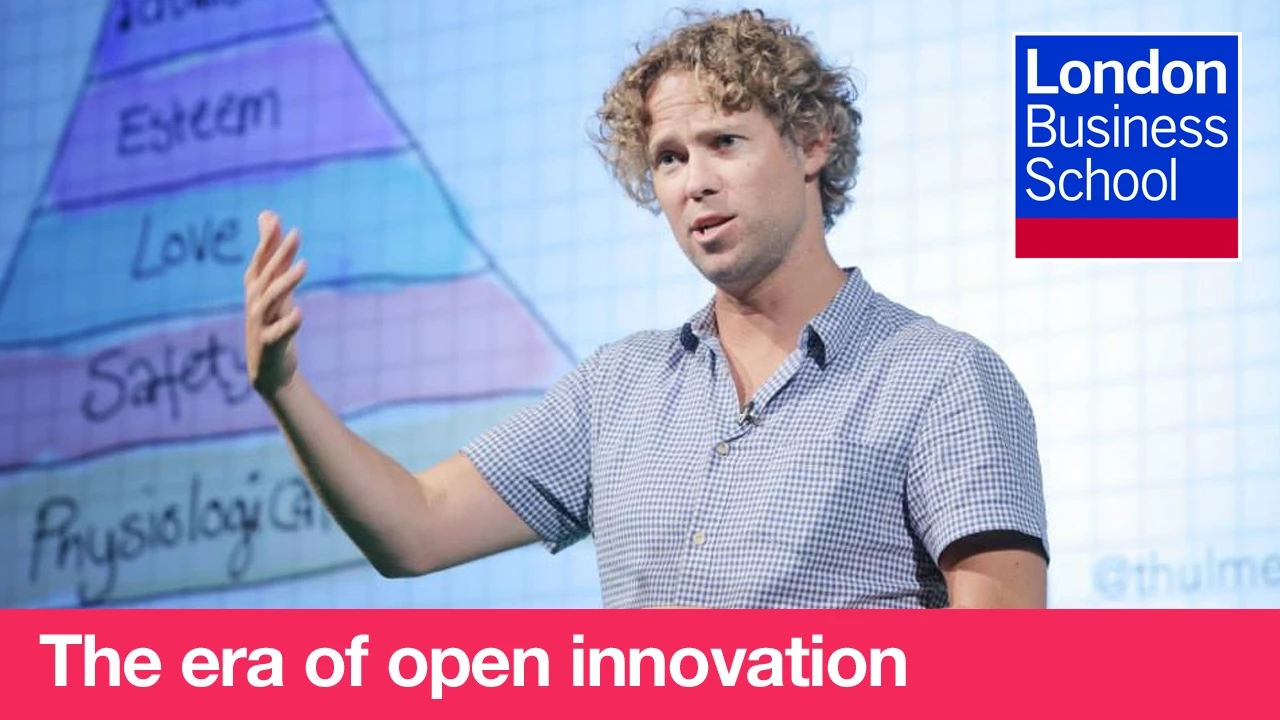
simplest reason simplest incentive there is but actually it's not great at getting diverse participation if you look at Wikipedia people make the mistake of thinking everyone would write to Wikipedia for the same reason it's quite clearly not true people participate for a range of reasons a range of motivations so when you're thinking about opening up design your approach so that multiple diverse people will want to participate for example on open Ideo we address challenges that are right down at the bottom of base of maso's hierarchy but we also give people a sense of community and
belonging by creating teams that coales we give people feedback about what they do on the site and we've seen it go to places like people are actually taking and applying for jobs using their profiles and their scores from the platform we've seen people actually celebrate the impact they have so you can design many motivations for participating today the community is up to 60,000 people I think you know it's not a huge Community but it's certainly diverse there's three places on the planet over the last three years we've not had visitors from which is kind of
my frustration so if there's anyone that has access to North Korea please take the URL with you and you probably need some other equipment as well but the impact has been really interesting so we've had personal impact for example 110,000 people swabbing their cheek to go on a bone marrow registry we've had social um apps develop for example an app called panic button for Amnesty International that's now rolled out globally and won a Google award we've had um social Enterprises spring up for example 1,800 patients have been treated in a place called kdas in Colombia
by a gentleman who just lurked on the site and had ideas and then decided to implement them it's interesting I'm a startup person by background I was trained to dislike lurkers they're like a missed opportunity but when you start seeing how they might take the stuff online offline you realize sometimes they're the most valuable community members you can have the final few slides I'd love to share is just some other examples that might inspire you for how you might might adopt a similar approach we were approached not long after launching open Ido by people saying
can we have this for our own Community why don't we do this internally so we launched a software product called oi engine and we've had for example the KN Foundation an amazing organization in the states use it to give away a few million dollars of Grants each year open Grant making makes more sense because there isn't someone a bottleneck anymore the crowd does the due diligence says what's a good ide idea it's far more efficient than the historical approach we've had um a large Airline now has 12,000 cabin crew on their version of the platform
and they for the first time ask the cabin crew what type of meals they should put on the flights and that materially changes the net promoter score they ask what the strategy should be around how to help Flyers sleep better and then interestingly most recently and I may well be sacr to talk about this here so I apologize but most recently Harvard Business School has started using the software so when talking about um actually I think we talked a little earlier about Kay Christensen article Klay Christensen actually crowdsourced with a 150 alumni his most recent
article which went into hbr last week and there's a wonderful video I can send to any of you that are interested it's also on hbr in which he talks about his new approach his process so now when he writes an article he starts with research like he did historically but he has everyone submit research examples then people generate ideas for what should be in the article they evaluate ideas and finally they publish and this is a very collaborative process all the way through so you can see here someone submitted an idea for Clay's piece and
people subsequently commented on it improved it these then became ideas as you can see here and actually people have tagged the stuff they built it on on the right and this article evolved over time and as I said was published last week so it's called the capitalist dilemma for any of you that are interested it's a kind of Hot Topic at the moment there's a little back and forth between different journalists about whether it's a reasonable approach or not but you can see one of the things that hbr did which I think was wonderful was
they actually showed how ideas formed in an interact Ive infographic you can see here so just ticking over me in the last 30 seconds here you will see how ideas form over time you will see that you know the lone genius is generally a myth the Silver Bullet is generally a myth instead for us to solve more complex problems we need to collaborate more together and so the real question is who can answer the problems that each of us have how can we open up to involve them whether it be inside or outside your organization
and then finally how do we motivate them how do we get them excited to actually help solve the problem with us and how do we recognize them thereafter I'm actually you're going to be relatively sick of me by the end of the day but here's I'm on a panel this afternoon so if any of you have any special sort of you know related questions I'd be really delighted to ask them at that point but thank you for taking the time