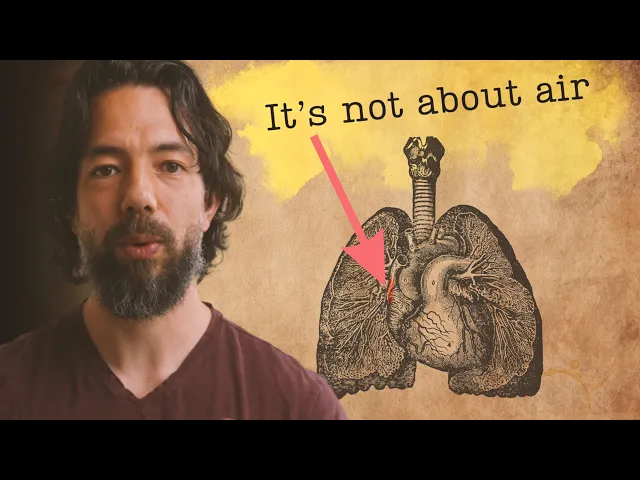
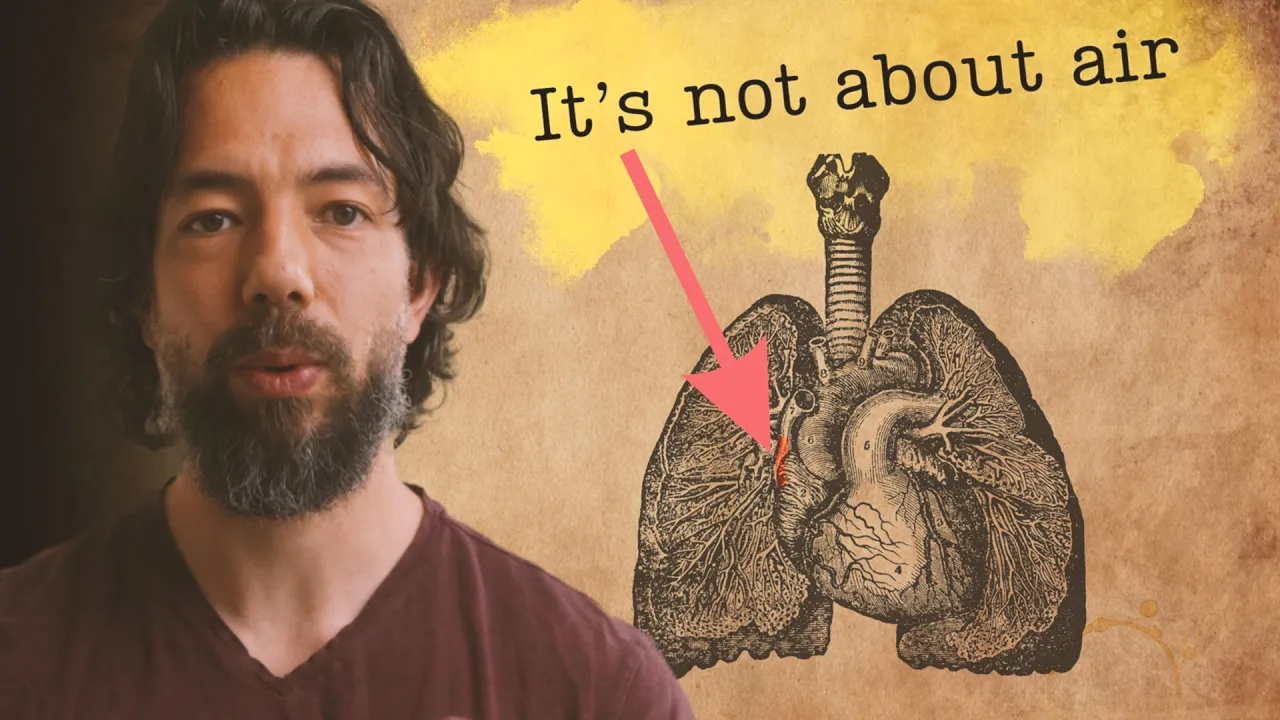
Breathing is not just about air. It's the underlying fabric that interconnects action and rest. Most people don't pay much attention to their breathing or think breath work, meaning deliberate breathing, is some esoteric voic.
But here's the paradox. We're living in a stress epidemic that takes an alarming toll on our physical and mental well-being. We feel overwhelmed, anxious, and disconnected.
But how is this connected to our breath and why oxygen doesn't really matter here? Well, the truth is that breath work is not just a spiritual practice. No, it's a powerful tool for managing stress and your nervous system.
I will tell you how this is all connected and how you can use four breathing principles to become the captain of your own ship, not just a passenger who gets seasick in a storm. For those who don't know me, my name is Kitaro and I'm a Bradberg and mindfulness coach and a former traditional kung fu and movement teacher who has been teaching for 20 years. Breathing is essential for life.
Our brain, muscles, and other organs need oxygen to survive. And it's so important that breathing is controlled by our autonomic nervous system so that we don't need to think of it and we still breathe. just like our heartbeat, digestion, and other vital processes in our body.
That's a good thing. So, we don't accidentally die when we think about, for instance, chocolate. Speaking about chocolate, we constantly scan our environment on a subconscious level for treats and threats.
By default, our body and brain want to store and conserve energy. This is why we find it so hard resisting sweets like this chocolate bar when we see them or use this nice and comfy couch instead of standing. But we also perceive too many things in our to-do list or emails as stressful and we get nervous if we need to speak in front of people or ask this girl out that we like.
Our brain anticipates rewards and risks and prepares our body for them. This is all part of the autonomic nervous system which controls action and rest in our body. While this feature of our brain was very neat and helpful when we were hunter gatherers and helped us survive, it creates many problems in today's age of abundance and over stimulation.
You see, today we stress about things that we shouldn't be so stressed about and we consume things way more than it's good for us. So instead, we want to learn to control our autonomic nervous system where it makes sense. We want to do that to better function in today's age and live a happier and more intentional life.
We can do so by a top- down approach like reframing experiences in our mind through a mindfulness approach or we can take a physiological approach through breath work and directly influence our autonomic nervous system. I like to do both. And today we'll dive deep into how breathing affects our autonomic nervous system and how we can utilize that to our advantage.
Breathing is more than about air. When we breathe, we think of air, oxygen that nourishes our cells. But that's only one side of the coin.
The other side is our heart. Depending on how you breathe, the blood flow speed through the heart changes, which then changes your heart rate. If you focus on long exhales, prolonging your breath, the blood flow through the heart speeds up a little and the receptors in the ceno node of your heart signals your brain to decrease your heart rate.
If you focus on strong inhalation instead, these receptors signals the brain to accelerate the heart rate. And your brain does that by engaging different nerve nodes in your autonomic nervous system. We have one branch of our autonomic nervous system that triggers a fight or flight response in our bodies which is accompanied by stress.
So for example, we get more alert. Glucose is made more available for muscles for explosive use and our body and mind are geared towards action. The counterpart of this is our rest and digest mode which calms us down and redirects blood to our digestive tract.
So this interplay between inhalation and exhalation isn't so much about air but more of a neurological connection to influence our states. If you need to be more alert and have more energy, focus on fastpaced breathing where you emphasize strong inhalations and have a short exhalation. When you want to relax and calm down, instead prolong your exhalations and slow down your respiration rate.
Many people and also animals do that already by instinct. When we are about to enter a stressful situation, our nervous system already reacts by having a fightor-flight response. It anticipates stressful situations and prepares our body and mind.
Our breathing accelerates our problemsolving part of the brain shuts off and we have difficulties thinking clearly and our muscles start to shake because they are prepared for explosive movements. In the past, most threats were physical and we had to flee or fight. Today, stress, on the other hand, is more often connected to other things.
And this fight orflight response is not always useful and even counterproductive. Our lives today have become so much more complex that it's not always easy to solve a stressful situation right away. or we deliberately face stress and just need to deal with the situation.
Many people wish to be mentally stronger in these situations or they just think they're not built with this resilience or wish for an easier life. But what if instead they wish to have better regulation skills to influence their autonomic nervous system? Our breathing has this unique quality that we don't need to think about it.
But we can also deliberately control it. This gives us an indirect gateway to influence our autonomic nervous system. When we are overwhelmed by a situation, we can use deliberate breathing techniques to counter this response.
This is what I call intervention breath work or the counter breath. It's not always easy to control how our bodies and mind respond to an event or situation, especially if it's very challenging. Instead of following the common practice of blaming the situation or ourselves, we should accept and acknowledge this feeling, this anxiety or this stress as a natural part of our ancient brain.
Then we can deliberately control our breathing and change our state. Any challenging situation or event either triggers high arousal like anger, fear or anxiety or it robs us of energy like feeling exhausted, sad or tired. This dual system of high energy and low energy gives us four principles of intervention breath work.
And these principles are calming breath work, energizing breath work, rejuvenating breath work and transmuting breath work. When we feel nervous or overwhelmed, we want to calm our nerves as we start from a high energy state here. We want to bring our arousal level down to think more clearly and gain a sense of calmness and control.
So, I first mimic my current breathing pace, which often is higher than usual when I'm nervous or stressed, and then gradually reduce my respiration rate by focusing on prolonging my exhalations. From here, I can move to coherent breathing where I inhale to a count of 6 seconds and exhale for six. [Music] Or you can do cyclic click sighing where you do a deep inhale followed by another sip of air and then exhale through the mouth with a big sigh.
[Music] These two techniques are very easy and simple, so you can use them when needed before an important meeting, competition, or speech, or whenever you wish for some calmness and peace. When you need a kick of energy and alertness, a few minutes of deep and full breathing can be your go-to method. Focus on expanding your whole rib cage and strong inhalations.
The beauty of breath work is its adaptability. You can tailor your breathing technique to suit your needs. If you want to add just a little bit of stress into your system to make you more alert, inhale fully through the nose and exhale explosively through the mouth.
If you want to add more stress to your system, inhale through the mouth and exhale through the mouth. This way you can increase your respiration rate even more and make your breathing more intense. And to make it even more intense, increase the speed and intensity.
Practice with awareness and caution as this can be quite intense and lead to fainting or a panic attack if done recklessly. But with the right dosage, this can be a very powerful tool for a quick burst of energy and [Music] alertness. Rejuvenating breath work is very useful if you want to recover, wind down or prepare for sleep.
When I feel exhausted, naturally exhausted from the end phase of the day or an event, I complement this natural reaction with deliberate breathing and mindfulness techniques to relax, rest, and rejuvenate. I like to combine a bottom up and a top down approach here where I focus on calming breathing techniques and combine it with a mindfulness practice like NSDR, body sensing, for example. Do coherent breathing, 6 seconds in, 6 seconds out, and combine it with a meditation or body sensing session where you do a body scan.
The body sensing will disconnect you from the day and guide your mind towards introspective awareness enhancing your your recovery. Additionally, numerous studies have indicated that higher intraceptive awareness is linked to better impulse control, emotional stability, and long-term decision-making. You can do this guided or non-guided, but I usually like to sit down and then gradually slow down my breathing.
Once I reach about a comfortable 6-second breath interval, I direct my awareness through every limp of my body, saturating it with awareness. Then I move up my spine vertebra by vertebra the back of my head and around it down to my chest and rib cage and back to my naval area. I have some guided videos here on my channel so if you like you can follow one of them along.
Transmuting breath work is a more disruptive principle. The idea behind this is that when you feel angry, anxious or or carry an inner nervousness with you where you feel easily distracted, you transmute this unproductive energy into a more grounded and pleasant energy. Transmuting your state is more than just calming or energizing yourself.
To explain this principle, we first need to understand the circmplex model of effect developed by psychologist James Russell. It proposes that all human emotions can be plotted on a circle or two axis using two fundamental dimensions. The two axis of our emotions are one valance meaning how pleasant or unpleasant an emotion feels.
This is the horizonal axis. So examples would be the feeling of joy which is a high pleasant emotion or sadness which is a unpleasant emotions. The second dimension of emotion is arousal.
This is the vertical axis and it represents how activated or deactivated you feel. For example, anger is an unpleasant and high arousal emotion while boredom is an unpleasant but low arousal emotion. Now let's take anger as an example.
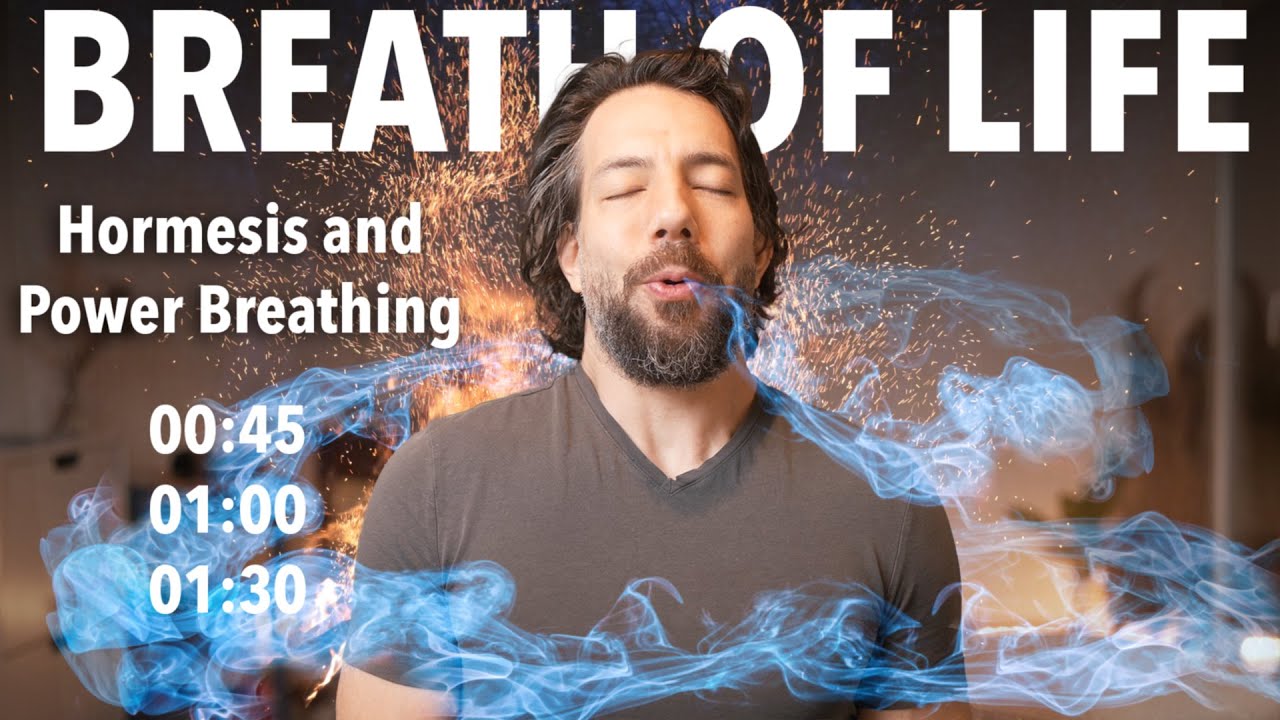
A very unpleasant and high arousal energy emotion. So instead of just calming the arousal energy down by a calming breath work technique, the idea of transmuting energy is to make use of the high arousal level and channel it through a breath work technique to transform an unpleasant state into a neutral or even pleasant state. One very useful technique you can do on the spot is hypoxic breathing or as I like to call it hormesis breathing.
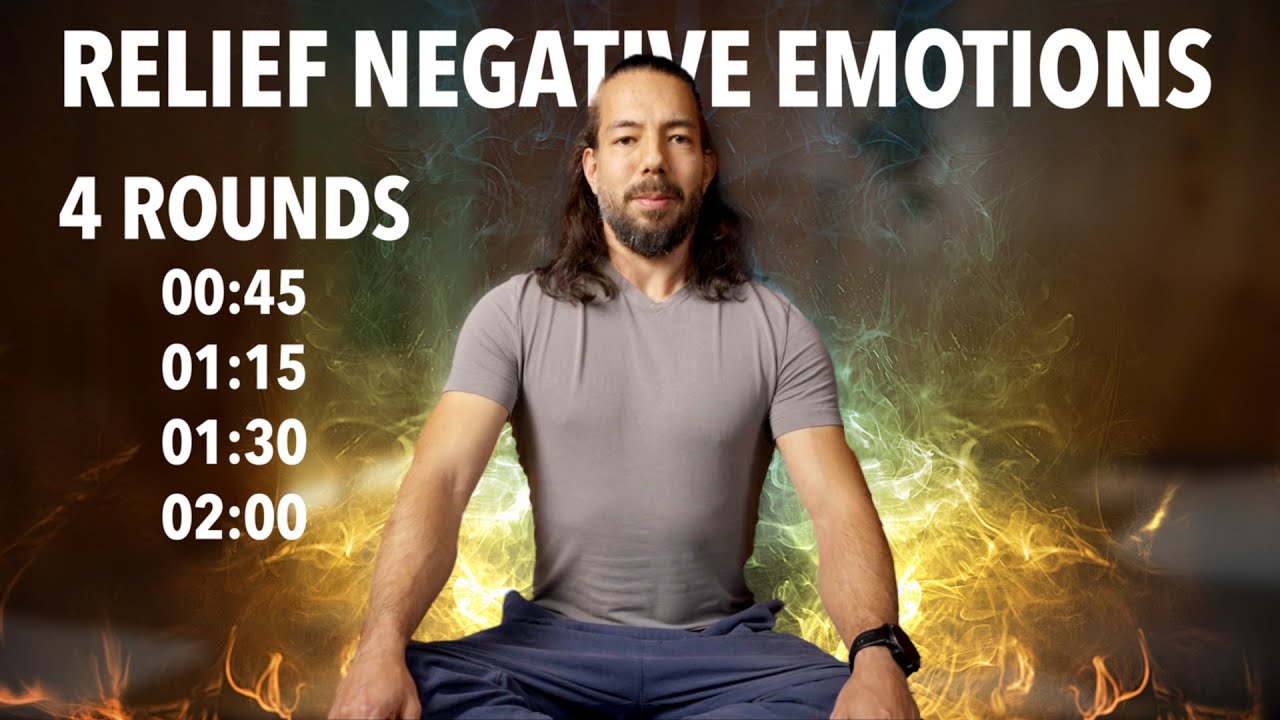
You do fast and deep inhalations for about 90 seconds and then follow with an extended breath hold after exhalation. Then you follow with an inhale and a second breath hold after inhalation. You repeat that for three or four rounds.
Try it out and experience the effect for yourself. Just be sure to not do it while driving or when in water as there's the risk of falling unconscious when combining rapid breathing where you offload a lot of carbon dioxide with extended breath holds. The rapid breathing rises your arousal level.
And when you do it when angry, you can channel your energy into vigorous breathing. The extended breath holds will first calm you down and then towards the end when the urge to breathe increases more and more. Your arousal level rises again and until you take a rejuvenating inhale and hold again.
This ping-pong play with your nervous system and the interplay between reaching a hypoxic state, low blood oxygen and I a hypocnneia state, low blood carbon dioxide has a similar effect on your metabolism as a cardiovascular workout. Combining this breath work method with mindfulness meditation is even more powerful in transmuting your emotions. having both a button up and a top down approach.
Again, I have many guided videos where you can do a follow along of Hormesis breathing. Be sure to check one of these out on my channel. And if you want to learn more about how to control your mind and not just your breath, check out this video here.
Thanks for watching.