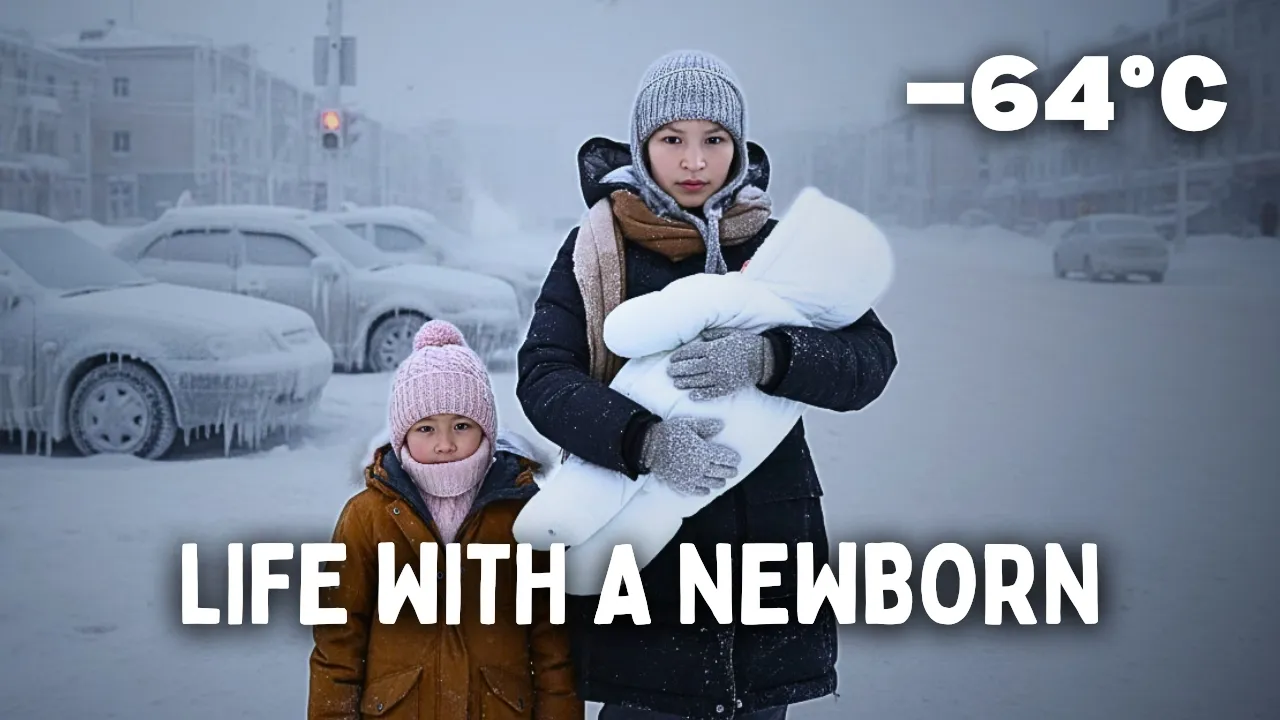
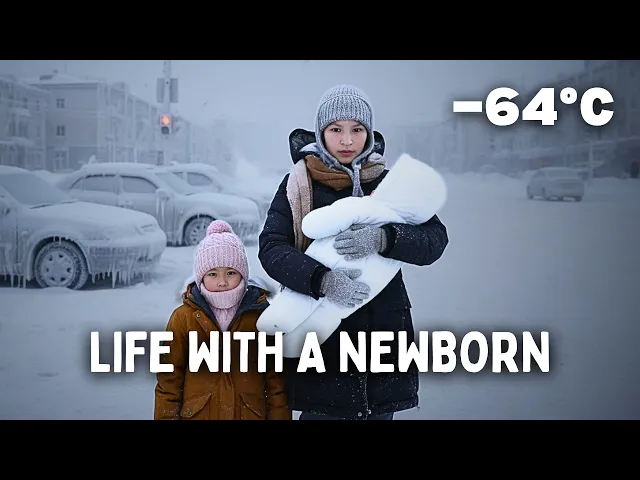
Yakutsk, the coldest city on Earth. Sardana, a 32-year-old mother of three, is already awake. She gently wakes her newborn daughter, Arina, only 1.
5 month old. The morning routine begins with light stretching. A simple practice that helps babies in Yakutia stay warm during the long winter months.
Because of the harsh climate, mothers with newborns can't take their babies outside for walks for almost 7 months. The only time they step out is to reach a preheated car, and even that can be dangerous. Sometimes the temperature difference between indoors and outdoors is more than 80°C.
While Sardana cares for the baby, her husband Igor is already checking the heating system. The air boiler runs 24 hours a day, non-stop on maximum power. Without constant heat, the house could freeze within hours.
Keeping the temperature at 25°C cost their family about $200 every month. But in this climate, staying warm is not comfort, it's survival. Sardana prepares breakfast for her two older children, 12-year-old Maxim and 7-year-old Vika.
Like many kids in Yakutia, Maxim and Vika go to school even at minus 45°C. Classes only cancel when the temperature are above -50°C. Before they leave, Sardana checks their clothing carefully.
Layers of wool, thick winter jacket, insulated boots. At this level of cold, stepping outside without proper winter clothing can be life-threatening. For 7-year-old Vika, the school run is easy.
She rides with her father on his route. But 12year-old Maxim travels on his own. He walks to the public bus in the freezing dark, determined to be independent.
His classes start a bit later, so he prefers to go by himself. There is no heated bus stop and Maxim stands in the open cold, slowly freezing while he waits. But for him, this is normal.
Just another winter morning at -45°C. If the bus is delayed, he has to make a quick decision. Run home to warm him up or risk getting frostbite.
Thankfully, today the bus arrives on time and Maxim heads to school like any other child in Yakutsk. Already used to facing the extreme cold from a young age. Back at home, Sardana feeds baby Arina.
In Yakutia, breastfeeding often continues until the child is two or even 3 years old. Mothers here traditionally eat nourishing Yakutian beef soup while breastfeeding, a warm, hearty dish that helps them stay strong in the extreme cold. Inside the house, the heating runs constantly, keeping the home warm, but also making the air extremely dry.
Because of this, Sardana carefully moisturizes her own skin. And it especially important to keep a newborn skin protected. Without it, delicate newborn skin can easily crack during the long winter months.
There is also tradition deeply rooted in Yakut culture. Newborns are often kept out of sight for the first 40 days of life. Families don't show the baby to anyone outside the household, not even to relatives, believing that this early period is when a child is most vulnerable.
Keeping the newborn unseen is thought to protect them from jealousy, negative energy, and the harsh outside world. While the baby sleeps, it's time for chores. Sardana get dressed to go outside for just a few minutes, and even that requires layers of warm clothing.
She steps out to collect ice blocks, which the family melts for drinking water. It's considered cleaner than tap water, which is why many families in Yakutia rely on ice for their drinking water. Here, even inside the city, water pipes can freeze or malfunction during extreme cold.
And in many Yakutian villages, there is no running water. So, families rely on melted ice, a source of clean, natural water that has sustained people here for generations. She also uses the outdoors as a natural freezer.
With temperatures far colder than any freezer, the outside becomes the perfect place to store meats and precious berries like cranberries harvested during the short summer. Fresh fruit is rare and expensive here. So these berries are treasured.
Throughout the day, Sardana cooks, cleans, and takes care of all three children, managing everything by herself while Eager is at work. In Yakutia, mothers usually take care of most things at home, cooking, cleaning, and looking after the children. Every family is different and Sardana's husband helps whenever he is home.
But in many Yakut families, this traditional way of sharing responsibilities has been common for generations. While the baby sleeps, Sardana uses the quiet moments to clean the house and prepare for the next round of chores. Sardana gave birth naturally without anesthesia or painkillers, something that's quite common here in Yakutia.
Doctors often encourage natural birth and the entire process is completely free. Prenatal care, delivery, and a 5-day stay in the hospital. Now, Sardana is on maternity leave.
Mothers can stay home with their baby for up to 3 years without losing their job. and mothers continue receiving monthly payments equal to 40% of their salary until the baby turns 1. 5 years old.
Because of this support, many mothers are able to stay home and take care of their children. And having a nanny is not common here. Most families raise their children on their own.
Once the washing is done, she hangs everything outside to dry. In Yakutia, this isn't unusual. People believe that drying clothes in the freezing air kills bacteria and gives them that fresh smell of winter frost you can't find anywhere else in the world.
today. Eager is at work all day. So, Sardana has to pick up Vika from school herself.
She has no one to stay with the newborn and like many Yakut mothers, she must take baby Arina with her. Sardana dresses Arena in several warm layers, then covers her completely so that not a single piece of skin is exposed to the freezing air. The walk is short, just a few minutes to the preheated car so it's safe for the baby.
In Yakutsk, even cars need their own winter armor. Many families insulate with extra layers of window film, thick thermal blankets wrapped around the engine, additional electric heaters, and insulated covers under the hood. All to prevent the engine from freezing solid in the world's coldest winter.
Sardana drives to Vika's primary School. Kids in Yakutia grow up used to these temperatures. Some walk to school in the dark.
Some take the public bus and some are driven by their parents. today is the day Sardana needs to take Arina for her monthly checkup at the hospital in Yakutsk. Doctors visit the family's home every week until the baby is 1 month old.
They do this because taking a newborn outside in this extreme weather can be dangerous. After the first month, mothers begin bringing their babies to the clinic for regular checkups. Newborns here receive two mandatory vaccines right after birth.
the hepatitis B vaccine within the first 24 hours and the BCG vaccine against tuberculosis within 3 to seven days. Now it's time to think about dinner. The family of five needs groceries and in Yakutsk food is more expensive than in central Russia because everything has to be transported from far away.
On average, a family spends around $500 a month on groceries. Today, Vika helps her mother pick out a few basics at the supermarket. Eggs, milk, cooking oil, a cucumber, yogurt, cookies, and bread.
Back home, Sardana begins cooking. Today's menu is traditional tatter pastry called echpochmak and traditional yakutian beef soup. An essential dish in Yakuta, especially in winter.
Sardana prepares the filling with potatoes, beef, and onions, seasoning it with salt and pepper. She uses readymade puff pastry, adds the filling, and folds each one into a neat little pocket. As the sun finally sets, the whole family cuddles for dinner.
The food Sardana prepares always tastes especially good. Everyone looks forward to this moment, sitting together, sharing a warm meal, and talking about their day. It's the coziest part of life in Yakutia's long, dark winter.
Later in the evening, it's time for baby Arena's bath. Sardana and Eager heat the melted ice water, making it warm enough to gently wash their newborn daughter. When the house finally quiets down, everyone falls asleep except Sardana.
These late hours are the only time she has for herself. But even then, she doesn't rest. She works on her project, chasing her own dreams after a long day of caring for her family.
Mothers in Yakuta and mothers all around the world share the same quiet strength. What about in your country? How much does it cost to give birth?
And what are the traditions for caring for a newborn where you live? Share in the comments. I would love to hear your experiences.
Thank you for watching and for being part of this story.



![[Episode 1] A Korean couple raising quadruplets | couple vlog](https://img.youtube.com/vi/h3bQlCmlMjc/mqdefault.jpg)