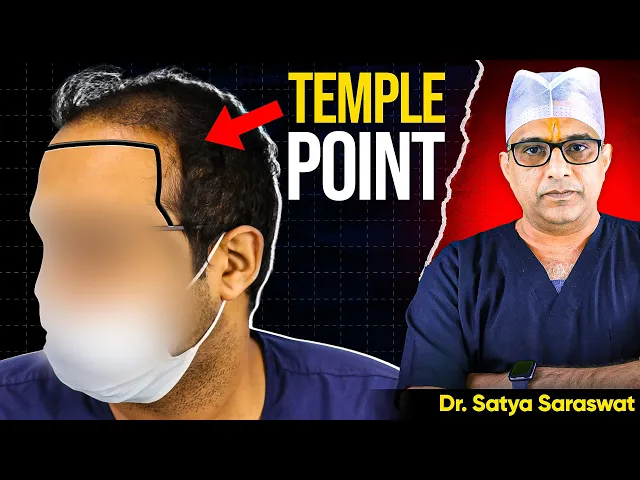
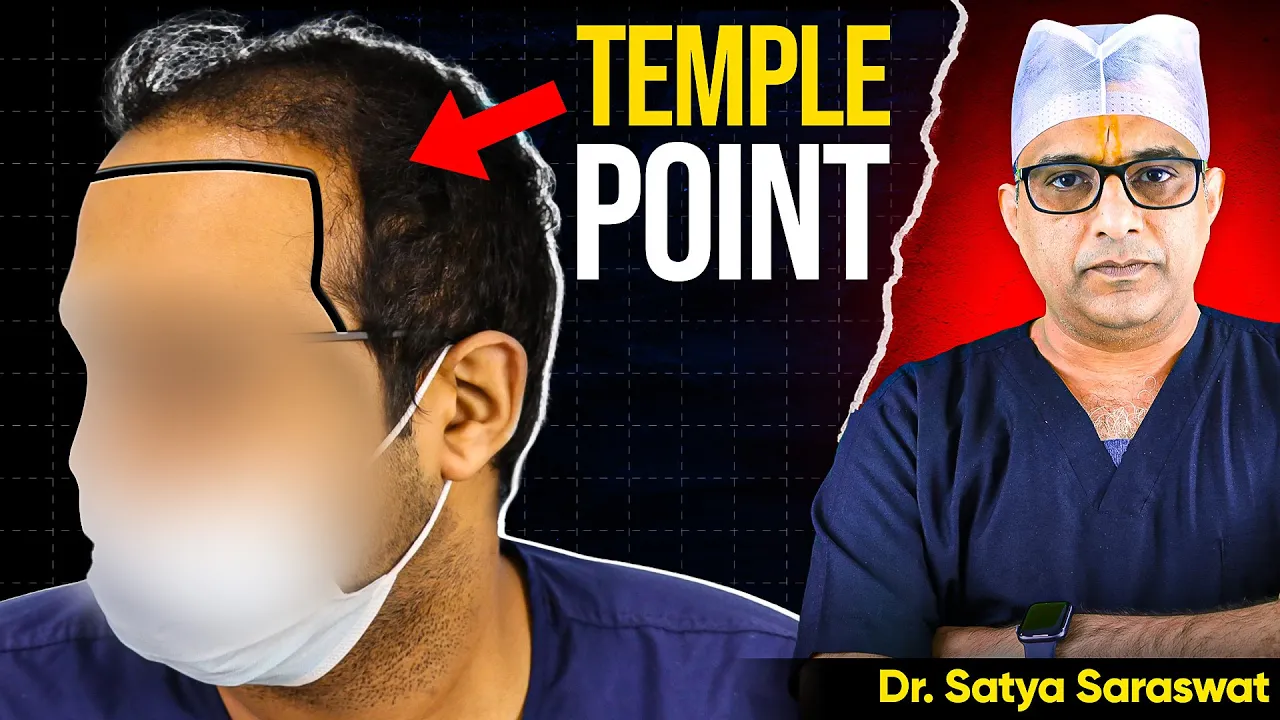
if you have always wondered about the temple Point hair transplant when you should undergo a temple Point restoration or hair transplant what is the important of these Temple points what are the technical difficulties in performing a hair transplant in this Temple area what are the number of graphs roughly required for a temple hair restoration and if you have undergone a temple hair restoration and there is some problem with the temple like the angle and Direction how and what are the ways in which you can correct this so that they again start looking natural this is
the video in which we are going to discuss these important points about the temple hair restoration I'm Dr Satya saraswat gold medalist plastic and cosmetic surgeon and in this field of hair restoration surgery since 2006 that is around 19 years and also I am a member of abhrs American Board of hair instution surgery ishrs which is international Society of hation surgery ahrs which is the association of hair registration surgeons of India and various other organizations from the country as well as International organizations so with this video we are going to discuss these important points about
Temple point and I would request you to keep on watching this video till the end so that you have a complete knowledge exhaustive knowledge about this subject and also I would request you to subscribe to our YouTube channels to find out more useful content in our hair loss Journey the importance of Temple points in your hair restoration or your hair journey is that it provides a proper framework in the literal view literal means whenever somebody is seeing us from the sides like right side or the left side that's the literal view if somebody is watching
me from the front these points may not be that noticeable but from the sides 90° or 45° these points do make an impression about you being a bald person or you being a not bald person so this is very important the importance of temporal points lies in its facial framework especially when you are looking at a person from the sides now there are four grades of boldness of Temple points sort of a classification of them one is the grade n first is a grade N grade N means the temple points are normal so obviously when
they are normal you don't need to go for a hair transplant for them Point number two is T great T which means thinning there is a significant amount of thinning of your temple points it depends on the level of your concern whether you're too much concerned about the thinning or not in that case the decision to undergo Temple Point hair restoration can be taken along with your doctor understanding its limitation and technical difficulties which we are going to discuss in this video grade three is p which is parallel when the temple points become parallel to
your sideburns this is a Sideburn and if it goes if you draw a line like this and there are no hairs absolutely in the front of that line which you're drawing from a temple point from a side burs above then in that point if it is grade P where there are absolutely no hairs then obviously you have to undergo hair transplant the temple Point area grade four or the most severe form of hair loss in the temple area is grade R which is revers when the hair loss has increased so much that it is going
beyond the line drawn parallel to the or vertically from the side bus if it is going backwards to that obviously you have to again undergo a hair restoration in these Temple points do like the video If you liking the content till now now let us discuss the technical difficulties which are there from the point point of view of a hair restoration surgeon whenever he is attempting a temple Point hair restoration the most important thing is friends if you look from a side these hairs are running parallel to your skin like in the front they are
coming out at an angle here the angle between the skin and the hairs is hardly anything it's just like we for the practical purposes we say that it is 0 to 10° but otherwise it runs very very flat to the skin surface so to create these slits at that angle is practically very very difficult there are two ways in which we can create these Temple points one is when we double bent a needle a needle is used to create these slits or the sides and it is double bent at 90° at two different points second
way to do is we can make two kind of slits one is a sagital slit and other one is a coronal slit so coronal slits are preferred for the temple Point Recreation just to make it as flat as possible if we are not using a needle so this is one point second point is the direction of hairs so they are not uniformly going down or back some of the hairs are in the top part some of them are coming towards the front and downward and in the middle part or the lower part of the temple
they are going backwards and downwards so while creating this direction it is absolutely important for your hair restoration doctor or a transplant doctor to mimic the angle and the direction both so that this doesn't look very unnatural third thing is these hairs are generally very very soft and they are single which means in as you all know in a single follicular unit or we call them as graft there can be one to four hair if you're using a three or a four or even two hair graph to recreate the temple points it's going to look
very unnatural one single hair soft grafts are to be used for the temple Point Recreation and not otherwise so we have to typically segregate these hairs out of the extracted follicular units and we generally get these soft hairs basically from the Lower Side of the donor side which is the nape of the neck we get the best hairs for temple point Recreation from that area rather than taking it from the area where the density and the thickness of hair is maximum sometimes if the slits are quite big made with a bigger size needle or a
blade there is a chance that there is a movement of the muscle underlying there is a muscle known as temporalis muscle and if you clench your teeth very tightly like this this muscle will contract it is basically a chewing muscle which inserts into your jaw bone so if you're moving this muscle a lot immediately after the hair transplant and the areas have not healed properly and and the slits are quite bigger this can also result into change of some angle as well as Direction mostly the angle after the temple Point her restoration and the last
point which a doctor should be knowing wherever you are getting it done is that there is a particular gland known as cous gland which secretes sebum and this sebaceous gland is present in each follicular unit so it's a small I would say small bulb kind of a gland if while placing the grafts your cious gland is coming inside toward the skin side and not going upwards this can lift your hairs a bit and because of this lifting the angle can change so this is a technical point which the hair restriction surgeon should be knowing that
the sebaceous gland should come upwards and should compress the hair thereby decreasing the angle of the transplanted hair if you are planning your hair registration surgery you can either call us at the numbers mentioned on the screen or you can write down in the comment section below now how many graphs do you need for your temple Point Restoration in general the graph requirement for one side is between 100 to 200 depending on the size of your temples so on both the sides you may need anything between 200 to 400 graphs when you're doing a bilateral
both side Temple Point hair restoration surgery if you want to see another of our such informative video about the crown hair loss you can click video given in the link above now if you're one of those patients who has already undergone a temple Point restoration his angle is weird they're coming out like this which we see a lot of them and you want to know how we can correct this so friends I'm discussing two two ways by which you can correct the angle of these hairs the first method is laser hair removal which will completely
remove these hairs but it will need multiple settings sometimes 6 to eight settings are required even for smaller number of graphs and the point number two is to excise these graphs again using a Fue method which again we have done in many many cases as you can see in the screen here a short video where we are taking out the graphs from the temple point in a patient who has already undergone a temple Point hair restoration from another clinic mostly it has to be done two times because not all the hairs are in the growing
phase at any point of time so these are the two ways by which you can correct and the extracted graphs by Fu can further be used or inserted in some other area of your hair loss please share this video with your family members or friends who are looking out for such informative video about the temple point ha restoration if you want to see one of our latest hair transplant results you can click the video on the left and if you want to know more about scalp micropigmentation which is another way of combating your hair solution
not through surgery you can click the video on the right