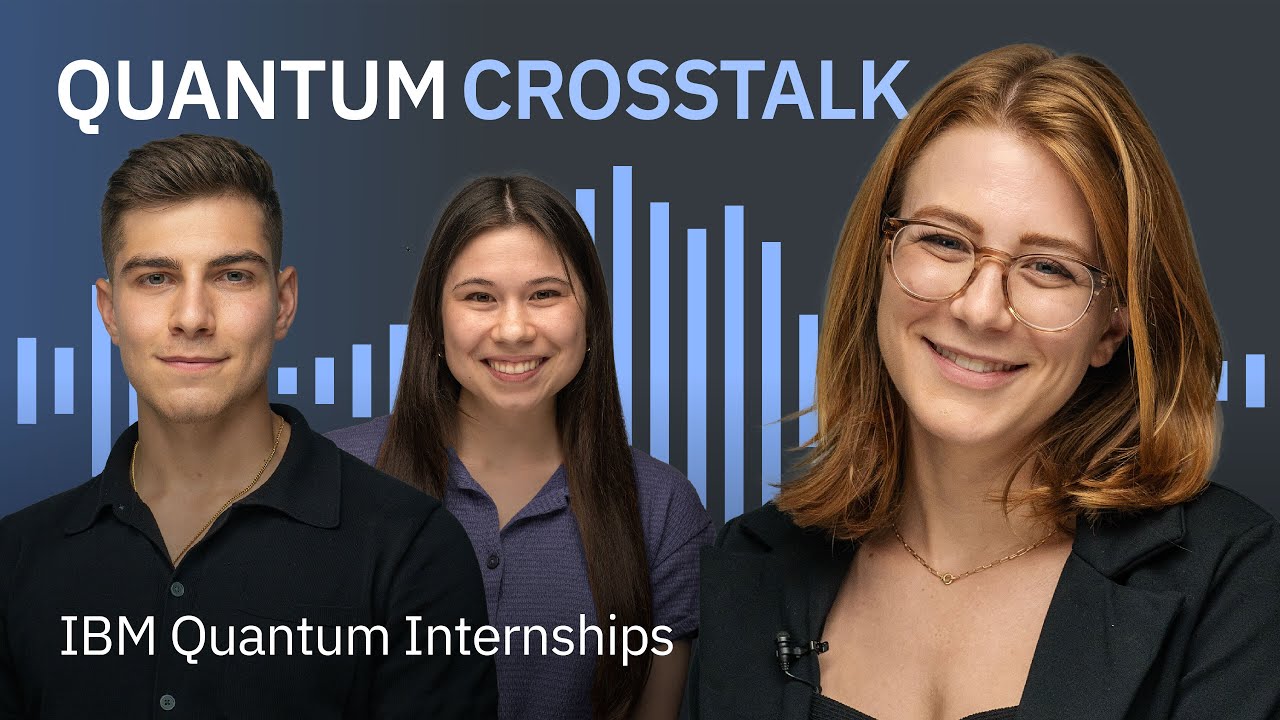
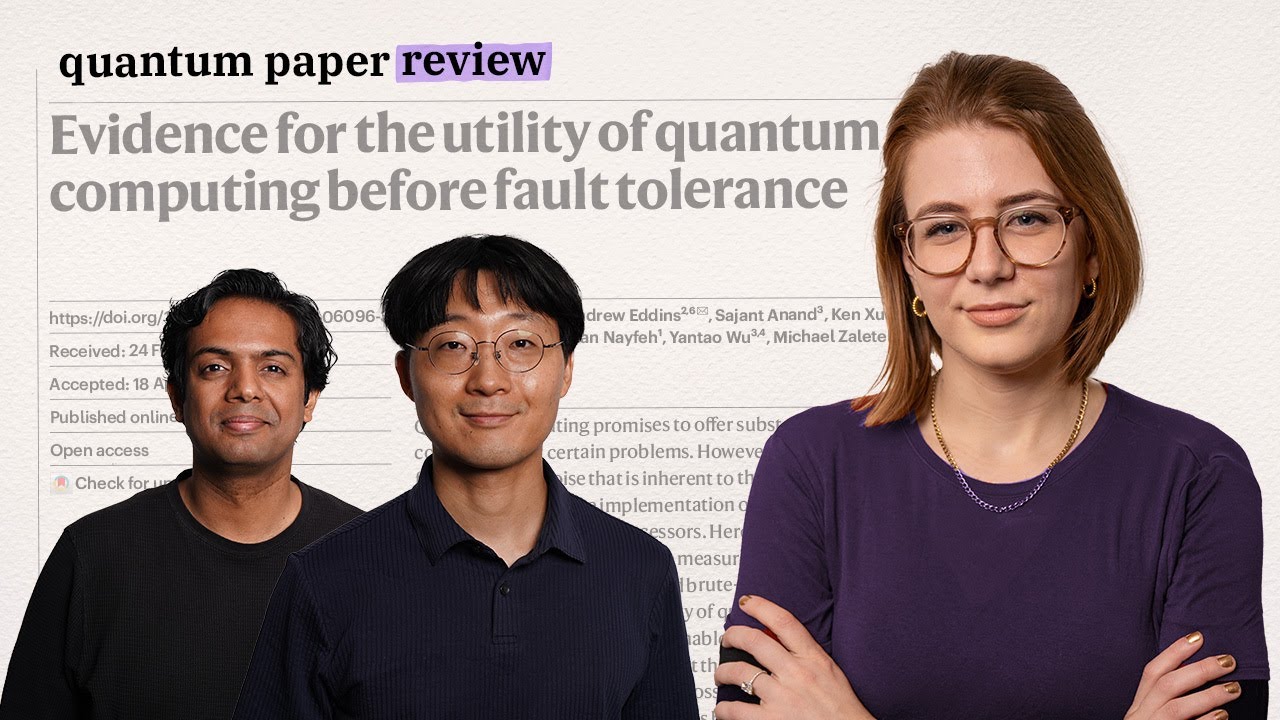
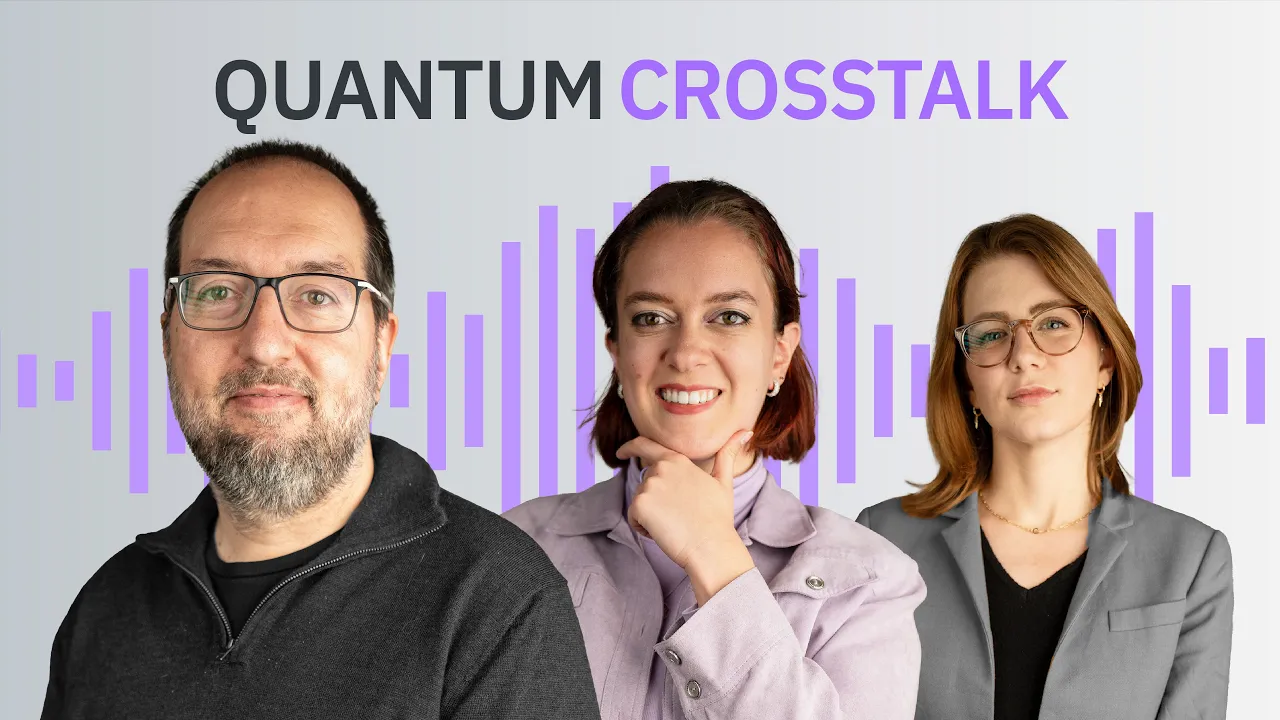
[Music] hi everybody I'm Olivia this is Abby and welcome back to another episode of quantum cross talk we have a super interesting interview to share with all of you today with ishmail faroh who is the Quantum VP of data and services and today we talk to him all about uh Quantum and AI specifically how the cloud transpiler service which was announced back in December which includes some AI transpiler passes and we also dug in a little bit into the upcoming kiss kit code assistant as well and make sure you stick around to the end after
our interview with Ismail we're going to have some really important Quantum announcements for you all but we'll get right into it isil thank you so much for coming down and speaking with us so maybe for some viewers who might not be familiar with your work um can you please tell us a little bit about your background and how you came to IBM Quantum and to become our VP of Quantum Services and data oh cool yes uh yeah my background is uh is interesting because I am a very classical computer engineer okay uh my orig is
classical computer uh science engineer and I work in different projects before to entering research in 2015 uh when I joined in research I have the opportunity to play with different Technologies Ai and Quantum was one one of them and I held from them to the rest of the quantum team to create all the sofware stack that is between the user okay and the one computer I help to create all the cloud architecture around of all of our Quant uh platform uh and after that in 2016 i h to to create a IBN Quantum experience after
that KY 2017 and with all these achievements and all these sare lers one on top of another at the end we build this services that is the thing that I try to lead in this moment I try to help the team to continues to integrate all the quantum computation with classical computation and with the users so I guess you must have taken a lot of your expertise from the classical software Services sphere and applied that in Quantum exactly my my big experience is to try to take difficult technology or complex Technologies and try to simplify
as much as possible to make consumable for the users in different ways no because at the end we have different levels of users we have users that try to learn Quantum computation the composer was one of the the first iterations second the people that try to continue to learn but with more advanced kisy was one of the components that we realize and we create to to to cover that Gap and obviously all the software that facilitate the users to have access to the quantum comp computer that we have at the beginning in the lab and
now in our Quantum Data Center and I just want to emphasize for people so you were really one of the driving forces behind putting the first device on the cloud back in 2016 that was that in part that was you yeah yeah that's pretty awesome y That's amazing that really sort of I guess opened up this technology to pretty much everyone around the world you don't have to be like physically located with these big machines to be able to use them like that was I think revolutionary to be honest well for me I'm my I'm
part of my team the developer that try to like take care about the put all the pieces on place on the cloud was a challenge because again we don't have any idea about Quantum Computing and about talking about circuits Gates and at the beginning was what is this but at the end like understanding what is the need from people know the the researcher that Tred to make research in that time no focus more in the in the in the cubits in single Cubit thinking that the first computer was five cubits and mod research was to
to find like all the working all all the research around of the cubits the hardware is was critical no but now with the years after it's like the we continues to add more lers okay to try to abstract all this complexity and now it's more algorithms more the utility scale is like try to figure out what is the next big steps I'm thinking part of my day byday role continues to be the same is try to find what is the new features try to understand how we can put this in the most efficient way in
front of the users and long so we've heard a few people say at this point that this is going to be the year of software at IBM Quantum and a big part of that was the 1.0 release but what are some other areas of the stack that your team is focusing on this year uh on my thing is focusing the services part of the the concept is how K is everything at the end at at the beginning we create KY to put KY in the front of the user like thisd gate to have access and
interact with the hardware but with the years adding more components in all the sofware stack that we have we have R mitigation PRI we have the kisy patterns everything is kisy at the end like the user use the SDK that is this 1.0 release to develop the things in the laptop but the rest of the layers that we have continues to use kisy we have KY on the cloud we have kisy near to the quantum computer to example to make error mitigation or trolling or other techniques to to to enhance the the usage of the
qpu and from our side our goal this year is like all the people understand that the kiss key is like a all the concepts all the software that we have on Services K all the way down exactly and and it's clear for us that the SDK is uh from the user point of view is something that they can touch every day because something that you installing in your laptop but also like we want to highlight that the rest of the layers that we have in all of our cloud and HPC Integrations or or the our
data centers use KY also M yeah I think that's something that um we sort of we also uncovered a little bit when we were talking to Jesse in last month's uh cross talk is that how much of the the software stack kind of extends Beyond just that SDK that you are downloading onto your laptop um and so yeah I hope with the year of software people become more aware of all the other software components that go into making Quantum Computing at reality from one side you know part of the the software stock that that we
use and our user use is focusing in how handle at the beginning is like the hard one but now is how we can allow to the people to use more it's like from the algorithm point of view how we can use in the most efficient way all the resources that is not only Quantum that you need to use in the middle of all of your operation no thinking that with the this kissy pattern that we announced in the last Quantum Summit that again is a format that we use to guide the users to say okay
if you have a problem and if you want to translate your problem to Quantum you need you can use these four steps simple steps you can first mapping your problem from classical to Quantum second like try to optimize the circuit that you generate execute the circuit and at the end get the the post processing thinking that three of these steps is classical and is all this sofware stack that we have on your laptop on the cloud on near to the quantum computer again and this is all when we talk about s is for the reason
because this year one of the big Focus that we need to to to pay attention is more performance more mod modularity this mean allow to the people to have more flexibility to take and change one component by for other component part of this uh kissy patterns go in that direction because you have this small building blocks inside of the KY pattern that example you can use the transpiler that we can provide to you using KY using atics or you can use something new that we are working on that is this AI transpiler or other components
that at the end you can replace one by another because it's modular to facilitate to different levels of users more flexibility and more like broad uh capabilities or or or ways to do the same thing you mentioned uh the AI transpiler there which brings us on to a next topic that I I really want to dig in to with you today and that is this idea of AI being such a huge topic right now and every corner of the software industry um can you tell us a bit about how you see AI impact ing or
benefiting the kind of the quantum Computing industry yeah like there are in in all this conversation between Quantum and AI there are two point of views uh the one is the point of view that most of the people are thinking that is you have a quantum computer that is a new a Noel uh computational model okay how we can put machine learning there okay this is a big research area that like are going to take time to continous to figure how new algorithms and most of these things my team and thanks my team try to
cover the other area that is how use the AI to improve the quantum part okay in that area we understand that like I told before no like you have you we understand that we have the quantum computer around of all of this classical computation how we can put AI in these classical components to improve the classical part to at the end have a or or have better results in the quantum computer I think that's such an important um kind of Distinction because you know when I talk to people everyone like is talking about Ai and
I feel like people generally tend to think only of how is quantum going to help Ai and not the other way around in fact yeah our last or the current thing that we are working uh that demonstrate that is very interesting use an experiment with AI to improve the quantum okay ecosystem is is focus example how optimize the circuits or how use the new generative models to teach people how develop and how learn because thinking that uh and we saw this in this way you know in some moment in the future it's like the people
are going to change from read static things to request okay bring me information about my the things that I have interest in this moment I don't need to navigate for a lot of information bring me the information that I need to do the thing that I need to do and I'm thinking that that is interesting and you mentioned how you can use the AI um transpiler passes in the new cloud transpiler service that got launched I think it was back in December or so um I know we have a you know the services accessible now
to our our premium users is that right um just tell me about that I'm excited yeah the the idea is started because uh at the end like we comment before um if uh you have a problem that the problem is okay how you optimize something uh obviously in optimization there are a lot of uh like ideas around that how use machine learning to optimize things no because optimize things a lot of times mean how you detect a pattern and in detecting the pattern how you can make something like pattern and transpilation is such a crucial
part of the optimization process for Quantum Computing if you're not transpiling your circuit well enough that could be the difference between getting good results or from the heart total garbage exactly yeah exactly in fact our kiss keting have a transpiler that have a lot of a sticks that have if I remember well more than 80 uh 80 uh different passes to cover different aspects of the circuit uh from my team we try to get this AI approach to say okay how we can use Ai and to be more precise I don't want to be very
technical but we use something that that the the technical people call reinforcement learning the idea is how you can put uh some problem in front of the model the AI the I component and the I try to find the better path okay thinking that is the same approach that uh a lot of people use to example solve games or or play games with a it's like try to find is like what is the best score all time kind of like chess exactly and the idea is how you can try to play a lot of times
you we exactly working this way so like different combinations com that get you to the it reminds me of like when I'm playing chess on my phone versus like the AI computer and you can click like how hard you want the AI computer be you can choose how good you want your and the idea is with that is the the concept is try to Fig out p and with this path the system the model okay understand patterns and say oh every time that I find this the gates in this combination I think that the best
optimization is in this level or in this way have machines training a lot of time okay try try try and training and and understanding what is the best options and when you start to introduce that you can see that the system discover new ways to to to solve patterns that from the human obviously at the beginning it's not clear no but when you see the the the how the model how the AI solve the problem you say oh you see and it's interesting because we have a strong relation between all all of our 30 in
transpilation this AI thing and the thing that implement the ristics why because at the end all of them take advantage in each of these steps obviously we take the the theory people and the people Implement theistic to say okay is that is our base from AI we put the AI and we say okay how we can get something better if we get something better we talk with the theory people and the the people say ah you see I go to challenge to you in the next level because I saw that if you put this and
it's interesting because you use this to again reinforce the the project that is one of my favorite things about working at IBM Quantum is that we do have all these teams and it's it's such an interdisciplinary atmosphere so yeah you can have the AI experts toward talking to the quantum theorist talking to the experimentalists talking to the YouTube people you know I think also the users um that was what I was going to say I'm really excited about it from a user perspective because I feel like once it becomes you know really robust this takes
a lot of work away from a user who might be new to Quantum Computing and might know you know the secrets of transol I know thei can produce some some kind of improvements but also some some human need to to try to guide the what what is the thing that you need to find because the machines are machines I mean the machines are only as smart as the people program to be clear but the people programming them are pretty freaking smart I also want to talk a little bit about the other AI tool which is
the code assistant what can you tell me about that yeah that is a a work that we are doing in in collaboration with other uh departments in ivn in that case in ivn research and and system that is with Wason X team okay and a new thing that's uh is working a new tools that are emerging in this moment that are very interesting that isru lab ER and the idea here is uh is like the the transpilation but thinking more in the final user no how the user can learn or use in the most efficient
way the quantum computer computers when write the code mhm so it's kind of like an education tool exactly it's a helper a hel okay yeah but but yeah it's you're right it's like at the end is like if you don't know how to do that you can write how I can do blah blah blah blah in in playing English and after that the system can bring to you a suggestion a suggestion so it's kind of like stack exchange but it's in the notebook you're exactly because thinking that's also like all the training all the knowledge
that that we have in these models is based in all of our seven years of history of kisy all of our tutorials everything that you and us do with with we have created a lot of code and a lot of content exactly I was talking to some people about this yesterday actually and I was like I wonder what data they're feeding it to like learn off of I hope it wasn't my first circuit that I started in fact uh I don't go to entering a lot of technical details but in fact we Ponder like we
uh put weight okay in the different data this mean Legacy data is interesting to bring some basic things because at the end circuit is circuits gates are Gates but how you use the gates or how you use new features is something that is new yeah the new things have more priority okay we put more priority in the new things that in Legacy things that's so smart because you know I I still you know see old bits of code flying around with like really old versions of Kiss kit that don't work anymore and then people wonder
why it doesn't work and so I I think that's such an important part of it to make sure that you know kiss kit 1.0 is the version that people are are getting the advice for yeah so obviously this is a little bit more in the future but maybe you can talk about how we think AI is going to influence the quantum software this year and then how could it maybe in the future impact more scientific discoveries and increase the development of those first like the the two concept that we talk about the the transpiler service
and the kisy code ass system is something that we just have no we are working to put this more stable in front of the users but behind the scenes we continues to add new things that is focusing the user experience one example is like we have a small models that example predict the execution time of each job that you submit to our platform and thanks to that you have better prevision when when you see how long they are going to take to be executed in the que and on the Q pus the the the jobs
all this is generated by AI in this moment we have model that training with all the knowledge that we have all the the the usage the metadata of this execution and uh we are going to continue to add this small components this year and the next year to facilitate the user experience something that we are going to release in this weeks uh also is validation it's like how use also AI components to contines to validate and improve the user experience when I say that is if we with the knowledge that we have we can predict
if one job are going to fail for a b or c reason okay I go to tell you in the same way that I can tell you that how you can optimize your code that is the next things that we are going to do is like uh thinking connecting with a code assistant if you have a piece of code if I can highlight to you how you can improve your code how can explain to you why you can improve your code that is this combination between code assistant pil a service and everything have ai behind
help to the user to understand and and have better results because at the end if you create better software better code uh better circuits you are going to have better results and in all the components that we are going to have in the middle again facilitate to the user to contines to improve that this is in the middle ter and the longterm obviously all these tools this generative AI all the people talk about the chap gpts or this kind of Lama 3 this kind of models that is have more human compression I go to say
this in this way and you can interact more like a human okay with that we thought or we tried to figure out like what are going to be the next interfaces for the developers in the next generation of our software and our Hardware no but from the software point of view is how we are going to facilitate some tools to continues to extend the capabilities of the how you say okay I have this problem you define the problem and the system can provide to you some not final but very very fine uh solution about the
okay you can divide your problem in these four steps in the first step you need to do that in the Second Step the other and the other and the other and connected with that and thinking in our Ro map in some moment two years from now more or less we need to use also AI to coordinate all the resources between classical and Quantum uh in that moment is like the complexity of the all the resources that you need to use are going to be more complex thinking you can figure out some scenarios that we can
use several quantum computers okay in the same time and some of them with several cubits and all the classical preprocessing and the classical Pro po processing how you handle all of these how you orchestrate that so pretty much anywhere that classical software is supporting Quantum Computing is probably a space where there is some potential for AI to to improve those those classical it's only going to get more complex so it's important that we're looking into this now yeah yeah I'm thinking more and more in the future is everything that is error mitigation and correction is
something that's again is uh we uh we we try to explore how use AI to improve error mitigation and error correction tees y well that sounds insanely impactful sounds like your team has a lot of work to do in the next few years thank you so much for coming and talking to us about Ai and all of these things is this was super cool sure what an amazing chat with Ishmael I learned so much and I'm really hyped now about all of the new Ai and Quantum possibilities I know I didn't even know half of
the stuff that he was talking about today his team is doing some really important work we also are excited to announce the next edition of the kuit global summer school is coming and registration will be available and open very soon so make sure you mark your calendars for July 15th through 26th that's when the summer school is running this year and check out the description linked below for any other information that you need to know about that um otherwise we'll see you next time [Music]