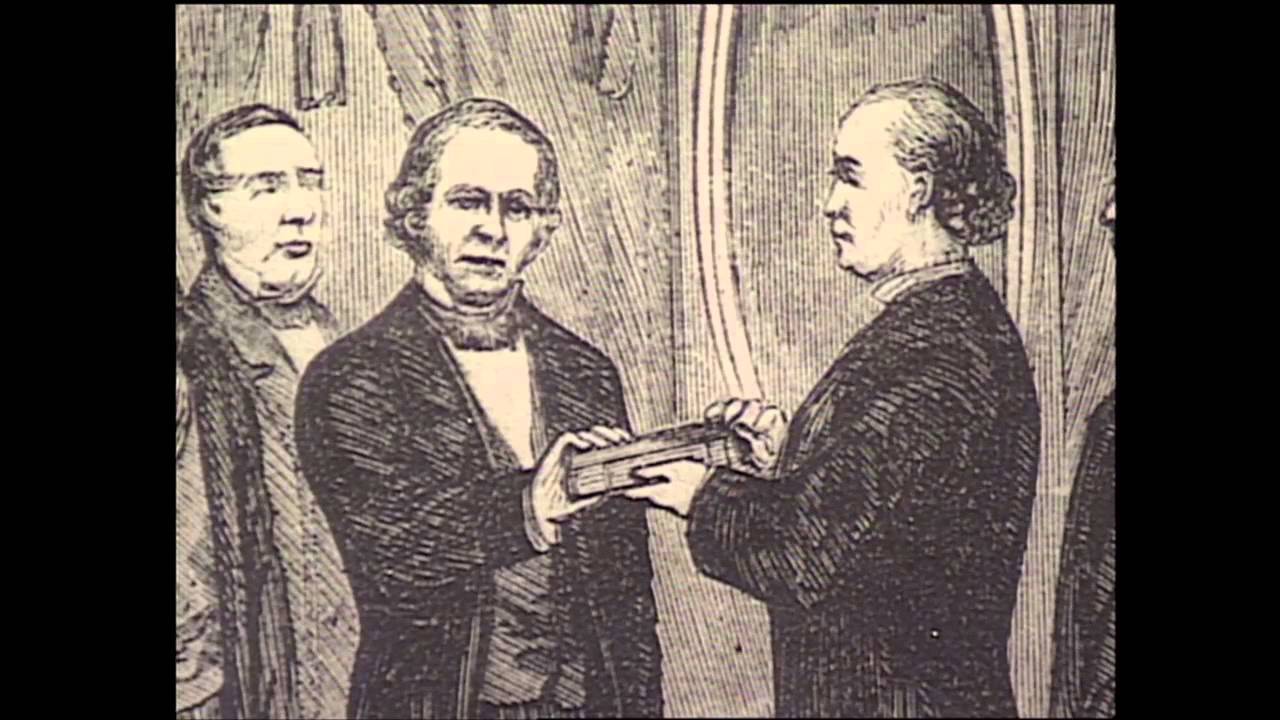
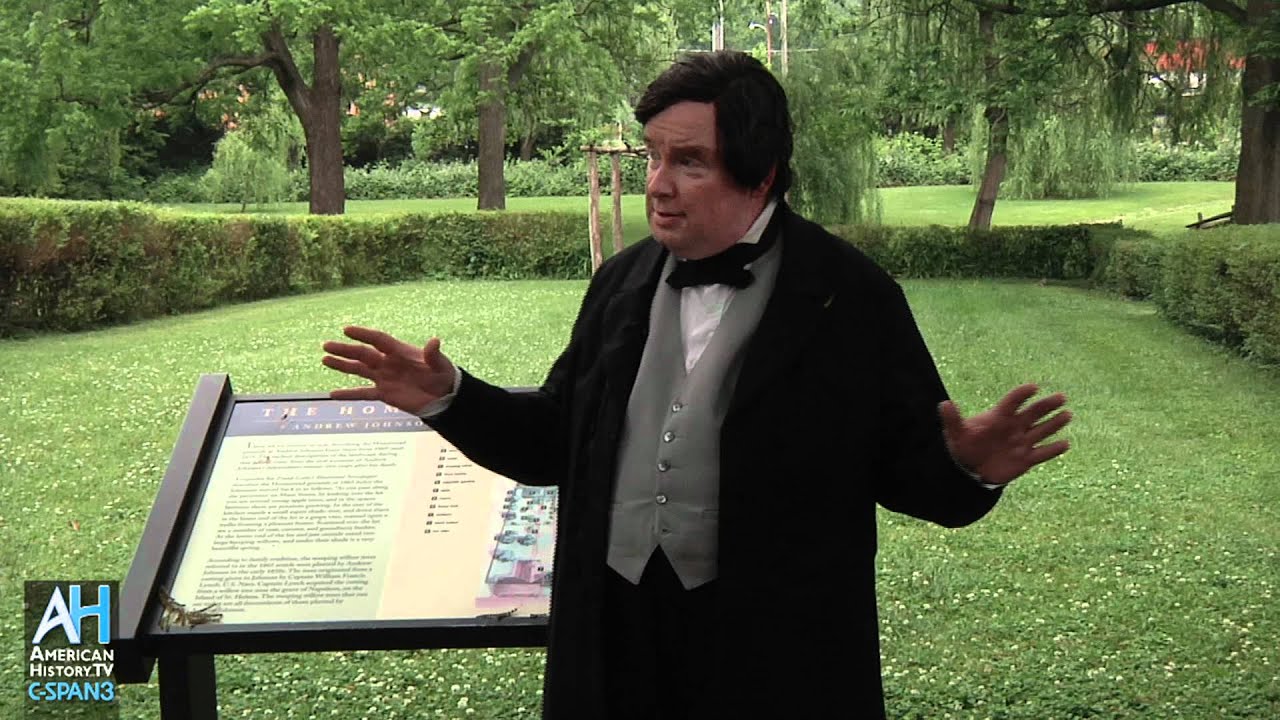
Welcome to the Andrew Johnson episode of Presidential! If you listened to the previous episode about Lincoln, you'll remember how one of the things we talked about was the power and beauty of Abraham Lincoln's second inaugural address—the one that goes, "With malice toward none, with charity for all. " It's one of the most famous speeches in American history, so you might have been sitting there listening to the episode and thinking, "You know, what would it have been like to witness that momentous second inauguration of Lincoln's in 1865?
" Well, it would have been interesting because right before Lincoln gave that speech, his new Vice President, Andrew Johnson, gave his own address, and he was absolutely horrendously drunk. So, Johnson gets up for his swearing-in and for his speech, and it's kind of embarrassing. At one point, he's talking to the various cabinet members, and he points to Seward and Stanton.
He looks at Secretary of the Navy Gideon Welles and can't remember his name. He talks and says to the guy, "Now, who's the Secretary of the Navy? Oh yeah, you!
" You know, it's just not an auspicious start for Johnson as Vice President. A senator from Michigan writes to his wife and says something to the effect of, "You know, if there had been a hole nearby, I would have crawled into it. " Six weeks later, Johnson is suddenly, unsurprisingly, the actual President of the United States.
I'm Lillian Cunningham with The Washington Post, and this is the 17th episode of Presidential. [Music] Another sign of pregnancy… [Music] The guest you just heard talking a minute ago is Michelle Crawl. She was on last week's episode; she's an expert in the Manuscripts Division of the Library of Congress.
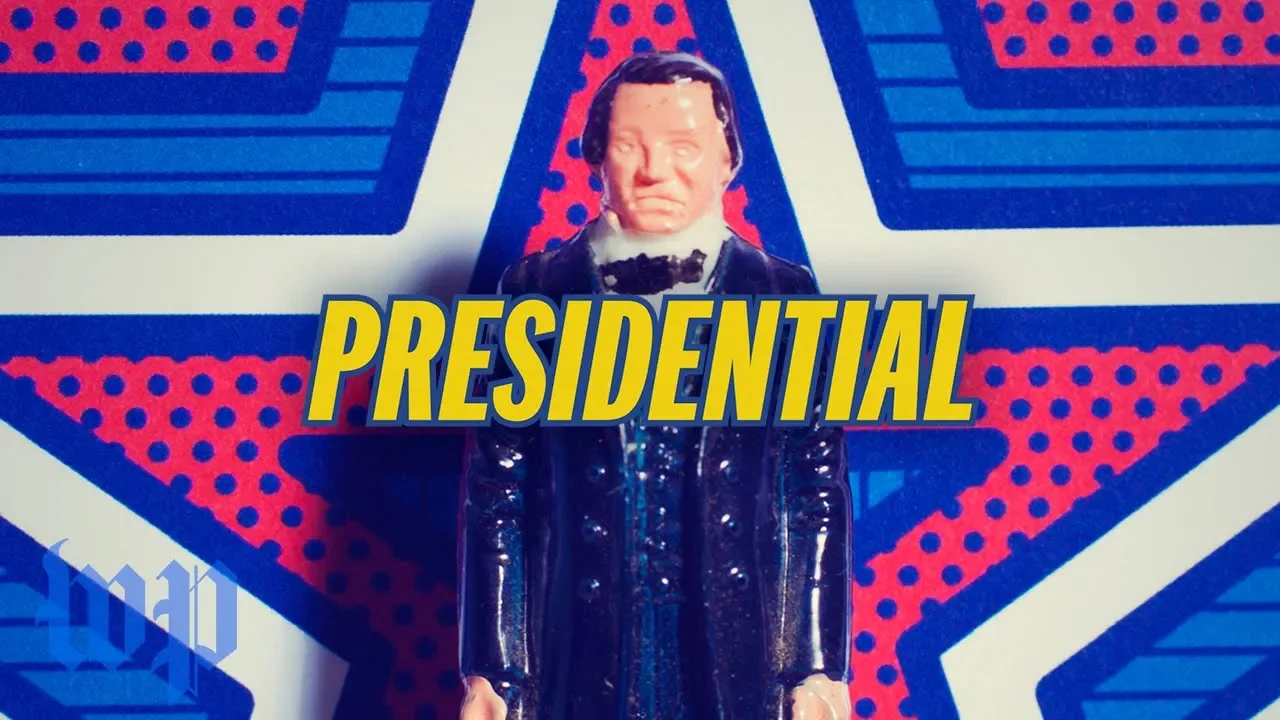
So this week, for our episode, she's going to lead us through the life and presidency of Andrew Johnson. He was born in 1808 in North Carolina, and after Lincoln's death, he became president from 1865 to 1869. Personally, I think that to understand Andrew Johnson as president, you have to at least have some familiarity with his early life.
So, Johnson, like Lincoln—even more than Lincoln, actually—is really a rags-to-riches story. To some degree, he's even more like his own political hero, Andrew Jackson. They both had very rough starts, with fathers dying young and then really having to make it on their own.
His mother and father were both basically illiterate and had worked humble, menial jobs at a local inn. The way his father died was from getting sick after jumping in a creek to rescue two men whose boat had capsized, and one of those men was actually the editor of the Raleigh Star newspaper. Andrew Johnson was three years old at the time when his father died.
Because his mother couldn't financially support and care for her children, she had Andrew and his brother become apprentices to a local tailor in Raleigh, North Carolina. This was when Andrew was about 14, and it's fairly similar to what we heard about with Millard Fillmore. Apprenticeships were almost sort of an indentured servitude for children, but they were fairly common among poor families.
Andrew Johnson, though, ends up so miserable in his apprenticeship that he eventually runs away. He'd had enough of it! He ran away with his brother, and there was actually a newspaper advertisement seeking him, just as you would for a runaway slave, having to describe him and how much they were going to give for him.
He and his brother hide out by themselves for a couple of years, dodging capture. They never went back to working for that tailor, but they did eventually return home to their family long enough for everyone to pack up and move to Greenville, Tennessee. Andrew is about 17 years old at this point.
When they get to Greenville, he starts his own tailoring business. He also meets a young girl named Eliza, who was the daughter of Greenville's shoemaker. They get married, and while Andrew is working in his tailor shop sewing clothes, Eliza sits there and reads to him and teaches him how to write and spell.
She helps him understand math and basic finances because, up until this point, Andrew Johnson hasn't really had much of an education at all. One of the things that we have here in the Johnson papers at the Library of Congress are early financial records of his tailoring. So this particular page I pulled out—page 60, starting in 1833—is an account for Mordecai Lincoln.
I pulled that one partially because Mordecai Lincoln was the man who married Johnson and his wife Eliza, but Mordecai Lincoln was also a cousin of Abraham Lincoln's, showing you that there's a lot of connection in their early life. With this, you can see he's making a suit, a coat for Robert Johnson; he does cutting and he does sewing, and this is actually how he makes a start as a laboring man. I think for Johnson, that history was something that was really crucial to understanding him—that he identified with laboring people and understood how high he had risen in life.
He was very consistent about wanting to do things for people like himself. So when he got into Congress from 1846 on, he was introducing, in either the House or the Senate, homestead acts so that laboring poor like himself— or how he had started out—could get free land and be an asset to the country in terms of spreading agriculture and settlement. But also, this was a way that people like himself would have a chance to get ahead.
comes from those early beginnings to that he remains very consistent with is that he has a—I don't want to quite say a hatred, but he has a lot of negative feelings about aristocracy. But then again, on the other hand, Johnson was part of that to some degree because he too was a slaveholder, so he, you know, he had ill feelings about an aristocratic class that always looked down upon laboring classes like himself. But then again, he had many of those same feelings about African Americans too, and that all comes into play into his presidency.
[Music] Okay, so before we get too ahead of ourselves, how does this man even get to the White House? First of all, he’s one of the very rare presidents so far who did not ever become a lawyer. While he had his tailoring business in Greenville, he started to get involved in local politics as the town alderman and then eventually as mayor.
This is around the time that Andrew Jackson is president, and so the common man populist politics of Andrew Jackson are very much resonating with Andrew Johnson. Interestingly, Johnson would later reflect that he basically got into politics because of his lack of education. Johnson said, "You know, if I'd had more education in my life, or if I had had more control over how I started, I would have been a schoolteacher or a chemist.
" But Johnson didn’t, so he keeps climbing the political ladder from Greenville's mayor to Tennessee's state legislature. He then becomes a U. S.
congressman, then Tennessee's governor, and then finally, just as the Civil War is breaking out, he goes back to Washington to serve his first term as a U. S. senator.
This is then how he basically gets noticed and tapped to be vice president for Lincoln's second term. Lincoln's first term vice president, Hannibal Hamlin, isn't going to stay on, so by the election of 1864, the Republican Party is trying to find a new VP running mate for Lincoln, and they're looking for someone who can help reflect the ideals and the concept of what they hope will soon be a reunited nation. They end up with Andrew Johnson, or they look to Andrew Johnson because, for one thing, that stubborn personality had really shown itself.
His state seceded from the United States—Tennessee seceded from the Union—and Andrew Johnson didn't go with them. So he’s a senator from Tennessee and he refuses to secede with his state. He’s, in fact, the only senator from any southern state who stays in the Senate during the Civil War.
Back in Tennessee, they hang him in effigy, they loot his home, and they basically drive his wife and his daughters, who are still living there, out of the town. Johnson's refusal to leave the Union is obviously being lambasted in the South, but it is proving him to be a man of unwavering commitment to the Union, to the Constitution, and to his own principles. So if you're looking for a Democrat—because essentially that's what he is— that even though he's on a nominally Republican ticket (they don’t call themselves the Republican Party; it’s more of a Union party), you know, here's someone who's been very consistent in terms of his Democratic politics, but he's going to be on the ticket because he's a Southerner.
He had been a slaveholder, but he came over to the emancipation side. He refused to secede with his state. He is very outspoken about thinking that Confederates are traitors and that they need to be punished for it.
So he seems to be a very solid Union man—not necessarily Republican, but a very solid Union man—and that would be an attractive ticket for 1864, trying to appeal to Northern Democrats but also maybe looking in terms of what the nation could be if the war is won by the Union and the United States is restored. So that's how Johnson gets on the ticket, and you know, he looks like a really good choice. So if I, you know, walked into a room and there was Andrew Johnson, could you describe him for me?
Is he outgoing? Is he attractive? I mean, I suppose you could say he was attractive.
That’s that. Yeah, I guess you could say I probably wouldn’t, but no, when you look at pictures, that, yeah—well, he was charismatic in the sense that he was a very good stump speaker. Well, for one thing, he at least dressed well because he was a tailor, so he would probably have a good sense of how your clothes are supposed to fit.
He strikes me as someone who is very determined. I guess that to get to the place that he was in life, you have to be stubborn; you have to be persistent; you have to be, you know, to some degree, sure of your cause and all that. So I think he probably would be compelling.
He doesn’t strike me as a happy-go-lucky kind of person or as a humorous person; that could just be me looking, and other people might have felt differently about him. But you know, he didn’t back down from a fight either, so I get the sense of a kind of pugnacious character. Well, that was a problem on inauguration day; that was for sure.
You know, I don’t think he was an inveterate drinker, but definitely he gets that reputation, definitely because of what happened on inauguration day. That I would be happy to tell that story. So what seems to have happened is that Johnson may have been recovering from either an illness—maybe typhoid—or recovering from illness; and either he.
. . Had been carousing a little bit too much the night before, or as a way of trying to sort of combat not feeling well, he had some probably whiskey before he was sworn in as vice president.
So, he was sworn in first in the Senate chamber, and then they were going to move outside to the east front for Lincoln to be inaugurated. What happens next is the drunken mess that you heard about at the beginning of the episode. Michelle pulled out some documents that still exist, where people present at the inauguration recorded their impressions of Johnson's speech.
For example, the way that Gideon Welles describes it—he's the Secretary of the Navy—he says, "The Vice President-elect made a rambling and strange harangue, which was listened to with pain and mortification by all his friends. My impressions were that he was drunk, yet I know not that he drinks. He has been sick and feeble, and perhaps he may have taken medicine or stimulants, or brain from sickness may have been overactive in these new responsibilities.
Whatever the cause, it was all in bad taste. " He then continues, "Stan, Johnson is either drunk or crazy"; somebody else says, "The man is certainly deranged. " So everybody thinks, "Oh, this is not good.
" Now, on Wells' point of view, he turns it around; later on, Wells will be one of Johnson's most loyal cabinet secretaries, but it's not an auspicious start—that's for sure. Zachariah Chandler says, "The inauguration went off very well, except that the Vice President-elect was too drunk to perform his duties and disgraced himself and the Senate by making a drunk and foolish speech. I was never so mortified in my life.
Had I been able to find a small hole, I should have dropped through it and out of sight. " But then he says, "The president's inaugural was brief and good. " So, for some, yeah, that's one thing that people really take away from the inauguration: that Johnson did not perform well, and they didn't really want him to say anything more when he got outside.
Another interesting thing about the inauguration is the way Frederick Douglass responds to it. Frederick Douglass, the noted abolitionist and orator, had been standing in the crowd, and he talks about when Lincoln and Johnson came out of the Capitol so that Lincoln could take his oath and give his inaugural. Douglass was watching them, and Lincoln then sort of pointed to Douglass in the crowd or motioned to Johnson that Douglass was there.
Douglass saw in Johnson's eyes hatred or disgust, and then he realized that Johnson was looking at him; he then changed his expression. Frederick Douglass remembers after that that it was also not a good portent for the relationship that African Americans were going to have with that president either. So, a few things on the Anunnaki were not auspicious beginnings.
[Music] When Lincoln is shot at Ford's Theater shortly after the start of his second term, Andrew Johnson races to be by his side while he's treated by doctors on his deathbed. A few hours later, once Lincoln passed away, Andrew Johnson was sworn in as president. How does Johnson work his will?
What's his leadership toolkit that he draws on? I mean, you mentioned he can be stubborn, but can you talk a little bit more about the way that he tries to get people to do what he wants? Unfortunately, with Johnson, so much of what you think about with him is not how things worked but how things didn't work.
The thing that I was struck about, and that other people are struck about with Johnson, is how consistent he is, particularly in his opinions about things. You know, all the way through, he's very consistent in that he's going to do what’s right as he sees it, and he’ll say that again and again: "I would rather be right and stand on principle and be voted out of office or be in the minority than be elected and compromise my principles. " Sometimes that’s a wonderful quality if you’re on the Union side during the Civil War, and here’s this person who is saying he’s going to stick with the Union.
He was, again, very much like Andrew Jackson in that point of view, where South Carolina’s thinking about seceding or having this nullification crisis, and Jackson says, "The Union: right or wrong. " Well, that’s Andrew Johnson. So he looks like a very principled, stand-up person, but then that same leadership quality that you can admire about him ends up being something of a detriment to him in his interactions with Congress during the first years of Reconstruction.
Now, we’ve seen conflict and drama between the president and Congress before, but never quite like this. We’re not going to go into all the minutiae about Reconstruction policies, but in terms of examining Johnson’s leadership, the main thrust of the conflict between him and Congress is that he has a different view about what the conditions need to be for southern states to re-enter fully into the Union now that the war is over. At this point in Congress, there are a lot of Radical Republicans, as they were called, and some of the key things these radicals are pushing for are voting rights for African Americans and also for the southern states that seceded to have to jump through a lot of hoops in order to be granted full status in the Union again.
Well, at least on one of these aspects, Johnson holds pretty close to Lincoln in that he doesn’t think the states ever legally had. . .
The right to leave the Union, and so he thinks, how is it constitutional to force a lot of restrictions and conditions on them when they aren't technically being readmitted? Johnson agreed with Lincoln: no, there was no such thing as state suicide; that they were states in rebellion—they never stopped being states. We bring them back as states, and that's it.
However, some of the Republicans on the more radical stripe thought that these states had committed suicide and that you had to go through a much more stringent policy for coming back into the Union. But the trick of it is, Congress was in recess for the first six-plus months of Johnson's presidency, so Johnson used this time to basically come up with and start implementing his own reconstruction plan. Then congressmen returned, and this long, messy volleying match began where Congress was knocking down everything that Johnson laid out that he wanted to do, and then Johnson was vetoing left and right everything that Congress was starting to say that it wanted to do.
To be fair, I think any president was going to have a difficult time in reconstruction. It's a huge job; you're trying to bring the sections back together again, you know, not necessarily always amicably. There are the issues of African American rights to deal with.
You know, all of this is very impressive, and so I do have sympathy for Johnson because he really had only been on the job for, what, six weeks as vice president when he has to take over in this difficult situation. But, you know, I think the thing is that he does about being consistent: if it's not our job to do this, I'm not going to do it, and I'm going to veto anybody who tries to. It sets him up in conflict with Congress, with the radicals, in a way that someone who was more flexible about seeing the gray areas would have been a little bit more savvy about how to work with the radicals.
Even though Lincoln would have had a difficult time getting the nation reunited, he would have had more political savvy in how to deal with interpretations of the Constitution and what his duty is in working with Congress on that score. Additionally, it doesn't help that Johnson has this kind of pugnacious attitude. For example, in 1866, Johnson is president starting in April of '65, and in '66 he's still trying to shore up his own policies.
He does what's called a "swing around the circle" tour; he's going out and campaigning for midterm elections, trying to get more politicians into office who support his agenda. It starts out all right, but then along the way he starts getting heckled by the crowds, and he heckles back. It's so undistinguished.
He's taken Ulysses S. Grant on the tour with him, because Grant is the most popular man in America, and even Grant writes home to his wife, saying, "Oh, this is just disgraceful; keep that under your hat, because publicly I have to be supportive of the President, and I want to make sure that he trusts me, but you know I'm sick of these political tours. It's just a national disgrace.
" So Johnson doesn't necessarily always read the political signs very well, and what was supposed to be a good electioneering tour turns out to be an even more disgraceful display because he allows himself to get drawn into these shouting matches with some of the crowds. Not only would Lincoln have had more capacity to navigate the politics and to be more diplomatic, but he likely would have had more commitment to promoting the rights of the roughly 4 million slaves who are now suddenly free after the Civil War. Johnson has this sort of strange duality, where he ended up strongly supporting emancipation during the war, and yet as president, he decides that he's really not going to support African American men getting the right to vote or things like the Freedmen's Bureau, which was an agency designed to offer protections for these newly emancipated slaves.
On one level, during the war, he claims to support emancipation, and while he's the wartime governor he actually declared emancipation and claimed to be the Moses of African American people, claiming to be their friend—whether he was doing that out of the heat of the moment or out of political necessity. But then other people will comment privately that he seemed to have an issue with African Americans. His secretary describes an instance where, while they're out on the grounds of the White House, Johnson comments, asking where all the white men are, essentially wondering if all the white men have been fired.
The secretary records it in a way that indicates it wasn't just a question; there was more to it, as if he seemed to have an issue. We know that he didn't necessarily stand up—well, he didn't stand up for African American rights. Now again, some of that is tied into his own ideology—that if the Constitution doesn't provide the federal government with a clear mandate to do something, then it should be left to the states, or it should be left to the people.
He has a lot of things he wants to leave to the people because they are the basis of the Constitution, or the base of governing power. So with the Freedmen's Bureau, for example, he didn't think that. .
. The Constitution allowed the War Department to continue that, but no, I don't think that he had a lot of fun feelings for African Americans, nor did he certainly put their needs ahead of, you know, constitutional issues. Despite his negative feelings about planter aristocracy, he allowed them to get pardons.
You know, when the planter aristocracy is allowed to come back into power, then that's going to be a double blow for African Americans who might have benefited if they had had a better advocate in the White House; then things might have gone a little bit differently. The other thing about Johnson is that he was a fiscal conservative — you see this consistently throughout his career — that he does not want the government spending money on things that he doesn't think they have the authority to spend on. For example, he didn't want the Smithsonian, that James Smithson gives this money to, to do in America for the increase in the diffusion of knowledge.
This Smithsonian institution is proposed, and Johnson votes against it, not because he thinks it’s a bad institution necessarily, but because it might cost us money. So repeatedly, you can see that if anything is going to cost the government money, and he doesn't think it's legitimate or a constitutional purpose, he’s going to vote against that. With many of the Reconstruction acts, even when they might appear to someone else to be a very good use of government resources or a legitimate function, he vetoes it because he doesn't think it's constitutional.
These things come up again and again. Johnson vetoes so many things that eventually Congress just can't take it anymore. One of the things that they end up doing is passing a Tenure of Office Act, which basically strips the president of the power to remove certain government officeholders without the Senate's approval.
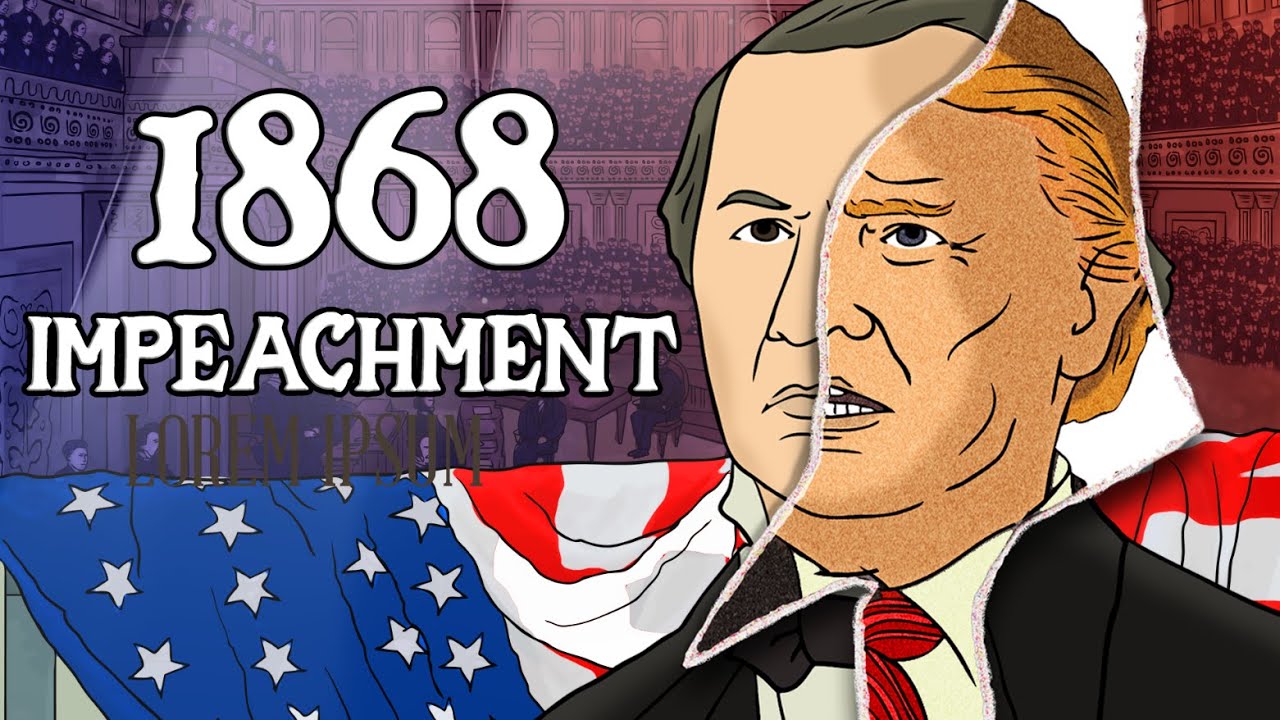
Well, Johnson is so mad at this confrontation and sort of usurpation of his presidential right, as he sees it, that he decides he is going to remove some of his cabinet members; basically just to test Congress. This is all tied up, of course, with all the other issues that have been going on between him and Congress that prompts the House of Representatives to impeach him in February of 1868. This becomes the first impeachment trial in the history of the U.
S. presidency, and when he's impeached because he seems to have violated the Tenure of Office Act, they claim that he's being unconstitutional and committing high crimes and treason. He says, "You know, they’re going to impeach me over the Constitution.
This is what I've been fighting for my entire political career. " In the end, even though the House impeached Johnson, the Senate decided to acquit him, so he doesn't end up being removed from office. What this exercise essentially did, though, was reinforce the concept that just because Congress dislikes the president's policies or his leadership, that isn’t enough to remove him from the White House.
Johnson did, however, end up basically incapacitated for the final year of his presidency. You know, what do you think are the big presidential leadership takeaways when we look back at his time in office? It sounds like one of them is maybe how important it is to have the ability to sort of massage politics in these different positions.
But are there other lessons that also stick out to you? And the one thing that we have to understand about Johnson is that not everybody disagreed with what he did either. The Radical Republicans were not necessarily always popular.
You can look at some of the documents in our papers after the impeachment trial, for example. You see people writing in, saying, "We support you. You know, stick it out," or, you know, calling the radicals, "We'll get up an army to go after those crazy hounds," you know, no offense to dogs.
One of them literally says that they compare these radicals to a pack of dogs and then apologizes on behalf of dogs everywhere. There really are very passionate disagreements on both sides, so not everybody is necessarily against Johnson. But I think that he doesn't know how to go about things the right way.
One of his supporters says, "You know, he's gonna stick to his principles," but he never does it at the right time. So I think that's the takeaway for Johnson: On one level, it's fine to be consistent, but on the other level, there has to be some understanding of where the other side is and how to navigate. Johnson's fights with Congress, his impeachment trial, all of this assured a period that we’ll see play out for several presidents to come, where Congress ends up, more than ever, being the one to pull the strings, and the presidency itself is decidedly weakened.
Johnson's story also, for me at least, gives a lot to think about. Well, what exactly are the leadership benefits and downfalls of stubbornness, and where is that line between being usefully principled and being just kind of uselessly obstinate? That’s a question we’ll keep stewing on for episodes to come.
But to close this episode, since last week we looked at how accessible Lincoln's language was, I thought we'd spend just a moment here on some of the accessible language of Andrew Johnson's and the way that his personality could shine through his words. Let’s see, so I mean he says this in 1847, but this is the kind of anger that can arise in him. He’s angry with some of the people back in Greenville, Tennessee, about a property issue, and so he says.
. . If I should happen to die among the damn spirits that infest Greenville, my last request before death would be for some friend— I would bequeath the last dollar to some Negro to pay to take my dirty, stinking carcass after death out on some mountain peak, and there leave it to be devoured by the vultures and wolves, or make a fire sufficiently large to consume the smallest particle, that it might pass off and smoke and ride upon the wind, and triumph over the godforsaken and hell-deserving, money-loving, hypocritical, backbiting, Sunday-praying scoundrels of the town of Greenville.
Wow, it is exactly now, of course I should say, you know, he stayed in Greenville for the rest of his life, and that is where he's buried. And to the best of my knowledge, you know, everything is okay in Greenville. And this was also something written privately to a friend, so you know, he's not putting that in the newspaper.
But, you know, this is the kind of anger, or the kind of personality that Johnson can have when he's aroused to anger. So he can give it back as well as he can take it. Even though he's, you know, in the same letter, he's, you know, I'm trying to serve my friends, my principles, my party, and my country faithfully.
So that's sort of the two sides of Johnson: is that on one level he's trying to serve his country the way he sees that it should be in his own mind, and then there's that kind of, you know, down and dirty sort of side. Two very special thanks to Michelle Crowell in the Library of Congress for this week's episode. Next week we'll be discussing Ulysses S.
Grant, and we have kind of a different treatment for that one. So Grant's memoirs are considered the best presidential autobiography in American history, so I asked the Washington Post nonfiction book critic Carlos Lozada and also our amazing presidential biographer David Maraniss to dissect and discuss Grant's memoirs next week as a part of our episode. So all of that is to say, if you have some time on your hands and you want to pick up a copy of Grant's memoirs, this is your week ahead— heads up.
[Music] Thanks for listening, and we'll be back next week with more presidential [Music].