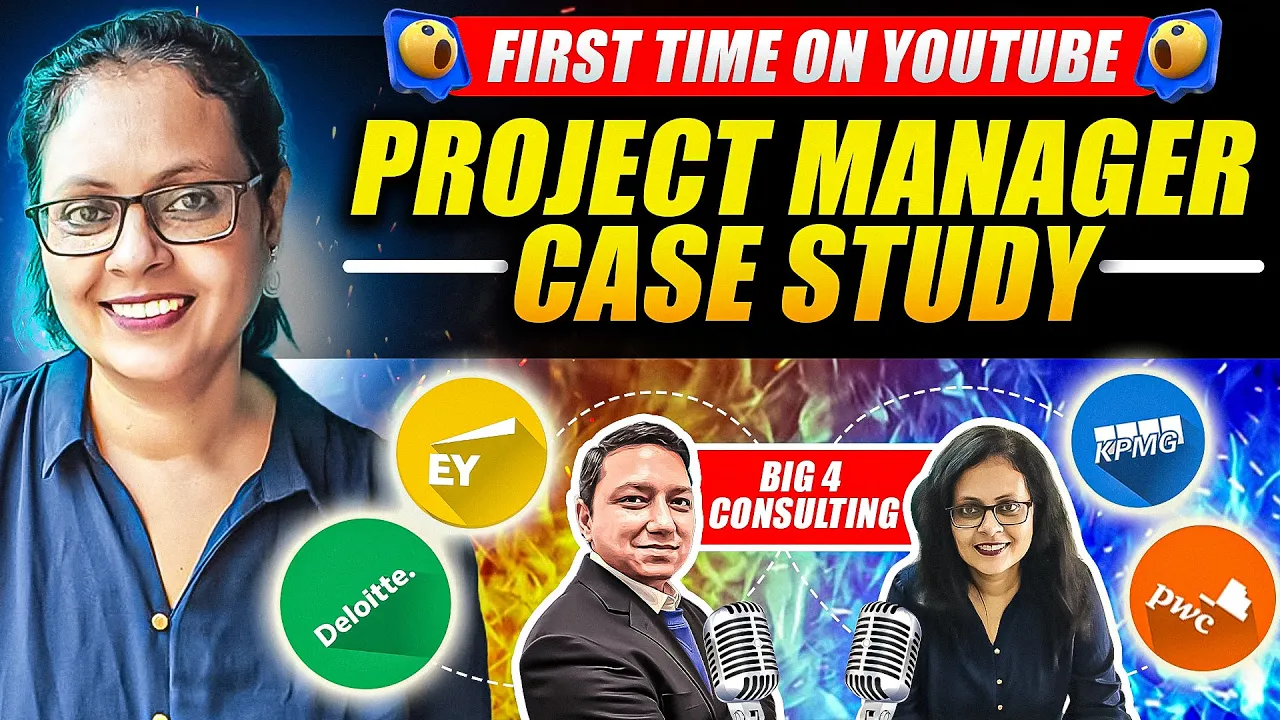
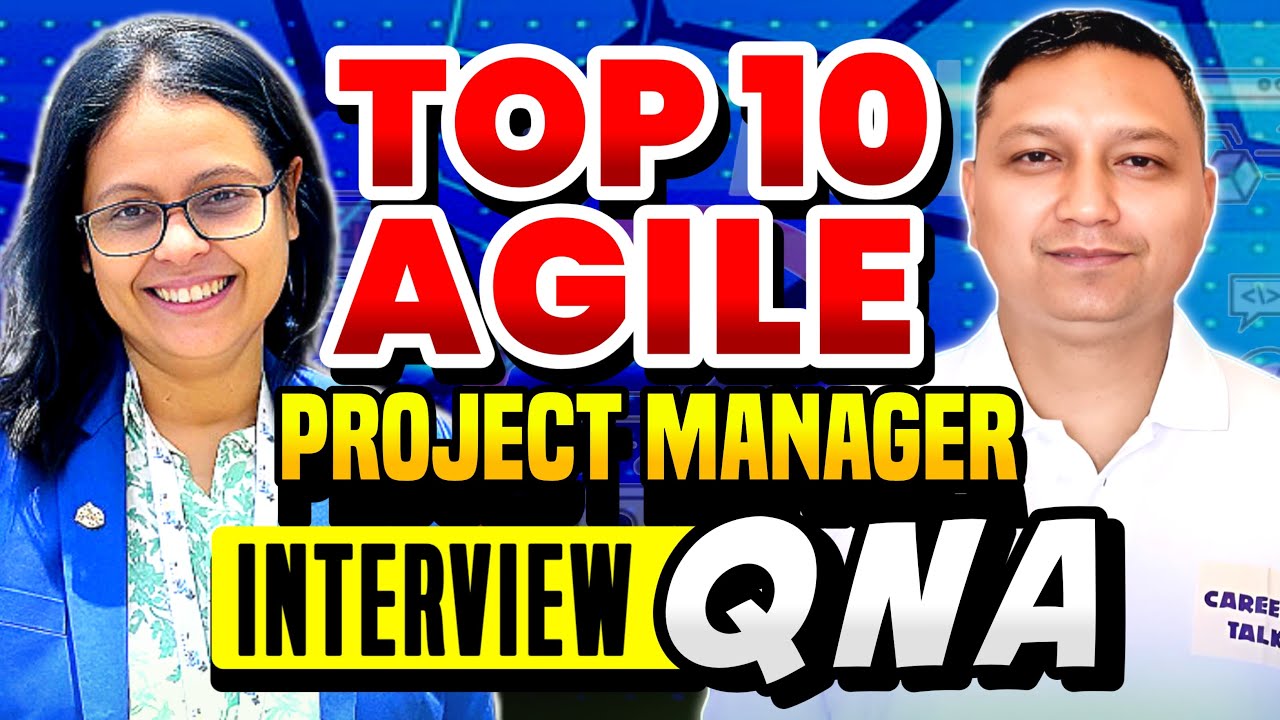
Hello friends and Welcome to our Channel ker talk I'm Sun Sharma a senior consultant based in the Netherlands and friends today I'm super excited because For the First Time on YouTube we are going to share a real and actual project manager case study as ask in Big Four consulting firm and to help us we have a karabi bhadwad a season program and a product manager with over two decades of Rich experience we already did one session with her in the past with the title top 10 agile project manager interview question and answer so if you
haven't seen that session yet you can watch it after this session for sure and the link is in the description box and under the pin comment friends before we start a small request if you find this session helpful which I'm sure you will please please hit that like button and subscribe to our channel so you don't miss out our future sessions all right let's get started hello kabi thank you for being with us today karabi thank you so much s for inviting me once again thank you great so without wasting time let's start the session
can you share your screen sure I will okay friends so by the time she's sharing her screen normally the company gives one or two hours to prepare the case study and in that time frame you have to understand the problem statement and you have to come up with a solution which you will present to the panel they will ask question about it basically they want to see your approach and thought process okay so we'll do a kind of a role play over here and I will be the part of the interview panel and karabi will
be our candidate so uh can you share your uh PP I can see phase two development and testing I can see an exra sheet right now yes I can see this yeah can you do this F5 full screen sure great so this is our case study e-commerce strategy for hello all so we have changed few minor things here and here just to avoid oh I can see your notes now can you go to the other screen yes yes now I can see your screen so this is a case study yes okay so uh if you
are okay shall we start yes please okay so friend this is a case study U take some time to absorb this case study this looks pretty easy but it's not there are a lot of problem statement in this so yeah Global retailer having a presence in all these three companies and they want to uh you know virtualize his physical presence they are losing lot of competition so yeah they are big in size and they are from last 40 years into the industry they're concerned about their team will not able to provide 24x7 support as they
are not used to that high-tech environment the customer want to see the project completed within the 9 months that's again a challenge and how as a project manager uh you're going to pitch this particular solution to the customer yeah so that's a thing especially in a pre- sales stage so we have done couple of sessions on project manager in the past uh where you will get to know that how the project managers are also participating a lot of biddings and creation of rfps and all those things so if you not seen those sessions please go
and watch them you can find them in the project manager playlist okay so that's a case study uh now I will just zip kab and over to you so what you thought about this and what how you are going to know crafted Your solution yeah K to you thank you Sunan so uh I think the last bulleted point which you have provided to me is kind of very important because right now when I am going to pitch I will not be Dawning the Hat of a PM but rather a pre-sales consultant right okay so it
means that while presenting uh our case it means that I'm actually positioning our product or our point of view in front of the customer and we'll have to uh provide them with an Fair unbiased recommendations of some of the tools Technologies as well as provide them with how we do things here in our own organization ation that should be a high level thought process when I'm receiving the case study for the first time after which probably my uh thought process will be what is what will be the high level deliverable expected from our RN as
a part of the product and probably during that point in time I will be uh using Excel or a word if if that helps any candidate so that I can draft the high product components which are going to be the core features or the capabilities of that e-commerce product right because based on that capabilities or the features the customer is going to understand in fact I do not know if I should use the what understand probably they are trying to visualize what they have thought is coming out in the paper or not good enough right
and since this is just in the pre-sale stage it means that uh we have had say two or three rounds of discussion with the customer and then only we have come into the state where in we we can provide them with a high level product cap or capability breakdown and then we are also going to take them through uh our our assumptions our risks and U how we are going to do the costing that is how I would like to proceed soon is is that okay yeah please go ahead yeah thank you all right so
the first thing is the executive summary we we understand that this customer say hello all they are doing the business since the last four decades and we understand that they have a loyal customer base and uh right now because they are feeling the heat from the online competition they would like to virtualize their offline presence and as such they are asking if we can provide them with a realistic and a scalable solution so that they can launch their e-commerce online store our Focus areas will be we are going to provide them what would be a
minimum viable product for the initial launch I will uh probably dive a bit deep into this concept of MVP then we are also going to provide them with a roll out plan at a high level we are going to show them how we are addressing their key challenges and then we are going to propose tools and Technologies remember remember when we are saying it is we are going to propose it means that we are going to provide them with some recommendations the decision making will still be owned by the customer then we are also going
to provide them with the standard delivery methodology capacity based and the how we are dering the cost and then we are also going to take them through the usual standard risk managements or based on the assumptions that we have uh so far so good I'm proceeding on the next slide so the current situation as we understand that the customer has their uh geographical presence in Africa Germany and USA now as soon as any candidate when they are getting a case study and they are seeing that uh that this retailer is having multi country present the
first thought which may come into the mind of the candidate is that whatever the product or solution which we are going to propose probably a low language and a multicurrency option could be one of the feature this is just uh I'm saying because when it this case study was given to me the first s that the first thought that came to me is that hey this product may require multicurrency multilingual support or capability and then uh the key challenge of course is that they do not have online presence but this cannot be called as a
key challenge I think the challenge is they are losing their market share to the online competition right since they have their physical stores online so the lack of online presence is impacting their growth they are losing out to their competition in terms of sale and they are losing out their market share the other key challenge as has been narrated by the stakeholder or the sponsor of this project is that their team is probably not so much familiar in providing a 24 by7 Support Services to the customer to to their end users because they are not
used to in in working in a high-tech environment so the ask for the it vendor whoever is pitching in for this particular project is that they have to craft a strategy to launch the MVP they have to design develop analyze and deploy online presence for sales returns and integrate with their social media channels then there has to be a strategy to scale up we have to create a virtual presence of the physical stores uh and then we have to craft a change management strategy and how to execute that right so I think from this slide
it is coming up clear that first we have to provide a strategy of what we mean by the MVP see any product uh which has the core capabilities to address the key challenges of the business which is shippable and which can be used by the end users can be termed as MVP right so whatever the product capabilities or features which we are going to Define here in this pre-sale stage that may undergo a revision in the subsequent discussion process at this stage whatever we have understood from the customer will will be going inside what we
called an MVP but this is against subjective to the discussion and the final negotiation of the contract and when we say on the third point that we have to design a strategy to scale up it means that we have to provide recommendation to the customer how they can scale up their online presence by integrating different marketing and sales promotion uh you know the channels as well as uh the strategies here we are going to need support from their own sales and marketing team because remember we are pitching in this project as an IT vendor right
so we can provide them with our experience we can provide them recommendations of of choosing the right technology the right platform the right tools and uh but the strategy for the sales and the marketing the promotional campaigns what is going to work for them is going to be best defined by the customer not by us what we can do is we we can integrate their strategy and incorporate the same in technically into the product the next slide is is our point of view how do we Define or probably decompose their requirement such that we can
come to an understanding of a schedule and from the schedule and from the decomposed requirements we can also come up with a high level cost structure for this particular project right so requirement one will be probably identifying a couple of stores we have to digitize their inventory we have to digitize their customer data we have to use probably the RFID best tech usage to integrate their local store inventory now whatever the requirements which are being defined here remember they are based on certain assumptions so while we are pitching in we'll have to clearly call out
some of the assumptions which we have visibility as on date today and then number two as as I have actually put right here that we have to provide them with the recommendation of choosing uh the Cloud solution provider right and uh probably choosing or identifying the API gateways we'll have to develop the high availability and the strategy and we'll have to analyze the need for private or hybrid Cloud now we are assuming the fact that the customer here doesn't have any take capability inh house right whatever take capability which they have may not be sufficient
enough to provide them with uh uh you know deep information or deep knowledge in terms of deciding their Cloud solution provided so as a consultant it is imperative for us to provide them with a wide array of recommendations pros and cons of a couple of Cloud solution uh Cloud solutioning platform and let the customer decide right the third point will be of course selecting the e-commerce platform but this is kind of overlapping with Point number two uh requirement number two requirement number four will be we'll have to design the Prototype we may use figma we
may use anything else any other tools as well we'll have to display the local inventory in the sense that we have to develop the product catalog we'll have to develop the product Dimension the SKU Dimensions the quantity and and other stuffs regarding the product requirement five will obviously will be integration of the payment Gateway the wallets the cards the net Banks uh there is something which I would like to call out as a consultant you see the choice of the Cloud solution provider must need to factor in uh a couple of uh parameters say for
example AWS AWS comes with its own payment Gateway whereas if you go for big Commerce big Commerce gives you the flexibility of integrating any third party Gateway right at the same time uh if I understand that the client has geog geographical presence in uh USA South Africa and in Germany it may mean and we are assuming that some of their end users will be using Apple payment or Apple pay Gateway right so we'll have to choose the Cloud solution provider or the cloud platform such that it may support that particular Apple pay uh the the
payment method right and then then the requirement number six is of course we'll have to identify what third party tools including the chat boards intelligence search and recommendation engines will be good some of the most important or leading Cloud solution providers will have its own referral review product feedback uh features Incorporated with it so that needs to be clearly called out to the customer and then we'll have to design and deploy the analytics which is very very crucial in order to see how the product is doing in the marketplace and then of course we have
to identify and implement the business process engine uh that is going to be uh leverage by the team members of the customer uh there could be other you know any candidate who is uh who is answering to this particular case study and we who are doing this particular POV slide they can craft the POV in a different way there is nothing right and wrong this is something which has come to my mind hence I have uh designed it in this fashion but there could be a better way of defining this as well okay I have
one question over here can I ask yes please so uh you mentioned you already mentioned about like okay when choosing a cloud service provider like what what your what was your thought process right now why is it important to design a uiux for the MVP and when you talk about all this thing like why we should set up the Epi Gateway ear into the project so that was the question right right I I'll try to attempt and and answer this question right so first of all why UI ux um see as a non-tech person like
me I'm a user and if I am one of the team member within the hello all Enterprise I will be the one who is going to do the cataloging of the product I'll be the one who's going to maintain the storefront I'll be the one who is going to interact with the customer so it is very important for me to visualize how do I as a user interact with the system if I do not see something upfront in front of me it means that at the later stages of the product development I may be coming
up with my own set of feedback which may derail the entire project schedule hence if the it vendor focuses on the UI and the ux development first it not only helps them in coming up with the prototyping faster but also helps them keep the stakeholders engaged since the initial stages of the product development early feedback loop always helps no doubt about that with respect to your second question Sunan uh why do we need to integrate the API gateways initially there are a couple of reasons which is coming up to my mind as of now while
facing this interview number one is uh again the early feedback loop right when we integrate the API gateways we can test certain mock uh we can test certain uh scenarios by implementing mock services that is going to help the development team as well as the testing team especially in the uat phase the other thing is if we can set up a highly robust um error logging mechanism then it is better for us because in the later stages the testing and the issue resolution becomes much easier hence to set up the API gateways hence the reason
to set up the API gateways in the initial stages is because we need to have an early feedback from the end users how the system interacts like when I when a customer purchases where is this shopping cart information coming from where is the payment getting stored how is the customer end user for hello all is interacting with the system what is an API what are the API call set up being called for how many API calls are being used or probably is going to get used during the peak time these These are information and key
information which the team members internal to the customer they need so that they can understand what they are getting into and also in terms of deriving the cost for the entire product it is important for us to implement some of the key apis by the API gateways so that can provide the accurate cost to the customer for the entire product does that answer your question yeah thank you I think you have elaborated pretty well thank you please good idea all right so I will go to the next slide so as as I have stated that
the code Focus areas for the minimum viable product will obviously the basic online storefront product cataloging with search and filter functionality we have to implement a secure checkout process we have to implement a customer account management uh so that we can see whatever products we have uh ordered we can check out ourt sorry K I think you forgot to mention that seven and eth point after sixth we we just came over here can you go to the previous yeah yeah sure sure uh I'm sorry about that if I forgotten yeah I said that we'll have
to implement and uh deploy the analytics which is very crucial to measure not only the success of the product uh when it is launched but also to measure how the end users or how the market is is reacting to this product right say for example the daily active users the monthly active users they are all important kpis that is going to come up from the analytics but most importantly for the stakeholder who has actually invested his money in virtualization of this physical store it is important for him to understand how much money he's making when
he has actually come online from from the physical world right so uh without the that data how much money he's making from all the storefronts from all the geographical regions across all the product lines uh analytics is just going to help him so we have to implement and design that and then of course we have to identify and implement the business process engine as I said this is more uh required by the team members who are going to implement or who are going to interact with this system day in for the customer uh does that
sound okay sa you have any question okay all right so uh while we are uh focusing what would be the core capabilities or functional areas of the MVP uh basic online storefront product catalog securing the checkout process customer account management mobile friendly design warehousing feature shipping and returns integration with social media platforms SEO friendly secure and scalable design architect Ure there could be other Focus areas which can be uh defined by the candidate during the interview but these are something which has just come to me as of now uh during this session and we also
have to keep in mind that we are launching this uh inter product for USA followed by Germany and Africa and we are assuming that in USA they are having the highest online shopping presentation uh penetration right now I have uh come up with a very high product features or capabilities using an Excel so I may just see how is this functioning and if I can show this thing online all right so this particular Excel is nothing but this is just to show the interviewer that the candidate is thinking through uh the products core capabilities or
core features and we'll be able to convince the customer that they understand what an e-commerce business or a e-commerce portal they usually look like right and this cannot be taken as the final set of deliverable because this is still in the pre-sale state so the in scope items are all reflected in column C out of scope is column d uh the assumptions in column e risks in column f and g in uh and dependencies in column G there can be a better way of representing the core capabilities again I'm reiterating this is just for the
interview purpose right within that one one and a half hour which has been allocated to the candidate uh this is the best which I could do but maybe the viewers of your channel may do better uh so first of all uh you know selecting the cloud service provider uh we have a few leading cloud service providers like Amazon like becommerce like Oracle uh we have adom Ecommerce platform so as a consultant we can only provide with the recommendations right and while we provide with the recommendations I think the first factor that is going to come
to mind is what features or what capabilities or what are the unique features and capabilities across each of the platforms and the second will of course be the cost and the third most important thing since we are daing the Hat of a consultant we need to be mindful the available skill sets which we have in-house if the in-house available skill set um is is more uh you know pivoted towards Amazon AWS platform then probably we can highlight this if the availability of the skill sets is more towards Adobe Commerce Cloud then we can highlight that
so the availability of the skill set coupled with the cost uh is something with which the uh the consultant keep need to keep in mind while taking this discussion forward and then of course you know the localization of the entire product local language support and one of the most important thing nowadays uh which I find personally um is going to be very interesting is to implement the accessibility option in the product right when we are saying that accessibility it means that we have to launch the product such that uh especially abled to people who are
probably you know having some challenges with respect to hearing with respect to seeing uh Vision they can also use even if they cannot use the full product but at least they can use some of the core capabilities of the product so we'll have to be mindful about that and this this can be a unique differentiator for the customer as well then we have to implement the currency converter and uh we have have to be mindful that the customer may run local promotional offers from time to time then we go to the configuration of the warehousing
management module purchase as we understand it can be a centralized one and then we have to we have the return management process this will also be need to be a centralized one because of the stock reconciliation option and of course the shipping the shipping is is going to be from the warehouse we are assuming a lot of things here but I think the most critical part of assumption is that we have to tell customer that we are assuming they have this warehouses this logistic supply chain available that that is something which is there either in
their thought process or it is already available physically right so we'll have to talk to the customer and understand what is their warehousing process how does it work as of now and uh then we go on to configure the Vendor Portal but here you will notice that I have highlighted the Vendor Portal here as a phase two and Mark it as yellow this is something which we may need to understand from the customer if they would like to have the Vendor Portal as a part of the MVP because from the Consultants uh mindset we feel
that it can be taken up in the phase two right what will be the components of Vendor Portal is something which is reflected here in column e so for example the vendor can lock in they can check real time their inventory the invoices they can replenish the stock on their own without the store personnal having to reorder manually or the warehouse personnal right and there can be also vendors um who are actually the Fulfillment centers right so they can be the last mile uh shippers of the of the product and services so we since the
schedule is kind of very aggressive that within N9 months we have to come uh we have to develop and launch this product uh we may need to configure or think of config in this Vendor Portal in the phase two and then we have uh this product management by that we mean the catalog creation the skq and its Dimension creation and Etc like the product categories subcategories review recommendation rating everything right and here we are highlighting one risk that the digitization of the inventory that effort can be taken up by the third party of course as
a it vendor we can recommend them which third party would be best and why we are saying though it's because in the in the online uh I mean all the online stores if they cannot uh show the products in a particular way you know the sale may not be uh may not be kickstarted even right so by that we mean that the photography the picture the entire appeal of this store needs to be done in a particular way and in order to do so pictures they they they come critical in in the order of priority
now the it vendor may not have the bandwidth or the resources or the skill sets to click all the pictures and then you know catalog them so we may need to leverage on the expertise of the third party uh in fact the customer can also provide the pictures of their own products and uh you know we can also showcase them but it is better that we Leverage The expertise of a third part and uh then we have to configure the customer portal like the registration and also we may provide them that with the option that
the customer can purchase even without the registration right we can also configure the profile and the transaction history of the customer then we go to the order management which will also come under the customer portal to track the order their refunds their returns and the history we can implement the cognitive search by that we mean the intelligent search AI driven we have to implement a recommendation engine as well right so it is a configurable component in some of the e-commerce platforms say for example the B Commerce and AWS uh recommendation engine comes as a part
of its own feature uh hyper personalized product recommendation historical purchase by seeing the historical purchase pattern demography um and then we can also recommend new launched product phase two I have just kept as refer and earn this is a part of the sales and promotional campaign so this may be kept in the phase two but we'll have to discuss with the customer mobile app here I have uh made this as a question mark because it's a pre-sales discussion we may need to ask the customer do they want to launch the mobile app in parallel with
the web store right of course the integration of the shopping cart they add edit wish list and deletion of the U items in the cart then we have the uh module or the capability of of integrating various payments net banking card wallets and of course the analytics uh sunant which you are asking me to highlight a bit intelligent analytics like demand forecasting inventory reporting product sales performance seasonal Trend and loyalty program sales and store discounts returns analysis fraud and dispute analysis and there can be so much there can be so much but in analytics while
any candidate is trying to kind of dive deep as to what kind of analytics will be better see analytics as per my knowledge can be categorized under two broad categories one is the product analytics how much has been the download of the product what has been the active how how many users or active users are there in the product so these will be a part of the product analytics and then there is a part of the business analytics or the sales analytics right that is forecasting their demand or it is forecasting their sales and that
is also Prov providing them with the trend of the various products and how their loyalty programs are running and so on so forth uh security considerations also needs to be made both for the platform for the network encryption uh having a keyal to store your passwords and then of course the authentication and authorization and we have to also configure the roles and its access because and this is more important for the team members within the customer who are who will be maintaining and managing the products and the stores and of course we'll have to have
a CRM so that we can provide them with a health dis now one of the key challenges that has been shared by the customer is that their own team members they are not too much Savvy with the high-tech environment and they are not fully okay as of now to provide a 24x7 customer support So in that case our proposition would be to have a fq section first so that the end users can troubleshoot their base B problems from the fq section and then we can provide a mail facility we can provide uh probably a toll-free
heal disk facility that can run for a particular duration of each day except probably Sunday or Monday whenever the weekend is and above all we can provide them with an intelligent chat facility and after that probably there is going to be a 24x7 Support Facility so this these are thought in stages not everything needs to be implemented all at once as a part of the MVP because it is not possible because the adoption of the product is very important for the end users of this Enterprise but more than that adoption of the product is important
for the team members the internal team members of this Enterprise right hence everything may not be a part of the MVP we'll have to prioritize that these are the broad level or the high level key features which uh we have thought as a part of the MVP would be okay have one question yeah sure so I'm asking this question uh as an audience who is watching this video is it possible to create all this in 2 hours or 1 hours what is your take like how maybe like you are so experienced you already worked in
some similar kind of projects in the past uh but is it doable or do you think like this much kind of details is required or how you have done it right so sunant the Excel sheet which I have actually shown you I myself had done it I have just for this particular session I have just edited in the sense that made some of the headers in other than that I had done it within this one and a half hours time which was provided to me okay right at the same time your question is very valid
and realistic sunant right because although we PM we come from vertical agnostic platforms right since I have had an experience of working in such an environment I could come up with this entire product structure but it may not be correct for any other PM who has probably who do not have that kind of experience that who has not worked in this kind of environment before so what should be our Focus so the idea is like what should be a focus like you have talked about lot of technical details in this solutioning part uh so what
should be your focus let's say I have just only one hour or two hours if I have let's say one or two days then probably the things will be different then I have lot of time to do this and that but within a 1 Hour 2 hours uh what do you think what you suggest that we should be focus on let's say one or two three key areas I think the most important thing for the candidate would be thinking himself or herself as the user of the product I think just and think of a particular
product either they can think of Amazon or they can think of Walmart or they can think of any other product so identify one product and put yourself in the shoes of the user then it is easier for you to define the high level product capabilities I think you yeah gave the answer yeah sorry I just interrupted you in between no it's okay this this discussion needs so for you for you it's pretty easy you just explaining and I was just like I don't have anything to ask she's just explaining everything what should I ask her
right but then it's not the case for a lot of other people right K so that's okay please go ahead sorry yeah and also soon just to continue with your thought I'm reiterating the fact that these are all my thought process but the viewers of your channel they are in fact I am also an Ardent viewer of your channel they are experienced and they are learned enough they may have a better way of representing this right everyone is unique yes yes in fact I have few inputs on that but we we'll share it later on
not sure sure then then we come to the key challenges and mitigation as we understand that the customer retention is one of the key challenge for that Enterprise customer support is one of the key challenge for the Enterprise and in general team adaptation will be definitely a key challenge because transitioning from a non-tech environment to a high-tech environment is a huge uh what you can say it's it's a huge turn of missionary it cannot happen all at one go it is going to be gradual these are the delivery methodology and the engagement model which we
can propose of uh this will be definitely time and material and U duration as the customer stated that this is going to be a 9 months duration or scheduled project pricing model I will I will talk about this pricing model a bit later and the support will be again AMC ticket based and the you know SD D now when we say time and material at the same time we say it's agile delivery at the same time we say that the customer has an aggressive schedule in 9 months these things are kind of interconnected right uh
many of times I have come across uh my peers my colleagues you know who says that if it is agile it means that the scope will always be slipping that that's one thought process and the second is when you are saying it's time and material it means that okay fine this particular time has elapsed you are invoicing me but I may not get the end product just because there has been a slipage in terms of scope in terms of change request or whatever right so there can be concerns from the customers as well at the
same time most of the it companies especially the big four Sunan which you have just highlighted while you give me the case study and other it companies they are focusing more and more on the capacity based agile delivery methodology or engagement model by so so just just a small thing over here so yes uh most of these service based companies are having this time and material thing nowadays but slowly slowly what's happening that they are moving towards this output and outcome based Contracting where they calculate the cost of Spain and then they're using the function
points and things like that just an update nothing like yeah majority still like 80% 90% but then as we are progressing right U they are going to adapt new new different models on pricing part on a project management part because sometime it's very challenging you know from the bo from the client perspective and from uh the service provider perspective the vendor perspective that how to materialize one time we are telling that okay we have to be uh follow the agile way of working and then on top of it we are still having the traditional way
of working yes there is no harm in that but then things are changing so even myself is working on a few contract which are specialized in that format but then yes it's kind of in an early stage but then few people are adopting so just a small input nothing else yes sorry yes no no it is it is very important that both of us share what our experiences are right working through various customers and working in the pre-sale stage so what usually happens is in the pre-sale stage we usually provide a rough order of of
magnitude of the costing which uh which is going to be factored in by the customer while they are allocating their budget for the it right and the product development cost is again based primarily on uh what is the schedule how many team members we will meet what are their roles or the skill sets and if you are working in a multi geography uh culture wherein you are having to engage expertise from all across the world globally then probably the rate of the skill sets across the geographical spread will differ from country to Country So based
on that and based on the decomposed capability the functionality is what we have just seen in the Excel we can come up with a high level costing structure for this entire product as it is been shown on screen this is how we usually do it but again uh people may have a different opinion they can come up with costing structure based on their uh based on their experiences based on what is prevalent within their organization so the roles here which we have considered is the architect for the cloud infrastructure security and the system it doesn't
mean that these are Architects need to be engaged full-time they are they may or may not be FTE their expertise may not be required fulltime for the for this entire N9 month right maybe initially yeah yes later on yeah that's right so maybe initially the engagements will be higher and later on you know it is going to meander and then we have the front end developers we have the backend developers we have the QA again in the QA you know we can highlight how much automation we can do and where are the automation components are
going to kick in for the customer which is going to help PM the product manager and the PGM is the project manager now the product manager may be engaged full-time FTE but the project manager usually I have seen is factored in 25 20 to 25% of their time of the entire roles time so for example if minus the project manager if the entire hour comes to around 2,000 probably 25% of 2,000 will be the uh project manager time allocated for this project right but then you can always negotiate internally and and come up and the
rates are again reflected here so the total number of hours you can calculate and the total number total budget for each of the resources are calculated here in the last column and the total budget for this ENT that project has been given in the last row as you can see it's it's a 423 050 USD right this is done in the USD but you can calculate in any other currency as you require um sunant you have any question or comments maybe you can share your experience a bit so uh I have jot down few questions
for you but then I think we'll ask uh once this is over otherwise I will keep on interrupting you sorry please go ahead okay and uh this is the basis of the delivery uh schedule based on that only the costing model has been developed so and this is again as I said this was done in the while I was in the interview mode at a high level so planning and design will be maybe uh taking up the initial one to 3 months and then we have the development and testing from the fourth to sixth month
and then the deployment optimization from the 7th month to 9th month onwards and uh these are some of the core or the key features which I have highlighted that what we may need to do in the first three months in the next 6 months and in the next nine months right and the last slides talks about the assumptions and the risks the impact and its mitigation now here I would like to call out that I have seen many uh peer or many uh uh colleague of mine while they write the risk they usually write in
a in a language that do not begin with delay in lack of resistance to these are all negative words right these are not so positive words but risk when we are writing the words uh or we when we are writing risks in a risk register we should always write say for example delay in decision making and should not write decision making as a risk right delay in decision making can be a risk decision making is not a risk or say for example required skill set this is not a risk but lack of required skill set
is a risk right MVP scope or too many changes this is not a risk but fluidity in the MVP scope or too many changes is a risk so while we are writing the in the risk register we need to be conscious of how we are expressing ourselves that's just one of my experience which I'm sharing and then again the impact obviously the most standard impact will be the schedule and in the cost and they are going to get overrun if there are too many scope changes and there's a delay in signing the contract there's a
delay in decision making so uh one of the question that I was asked is what happens when there is a delay in decision making how will you mitigate that at that point in time my answer was we we need to time box the decision making time frame right like we are time boxing the Sprint we can also time box the decision making time frame because beyond that the cost and the schedule will definitely be overrun for example the uh this particular Point aggressive product pricing and promotion and Global competition which is going to be a
risk because the customer is launching their product a fresh this is for the first time they launching this online store right and if they are feeling the heat from their competitors already who are doing business online for so many years obviously there is going to be an impact on the net promoter score because in no way they can match to the aggressive pricing which is being given by the uh by their competition that is going to impact their sales that is going to also impact their confidence so what could be a mitigation that mitigation cannot
be provided by the tech company by the it company but what we can recommend is a regulated reaction to the market just because my competition has slashed down the prices it doesn't mean that I'm going to do so so watch learn and then react or act and then a change in the leadership mindset is also required that we are not going to show any knej reaction yes our NPS will be impacted we are factoring that risk we understand that risk right and this also means that the Enterprise need to enhance or increase their people collaboration
it doesn't mean the collaboration within their team but collaboration within their loyal customer base right they have to keep a focus on their physical business as well so that during this downtime when their online store is just up and running they are not getting enough Roi they understand that but they are doing okay with their physical business right so so these are some of the assumptions risks and mitigation and probably Sunan this is my last slide okay no problem you can unshare your screen now I have few things for you first of all it's really
awesome okay the way you explain it it's pretty good so I have very small few you already explain everything so I don't have to ask anything but still so uh you mention about teams over here right so what are the few key challenges uh which you may occur when you are going to work with the cross functional teams right so sunant in fact this was one of the question which was asked to me so thank you for asking this you know um one of the important or one of the key challenge or behavior notic that
when we are working with cross functional teams they have various priorities on their own right and since the pm has to work through a lot of conflicting priorities because he or she is working with cross functional teams it is important for the PM to provide a holistic integrative leadership so that the all team members they are having the shared common purpose or they are having the same vision of what they need to achieve as a team so conflicting priorities is one of the key challenges which I have experienced other than that probably cultural issues you
know in our culture the way we speak English the way we talk the way our body language or ination work may not be equal in some other geographies right so we need to be mindful of the cultural differences and cultural issues and uh time zone issue so I think that is very common we have to the PM have to work through on the overlapping time zone so these are the three key issues which I have experienced okay great okay uh so uh all this is happening right but as a project manager or let's say for
to help our audience can you tell us like what all are there in RFP when we say Okay request for proposal RFP even many people not even aware about the full form of RFP so that's why I mention it so what are the key component of an RFP sure sure so RFP is again as you said request for proposal it has three main category one the business objective the business requirement the that is a category the other category is uh the contract criteria under the contract criteria they may provide technical criteria they may provide vendor
selection criteria they may provide some other criteria which is related to the environment say regulatory criteria compliance criteria so on so forth right and the third category under an RFB is of course the commercial criteria right uh what is going to be a part of the commercial consideration if or if not the it vendor that the Enterprise is selecting should work with any other third party or not all the team members need to be their own is or not so these can be a very important consideration in an RFP so RFP typically that I have
seen has three main categories one is the business requirement the other is the contract criteria and the third is the commercial criteria okay yeah there are many but I think you have covered the most important good okay so let's move on so you also mention about that multilingual support thing over there right because the different countries are there so how do this multi-level multi- language support and this Regional pricing help this particular e-commerce platform in order to be successful what you think about that yeah uh see the business is global right but the sales is
local so in order to localize in order to um materialize your sales in the in that particular region if uh the language can be changed into the regional language if the currency can be supported in the regional currency then a lot of the time the customer feels that they they feel they do not feel that uh that yes I'm having say for example the product is launched in German and we are using a US language and that is perfectly okay but it is always better to have a German language implement it because it helps the
customer it gives a psychological safety net for the customer that they feel it's okay for me to go to this site and buy okay uh yeah understood okay uh one small suggestion uh for our viewers as well because see you mention lot of assumptions so it would be good like if you have one slide with whatever the assumptions which are going to make the beginning of the uh deck When you mention about the executive summary after that if you can just insert one slide only on assumption okay these are the assumptions based on these are
the numbers or these are the assumptions because sometime they just give you some wak thing so you have to assume that okay my team size is this big or this is my you know so that's a small thing but I think that will going to help no but this is important it is it is important I missed that assumptions in my interview but uh without assumption I don't think we can impact so it's always absolutely so it's important to put all these assumptions at one place why I'm telling this because we have already not on
a project management but on other thing we have done other case studies so that's an important component which I think uh it should be there that's a small thing nothing else okay now let's talk about uh the dashboards the program dashboards so how we going to represent all this monit how you want to monitor how you are going to share your progress of your complete project so what are the different kpis which you think are important to be part of that program dashboard so if you can throw some light that would be great sure now
while talking about the program dashboard sunant as we all understand each Enterprise they have their program dashboard already configured right so they are kind of very standard say for example what is the cost variance what is the schedule variance right what is the resource utilization Trend these are some of the key metrices that usually come as a part of the program dashboard now specific for this particular project we can also configure a few other key matrices for example the team velocity for example the burnd downs for example um I can say the cycle time right
these can also be a part of the program dashboard however again for a PM I mean the project manager it is very important to have a control on the cost and the schedule and of course on the score okay so uh kab still I have lot of questions but considering the time we I think already time limit I think it's going to be a 1 hour session looks like so I think you have covered most of the stuff all of the stuff I would not say most but everything you have covered but still as you
mentioned right the approach may be different from all different people so just take this as a reference uh create your own you know uh solutioning part maybe you can share with us we love to share to to check your solutioning part whenever we have time so I think uh we are good k for this session of course I'm eagerly waiting for our third session on project management interviews again there are lot of demand lot of request from viewers that okay let's have one more session with karab on project management so I'm eagerly waiting for that
so thank you karabi for this uh all knowledge sharing with us so thank you a lot and friends if you uh enjoyed this session I am enjoyed thoroughly uh if you find it knowledgeable don't forget to hit like And subscribe and stay tuned for more until next time take care bye thank you everyone this is Sunan Sharma signing off thank you kabi thank you so much and thanks to K thank you
![[Top 40+ Questions ] scrum master interview questions and answers ⭐ scrum master interview questions](https://img.youtube.com/vi/SE8Ve8kIIxA/maxresdefault.jpg)
![108 Project Manager Interview Questions in 2023 [Comprehensive Guide]](https://img.youtube.com/vi/C6_Abkok55Y/maxresdefault.jpg)
![[Infosys] scrum master interview questions and answers ⭐ scrum master interview questions](https://img.youtube.com/vi/rgRY8WmT6BU/maxresdefault.jpg)
![[Top 19+ Technical ] scrum master interview questions and answers ⭐ scrum master interview questions](https://img.youtube.com/vi/Yh5vXYGiubA/maxresdefault.jpg)