This very contemporary sentence, predicting the destruction of nature, was written by George Sand in 1872 in a plea of support to the painters of the Barbizon school. These artists, who have fought for several years against land developers, who jeopardized the landscape integrity of the Fontainebleau forest, their main source of inspiration. They would finally reach the creation of artistic reserves, which constituted the first mesure of nature protection in history, acquired in the name of the right to beauty and poetry.
We have entered the era of the Anthropocene, this era of the human being, usually tracing back its beginning to the day of the invention of the steam engine in 1784. Humans had become a force, strong enough to transform Earth, a force that is equivalent to that of the geological phenomena. Disenchanted nature, was relegated to nothing more than as reserve of resources ready to exploit.
In the aftermath of the Second World War, accelerated by climate change and the erosion of biodiversity, ecological awareness gains structure, and becomes an essential part of the artistic avant-gardes who contest the system and its derivatives. Artists must now create works derived from a nature that was devastated. "Green Power" is an example, made by Öyvind Fahlström, this assemblage of plastic plants, unified by the color green, and manifesting this nature that humans modified and made artificial.
In the same year, Dennis Oppenheim dramatizes the impact of love on Earth, in "Directed Seeding Cancelled Crop", he associates actions that were made in a field, with irremediable marks that humans have left on the ecosystem. to the left, directed seeding in curve, on the right, a harvest in the shape of an X, and in the center, a map, tracing the route that leads from the field to the silos. While following the rhythm of the seasons, his aim was to remove the grain from the food production system, and to show how dependent contemporary humans became on machines, and the complex production chains that takes them further away from nature.
French artist Gina Pane, puts her own body in danger, by confronting it with the endless human excavations, to exploit the resources of the soil. In "Deuxième projet de silence", she climbs, barehand an extremely high and unstable sand wall in the sable d'Ury quarry, near the Fontainebleau forrest. Her body appears as a lost point in the immensity of a ghostly landscape that erases the forest in the background.
Ecology is above all a science that carries a cultural revolution within. It is the end of the perception of nature as an aggregate of objects, placed side by side. From now on, nature was approached as a system of interrelations between its elements: an ecosystem.
This systemic approach put an end to the idea of representing nature as the original source of art for millennia. It rather substitutes the approach of presenting nature. Artists left their studios to work directly with natural phenomena such as water cycles, meteorology, the course of the sun, and the ramifications of life.
Graham Stevens thus combines very early the domains of art, architecture and climate science. In contrast to traditional construction based on a solid structure, and controlled elements, he imagines with his work "Desert Cloud", atmospherical architectures, perceived like clouds, unstable and in perpetual movement, resembling the ecosystem. Their pneumatic polyester structure inflates and rises under the effect of air heated by the sun, and water, this vital resource in the desert, condenses on the walls of the inflatable work, to be then recovered.
Giuseppe Penone also seeks to honor the intelligence of natural materials, and to reveal their living forms rather than considering them as dead material subject to human needs. With his series, "Arbola", which he produces throughout all his life he makes visible, in an industrial beam, the original structure of the tree from which it originated. He meticulously dissects the rings of the wood and reveal, the intact trunk, and the branches etched in the heartwood, which corresponds to the first growth ages of the tree.
The vital force that transforms the plant, year after year, sap rise after sap rise, preserves time in matter. British Land Artist Richard Long considers himself a walker, above all in search of humility, and an intimate and rediscovered connection with the environment. His hands and his feet as his only tools, he leaves an ephemeral trace on his way over the soils of the landscapes he crosses, similar to this assemblage of stones on Somerset beach.
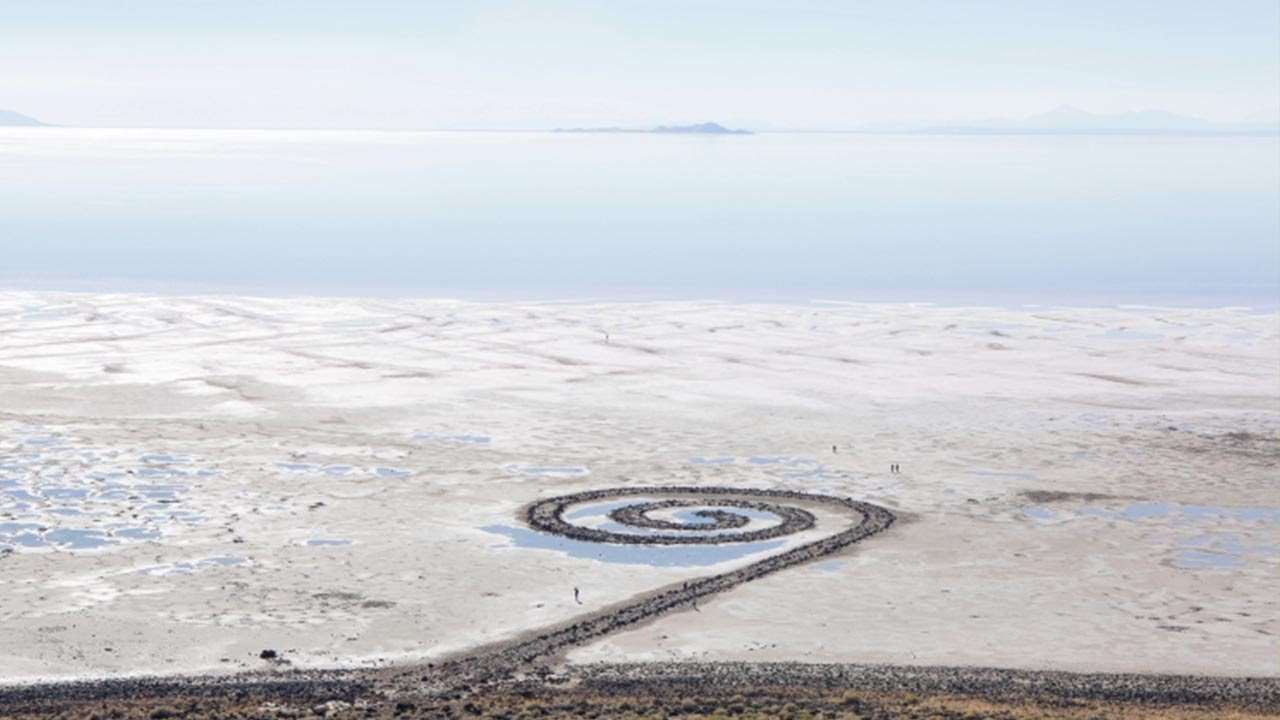
He stands out from the great artists of American Land Art such as Robert Smithson, Nancy Holt or even Michael Heiser who also set out to conquer nature and its wide open spaces but to create gigantic and telluric works, Earthworks, literally that care little about their ecological impacts. Modern humans tend to forget that they are Nature, that it is not separate from him. The challenge for these eco-conscious artists, is no longer to represent nature, or even to save it, but to find it in oneself, and to incarnate it fully.
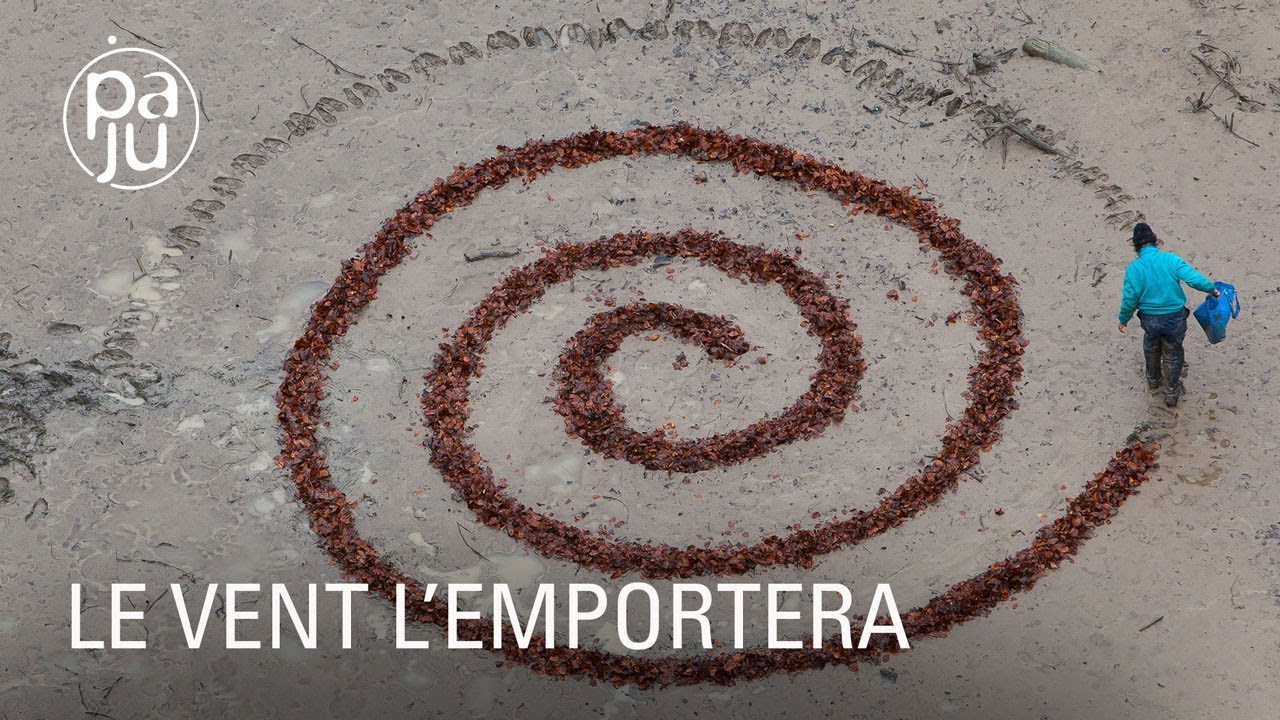
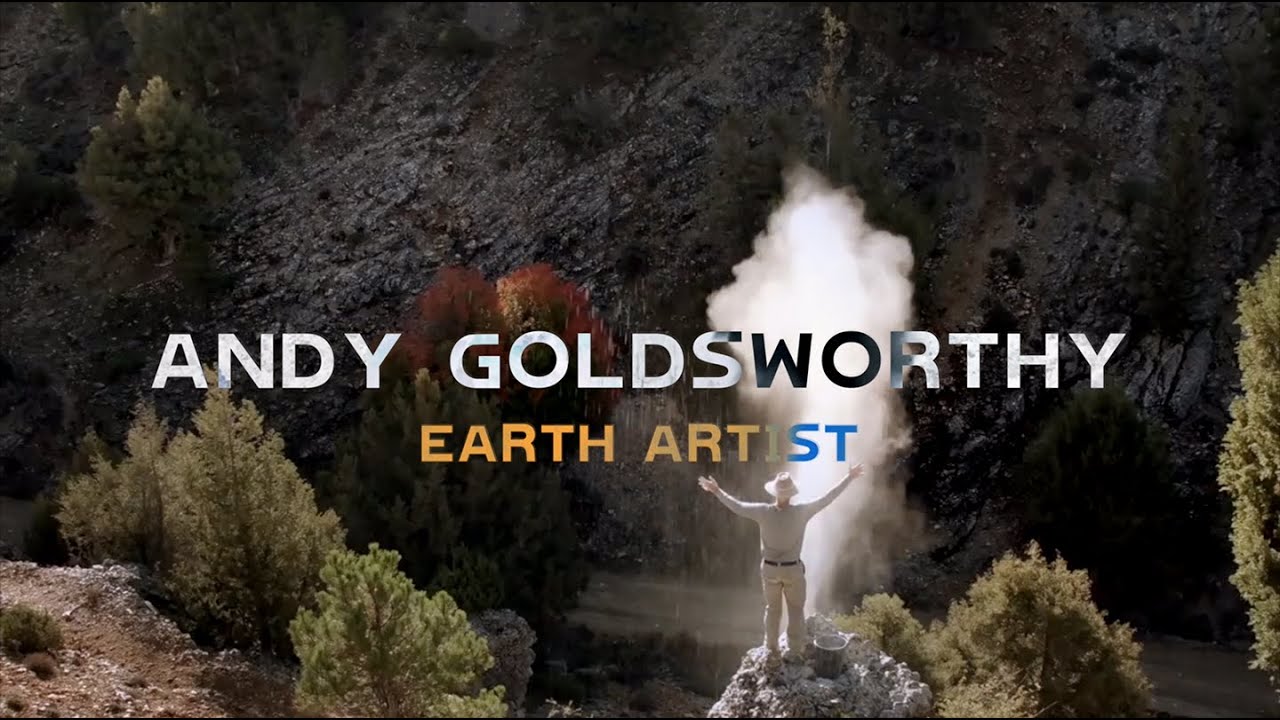
Andy Goldsworthy, in the wake of Richard Long creates a work of humility, made from rocks, ice, leaves, and delicately arranged branches on the sandstone of his walks like those blades of Iris pinned with thorns, and many installations that survive only through their photographic traces. Because for him, “It is not about art, but about life and the need to understand that there are many things in life that do not last. " Humans are just one animal species among others, and a simple interdependent link in the great chain of life.
This induces a metamorphosis of sensitivity, and of imaginations, to reconnect with a less dualistic vision, which does not put nature and culture in opposition and approaches the living in its complexity and its entirety. In their film "Earth Message" Corinne et Arthur Cantrill attempt to translate through visual experimentation the coexisting relationship between the Australian bush and Aboriginal society. They represent a form of energetic harmony between botany, geology, and the wildlife that shape the landscape.
To renounce the hierarchy of the living, is also to renounce that of gender, at a time when women were liberating themselves, nascent eco-feminism attributed to Man who became master and possessor of nature, according to the formula of Descartes, the responsibility for the exploitation of nature. It advocates the use of attention, care, and listening to what surrounds us and constitutes us. For example, Cuban-American artist Ana Mendieta carries out numerous performances to unite her flesh to matter, honoring the fertile earth and universal energy.
These "Siluetas", which permeate the ground are subject to the elements, to earth, to fire, to air, to water in rituals which tend towards the sacred. Caring for, repairing the injuries of ecosystems, and coming to terms with the living, to restore ecological balances, many artists, such as Ágnes Dénes, Joseph Beuys, or Thierry Boutonnier today turn the simple act of planting a tree into a highly symbolic artistic gesture. In 1978, Alan Sonfist replanted, within "The Time Landscape" a forest made up of plants native to the region to revive a landscape that predates colonization and urbanization, in the heart of Manhattan.
In "Tree Dance", Gordon Matta-Clark imagines a performance inspired by spring fertility rituals, transforming the tree into a real place of life. At the end of the performance, seeds were scattered to ensure an explosive spring in the following year. These are works and therapeutic gestures that are also summoned in this "Peinture Homéopatique" of Fabrice Hyber, an artist who has also sown a forest in Vendée for 25 years.
Today the forrest has over 100,000 trees and has become the artist's main source of inspiration as well as a place of life and exchange. The return to the earth is often combined with the reappropriation of rural practices around which communities are created, concrete utopias where we relearn autonomy, sobriety, conviviality, and living in harmony with others and with nature. From 1966, American couple Lawrence and Anna Halprin created the "Drfwood Village" on the edge of the Californian ocean.
It brings together artists, dancers, architects and environmentalists around artistic environmental experimentation. Bonnie Ora Sherk's "Crossroads Community" Urban Farm started in 1974 in San Francisco on a freeway interchange also became a pioneering community gathering place in urban agriculture, environmental education and the arts. Today, we no longer count the number of initiatives and third-places created by artists who reconcile their artistic practice and their ecological conviction, by carrying out collaborative projects around lands, mixing culture and agriculture.
Artist Fernando García-Dory brought back to life, in an abandoned hamlet in Spain, a pastoralism school. Olivier Darné reveals the wealth of biodiversity in the suburbs through the production of urban honey. While Barthélémy Toguo, associates to his artistic foundation "the Bandjoun Station" in Cameroon, a production of truly fair trade coffee.
This approach of sobriety, which reveals the meaning of the word humus, the origin of "humility", also manifests itself today through research in eco-conception, especially in design. These items range from Adrien Rovero's "Tabouret Particule", made of pressed wood particles, using a technique from the pallet industry that promotes material savings, to Samuel Tomatis' seaweed bowls resulting from research into new biodegradable materials. From nature as an object of inspiration for artists to nature as an intimate partner in creation and invention, the artistic scene witnessed how environmental approaches exploded from the 1960s until today.
The challenge, which has become vital, is no longer just to defend nature but to find it in oneself. This movement that shifts our gaze to the world, since it places us in nature and not next to it, gives back to creation, to aesthetics and to sensitivity all their necessity.