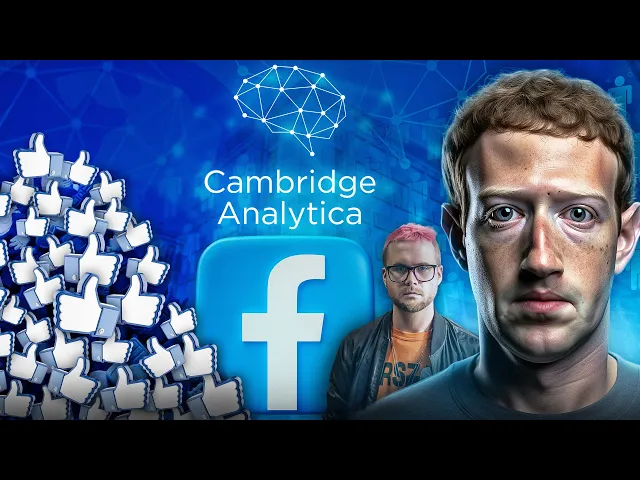
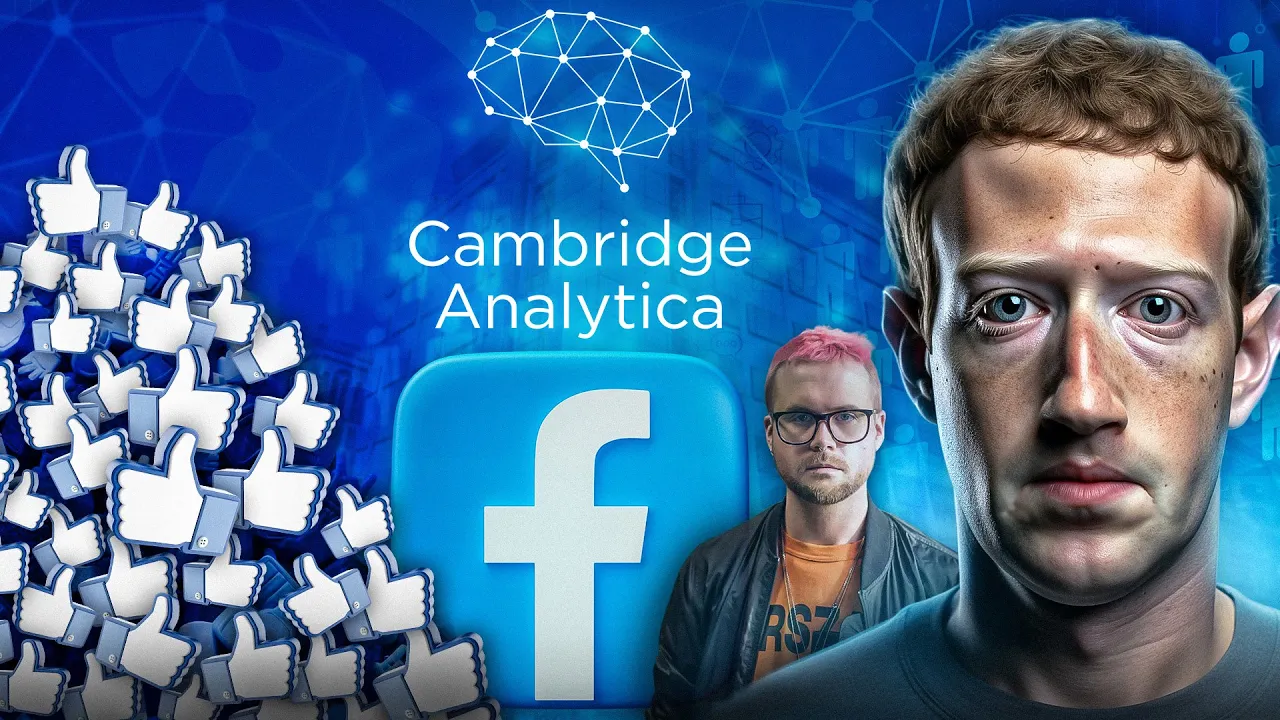
We live in a hyper-connected world, we surf the internet for hours and hours every day, without realizing that often our data, which we share almost without even realizing it, can be collected and exploited as a simple commodity to decide the fate of millions of people in exchange of the interests of a few. Today, we will discuss the Cambridge Analytica-Facebook case, a scandal that came to light in 2018 involving the tech giant Meta, then known as Facebook, and Cambridge Analytica, a British consultancy firm active in the field of political marketing. Through Facebook, Cambridge Analytica illegally collected the data of tens of millions of users to create personalized posts and advertisements capable of tilting the 2016 US presidential elections in favor of Donald Trump and, in the same year, allowing the exit of the Kingdom United by the European Union.
Mark Zuckerberg, CEO of Meta, was forced to sit through a five-hour hearing in front of the US Congress, but the whole scandal revolves around other controversial figures who, in reality, never worked for Facebook. This scandal had – and still has – enormous implications not only for our way of understanding freedom on and off the internet, but also for the democratic stability of our societies. To find out why, we asked the experts at NordVPN for help, who invited us to talk about exactly this in their offices.
But before delving into the analysis of the facts, it is necessary to establish some key concepts. Everything we do using the internet leaves a trace. If Simone Guida, ruler of Novalandia, searches for the word “Skyrim” on YouTube, posts a photo of himself in Greenland on Instagram and listens to his usual metal music on Spotify, there will be a good chance that, sooner or later, he will come across advertising of some Viking themed board game.
I'm a basic white male, what do you want me to tell you. However, I am sure that you too have seen or read an advertisement which, coincidentally, reflects your interests exactly. Well, it is not a spell cast by a Celtic druid, but a particular form of marketing: microtargeting.
When we surf the internet, use social media, sign up for a newsletter, create an account to buy goods online or accept cookies to visit a website, we are essentially giving consent for our personal data to be collected, analysed, reprocessed and then exploited for marketing purposes. In recent years, political parties have also started collecting data for certain votes. After all, just as companies do, they must convince people to buy a product, that is, to vote for them.
Therefore, it wouldn't be strange to find a post on my Instagram home that says "vote for independent Novalandia". In the next elections you know what to vote for. In other words, microtargeting leverages not so much tastes, but rather their emotions.
It profiles not the choices we have made, but the ones we would make if subjected to the right inputs. Like watching for hours the greenscreen cat memes that now plague my Instagram home pages. This profiling occurs through the use of psychometrics, a research method that takes into consideration our inclinations.
One of the most widespread psychometric models used for marketing research is the one based on the so-called Big Five, five parameters that outline certain traits of our personality: openness, curiosity and open-mindedness; conscientiousness, the level of perfectionism; extraversion, how sociable we are, agreeableness, the tendency to be collaborative; and neuroticism, emotional stability. Together, these criteria make up the OCEAN model. CHAPTER 1: Cambridge Analytica September 19, 2016, New York.
On the stage of the Concordia Summit, an annual forum in which governments, businesses and organizations participate to discuss the most relevant global challenges, this gentleman is invited: Alexander Nix, CEO of the British Cambridge Analytica. At the time, this company was virtually unknown in the States, but not at home in the UK. In 2015, in fact, it was rumored that the small Cambridge Analytica had been entrusted with the management of the online electoral campaign of the British Leave.
Eu committee, supported by Nigel Farage and in favor of the referendum on Brexit which would be held a year later. Cambridge Analytica would have made use of microtargeting based on the Ocean model to spread pro-Brexit posts and news. As we all know, in 2016 the United Kingdom left the European Union.
A month before the Concordia Summit, Trump had tweeted: “Soon they'll call me MR. BREXIT”. In fact, the tycoon had recently entrusted - in great secrecy - the final phase of his presidential election campaign to Cambridge Analytica.
At the Concordia Summit, however, Nix presents a different operation, which has had equally positive results. Between 2014 and 2015, Cambridge Analytica had made contact with conservative Senator Ted Cruz. In just one year, Cruz had gone from 5% of the vote to 35%, transforming himself into Donald Trump's main rival as the candidate of the Republican Party.
How did he do? With microtargeting, psychometrics, and the Ocean model. The process for creating these custom posts is simple and straightforward.
Cambridge Analytica buys and consults data from the most disparate sources: personal and car records, purchase information, gift cards and gym, club or magazine memberships. Subsequently, it triangulates them with the electoral registers of the Republican Party and with likes, posts and comments on Facebook, and then outlines - for each individual about whom it has information - a personality based on the Ocean model. Cambridge Analytica is not only able to reach each individual citizen in a different way, but also to suggest to its client, in this case Ted Cruz, what to say and how to say it.
Indeed, this pattern was repeated with Donaldo "Trumpolino". I don't translate Trump literally because it has a not very nice meaning in English. Even before the support given by Cambridge Analytica to the tycoon was made known, the mathematician Cathy O'Neil had noticed that Trump behaved like an algorithm, often changing his opinion just to adapt to the wishes of his audience.
Let's be clear, this was not the first time that presidential candidates used microtargeting techniques. In 2008 and 2012 Barack Obama made use of several behavioral psychologists who were experts in psychometrics, so much so that he earned the title of "president of social networks". Furthermore, Trump's challenger, Hillary Clinton, had obtained the support of Google and the support of BlueLabs analysts in 2015.
However, Cambridge Analytica's psychometric models were found to be unsurpassed. With the help of Nix's team, Trump concentrated his efforts in just 17 states, and in the last weeks before the elections he was advised to focus on Michigan and Wisconsin, where the largest percentage of undecided people reside. It is November 9, 2016 when Donald Trump becomes the 45th president of the United States.
That same day, Cambridge Analytica issued a press release: “We note with great satisfaction that our revolutionary approach to data-driven communications played a central role in President-elect Trump's stunning victory. ” Signed, Alexander Nix. As we said, in theory it's all perfectly legal.
Yet, two years later Nix will end up right in the eye of the storm. To understand where he went wrong, you have to go all the way to the origins of Cambridge Analytica. Chapter 2: The Creator 2008, UK.
Mihail Kosinski, a young Polish psychologist, is accepted as a doctoral candidate by the Psychometrics Center at Cambridge University. Kosinski immediately began working with another student, David Stillwell, who a year earlier had developed an app for a still immature Facebook. The app, which is called MyPersonality, allows those who use it to answer a personality questionnaire based on the Ocean model.
Based on the likes, comments or posts published by Facebook users, MyPersonality is able to propose questionnaires each time with increasingly targeted questions, with predictable answers. After four years of study, in 2012 Kosinski demonstrated that with an average of 68 likes expressed by a person, the MyPersonality algorithm can easily predict his sexual, political and religious orientation, and with 300 it comes to know him better than a partner or of a close friend. And it also works the other way around.
If it is true that psychological profiles can be built on the basis of data, on the other hand the latter can be exploited to search for specific categories of people: for example, all eighteen-year-olds who go to the gym, or all supporters of the right to abortion. In short, Kosinski's method is a very powerful weapon. It takes very little before someone realizes it.
In early 2014, Kosinski met another neuroscience and data researcher studying and working in Cambridge, Aleksandr Kogan. Kogan is interested in studying the functioning of MyPersonality, as a representative of the SCL Group, Strategic Communication Laboratories, a British company that has literally been involved in "influencing election campaigns" since 1994. SCL claims to have operated in approximately 25 elections around the world, including Nigeria, Yemen, Indonesia, India and even Italy, and to have disseminated US and British military propaganda during the wars in Iraq and Afghanistan.
The question is even more convoluted. One of SCL's main financiers is banker Paul David Nix, whose son, Alexander Nix, is CEO of small Cambridge Analytica. The latter was founded at the end of 2013 as a subsidiary of SCL thanks to an initial investment of 15 million dollars by Robert Mercer, a well-known American computer scientist, investor and billionaire with Republican leanings.
Mercer's daughter, Rebekah, is also a major financier of the Grand Old Party, and together with her father she co-founded Breitbart News, a far-right online newspaper, in 2007. Here are some examples of "news" to help you understand the level of content. Among the founders of this newspaper is Steve Bannon, an expert mass media manager who, in turn, is vice president of Cambridge Analytica.
Although worried by this mysterious company, Kosinski shares part of his findings with Kogan. Moreover, both are interested in scientific research, and both work for the University of Cambridge. Also in 2014, Kogan developed thisisyourdigitallife, an app very similar to MyPersonality.
In fact, also in this case, questionnaires based on the Ocean model are offered to users, and those who want to take them must log in via their Facebook account. In the space of just one year, thisisyourdigitallife reached 270 thousand members. Thanks to the social network's terms of use, once a user has given consent to share their data, the app can also collect information about their network of friends, as long as that information is not shared with third parties.
Everything seems to go smoothly. At a certain point, however, Kogan disappears. In 2015 he moved to Singapore, got married, and changed his name to Aleksandr Spectre.
At the end of the same year, US Senator Ted Cruz announced that he had signed agreements for 750 thousand dollars with Cambridge Analytica, which presents itself as an election marketing company that creates psychometric profiles based on the OCEAN model. The problem is that that model was perfected by Kosinski, who never wanted it to be used for political purposes. It is at that point that the Polish researcher understands that Aleksandr Kogan, alias Mr Spectre, has deceived him.
CHAPTER 3: Facebook “I didn't build the bomb: I just showed that it exists,” Michal Kosinski declared in 2017 to the Swiss newspaper Das Magazin. Thus, like a modern Oppenheimer, Kosinski had to defend himself from the accusation of having handed over the weapon that had allowed Donald to become president of the States into the hands of Cambridge Analytica. Furthermore, more than a few shadows hovered over that small marketing company.
After the victory, Trump appointed Steve Bannon, vice president of Cambridge Analytica, as "chief strategist" of the White House, that is, as his advisor . In May 2017, the Guardian reported that Bannon was a great friend and supporter of Nigel Farage, the leader of the Brexit movement, and had opened a branch of the online newspaper Breitbart in London in 2014 to direct public opinion towards Leave. Cambridge Analytica's involvement in the Brexit election campaign has never been proven.
Yet, there are a series of indicators that cannot be just simple coincidences. For a start, in 2018 it became known that three pro-Brexit committees – Vote Leave, BeLeave and Veterans for Britain – and the Northern Irish Democratic Unionist Party had paid a combined £3. 5 million to AggregateIQ, a Canadian marketing company , to propagate pro-Brexit messages on social media.
So far , everything is ok. Except two for oddities. The first: AggregateIQ used microtargeting techniques very similar to those that would later be exploited by Cruz and Trump.
The second: close to the 2016 American elections, Aggregate IQ sold some of its intellectual properties. Or rather, it was their true owner who gave them away: Robert Mercer. That's right, the billionaire who founded Cambridge Analytica and who - together with his daughter - financed Trump, who chose Steve Bannon as his advisor.
Well, pure coincidence you might say. For the Guardian, Cambridge Analytica would have been nothing more than the re-brand of AggregateIQ, while Mercer, Trump and Bannon would have literally hijacked British democracy. We are certain of one thing: this hijacking actually happened in the United States.
Through Facebook, Cambridge Analytica not only sponsored pro-Republican posts, but also actual fake news aimed at praising Trump and discrediting his opponent, Hillary Clinton, with the aim of convincing undecided voters or changing the minds of Democratic voters. Between August and November 2016, fake news reached 9 million Americans, gaining more credibility than national newspapers. I'll list just a few of them.
Pope Francis declares support for Trump's candidacy , WikiLeaks confirms that Hillary Clinton sold weapons to ISIS, Hillary Clinton cannot legally hold any institutional office, FBI agent found dead in home after leaking information about Hillary Clinton, Hillary Clinton claims that black males are predators. Where do all these rumors come from? According to the American secret services, the 2016 elections were strongly influenced by Russia.
Starting from March 2016, agents of the GRU, the Russian secret service, allegedly came into possession of thousands of emails written and received by Hillary Clinton and her collaborators. Those emails portrayed Clinton as an insecure person, unfit to play the role of president, full of secrets to hide. At that point, ahead of Election Day in November, Russian agents allegedly generated thousands of fake and troll accounts on social media, including Facebook, to promote pro-Trump events and spread false news about Clinton.
Come on, so those scoundrels do something else besides filling my inbox every 4 and a half minutes with spam emails written in Cyrillic and malware links. "You are disgusting"! In any case, net of foreign interference and ethical implications, microtargeting is not an illegal practice.
Certainly, as long as people give up their data consensually at least. Already in February 2017, the United Kingdom's privacy regulator launched an investigation into alleged illegal data collection against British Facebook users. That data would have been obtained without consent, to then develop psychometric models and suggest posts as personalized ads in the form of fake news.
A year later, on February 27, 2018, Alexander Nix was questioned by the British Parliament, and denied the charges. Now, keep in mind everything we have said, all the characters we have named, because the real bomb explodes on March 17, 2018. The Guardian and the New York Times publish two mirror articles at the same time.
Both report an interview with a certain Christopher Wylie, a former employee of AggregateIQ, SCL and Cambridge Analytica who claims that the latter stole data from over 50 million Facebook profiles. Wylie himself is implicated in the affair. According to his story, Wylie came into contact with Alexander Nix in 2013.
At the time, SCL was looking for a way to influence US politics and fill the void that had been created in the Republican environment after the two defeats suffered in 2008 and 2012 So, Nix contacted Steve Bannon, who introduced him and Wylie to the Mercer family in late 2013. Once the meeting was concluded, Mercer decided to finance the birth of Cambridge Analytica. But to get it off the ground, we needed data, lots of data, and a reliable psychometric profiling model.
So it was that Nix, Wylie, Bannon and Mercer relied on a single person, whom we have already talked about: Aleksandr Kogan. Remember his app, thisisyourdigitallife? Well.
After copying Kosinski's original research, thanks to Facebook's conditions of use, Kogan managed not only to collect the profile data of 270 thousand users, but also that of their friends. At the time, a user had an average of 160, which means that Kogan collected, according to Wylie, the data of fifty to sixty million people. As a final move, Kogan sold that data to Cambridge Analytica in 2014, and then fled to Singapore.
Facebook immediately ends up in a round of slaps (and to be honest, it deserves all of them, I say, give those shits a hard time). Although the Guardian and New York Times speak of a "flaw in the system", in reality Facebook - in theory - is not at fault. Of course, the conditions of use that allowed the collection of data from a profile's network of friends were extremely lax, but legally Aleksandr Kogan is responsible, because that same data could be collected as long as it was not sold to third parties.
That's fine, but should we believe the fairy tale that a giant tech company doesn't know what's going on under its nose? As reported by Wylie, Facebook had already discovered in 2015 that Kogan had violated the agreements, but had not taken any legal action against him or Cambridge Analytica. For example, the social network could have suspended the company's account, preventing it from continuing to collect data for marketing purposes.
Instead, strangely enough, Cambridge Analytica was only suspended on March 16, 2018, that is, one day before the publication of the Guardian and New York Times articles. In other words, Facebook was caught red- handed. Naturally, the CEO himself, Mark Zuckerberg, was called to answer for the accusations.
On April 10, 2018, less than a month after the scandal, he was summoned by the United States Congress Ohhh he touched it gently, guys. However, first of all Zuckerberg denied any correlation between Facebook and Moscow's secret services, admitting however that a Russian IT agency had spent 100 thousand dollars to publish adverts on the social network. He later claimed that Facebook had learned about the data sold by Kogan to Cambridge Analytica, but that Cambridge Analytica had promised to delete it.
For his part, Kogan admitted that he had collected that data, deleted it in 2015, and violated Facebook's terms of use, but specified that he was not the only one to do so, and that these terms were unclear. You got it right. Facebook is to be held fully responsible.
However, it went virtually unpunished. And among other things he insists on not providing the blue tick to my instagram account, so he's doubly guilty. Shame on you Meta admin.
In 2019, the US Federal Trade Commission fined big tech a record $5 billion for violating citizens' privacy. The first formal accusation against Zuckerberg came only in May 2022, that is, about a year and a half ago, and four years after the scandal. The whole Cambridge Analytica-Facebook affair seems to have come to an end last December, when Meta agreed to pay 725 million dollars to settle a class-action lawsuit regarding the violation of privacy.
Of course, Facebook admitted its faults, according to justice it served its sentence, but its negligence cost the data of 87 million people. In March of 2018, Wylie revealed that the only country with which Cambridge Analytica is certain to have worked is Italy. In particular, a party whose name is not known.
Therefore, the issue concerns us more closely than we might think and, leave me this doubt, who knows, it may not arise again in the future in different forms. But luckily, to prevent our data from becoming fertilizer like in Farmville (what nightmares have I unlocked for you, eh? ), NordVPN takes care of it.
In the internet age, protecting our privacy has become imperative, to prevent companies and political parties from collecting our information without our consent and using it to influence our choices. In fact, NordVPN is a virtual private network. With features like Threat Protection, NordVPN minimizes the risk of your personal data and passwords being stolen, and by hiding your location, NordVPN's encryption will block tracking cookies and pop-ups like those damn banners that appear while ads for example you read news online or make purchases on the internet and which, if clicked, expose your data without you even realizing it.
It just so happens, I was downloading a little piece of an interview on the internet, and look here: "the power of big data", this beautiful page blocked thanks to threat protection, because it revealed malware. And regarding the dangers of the web, with Dark Web Monitor NordVPN will inform you of any data leaks so that you can intervene and change your passwords as promptly as possible. These are all basic measures, of what we can call "good online conduct", and which can counteract your profiling and therefore aggressive microtargeting.
Also remember, NordVPN does not track your data while you are using it. So, to take advantage of NordVPN's Christmas offer, i. e.
4 extra months free on all two-year plans, just click this link in the description. I remind you that with the Plus plan, that is, this one, you will also include the password manager where you can save all your passwords in a single go, so you don't forget them and don't have to change them every time. But now, the time has come to complete our children's story.
And no, it's not that of Instant Geopolitics, but that of Cambridge Analytica. . .
Chapter 4: the legacy of the Cambridge Analytica-Facebook scandal Two months after Christopher Wylie's revelations , Cambridge Analytica declared bankruptcy, and did the same also SCL, the main group. Well, you'll say. No, not at all.
All the key personalities, employees and data from 87 million profiles collected converged into a new company, Emerdata still active today and potentially hireable to conduct electoral campaigns. Emerdata's initial financiers were, of course, Robert and Rebekah Mercer, totally unpunished. The fates of the other characters in this story are quite varied, it almost seems like the end of a 90s tragicomedy.
From 2020, for seven years, Alexander Nix will no longer be able to manage any company. In 2017, Steve Bannon was removed from his position as advisor by Trump himself and is currently accused of corruption, money laundering and conspiracy to harm the state, but not for the Cambridge Analytica affair. Aleksandr Kogan, Mr Specter, went back to being Mr Kogan, was accused of being a Russian spy due to his Moldovan origins, and got away with a nice fine of.
. . 0 dollars.
Michal Kosinski today teaches at Stanford, Ted Cruz has grown a beard and is still a senator, and Donald Trump, between one trial and another, is once again a candidate for the White House. Yes, you understood correctly, the only ones who lost out were those users who, unknowingly and illegally, had their data stolen and then reprocessed to psychologically influence other people around the world. DAMN IT, In 2013 and 2017, Cambridge Analytica worked on both election campaigns that gave Uhuru Kenyatta two presidential terms in Kenya.
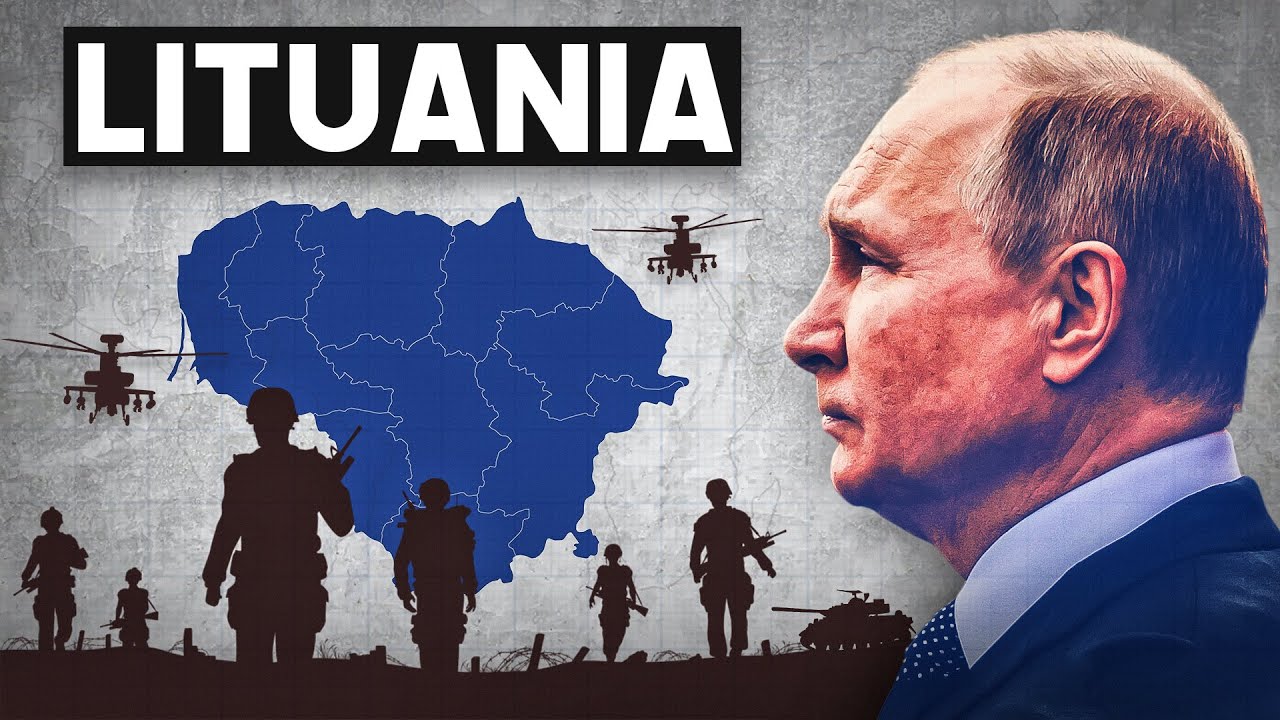
According to what was declared by Alexander Nix, secretly filmed during an investigation conducted in 2017 by Channel 4 News, Cambridge Analytica worked in India, Mexico, Thailand, Philippines, Indonesia, Malaysia, Colombia, Cyprus, Zambia, South Africa, Romania, Lithuania, Trinidad and Tobago, Nigeria, the Czech Republic and Argentina. According to material released on Twitter in 2020, the count of countries in which the company has operated rises to 68, including our beautiful Italy. In short, we are faced with an octopus with long tentacles.
Under the name of Emerdata, Cambridge Analytica's methods may continue to be used in the coming years, and we do not know how many and which other political marketing companies are operating around the world, and on whose behalf . However, the role of whistleblowers is crucial, of those people like Edward Snowden and in this case Christopher Wylie who, while admitting having made mistakes, want the internet not to transform into an Orwellian machine. The road is still long, but it is important, it is very important, that someone begins to trace it.
To conclude, I would like to specify one thing. Microtargeting isn't evil incarnate, it's a marketing technique. In most cases we ourselves give away our data.
Even by watching this video you are doing it. However, if it is true that we need to pay more attention to which permissions we grant when browsing the web, and in this case a tool like NordVPN can lend us an important hand, on the other hand - as we have seen - microtargeting becomes extremely dangerous when it is associated to politics. The problem is not in favoring the candidate we don't like, or whose ideas we don't share, but in polarizing the opinions in the field.
Of course, democracy is plurality, but if it turns into a challenge between presumed forces of good and equally vague forces of evil, seasoned among other things with a good plate of fake news, the result can only be explosive, generating further divisions and sterilize the political debate In the end, when we are conditioned, when we believe we have exercised our right to vote in full autonomy, all we have to do is turn on the television, praise our hero, because he has just won the elections. promises to defeat the bad guys, walk on the moon, make us rich, and keep us healthy forever. Ultimately, no, this is how our freedom dies, the freedom to choose dies: under thunderous applause.
Per aspera.