To help us answer some of the biggest questions right now about the U. S. economy, the recovery and the jobs market.
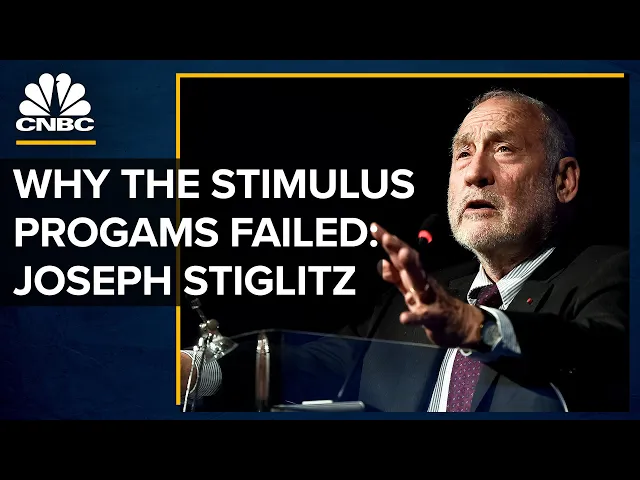
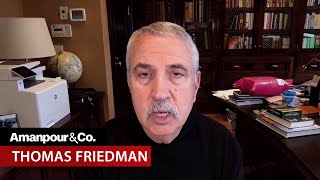
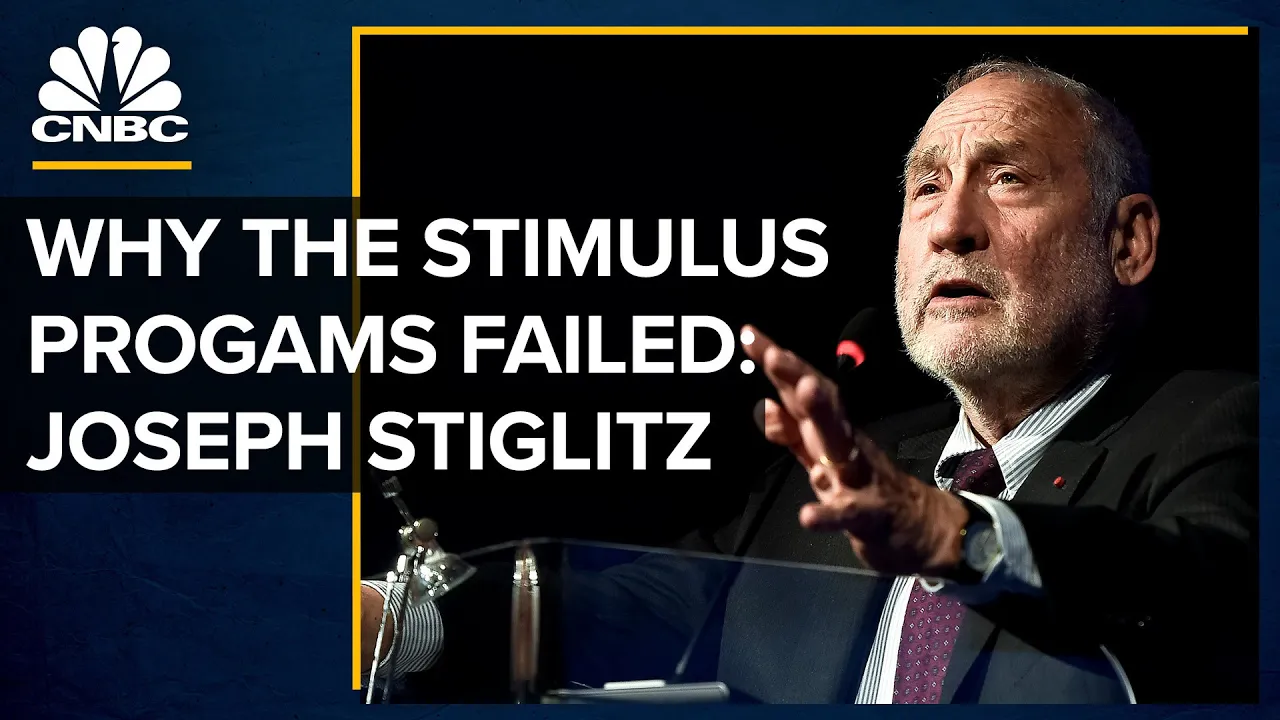
We're talking to Nobel Laureate Joseph Stiglitz. Where's the economy headed right now? No one thinks that it's a v shaped recovery.
You have to be worried that the pandemic will be with us for a long time. But then even after the pandemic is put under control, whatever that means, the economic recovery is not going to be easy. What do you see as sort of the worst case scenario for the economy?
The worst case scenario is another Great Depression. We are already at the levels of unemployment associated with the Great Depression. People without income are going to be using up their savings account.
Companies are balance sheets are going to be worsened. Many companies will go bankrupt. Banks will find that many of the loans they may will not be repaid.
And that's the kind of cascade of effects from which it's very hard to emerge without government assistance. If you look at the stock market, it's doing pretty well. I mean, stocks have been up over the past month even as we had these terrible unemployment numbers.
Can the market continue to go up while the economy is is so bad. The government has put almost three trillion dollars of money into the economy. It's clearly not going to expanding demand.
And right now, people are using some of that money to build up cash buffers to protect themselves because they don't know how long this pandemic is going to last. And as they think about where to put their money that's put into cash buffers. One of the places will be the stock market.
Do you think that all those trillions of dollars in stimulus from both Congress and the Fed have done enough to help the economy get through this time? No, clearly not. The problem wasn't just the amount of money, it's how the programs were designed.
The money didn't go to where it was most needed. It was supposed to go to protect the most vulnerable. The most vulnerable won't be getting checks until September.
The PPP program, the program for small business, was particularly badly designed because you had to apply through the banks, the businesses with the best connections with the banks got at the head of the line. And those weren't the smallest businesses. They weren't the people who needed it the most.
They were the richest businesses. What's happened in the United States compared to other countries like Denmark and New Zealand who did design the programs in the way that I would have recommended. They design programs where the money went to corporations directly to the workers.
Each company will make up for your shortfall of revenue, for your expenditures, for your workers who are paid under, say, ninety thousand and will pay eighty five percent of that amount. So long as you keep those on and we'll give you some money for overhead. Those have succeeded in keeping the tie between the workers and the companies.
So they've avoided the soaring unemployment in the United States. Our programs have failed and we have to admit that. How can you get the money into the hands of small businesses and workers who are struggling the most?
The irony is it's more important United States than it is in other countries because in the United States, American workers depend on health insurance provided by their employers. And if they lose their jobs, they're going to wind up on Medicaid. Another example, we could have used the data processing companies a lot more.
These are just administrative details, implementation. They have a lot. They have all the data.
The data is not that complex. So we have all the data. Why do we have to go through the banks, you know, other than to give them a bailout?
We saw the stimulus checks to individuals. Do we need another round of stimulus checks? Is it time for a longer term universal basic income?
Yes, I think we do need that. I'm not a big fan of you beyond universal basic income over the long run, because I think our society needs a lot of things to be done. People want to work.
Work is part of meaning, meaning in life. But right now there isn't work. And we have to recognize that reality over the long term.
We have to make that transition to a green economy. We're making a transition to a knowledge economy. We need infrastructure.
You know, I can think of all so many things that our society needs and when you have unmet needs and workers who want to work. Why not put those two together. When we talk about inequality, there was a study by the FED that showed that households that made under forty thousand dollars were the ones who were laid off.
So how do you help those workers and how do you address that growing economic gap. You figure in a family Most of these workers, whether you know, two earners, maybe both of them, have lost their jobs. The devastating devastation that that is bringing about.
You know, I've heard lots of problems of people not being able to get their unemployment insurance benefit, not being able to register first, taking weeks to actually get registering, then after they get registered, taking weeks and weeks to get the payments. And that's even in the better run states, let alone in some of the states that are not well-run. So we clearly have a problem.
And that's one of the things that we should be allocating money is to fix those problems quickly, because asking these people to depend on soup kitchens for survival just isn't right. We've also seen childcare kind of collapse as many workers have had to stay home and take care of their children or essential workers have gone to work and not had childcare. There's no paid sick leave.
You know, is there a broader policy shift that needs to happen to protect some of those those essential workers and workers more broadly? Congress recognized the problem and say we don't want these workers there. We want give them paid sick leave.
But they have COVID 19. They passed a law. And then under the lobbying of our largest corporations, the richest corporations, those with more than 500 workers, they said we're going to exempt those companies.
So the result of that is that they exempted on that one provision, 48 percent of all workers. So what does that do? Not only is it cruel to these workers making them face the hard choice of coming down with the disease or food for their family, it's unfair that in a civilized society, you make people make that life and death choice.
But since some of them are going to go to work, it helps spread the disease. What does the future of education look like? Should tuition be lowered as classes are online.
How does the system look to you. In our bailouts. We didn't help the universities.
We gave money to some dying industries, but not to the industries of the future, including higher education and higher education is being devastated because every major source of revenue is going down. And so I think we're going to probably be moving more to a mixed models where we use more distance learning, but also smaller class interaction. What kind of education and training is going to be necessary for the workforce after the pandemic?
I mean, are there certain jobs that are never going to come back? And how do we see that workforce changing? Those graduating from high school and college right now are facing a very tough job market.
They're not eligible for unemployment insurance, so they're caught in between. And one of the things that I've proposed is something that Europe has done is to say every young person should be either in school on a job or in training in some way. You know, these are valuable years.
You shouldn't be wasting those years feeling disconnected, resentful. So I would put it really a high priority on that kind of a program. We will still have an important service sector.
You know a lot of people have commented that you can't do dentistry by remote. There's certain things where you actually have to get in. And so we are still going to have to have lots of service training.
So a lot of that can be done remotely even if you can't practice it. I mean, in the end, you you will have to have practicals, get your hands dirty, as we say. Is it time for policymakers to just forgive that one point five trillion dollars student loan debt altogether?
What should we do with student loans? We will need to have ways of reducing the burden of those loans. You know, Australia has a very good system based what they call income contingent loans, where the amount you repay is related to your income.
And after 20 years, if you've had the bad glossary or you made a choice to go into the ministry or education or some other sector, that doesn't pay very well, then they forgive the loans. You've also warned about protectionism. You know, we're hearing increasingly about moving supply chains back to the U.
S. , limiting immigration. What would this do for the economy?
The pandemic has made it very clear we need more global cooperation, not less. We have gone through what I sometimes called hyper globalization. We didn't focus on the importance of resilience in our supply chain.
This is not only true in global supply chains, but every aspect of our economy. We make cars without spare tires. But as we bring jobs back, much of that work will be done by robots.
And so we shouldn't think of this. As a job program, it's a resilience program. And in fact, many aspects of the of this kind of protectionism are going to backfire if others reciprocate.
Our exports will go down. We import so many, much more medical supplies than we export. So if we if others reciprocate with the same kind of ugliness, we are going to be in a really bad shape.