this joa is heavy as I was it's called acanthosis 18 plus% of our children right now are [Music] obese how loud are you about 280 if you go with the flow in America today you will end up overweight or obese as 2third of Americans do I don't want to be fat for the rest of my life I've got diabetes sleep apnea high blood pressure I get dizzy when I get up everything's hurting though you don't crave broccoli and our generation has grown up craving a big man we have built a cheap food model and that's
the one we're dealing with right now it's so hard to combat against what the TV is telling you to buy your kids the kind of food that we eat is the kind that's most [Music] profitable local and regional foods taste better the weight of the nation is out of control but we can fix that how you like the market market mean everything for this neighborhood we have got to come together as a country and really make this a priority as long as we stick together that's what it's about it's not only Health it's about survival
and well-being of the United States as a nation the reason we have government in the first place is to solve problems collectively that we can't solve individually if we don't now take this as a really serious urgent National priority we are all of us individually and as a nation going to pay a really serious [Music] [Music] price [Music] [Applause] [Music] I weigh 99 lbs when my husband and I got married 30 years [Music] ago then you start having a family and after my second child it was like poofing it was my my grandmother my mother
my sister and myself we've got it's been the same [Music] story it's not easy to take weight off and that's life ass suction patches pills fad diets counting carbs counting calories I've tried it all and I've asked my husband let's be honest here am I that big and when he doesn't answer me I think oh my God what has happened to me you know or if he says no way then I feel better about myself you know but the ones that that he don't answer I know I'm that big and it's it's it's like a
slap in the face wake up you know do something you try and it doesn't and you lose hope [Music] [Applause] then B Lu said it's just like any Town throughout in the southeastern United States and there's some variations you get rural in northern Mississippi there really a lot of poverty and so forth and it partly relates to the industry and agriculture but we're just like any Old Country [Music] Town it's strawberries and cheese and strawberry jell and it's got bananas and pineapple and you would not believe how good get your plates start eating this is
Louisiana cooking this is louisian at its best where's the shrimp pasta you get tired of the the diet that that's not going to work and then you you fall off the wagon so to speak and you know you then you really piig out on something you're not supposed to have or you know you get tired of that that feeling of of failure if you don't fry it you grill it if you don't Grill it you ball it that's the way we eat down here good morning hello hi what's the name Cindy and Gary roach Cindy
you're going to be first Gary's going to be second okay just have a seat when did you start coming to the hard study we were in grammar school grammar school both of us I want to say about the third grade third fourth fifth grade Kathy P Kathy when did you start coming through screening I started heart study um my first year was in 1973 I was in kindergarten the baloa heart study is a landmark investigation of the uh the Genesis of cardiovascular disease from childhood right through adulthood and many of us as we came up
through our biomedical Sciences in uh undergraduate University we learned about the baloa heart study the main focus is on cardiovascular disease and the pathogenesis of disease over over time really starting in [Music] childhood I'm going home home toala I'm going home home [Music] toala in the baloa heart study we're looking at risk factors and children since we want to look at the early Natural History it's obvious that we ought to look at the early onset of these diseases the major effect of the baloa heart study is the biannual General examination of all school children in
baloa I can remember being very excited when they used to come to the school they used to come it was a big white trailer and that's where they did all of the um all of your work and back then I was just happy because we were getting out of class when I got the heart study the intention was to look at risk factors just like Framingham but to do it in children what I need is a list of the people that you don't have any kind of record on some of them we have because we
knew the cause we just didn't have the death certificate so you've exhausted all the data from the carer's office yes sir after we had been in the study five or six years we clearly established that heart disease began in childhood what clenched our information was doing an autopsy [Music] study 560 deaths since 1972 when we began to see lesions in kids it really gelled the fact that looking at risk factors clinically in life and here looking at the actual vascular disease and death and having a strong correlation highly significant [Music] relationships stand straight all right
take a breath our children are now 50 years years old and we have a 30 35 year history on them did you give us your email address it's the only study like that in the world it has long-term black white population the Obesity that we're seeing is very damaging to the cardiovascular system I just found out that I have high blood pressure and they said that I was on the borderline with maybe uh diabetes so my doctor told me to do to go Brown so no more white rice or potatoes or white bread so we've
gone to like wheat pasta wheat bread that type of thing okay all right what did you get for the subs scapula 1329 another and 133 obesity is not just fat cells sitting there but the particularly the central fat the abdominal fat the the Android deposition the male deposition of fat the waste measurement this is to measure the abdomen but it's the Obesity which is the major driving force for insulin resistance insulin resistance and obesity are the driving force for hypertension diabetes there's okay thank you the blood pressure 140 over is high if you lost 20
lb it might go to nor I am working on that I've lost you ought to be on some medicine I don't care you ought to be on some medicine I'll go back and see a doctor God good hey Sandy how are you I'm fine doing okay Miss Rita I'm doing fine found picture this morning I found out through heart study I had high blood pressure and I can take that to the doctor okay thank you m all we need my grandmother had a heart attack both my grandmothers I'm sorry um but I know going through
heart study that if something is wrong it's going to be caught early on and maybe I'll be here to see my grandkids grow [Music] up I've got to learn to eat the right things at the right times and I'm going to try it I'm going to give it a shot and come back and y'all see maybe a new [Music] me thank [Music] you [Music] life is really hard for people who are obese and by hard I mean both the social consequences of that and the health consequences of that um write down to the fact that
those who are very obese are not going to live as long as others um what makes me frustrated bordering on Angry is that um this is preventable uh it's not this is not one of those unfortunate acts of nature that we just have to accept as reality this is not the product of a [Music] tsunami the weight of the nation is not healthy and to get it healthy we're all going to have to do our part all of us have to be part of part of the solution to reduce obesity in this country otherwise we're
going to be faced with steadily increasing health care costs and the lives that are lost from cancer heart disease diabetes and other problems how many people in this Society are able to maintain a healthy weight a third or less something's wrong with this picture level of obesity in the United States have increased in alarming ways in the 1980s the Centers for Disease Control began putting together a map showing levels of obesity state by state and then they went through the years and every time a state changes colors it suggests increasing levels of obesity when you
look at the rates of adult obesity from 1960 until 2008 you can see that the rates were moderate and relatively consistent over time but then starting in the 1980s we saw a rapid increase resulting in the current level which is fully over a third of adult men and women in the United States are obese but it's the morbid obesity where we've seen the most striking increase from 1988 until 2008 we have childhood obesity at levels where people aren't denying it anymore so it is a a teachable moment when it was only adults or only people
in less valued groups you could put it aside it's those people but when it's children you can get a conversation going people who are poorer tend to have higher rates of obesity so if you look back in the late 1980s and early 1990s there's a linear relationship between poverty and obesity but if you look more recently from 2005 to 2008 everybody's rates have gone up and being wealthier is not nearly as protective against obesity as it used to be there is some Regional variation but it's all different degrees of terrible the levels are so high
everywhere that every state has to pay attention to this issue the health care costs not to mention the human burden are very high in every corner of this country and increasingly every corner of [Music] World obesity is an enormously complex problem with inputs from several places genetics is one uh we know uh that about 60 to 70% of the risks of obesity are heritable ones when it comes to obesity for the vast majority of people there's no one gene that makes a difference there's many many genes dozens perhaps hundreds Each of which has a small
effect on the Obesity and the population but which add up to a susceptibility when exposed to this environment we live in for getting more overweight or [Music] [Music] not there are a large number of genes that have been identified in humans that do play a role in the control of body weight and very interestingly the majority of these genes are genes that influence food [Music] intake obesity is a classic example of a what we call a gene by environment interaction any individual's body weight in most instances is a result of the interaction of their genetic
makeup with the environment that they happen to be living in there's no doubt that genetics the DNA that we inherit from our parents affects how much we weigh there's also no doubt that the environment we live in affects how much we weigh there's no nature versus nurture there's nature and [Music] nurture both Nature by that we mean genes and nurture we mean experience affect each other and they're inextricably [Music] intertwined is there a genetic predisposition to obesity absolutely is obesity caused by environment and behavior absolutely [Music] I've been interested in obesity for a long time
but now I'm responsible for a city of 8.3 million people every one of those people I consider to be my patient as a doctor um and and of all the health problems I deal with this is the one problem is getting worse uh obesity and diabetes this shows the diabetes and the Obesity in the South Bronx here the uh the lowest income County in New York state very high prevalence of obesity very high rates of diabetes just a short distance away here in Manhattan the upper e side where it's the highest income neighborhood in the
city uh we have very low prevalence of obesity very low prevalence of diabetes obesity is driving the epidemic of [Music] diabetes in the darkest areas on this map close to 90% of adults are overweight or abese you do have to literally start connecting some of these dots you know 57% of the kids in Philadelphia are overweight or obese you going to the playground [Music] okay serious diabetes problems uh obesity especially with our children uh and uh they just need more options right here in the community right on the [Music] Avenue we already know based on
the information from the center of Disease Control and many others that for uh kids living in these neighborhoods many of them will die before their parents a child born in 2000 has a one in three lifetime chance of having diabetes if that child is African-American or Latino it's one in [Music] two the red spots are where the highest rates of poverty are in this area almost one out of every three children is considered to be overweight or uh obese and this is an area as you were saying with poverty the average household income is less
than $25,000 for a family of four if you look at the state of Tennessee in Nashville it is a crisis level here I mean we rank at the [Music] bottom if we don't take on strategies that affect how the low-income Community is dealing with the Obesity epidemic we're going to see this phenomenon across our society in a relatively short period of [Music] time [Music] I'm going back to Bal people where I can have my fun we're pretty much in downtown B Lua right now which I'm sure was really nice back in the the' 60s OR7
and up here on the left is the lumber mill the smell of the lumber mill kind of permeates this whole place that's one of the lingering [Music] memories people beg me not to go I'm going back down in no school is our next scho y'all have a good [Music] [Music] day I think a really important question is when we look at the the levels of O overweight and obesity that we're seeing in in bogaloo so you know 50% of kids um being overweight or obese is is baloa unusual or if we looked at other places
like this around the country would we be seeing similar levels of overweight and obesity you know is baloa special or do we just happen to to have 35 years of data on [Applause] it in the 1970s 5% of children were overweight and obese today that's over 30% so we've seen just dramatic increases in a very short period of time so our biology has changed quite rapidly within a very short time frame on The evolutionary time scale and the Centers for Disease Control and prevention have produced these maps and this area around the Lower Mississippi Delta
encompassing Arkansas Mississippi Louisiana historically has the highest prevalence of obesity and is kind of at the Forefront of the Obesity epid emic in the United States all this pink one for me actually Bri come on in here and let's get your height and weight okay you ready Danel so you're 12 yes ma'am not as bad as I've been here 10 years and I have seen a drastic change in the Obesity and I've seen um a change in the blood pressures it's definitely going up their blood pressure should not be that high actually it should never
be over 120 over 80 so this is this is a kid that we'll watch we'll monitor his pressure we will probably do lab work on him get an EKG make sure everything with his heart okay send him to Cardiology if that comes back clean we may send him to see um a kidney speci specialist to make sure there's nothing going on with the kidneys cuz that sometimes can cause blood pressures to go up so this will be a kid that we watch and we follow shoes out for me okay step up on the scale we
have to address it now these are going to be our patients that have are on dialysis in their 30s if we don't do something now emergeny they're our future they need us they need us to Care and we do we as pediatricians never had to worry about learning a lot about hypertension that was a specialist disease we send the occasional one to the cardiologist but now there'll be many many times that I'll be facing children with increased blood pressure Stacey give you a note going back to class okay yes ma'am I think the results that
we're showing in baloa may be reflective as to where the country is going the blue line is the National Data in the red line shows baloa by the mid 1980s baloa really began outstripping the pace of the rest of the country we don't really see ethnic disparities we see the that both African-American and white children have comparable levels of overweight and [Music] obesity this is it this is what the kids have the swings are broken down there's no basketball court for them to play on and I mean what does a parent do you know what
voice do they have and demanding safer play spaces for their kids and this is actually we're in a part of town with higher poverty rates and the density of kids is actually one of the higher areas in Bogalusa I guess you know we as communities need to realize that these features of our environment have health consequences and have consequences for for the Obesity epidemic it has to be a complete Community entire Society approach to reducing this complex problem [Applause] not only is the prevalence of overweight and obesity going up in other words more and more
children are classified as overweight or obese but within that category those children are becoming heavier and heavier around the world obesity rates continue to climb so I don't think we've reached the maximum yet I want another over one of the most important ways we've learned about cardiovascular health and what a normal heart and vessel system looks like as well as how disease process develops across the lifespan in the cardiovascular system is by studying tissue from autopsy specimens in people who have died for completely different reasons but also in people who have died related to cardiovascular
causes weight that's present in young adulthood and weight that is gained from young adult to to middle age has tremendous consequences so we really think of this as a perfect storm a hurricane of consequences that drive cardiovascular risk and what we have in this case this is the heart from a 26 year-old woman of normal size height and weight who died of a non-cardiac cause her her cardiovascular system is entirely normal now in contrast we have a heart from another individual in this case a male he was in his 50s he weighed 500 lb and
he was 5'9 in height his BMI was calculated to be 70 over 30 is is obese it's really dramatically different from the normal heart you can see here there's a lot of fat the cavity is a little bit small and the wall thickness is Extreme it's more than a centimeter and a half so this heart had to do a lot more vigorous pumping to push around a larger amount of blood volume and also was pumping into a thicker stiffer arterial bed so it had to beef up the muscle in order to compensate for that so
this is hypertrophy pretty quickly that heart muscle that thickens so dramatically can actually start to weaken so the cells go through changes uh they pass a sort of Tipping Point where they then become weaker and the Heart overall starts to dilate or enlarge and that ultimately can lead to heart failure so here we see the thickened wall and a very small cavity but this individual died of a heart attack the contrast here is is a woman who has thickened walls as well but she didn't have a heart attack and over time those thickened walls got
weaker and weaker and the Heart got bigger and bigger and dilated to the point where she have this big baggy ineffective pump now the heart's a muscle like any other muscle in your body with one important difference it never gets to rest so the heart is particularly dependent on its continuous blood supply and if that blood supply gets interrupted such as in a heart attack there's damage to the heart muscle that starts to occur within seconds to minutes and so in the end with the patient's death the pathologist sees this is a 71-year-old woman who
weighed about 260 lb you can see here that it's enlarged it also has a fair amount of fat on the epicardial surface of the heart this patient has had a bypass operation we can see the bypass graphs laying on the surface of the heart so this woman as a result Al for obesity developed atherosclerosis and required coronary artery bypass and that's the graph that you see here that was done some time before her death you can imagine as a plaque forms in an artery it will affect the Dynamics of that artery normally an artery is
composed of smooth muscle cells that actually expand to accept blood when the heart is pumping and then contract to push it forward to the rest of the tissue that's Downstream over time when plaque start to build up there's more ingrowth of tissue and severe limitation to blood flow and that may cause symptoms like angina or chest pain when someone is exerting themselves so when a plaque forms that plaque May gradually enlarge over time and if too much blood clot forms it completely blocks the artery once that happens almost instantaneously the heart muscle cells Downstream will
start to die now the blue vessels that you see are actually veins which are bringing blood back to the heart and the red vessels coming out are arteries this is the aorta which car carries oxygenated fresh blood to the rest of the body tissues this is our Iota from our 26-year-old she has a normal heart and a relatively normal aort but if we look very closely you see a little bit of yellow raised lesion here here here fatty streaks are among the earliest lesions and they occur in children between the ages of 5 and 10
we think this process begins those early life experiences the development of obesity and overweight at a very young age we know has major consequences much earlier than than we should see uh for the arteries in particular this is an aota from our 71-year-old woman and you can see that this is a lot more complicated the surface is very rough and in fact this aota is is crunchy it's calcified it's hard it's stiff and some of these lesions these plaques have ruptured exposing the lipid to the bloodstream and when you see this kind of disease in
the in the aort you know it's present in other vessels as well so ideal cardiovascular health is really defined by seven factors and health behaviors and they include having optimal levels of total cholesterol a normal blood pressure not having diabetes having a lean body mass index meaning you're not obese or overweight not being a smoker and participating in recommended levels of physical activity as well as pursuing a healthy diet unfortunately at present in the United States less than 1% of individuals actually meet the definition for all seven of these criteria for ideal cardiovascular [Music] health
last February I was um training for the country music half marathon I had reached 10 miles and I was going to do 12 that day and I started to feel really nauseous and lightheaded and my legs started to fail and it was a heart attack this is me on my wedding day I'm at my heaviest you can see by the look in my eye how I feel I remember feeling ashamed I weighed 400 lb I've lost 100 plus PBS since this [Music] day I play a very wind driven instrument it's a very physical instrument and
I noticed changes in my plane my weight affected my musicianship you know how people say they look at a photograph of the way they were and they say I never want to go back to being that guy I don't believe that I think I am that guy but I'm taking care of that guy [Music] [Music] now you can change even if you weigh 400 lb you can change it boils down to a decision and saying this is what will happen it's not a matter of saying I want to or I would like to it is
what will be and that kind of decision and that kind of fortitude changes things [Applause] the individual with the abdominally preponderant fat if you will is at higher risk for the complications of obesity meaning diabetes high blood pressure heart attack than an individual who has fat stored elsewhere Sam do you have any questions it's going to be about 5 to 10 [Music] minutes there are Health consequences associated with fat deposition specifically within the belly we now know that there are um hormones that are released from these fat cells that then could interact for example with
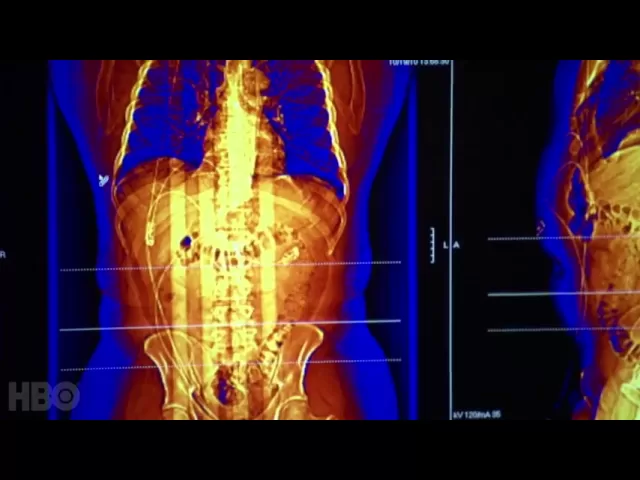
your heart or with your pancreas and they may become detrimental this person as you can see where white is body fat has a thick rim of fat underneath their skin called subcutaneous fat this person also has a lot of fat inside of their abdomen you can see all of these white blotches here inside the belly almost every organ system in the body is adversely affected by Having excess body fat and this is excess body fat underneath your skin excess body fat inside your abdomen and excess fat inside of other organs like liver tissue and muscle
tissue and heart tissue affects the function of those organs all of us have fat inside our our tummy we have to have a little bit because we actually mobilize that fat every night when we're fasting while we're asleep that's the fat that is metabolized and turned into the fuel supply to keep our brain happy while we sleep until we have our breakfast evolutionarily men and women have been programmed to deposit fat into two different different fat Depot we have the visceral Depot which is this Depot of fat that's located inside the abdominal wall it's the
first fat Depot that is readily mobilizable and it's it's burned up very very quickly and so men who needed to go out and actually find the game or the bear or the the food for the family they needed to be able to have a calorie substrate that was able to burn up really really quickly to provide them some energy women on the other hand we fight against losing weight in our hips and thighs and the reason we're programmed that way is that we rely on the calories in our hips and thighs evolutionarily to provide us
with calories for breastfeeding um or to help sustain a potential famine while we're pregnant now that's all in evolutionary terms in the modern world of course we're all living with excess energy supplies and therefore both males and female females store that fat inside the abdomen inside their muscle inside their liver and Under the Skin and all of a sudden the system which was elegantly designed now no longer is necessarily advantageous for the [Music] species down I want this PE a little bit higher than this rib I work in a department of surgery where we do
liver transplants and we're finding this very scary finding over the last decade that the reasons we do liver transplant are changing used to be hepatitis was the reason we did liver transplants but increasingly a form of therosis where the liver gets really stiff stiff called cryptogenic therosis has been the reason we're doing more and more liver transplants this is a lot of fat to get past uh it looks like like you you've done a good job at sweeping it over it's not what a normal liver looks like see how pale and pink it is it
looks like injected with fat it's normally much redder uh if it doesn't have all these fat globules in it this is called fatty liver and it's also very thick and and hard to move around so what's cryptogenic curosis turns out that's a bad term that defines people who have stiff diseased livers for reasons that we don't fully understand except it turns out that almost all of those people have a very severe form of obesity and they have a form of liver change related to obesity where fat literally gets stuck between the cells of the liver
causes inflammation causes stiffness liver disease and it may be the leading reason why in America in the next decades we're doing liver transplants 133% of all children who die in autopsy Studies have non-alcoholic fatty liver disease and 38% of obese children this is a disease we never saw before it didn't exist before in adults or in children and now 38% of obese kids have it the liver is a critical organ in our body because of the important functions that it serves and now we're realizing that the liver is very important in the metabolic problems that
are associated with obesity this has been a particular interest for us because we really are recognizing more and more the liver's Central role in causing or being involved at least in the metabolic complications of obesity which lead to Serious long-term outcomes like diabetes high blood fats and blood lipids and eventually heart disease and death I like I've battled my weight my entire life I've never been a person that had an easy time with weight from when I was about 18 years old on up about a year ago I was a little over 200 lb following
the weight gain portion of the study all of my Vital Statistics changed my cholesterol went up from somewhere in the normal range to like 250 or 260 my triglycerides went up my fat when they measured my fat it went up about 10% I think being a person that basically yo-yoed I really wanted to have some answers as to what it really means and is it okay to stay obese as I found out from the study it isn't okay it didn't work out well for me my body or my [Music] mind you doing okay all right
we're going to do a whole body scan on you measure for body fat takes about 10 minutes all right I just need you to hold real still this liver as you can see here a brown organ in the center of our body is a metabolic Workhorse it's a 4B organ that has extraordinary metabolic functions it makes a large number of proteins that are secreted throughout the body it also makes fats that are secreted throughout the body and also make sugar to keep our blood sugars at a normal level and prevent hypoglycemia and fainting when we
don't have food and if you take two obese people who are the same body size same amount of body fat and one of them has a lot of fat in their liver and the other has normal amount of fat in the liver the one with the high liver fat will have all the metabolic abnormalities that are associated with cardiovascular disease risk whereas the person with the normal liver fat will be relatively healthy and metabolically normal OB that's correct palate palmitate so what we will be doing today is that we will be um infusing some molecules
we will use this molecule in order for us to understand how well your body metabolizes fats we want to understand and see try to understand what is the mechanisms that causes this increase in fat in your bloodstream start [Music] pushing they've asked us to use five one of five fast food restaurants McDonald's Burger King Kentucky Fried Chicken Taco Bell or Pizza Hut so um and and the idea is to add 1,000 calories a day to my daily normal diet so that I gain weight over a course of about 6 to 8 weeks many studies that
have looked at obesity have really evaluated the effect of weight loss in obese people because that's what we're trying to get obese people to do and we know a lot about the metabolic effects of losing weight much fewer Studies have actually looked at what's the effect of weight gain in obese people and that actually occurs much more frequently in our population than is weight loss so we decided to do a study that would really evaluate in a rigorous way well-defined way well-controlled way what is the effect of gaining 5% body weight in people who are
already obese on their metabolic function thanks for CH McDonald I just need a cheeseburger and a small order of fries and that's it thank you it's a hand tossed pepperoni pizza those of us that have on occasion eaten an entire Pizza um each piece has 340 calories and 14 G of fat bean burrito for 550 calories is a lot of calories for a small amount of food I'm a volume eater so um I could probably polish this off for lunch and still be hungry you know I don't know I keep these Diaries and shows every
everything we eat I did the diary for about a month before we started the overfeeding so that they would know about how many calories I took in on a normal basis every day and then they added 1,000 calories to that I'm going to pick up um I guess maybe hi um could I have an eight piece meal um a chicken extra Krispy Chicken Breast has 500 calories and 33 gram of fat it's great piece of chicken I'll admit that they serve it with the little biscuits one biscuit at 180 calories and 8 gram of fat
now that I'm aware of the fact that it's 33 Gams of fat I don't think I would be as eager to grab the [Music] chicken you increase your LDL cholesterol the bad cholesterol by 14% And you increase your triglycerides by 33% after gain this 5% of body weight over such a short period of time your liver fat went from 3.9% up to 10.2% and you can see this peak much higher that's a 160% increase in liver fat content this is 5 lbs of fat and you literally gained 10 lb of fat so you actually gain
two of those fat models by that small 5% weight gain which you did over really a period of a couple of months pretty disgusting body fat is not an inert dead tissue it's alive acting tissue it's not just the volume but this tissue has metabolic function that can cause harm now the good news is that the smallest amount of weight loss is needed to improve your health a 5% or 10% weight loss can have significant benefits on your metabolic Health these are microscopic pictures of a liver from a lean man and extremely obese man before
and after massive weight loss you can see in this lean person that the liver cells are pink and very tightly packed whereas in this very obese person there's a lot of white Open Circles which consists of fat inside of those liver cells almost half of this person's liver is comprised of fat but once this obese person loses weight their liver has returned completely to a normal architecture about 30% of adults United States have fatty liver disease so this is not a simple issue this is a very complicated problem that involves a large number of people
in the United States we know that when we begin the weight loss L process you'll very very rapidly reduce the fat content of your liver in fact we found that 48 Hours of calorie restriction causes a 25% reduction in liver fat content following the study when you start the weight loss program Dr client's office worked with me and we charted everything I ate and we talked about it and we got into a plan of eating um mostly lean meats fruits and vegetables and whole grains as soon as I started doing that the weight started coming
off and all of my statistics went back to where they were when I started thank you enjoy I didn't want another hamburger I didn't want another piece of fried chicken I didn't want another cookie I didn't want any of it Hi how are you good I found out that with only a 5% weight gain a person who has a genetically healthy the disposition is at risk also so even though I've considered myself always to be a normal person and never that much overweight and never that unhealthy going through all this taught me that it's it's
almost like you're just at the line waiting to go over the edge this is a serious medical problem that we need to address because this excess fat in the liver is driving a lot of these abnormalities that are associated with with obesity not just in adults but also in our [Music] children what obesity has done as it's moved in this wave through the population is to create right behind it a wave of chronic disease obesity causes an enormous number of health problems there's hardly any part of your body that it doesn't harm it increases your
risk of cancer increases your risk of joint [Music] problems our bodies were not designed to carry two times uh our body size uh so there's [Music] consequences our throp aies that's a fancy way of saying uh joints that hurt and joints that hurt hurt more when you carry too much weight [Music] around obesity negatively affects the function of the human brain the higher the problem with obesity the less the activity of areas of the brain that are extremely important for cognitive operations [Music] the list goes on and on and on gallbladder disease liver disease people
individually with obesity are much more likely to have diabetes they have diabetes they may have foot infections that fester and don't heal and so it requires amputations they may develop blindness they may develop kidney failure which leaves them Tethered to a dialysis machine for the rest of their lives what is this doing to ourselves as a nation this is really having enormous implications diabetes follows obesity as night follows day I always thought when they talked about someone being overweight and that caused this and then it caus that I thought these they meant being huge well
we weren't huge but we were overweight and it just takes a little bit of overweight to hurt the heart to start the diabetes to lose a toe then to have to have bypasses in the leg and trying to save it and then losing a foot all right oh maybe I can get by it okay I'll just pull out he's found out just how much he can do and what he can't do I get home yes yeah [Music] yes there you [Music] go diabetes just means high blood sugar type 1 diabetes means you don't have enough
insulin to run your body's [Music] functions [Music] type 2 diabetes says I have plenty of insulin but it's not working well at the level of the cell so the level of insulin's high but the ability to clear sugar into say fat is [Music] lost [Music] therefore the blood sugar Rises makes you [Music] sick we understand much better than we have in the past what are the risk factors for developing type 2 diabetes the one that everyone is most acquainted with of course is obesity increasing weight and it doesn't have to be that you become obese
it can be even at lower levels of weight when you go from being you know 2% overweight to 5% that increases your risk substantially you were in football and then you went to Boston College this is my Boston College graduation picture and I put a little bit of weight on there this this was 30 years ago so you were just about 42 43 in that picture yeah this this probably shows you as heavy as I was you can see it in my face and it seems like I mean as we get older and we gain
three lbs well that's not very much and it's we don't have to we think we don't have to worry about it but at the end of 10 years 3 lb a year is 30 lb and that's huge somehow obesity especially in the abdominal area makes you resistant to your own insulin so what happens your pancreas is now really trying to keep up trying to make more uh in order to keep your blood glucose from rising too high ultimately it gets exhausted and the cells that are making the insulin are now themselves uh sick because of
being overstimulated and then diabetes ensues if you look at a study called the nurses health study in which they took Nurses Back more than 20 years ago asked them how much they weighed and if they didn't have diabetes at that point they Then followed them over something like 15 years and for those nurses who had a high BMI body mass index which was in the obese category they had a risk that was between 50 and 100 times higher than women who were thinner at that time we could have probably eaten better and we could have
uh done done a lot of things are better if we knew if if we knew it was leading to to a diabetes you don't have to have steak and roast beef and all those things that we used to like we don't have anymore fish is wonderful chicken is wonderful and that's pretty much where where we stand today in your in your path it's the fourth door on the left absolutely so you've got some early cataracts that make it a little bit difficult for me to see absolutely clearly in there diabetes affects the vessels and it
affects the vessels supplying the eye the vessels supplying the kidney maybe the vessels supplying the nervous system uh those are the small vessels and then it also affects those medium siiz vessels uh that that that Supply circulation to the heart to the brain and to the legs so the per the periphery now let's get to where the action has been I'm going to take a look at the foot and this is where the problem has been on the bottom of the foot here right okay actually on the side of the okay the peripheral nervous system
is what gives you sensation so people with diabetes who suffer from peripheral neuropathy means that they don't feel their toes as well they don't have the same sensation to light touch or to temperature and their feet therefore are very vulnerable to various kinds of trauma you don't realize all that can go wrong when you are a diabetic in um 2010 January actually it was New Year's weekend and he woke up about 3: in the morning and his foot had mushroom to twice its size we called his primary care doctor and he said get in immediately
I'll have the vascular team set up which he did in the emergency room they took a look at his foot and said If it's between your life and your foot your foot goes now I want to take a look at the stump okay okay can you get that off okay nice that slips right out okay and that's one of the problems is that with the diabetic foot because the circulation is reduced the bacteria kind of get their way in it looks like an innocent little infection I don't like sometimes what this looks like but this
one I was afraid of absolutely absolutely there is this risk that we know of that about 50% of people with an amputation on one side will get an amputation on the other side within about 5 years or so got it okay in the US at this point in time there are approximately 24 million people with type 2 diabetes of that group there about 5 million or six million who haven't been diagnosed and we know that from having done screening programs where we pick up cases of diabetes where the people didn't know it so something on
the order of 19 million or so with diagnosed Ty 2 diabetes and another 5 million or so with undiagnosed diabetes this has slowed us down but we it's not going to keep us slowed down I I think we have to work at it every day or else I think you have a tendency just to die and and I mean I've got grandchildren we both have grandchildren we want to see and things like that there's too much in life that's important to us just to give up and oh you forgot our wedding picture wedding picture this
was 1968 68 yeah give you a kiss happy anniversary in [Music] June among the health issues that are confronting this country and now increasingly the world this could be the number one issue both in terms of human Misery the severity of the disorders that are consequent to it and that the cost of this enormous problem which is only going to get bigger we're living in somewhat of a damage control mode where we're waiting for people to get sick hospitalized diabetes stroke cardiovascular disease cancer and then we're investing in enorm orous amount of money in trying
to mitigate the chronic disease State that's a huge drag on our [Music] economy someone who's obese costs on average more than $1,400 to care for more per year than someone who's not obese someone with diabetes costs on average $6,600 more to care for per year than someone without diabetes collectively obesity costs about $150 billion a year out of that almost $150 billion a year about half those costs are paid for by public funds Medicaid and Medicare if you look at the skyrocketing healthare costs in the United States which we don't have solutions for whatever competitive
position that we have in the world today will even be weakened by this overweight problem that we have we're going to have a productivity crisis we're going to have an employer employee crisis we're going to have people say I'm not sure that I'm going to be able to manage my bottomline business system if I don't have FIT employees one of the things businesses are doing is increasing the the premiums for for obese individuals even North Carolina State Employees if they're obese now pay higher rates Alabama employees pay higher rates if they're obese private sector firms
are are doing similar things but in fact some are saying you know what it's just too expensive and they're moving their their sites to India or China for cheaper labor and and basically offloading the cost entirely what type of nation can live without a Workforce that is healthy so what diabetes and obesity is doing to this nation is crippling the workforce but beyond that crippling the families and the individuals and the communities 27% of young people trying to get into the military cannot get in because they weigh too much that's affects the productivity not just
the military but think about that effect for police forces and fire departments and workplaces around the rest of the country what is this doing to ourselves as a nation this is really having enormous implications I gained about 150 lbs I don't want to live like this anymore please rise or does it again if I set my mind to it I can do almost anything why can't I solve this problem what can I do about it I need to find something that works for me when it comes to fighting obesity what is the best thing that
I can do for me and my family soda and other sugary drinks are the number one source of calories on our diet it's really not just about what we're eating but it's about what is is eating you we can separate out environmental factors from genetic factors got to get this weight off people who are overweight or obese and people who already have diabetes doesn't mean that the game is up yeah you got to start somewhere physical activity really is the Wonder Dragon it's a lot of hard work it's all worth it the payoff is huge
I'm just an ordinary person who does a whole bunch of very very tiny ordinary things that together are [Music] extraordinary [Music] [Applause] [Music] [Applause] [Music] [Applause] [Music]