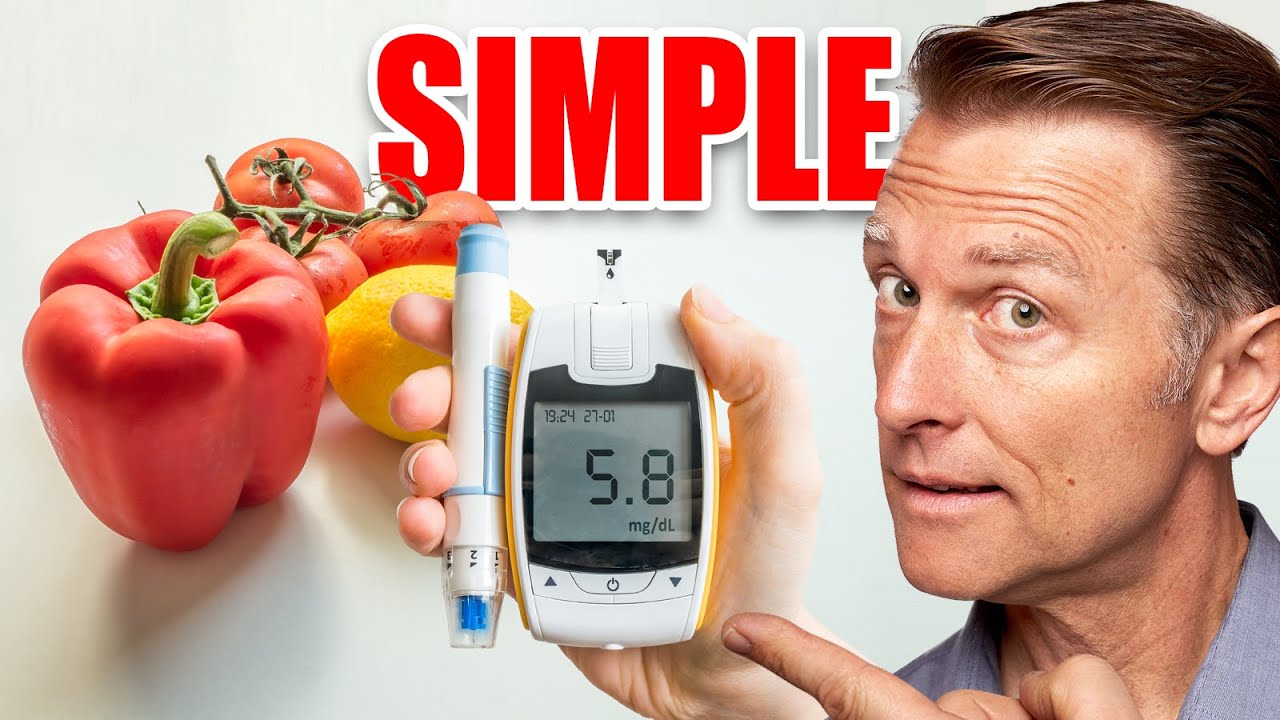
are you tired of waking up with high blood sugar in the morning even when you haven't eaten anything well we're going to look at the most common causes of high morning blood sugar and how you can quickly and safely bring it down before you even think about how to bring down high morning blood sugar you need to understand what's happening in your body and why things are going wrong and this will make it much easier to lower your blood sugar there are a couple of words you might hear when people are talking about diabetes and high blood sugar and it can all get very confusing so I'm going to make everything really simple and easy to understand so let's talk about blood sugar when you hear you have high blood sugar what does that even mean when you eat foods like potatoes rice and bread you're basically eating Stars and this goes into your gut where it's broken down into glucose this glucose goes into your blood and raises the levels of glucose in your blood so when you hear blood sugar that actually means blood glucose when your blood glucose blood sugar rises above a certain level your pancreas releases a hormone called insulin and insulin is basically a messenger chemical that that carries instructions and it travels to every part of your body through your blood and it goes around knocking on doors telling your cells to open up and remove all that glucose all that Sugar that's floating around in your blood if you're healthy and everything's normal when insulin knocks the cells listen they open up and take some of that Sugar out of your blood and into your cells and your blood sugar comes down over time as we get older and fatter and as we keep filling up our stores with glucose day after day after day your cells become stuffed and uncomfortable you know the way you feel when you've had too much to eat and you literally can't eat another bite just like that so now when you eat your blood sugar that's your blood glucose goes up insulin comes along and knocks on the door telling your cells to open up and remove some of that Sugar from the blood and they're like no thank you we're full we're fine we don't need any more glucose from you and they refuse to open their doors and the glucose in your blood stays high so this is where we talk about insulin resistance if insulin knocks on the door talks to your cells and they listen and open up that means that your cells are responsive to insulin they're sensitive to insulin but if insulin knocks and the cells don't listen and they don't open up that means that they've become stubborn they've become resistant to insulin if your cells aren't removing this glucose this sugar from your blood what happens it goes around the body and attaches itself to everything it goes to your eyes attaches there causes blindness it will attach your skin and make you look older and more wrinkly it creates a wonderful environment for germs to grow so your wounds will refuse to heal and become infected it affects your heart your kidneys your sexual function everything so we really don't want a lot of sugar floating around in the blood when your pancrea senses that your blood sugar is still high what does it do it sends out reinforcements it produces and releases more insulin to force these cells to open up and remove the sugar from your blood and your blood sugar comes back down to normal this works for a while but then your cells mount a rebellion they become more resistant and your pancreas produces even more insulin and it keeps escalating like that until eventually your pancreas can't produce enough insulin to force these cells to remove the sugar from your blood then and only then your blood sugar starts to go up so this battle can go on in your body for years but you don't know it's happening why because each time you had your blood sugar checked the result was normal and it's only when your pancreas lost the W that you found out there was a big problem so now you're left with high insulin resistance High insulin levels and high blood sugar so now you have pre-diabetes and as your blood sugar goes higher and higher you progress to full-blown type 2 diabetes blood sugar as your blood glucose is measured in milligram per DL or milles per liter depending on where you live just the same way that some countries use kilograms and others use pounds to measure weight I have a document you can download from the description that has a list of different types of foods which ones to eat more of and which on to avoid to lower your blood sugar and different tests for high blood sugar what they mean what's normal and what's not and you can get that from the link in the description so let's look at the fasting blood sugar or fasting blood glucose test when you want to check your fasting blood sugar you don't eat or drink anything after your evening meal except water so you're basically fasting for at least 8 hours and then your blood is drawn in the morning if you're going to to a lab or you prick your finger and use your blood glucose meter at home so naturally what would happen is that after the sample is taken then you would start eating and drinking normally and of course your blood sugar would start Rising so you would expect that the morning blood sugar that fasting blood sugar level would be the lowest value for the day and the blood sugar reading you get in the evening would be your highest blood sugar reading for the day because the food that you eat is what would raise your blood sugar unfortunately you may find that you get your highest blood sugar reading in the morning and this can be very confusing because after all you didn't you didn't eat anything during the night so where is this sugar coming from um and a a common question I get is what do you mean by high morning blood sugar if your blood sugar goes up by 20 mg per deciliter that's about 1. 1 mm per liter overnight then you can say that you're having abnormally high blood sugar levels in the morning for example if you checked your blood sugar at night and it was 100 Mig per deciliter for example and then it rises to maybe 130 migr per deciliter in the morning then you can say that you're having abnormally High morning blood sugar levels so there are two main causes of this very high blood sugar in the morning the first and most common cause is what we call the dawn phenomenon or the dawn effect so when you eat like we said the glucose goes into your blood now some of that Sugar goes into your liver where it's stored away as glycogen and during the night when you're not eating your blood sugar starts to drop towards morning your body starts to release hormones like growth hormone and your flight or fight hormones like epinephrine that's adrenaline and then also your stress hormones like cortisol and all these tell your liver to break down that glycogen that is stored away to release glucose into your blood your body does this to give you enough energy to start your day so that you can be alert and move around and be active even without eating anything if this didn't happen you'd barely be able to get out of bed in the morning so this is something that's normal for everyone everyone's liver breaks down glycogen to release glucose into the blood in the morning so when the blood sugar goes up because of the sugar that's being released by the liver your pancreas releases insulin and if you remember insulin tells your cells to open up and remove sugar from your blood right but insulin also goes to your Li and says we have too much sugar in the blood now stop breaking down this glycogen stop pushing more sugar into the blood normally your liver would listen and stop releasing glucose but remember that when you have this problem of high blood sugar you have insulin resistance and your liver is also resistant and stubborn to insulin so when your insulin tells your liver to stop releasing glucose into your blood it doesn't listen it just keeps pumping sugar into your blood and your blood sugar just keeps going higher and higher and then remember that your cells are also resistant to insulin so when insulin is telling them to open up and remove all the sugar from your blood they don't listen and your blood sugar stays High another cause of very high blood sugar in the morning is what is known as the smoggy effect I know I butchered that name I usually do so with the smoggy effect your blood sugar drops very low in the middle of the night your body wants to keep you alive so it starts frantically trying to raise your blood sugar so that you don't go into a coma and die this works so well that your blood sugar basically shoots up but it goes up way past normal levels and now you have the opposite problem of very high blood sugar there are a couple of things that can cause this very low blood sugar during the night for example if you're taking drugs the dose of these drugs may be too high so it drains your body of sugar during the night when you're not eating another thing is that the timing of your medicines may be wrong or maybe off especially if you're taking insulin injections where you're getting too much insulin at night while you're sleeping another possible cause is taking your medicine in the evening without eating when when there's no food for your medicine to work on your blood sugar can drop dangerously low and then if you exercise more than usual in the evening you again use up some of the sugar in your blood so when you take your medicine you're pushing your low blood sugar levels even lower so you may not even realize that you're having these very low blood sugars because it's happening at night and you may sleep through the whole thing but there are a couple of signs that may suggest that this is happening one is that you may have nightmares or very bad dreams during the night another is that you may find that you're sweating heavily during the night and you wake up to find your night clothes and your bed sheets soaked with sweat and then you may find yourself waking up in the morning with a very bad headache so now we have two causes of high morning blood sugar we have the dawn effect and the SM SMY effect it's important to know which one you have because you'll treat them differently so what you can do is to check your blood sugar at around 3:00 a. m.
for 3 to four nights in a row and if you have a continuous glucose monitor that's a CGM then that's really easy to do otherwise you have to wake up and prick your finger to check your blood sugar during the night if it's normal or high then your high morning sugar is is being caused by the dawn phen phenomenon if your blood glucose is low at 3:00 a. m. then you're probably having the smoy effect it's important to treat this High morning sugar because if it continues for a long time it increases your risk of getting diabetic nerve damage kidney disease blindness heart problems Etc and if you're having the SMY effect your doctor May lower the dose of medicines that you're taking or you may need to have a snack before bed to balance out the effects of your medicine your doctor may change the medicine that you're taking all together so how do you bring down your blood sugar if you're having the dawn phenomenon first of all let's talk about food you need to change the way you eat in the evening eat more high protein food like fish and other Seafood eat more meat eat more chicken Etc avoid Avid bread spaghetti noodles and rice and other starchy food so you could have some roast chicken and salad for example the next thing about food is that when you eat your last meal of the day don't make it too late at night and that includes snacking don't snack in the evening and try and eat your last meal before 6:00 p.
m. if you can the next thing you can do is that you can take two tablespoons of vinegar put that in a glass of water and drink that with your evening meal the worst thing you can do is to eat lots of bread and fake food like chips and sodas in the evening because this will raise your blood sugar before you sleep which means that by the time you start having the dawn phenomenon in the morning your blood sugar which is high will go even higher after eating you need to move but especially after your evening meal and the easiest thing you can do is just just to walk for 30 minutes this uses the big muscles in your body like your legs and your buttocks and these muscles will soak up and use up some of that Sugar from your meal that's in your blood and lower your blood sugar before you go to sleep don't do vigorous exercise late in the evening because it will make it hard for you to fall asleep and closely related to that is that you need to get good quality sleep at night when you don't sleep well hormones like growth growth hormone rather and cortisol you know your stress hormone they're not released the way they're supposed to according to the normal patterns and this will raise your blood sugar in the morning ideally you should be asleep by 11:00 p. m.
and getting anywhere from 6 to 8 hours of sleep I can't tell you how many messages I get that are sent around 2:00 a. m.








![90% of Diabetes Would be REVERSED [If You STOP These Foods]](https://img.youtube.com/vi/qCQW9e7CrEk/maxresdefault.jpg)