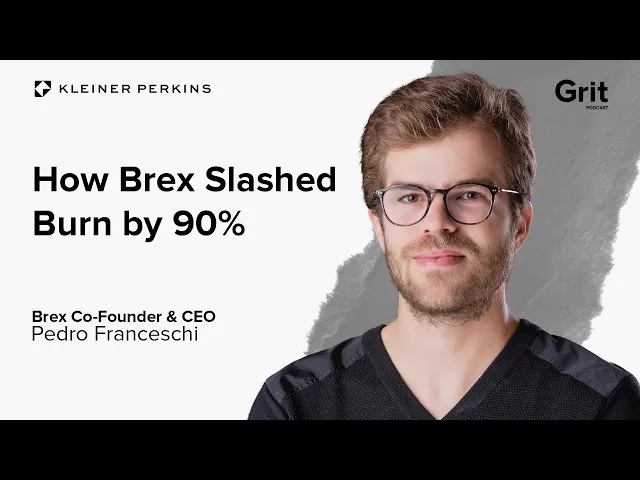
It's easy to like grow fast, burning more, burn less, growing slower. It's very hard to do both. When both are happening at the same time, I think it's a sign that something fundamentally changed about the structure of the company. 3 years ago, I think we had like five public companies on Brex. Now there's like over 150. I spent a lot of time reviewing work. And reviewing work is like a team comes to me and it's Like, hey, we're going to ship this or we're thinking about this marketing campaign or this offer. It's not about like
managing a team of people. You're just critiquing the work. We're putting like hundreds of millions a year in product investment, but the quality of the experience isn't improving. And when we zoomed out, it was just because we were spread ourselves across so many things that didn't matter. And we concentrated the resources and said, "These are the bets we're going to take and we're going to like have the courage to focus on very few things." And things move a lot faster and better. [Music] Welcome to Grit. I'm Juben, partner at Kleiner Perkins, a show where we
go beyond the highlight reel and explore the personal and professional challenges of building history-making companies. Today we have Pedro, CEO and co-founder of Brex, the company that started with a Corporate card for startups and grew into a leading financial platform helping companies like Anthropic, ARM, Plaid, Robin Hood, and more manage their spend every day. It's an epic story. Enjoy. How's your day? Uh busy. Like a a day in in Brex uh typically. So uh but it's good. Yeah. How are you feeling these days? Uh busy. It's been a It's been a good year, but uh
It's been a great year. It's been a great year. Can't complain. I'm really happy for you guys. Thank you. Is it odd like going from the golden child of the valley, right? Like you have some of the craziest growth you've ever seen. You go to 100 million in like whatever year and a half. Just like it just goes, right? I don't know how how long it was. It was pretty quick, right? Year and a half. Something like that. And then you know um the COVID years happen right then things keep going and then all of
a Sudden startups are going out of business. You guys have this huge team big burn. Then all of a sudden all the articles come out. You know everyone starts to think, "Oh, they're done. This is it's it's over." And then now you guys are on fire. What a like it's just a it's such a roller coaster, isn't it? It's just, you know, I I I think startup roller coaster is uh you know, it's never you know, when you're in it, you're like, "Oh my god, we're the best Company on the planet or like we we
suck, right? They're sort of very biodal and there's the sort of in between states get longer and longer." Uh but I I would say um I think I think it's u you know the beginning of Brex we we were just very fortunate to find a problem that was so deep and so entrenched into every single company right that was like getting a corporate card and we found product market fit really really quickly like we just we Sort of launched and it kind of worked and and of course we iterated and made it better but I
think I think we we thought we could do more than we actually Um and and 2022 and three to some degree was a a moment of uh you know just coming to realization of like what is the future of this business going to be and and and specifically what is the ethos of the company and and that was um enlightening because I think you know to Some degree we can talk about 2020 2018 and 2019 and say you know like this was sort of an accident to some maybe to some degree but I think now
there's uh less of Uh, I think there's a better understanding of the physics of the company and the customers and why they care about what we build. Um, but it took uh some painful years to to to get to that realization, I would say. It's crazy. When um when did you and Enrique stop being co-CEOs? That was uh early Last year, early 2024. Was that painful? Uh I think it was more of an evolution of the model than like a a particular pain. You guys are like brothers. Yeah, we've sort of grew up together. uh
we built the first company in Brazil uh and then we built Brax of course uh and you know we're we're friends and we talk I was talking to him right before coming here um and uh and I would say um it's it's the kind of thing that you know I think like there's a thing that people Talk about marriages of like you know you have to sort of like learn how to change with your partner right it's just like you you you you obviously you meet when you're really young and then like if you want
to stay married for like 10 20 years right there's you change in one way your partner changes in another way and then like you know eventually uh you will have to learn how to reconcile both uh both changes and I think that was that was a little bit of happened to us The the the difference of a co-founding relationship is you have a third entity which is the company and the company changes and the company matured and got bigger and and the needs of the company changed and that affects the relationship to some degree as
well. Yeah. Um so so I think I think it's more of an evolution Yeah. than like a pivot if that makes sense. Yeah, that makes sense. How do you enjoy what you're doing now? It's pretty great. I have a Lot of fun. Do you have fun? I have a lot of fun. Yeah. Like you enjoy this? I enjoy this. Yeah. It's a it's a different I think it's like the way I would describe it is like you have to make it um I had this like conversation with Bram once that was like you know Brex
was like maybe like a 100 million in revenue maybe 150 million revenue um and sort of scaling and growing really fast and I came to him once and I said like Hey like what's the job of a founder in this new scale because early on it's like product market fit and like you know hire your team and and start scaling and and he said Well, the job of a founder is to figure out how to be happy. And I was like, what? Like, what do you mean by that? And and basically what he said is
like look, like the reality is if you believe in founder companies, right? Um the thing that's matters the most is like you being there To like lead it. Uh and if you don't like it, you're not going to do it because people don't do what they don't like for a long time. Um and and and and sort of he he followed that. You know what's impressive about, you know, obviously the Carson brothers at Stripe, uh, or even like Zuck at Meta, uh, is like it's not that like, you know, Facebook is like a Meta is
like a trillion dollar company and and and and you know, and growing and doing all that Is that it is a trillion dollar company growing and all that and the founder is still there 20 years later, right? And maybe 24 years later now. Um, and and that is the part that's really impressive and and I think like the the sort of secret to some degree is like how to make the day-to-day something that is aligned to what you believe so you actually enjoy it. So I think a lot of it is like how do you
manufacture the culture and the way of working and the Way of building to be something that gives you energy um so you can do it for a long time. Yeah. Did you have a belief barrier if you could do it yourself? Like has like when you started your business in Brazil, it became a pretty big business, right? Yeah. For Brazil standards. Yeah. The third largest payment processing company there. I guess it's like pretty legit. And at that point, you probably thought, Man, can I even be the CE? like can I even run this company? Like
like I can't believe this company. How old were you? Like 19. When we started I was like 16 or soldier I was 19. Maybe the what I'm really trying to ask you is like has your belief barrier of what your abilities are changed. I think I think like for sure I mean I think the I don't think anyone is born a CEO or even a founder. I think you I think there's this like early Like rebellion of like you want to you want to see something different about the world and that's the the what I
call it the build instinct. It's just like you just want to build something and and I the biggest luck of my life is like I found I find out what I wanted to do when I was nine. Uh I just had I was just fortunate to have a computer at home and I wanted to control the computer somehow. Uh, and I figured out that coding did that and I learned how To code and I got really into that world and and the the feeling is the same since like I was nine. The the how changed,
right? It became initially like jailbreaking iPhones and then like building you know things on top of this jailbreaking community and then it became building a payments company in the acquiring side for online processing and then it became corporate card issuing and and and then it became a management platform and a lot of the Things that we do at Brex um and and and obviously the company maturing changed the how uh right I think initially was like I started Brex as like basically the CTO like building a lot of the product myself and and over time
as the the needs of the company changed, you adapt the how around the building, if that makes sense. Like what what does the build require of you versus like what do you enjoy doing, if that makes sense. So I I I I don't think there's Anything that I dislike about doing. I think it's just like a necessary condition of what you're trying to build and then orienting everything around that uh makes the how just sort of a means to that end. Give me an example. like I don't know I think a lot of people may
say you know early on at Brex um people try to build this before and they they they couldn't get a product in market and and when we look when we Asked people why um it was because they got sort of completely overwhelmed by the regulatory barrier right they were like oh you need to have you need to be a bank to issue a card and you need to like have a banking license. They don't need to have uh or a banking partner that lets you like build your own systems. That's a really complicated thing. So,
like no one's ever going to do that. Um and and what we did is like, you know, we sort of, you know, I I I I Had like there's like Mastercard manual, so all the rules of Mastercard um and Visa, and we read I basically I sort of read them over the years and and we sort of looked at exactly like what are the rules of what you can and cannot do as an issuer. um and went to a banking partner and said, "Hey, like we believe these things are actually totally fine." Uh but we
knew exactly the page and the line in the page where the things that we needed were listed. And a lot of Founders I think are like, "Oh god, like this is like a lawyer's job or compliance job." But it's just like I think it's like you have to sort of almost be a generalist of everything to do this across multiple domain, multiple functions. But um to some degree like the the the the bottleneck of the business changes over time. Early on it was just like can you even build this because there's a barrier in finance
and regulatory and then it became can you Scale it and then it became can you build more products and it became can you serve an enterprise customer and then so it changed over time. So I think you have to have some ability to step into a new uh function, a new domain and and kind of think about it from first principles and and and and understand how to make sense of it to some degree. Um and that's fun. That is the challenging part is like hey here's a new thing they never heard of like how
Do you like learn uh and and make sense of it and sometimes in first principle there's a beginner's mind and there's some benefit that you get from having seen it before but but I think there's like value in in in doing that and across multiple different things over time when uh when you were in Brazil and you picked up the computer at 9 like where where in Brazil were you what was your like what was your state of life at That point? Yeah, so um I was born and raised in Rio. Um and uh my
um my dad had just passed away. My dad passed away when I was eight. Uh he had cancer and um and you know he was sort of a nerd and had computers at home and all of that. And to some degree I think I I sort of was attracted to computers because of that. Um and I had a lot of free time. So, I was just very curious about how the computer worked and what could you do with it? What was happening Under the hood uh because it just felt really magical that you could just
have this device that just did all these things and and I and I had this like um uninteresting obsession about like how it worked and why it was doing these things and how could I change what it was doing, right? Um and uh and and yeah, I think like I just had a lot of free time and and and and internet, thank God, uh existed and there was not a lot of materials in Portuguese, which Forced me to learn English, which in hindsight was uh a good thing for sure. Uh but uh but yeah, I
I I think the internet's amazing. Just allows people to like me to, you know, change where they came from based on what's available there. Do you you you you use the word like mastery of of the computer. Um I don't know, maybe I'm wrong, but like do you feel like maybe the passing of your father created some void of control that the computer Kind of gave you? For sure. For sure. I think like the the you know, I think you want to have some you want to control something in your life, right? And then the
computer is like one of the few I mean I think software engineering is one of the few professions that you can like control all the variables almost literally right if you think about like you know you're like a a structural engineer or an architect or you're a doctor right like you you you can do Your profession to some degree and then there's variables that are outside of your control right like the weather if you're building a building or you know like someone's health if you're if you're if you're a right like and and you don't
control all the variables. So um so I I think software engineering has this uh characteristic where um you you have a higher feeling of control and that probably attracted me to some degree that it was almost like its own Universe and and once you get um absorbed into it there's like its own community of people that like um obsess over different parts of the craft like you know I think I was very interested in operating systems and distributed systems and and things like that and um you and programming text editors like how to really build
a workbench that was uh uh very uh uh efficient to to you know produce high quality software fast and and and and and sort of trying out Different tools and things like that. But but it almost came from a place of like play that I was just so curious about it and sort of try to get better at it where but but the sense of control I think was maybe the initial impetus. Yeah. Yeah. Yeah. Yeah. It's almost like the real world was painful and this was a way of going into a different world and
kind of getting lost in it and being great in that world. For sure. Spending a lot of time in it. So yeah. Is your Mom still in Brazil? No, she's actually in Italy now. What? Yeah. Do you see her? Uh I see her I see her a few times a year. Yeah. So she Does she know what you're bu like does she like does she actually know how important the company that you're building is? I I think so. I think she I mean I think she knows like she reads articles. Yeah. She she she she
like sends me the links and like, "Oh, you didn't send you gonna send me this thing that happened." And I'm like, "Well, like, you know, I I don't know. I'm not going to send you everything that comes out." But uh but um but I think I think she she gets it. She loves Brex swag. We have great swag at BS. Uh so she loves like, you know, hoodies and t-shirts and stuff like that. She has all of it. So uh but uh but yeah. Were you like middle class, poor, rich by Brazil standards? By Brazil
standards, like probably middle class. And now when she sees the way that like you know Brexit is a whatever 12 billion dollar company like it's it's going to go public at some point. Like I don't know when, but at some point it's like one of the darlings of Silicon Valley. Does she look at I don't know. Is she just like I don't know as a mother like does she like in disbelief? I I don't know. I think like I think I I think my mom had a you know like she had a a different she
she was more supportive of My I don't know more but she was definitely supportive of my journey growing up uh in a way that maybe wasn't necessarily expected from someone in her position. Right. So I I actually I I went to work for uh like as a sort of professional software engineer for the first time like in in a company right when I was 11. And and the way it sort of happened is this company saw that I was doing these things online and and you know they someone that worked there Was actually involved in
uh uh very early on in in building iPhone apps. Uh no one knew how to build iPhone apps in Brazil back in 2008 or nine. Um, and they went after me and they were like, "Hey, like want to hire you." And and I actually didn't share my age online, so people didn't know whether I was like 10, 20, or 30, right? Um, and they sort of sent me an email saying, "Hey, like we'd like you to come work with us and you know, like we'd love to meet you for An interview." Uh, and I told
my mom like, "Hey, these guys want to interview me." And and I think like she she had a decision. It's like, "Well, you could either like shut this down and be like, "Well, definitely don't go there, right? Like you're not going to work. You're 11." or there's a supportive version of it, which is what she did. So, she actually went to the interview with me and and she said, "Hey, like I I think it'd be beneficial for him to be amongst Like better people than him, but um but he's a kid, right?" So, so she
had this sort of way of dealing with it. And you know, like at the same time, I remember back then that like this article came out that like uh Bill Gates's daughter could only spend 45 minutes a day or like 15 minutes a day in the computer. And my mom was like, "Well, if Bill Gates, the daughter, can only spend 45 minutes a day, like maybe you can spend 30." Um, and and that would have just Like ruined my life because like I was spending 12 hours a day in the computer learning how to code.
And like had she done that decision differently, like probably the rest of my life would not would have been completely different than it is today. Um, like that one decision uh completely changed the course of my life. even though it seems uh inconsequential when you just think about well like how much you limit your kids's ability to be in the computer but I think she had some um foresight in in just understanding what I was doing and that I was actually trying to build something like I wasn't like playing games online I wasn't like you
know just sort of on YouTube I was actually trying to create something and I think that uh uh uh ability to discern what I was doing from a very early age made her more supportive early on which was like very impactful For sure. This idea of small decisions seeming big In hindsight. How often do you think about that now? Like how many decisions do you think you make a day? I mean, it's everything, right? I think it's like I think like the the like I think I think I think there's a very small number of
decisions that matter a lot, right? But but the thing that but on the other hand there's a million decisions to do every day right and I think these are sort of paradoxical statements right you're you're choosing a bunch of things Every day um and very few things matter and I think like the way I reconcile that is like at the end of the day like you you live like these very big decisions they sort of said the broad stroke folks of where you're going. But the reality is like you sort of live in a single
day and the way like any big plan happens or any big thing happens is by like a series of deliberate decisions that happen as well in a day right um And and you know there's this quote I think it's from Tim Urban that I really like which is like you know life is a picture but you live in a pixel and the idea is like when you sort of zoom out and you look at a big outcome you're like wow that's like a really big picture that's a really beautiful picture But when you zoom in,
it's a bunch of pixels and you actually live in each pixel which is today. So on today, Tuesday like or Wednesday or Thursday, What are the decisions that you're making that actually contribute to that outcome and and these are things like you know what kinds of things you spend time talking about uh you know one of the things I talk a lot about at Brex is like things take the importance you give to them right so it's like if you talk a lot about something that doesn't matter people perceive that that's important uh if you
talk a lot about something that matters people also perceive that to be Important so so it's almost like how do you distill those big decisions almost in a belief system um that that sort of shapes the way all the small decisions happen almost automatically, right? So so so I I guess like the way the way to think about it is um these small decisions compound into bigger bigger decision that that that actually really matters but the big decision is just a lot of small decisions combined. Yeah. But Using the analogy or the metaphor of your
mom making the decision to just let you run wild on the computer as much as you wanted, whereas she reads an article uh that Bill Gates's daughter is, you know, only spending 45 minutes and so should you be spending 30. That probably seemed like a pretty small decision for her at the time. I I think I think it's just like which things compound, right? That's the only way to go about it is what what are the things that if you do Every day they get you to like dramatically different places, right? If you do it
in if you do it if you do a lot of it, if you do a little bit of it or if you do none of it. And and I think like um learning a skill including learning how to code, it's probably similar in the sense that if you're spending and I'm I'm sure I spent more than 10,000 hours coding in my life, but like if if you spend and and probably you know in in sort of early ages of my Life. So I think like to some degree when you do that um like like if
I had done this over the course of five years versus 10 versus 15 versus 20, it gets to very different places. And I think like I I really don't think I I think the biggest luck that I had was just like knowing what that is very early and and you know comparatively speaking sort of having a 10-year head start on on most people that are my age today. Um and and and to Some degree that all sort of boils down to having compounded that skill for longer, right? And having compounded that learning and the sort
of sense of building from from a from a younger age. So I I guess is the framework is like which things compound and which things don't. What are like practical things that do compound that you think about that you focus on? Yeah. And what are things that you think most people think compound or think are bigger decisions That you tend to not think about? Yeah. Um uh I think learning compounds a lot like the ability to learn and and and and how to learn things. I think quality compounds. I think like the degree to which
you raise the bar for what matters in your company and and the bar for what great looks like. I think this like compounds immensely because companies like the only thing you have as a founder that no one else has in the company is this thing that I call like The moral imperative. You get to like dictate what's right or wrong. And dictating the right things to be right and the wrong things to be wrong compounds a lot because that's the kind of thing that people learn. Um and you can't put it on paper. It's just
like when someone comes to a review with a product that's [ __ ] and they say, "Hey, this is just not at the bar." Um, like setting that bar really clearly and really deliberately compounds because Everybody's learning from that. It's almost like uh um uh uh it's almost like the judicial system that people are learning from the examples of like past judgments and past decisions and past mistakes uh and creating their own understanding of what the bar is for things. I think that compounds a lot. Um things that don't compound. Um, I think I think
like in general like things that are very like [Music] Um focused on what other people think or like perception um versus reality, right? I think like there's a lot of people that like and you know we were definitely prey to that in the past of like you know you want to be the fastest company to X or you want to raise the highest valuation and be at the at the forefront of like you know the the the the the sort of perception of of of the the kinds of customers you serve and and you Want
to you want to seem bigger than you are like these things are like they definitely play a role in the address but I think the substance of of what compounds is like are you like delivering a 10x customer experience to someone and is that getting better and better every day. Um and and and I think quality the sort of first point I I had has is sort of the thing that compounds and all the rest that sort of creates a perception of That but not necessarily the substance probably doesn't compound. How do you compound the
bar raising? Like maybe I understand how you how bar raising compounds, but how do you be deliberate about raising the bar? Maybe with people. I think I think you have to create a very clear um rubric for what kinds of people tend to work in your company. And and it has to be simple. And and I think for for us like what we did is there was one day That I was like we we had a lot of leaders in the company that have like worked some that and a lot that haven't worked. So one
day we I sat down I wrote a list of all the people that have worked and the people that didn't work and and I was trying to find like what is predictive of leadership success? What what are the things that only the people that worked have in common and the people that didn't work do not have in common? And a lot of things are not a Lot of things are important but they're not predictive. Right? Okay. So, for example, someone that's like customer obsessed, very important, but there's people in both sides of the list that
have that. So, it's not exactly predictive. And and the only thing that we found at Brex is this this trait that we call operate at all levels, like someone that has the ability to operate at all levels. And and the way we define it is someone that even at the highest Levels of leadership has uh deep understanding of the details of execution at an individual contributor level. So what that means in practice is like a great CTO is someone that's actually a great engineer at first uh and can actually write great code and design great
systems. A great head of design is someone that can actually design amazing products. a great head of sales, someone that can actually go and close deals themselves if they need to. And doesn't mean they're going to do that all the time, but it means that they know uh the nuances of what makes someone great at the craft, someone great at selling, someone great at writing code, someone great at designing great products. And and if you don't know how to identify greatness because you know how to do it yourself to some degree uh or you know
what the bar is yourself to some degree because you're in intimately connected to it uh there's No way to build a team that's great. And so so I think the the first thing is identifying creating a a very clear sense of like who are the people that actually understand the craft and and and the specific uh uh uh nature of what is great work in this function that they're doing. Um and and then the second thing is how to be very consistent of that across every layer of the company and and painfully so. So one
of the things That we did in Brex 3.0 know when we did a big cultural reset is we basically said hey we went through every leader in the organization and said like can they operate at all levels or no and and and and a lot of people couldn't and and we had this like uh a lot of companies have this over time uh this role that people call it like a people manager. It's like someone that's like, well, this person is like they're sort of they're like an a director of engineering, but they Can't really
code because they manage people now. Or, you know, this person's like they're like a they're like a VP of sales, but like they can't really sell because they're now managing the team. And that concept is just something that we eliminated. Like there's no that role for that anymore because what it means to be like at the end of the day, there's no way to manage people divorced from the work. You're managing the work itself. Like a great head of sales is Not managing the team that goes and then closes the deals. He's managing the deals
through a team, right? It's like uh um you know Brian Airbnb talks about this like you know it's almost like imagine like Johnny Iv at Apple like designing the iPhone managing the team that goes and designs the iPhone in the corner. No, look, he's designing the iPhone with a group of people and and and it's just it's sort of simple, but it is a very profound change in how you Orient your relationship with the work and your relationship with what you put out there in the world. Um, and I think like you just have to
select for people that appreciate the actual output of the work and the work itself and not the process of doing the work, not like the team that does the work and not like what people perceive internally about who does the work. All these things are like accessories. They don't matter. What matters is like do you know what Great looks like? Uh can you do it yourself and bring people along with a really high bar uh for doing it at that level? And if you get rid of that director of engineering or that VP of sales,
what's the trade-off to that? What's like what was your perceived opportunity cost whether that played out or not? I don't think there was one. I think I think did you eliminate that layer or did you back? just we just took out two layers of the company two layers Almost two layers entirely of management yeah so it would be you so I'll give I'll give you an example uh like the person that our CTO right now was two layers removed from me it was someone that reported to someone that reported to my CTO back then I
remember I came to him and I was like um hey um I think you should run engineering and he was like let me guess the reason why you want me to run engineering is because I don't want to run engineering. And I'm like That's right. That's exactly right because like you're going to build it for someone like you that actually is and and by the way he joined the company as an IC engineer. He joined as an individual contributor writing code uh I think four years ago. Um and and the reason is like the reason
I elevated him was because he knew what great engineering was directly like he experienced it himself because he knew how to do it and he could bring and Inspire other people to do that as well. Uh there was like almost universal respect for the bar that he set for what great execution means. Um and and I think the other thing that happens is like I think companies have this very perversive structure where where you are in the org chain means how involved you are in a decision and and and I think what happens is you
have a lot of companies that have really talented engineers, really talented salespeople, Really talented designers and those people get pushed down to execute on orders that the management chain gets to them and and One of the things that this model breaks is that because there is no perceived superiority in anyone based on their position, right? Because at the end of the day, everybody's focused on the work product. The work product is king. So the work product is what dictates who gets involved in a decision or not. So it's not like you're saying, Well, like we're
going to go build this product, this feature on this product. Let me get the manager of that team and the manager's manager and the director and the VP. And then in these rooms where there's like I remember these rooms in like Rex 2.0 0 like two and a half years ago where I'm in a room and there's like 12 people and like three IC's and like se six or seven managers from the a design manager, an engineering manager, a product manager, Maybe a sales manager, and there's like three engineers. And I'm like, those are the
people that actually know the problem. And when you take all this fat away from the system, what these people start doing is like they start taking far more initiative and they take a much bigger role in the organization because they know the problems. Like they know what the bar is and all you have to do is just create space for them. Elevate some of them uh uh in in leadership Roles which we've done. But the reality is the work product and the output and the quality of what you're shipping is king. And we're going to
subordinate everything around having the right people involved to that work. Not to make it easy to manage the org, not to make it easy to hire people, not to make it easy to uh deal with the project management. It's going to be all around the work product first and then everything else follows. Yeah. You're Working backwards from how can I put together a group of people narrowly focused on creating the best work product. Yeah. Yeah. And just like and your answer to that is find the person in the or whoever it is that you think
has the best eye for great work. Mhm. As defined by a set of things that you've seen them do, whether that's in sales, marketing, or engineering. elevate them. If there's floors along the way to the top, Remove the floors. Yeah. And and and the thing is like people like I mean James and then and then bet on them to learn how to hire people. They will learn how to do that. Um and and and obviously there's a minimum, right? So I think like someone that has no aptitude for managing people probably like an IC engineer
probably shouldn't be the CTO of Brex. Well, even though the current CTO was an IC engineer, he was. But did was he a manager after that? He was a Manager after that. Yes. It's like something something for sure. But but but I think like the way a lot of people like do that is they say like well like does this person have the experience managing an org of this size? And I'm like why does that matter? Right? It's like this person was this person was managing or of like maybe 25 30 people before and now
an or of like 350 400. Um and and and when you look at it, you're like, what changes about the physics of The problem that requires like it's so much easier to say, okay, I'm managing a team of 50 now a team of 350. Um than say I need to learn what great work is like the like it's almost like a it's almost like a different thing. It's almost like a completely different category of challenge. And and I think um most people that have that understanding and understand how to identify great people also I think
they have to have that eye for like which Which other people are also great uh and and and and been able to to to bring that along of course but but I think like I think people overindex on like how much does this person know how to manage a large org or a large team and all that stuff is like not that hard. People learn that if they're smart enough, I think. And so is the net takeaway that you've had from this that experience is grossly overrated around anything other than taste for the work? I
think that's pretty close to right. I would say um experience matters to the degree that it exposes you to great work. Um, and and I think like maybe the perfect example of that is like you go to someone that's like like oh my god like I hired this like great like growth PM from Meta and you're like sure but this person didn't do the thing that made Meta grow right That person worked in like 2009 right unless you're hiring the person from 2009 that actually the CMO of Meta today. Uh so that's like a pretty
hard person to hire. uh you're not getting the person who actually was exposed to the great work directly. You're getting someone that was exposed to an like a layer on top of a layer on top of a layer on top of a layer of something that was already working and scaled. So that person had like less exposure to That. So I think experience matters to the degree that it exposes you to that. So you have more of a pallet to identify what it means in different contexts. Um, but I think the maybe the other common
trend besides great work and great taste is like you hold yourself to a much higher bar than anyone else could ever hold you to, right? And the way I describe this is like is like you know someone up on something, someone made a mistake and Then you can go to the person, give them feedback and like and you know that you don't have to be any harsh on them because they are like killing themselves inside and they're like, "Oh my god, like this is like so stupid. I wish I had done this differently. Here's the
10 learnings." And they're like thinking about the [ __ ] in the shower. They're thinking about like how could I avoid this again? How could this possibly be happen? like how can I change this next Time? How can I learn better? And I think if you have like taste for the work uh and and great taste in general um and hold yourself to a the highest bar possible so that not even me or your manager or anyone can hold you to a higher bar. The those are typically some of the ingredients that I think tend
to work. Yeah. My um my definition of this is the dolphin. Like uh if you imagine a dolphin going up and down in the water, like they're up in the air and then They're all the way submerged way under the ocean. And an executive uh it's the number one thing, maybe the only thing that I look for in an executive. And an executive generally by definition has no problem being up in the air like at a strategic strategic level. Uh but getting underwater is often the thing. Maybe that's your framing of the the taste for
the work. Yeah. And um and in many ways like it's even more Pernicious because if you don't get close to the work, how can you be strategic? Yeah. 100%. Strategic is not a euphemism for a big team that gives you leverage. You know, like strategic is deeply understanding the end problem and the path of least resistance to solve it elegantly. How can you do that if you're not very tactical? Yeah. 100%. And often those people do not have the LinkedIn that you would necessarily Expect a person to have. That's the CTO of Brex. Mhm. And
I think the problem compounds even more when you feel all of this pressure to your point about like what doesn't compound like what people think about you. Like this is where this gets really bad where now you have a board and you have other people in the company and you have your own ego that you feel like you need to satisfy that says you got this person who has this pedigree And it's actually like the worst thing you could do. Yeah, 100%. It kind of feeds on itself 100%. I I think I think like there's
definitely, you know, to some degree like again I think pedigrees are a a measurement of like the person being exposed to great work, right? I think that that is really all it means. And and I think like the question is like when someone says, "Oh, this person worked at this amazing company, right?" And you're like okay like were they like And the thing is when a company when a company's doing really well there's this phenomenon that happened that people associate their presence with the success of the company right but the reality is like was the
company successful because of them regardless of them or despite them and that is something that's actually really hard to assess and but but if you go a little bit deep you can actually get a sense of like was this person directly involved Uh in in what was success successful or not. And and a good proxy is like a lot of times when you hire, you know, the leader of a company that grew really fast, typically it's very hard to find find a leader, but sometimes you can find a number two that was like right underneath
that person and saw everything and had direct exposure to the work. Um, and and now I was maybe looking to be the number one in a new role as an executive, for example. Uh, But like someone that was like, well, like I I I was I worked at the company during those years of like very fast growth. That that's meaningless on its own. I think it's like where were they actually engaged in the thing that made the company successful or not? That's like what matters. You've referred to Brex 2.0 and 3.0. What is that? Yeah.
So, uh we when we we made a bunch of changes in the company uh why end of 2023? Well, we were not Growing very fast, burning a lot of money. Um and uh and and and we got to a point that it was pretty clear that like I I wasn't enjoying the the work. I wasn't enjoying what it meant to be to work at Brax. I wasn't proud of what we're shipping and and it just took um a reset to be like let's put a stake on the ground and this is what the company will
mean moving forward. And I I I decided to Call it Brex 3.0. 1.0 0 was sort of the early innings of Brex like the sort of a credit card for startups. 2.0 was like the sort of zerp growth that came a lot after that and 3.0 was like the uh rationalization at the end of 2023 and when you say like growth slowed burn was high can you quantify that? I mean, we were burning a lot of money, like hundreds of millions a year. Uh, and growth was, you know, Brex was doubling every year for a
While, and then Brex was growing, you know, uh, uh, uh, poorly. Way less than that. Way less than that. Yes. And what did you grow? So, that was 23. That was the end of 23. Yeah. And what happened in 24? Growth accelerated a lot from there. back to what it was pre not not exactly but the base is much larger right so the base is like probably three times four times larger than when we started so uh you know growth Accelerated you know almost 3x since where we were before wow and burn went down yeah
like close to 90% close to 90% and is that as a uh is that a byproduct of the reduction of layers um like not directly Right. The reduction of layers reduced some of the cost maybe like 20% of the cost 25% of the cost but 90% 90%. Okay. Um but that was I I think like you know someone someone sort of Said this to me which is like it's easy to like grow fast burning more. It's easy to like burn less growing slower. It's very hard to do both. and and and and I think when
you when both are happening at the same time, I I think it's a sign that something fundamentally changed about the structure of the company, right? Fundamentally changed about how people are actually approaching the work. Um, and I think like to some degree That's that's what I think happened. Um, and and it was a it started with a big cultural change of saying, hey, like every leader has to operate at all levels of the organization. Number one. Number two is like we want to meet the customer where they are at all times. So we want to
start by every time we sell something to a customer, we have to be solving a problem they have today. And because over time Brex built a lot of products and the company had this habit Of like effectively selling everything we had into the customer on day one which meant we didn't really solve any problems they came to us with. uh and the individual pain that was like actually making create making making their lives very hard. So we we decided to just meet the customer where they are first and win the customer first in one problem
and then earn the right to give them more and sell them more things over time. Um three, um we we we did a we did a lot of clean up in terms of like um the comp model and incentives and incentivizing go to market on like revenue versus other metrics that were not revenue. Uh we we rebalanced a lot of people to be more equity oriented than cash oriented in their comp. So I would say a lot of like comp hygiene and incentive hygiene. Um and uh and we just like narrow down the Focus on
how we build the product and and and what we used to do and we did a lot of stuff on the product side and and what we used to do which I think is what a lot of companies do is like we had a bunch of teams and you know and and I kind of joke that in the past we had like one team working towards five initiatives and now we have five teams working towards one. So we just like completely channel funneled down the resources towards fewer things and did Them really well. Um we
changed the way we build products to instead of shipping every time. We we still do that but we actually now have three major product releases a year that we release a massive number of changes in the product. I'm actually the editor of the road map. I spend a lot of time with the team thinking what we want to ship in each release and why. And what it does is it creates this ability to do a company affecting Investment on the very few things that matter versus like spreading your resources across a number of things that
don't actually matter at all. Um because I remember just like using our product and being like we're putting like I don't know hundreds of millions a year in product investment but the quality of the experience isn't improving and and and when we zoomed out it was just because we were spread ourselves across so many things that didn't matter and we Concentrated the resources and said these are the bets we're going to take and we're going to like have the courage to focus on very few things. um the the amount of like capa leadership bandwidth and
talent density in these problems just increases dramatically and things move a lot faster and better. And is that also when the CEO when you became the sole CEO? Yeah. These things are all connected. Yeah. Yeah. And so you changed all these things. You become The it's you become the editor of the road map. it in many ways it reminds me of like you're taking the best of a lot of different companies like uh you know like Salesforce is famous for doing a big thing once a year Dreamforce everybody marches towards that drives all product sales
marketing everything you know Brian Chesy is pretty famous now for at Airbnb Brian Influences a lot so Yeah, for sure. A lot of the same ideas. These ideas have existed cuz it's not just you. Like so many people like what what happened? I think it's pretty simple. I think it's like people people um mixed uh your ability to ship software fast with the customer's ability to use it. And and what I mean by that is we ship like hundreds of times a day and the product's getting better every Day. But but the thing that a
release process helps um is back in the day you had no option but to ship software every year with like a CD, a physical CD of the software, right? Um and and I think like the the downside is obviously the product cannot get better you know quickly as you learn things and cloud made that better right all the things that we know about already but but the there was a good thing which is like the customer had very clear sense of when Things would change and and how should they change their behaviors to use these
new things and benefit them. So, so what the release process does is it allows us to coalesce everyone uh around one moment in time that we actually deliver things to customers in a very big way and not just a delivery from a sort of shipping the code standpoint but from a go to market enablement, marketing, uh support training, uh implementation help and all these things that enterprise Customers need. So a lot of it came from us maturing as well and the kinds of customers we served because you know three years ago I think we had
like five public companies on Brex now there's like over 150. Wow. And our enterprise business is you know almost doubled last year and it's growing very very quickly and more and more companies um you know some of the most important companies on the planet are choosing to use Brax to run their finances right and and that Warrants a level of um thoughtfulness about how we release and build software um that that this process allows you to do on not just shipping but delivering value which includes of course delivering the solution on your on your on
your on your mobile app and website and etc. But most importantly, making sure they get value, they use that the right way. Um, and and maybe the last thing I'll say is the other thing it does like I really believe that like the Company needs like rhythms to function. Um, and and and the rhythms have to come from the top. And I I I at some point in my life I was like fascinated by like the sort of hyperdistributed model of like Amazon like the two pizza team kind of story and and and I think
for their business that works really well because things are so segregated, right? Like like one product category is very different than other product category, right? AWS is very different from Retail. But in a business like Brex where customers are really buying a unified experience of financial services and software uh you need a a singular product vision for how all these pieces fit together and that articulation has to come from the top all the way down into every layer of the organization. Um, and what the release process allows you to do is to coordinate everything from
the top versus expecting teams to coordinate stuff on their own, which is Like really timely, really costly, and just far more prescriptive about what you want done and what you want shipped. Um, which I think just creates clarity for where the company's going. As a part of 2.0 to 3.0, did you change your day-to-day of leadership? Did you change how you think about organizing your day, your months? Like a lot. What did you do? Um I I spent a lot of time reviewing work. A lot of time of just like probably half of my time.
Um and And reviewing work is like a team comes to me and it's like, "Hey, we're going to ship this or we're thinking about this marketing campaign or this offer or this like whatever like anything or this PR strategy, whatever it is." and and just spending far more time actually reviewing the work itself with people that I trust and and and and reviewing, but also uh uh jamming on things with the teams that are actually doing it. So I I I I spend probably Uh uh I would say a third of my time on sort
of traditional CEO duties like running the leadership team, running my direct reports and all hands, things like that. um then a third in like reviews and then another third in like one or two projects that I'm typically involved almost as an IC um actually you know pushing things forward in a in a in a director in a in a direction that I believe in a in something that is like Company affecting to some degree um and and and twothirds of that if you think about it it's like it's not about like managing a team of
people it's just like you're just you're just critiquing the work. Uh, and a lot of it is the taste making of like saying this is the bar for for what we want in in terms of the things we ship and and and the reviews that we're doing. Um, and like here's the ways in which I want to personally influence the direction of this Initiative or project that that we're building. Are you writing code? Uh, I actually am now because I'm I'm getting pretty involved in the AI coding tools. Uh, cursor. Uh, I played with wind
surf a little bit over the weekend. It's good. Um, it's pretty good. Both of them are pretty good. Uh, I played a little bit of Devon. Um, and, uh, Versell and Vzero. Uh, we've been pretty impressed on the prototyping side. Um, so Retool, one of our customers, we've we've played With it as well a lot in some in some interesting things internally. So I'm actually doing it but but not as much from the perspective of shipping things but from the perspective of like learning the physics of what it means to be a soft engineer in
this new AI era. Were you worried about the perception of this extreme level of change internally or externally? either both. Both no I think like actually Not really because like the thing is like people also to be fair you didn't have much to lose at that point like it was not like you were doing it during the Yeah. I mean I think I think growing 3x I think people people forget a few things like first is um um people complain a lot about change but not changing is so much worse because when we did Brax
3.0 like we didn't know it would whether it would Work or not. I just knew it would be different. It's like may like maybe it's not going to work but it's for sure going to be different than where we are now. Um, and and I think like that's a good thing because like if you if you have enough of a growth mindset and you're like trying to learn from mistakes and like seriously internalize them and understand like how to change your past decisions to to get to a better place. Um, change is is is effectively
the clock speed right of the engine, right? It's essentially like the speed in which everything is happening in the company. Um and and and I think like you know and of course there's too much change and I think like things need to compound and and I think you know now now now things are compounding in in a very different way than it used to in the past and at least in the last few years. Um but but I I think people are more afraid of Change and I actually think companies can take far more change
than people think. Uh far more. Uh and I remember this like you know first time we did a layoff in like 2020 you know someone told me oh you know like companies never recover from a layoff and I was like what and it's like yeah you know X company Y companies Z companies did layoffs they never recovered and then people told us again and people said well companies never recover from like More than 50% change in the leadership team and it's like these things are not true or companies never recover from slowing growth 100% that
that was a big one like and that everybody was like yeah companies like you know it's really hard to reacelerate growth at scale in you know the sort of hundreds of millions of dollars revenue range and um and and you're like sure like I hear you right but you're talking about like this is like you're talking about the Stats like oh these are the stats against you or in favor of you and I think like the you you don't like as an operator right I think like you don't live in a world of stats you
live in a world of black and right? Like things are going to work or not going to work, right? And and and you're trying to make them work. Whereas like I think investors are looking at it as like as a a sort of a range of outcomes and a range of Probabilities of what could happen. But but I think like at the end of the day like it's all about the work that you ship and the work you put out there. So it's like so it's almost like reducing to a very simplistic framework and and
and it's almost like what is the quality of the product we're putting in front of a customer and if that gets better like everything should get better and what is the quality of how we're actually selling and Explaining the value of this to customers versus everything else that exists. Is that experience getting better? And if it is getting better everything should get better. So I I think you almost have to be uh uh sort of ridiculously reductionist to say like okay if the building blocks if the atoms of what constitutes the company success are working
well and I think that's like the quality of your product the quality of go to market and the quality of your People right so if these three things are there um it it's almost like just give things time and the results will probably come but but but but it's But the the thing that's hard is there's no feedback loop until things are working, right? And I think like I remember like 3 months into Brex 3.0 or four months into Brex 3.0 people are like are things working and people ask me intern like is it working
or not? I'm like I don't know if it's working. I Just know that like the quality of the product is higher and I just know that the quality of the people is higher and I just know that the quality of how we're selling and the go to market execution is higher. That's all I can tell you. and and I believe these things to correlate very highly with a company being successful. Um but but that's that's all you have, right? There's not there's not much more uh than that. So so I think like the The you
know these are the things to focus on and change everything in service of these these three things working and kind of ignore the noise. when you promote the engineer engineering manager into the CTO, were you not worried about backlash internally or perceptions around a move that extreme? Yeah, I mean f first like our our our our previous CTO was like very much on boarded a plan and very involved in the transition, right? So so He was very so I think like his support probably helped internally. Sure. Um two like I one of the things that
I this may be a little controversial but um I think it's true is like like you as a leader like you are not in the job of converting people right and I think a lot of people are like oh like you know come here do a save call because this person is like supposed to leave and They may go to a And it's like you can't control that. Like people like all you have to do is say here's the way we're going to do things. And if you believe in that, that's awesome. We're going to
go crush it. And if you don't believe in that, honestly, you should probably go. Mhm. And and I think the a lot of the the psychological challenge of turning the company around and and and I think of doing any kind of Uh uh uh uh big change in a company is that um you have you see a lot of people leaving because they don't believe in the thing and and and they say well you know like and and there's all these reasons of like well this other offer is great or you know like I've been
here for too wrong. And and I think the only way to not be like psychologically crushed is if you say, "Look, there's going to be believers and non-believers." And it's actually fine If they leave. And it's like not frowned upon. And and I'm friends of a lot of people who left the company and they don't believe in the direction that we're going and and we have great relationships and and that's great. But there's a very big difference between whether they believe in the way you're doing things or not. And and and and there's no such
thing as converting someone. All you can do is tell them, hey, here's how we see the world. Here's How we're going to do things. And of course, you have to live by these things. You can't just say them and not do them. But assuming that it's actually happening, uh some people will self- select out. And that's a positive, right? that that that is the culture uh uh creating enough pressure in itself that people are saying maybe that's not for me and we did a lot of things that were unpopular right we said hey I'm going
to be the chief product officer And I'm going to edit the road map and say exactly how I want to build things um a lot of people said this is not for me a lot of people in product said this is not for me right then we said we're going to go back in person a lot of people said this is not for me including a lot of leaders in the company that said hey I like working remotely and we're like we think a culture of intensity is important and for intensity is easier done in
person and and Building connection amongst the people that are working really hard is easier in person. Um another thing that we did is we said hey like we we will we will we will focus a lot more on the actual work than on managing the people that do the work. Doesn't mean management is not important but it's going to be secondary to what we ship. A lot a lot of people don't like that. A lot of people believe that their careers are being managers and managing people And building teams and and and and and also
something unpopular. And every time you do one of these things, some people leave and and the thing is like you have to almost reframe it and be like that is actually the system self-correcting itself and people uh uh uh choosing to be aligned to people that have similar beliefs. And then I'm going to hire other people that have those beliefs and will actually amplify the thing you're trying to do forward because that is What the culture is. The culture is like it has to have some level um of antibodies to things that you don't tolerate,
right? Because otherwise if it's like if it's like uh um bland and something that like anybody can fit in, anybody can belong, anybody can do this, then then there's no meaning behind your choices, right? because it's not creating the right selection pressure. Mhm. What else did you do that you think was Controversial? Maybe controversial internally. Um like on the comp thing Mhm. did you actually reduce people's reduce people's cash to some people? Yeah. And increase their equity. A lot of people. We increase a lot of people's equity. People that you thought were valuable. Very valuable.
Like that you would have promoted 100%. and you said, "Hey, we think you're one of the best stars in this company. We're going to lower your Cash." Yeah. And and we had his model. That feels controversial. Yeah, it is controversial. And and I think like the belief that I had is like people are not going to get rich here on e on cash. They're not going to make money on cash. Cash will be the way they pay for their everyday expenses and their and you know their sort of immediate life needs. But you're going to
build like generational wealth Through your equity and and I think like people believing in the value of the equity is like a very important thing in a company and and and you know and we wanted to make sure that everybody had that to some degree. So we looked at how much people owned and and their ownership and their stake and different valuations and things like that and and we sort of readjusted some of that. And a lot of people in the past model, you know, back in the day, you could Basically choose freely between how
much cash and equity you wanted, you know, comp model, which was kind of a Zerp idea. Um and and and and that created people that just like selected more cash and and some of them were low performers and and you know we just ended up parting ways over time and others um just had sort of historical baggage that we said hey we're changing our philosophy and we'd love to have you on board but there's Going to be a change and by the way everybody's changing so the other thing is doing it consistently and we said
hey there's a max c salary cap in the of X. Um, no one makes more than X, including me, including everyone. And you're going to be at that max because you're above the max today. Um, and that was like really healthy, just creating that like um collective sense of like everybody's giving up something in order to get the things that we're actually trying. What About bon What about bonuses? Um, can you We don't do bonuses today. Uh, nobody except for sales. Except for sales. Yeah. Uh, I I I don't really believe in bonuses personally. Um,
I I think they have a role when the company's like cash flow positive and and profitable. We're not there yet, although we're getting closer. Um, I I would say like I think like bonuses can create a culture of like rewarding like spot Performance versus a consistent performance. And and I think like the fundamental belief that I have is like I think comp is like a hygiene factor not a motivating factor which means like um uh sort of a uh too much comp doesn't mean job satisfaction mean just means lack of job dissatisfaction. Um so so
so said differently like when people are not compensated Enough for their roles of course that affects them because there's a sense of fairness and there's a sense that they're not being rewarded but once they are at that threshold and and I really believe in paying people really well and we do that um I I I believe the best people are not motivated by the money they're motivated by the sense of doing great work and and and being part of something that is aligned to their values and something that is aligned to Their sense of identity
of what they're putting out there in the world. Um because I am that way. You know, if I were to do this for money, I would have stopped. Uh um and I think a lot of founders are similarly, right? and and and and and I think that's true for for for a lot of people uh uh that are great at their work like and and and of course like people make a lot of money at Brax of course like there's going to be a lot Of like people that you know create generational amounts of wealth
through the company and and we're really excited and proud of that but but that said that's not the why that is the outcome the why is because they believe in that way of working I think um are you in the talk about this however much you want. Are you in the camp of like you want to take this company public? Are you in the camp Of a stripe? Like I want to stay private for longer. Mhm. I don't know. Do you have a philosophy around that? I'm not actually asking you when. Yeah. Um our philosophy
is like whatever like how how do we compound this thing for a long time, right? and um and and and you know, we're going to go public at some point. Um the timing is dependent on the predictability of the business, on the market. There's a lot of variables there. Um but for us, like we're Religious about like But the market's ready right now. I think there's a ton of appetite. Yeah. I think like for like quality growth companies and you could argue that like your business is in a pretty good spot. Part of me is
like uh I I just had the Amplitude founder and CEO on Spencer. Do you know Spencer? Yeah. And they went out at 100. Mhm. And what was really interesting was he was like look I view it as my fiduciary duty to take this company public. Like I Think that what we have lost in company building today is this implicit agreement that I make with my stakeholders whether it's employees or shareholders to take this thing out. Like I think when you raise an A that's like the agreement like that you're gonna really try. Yeah. And I
don't know. It seems like nobody really cares about that at all right now. I I think we definitely care about it. Uh we the thing for us is like and I talk a lot About this is like going public is very easy. Go in public is you hire a bank, you run a process and you're public. The question is what happens after you're public. Mh. And and the thing that matters I think is like you want to be a public company with low volatility and very high predictability in your business because the the the the
way I think a lot of people have done this wrong in the past in my opinion is you go public when the market conditions are Right but the company conditions are not right. Right. Right. And I think you have to time both. Right. And and the market being right is great but like but you know Brex for example today like we're we're actually ahead of the plan this year. uh and we're ahead of the plan last year but two years ago we were behind the plan. So, so then the question becomes like to a degree
can you predict the business ahead to to to to build a level of confidence. Yeah. To Be a public company that people understand exactly the trajectory of the business and can model that out and essentially have lower volatility than a lot of companies that went public in 2021 for example that to that today trade at a fraction of the value. Not because the fundamentals of the business are worse, but because the confidence that you can have in the security, in the stock, in the underlying business model are just not there. And I think That's like
a lot of what we spend cycles on. How do we build this level of rigor and confidence? Yeah. Uh um so the business is also ready, not just the market. Yeah. But like let's take we were talking about Zuckerberg and Meta earlier. Like do you think that's a high predictability? Like do you maybe do you see that as a low volatility business? I mean given the scale they operate uh uh for sure right I think like when you Think about like the like the the they're taking big swings the volatility of the stock is different
than the volatility of the business right I know but even the volatility of the business is what I'm talking about like they're doing big swings 100% and by the way their volatility when they went out was also quite high because they didn't have a good mobile story 100% 100% But they said screw it. Mhm. Like like to your point about like going from 2.0 to 3.0, You don't know the outcome, but you know it's going to be change. Yeah. And change is good. Like you rationalized it once already. Yeah. I don't know. I'm I'm just
spitballing with you. I don't actually like I have no Yeah, we we we we definitely want to go public. Uh it's definitely in the future for us. I think the the timing is is something that we want to do it when the level of predictability in the business is is is is very high. Uh and We can fe and we can see years ahead not just like a quarter ahead or two but we can understand the physics of of the customer acquisition and and everything that's happening to a degree that can allow us to predict
many years ahead. Yeah. and the markets are in a good place and and and I think you know the the way I've I've always sort of built this company assuming that I'm going to be the one running it later. So a lot of companies see an IPO as like a Destination. Yeah. And the reason why this discussion for me is like a a little harder to engage is like I see an IPO as a point in time because I'm going to be the one later totally dealing with whatever happens. Right. So, so I think like
the to me the maybe to compliment Spencer, I think like the fiduciary duty is taking the thing public and being a great public company, right? And being a great public company that people are excited to double down and invest on. Yeah. Uh and and I think a lot of what we're thinking about is like how to build uh uh the shareholder base and and the mindset and everything in service of compounding including the decision of going public. Yeah. And and and I think and I think honestly when it gets to a higher uh higher level
of predictability, which I think now we're getting to, uh uh public markets are actually better to compound, right, versus private markets that that are are More used to volatility. There's more reward if you are if you're very predictable in in in public markets compared to private markets in my opinion. Yeah, I totally get this is not like a gotcha when are you going out, but it but I do think it's interesting like this idea of predictability. I wonder if we oversubscribe to how much control we believe we actually have around the future state of these
businesses. And You know, like part of the reason I'm asking myself this question and then kind of just thinking out loud with you is like I don't know there's like 50 macro things that are very unpredictable right now. Yeah. That could change a lot for you as a business. Like we are at the whatever top of the first of the biggest technology change that you and I will probably ever see in our life. Y I don't know what that means for your business, but it's probably Going to lead to some unpredictability, you know, like like
there's just all these things that are going and then let's just say like then something happens in the funding markets. Yeah. Right. like it was predictably good in the Zer area and now it's then it became predictably bad. It's like kind of unpredictable, you know, like it happened like that. Yeah. So, that's my only like I don't know. I'm just like thinking out loud about Those like how much control do we really believe we have? Yeah. Is good timing ever a thing? Yeah. Uh I believe in bad timing, you know, but is good timing ever
really a thing? Yeah. And I think like we we we when when I think about like look I spend like so much more of my time internally than externally, right? I spend like 80% of my time maybe 90% of time inside a company. Uh and and the 20 the 20% I spend outside is like almost exclusively with customers and And and and rarely doing things like that and like like this. And and I think like part of the the the reason why is is because like that is what we control, right? The only thing we
control is like our execution, right? And and and the way to your point about like the the stock stock going up or down and all that in in in in in public markets like the only thing we control is like how many customers are we acquiring? Are we serving them really Well? Are we shipping a worldass product? Like that that that is to some degree the only things you control. And there's something freeing about saying the market dynamics are what they are. banks will worry about that. What we're going to worry about is the operational
leverage the business has. Y and and I think like that is what we obsess over. Yeah. And and and the markets are are eventually going to be in a position that's like sort of an obvious decision. Uh uh and and by the way, I'm not saying like I think I think the the takeaway for me hopefully from this is like we want to go public when we can be a great public company for decades. Totally. And and that that that's like the that's like the the promise I would say. Yeah. And by the way, I
actually think most of the companies that that could be public right now that aren't are almost without exception, the ones where the founder is like, I'm going to be running this Company. Mhm. In 10 years when we are public like I have to bear the weight of this decision. And and and to be clear, I I think there is no fear in running a public company. I think I think the fear is that the bar gets sufficiently higher in the level of predictability of the business and and I think we take that very seriously. Yeah.
Yeah. Um more than anything I think like you know we we we see exceptional founders. We see like Zuck obviously at Meta. We see Elon at Tesla. We see so many people compounding in public markets and that's totally possible and and and eventually the the outcome for us. Uh I think it's just a matter of like when are we are we are we at the bar? Yeah. To to to clear the hurdle. Yeah. Do you think about what you uh if you're running this company in 10 years like let's imagine yourself in that seat. Do
you think about what would have to be different maybe what you would have to be doing differently to Think about the idea that you have been at the helm of Brex for at that point it'll be basically 25 years. No 20 years. 20 years. Yeah. 20 years. 20 years. like you're at your half life now. You think about yourself in 10 years continuing to run this company. Like do you think about what how you would have to readjust your life in order to get to that point? I mean, I don't think that much changes, right?
Because like it's just like, you know, I'm I'm getting married this year and like probably Thank you. I'll probably be married to the same person with a family hopefully. um you know living in the Bay Area, coming to an office, working people I like. So so I I think it's like again the sort of point earlier like life is a picture but you live in a pixel, right? And I think it's like do you enjoy the pixel that you're in right now? And I think like I enjoy it, right? And I think like as long
as You're compounding it into something bigger and more impactful and more meaningful, right? I think like that that is the limiting factor in terms of uh you know what does the sort of overall picture look like and and I think if you're compounding the picture there's no reason why the picture wouldn't look good um I believe and and and do you enjoy the pixel that you're in right now um I'm excited about a lot of things that will change uh uh with AI Obviously uh we think a lot about it in the business internally uh
and our product but and what it means for customers Um but but that's like the fun part. There's like some a little bit of volatility in terms of the world right now. So we can totally take bigger swings. Have you changed anything from 2.0 to 3.0 or even as you've evolved at running the company on your on your personal side like how you think about your sleep, how you eat, how you wake Up, like how you bring all the juice to your work. I I think I think Do you think about that stuff a lot?
Um I mean my my mental model is like um I think like I think like the CEO job is like kind of like a professional athlete in the sense that like you you have to take a lot of boring but important steps in order to be able to like go out and run, right? Um, and to me it's like there are things I do pretty much every day religiously. Uh, what meditate, sleep, diet, exercise, and and I do therapy once a week. Um, and if I don't do any of these five things, like typically things
like start to uh fall off the wagon a little bit. Uh, meditate, sleep, eat, workout, therapy. Yeah. Uh, I do all those every week. You do? Do you do all four? I do all four every day. Every day. Every day. No matter what. Um, what are you the most Psycho about of those four? Meditating. Meditate. Meditate. Like I um I mean I'm I'm I'm pretty focused on diet and exercise is the hardest to fit in, but I but I do fit in like it takes the most time. Good four times a week. Yeah. medit meditate
takes half an hour a day, but I do like every morning religiously for the past like five years. Wow. Um, and it's like like doesn't matter which day, doesn't matter where I'm at, doesn't matter like anything. Doesn't Matter what's happening in the world. I just like sit down and meditate for half an hour in the morning. Um, and it just helps you like ground yourself. Eating. What about eating? Uh, I try to eat very cleanly. I don't eat sugar. I try to eat not a lot of carbs. Um, more sort of protein heavy diet. Um,
no sugar. I try to avoid sugar a lot. Yeah. Uh, drinking. No drinking. I don't drink at all. Uh, have you zero? Did you used to? Uh, I used to until like a couple years Ago. Uh, and then I just like fully stopped. It's really really hot right now in in Silicon Valley. I mean, I've been I've been I've been out of it for like a while. I don't miss it at all, honestly. My fiance misses that I don't drink probably more than I than I do, to be honest. Uh uh you know she was
in New York for a while uh and that's harder there. Um so uh what else? Um and a lot of sleep hygiene. Uh sleep is hard for me. Uh is the one that like I actually Cuz your mind's racing. Yeah. I I I I just put like a lot of you have to put a lot of like work in the sort of sleep hygiene like no device in your bedroom. I try to meditate before going to bed like journaling some things like that help. Uh but sleep is the I would say the most challenging one
for me. It takes the most amount of cycles to get right. Yeah. Um but yeah, when you work out, so maybe actually when you um when you don't do one of those things, is it Punitive? Do you beat yourself up? Um I mean meditation I just like I just I just I just can't function as well. So it's just like I just sit down and do it. Uh I just sort of stop what I'm doing and go do it. Um the other ones I would say it's like it's not like punitive but it's just like
there is a tax that you're taking right and there's like a debt that you're accumulating and I think like the like it doesn't mean debt is Bad but it it can be bad if you do a lot of it right so I would say it's something that you you almost keep a balance and I try to be disciplined about it I think it's also like the the the thing of like you know I think the job is pretty stressful um and I think it's almost like you have to take care of yourself first before you
can take care of others and the sort of expectations or your bandwidth your availability the people you take care of Uh you know the amount of energy the company consumes from you right like I think effectively the a lot of the CEO job is just like energizing the company you just go in and say like we're going to do this and it's going to be fast and it's going to be good, right? And and and and and these things take energy from you. So, I think it's almost like the sort of most uh selfless thing
you do to some degree is take care of yourself because that's what allows the Rest to to But but but Pedro, like on a when you have a [ __ ] day, you didn't sleep well the night before. Yeah. A terrible meeting, somebody quits. Mhm. Your fiance is like mad at you for something. Mhm. you uh had a worse workout than you wanted to. Yeah. And like do you not want to go and like just eat pizza or something or like go have a drink? Like do you have like do you not like there has
to be some Outlet? I mean sugar sometimes is is an outlet. Uh I I the other one is walking. I actually like walk a lot. Uh uh not not I mean I mostly on the weekends these days but like I try to do everything I do in SF walking. Um there's something like physiological about you just go out on a walk and you come back and things are like slightly calmer, slightly more in place. Um drinking, drinking and and like binge eating uh especially like things that Are very fatty like typically make me sleep worse
and make the problem worse. Uh sugar's just like good. Uh so so it's a little different but um I I would say I I I think I try to be very mindful of like which things actually help and which which things make the problem worse. Mhm. And some things just makes it worse and then have to deal with a bigger thing later. Um but uh but you know all that and know of course like in like I had like mental health crisis in The past and then you know having a a psychiatrist involved and potentially
taking medication. And I've taken medication in the past. Like these things like help as well when as a result of work. Yeah. 2021. Um you went and saw a psychiatrist. I I mean I saw I I see a psychiatrist for the past like four years and a therapist. Um do you believe that you should have been on medication uh during a crisis? Absolutely. Yeah. Absolutely. Uh anyone Should. Um yeah. Stress is like what was the crisis? Just deep anxiety. like deep deep anxiety like getting in front of a computer, opening the screen and like literally
not being able to focus. You're just like sweating cold um of anxiety. Um and there's there's a way out of it. Uh it just takes time and patience and work and great doctor uh and a and you know a great support system around you of Course. But you but your solution wasn't let me not let me stop working. uh you have to do that as well. The problem is it comes back, right? You have to sort of integrate the you have to sort of make sense of what's happening, why it's affecting you and treat the
symptoms and uh and and do things that make it more manageable every day, right? But but it was like a moment like I I had I had a a girlfriend back then. We had just broken up. Common was going through a lot of change. Um, and uh, and you know, I sort of sensed some of the things that ended up creating the big issues starting to like brew. Um, and and just like affected me a lot. And uh, and yeah, I was like very anxious. Very, very, very anxious. Couldn't sleep. Yeah. Couldn't sleep. Taking meds
every day. Um, and uh, it's a very shitty state. How long did it last? Like 3 4 Months. Did you think it was going to go forever? Yeah, for sure. I mean, I I think it's like it's not like I think the thing is you I mean I was like how old would I was back then? 2021. I was like 24 23 24 and like and and there's a very debilitating feeling and I remember like I was in LA during the pandemic when it happened. It was like the middle of the pandemic. I remember like
being inside My house and it's like gosh like I'm like 24 years old. I I have like a great job. I'm perfectly healthy and I I cannot function right now because like I just I'm too stressed and and and I remember like it's a very it's a very shitty feeling. And I remember this feeling of like, you know, jumping in meetings and being so stressed like uh the only thing that would like calm me down was like go watch a movie like a Pixar movie, like a Very dumb like you know uh uh sort of
you know children movie uh to just like calm down. Um and that's like a shitty state to be in. But you learn how to like it's definitely possible. You can definitely see how people that don't take enough good care of themselves can get in that state. And I think Do you think it was a result of not doing the things that you're doing now around eating, sleeping, working Out? Not directly. I think it was more like the jobs changed a lot. I think the complexity of the company changed a lot. I think the expectations and
I didn't know how to be successful in the role that I was and and the sort of scale of the company. Um and and I think my personal life wasn't very clear. I was I I was I had a relationship. I was then single in a different city, right? It was a lot of sort of Yeah. more alone Than than used to. Uh so all these things compound, but but I think the the learning is like I think you learn a lot about your psyche when you're like you go through one of these episodes that
you're like, gosh, this is like pretty close to the line. Um, and and you get out of it because then you like when when [ __ ] hits the fan and obviously sometimes it does. And I think like a lot of what I try to do over the years and and also Brax is like reduce the stigma and mental health because like every single successful founder I know every single one 100% of them had some mental health struggle building their company. And there are people that talk about it and people that don't talk about it
but no one that didn't have anything. Mhm. Um and I think people don't talk enough about it. There's like a big taboo for some reason in Silicon Valley, but um it is I think the reason's obvious. People Think that it makes them seem less grateful or something for the position that they're in. I think I think it's like it looks everything looks sexy from the outside, right? Right. And then when you're in it, um, and and you see the day-to-day, it's like less sexy. You see a lot of the problems and a lot of the
don't look great. Um, but but but there's almost this thing of like, wow, like am I alone in this, right? And and I think like When you sort of go through it and and you really hit pause and you like talk to other people about it and it's like this is like a very debilitating state, um, you learn that it's far more common than you think. It probably was even exacerbated the feeling like I you were probably renting in LA at the time like rented a house. Yeah, I was like renting a house probably like
a sick house, you know, like I mean it was me was me and my Co-founder and actually his girlfriend back then. Um and uh it's just got to be even lonier when you're like I have it all. Like I'm living in this amazing place. Yeah. Co times and you know rentals in the pandemic but Yes. Yeah. Yeah. Yeah. Uh but you know what I mean? like I'm the founder of what everybody is telling me is the hottest company. Mhm. You know, I think it makes it worse. I think that it makes it lonier. It makes
it lonier. Yeah. And I think it Makes it um uh probably more uh I I I I think people have very um like reconciling like I I think the gap between external perception and reality is something that like keeping an eye on is like always like important because when the gap gets too big um in either direction typically it affects people in in some way right and I think people are Saying and and and sort of coralary of that is like things are never as good as you think never as bad as you think right
um most of the times so so but when you're in the verge of it and and things feel like oh my god I'm so anxious like things are so stressful and so bad or like oh my god I'm so amazing and so good and everybody wants B or you know the my company or whatever It's also not that either, right? So, I think it's grounding to understand that and Especially with like social media and and you know the way we consume information today like you know uh uh uh extremes get far more weight than they
probably deserve. So, thank you for doing this. Happy to. This is fun. This is really fun. Great interviewer. I really appreciate it. I appreciate you. Thank you for having me. Um are you hiring? We are hiring. breass.com/job anything in particular or everything everything uh and customers too any c Anyone that needs to manage spend and uh uh on corporate cards banking uh bill pay uh globally in the US uh startups all the way to enterprise customers uh all the way to the government all the way to the government hopefully hopefully fingers crossed on that one
uh shoot so um yeah looking forward to serving more companies when you hear the word grit what do you think of resilience. It's just like the ability to keep showing up Even when like shit's not good. And uh and I think like people are I think like good I think like people get people are sort of known by like the best days, right? obviously, but they are defined or shaped by like the really shitty days that are like not the ones people want to talk about or people talk about negatively. And I think the resilience
of like enduring those things is probably the way I would I think about Grits. Thank you, Pedro. That's it for now. If you like the episode, please leave us a review or go back into the archives where we've done more than 200 episodes with some fantastic folks. This podcast is a Cliner Perkins production and I'm Juben. Thanks for listening. [Music]