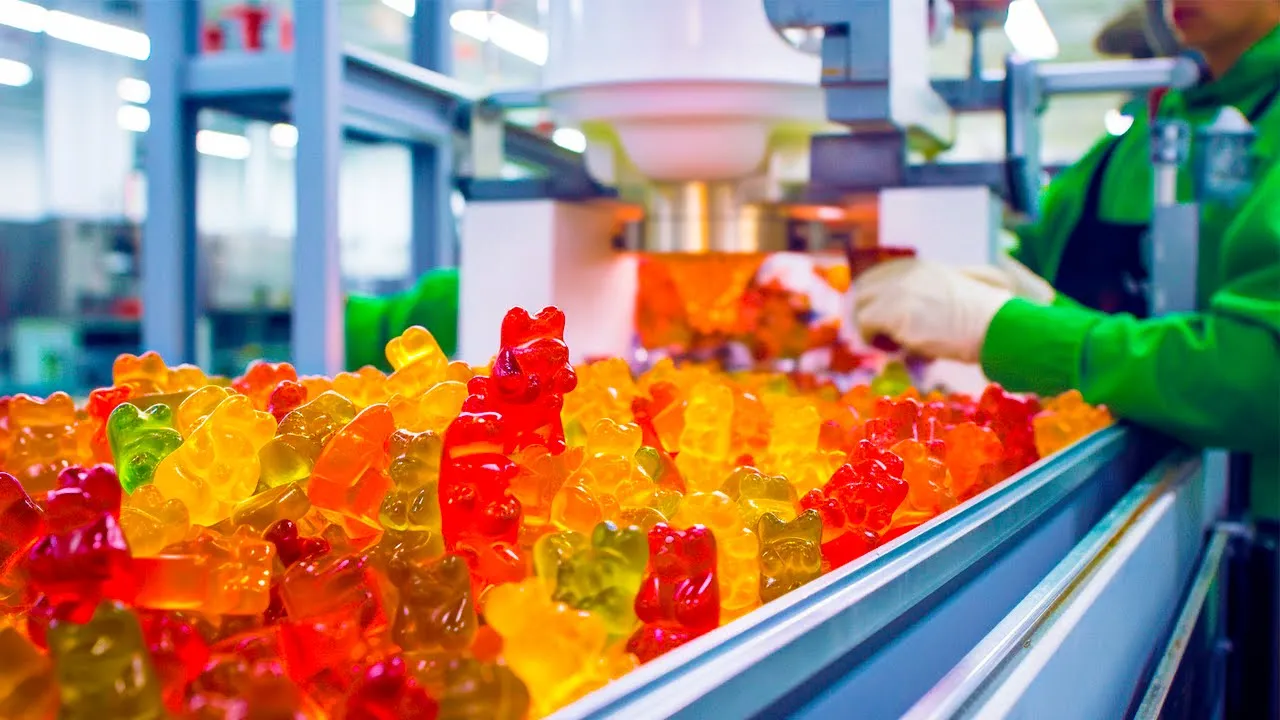
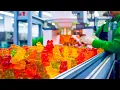
the gummy candy was born in the kitchen of German confectioner Hans Regal for over a year he made candies with nothing more than a copper pot and a stove eventually he struck gold with the gummy bear the process of candy making starts with preparing a recipe that will be followed to the letter in the production process for this purpose companies employ experienced food technologists and expert chemists who know what they're doing When developing the formula for gummy candy they experiment with the proportions of the different ingredients in order to influence the taste texture and appearance
of the candy the main ingredient responsible for the characteristic texture of gummy candy is gelatin if you've ever wondered how the candy dissolves in your mouth it's because of gelatin's thermoreversibility to speak in simple terms gelatin becomes thinner the more heat it absorbs allowing it to disintegrate as soon as it enters your mouth although it's the main ingredient gelatin is tasteless and odorless therefore sweeteners and flavorings are added to the candy to give it a taste commercially both sucrose derived from sugarcane and fructose is used although the latter imparts much more sweetness to stop the
sugar from crystallizing in the candy corn syrup is added apart from that corn syrup gives the candy more volume and maintains its moisture content gummy candy doesn't taste just sweet though does it natural flavors are added to help build the flavor profile of the candy these are obtained from fruits berries molasses and maple sugar the impact of these flavors is made more powerful by mixing them with aromatic chemicals giving them the smell we associate with each of the flavors the candies are given color with the health of natural dyes typical dyes include red dye number
40 yellow dye number five yellow dye number six and blue dye number one using these regulated dyes gummy manufacturers can make the candy in almost any color they desire finally natural acids are added to control the pH of the gelatin this is important because the texture of gelatin depends on a variety of factors including temperature method of manufacture and pH while the rest of these can be controlled physically food grade acids help manufacturers control the pH chemically now that the ingredients have been sorted we can proceed with manufacturing the manufacture of gummy candies begins with
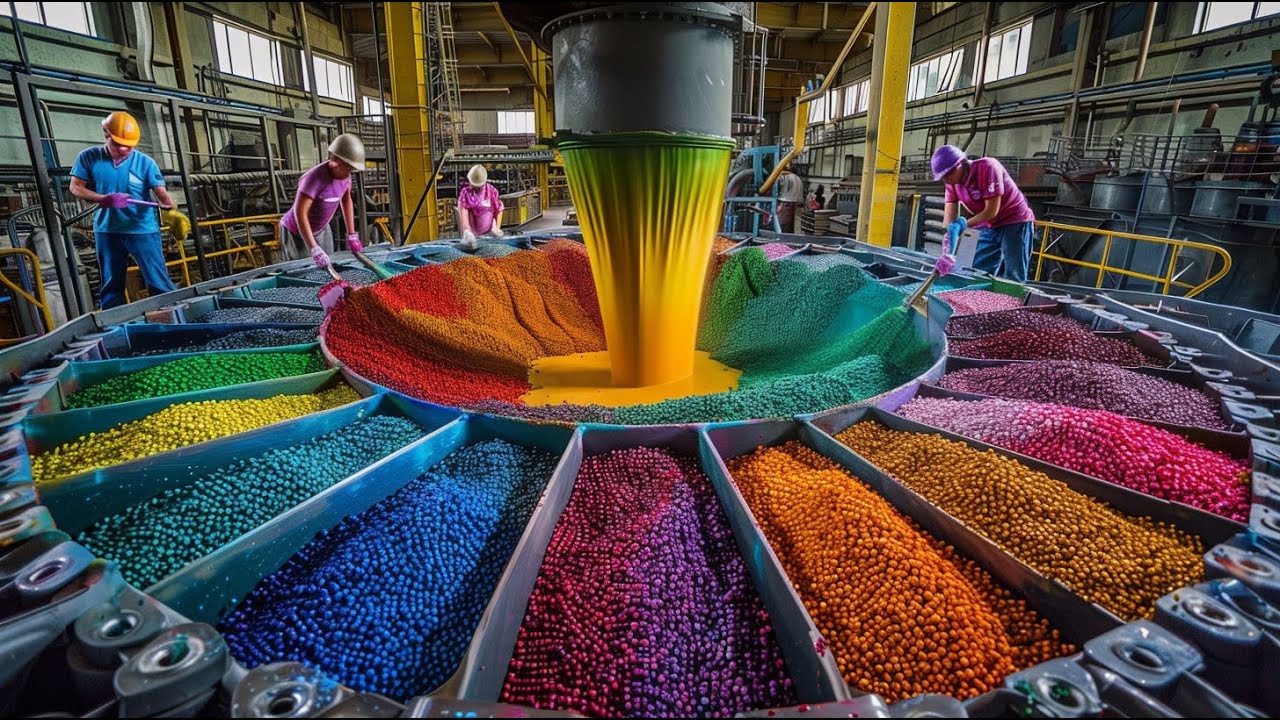
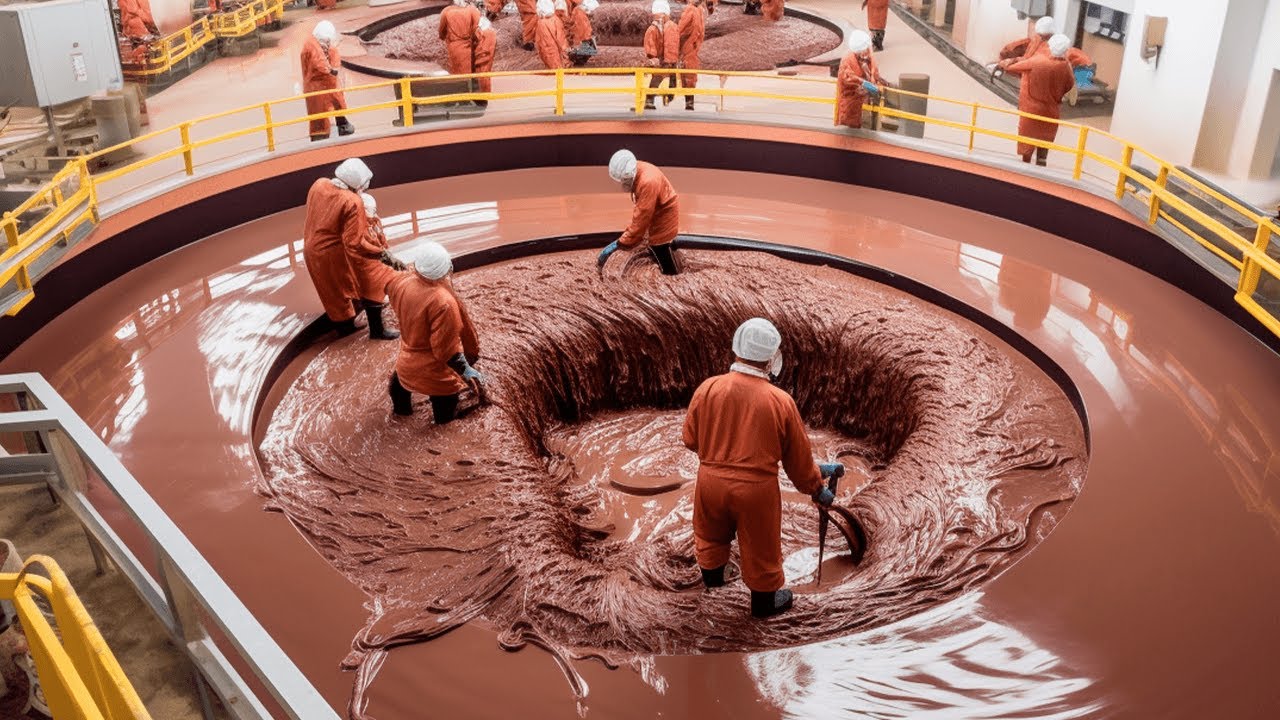
compounding in this process the factory workers follow the recipes prepared by the food technologists and physically pour the correct proportion of the ingredients into mixing tanks these tanks which are equipped with mixing Heating and Cooling capabilities are quite large after the ingredients have been thoroughly mixed they undergo a continuous heating process allowing the gelatin to dissolve completely and for the flavors to develop while in the tanks the mixture is continuously stirred to prevent burning and ensure even heating after the candy base has been compounded or cooked it is transferred to a specialized machine known as
a model which uses starch as a molding base the Muggle machine operates continuously and automates multiple tasks in the candy making process starch a crucial ingredient in the process serves various purposes such as preventing sticking holding the candies during drying and Cooling and absorbing moisture to create the desired texture for the starch molding process to start it is first filled into empty trays leveling the surface the trays then move to a printer table where a board with molds imprinted on it presses the starch creating indents that match the desired candy shapes the gummy candy base
prepared during the compounding process is transferred to the depositors within the Muggle machine the depositors consist of filling nozzles that deliver precise amounts of the candy base into the trays filled with starch molds as they pass under them the depositors can accommodate multiple colors and flavors simultaneously streamlining the production process filled trays are moved to a stacking machine and then transferred to a dedicated cooling room the candies remain in the cooling room for over 24 hours allowing them to properly cool and form their desired texture and shape cooled trays of gummy candy are then inverted
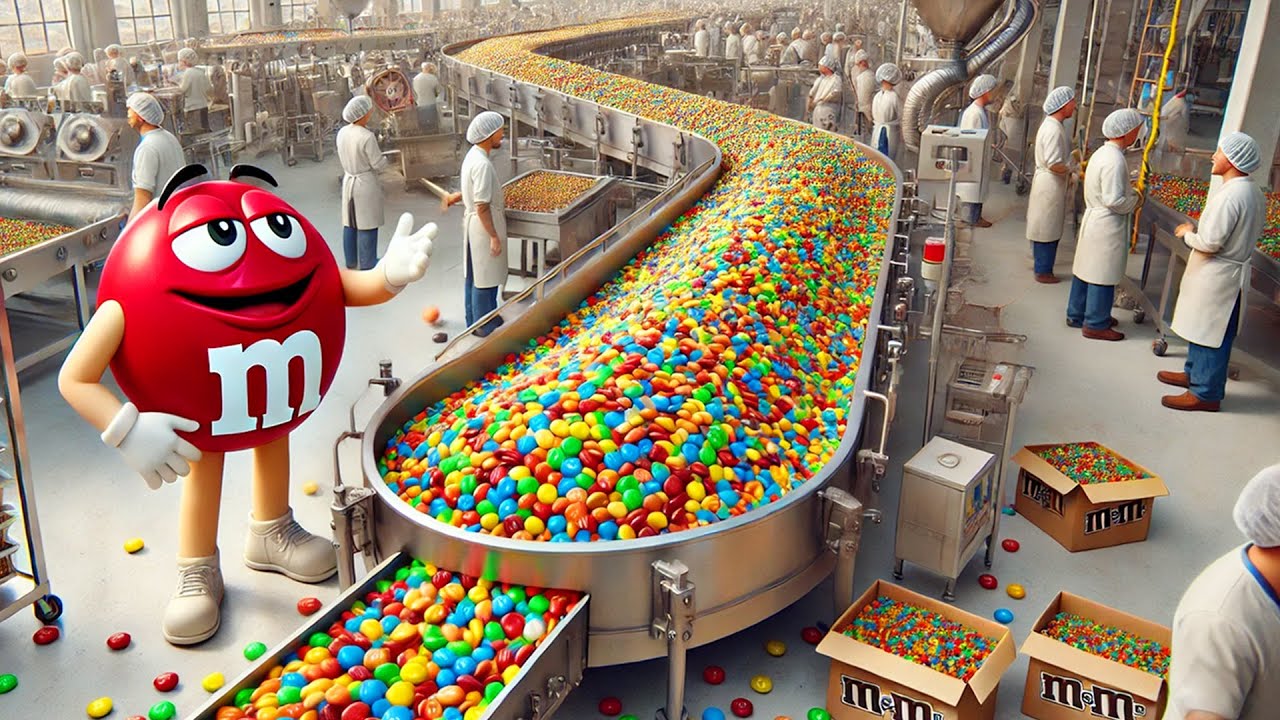
within the Magle machine causing the candies to fall onto a vibrating sieve this sieve along with oscillating brushes removes excess starch from the candies the cleaned candies are then conveyed to other machines for further decoration and packaging in commercial production additional steps may be taken to enhance the appearance and taste of the gummy candies this can include applying a thin layer of wax or polishing agents to give the candies a shiny finish some candies may also undergo a sugar or sour coating process for added texture and taste the finished gummy candies are automatically sorted inspected
for quality and then packaged into various form of packaging such as bags boxes or jars automated machines handle the packaging process ensuring efficient and consistent packaging of the candies quality control begins with the evaluation of the incoming raw materials before they are used these ingredients are tested in the QC lab to ensure they conform to specifications various sensory characteristics are checked including appearance color odor and flavor many other characteristics such as the particle size of the solids viscosity of oils and pH of liquids are also studied each manufacturer depends on these steps to certify that
the ingredients will produce a consistent quality batch of gummy candy the characteristics of each batch of final product is also carefully monitored quality control chemists and technicians check physical aspects of the candy that include appearance flavor texture and odor the usual method of testing is to compare them to an established standard for example the color of a random sample is compared to a standard set during product development other qualities such as taste texture and odor are evaluated by sensory panels these are made up of a group of people who are specially trained to notice small
differences according to estimates 160 million gummy candies are produced in Factory floors around the world each day well for a process that long I'd say the reward is well worth it