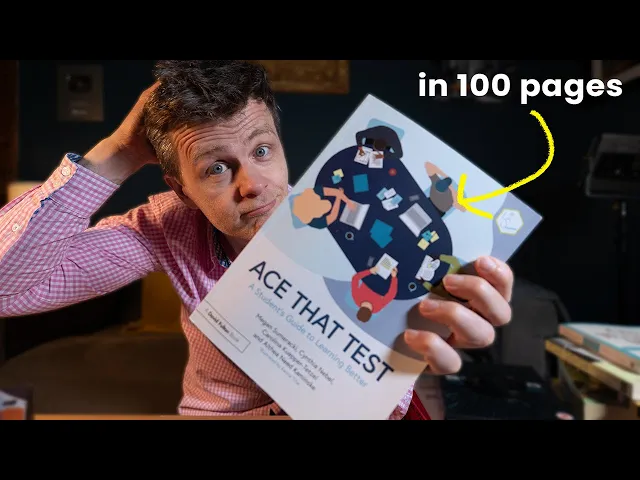
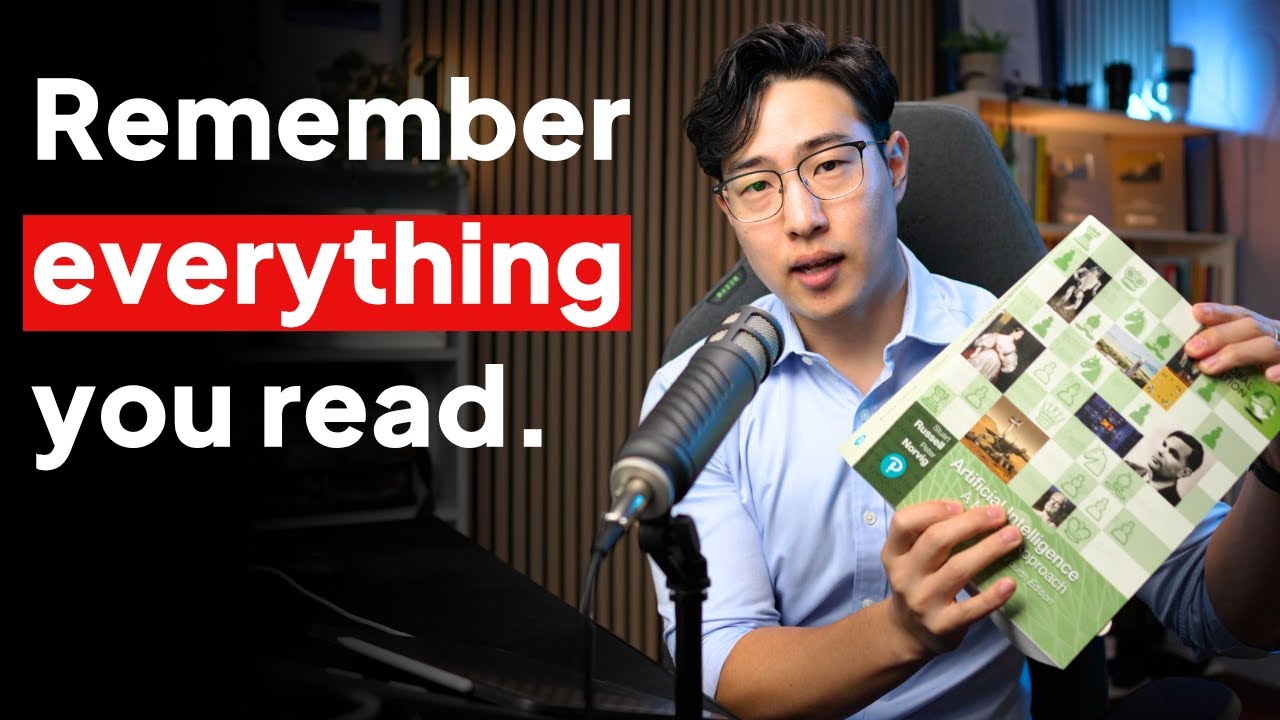
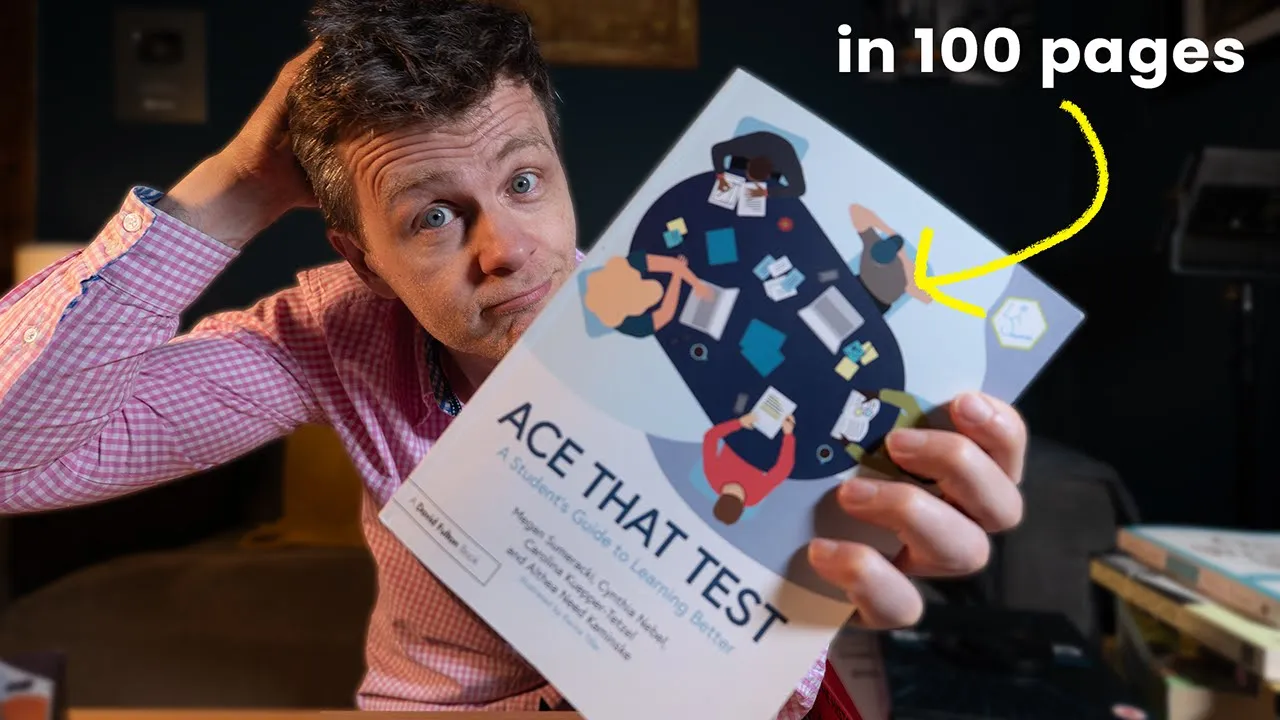
Today we're going to be looking at this perhaps the best book on learning you can buy. There are two types of self-help book that you can buy. Those based on the hopes and dreams of the author.
The hopes and dreams being that they'll make money out of selling you worthless advice. And there are those based on scientific evidence. This book is written by cognitive scientists and based on scientific evidence.
I'm going to spend the next few minutes showing you what I like about it and why it's usurpered my previous favorite books on learning. If you follow its advice, you will become a better learner. Will it make you the next Einstein, Peter Singer, or Simone Devoir?
No. A book can't teach you that. But it can teach you techniques to ensure you reach your potential.
And if you follow its advice, that potential could be far in excess of what you currently believe it to be. So, if you're looking for a book to transform your learning performance or to ace your next exam, keep watching because you're going to like this. How can you be sure this book gives good advice?
Well, it's published by David Fulton, a part of Broutlidge, who only published books based on sound science. But as you can see, it's not a dry academic text. Actually, the academic part is kept to a minimum.
Mainly there to show you that the techniques and advice are backed by evidence because this book is designed to give you all the information you need to learn anything thoroughly and quickly in as few pages as possible. Crucially, it doesn't just explain the techniques, it shows you how to put them into practice. And that is why I like it so much and why it's become my favorite.
Because although other books touch on how to apply the science to your own learning, none of them do it as directly and prescriptively as this one. If you're interested in discovering more about the science behind the methods, there are citations at the end of each chapter. But there's no need to if you don't want to get bogged down by that.
They can just exist as a comfort blanket, reassuring you that all of this works. After all, there are people who are happy to board a plane, not knowing how it all works, reassured by the science and engineering behind the process, and there are those who know how it all works. Either way, you still reach the destination safely.
Whichever you choose, this book will work for you. The authors have kept it accessible so that it can be aimed to a wide readership, including teenagers studying for GCES or the equivalent. How do I know that?
You can tell from the language they use, the references to homework, and they mention GCES. They also explicitly say that it's aimed at teenagers and people at university, but don't be put off by that if you're not a teenager. This book is good for learners of any age or level.
If you've never been taught how to learn that are not familiar with these methods, you'll benefit from reading it. You can easily complete the book in a day and then keep it as a reference. I'll move on to what it'll teach you soon, but I want to tell you about the authors first.
They're the people behind this website, which I've mentioned in previous videos. If you want to discover more about learning and how to learn effectively, this should be your go-to site. It contains articles about learning, different learning techniques, what works and what doesn't.
They're cognitive scientists whose main focus is on the science of learning. You can trust their advice. Okay.
So, what does the book cover? It's in three parts. Part one, you'll be introduced to the ideas around the science of learning, how to apply them to yourself, and why you should trust the techniques.
Part two is about preparation background information to help you so that when you use the techniques they recommend you can take advantage of them. It covers topics around health, sleep, diet and exercise, study preparation, planning and organizing study sessions to maximize their usefulness. Part three dives straight into the best study strategies, what to do and what not to do.
There are also note-taking strategies and tips on how to get the best from your notes. The tips point is important. As I've said, the book doesn't stop at telling you what the strategies are.
It shows you how to apply them. It is prescriptive in that sense. At the end of each chapter, there's a brief summary of what was covered, so it's easy to refer back to what you learned.
And at the end of each chapter, as well as citations, there's a QR code linking to further resources. This feels a little gimmicky because the extra resources are chapter summaries, link to some pages on the Learning Scientist site, and a PDF download of answers to that chapter's questions. The summaries aren't overly useful, and nor are the downloads if you already have the book.
The best resources are the links to the posts, which you could find on the site anyway, but they're there if you want them. What about the price? It's not cheap.
For me, in the UK, the Kindle price is £12. 39 and the paperback is £16. 55.
And if you fancy the hardback, that'll cost you £126. 14, which is ridiculous. I have the paperback version, and this is the one I'd recommend.
You won't need another book on learning. And in a 100 pages, this could transform your life. I wish I'd had it when I was a student.
So, I'm fascinated by how we learn and how research can optimize our learning process. It's a theme of the entire channel. And that's why I like brilliant.
org, who's sponsoring today's video. I think you'll like it, too, because Brilliant helps you get smarter every day with thousands of interactive lessons in math, science, programming, data analysis, and AI. You might already know that due to its scientific approach to learning, Brilliant is the most effective way to learn.
That the problems you solve will make you a better thinker. But it will also help you to develop a powerful daily learning habit. And learning a little every day is one of the most important ways to develop personal and professional growth.
And if you're sick of mindless scrolling, the Brilliant app will help with that. Whenever you have a few free minutes, you can take out your phone and work through some fun hands-on lessons. If like me, you're interested in data science, then you'll like this.
Brilliant data science content uses real world data to train you to see trends and make better informed decisions. Perfect for learners of any level, you'll learn data analysis with a full suite of content covering data visualizations, algorithms, regression models, and more. To try Brilliant for free, visit brilliant.
org/python programmer or scan the QR code on screen or you can click on the link in the description. You'll also get 20% off an annual premium subscription.