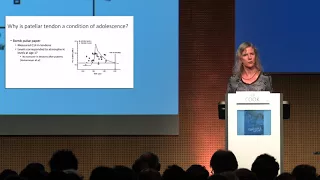
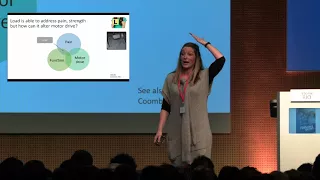
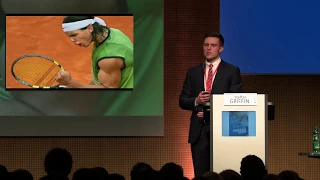
so my brief today is to talk about concepts in tendon rehabilitation and you can see from the bottom of this slide that it's not a simple issue that we have to consider pain we have to consider function and we have to consider pathology and our rehabilitation has to integrate all these things in our approach to the patient to get the outcomes that we need so when we're making decisions about how we rehabilitate a tendon we have to make a first decision is which is are we trying to change pathology and an effect structure are we
trying to change pain well of course we are because our patients come to us with pain and that's our primary outcome measure but do we want to restore function well the answer to that is of course yes we do because you can see from the diagram that most of our patients want to be active either at a high level or just recreationally so function is so important to us and I want to appeal to you that restoration of function is what we do as physiotherapists that this is our key core value and we must never
let go of the fact that exercise and functional restoration is what is good for tendons and good for many of the conditions that emma has alluded to today so before we can actually get on to understanding pain and function I want to just run through some issues about pathology and and and structural change and today in 2017 we still don't fully understand what happens and how in pathology and how a tendon develops it so inflammation we used to think was an issue but in the 80s and 90s we thought that that had gone away but
it is making a comeback so there is an our research groups that suggest inflammation is a key factor collagen tearing was what I learned that when you went out for a run you actually over stretched your tendon and you tore your collagen so that was something was in the 70s and and again is carried through to today and of course Craig and I developed the continuum model where we think that the cell is key to the development of pathology and how we see symptoms in tendons and I will talk through that as we move through
the the presentation so if we look at how we develop tendon off tendon pathology we know that there is some inflammation in tendons that there are inflammatory cells and there are inflammatory mediators so we have to consider that from a collagen caring perspective I think we can finally say that that does not happen so you cannot tear normal collagen if you have a muscle tendon bone continuum and you over stretch it your vulnerable parts or your vulnerable tissues are the muscle and the bone the tendon is so strong that you can never ever tear normal
collagen so that is not the starting point of tendon pathology and the cell based model that we talked about is where the cells are intimately connected to the the collagen matrix they can sense load and they respond to load and this is a really important way of thinking about again how load and function can influence our outcomes so if we put that together what we can talk about is that inflammation exists but it's not our prime driver of pathology collagen tearing exists but it's a consequence of a pathological state so it's not the primary event
and that our cell changes exist and seem to be driving much of our pathology and the changes we see in the tendon and you might say to me well I actually don't care what's happening in my tendons because I'm interested in treating my patient and their pain and and hopefully their function but I'm going to tell you that we should be thinking about it because pathology should help us direct rehabilitation so if we're talking about inflammation our primary intervention is rest because we want the in formation to settle if we're talking about college and tearing
our primary intervention is rest because we got the collagen to heal but this is where we get into trouble because we know that rest is bad for tendons tendons must have load on them virtually every day to maintain structure so we know that we can't approach our tendons from an inflammation or collagen tarring perspective but if we think about the cell being the key driver of tendon pathology we know that the cell is responsive to load and that allows us to use loading and restoring function as the key treatment in tendons and we can do
it with the understanding that we were we are helping the tendon that the load is beneficial for a tendon but all even with all of this knowledge can we change pathology once it's developed well I hate to share with you the fact that it doesn't appear that once we have a degenerative pathology that we can actually change it so any exercise based intervention and the graph that you can see up here is a 24 week program of exercise and you can see that the structure does not change these people get better they become more functional
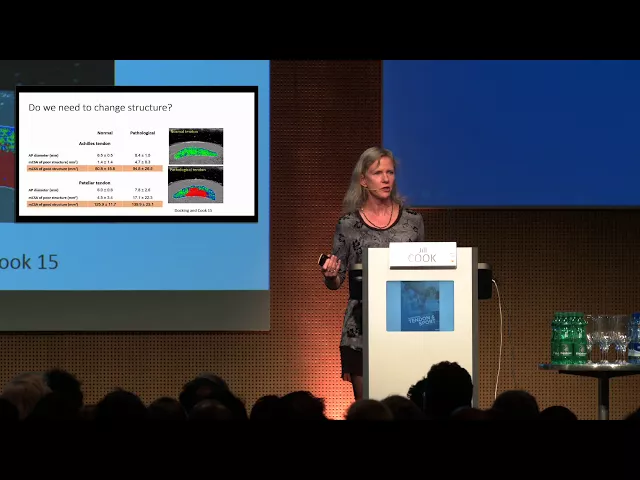
they lose their pain but our structure doesn't change so it appears that almost nothing we do will change structure so that leads us to the question do we need to change structure and this is some very exciting work that is so important to us as physiotherapists that Shawn docking has done as part of his postdoctoral research at Latrobe so he looked at normal and pathological Achilles and patellar tendons and here's a normal tenderness is some special imaging that we use it helps us measure how much structure is in tendons and here's a pathological tendon and
these are both patellar tendons this red part here is the pathology the pathology within the tendon and he showed that the pathological tendon is thicker well we know that clinically we see thick tendons in in our patients he also showed that pathological tendon has more pathology than a normal tendon well again you're going to sort of kick me off stage and say well that's pretty obvious I know that's nothing new particularly but this is the most exciting thing that he showed when he looked at how much good structure there was and the green and blue
represent good structure he showed that in both the Achilles in the patellar tendon the pathological tendon had more good structure than the normal tendon let me repeat that the pathological tendon has more good structure than a normal tendon this means for us that we can load these tendons because we have plenty of good tissue we do not have to tell our patients oh my goodness you have pathology you must be so careful we can't put too much load on it because it might rupture and we might make you worse the answer is that is not
true that tendon pathology causes the tendon to adapt and develop much more tissue that can take load so here we go again where physiotherapists loading is what we do exercise is what we do and we have a tendon that can take load and will benefit from loads so this is so important and here it is in another way and what you can see if this is the range of normal tendon cross-sectional area and these are the patellar tendons that had pathology all of them but one had as much tendon structure good tendon structure as a
normal tendon or in cases some cases had a lot more now what Shawn says number one you do not need to worry about the tendon pathology number two you can tell your patients treat the donut not the hole this is really important so the hole is the pathology we don't have to worry about that we don't eat the hole it's not important to us we have plenty of donut that we can load and this is so important for our for our patients to understand because we see so many of them who are frightened to load
because they've been told they have a tendon tear or they you know have great areas of degeneration and it can be quite frightening for them and you can undo that by telling them that that's not true so if we leave structure now and look at where pain comes from it's really important to understand that the hole in the doughnut our pathology is not the driver of pain so we can have a tendon that looks really disrupted on ultrasound imaging and this is a patellar tendon but this person can be completely pain free so it's not
the amount of vascularity it's not the amount of echogenicity within the tendon that causes pain in fact if I took an ultrasound to all of you I would find that 25% of you had tendon pathology somewhere and you have never had pain so we know pain doesn't come from the poor structure or the pathology but we don't know the source of pain and this is a real problem for us because how do we treat it if we don't know where the pain is coming from what we do know and what is so important in this
new area of pain and the brain is that lower limb tendon pain does not appear to be centrally sensitized it appears to be a local nociceptive issue that is the 10 the tendon is the source of the pain and the source of nociception and the the pain in the brain is actually from the tendon so what do we do about the pain well we know that the nerves in the tendons are in the periphery that is they are in the peri tendon there are no nerves deep in the tendon and in in pathology any nerves
that grow in are actually sympathetic not sensory that is they control the blood vessels that they don't actually have the ability to to send pain so if we are going to treat pain what we have to do is direct treatments at the nerves and that will allow us to gain some sort of pain control by inducing damage to the nerves and you what we would call a neuropraxia the problem with this is it's only short-term and it lasts days perhaps out to months and the examples of treatments that will give us pain relief but only
because they work on the nerves not function and not structure are things like shockwave therapy our Phil itting surgeries and our poly da cunha Lera Scala rosing therapies all of which have been shown to be successful but probably because they directly treat the nerves not the function and not the structure that we've talked about before so what's the link between pain and dysfunction it's it's this is the biggest link of everything we're talking about today tendon pain causes profound dysfunction so tendon pain affects your ability to be active it affects your ability to perform if
you're a sports person and this is one of our football players who came to us in May of a season so a couple of months into the season by that stage he had 17 injections across a variety of injuries and he said I've had a fractured finger I can play I've had low back pain I can play I have had a sprained ankle I can play but I cannot play with my tendon pain because it stops me stops me changing direction stops me jumping and I need to do something about this so the relationship between
pain and function is so important and it's what we aim to that the Nexus that we aim to disrupt with our physiotherapy so as physical therapists do we consider function and I would argue that we probably don't very much we think very much about pain and structure and we don't think about function so what loads if we are going to use function to restore people back to pain-free activity what loads do we need to consider well-attended has a lot of load placed on it it has energy storage loads and that's when it acts like a
spring it has compressive loads so tendons get compressed against bone just before they insert this is an achilles tendon we get compressive loads at outer range of movement and we get friction loads between the tendon and the surrounding tissues where we get a peri tendon problem we will talk about these all this afternoon when we talk about Achilles tendinopathy but I just want to highlight that in the Achilles we see all of these loads at different places in the hendon so we see a lot of energy storage overload in the mid tendon where the tendon
is overloaded in its spring-like behavior we see two too many compressed too much compressive load at the insertion so we get pathology down there by loading it into dorsiflexion and we see peri tendon problems where we see friction loads between the tendon and the surrounding structures so even in one tendon we have to consider three different sort of loads to restore function so if we look at function how do we find how do we define it it must be related to maximum tendon function and craig and ebony are both going to talk about this graph
and what it shows is that to really restore function in tendons we must do very fast loading at some point in our rehabilitation that we can't just do slow loading we must get this tendon able to take very very fast loads and that's what allows us to use our tendon as a spring which is our energy storage loads that we talked about previously and we also must allow the tendon to deal with compressive loads and how we integrate that into a rehabilitation program I will show you so what we need to do is restore the
tendon back to the highest level of function that we can but we can't just concentrate on the tendon we have to concentrate on the muscle that's attached to the tendon we have to concentrate on restoring function in the kinetic chain and we have to concentrate and ebony will talk about restoring brain function as well but what I can tell you and if I want to give you a take-home message from today that a person who has poor function will nearly always have persistent tendon pain and if we restore function we will get rid of that
person's pain and we restore function by progressively loading a tendon with exercise and ensuring that we get the right loads on a tendon so if we have a look at what rehabilitation protocols are out there with evidence the e centric protocol you know the Alfredsson program and a few other programs it this program loads the tendon loads the spring in a slow way so it puts load on the series elastic component in the tendon what it doesn't do is strengthen the muscle attached to the tendon it doesn't strengthen the kinetic chain and it doesn't change
the brain so we don't get any adaptation to those fast loads that we so desperately need in tendons and we get no adaptation to the compressive loads that we see at insertion or tendon Appa thieves there's also heavy slow resistance that has some evidence that gives us muscle strength and gives us some load on the tendon and there is some evidence that slow heavy loading increases mechanical strength of tendon but it also fails to deliver us the energy-storage loads the fastest spring-like loads we need it doesn't deliver us tolerance to compressive loads and it doesn't
address our kinetic chain and brain so even though these have the most evidence they fail us when we're trying to return our athlete back to sport one of the issues is that all of these protocols have a surrogate outcome measure of reduced in pain they never investigate whether that person is actually able to return to sport which is a there's a big gap between having less pain in your tendon and actually being able to be active so what do they have in common they have exercise in common in correct loading and that's what we need
to be doing why can't we get our patients to adhere to exercise programs because we've been telling them for years to exercise and I think you're just telling them the same thing it takes time to do this and also I think because it's not expensive you know I think if we charged a thousand dollars per exercise we would get much more adherence because people expect that expensive treatments will have an effect and they were more likely to do their exercises because they've paid a thousand dollars for your exercise program of course we won't but there
are reasons why exercise is hard to get patients to do so how do we make exercise ideal for tendons we make the tendon the muscle tendon complex and the kinetic chain tolerant to our loads so pain will in move we don't try and change structure and we don't rely on quick fixes because we get short-term gain and no long-term outcomes so how do we do it we do a stage loading program first we reduce our loads to let the tendon settle down and then we gradually reload our tendon and this is their cartoon to say
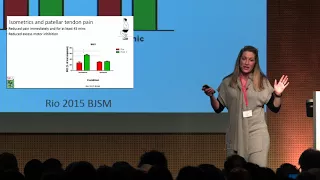
that we take what they can currently do and in very small steps we go through a strength energy storage and energy storage or release program back to our required capacity and we add endurance and compression loads at the same time and so we will talk the rest of the day about our four stages our four stages our stage one isometrics to reduce pain we do this outside of compression our stage two is strength where we look at muscle and kinetic change strength functional strength and strength endurance without compression Stage three is restoring faster programs where
we add either end of range East centric loading and we start add compression and Stage four is sports specific loading where we need to add compressive loads so we take that stage program and we fit it to the person and the tendon the first thing is that individuals differ markedly so we have elite jumping athletes and we have sedentary people who don't do very much activity and so our rehabilitation must be different our tendons vary markedly and we'll talk about this this afternoon how patella tendon and our Achilles tendon are actually very different but our
gluteal tendon is a disease of postmenopausal women whereas our Achilles tendon can occur across the lifespan so what about rest it's a disaster do not rest tendons the tendon turns to loses its structure we lose muscular tenderness strength we lose kinetic chain function and we get changes in our brains so we get a massive unloading effect and we know that the strength of a tissue will only be as great as the load that we place on it so what about interventions we know there are many interventions and many elektra therapies and a lot of guru
juice that flows around and I'm going to fix your tendon my take on it is if you have poor function it really doesn't matter matterwhat intervention you do unless you restore function you will still hop like a duck and that's what we see in our athletes people with really poor function so can interventions be negative yes they can so this shows an injection into a tendon that's 16 months post injection here's the responsive attendant to assay line and a PRP injection with cells and proteoglycans and you think PRP is good until you look at normal
in fact PRP is worse for the tendon and if you look at what happens to our collagen you can see that nothing changes so our injection therapies don't offer us very much and this is a case study I love this this is a lady who had a massive vascular response after a poly da kunal injection and you probably can't read these but this is where she had a poly da kunal and after that she had offered she was offered iontophoresis shockwave a corticosteroid injection acupuncture and surgery so even with this sort of negative response she
had massive interventions in that tendon where as a loading program might have helped what about the things that you do I don't care what you do I don't care if you use massage and ice and taping and electrotherapy as long as you do the loading program you cannot replace the loading program with hands-on therapies because you will be unsuccessful so in summary tendons and tendon pathology and pain is complex and they're often managed far too simplistically receipe treatments don't work because they don't address the individual they don't address the tendon and they don't fully restore
function and you are the clinicians you have to be thoughtful you have to really understand what's happening in tendons so that you can fully rehabilitate them thank you so much you