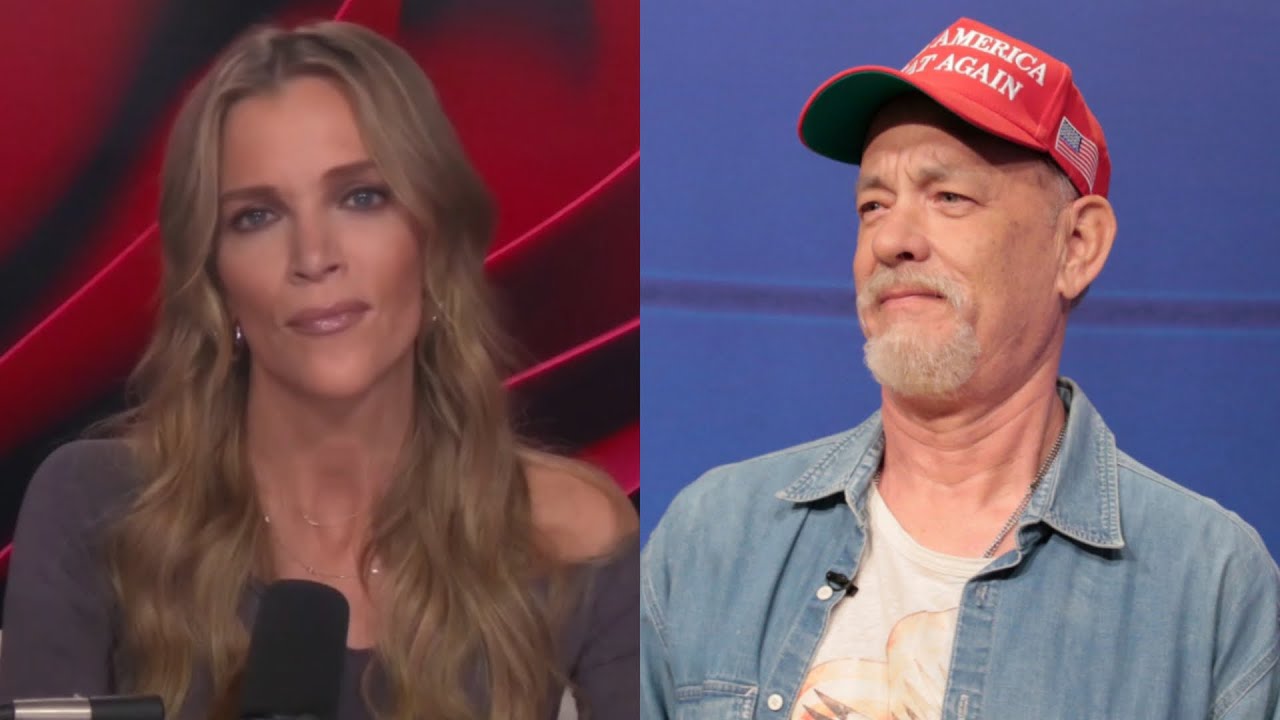
Tom Hanks thought his SNL skit mocking MAGA was just comedy until Caroline Levitt called him out and turned the internet against him. It started as just another night on live television: Saturday Night Live, the long-running comedy institution known for its political jabs, celebrity impersonations, and outrageous satire. But on this particular evening in early February 2025, no one expected Tom Hanks to be the one lighting the match that would set off a political firestorm.
The audience inside Studio 8H in Rockefeller Center was electric. A-list stars had come and gone, sketches had ranged from absurd to mildly offensive, and then the camera panned to Hanks. At first, it seemed like a harmless surprise; the man who had played Forrest Gump, Captain Phillips, and Mister Rogers was about to grace the stage with his charm and comedic timing.
However, the moment he opened his mouth, the atmosphere shifted. Drssed in a red baseball cap, oversized aviator sunglasses, and a windbreaker plastered with the words "Real America First," Hanks launched into a full-blown parody of a MAGA rally. The crowd inside the studio chuckled—some nervously, some wholeheartedly—but across the country, the reaction was far from unanimous.
His exaggerated Southern accent, the way he shuffled around the stage mimicking a passionate but clueless supporter, and the over-the-top rhetoric about keeping Hollywood elitists in check were all unmistakably aimed at Trump supporters. The writers had crafted a script that played into every stereotype: over-the-top patriotism, conspiracy-laden rants, and exaggerated anger toward woke culture. At one point, Hanks leaned into the camera, wagged his finger, and declared, "Y'all ever notice how every time we lose an election, it's rigged?
But every time we win, it's the will of the people? Funny how that works, huh? " The studio audience roared with laughter; online, not so much.
As the skit continued, Hanks doubled down. He parodied calls to "Take Back America," made exaggerated hand gestures reminiscent of Trump, and even poked fun at conservative commentators, pretending to hold a podcast microphone while yelling about the Deep State cabal. By the time the camera faded to black, the damage was done.
For many in Hollywood and left-leaning circles, it was just another comedic bit, no different from the dozens that had aired on SNL over the years. But within minutes of the skit ending, social media erupted. Some praised it as brilliant satire, a much-needed roast of a political movement that had dominated headlines for years.
Others saw it as outright mockery—tone-deaf, dismissive, and condescending. And then there was Caroline Levitt, a rising star in conservative media and a former congressional candidate from New Hampshire. Levitt wasted no time responding; within minutes, she fired off a tweet: "Tom Hanks just mocked millions of hardworking, patriotic Americans on national television.
Hollywood is so out of touch, it’s actually embarrassing. " The post blew up instantly—tens of thousands of likes, retweets, and replies poured in, ranging from support to heated arguments. Some called her reaction overblown; others agreed wholeheartedly.
But one thing was clear: this wasn't going to fade away overnight. Levitt doubled down in a follow-up tweet: "The elites in Hollywood think they can ridicule and belittle us and we'll just sit back and take it. This isn't comedy; it's a direct attack.
" Her words spread like wildfire. Conservative news outlets picked up the story within the hour, fueling a narrative that Hollywood was openly mocking a large portion of the country. By the next morning, the incident was front-page news, and the cultural battle lines were drawn.
But this was only the beginning. As the sun rose the next morning, the internet was already ablaze. Caroline Levitt's tweets had turned into a rallying cry, and conservative influencers, news outlets, and politicians wasted no time piling on.
The hashtag #BoycottHanks began trending before lunchtime, fueled by a mix of outrage, political opportunism, and genuine disappointment. On Twitter, Instagram, and even TikTok, the reactions were fierce. Some MAGA supporters posted videos of themselves tossing out their DVDs of Forrest Gump and Saving Private Ryan, calling Hanks a Hollywood elitist who had finally shown his true colors.
Others mocked his past roles, joking that maybe he should get stranded on an island again and stay there this time. Levitt herself seized the momentum. She appeared on a morning Fox News segment where she didn't hold back: "This isn't just about a joke; this is about the constant, never-ending disrespect from Hollywood.
They think they're better than us; they think our values, our way of life, are something to be laughed at. Well, I have news for Tom Hanks: we're not laughing. " The clip went viral, shared by high-profile conservatives like Donald Trump Jr.
, Tucker Carlson, and Vivek Ramaswamy. Even Elon Musk chimed in, replying to one of Levitt's tweets with a simple, "Hollywood is a joke. " But it wasn't just conservatives who had strong feelings about the skit.
Liberals and Hollywood elites defended Hanks, arguing that satire had always been a part of comedy, especially on SNL. Late-night hosts mocked the backlash, calling it the most predictable outrage cycle in modern history. Trevor Noah, on his podcast, quipped, "Republicans are mad because someone on TV made fun of them.
Isn't that what they do every day with Hunter Biden? " The debate quickly spiraled into a full-fledged culture war, splitting social media into two warring factions. On one side, conservatives saw this as yet another example of Hollywood's contempt for middle America.
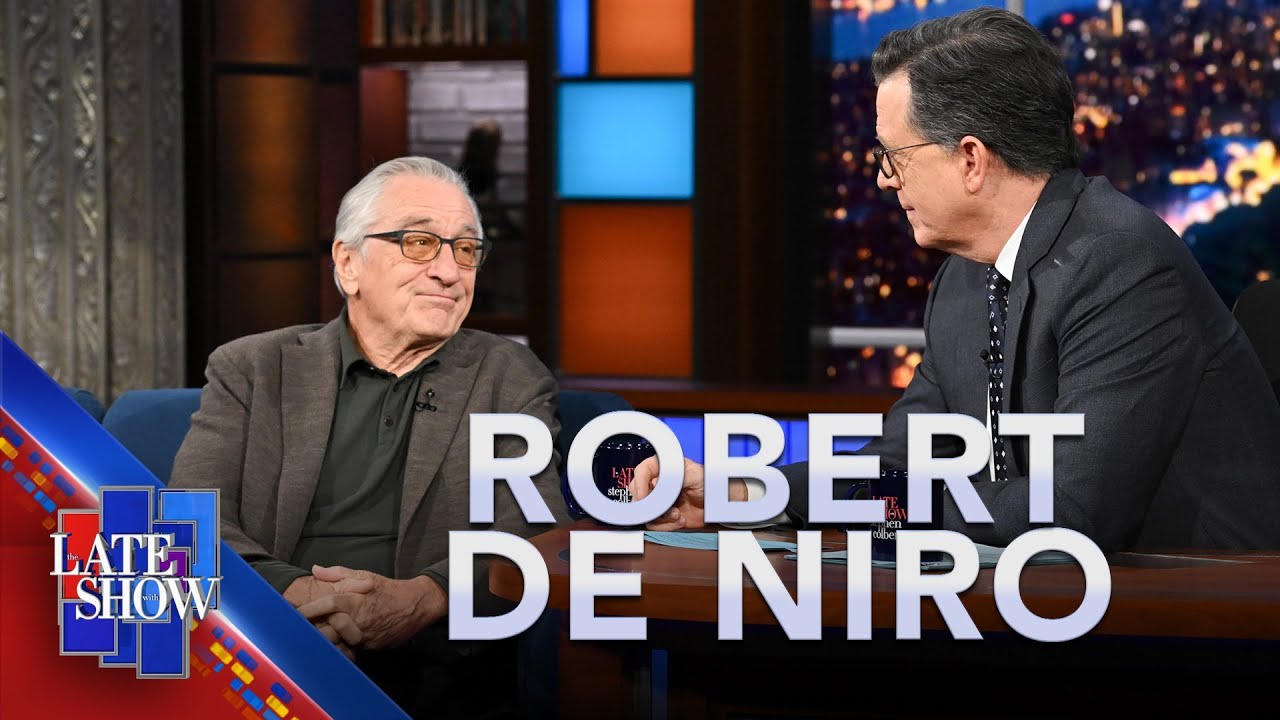
On the other, liberals viewed it as a case of manufactured outrage, arguing that the right wing had no problem dishing out jokes but couldn't take them. As the controversy spread, more celebrities weighed in, adding fuel to the already raging fire. Robert De Niro, a longtime critic of Trump and his supporters, threw his support behind Hanks, calling the backlash laughable.
An interview he said people are mad because they got made fun of. Please, the entire Trump movement is based on making fun of people they don't like—hypocrisy at its finest. Meanwhile, conservative actors like James Woods and John Voight took the opposite stance, accusing Hanks of selling out and pandering to the liberal elite.
"I used to respect Tom Hanks," Woods tweeted, "but I guess even America's good guy has to fall in line with the woke mob. " Even musicians got involved. Kid Rock posted a video smashing a DVD of "Cast Away" with a sledgehammer, declaring, "If you hate us so much, why don't you just stay in your Malibu mansion and shut up?
" It wasn't long before calls for a boycott became a serious discussion. By the end of the week, Tom Hanks's name was plastered across every major news outlet in the country. Cable news networks dissected the controversy from every angle while online forums and Facebook groups debated whether or not he had crossed a line.
Companies that had long partnered with Hanks, like FedEx and Apple TV+, were suddenly being bombarded with demands to cut ties with him. Rumors even began circulating that an upcoming biopic he was set to star in had been quietly put on hold as executives weighed the PR risks. The outrage was spreading far beyond social media, and now the fallout was starting to affect Hanks's career in ways he never expected.
But the media wasn't done yet. The story was about to take an even bigger turn. By the time the weekend rolled around, the controversy surrounding Tom Hanks had become impossible to ignore.
Every major news outlet was dissecting the skit, the backlash, and the deeper implications of Hollywood's relationship with conservative America. CNN ran a segment titled "Has Comedy Gone Too Far? The Tom Hanks Backlash," while over on Fox News, Tucker Carlson devoted an entire monologue to what he called the latest attack on patriotic Americans by the out-of-touch Hollywood elites.
"Tom Hanks is a national treasure," Carlson began. "He played Captain John Miller in 'Saving Private Ryan' for God's sake, and now he's up there on SNL mocking the very people who make this country great. Why?
Because they dare to think differently than he does? " Meanwhile, the New York Times published an opinion piece defending Hanks, arguing that political satire had always been a part of American culture. The author pointed out that past SNL sketches had mocked Bill Clinton, George W.
Bush, Barack Obama, and even Joe Biden. So why was it suddenly off-limits to poke fun at MAGA? But that argument didn't hold weight with the conservative base.
In their eyes, this wasn't about a joke; it was about a pattern. Right-wing commentators weren't just reacting; they were strategically weaponizing the controversy, turning it into a referendum on Hollywood's arrogance. On Newsmax, a panel discussion framed the issue as part of a wider war on conservative voices in entertainment.
One guest even suggested that if a comedian had done a similar skit mocking Black Lives Matter or the LGBTQ+ movement, their career would be over before the show even ended. Podcasts followed suit. Ben Shapiro released a 30-minute breakdown of why this moment proved Hollywood had given up on even pretending to respect conservatives.
"They don’t see you as people," he said to his audience. "They see you as caricatures, and they expect you to just sit there and take it. " It wasn't just talk; Republican lawmakers started weighing in.
Florida Governor Ron DeSantis posted, "Hollywood thinks they can insult everyday Americans and face no consequences. Maybe it's time we stop funding their movies with our hard-earned dollars—Boycott Hanks! " Senator Josh Hawley went a step further, calling for an end to tax incentives for film productions in red states.
"Why are we subsidizing an industry that openly mocks half the country? " he asked during a speech. For days, Hanks remained silent.
The longtime Hollywood icon had never been a particularly controversial figure, which made the backlash even more shocking. But as calls for boycotts grew louder and media pressure intensified, he finally broke his silence in an exclusive interview with CBS's Gayle King. Sitting in a quiet, dimly lit studio, Hanks looked weary but composed.
"I never set out to offend anyone," he said. "It was satire. It was a joke.
That's what SNL does. " But King pushed back: "Do you understand why people were offended? " Hanks sighed, choosing his words carefully.
"I get it. I really do. But if we reach a point where comedians can't poke fun at political figures without facing an all-out war, what does that say about us, about our ability to laugh at ourselves?
" His answer did little to calm the storm. Some saw it as a reasonable defense; others saw it as doubling down. By now, the controversy had evolved beyond just Tom Hanks; it had turned into a cultural battleground—a fight over whether Hollywood and conservative America could ever coexist.
News segments, podcasts, and viral posts were no longer just discussing the skit, but what it represented. Was this simply about a joke, or was it a sign of something deeper, something irreparable? And just when it seemed like things couldn't escalate any further, a shocking revelation changed everything.
As the controversy raged on, the backlash started seeping into Tom Hanks's personal and professional life. What had started as a single skit on Saturday Night Live had now transformed into a national scandal with real-world consequences. Studio executives began to panic; calls were made behind closed doors, frantic meetings were held, and publicists scrambled to assess the damage.
Hanks had long been one of Hollywood's most beloved figures, his image built on decades of playing America's everyman. Now that carefully curated reputation was under siege. A-list colleagues reached out privately, some in support, others with caution.
A well-known director texted. . .
"Him write it out; it'll pass. Just don't say anything else. " But it wasn't passing; if anything, it was gaining momentum.
Within a week, rumors started swirling about an upcoming biopic that Hanks had signed onto, one that was already in preproduction but was suddenly delayed indefinitely. Industry insiders whispered that studio executives were nervous about attaching his name to a major release while the controversy was still fresh. A source from inside Warner Brothers told a reporter off the record, "Look, nobody's outright canceling Tom Hanks, but let's be honest, this isn't a great time to be making a movie with him.
Too much baggage right now. " And it wasn't just Hollywood that was feeling the pressure. Brands that had previously worked with Hanks were now being bombarded with boycott threats.
FedEx, which had partnered with Hanks for a major ad campaign, suddenly went silent. Apple TV Plus quietly removed promotions for a project Hanks was producing. Even Disneyland, where Hanks had long been a spokesperson for various projects, reportedly reconsidered a new collaboration for the first time in decades.
Tom Hanks was feeling something he had never experienced before: rejection. Meanwhile, Caroline Levitt was capitalizing on the moment. What had started as a series of angry tweets had turned her into one of the most talked-about political voices in the country.
She was suddenly everywhere, interviewed by Fox News, Newsmax, and conservative podcasts. Some were even calling her the voice of America's forgotten voters. Her followers on social media exploded; she went from a niche conservative commentator to one of the most influential voices on the right overnight.
Within days, she announced that she was launching a new media company dedicated to fighting Hollywood elitism. Her first official post read, "They mock us; they laugh at us, but they don't get to define us. It's time for something new.
" And just like that, she became a conservative powerhouse. Hanks watched it all unfold with a mix of disbelief and exhaustion. He had always considered himself a unifier, a man who could bring people together through storytelling.
Now, he was at the center of a culture war he had never wanted to be a part of. His friends in Hollywood assured him that it would all blow over. "Give it a few months," one close friend told him.
"They'll move on to the next outrage. " But Hanks wasn't so sure; something felt different this time. The divide was deeper, the anger more entrenched.
He had been in the industry long enough to know that some scandals fade, but others leave permanent scars. And the worst part? He wasn't sure if he was Tom Hanks, the beloved American actor, anymore, or if he had just become a symbol for something far bigger than himself.
But just when it seemed like the controversy had reached its peak, a shocking twist turned everything upside down. Just when it seemed like Tom Hanks had no way out of the controversy, a bombshell leak changed everything. Late one evening, an anonymous source dropped a behind-the-scenes clip from the SNL set onto social media.
The video, barely two minutes long, was shaky, like it had been secretly recorded from a phone, but its content was explosive. In the footage, Hanks could be seen in a private conversation with one of SNL's writers. His expression was tense, his voice low, but unmistakably serious.
"I don’t think this is a good idea," Hanks said. "I get satire; I do. But this feels like it's going too far.
" The writer, whose face was invisible, laughed it off. "Come on, Tom; it's just comedy. Besides, the producers love it.
The network loves it! " Hanks shook his head. "Yeah, but it's not just about the joke; it's about what happens after.
You're playing with fire. " The clip cut off there. No context, no explanation, just those few damning seconds.
At first, people weren't sure what to make of it. Was Hanks being set up? Was he pressured into doing the skit?
Then a second leak followed; this time, an email chain between Hanks and the SNL producers. In it, Hanks had explicitly raised concerns about the skit before the show aired, questioning whether it was the right move given the political climate. One producer had responded bluntly, "This is SNL, Tom; we make fun of everyone.
Besides, controversy is good for ratings. " And just like that, the narrative flipped. Suddenly, Hanks wasn't the villain anymore; he was the scapegoat.
The same conservative commentators who had spent days ripping him apart now began shifting their anger toward SNL and NBC. "So let me get this straight," Ben Shapiro posted. "Tom Hanks actually tried to stop this skit, but the network pushed it through anyway.
Classic Hollywood, throwing one of their own under the bus to save themselves. " Fox News ran a prime-time segment exposing how the entertainment industry pressures actors into controversial roles, painting Hanks as a reluctant participant rather than a willing instigator. Even Elon Musk chimed in, again tweeting, "Hollywood is a machine; do what they want or they'll chew you up and spit you out.
" The backlash against SNL grew rapidly. Some conservatives who had been calling for a boycott of Hanks now turned their attention to the network itself, demanding apologies, firings, and even an end to the show altogether. For the first time in decades, SNL refused to comment on a controversy.
There was no press release, no damage control interview, no statement from Lorne Michaels. The silence spoke volumes. The show was in trouble.
Ratings for the next episode plummeted as thousands of conservative viewers, many of whom had already abandoned mainstream late-night comedy, tuned out in protest. Meanwhile, NBC executives scrambled behind the scenes, desperately trying to figure out how to contain the fallout. But it was too late.
Hanks, who had spent over a week drowning in controversy, suddenly emerged as the unlikely victim of Hollywood's insatiable hunger for controversy. And as the dust settled, one question remained: who else had been forced into a role they didn't want to play? What happened next would shake the entertainment industry to its core.
As the days passed, what had started as a controversy about one skit had turned into a much larger conversation about Hollywood's political bias and the true cost of controversy. The leaked video and emails had shifted public perception in ways no one could have predicted. For the first time in years, people weren't just questioning the politics of late-night TV; they were questioning the entire entertainment industry itself.
Podcasts, news segments, and YouTube breakdowns dissected what had happened to Hanks. The pattern was clear: SNL and networks like NBC thrived on controversy, pushing actors into uncomfortable situations for the sake of ratings. The skit had worked for them; the show had made headlines and had dominated social media.
But at what cost? Even liberal media figures started questioning whether this kind of satire was actually helping or if it was just feeding into the cycle of division. On a segment of The Daily Show, one comedian admitted, "I mean, I get it, satire is important, but maybe, just maybe, constantly mocking half the country isn't the best way to bring people together.
" Conservative media, of course, saw this as an opportunity. "How many other actors have been forced to play along with these kinds of political narratives? " one Newsmax anchor asked.
"How many have been pressured behind closed doors, afraid to speak up? " The idea that Hollywood actors—especially older, established ones—might be walking on eggshells suddenly felt more real. "Hanks wasn't the first," Levitt said in another viral tweet, "and he won't be the last.
" Once the dust settled, the real losers weren't Tom Hanks or even Caroline Levitt; it was NBC. Public trust in mainstream media had already been declining for years, but this scandal pushed it even further. Even some left-leaning journalists started calling out the hypocrisy.
SNL had always claimed to be about punching up, so why were they throwing their own under the bus when things got messy? Boycott campaigns against SNL gained serious traction. The network's advertisers began pulling out, worried about the backlash.
And then came the final blow: NBC suddenly announced that SNL's executive producer, Lorne Michaels, was stepping down. The official reason was retirement, but everyone knew the truth. The fallout had finally reached the top.
When all was said and done, Tom Hanks survived the controversy, but not without scars. His reputation had taken a hit. The man who had once been America's most beloved actor was now seen in a more complicated light.
Caroline Levitt, meanwhile, had cemented herself as a powerful conservative voice. What had started as an angry tweet had turned into a career-defining moment. But the biggest lesson?
Hollywood had finally been exposed for what it was: a machine that thrived on outrage, even at the expense of its own. For years, people had speculated about who really controlled the narratives in entertainment. Now they didn't have to guess; the proof was right in front of them.
And as audiences across the country watched the fallout unfold, one thing became clear: the entertainment industry would never be seen the same way again. At the end of the day, this wasn't just about a joke; it was about power—who gets to laugh, who gets to decide, who gets thrown under the bus when things go wrong. And maybe, just maybe, it was time for audiences to start asking the question: if Hollywood is willing to chew up and spit out someone like Tom Hanks, what does that say about the rest of us?
What do you think? Drp a comment below and let's talk about it.