Hello everyone, it's Aria and welcome back to my YouTube channel. In today's video, we are going to learn about something super common in English, but sometimes a little tricky, idioms. We'll learn 20 of the most common idioms that you'll hear all the time.
So, what exactly is an idiom? Sometimes in English, we put words together and the meaning of the whole phrase is totally different from the meaning of the individual words. They aren't meant to be taken literally.
They have a special figurative meaning. For example, if someone tells you to break a leg before a performance, they don't actually want you to get hurt. It's an idiom that means good luck.
Or if someone says a task was a piece of cake, they mean it was really easy, not that they were eating dessert. See, the meaning comes from the whole phrase, not just the words. Now, you might be thinking, okay, but what are sayings?
That's a great question. Sayings are a bit different. A saying, sometimes called a proverb, is usually a short, well-known expression that offers some kind of advice, wisdom, or a general truth.
For example, you've probably heard, "Look before you leap. " This is a saying that advises you to think carefully before you do something. Another saying is, "Practice makes perfect.
" This means that if you do something many times, you will become very good at it. So, what's the main difference to remember? Sayings can sometimes be literal.
They can be understood if you hear them for the first time, like practice makes perfect. The words mean pretty much what they say. But idioms are almost always figurative.
You can't understand them by just knowing the words. For example, break a leg sounds like it means to hurt someone, but it actually means good luck. So, if you've never heard it, it's confusing.
But don't worry, it doesn't mean anyone will actually break a leg. Now that you know the difference between sayings and idioms, let's start with the first idiom. Feeling under the weather.
Hm. What do you think this means? If someone says they're feeling under the weather, it means they don't feel good.
They might have a small cold or they might not feel their best. For example, I'm not going to work today. I'm feeling a bit under the weather.
You look sick. Yeah, I feel under the weather. I might not stay out for too long.
I'm feeling under the weather. Here, if you're feeling under the weather, drink some of this tea. It'll help.
Did you know this idiom started with sailors? When they were sick, they'd go below deck away from bad weather. So, under the weather means feeling ill.
The next idiom is speak of the devil. Don't worry, it has nothing to do with the devil. We say this when the person we were just talking about shows up.
For example, I haven't seen Jose in a while. Well, speaking of the devil, he's walking towards us right now. This is my brother's favorite restaurant.
Oh, speak of the devil. It's my brother. Hello.
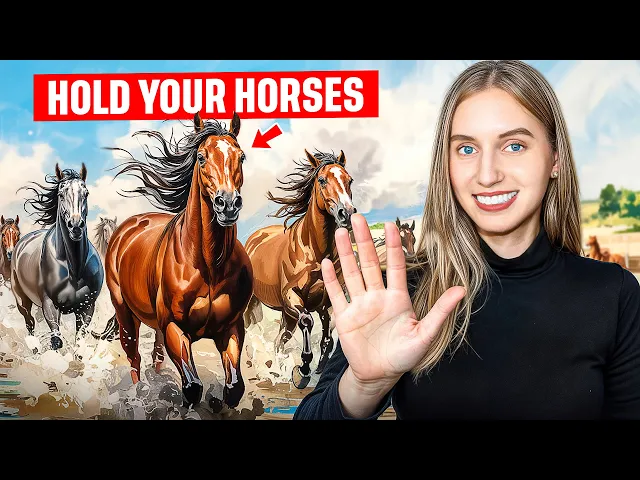
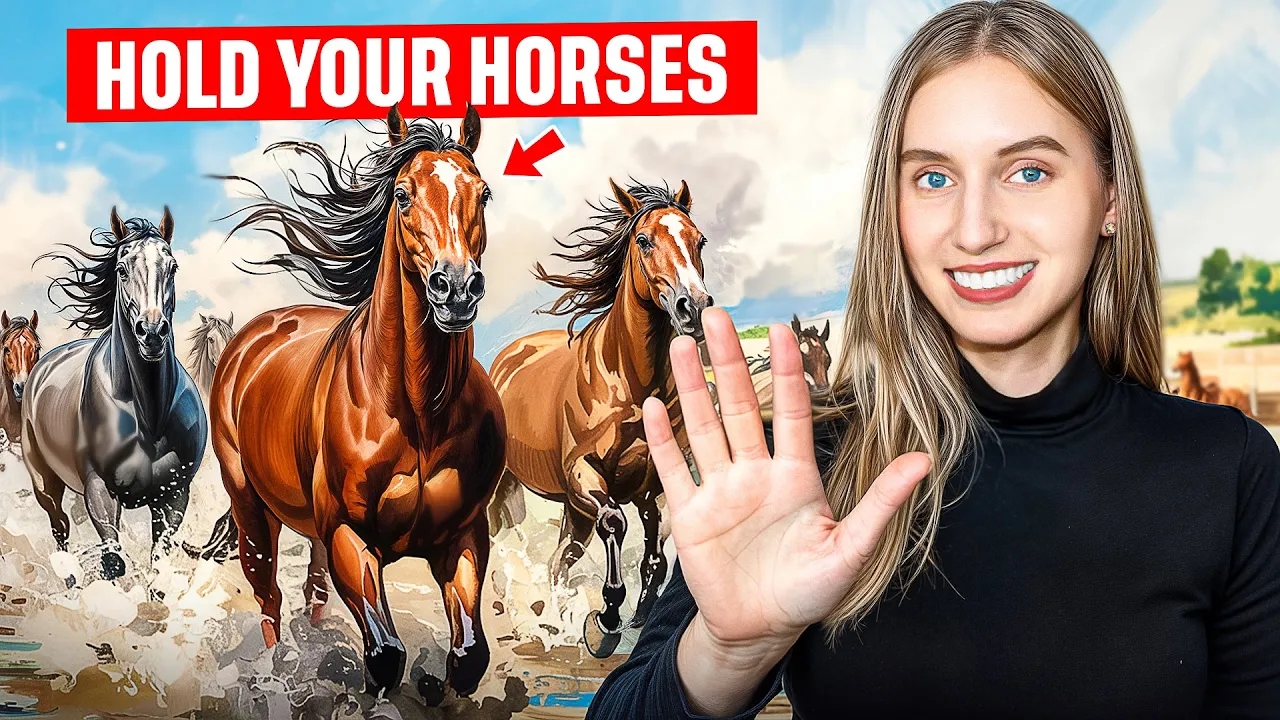
Let's move on to hold your horses. What does it mean? Think of stopping a horse from running too fast.
You say, "Hold your horses. " That's exactly the idea behind the idiom. Hold your horses means wait, slow down, or don't rush into something.
You usually say it to someone who is getting ahead of themselves, being way too eager, or jumping to conclusions too quickly. Let's look at a couple of examples. Hey, let's go.
I need to go home. Hold your horses. We just got here.
Here, hold your horses means slow down. Here's another example. Ooh, slim gym.
I'll take the mild. This big one, the original. Hey, hold your horses.
You're right. I'll just grab one. Let's talk about the next idiom.
Once in a blue moon. This phrase means something happens very rarely, almost never. Think of it like an unusual event.
For example, you might say, "I go to the movies once in a blue moon. " Meaning, you don't go to the movies very often. Love you, Dad.
Take care. My dad calls me once in a blue moon. He's always busy.
And speaking of the moon, it's funny how we say blue moon, isn't it? Because the moon is never actually blue. All right, before we jump into the next set of idioms, let's see how well native speakers know them.
Must have been hitting the books pretty hard. They're going to hit the books and pass it. I went to the library and I hit the books.
He said he was under the weather. I'm feeling a little under the weather. Unfortunately, she's a little under the weather.
Guessing there's something you want to get off your chest. He's trying to get something off his chest. Just got to get something off my chest.
Okay, so as you probably saw, native speakers use these idioms naturally all the time. Idioms are a big part of sounding natural, but they can be confusing sometimes. If you feel like mastering them costs an arm and a leg in terms of time and effort, or you're just struggling to sound more natural, I've got a fantastic resource I want to share with you.
I'm excited to tell you about today's sponsor, Preply. Preply is an amazing online language learning platform. They have thousands of native English tutors that you can connect with for one-on-one lessons.
This means you get learning that's focused entirely on your needs. They have easy to use filters so you can find a tutor who fits your budget and your schedule. Plus, you can specifically focus on things like idioms to sound like a native speaker.
And here's the best part. Preply is giving you guys 50% off your first trial lesson. Just use my code adita 50 and click the link in the description box to find a tutor who's perfect for you.
Thank you so much to Prely for sponsoring this video. Now, let's dive back into our list and learn some more useful idioms. All right, our next idiom is one you'll hear a lot in social situations.
Break the ice. So, what does break the ice mean? Imagine walking into a room full of people you don't know.
Maybe at a party, a meeting, or the first day of class. Sometimes there's a bit of awkward silence. Maybe people feel a little shy or tense.
But breaking the ice means doing or saying something to help people feel less awkward or shy when they first meet. It's a way to start a conversation and make everyone feel more comfortable and relaxed together. For example, having a dog is a great way to break the ice, especially at a park.
Hi, can I pet your dog? Sure. Hi.
Hey, you should break the ice. Maybe ask her what her name is. Excuse me.
What's your name? Hey, my name is Angie. Nice to meet you.
Oh, nice to meet you. All right, the next idiom we have is to get something off your chest. Imagine you have a problem that bothers you.
Maybe you think about it a lot. Getting something off your chest means you finally talk about that worry or problem with someone. You share what's bothering you.
When you do this, you usually feel relieved. For example, if you were stressed about an exam and finally talked to a friend about it, you might say afterwards, "Phew, thanks for listening. I really needed to get that off my chest.
" Here's another example. Hey, can I talk to you for a sec? I really need to get something off my chest.
You know what? I didn't even like working there anyway. By the way, you didn't even pay me minimum wage.
Bye. I really needed to get that off my chest because if not, I would have been working there for the next 5 years. Ready for the next idiom?
The next idiom is call it a day. It simply means to stop working on something, usually for the rest of the day. You might say this when you're finished, when you're tired, or when it's time to go home from your job.
How can I even get to work when the Ohio River is flooded? You know, I'm just going to have to call it a day and head back home. All right, enough emails for today.
Let's call it a day. Here's another common idiom. Pull yourself together.
You might say this to someone who is very, very upset. Telling someone to pull yourself together is like asking them to calm down and get control of their feelings. But be careful because sometimes it can sound a bit impatient, like you're telling them to hurry up and stop being upset.
But it can also be said in a kind way to encourage them. Let's look at a couple examples. Oh my god.
Where's my dog? Hey, pull yourself together. I think Jose has your dog.
Oh my gosh. Thank you. Oh no.
What's wrong? I forgot my credit card. How can I pay for this?
Hey, take a deep breath and pull yourself together. You can use my credit card. Thank you.
Let's look at the idiom spill the beans. This phrase means to reveal information that was supposed to be a secret. Maybe something you weren't supposed to share.
For example, I heard you went on a date last night. Don't keep me waiting. Spill the beans.
How was it? You're asking them to tell you the secret. Do you know what happened between me and my mom?
No. What happened? Spill the beans.
Bye. Bye. Hey, did you hear what happened to Santi yesterday?
No, spill the beans. All right, here's another useful phrase. Go the extra mile.
It means making a special extra effort. You do more than what people expect you to do. Maybe to be more helpful or to do a better job.
For example, she always goes the extra mile to help her students. Oh, wow. This place really went the extra mile with their decorations.
They even have Mr Red Legs. This store goes the extra mile because they use robots. Okay, have you heard the phrase catch someone red-handed?
It means you find someone while they were doing something wrong. The key thing is you see them doing it, so there's no way they can say, "I didn't do it. " The proof is right in front of you.
For example, hey, I caught you red-handed. Get away from my car. All right, here's a phrase you'll hear a lot.
You can say that again. Now, listen carefully because this one can be confusing. When someone says, "You can say that again," they do not actually want you to repeat what you just said.
What it really means is I completely agree with you or that's so true. It's a way to show that you feel exactly the same way about what the other person just said. Let's look at some examples.
This pig looks so funny. He has a mustache. You can say that again.
Man, a hot cup of coffee sounds really good right now. You can say that again. Let's go order one.
Yeah. All right. Let's talk about the idiom cut corners.
When someone cuts corners, it means they do a job badly or use cheap materials to save time or money. And the result usually isn't very good because they didn't follow all the proper steps. For example, do you see the peeling paint right there?
It looks like they cut the corners on the maintenance of this place. This suggests they probably used cheap materials or didn't do the job carefully to save money. Hey, they build that fast.
Yeah, I hope they didn't cut corners anywhere important. Okay, let's talk about the phrase to be on the same page. You'll hear this one a lot, especially at work or when making plans.
It simply means that everyone involved understands and agrees on something. you all have the same information or the same plan in mind. For example, we need to work 5 days a week.
I agree. We're on the same page. Ooh, I like chocolate ice cream.
Hey, we're on the same page. Okay, next up is a phrase you'll hear all the time. Take it easy.
Mostly, it means relax or calm down. So, if someone is getting upset, stressed out, or working way too hard, you can tell them, "Hey, take it easy. " For example, I love this bar.
I'm going to get drunk. Hey, take it easy. It's only 3:00.
This machine doesn't work. Hey, take it easy. Okay, our next phrase is perfect for encouraging someone.
Give it a shot. This idiom simply means to try something new or attempting something you're not sure about. It's like saying, "Go on, try it.
" Or, "Just have a go. " Here's an example. Imagine your friend is looking at a new type of food and says, "Hm, I've never eaten that before.
I don't know if I'll like it. " You could encourage them by saying, "Well, you won't know until you try. Just give it a shot.
This coffee shop looks really good. I'm going to give it a shot. Have you tried salted caramel?
I've never tried that. You should give it a shot. Okay.
The next phrase is hang in there. This is something you say to encourage someone when they are in a difficult or challenging situation. It simply means don't give up, keep going, or stay strong.
For example, hey, I heard you're in the hospital. Just hang in there, okay? Don't give up.
Come on. Okay, Ariana, hang in there. I know you lost this round, but in the next round, we're going to beat the other team.
Okay, let's talk about the phrase to get along with someone. This is all about relationships between people. It simply means you have a good relationship with them and you interact easily without problems or fighting.
We use this phrase all the time when talking about people we know like friends, family, co-workers, or classmates. For example, my dog seems to get along with the other dog. Hello.
I love your jacket. Oh, thank you. I get along with people from Cincinnati.
They're super nice. Next up, we have an idiom for feeling super happy. To be on cloud9.
If someone is on cloud n, it means they are extremely happy and excited. For example, finally sunshine and some warm weather. I'm on cloud9 because it's the first day of the year where I don't have to wear a winter jacket.
When I graduated from college, I was on cloud9 because I didn't have to take any more exams or do any more homework. And finally, our last idiom for today is handsdown. You use hands down when you want to say something is the best.
It means you think something is clearly the winner or the top choice and there's no real competition. For example, Cincinnati is hands down the best city in Ohio. And did you know we also call it the Queen City?
Let me know down below if you guys have any cool nicknames for your city. Angie, the cookies and cream cupcake is hands down the best cupcake. Spring is hands down the best season to visit the park.
Look at all of the beautiful colors. This bar has the best rings. Hands down.
Okay, that's it for our idioms lesson today. Do you know any other useful English idioms? Please tell me in the comment section below.
If you found this video helpful, I'd appreciate a like and make sure to subscribe so you don't miss the next video. Thanks for watching and I'll see you guys next week. Bye.