[Music] Hello everyone and welcome back to Mr English channel where learning English is easy and fun. I'm Emily >> and I'm Paul. Hi Emily.
How are you today? >> Hi Paul. I'm great, thank you.
How about you? How's your day going? >> I'm doing very well, too.
Thanks. My day is good. Very relaxed so far.
I had a nice cup of coffee this morning. Yum. >> Oh, that sounds lovely.
Coffee is so nice in the morning. >> Yes, it is. So, Emily, what's our topic for today?
It's a fun one, right? It is Paul. Today we're going to talk about daily routines.
It's a super useful topic for English learners because we talk about our day every day. Right. >> Exactly.
We all have a routine, even if it's a little different each day. It's a great way to practice many different verbs and time expressions. >> Yes.
And before we start, remember to like this video, share it with your friends, and subscribe to Mr English channel. It helps us a lot. >> Yes, please do.
We love having you here with us. And today we have a special guest. Well, not a guest here with us, but a story from a friend, Jesse.
She sent us a message about her day. >> That's right. Jesse is going to share her daily routine with us.
We're going to listen to her story and then Paul and I will talk about it and also share a little bit about our own days. >> It's a great way to hear real English and learn new words and phrases about what we do every day. Are you ready, Emily?
>> I'm ready, Paul. Let's listen to Jesse's day. [Music] Hello, my name is Jesse.
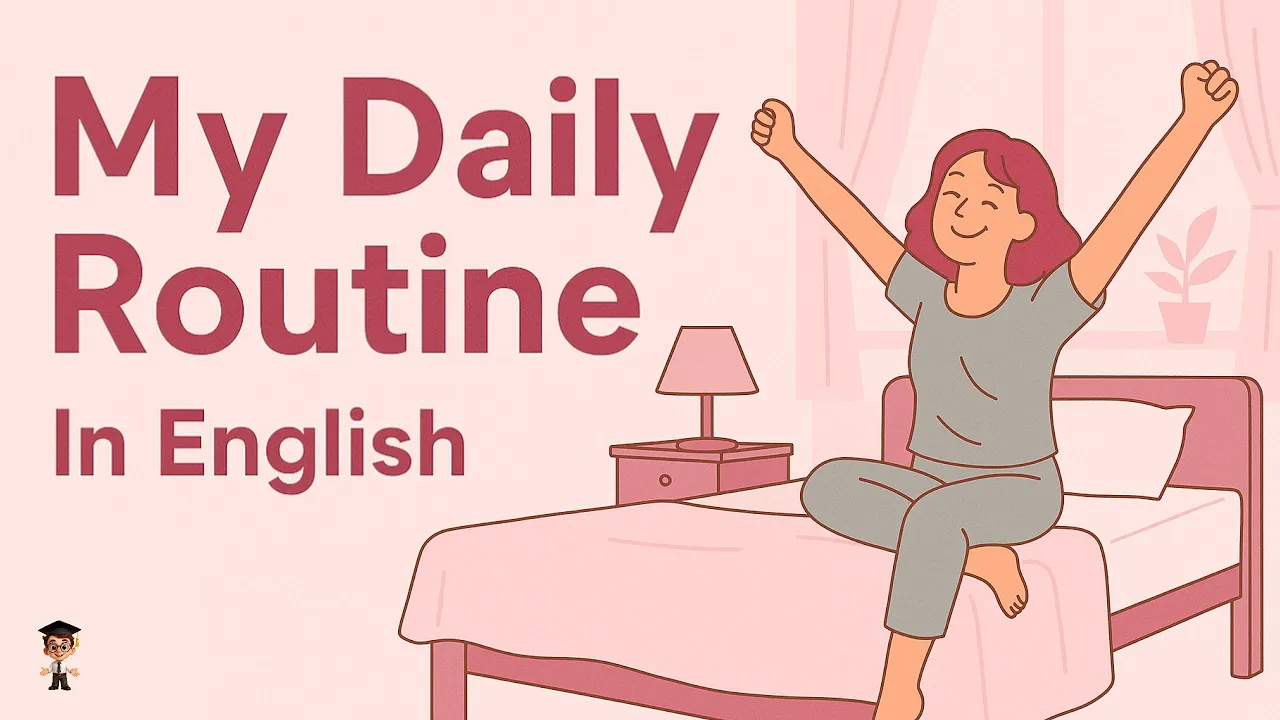
I want to tell you about my daily routine. I wake up at 6:00 a. m.
every weekday. I don't like waking up early, but my job starts early. First, I get out of bed.
Then, I go to the bathroom. I brush my teeth and wash my face. I always feel more awake after washing my face.
Next, I go to the kitchen. I make a cup of coffee. I love coffee.
While the coffee is brewing, I check my phone. I look at my messages and emails. Sometimes I look at social media for a few minutes.
After that, I get dressed. I usually wear simple clothes for work, like pants and a shirt. I don't wear fancy clothes every day.
Then, I eat breakfast. My breakfast is usually simple toast with butter and jam and my coffee. Sometimes I have fruit, too.
At 7:00 a. m. I leave my house to go to work.
I take the bus. The bus ride is about 30 minutes. I usually listen to music or a podcast on the bus.
I arrive at work at about 7:30 a. m. My work starts at 7:45 a.
m. I work in an office. I check my emails and start my tasks.
I work on my computer for many hours. At 12:00 p. m.
noon, I have lunch. I usually bring my lunch from home, a sandwich or a salad. I eat with my co-workers.
We talk and laugh. It's nice to have a break. In the afternoon, I continue to work.
Sometimes I have meetings. My workday finishes at 4:30 p. m.
After work, I take the bus home. I usually arrive home around 5:00 p. m.
When I get home, I like to relax for a bit. I sit on the sofa and maybe watch a little TV or read a book. Later around 6:30 p.
m. I make dinner. I like to cook, so I try new recipes sometimes.
After dinner, I wash the dishes. In the evening, I like to spend time with my family. We watch a movie together or talk.
Sometimes I exercise a little, maybe go for a walk. Before bed, I take a shower. Then I read a book for a little while.
I usually go to bed around 10:30 p. m. I try to get enough sleep about 7 or 8 hours and that's my typical weekday.
On weekends, my routine is very different and more relaxed. [Music] >> Wow, thank you Jesse. That was a great story about your day.
>> Yes, thank you Jesse. That gives us a really good picture of her daily routine. >> I liked how clear she was with the times like 6:00 a.
m. and 12:00 p. m.
That's very helpful when you're talking about your day. >> Yes, very clear. And she used so many common verbs that we use every day like she wakes up, she gets out of bed.
Good examples. >> Yes. I noticed she said, "I don't like waking up early, but my job starts early.
" I understand that feeling, Paul. >> Oh, me too, Emily. Sometimes it's hard to wake up early, but it's good to have a reason, like a job.
>> True. And she said, "I brush my teeth and wash my face. These are things we all do.
" >> Yes, essential actions. And then she mentioned coffee. She makes a cup of coffee.
H that's my favorite part of the morning, too. >> Me, too. And then she checks her phone and looks at messages.
So many people do that first thing. >> Yes. It's a modern routine, right?
Email, social media, and then she gets dressed. Simple clothes for work. >> Yes, it's good to be comfortable for work.
And then breakfast. Toast with butter and jam. Sounds yummy and simple.
>> Yes. Perfect for a quick breakfast. And then she leaves her house to go to work.
And she takes the bus. That's a common way to travel. >> Yes, taking the bus is very common.
And the ride is 30 minutes. That's a good time to listen to music or a podcast like our podcast. Yes, exactly.
Listen to Mr English Channel on your bus ride. And she arrives at work around 7:30 a. m.
Her work starts at 7:45 a. m. Good to be on time.
>> Yes, always good to be on time. And she works on her computer for many hours. Many of us do that now, right?
In an office. >> So true. Computer work is very common.
And then lunch at 12:00 p. m. A sandwich or a salad from home.
That's a good way to save money and eat healthy. >> Yes, definitely. And eating with co-workers.
That's nice. Building friendships at work is important. >> Yes.
Talking and laughing. It makes the workday more fun. Then she continues to work in the afternoon and sometimes has meetings.
Meetings are a big part of work for many people. And her workday finishes at 4:30 p. m.
That's a good time to finish. >> Yes, it is. Not too late.
Then she takes the bus home, arriving around 5:00 p. m. >> And then she likes to relax for a bit, sitting on the sofa, watching TV, or reading a book.
That's important after a workday, right? >> Absolutely. It's important to relax and disconnect from work.
And then she makes dinner around 6:30 p. m. She likes to cook.
That's a nice hobby. >> Yes, cooking is great. And then the not so fun part, washing the dishes.
>> Yes, someone has to do it, but it's part of the routine. And then spending time with family in the evening, watching a movie or talking. That's so nice.
>> Very nice. Family time is important. And sometimes she exercises a little, like a walk.
Good for health. >> Yes, a walk is a great way to exercise. And before bed, she takes a shower and reads a book.
>> Reading before bed is a wonderful habit. It helps you relax. And she goes to bed around 10:30 p.
m. >> And she tries to get enough sleep, 7 or 8 hours. That's very good advice.
Sleep is so important for our bodies and minds. >> Yes, it is. So, Paul, hearing Jesse's routine, how is it similar or different from your routine?
>> H, that's a good question, Emily. Well, like Jesse, I also wake up early for work, but a little later than her, around 700 a. m.
And I also don't always like it. Yes. The alarm clock is not always our best friend, right?
>> No, but I also get out of bed, go to the bathroom, brush my teeth, and wash my face. Those are the same. And then coffee.
I definitely make a cup of coffee first thing. >> Of course, the coffee connection. >> Yes.
And I also check my phone for messages and emails while I drink my coffee. So, very similar morning routine so far. How about you, Emily?
>> Very similar for me, too. I also wake up around 700 a. m.
And yes, the coffee is a must. I also check my phone for news and messages. I also get dressed after that.
Simple clothes for work here at the studio. Yes, comfort is key. Do you eat breakfast at home, Emily?
>> Yes, I do. My breakfast is usually yogurt with fruit and granola. Sometimes I have toast, too.
It depends on the day. >> Oh, that sounds very healthy and delicious. Jesse eats toast, so that's a similarity.
My breakfast is usually toast and eggs or sometimes cereal. >> Nice. So after breakfast, how do you get to work, Paul?
Jesse takes the bus. >> I drive to work, Emily. My office is a bit far, so driving is faster for me.
It takes about 25 minutes. >> Ah, okay. So, a different way to commute.
I also drive to work. It's only about 15 minutes for me. So, a short drive.
>> That's nice. A short drive is good. And when you arrive at work, what do you do first?
Jesse checks her emails. >> Yes, I also check my emails first thing and then I start organizing my tasks for the day. So that's very similar to Jesse.
>> Me too. Emails are always first. Then like Jesse, I work on my computer for many hours.
My job also involves a lot of computer work. >> Yes, ours too for the podcast and lunchtime. Jesse eats at 12:00 p.
m. >> I usually have lunch around 100 p. m.
So, a little later than Jesse. I often bring my lunch, too, like a salad or leftovers from dinner the night before. Oh, leftovers are great.
I usually bring my lunch, too. Or sometimes I buy something nearby. So, we all bring food sometimes.
Yes, it's practical. And then the afternoon work. Do you have many meetings, Emily?
Jesse mentioned she sometimes has meetings. >> Yes, I have meetings, too, especially online meetings these days. So, that's similar to Jesse's routine.
And my workday also finishes around 4:30 p. m. or 5:00 p.
m. >> Mine finishes around 5:00 p. m.
or 5:30 p. m. So, a little later than Jesse.
And then after work, what do you do? Do you relax for a bit like Jesse? >> Yes, I definitely relax for a bit.
When I get home, I usually sit down, maybe listen to music or just unwind for a few minutes. It's important to decompress. >> I agree.
I usually change into comfortable clothes and sit on my sofa for a bit, too. Maybe read the news. And then dinner.
Jesse makes dinner around 6:30 p. m. >> Yes, I also make dinner around that time, between 6:00 p.
m. and 7:00 p. m.
I like to cook, too, like Jesse, but sometimes I order food. >> Yes, me too. It's nice to have a break from cooking sometimes.
And after dinner, the dishes, right? >> Yes, the dishes. No escape.
But it's part of the routine. And then evening activities. Jesse spends time with her family.
>> I often spend time with my family, too. Or I might watch a movie or read a book. Sometimes I go for a walk like Jesse.
So that's quite similar. >> Yes, very similar. And before bed, Jesse takes a shower and reads a book.
>> I also take a shower in the evening and I like to read a book, too. or listen to an audio book. It helps me relax before I go to bed.
>> Yes, me too. And what time do you usually go to bed, Paul? Jesse said 10:30 p.
m. >> I try to go to bed around 10:30 p. m.
or 11 p. m. So, very similar to Jesse, I try to get enough sleep, too, around 7 or 8 hours.
>> Yes, that's my goal, too. Around 10:30 p. m.
or 11:00 p. m. is ideal.
So, it seems like Jesse has a very typical busy weekday routine, just like many of us. >> Yes, definitely. It's great to see how much we can learn from her simple description.
All these verbs like wake up, get out of bed, brush teeth, make coffee, get dressed, eat breakfast, go to work, have lunch, finish work, go home, make dinner, wash dishes, take a shower, read a book, go to bed. These are everyday actions. >> Exactly.
and all the time expressions. 6:00 a. m.
7 a. m. 12:00 p.
m. 4:30 p. m.
5:00 p. m. 6:30 p.
m. 10:30 p. m.
So useful. >> Yes. Very important for talking about your day.
Well, Emily, should we listen to Jesse's routine one more time? It's good to hear it again after discussing it. >> That's a great idea, Paul.
Let's listen to Jesse again. Pay attention to all the words and phrases we just talked about. [Music] Hello, my name is Jesse.
I want to tell you about my daily routine. I wake up at 6:00 a. m.
every weekday. I don't like waking up early, but my job starts early. First, I get out of bed.
Then, I go to the bathroom. I brush my teeth and wash my face. I always feel more awake after washing my face.
Next, I go to the kitchen. I make a cup of coffee. I love coffee.
While the coffee is brewing, I check my phone. I look at my messages and emails. Sometimes I look at social media for a few minutes.
After that, I get dressed. I usually wear simple clothes for work like pants and a shirt. I don't wear fancy clothes everyday.
Then I eat breakfast. My breakfast is usually simple toast with butter and jam and my coffee. Sometimes I have fruit, too.
At 7 a. m. I leave my house to go to work.
I take the bus. The bus ride is about 30 minutes. I usually listen to music or a podcast on the bus.
I arrive at work at about 7:30 a. m. My work starts at 7:45 a.
m. I work in an office. I check my emails and start my tasks.
I work on my computer for many hours. At 12:00 p. m.
noon, I have lunch. I usually bring my lunch from home, a sandwich or a salad. I eat with my co-workers.
We talk and laugh. It's nice to have a break. In the afternoon, I continue to work.
Sometimes I have meetings. My workday finishes at 4:30 p. m.
After work, I take the bus home. I usually arrive home around 5:00 p. m.
When I get home, I like to relax for a bit. I sit on the sofa and maybe watch a little TV or read a book. Later, around 6:30 p.
m. , I make dinner. I like to cook, so I try new recipes sometimes.
After dinner, I wash the dishes. In the evening, I like to spend time with my family. We watch a movie together or talk.
Sometimes I exercise a little, maybe go for a walk. Before bed, I take a shower. Then I read a book for a little while.
I usually go to bed around 10:30 p. m. I try to get enough sleep about 7 or 8 hours, and that's my typical weekday.
On weekends, my routine is very different and more relaxed. [Music] Great. That was Jesse's daily routine.
Again, we hope you enjoyed listening and learned some new words and phrases. >> Yes, it's a wonderful way to learn. Thank you again, Jesse, for sharing your day with us.
>> And thank you everyone for listening to Mr English Channel. >> Don't forget to subscribe to our channel, like this video, and share it with anyone learning English. >> Yes.
And please leave a comment below. Tell us what is one thing you do every day that is part of your routine. We'd love to read your comments.
>> That's a great question, Emily. We love hearing from you. >> So, that's all for today's episode on Daily Routines.
See you next time. >> Bye, everyone. Keep practicing your English.