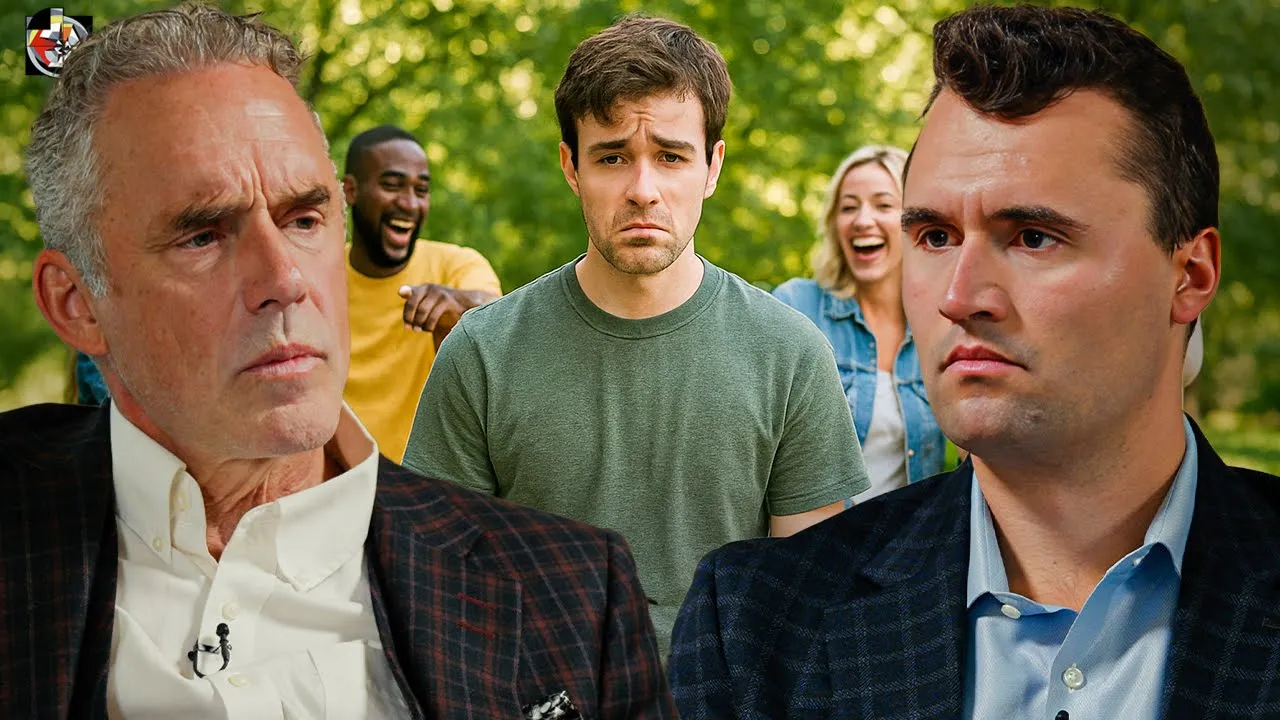
It's been my experience that it doesn't take that much encouragement for those the people you're describing to be inspired to try. Now, I've talked to thousands of young men now who've had that experience. You know, like I see a lot of them at my lectures.
They come to the meet and greets, for example, and they tell me it's great. It's really great. They tell me that, you know, five years ago, six years ago, because it's starting to be a long time now, eight years ago even, they were not in good shape and they came across my lectures or books and decided to decided that there was something worth aiming for and then decided to try.
So, to tell the truth, that's very common um vow, let's say, to to take on more responsibility. and they usually laugh about starting to make their bed or something like that which is a lot less trivial than people think and then it's straightened them out. The terrible thing is how little encouragement that that actually took and so would when are people coming out to see you on campuses and what kind of response do you get from the people that you talk to?
The responses have been incredible. First, the the crowds alone, we're drawing crowds of three, four, 5,000 people in the middle of the day just for me to debate a random college kid or a college professor. It's remarkable.
So, walk me through one of those events, Charlie. And so, I've been doing that for a decade just so I I started, as we know, we started Turning Point USA. One of the things I really wanted to make sure is that I was in touch with the target audience that I was trying to convince and trying to persuade.
No better way to do that than just go to the college campus itself, set up a card table with, you know, maybe a poster that says something like, you know, I think government should be smaller, something like that, and start a discussion. I would do this at University of Wisconsin Madison. I would do this at University of Illinois when we had almost no funding, no connections, no idea what I was doing.
I Right. Right. I've always believed in the grassroots interaction.
So where are your meet and greets? No, no data, no chart, no abstraction can get to that personal humanto human contact. So, I've been doing that for many years.
And then Steven Crowder, to his credit, kind of popularized this idea of debating and putting it on. I said, "Oh, well, why don't I also film these interactions? " And so, I started to do that around 2018.
So, it's been about seven or eight years now. And, you know, then 10 kids would show up and then 20 kids. And we started to put these on the internet and kind of concurrent and simultaneous to your rise where you you diagnosed what was going on in the west quicker and more accurately than anybody else, especially with young men.
We started to see our popularity increase as we started to address some of the underlying problems that young people were facing, but in particular young men were facing. And then COVID happened. We were basically out of business for, you know, a year in the sense where we weren't able to do campus activities.
Donald Trump was no longer in office and we had to really kind of rebuild on campus. Basically about two years ago, so let's just say the spring of 2023, things really started to change where we we would do these campus events prior and we would bring in your traditional conservatives, 3 to 400 people, maybe a couple hundred interested types, maybe 50 liberals, 500 students, call it a day. That's a success.
All of a sudden in 2023, we were drawing a different type of person and student. First of all, we were drawing people outside of the campuses that were welders, electricians, and plumbers and the working men that heard that we were in town and they just what they hear social media. Okay.
And so decentralized promotion and so they would show up and I saw that. I mean, these were guys that would go up to the question line and they were not asking about Rouso or they were not asking about Jacqu Dereda. They were saying, "How do I be a better person cuz I'm expecting a daughter in 6 months?
" Oh, yeah. Okay. And all of a sudden, here I am, you know, not in the position where you are nearly as seasoned to give advice to that young man, but he's searching and he's looking for anyone that seems to have an idea of how the world is supposed to work, that is professing a worldview of order and structure and discipline, something that he could do.
Yes. And that he want he was looking to me for advice. And that was a different dynamic.
Whereas prior all the questions the last you know eight years before that were hey Charlie what do you think about the tax rate what do you think about abortion and I still get a lot of that but it was something different it was young men especially that were seeking purpose and seeking a destination so this is crucially important this transformation because one of the things that so let's go back to that 60s dynamic that anti- athoritarian 60s dynamic know the the role of the left in the 60s was like an entrepreneurial progressive radicalism, let's say. And the the stance of the conservative was, well, you know, let's not throw the baby out with the bathwater, guys. And that's a pretty good dynamic because you need a force for change and you need a force that resists that.
But I think, you see, I think what the conservatives did wrong, like profoundly wrong, was that they were their breaks. This is why they're always dismissed as reactionary. Their breaks B r a kes.
Their brakes were fundamentally they're also moralistic. It was finger wagging. And and this is something that was distasteful, let's say, especially about the hypocritical evangelical conservative types.
I agree with that. Okay. So, so, but it was also strategically inappropriate because it's very hard to say to young people who might tilt in the progressive direction, uh, cuz they're a little more revolutionary in spirit, let's say, are also a little more immature that the the reason that to abstain sexually, for example, is because you shouldn't do it.
Now, that's true, but it's a weak argument. You know, I was talking to my wife this morning about this. Um, we'd been apart for a few days and I saw her again yesterday and I was very happy about that.
And she's she has a podcast. She's trying to reach out to young women cuz they're just as in much in or more trouble. They're just harder to talk to by a lot.
Um, our discussion centered around the fact that it isn't that you should get married, although you should. It's that you there is no alternative that's anywhere near as good but by any standard whatsoever regardless of position of analysis or time length. Anything you do other than that even though marriage is very difficult and every other alternative is far far worse.
And so if you want a pathway forward to what the conservatives support, the conservatives should be offering an invitation. They shouldn't be moralizing. And so and so and you're you're saying that they shouldn't even be political at the moment.
And and I know you're you're a figure whose political activity is grounded in a religious substrate like Shapiro is of course like that too and Dennis Prager. Christianity is my foundation. Right.
Right. Right. And so now you're seeing that these young men who are coming, especially the working-class types, they're not so interested in the political.
They're probably not even interested in the arguments. Exactly. They're looking for something else.
That's right. They're looking for direction. They're looking for connection.
They're also looking for validation that the way they're thinking, the way they're feeling is directionally correct. That it's the And so Yeah. So that having a direction is correct.
Exactly. That not being not meandering through life. Yeah.
Not having, you know, the aimless despair of walking in circles. Yeah. Not castrating yourself so your toxic masculinity vanishes sometimes, literally.
Far too often now. Literally. Literally.
They're chopping off. Yeah. Exactly.
Exactly. And so what we saw in 2023 again, so I have to wear multiple hats. Part of my hat is a political strategist.
Part of my hat is just trying to be a role model for young people. Part of my head is explaining these ideas to young people. I kind of connected all the dots.
I said, "2024 is going to be a rebellion of the men of the West unlike anything that we've ever seen. " And I would say this to the experts and they would dismiss it. They said, "No, no, no.
Row versus because Row versus Wade got repealed, remember that that either that summer or summer 2022. I can't remember. It might have been I think it might irrelevant.
The point being is that Row versus Wade was supposed to be the most important political issue of 2024 and that women were going to rise up in major numbers. I said, first of all, that might be true on one side of the the sex spectrum. On the other side or binary, the other side, there is something happening with men that no one is talking about, no one wants to acknowledge, no one wants to admit.
And so separately, the Trump team, to their credit, believed in it and actually ran an explicitly masculine campaign going on podcasts like Joe Rogan and Theo Vaughn. And so they were they were very much embracing of this to their credit. But separately, we must diagnose why is this happening?
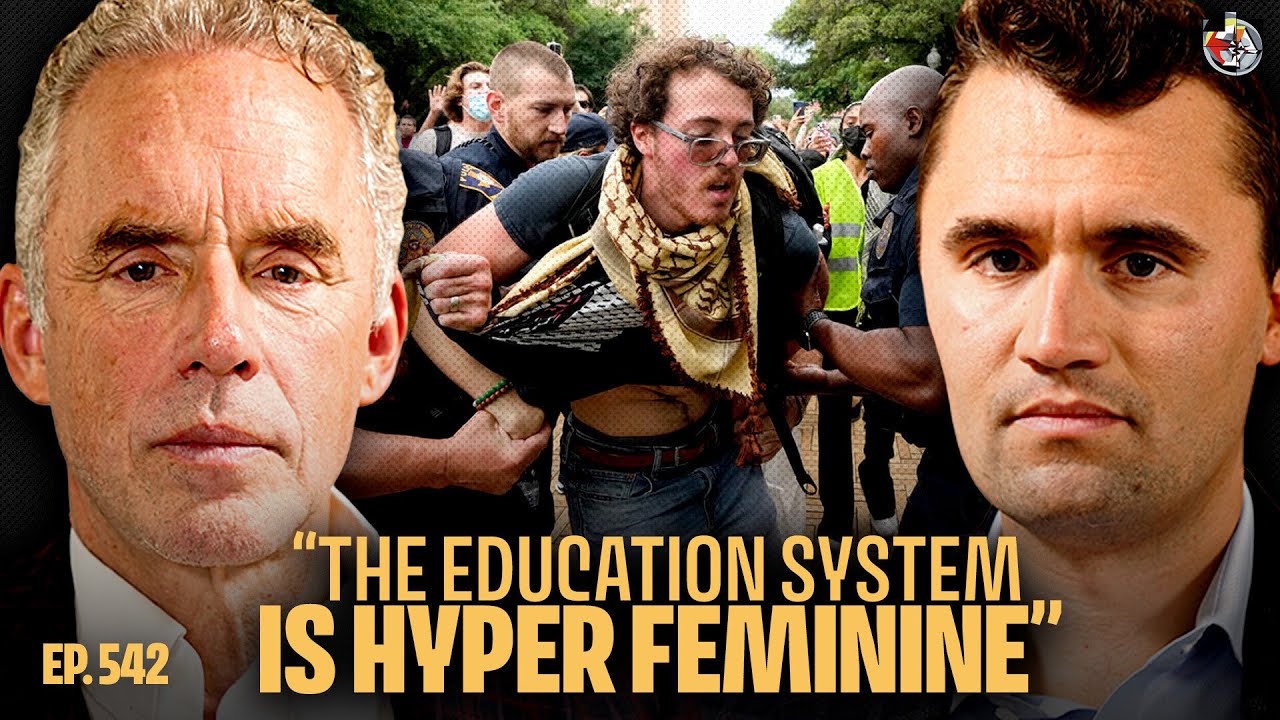
And the the education system, as you've astutely pointed out many times, is hyper feminine. There's no place for young men, especially young white men, of a Christian. I think it's one in four boys is now given an ADHD diagnosis.
It's something and even the New York Times has said this is for parents not for kids. Meaning this there is there's no medicinal reason for this to happen according to the New York Times. Yeah.
Right. So you know things have gone particularly sideways when I encourage people to read this cover story. It was unbelievable where they were basically saying after this major study that like 1% of the kids actually do need ADHD medication that are completely out of control.
But almost like 90 to 95% are just because the parents don't want to have an unruly kid around. Yeah. Or or well and and if that's the New York Times diagnosis, then you can also be absolutely 100% certain that they underplay the role of the educational establishment in setting up the circumstances so that parents are likely to draw that conclusion.
I mean with all this trans butchery nightmare you know my profession particularly the social work end of it but my like real psychologists let's say were also stunningly craven in their unwillingness to resist this the mantra was to parents well would you rather have a live trans child or a dead child which there was never Charlie there was never a shred of evidence for that it's one of the most evil things that has happened it it it is unbelievable the people who promoted that should be imprisoned. It's it's absolutely widespread and it's still in the fibers of the pediatric community. Yeah.
Yeah. That's for sure. That's for sure.
Well, the Supreme Court of the UK may have broken the back of that movement a week ago. That was unbelievable. I That was one of the most Now and then the Brits, God love them, do something quite radical in the right direction, you know.
Well, Brexit was a good example of that. That's interesting. They put through that free speech legislation that the Labor Party tried to resin that has actually reshaped the universities to some substantial degree.
That was in part a consequence of me being disinvited from Cambridge which had a long-term consequence that the disinvitectors hadn't really reckoned on because a whole group of professors at Cambridge got together and decided that they were going to change the policies at Cambridge which they did in a historic vote and then they changed the policies at the national level and the repercussions of that haven't haven't stopped yet but so yes so this terrible demoralization Right. So, all right. Now, you're being c you're advertising on social media.
Let's let's go back and tell this whole story. So, because I'm very curious about it. So, you you had an an an intuition that you could go to campuses.
Okay. So, tell me how where did that idea come from, do you think? Well, I never went to college.
Uh, first of all, which is right. You've been to many colleges. I've been to more colleges than most people.
You might have me be, but I've been to well over 200 campuses across No. No. You've got me beat.
Yeah. I mean almost every almost almost every college. Yeah.
You can imagine I can uh I can I've either given a lecture, a speech or started a chapter there. Yeah. So my daughter doesn't have a university degree.
So she started a university. So that's that's very comical. But this is good.
Okay. So So that means you do have a university education. You just got it a very different way.
Okay. So, so you decided that's interesting too because it's like I asked you what your in your your motivation for doing this was and the first thing you said was that you didn't have a degree. So, that's very interesting.
So, so what were you also curious about going to campuses like? Yes. And that that's really a great point.
So, just as a little background, I wanted to go to West Point. I didn't get in. I told my parents I would take a gap year to kind of figure this out because I saw some momentum of a local political group that was out of the cookie group by the way.
Okay. That kind of kept growing. I said, I want to keep this going and play this out.
See where this can be. This was after high school. Just after high school.
That's correct. That was the summer I graduated high school. Okay.
A really amazing mentor uh by the name of Bill Montgomery, may he rest in peace, was the only guy ever, he said, Charlie, you shouldn't go to college. I was like, that's the most radical thing someone could say. So that idea was planted in my head and I said, "Okay, I'll just take a gap year.
I'll kind of figure things out. " Why did he tell you that? He thought he in his own words, he sensed an entrepreneurial gift and skill that I had, right?
And a drive. He was a kind of an entrepreneur himself, part of business. So he could see the entrepreneurial part of me.
He didn't think that would work well in college. Yeah. And he said, "You have to go create, not this.
" Oh, good. Oh, that was you have to go build. He said, "You have something in you.
You have a drive. you have a passion, you have a relentless kind of um spirit. And he says, "You shouldn't go to college.
" That was the most radical thing that a suburban kid in Chicago could hear cuz everyone would go to college. It's a mark of failure not to go to college. Yeah.
And so not getting into West Point was very demoralizing. However, it was the greatest gift ever from the Lord because I took the gap year. And to your credit, which is no one's ever put this together, all my friends were in college.
So I would start visiting my friends in colleges. So you think about it because I would go to high school. I I graduate high school.
I still am friends with all my high school friends. So I'd go to University of Iowa, University of Illinois to go visit them, Northwestern. And I realized as I was trying to get this political thing off the ground, this is where it all stemmed from.
And I was trying to put pieces together that the academy was where the fight needed. Yeah. Yeah.
Definitely.