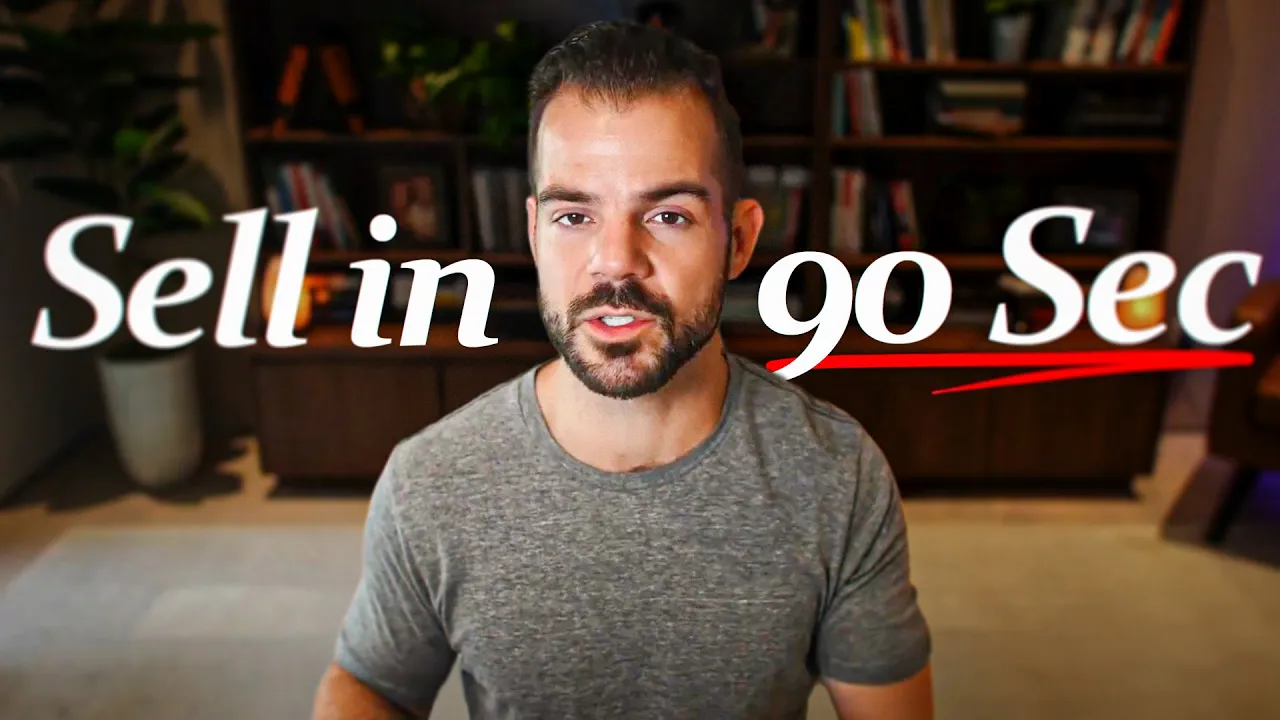
I'm going to explain to you how to sell anything in under one minute. And the first thing you need to know is that business is about solving problems. And that's because when you solve a problem, you create value.
And then customers exchange money for that value. So why is that important? Well, if we know that to be true, sales is really just a demonstration we can solve a problem for somebody else.
So if you're a sales person, the takeaway is if there's no problem, there's no sale. And that's why all sales are predicated on one thing and one thing only. And it's finding the gap or the problem between where prospects are now and where they want to be.
And that's the very first thing you have to do in a sales conversation because essentially it sets the frame on what the entire conversation is going to be about moving forward. Now, the second thing you need to know is that there's two types of problems or two types of gaps. There's pain and there's unfulfilled desire.
So a pain is when somebody's going from below average to average. So let's say they're overweight and they want to get to a healthy weight. That's a pain.
That's below average to average. An unfulfilled desire is when somebody wants to go from average to excellence. So, for example, if they're at a healthy weight, but they want to trim down and get a six-pack, that's obviously going from average to excellence or above average.
So, once you find out what type of gap or type of problem it is, then you can ask the other key questions of closing the sale, which is what's been keeping them from fixing this problem on their own. What's the consequences of not fixing the problem? What happens if nothing changes?
What's the payoff or result that they get if they fix the problem? Do they have the resources and willingness to fix the problem? Do other stakeholders or decision makers support them in fixing the problem?
And lastly, do they trust you, your company, and more importantly, your unique methodology in fixing the problem? But you can't answer any of those key questions until you first find the problem or the gap.