one of the things that happens throughout this century is that people are beginning to depend more and more on visual sources I don't know that many people thought about it a lot but photographs are coming more and more into their lives so it became a language that everybody knew they could [Music] speak photographic images um changed I think changed everybody's understanding about you know not only what the world looked like but what news was photography has a certain selective nature that will take an instant and maybe lifted up out of the ordinary and therefore make
bumps in history that you wouldn't find there if it were not for [Music] photography that moment in time when that Spanish uh uh Civil War uh Soldier is shot and bents back can you ever erase that image from your mind can anyone ever say all right I saw it I don't have to see it again I don't remember by 1930 people really think that the photograph is the most trustworthy um source of information it's the it's the thing they want most it's the thing they believe in most there's no question that most ordinary Americans have
been socialized in a way that says that seeing is believing and the photograph is the most accurate way to [Music] [Music] see and now the latest Miracle of news Gathering sending pictures by wire Has Lifted the curtain on a new era in news leaving Tokyo we're following up on the tourist the Associated Press Rockefeller Center New York City each day thousands of photographs come in from around the world they arrive via telephone line and satellite link minutes after they are taken in the field and coverage continuing from here they're selected and distributed to news organizations
around the world num if news happens anywhere on Earth we'll soon see a picture of it the notion that everyone or that many people see the same picture simultaneously is a pure 20th century experience never did you have millions of people waking up and seeing the same pictures and seeing the same events pictured it never happened news is of today and it's what happened today and so the pictures also had to be of what happened today and if the pictures lag Behind the Story by any significant amount of time the story is over and done
with in the 1930s the daily paper was still the way most Americans got the news Visionaries at the Associated Press decided that a process must be invented to transmit pictures as quickly as words the system required a network of High Fidelity telephone lines and would be extremely expensive newspaper owners who were being asked to pay the bill were skeptical Roy Howard Head of the scrips Howard newspaper chain was convinced the whole thing was a big mistake there aren't enough important pictures taken in the entire world he said to justify the expense but on January 1st
1935 groups of technicians huddled around black machines across the country the first transmission a dramatic photo of a plane crash the still wet print was wrapped around the cylinder the rotating drum converted the photograph's black and white tones into a wavering high-pitched sound in 25 cities across the country 25 cylinders were rotating simultaneously L while recording the image on a photographic [Music] plate and the day after the first wire photo was sent was the opening of the Lindberg murder kidnap trial uh Bruno halman going on trial in New Jersey that story uh pretty much sealed
uh uh the success of the wire photo because it became clear that yes there were a lot of interesting pictures out there in the following months Sensational news pictures flew back and forth across the country Amelia aart Landing in California after flying non-stop from Honolulu gmen shooting mob Barker in a furious gunfight in Florida Will Rogers the folksy philosopher killed in an airplane crash in Alaska from this time on big events no matter where in the world they occurred would be pictured on the front page of everyone's newspaper on the same day the whole Advent
of wire journalism both story and pictures tended to make the us more more of a one Community as opposed to a more regionalized nation which it was at that time in 1937 the entire country was riveted by a huge news story a story that Americans could witness almost instantly because of wire photo Mur Becca who was our chief Atara happened to be out at Lakers when this Hindenburg was coming in and uh most photographers waited in in the waiting room because the Hindenburg had been in before and it was just another picture of that hindur
coming down and we had plenty of pictures but anyway he decided put up the camera as it was coming in just he held up the camera it exploded he hit the trigger he had the first puff of explosion on the Hindenburg Murray Becker was using a speed graphic now a speed graphic is a large camera that's held with two hands and the way it operates is this you put a holder in to the camera full of film you take out a slide that exposes the film to the shutter you put the slide on the back
of the camera you [ __ ] the shutter and you make the picture now you have to take the slide back out you have to put it in the holder you take out the holder you turn the holder over because it's a film on the other side you put it in the camera you pull the slide you put it in the back you [ __ ] the shutter and you make the picture the Hindenburg burned in 40 7 seconds and Murray did that three times so there was this incident of explosion which Murray photographed and
then as the Hindenburg burned in those few seconds he made two more pictures a remarkable piece of camera work this one of the worst catastrophes in the world Place old 4 500 ft into the sky and it's a terrific Place ladies and gentlemen this SP Flav now and the fling to the ground not right to theing [Music] the day the Hindenburg went down the image eclipsed the words from then on it wasn't really news if you didn't have a [Music] picture [Music] the [Music] as much as you want to see pictures about nice things people
want to see pictures of horrible things people want to see the explosion people want to see the murder people want to see the Carnage people want to see death people want to see all the things things in pictures that are too scary in life to deal [Music] with and that's one of the things that makes it so impossible to understand the importance of Photography because you it lets you see everything and lets you think about [Music] everything on November 23rd 1936 a new magazine appeared on the news stands publisher Henry loose gave Americans something they
had never seen before a glossy large format news magazine which used photographs to tell its stories never want to think SM small loose called the magazine quite simply life it was the biggest Mass Market hit in the history of publishing going back to Gutenberg nothing that ever had been published lished was as big an immediate sellout and it just it just took over why because it spoke in a language that everybody could understand [Applause] pictures it is very hard I mean we're so inundated with images now that it is almost impossible to comprehend how little
of that existed when when life came out there maybe be a picture on the front page of the newspaper a few magazines would run pictures nothing arrived in your home and opened up the world to you this is precisely what life did the success of Life the impact it had I'm sure surprised the absolute hell out of the people who launched it I mean I think loose knew he was on to something Henry loose always had had a fascination with what he called picture magic to introduce his new magazine to the world he wrote an
essay which describe the many powers of Photography to see life to see the world to watch the faces of the poor and the gestures of The Proud to see strange things machines armies multitudes and shadows in the jungle to see and take pleasure in seeing to see and be instructed to see and be amazed you turn the pages of Life magazine and there's politics and there's fashion and there's movies and there's advertising and there's cars and there's food and there's homes and there's tragedy and there's happiness and if you think about what that was like
in 1936 during the Depression as people are just trying to understand what's going on in this country it's amazing life perfected the the format of the photo essay the photographs selected and arranged on the page would tell the story with the beginning a middle and an [Music] end when you're finished with that photo essay you should pretty much know what that story is All About without even having read a word in a text piece or a caption there was the career girl Leonard mom's Career Girl people hadn't seen stories like that actually published pictures of
people's ordinary lives one of the reasons I think that that people get hooked on life is a sense that they are bringing these extraordinary images to any American citizen any given American no matter where he or she lived no matter what their class was no matter what they did for living they they all could essentially share in this experience and that experience of course is defined by still photographs life told us about a world that many of us didn't have I grew up in in in the Italian section of Brooklyn I I did not speak
English until I went to school a magazine like Life Magazine which somehow came into the saalian household I don't know why but I guess someone said I think we should learn how to be Americans and Life Magazine was this great great lesson about what the other world the outside world was all [Music] about you know it's so amazing I can't remember what I ate this afternoon I can remember what I saw in Life magazine in a special feature life printed snapshots of mar and Chadwick and her father at the beach one photograph a year for
over a quarter of a [Music] century [Applause] [Music] a Great Depression in Washington Roosevelt attempted to deal with the economic crisis proposing a multitude of new government programs he knew he would need the support of Congress and the general public as part of the farm Security Administration the government established an organization unique in peace time a propaganda agency that would use the power of photographs to sell Roosevelt's programs Roy Striker an economist from Columbia University was chosen to run this new agency Roy Striker never took a picture in his life but he was a great
talent scout and he brought together a team of photographers some of whom have become Legends in the history of photography like Dorothy Al Lang Arthur rosin and Russell Lee and Walker Evans Striker was dedicated to telling the story of America the way it was as he put it uh our job was to introduce America to Americans and through our mighty nation it left a dreadful track from Oklahoma City to the Arizon line dakot and nebras to The Lazy R Grand it fell across our city I think what I phog that I did for f security
and what we all did I think uh is an expression of our feeling that we were living in a great country but that the country was in great trouble and also that the people who were most troubled in those times were also the people who were part of his greatness it was a politically naive period and all of us who went to Washington at that time had some crazy idea that what we could do could alter the course of history I've read any number of times about how there was dust in the food and dust
on the table and dust in the bed and in the clothes but until you actually see a good photograph such as is Arthur rin's of the uh people walking from the house to the dust Cellar you don't get a sense of the immensity of the occurrence somehow the photograph sums this all up in a different way you get a a sense of it that's uh sort of visceral instead of just intellectual over 6 years FSA photographers took a quarter of a million photographs they were made available free of charge and were widely used in newspapers
magazines exhibits and books at the time the pictures helped sell Roosevelt's programs but for later generations they have become a national treasure Frozen in this archive is a critical moment of American history today when we think of the depression we see these faces the suffering and the sadness as well as their implicit message as bad as things were America would [Music] endure in the early 1940s a young photographer Gordon Parks got a call to come to Washington with the success of the FSA its role was being expanded Roy Striker believed that photo grass could be
used to combat racial discrimination he began by showing Parks how things really worked on the streets of the nation's capital so Roy Striker asked me a few questions and said what do you you know you know about this city and I told him he said H he said well I'm going to give you an assignment your first assignment put your camera on the Shelf I want you to go to Julius garfinkle Store buy yourself a top coat there's a restaurant directly across the street and then there's a motion picture house down this in the same
block so to make the story short each one of them gave me short shrift uh uh I didn't get a code at the department store when I went to the restaurant man said don't you know Negroes have to eat in the on the other side the back you can't come in this side you have to get your food into the back and of course I didn't even get in the movie house that's the way it was so I was astounded and I went back and Roy saw me walk in and he smiled he said well
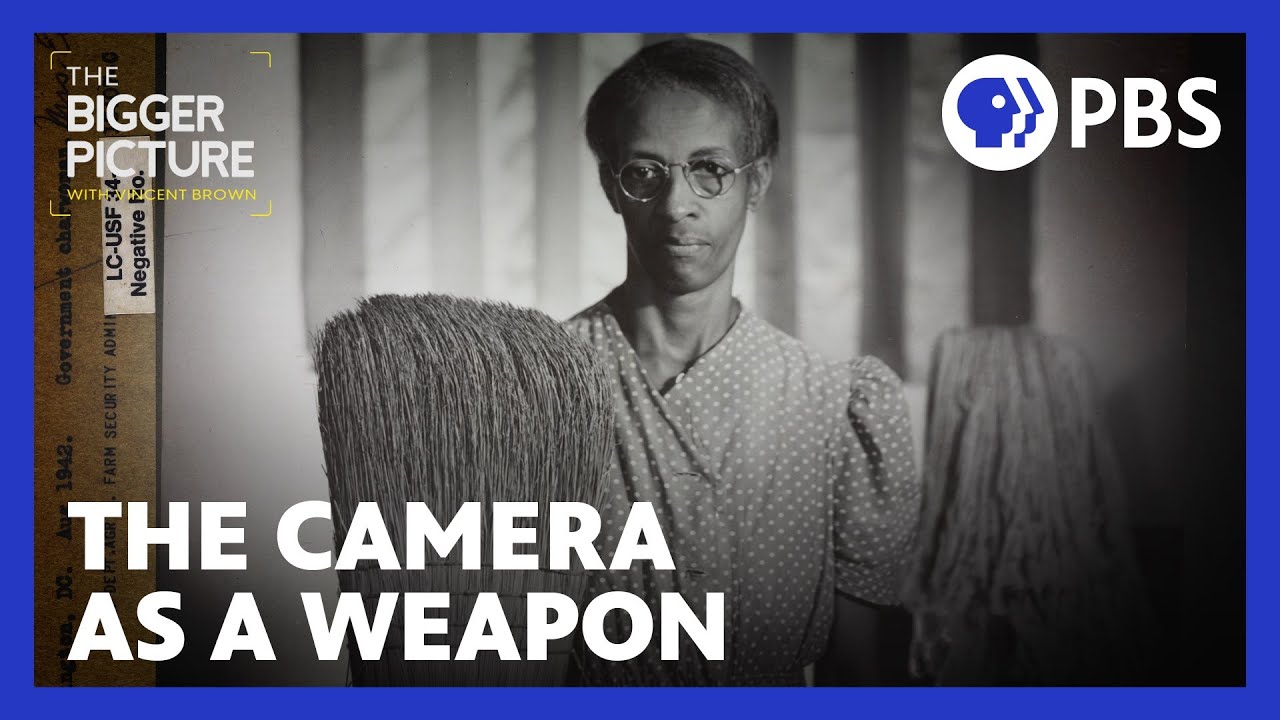
how did it go I said well I think you know how it went he said yeah what you going to do about it I said I don't know what do I do about it he said well what' you bring your camera down here for just like that I said oh so he left and the only person who left in the building was a black woman a Char woman was sweeping the floor and mopping so I introduced myself she told me her name was Ella Watson and I asked her if I could photograph her photograph me
like this I said yes I had really thought of Grant Wood's picture of the American Gothic I put a broom in one hand and a mop in the other and told her look directly into the camera well that picture has become best known picture of all of my work I showed it to Striker three mons later he said well you're getting the idea but you're going to get us all fired said this is the government agency and that picture is an indictment against America I realized uh from the reactions people that the camera could be
a very powerful instrument against discrimination against poverty against racis [Music] [Music] ISM he was um filled with this idea of photography of natural spaces being very much linked with um an American Vision the landscape in America has a has a great um history and Legacy to it um it was our Cathedrals um it was our castles um in response to a European idea of what art should be about something spiritual something lofty something historical our history was was in our waterfalls and our mountains and our Great [Music] Rivers people I think misunderstand uh Adams because
he photographed mountains and people so people think it's about uh geography or geology but he really was photographing the weather he uh he made pictures unlike anybody else had made or for that matter has made when Adams was doing its best work everyone thought it was irrelevant beautiful pictures of little uh pristine little lakes and the high sieras what did that mean during the uh during the Great Depression during the uh during the second war it really seemed like escapism then uh later after the world became uh concerned with ecological issues and when it began
to seem to people that the preservation of our place was as important as Central an issue as as any then Adams began to seem very relevant very prophetic in the early 1940s the photograph had completed its conquest of America after the success of Life the news stands were overflowing with picture magazines wire Services were now sending pictures instantly around the world not only on telephone lines but via radio waves 35mm cameras and fast lenses made it possible to capture life in action with these Technical Innovations photography had immense power to shape public opinion all this
potential came together on December 7th [Music] 1941 the war would be fought on many fronts an astounding Global story which both the military and the Press were determined to record in pictures Life magazine and former FSA photographers were rushing to the front lines it soon became a tragedy of unimaginable proportions but ironically World War II was a photographer's dream military cameramen moved in as always with the troops to bring home the pictured facts the hell of jungle warfare the dawn of Landing day on some Coral [Music] Beach [Music] public opinion wins Wars wrote General Eisenhower
a double face of nipon showed itself in its to win World War II it wasn't enough to tell the American public what they were fighting for it was necessary to drive home what they were fighting against the Japanese with their unprovoked attack on Pearl Harbor were singled out as objects of particular hatred well the Japanese soon became Japs not just in life but uh in the in the press in general um the worst most tragic thing that happened was the uh the evacuation of what eventually became about 100,000 Japanese American residents of the West Coast
to the in interior there was racism both conscious and unconscious in the treatment of of the Japanese if you can understand that then you can understand a dimension of the war that seldom surfaces today the kind of intense hatred that was necessary to fight it to Modern Eyes of all the many pictures coming out of World War II this is one of the strangest and most telling Life Magazine printed it as their picture of the week with the following caption when he said goodbye to Natalie Nickerson her handsome Navy Lieutenant promised her a [ __
] she was his girlfriend apparently and a very respectable girl who went to church and um led her high school class and that sort of thing and here she was present at this bizarre and gruesome exhibit of this Japanese soldier skull well that sort of thing was commonplace and so it became a real service problem what to do with these these cleansed bones of former Japanese soldiers that were being sent home as gifts and souvenirs but my point is that it's never happened with the German corpses they were never boiled down to get their bones
to send home never the Germans were white people I think this ought to be talked about in exactly those terms because it's been forgotten we didn't lock up people with German names we locked up people with Japanese names although they were American citizens they were very close to it seemed to what used to be called [ __ ] in this country and that should never be forgotten either and the fact that they were not quite suggested a very special brand of alien uh offensiveness and consequently to to uh take the flesh off their dead bones
and mail those bones home as nice souvenirs for the people in Iowa and so on didn't bother people at all they thought it quite appropriate you you can learn a lot about Americans in the second world war from that one photograph I would say World War II produced many famous photographs but one of the most famous was not of guns or tanks but of a young woman's back her name was Betty gyel and at the height of the war 50,000 servicemen a month were asking for this picture 20th Century Fox made a movie to capitalize
on the fame of the photograph love Lori Lori they called it pinup girl that's with high heels her bathing suit and her big come hither smile Betty grable's photograph was everywhere a fighter plane was named pinup girl and had her picture painted on its fuselage have to she built herself as the daughter of a truck driver and took her role as icon seriously I've got got to be an enlisted man's girl she said just like this has got to be an enlisted man's [Music] War do I love my pinup the war created a fad for
Pinups of all kinds on baric walls in decals in soldiers wallets Life Magazine published a set of pictures of beautiful women and then conducted a poll among the troops which one of these girls would you most like to have on you with the girl you'd most like to bail out with the girl you'd most like to take out for a chicken dinner an army publication put it simply we're not only fighting for the Four Freedoms we're fighting for the Priceless privilege of making love to American women so baby keep gr remember I'm pinning my hopes
on [Music] you this is the day for for which Free People long have waited this is dday for years it had been in the planning the return of Allied Forces to France the ultimate crushing of Germany and the end of the war in Europe every magazine and newspaper editor in the country knew that D-Day would be their biggest story Life Magazine sent John Morris to London In late 1943 his instructions were simple get us the first pictures of the invasion by June 1944 I had a team of six war correspon of photographers and my job
was to get them assigned to various spots for the great story of the invasion which involved a million men to cover the actual Landing Morris sent Robert Kappa Kappa had photograph the Spanish Civil War the desert battle across North Africa and the invasion of Italy [Music] if anyone could capture the events of dday on film it would be Robert [Music] Kappa when ca's film came in we were desperate because we had to make a a final deadline of 9:00 a.m. uh Thursday morning for shipment to to life up until that moment the whole world had
didn't know what D-Day actually looked like so we were we were really pressed for time Papa film came in came to me in the early evening with a note from him saying John the action is all in these four rolls of 35mm film and I ordered the dark room to rush processing as fast as possible I said give me contact prints I needed to edit and the young lad in the dark room uh put the film in a drawing cabinet and closed the doors and there was too much heat and because I we were in
such a hurry the films are were ruined and on three Rolos of the four there was no image discernable at all but on the fourth row fortunately I found 11 frames that could be printed and those are the pictures will live [Music] forever [Music] There She Goes one of the great photo icons of all time possibly the greatest is a picture that Joe Rosena made of the flag raising on uima on top of Mount saachi it had been a bloody bloody course and then Along Comes this picture that says Victory the night it was made
was flowing to Guam and the next day it was transmitted to the US so it was in the US within a day and a half of of the time it was made and transmitted to newspapers and the picture was played on the front pages everywhere and it became an instant icon that photograph is especially interesting I think because it could be said to Mark the impact of the New Deal upon the way we understood the war we understood the war as an almost Magical Force for uniting people in this country and for effacing differences and
that is what that photograph taken just as a piece of symbolism is about one picture and in that brief moment rosenthal's camera seem to capture the soul of a [Music] Nation [Music] [Applause] there are certain pictures that change our lives now I don't mean pictures of events that changed our lives but I mean pictures themselves that changed our lives and the oswit and other con conentration Camp photos are in that category people had read descriptions of the concentration camps but they seemed exaggerated unbelievable eyewitnesses had been met with suspicion the possibility that a whole people
had been exterminated was Unthinkable and then these images visual proof of the enormity of the Nazi crimes even Margaret Burke white the experienced combat photographer could not fathom what she was seeing using the camera was almost a relief she wrote it interposed a slight barrier between myself and the white Horror in front of me I kept telling myself that I'd believe it when I had a chance to look at my own photographs but later and I developed the negatives I could not bring myself to look at the films like the Holocaust they documented the photographs
Mark a turning point in human consciousness the world would never be the same [Music] y and [Music] on January 24th 1955 the Museum of Modern Art in New York City presented an exhibition called the family of man organized by photographer Edward styen it was a fusion of carefully selected photographs and captions all to support the concept mankind is one it included 500 photographs from 68 countries around the world it featured groups of related pictures that move the viewer from images of lovers meeting to pictures of marriage to birth and finally to Universal concerns of food
and shelter for one thing it came after this terrible War and the the aftermath of the war in which uh uh societies were uh really disrupted it made the point that people everywhere had the same needs the same desires that families were families wherever they existed no matter what their surroundings looked like it appealed to people on a just very human [Music] level [Music] critics attack the show as simplistic but for the vast general public the exhibit was a profound Revelation it toured the country and then the world bringing many people into museums for the
first time in their lives a book was published based on the exhibit and it brought the pictures to Millions more in all the family of man became the most widely seen collection of images in the history of photography I don't remember when the family of man came into my Consciousness uh but its effect on me was extraordinary it was a collection of the single most powerful images that I had ever seen certainly to that date and probably ever have seen together these extraordinary pictures celebrated a humanism saying that all people were alike Under the Skin
but yet in their differences they expressed the beauty of what it is to be [Music] human the couple making love obviously in the middle of sex although all you see are the shoulders was what I hoped passion would be the father teaching the son how to hunt in beuan land was was something about fatherhood something about what I wanted to be as a father but then there were photographs that just to me said said things that were so big about the world I mean the the C Bron photographs of theot especially the one of the
women looking off off across the field of stones in Kashmir the duaso picture of the lovers by the S they were icons they stood for meaning that kept building and building and building and it told us that the human heart was beautiful and the human heart was shared by everyone who was [Music] [Laughter] [Music] human and years ago I watched uh my wife going through the the New York Times a magazine section and she was turning like this really fast really fast and she finally stopped at what I thought was the worst ad I've ever
seen the headline was just dismal it said nothing uh the layout was really bad and I said why did you stop at that ad and she said I like that dress very nice picture of a dress I like the dress I think that our sense of our clothing at all times is essentially pictorial groups of people in 1863 caught by the camera show these these people looking like bundles of laundry I think in order to look better in the camera eye a kind of self-contained slim unit has come into existence you have to really be
quite slender to be perfect in the camera what the camera influences right there is the way people wish to look after the war going through the pages of Vogue or Harper's Bazaar looking at Penn's photographs later at Avon's photographs what these photographs did was create a way we wanted to look it permeated all aspects of um ourselves certainly ourselves as women in the world and you had desirable uh people's looks seen through the camera in those clothes that looked marvelous under the camera eye there is no nothing the camera cannot make marvelous let's say it's
a you put it on the model and it's still that's okay but it's a dress and then somebody pins it up in the back and pins it up on the side and it's still a dress and then a photographer an avidon uh takes a photograph and it's something that everyone wants it's this beautiful incredible dress and then what happens is they go to the store but it never looks like the photograph nothing really ever looks like the photograph and that's the sad part of life [Music] setting up the family slide projector is a ritual that's
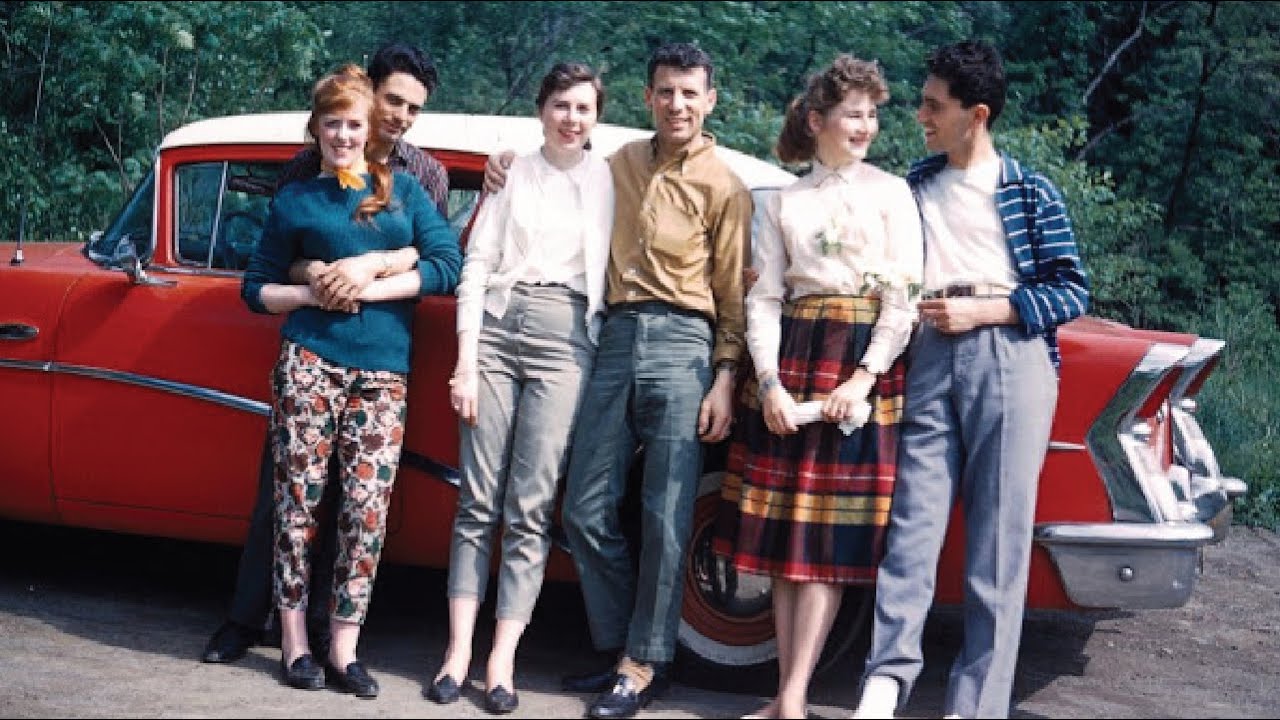
virtually disappeared but it's one that I recall with great clarity and affection from my childhood while my father's sophisticated knowledge of Photography made our family somewhat unique in many other ways we were typical we loved making photographs of the markers of Life often these pictures were made on family vacations when we like millions of other Americans stuffed the family into the station wagon and headed out onto the open road one might have the impression to looking at scores of these pictures that we moved around in a kind of Clump never more than perhaps an arms
length apart I think the pictures represent a kind of tenacity on the part of my parents to maintain a kind of Ideal Image or ideal appearance of family closeness in spite of whatever battles might have been going on in the backseat of the car 2 minutes before the photographs were [Music] made one of the most interesting things that in a sense plays itself out in these pictures is the idea of connecting the older mythologies of American culture to what you might think of as the future mythologies of American culture especially with the growing mythology of
the ideal family in America in the [Music] [Applause] [Music] 50s in the boom of the 1950s Americans were being inundated with images although television was becoming America's favorite pastime photography was still King magazines were everywhere life and look had more readers than ever the pictures in both the ads and the story showed a Brave New World of suburbs cake mixes Polaroid cameras krinolin and cars with fins Life Magazine movies and soon television create a photographic world of possibilities that nobody could dreamed of 20 years earlier and all of a sudden you start to get after
the war a different kind of visual universe that that magazine says it's reporting on but it's creating it's helping create it at the time people believed in it so strongly that people getting Life Magazine looking at pictures of those families would go through oh M that you know maybe we should redecorate our living room like that or what can we do to look more like this family the vision of Amer America and the the vision of the good life that's presented in magazines like life and look um is extremely narrow extremely circumscribed in terms of
who's being uh pictured it's clearly middle class it's clearly white it clearly has a husband and wife who accept that that the man is out in the public world the wife is home she's a mother she's taking care of the whole domestic sphere a very clear narrow uh tightly defined vision of of of what it is to be normal is sh come on we could look back at the 50s and say God Those ads really distorted and how could people have wanted to feel like the people in Those ads but today we'll have something like
a Calvin Klein ad all right now we have the sexy mother who looks beautiful with the children on the beach which I can tell you never has happened and we look at that and we say that's true and I want to have a white sweater like that while I'm on the beach with my children and everything stays White and the waves come up and we all look relaxed together and nobody's asking me for lemonade or where the juice pack [Music] is say she cares away Allelujah come on get happy get ready for the Judgment [Music]
Day the iconography of the the 1950s the official iconography of course has become you know the the largest cliche of the latter half of the 20th century that uh everything really domesticated you know absolutely everything under control Conformity blah blah blah things weren't actually that way out in the streets but the judgement [Applause] day in the mid1 1950s a new generation of photographers led by Robert Frank and William kleene rejected the perfect lighting and composition of professional picture taking William Klein described his excitement and first seeing not the order but the chaos of Life while
looking through his viewfinder I rushed out into the street he said and shot away aiming not aiming it didn't matter I wanted it all in a gluttonous rage gone was the comfortable middle class World Gone was the neat magazine photo Essay with its beginning and middle and end this photography is about this mess of misconnections and people uncertain of where they're going and uh and people colliding and cultures colliding and people not seeing each other it represents this very very different development in photography and um there's sort of no turning back from that these photographers
said here's your world this is this is your world this is not the fantasy of it this is this is the real world and made pictures that were graphic and iconic and could both tell the truth about what was what they were seeing and stand for something big the best photographers showed that in this vast country there are many lost souls that not everybody fits in and that the one American dream is not a one- siiz fits [Music] [Applause] [Music] all in August 1955 a 14-year-old boy visiting Mississippi from Chicago was accused of whistling at
a white woman he was bludgeon to death and his body was thrown into a nearby River in a South where violent racism was commonplace emit Till's murder may have gone unnoticed except for this Photograph published only in the black press it showed his young face beaten beyond recognition it was um awful aw awful it was horrific he looked like an old man I would go to bed every night frightened to death literally frightened to death because we were the same age as he and we didn't know whether or not they would come and get us
and we also saw pictures in the newspapers of and especially of in in the Chicago defendant Pittsburgh Coura of the the uh as salant uh in the classroom in the courtroom laughing a picture is worth a thousand words they're seared in your brain yeah and and they remain there and Emil's face is still in my mind today I can see it it's there and it will never leave I think my generation of black southerners who became active in the civil rights movement in the late 50s early 60s was the emit till generation because down to
the person all my friends saw that picture at about the same age as I or a year or two older and they were enraged and power felt powerless at the same time and vowed as I did that one day they were going to get even they were going to do something about it photography was growing up with a century in the coming years it would confront the television age and soon the digital age every aspect of American life was about to go through profound [Music] changes the camera would be there to document to shock to
motivate and to [Music] transform [Music]