[Music] my my personal belief is that you cannot always fully avoid overfitting there there's always a danger of having some overfitting in there which is if someone claims or I can avoid that to to 100% I would say they're lying uh it's very very maybe a bit harsh uh but but it's actually really really really difficult To avoid overfitting completely but there's a few things you can do to at least uh you know mitigate it a little bit welcome to the algorithmic advantage we're here to expand the toolkit of the Quant trading community and introduce
investors to the many advantages of systematic trading our goal is to educate and Inspire as we embark on a captivating journey into the vast knowledge and experience of leading portfolio managers and other experts in The field we hope you enjoy the show and if you do please subscribe leave us a review or even buy us a coffee by the link on the algorithmic advantage.com we really appreciate it hi Traders welcome back to the algorithmic advantage podcast of course my name is Simon and with me is my co-host Rich G Rich how you going good day
Simon very good we're really um loving the podcasting so far we just like to remind you that if you want to Help us out if you could leave us a review on iTunes that would uh that would help enormously we'd love that of course subscribe on on YouTube some of our shows are more visual uh than others and uh so but it's across all of those platforms uh today with us we're privileged to have Dr Thomas Stark um Tom is uh is now a Sydney resident but with a German background and he's worked globally I
know he's got a PhD in physics so I'm going to try not to be Too afraid of that has worked at Oxford University worked for rollsroyce uh before going on to funds and Prop Shops so um there's lots of really interesting background there Tom welcome to the show thanks for coming along thank you thank you I'm real real pleasure we're we're super excited to have this chat with you and uh and go in any direction that it that it may take we can talk about uh you know how you've been progressing your research and Trading
uh skills and development over the last decade in particular um but uh let's just start with a fairly brief uh background just to give people um an overview of how you got into trading and and what that sort of what those steps were from from physics to engineering and and so on into trading and uh and then we'll quickly try and jump into the trading itself sure sure well I I uh I start as an engineer and and physicist so I worked you know in Some engineering companies like Rolls-Royce and also in Academia a bit
and um at some point I had this crazy idea oh why don't I um you know I've never heard done anything really about stock trading and why don't I just build some computer systems that trade on the stock market and I prop up my my engineering salary a little bit and um uh basically started looking into this and yeah became quite an obsession and you know I started building you know Systems and and at the time there wasn't really much out there so so what I did on the side as well was to uh have
a Blog and so I was one of at the time probably about three bloggers on the whole internet talking about this stuff so um that was quite a lot of fun but but there was a point really where it became so much of an obsession that it actually really interfered with my work and I had to basically quit my job and just do this Fulltime and so at first you know did it yes probably not the only one I was probably an early one that's that's true so at first I uh I did the a
little you know a little bit of this on my own and and I was sort of traveling the world and doing this on the side basically sitting in cafes and and programming and actually I'm probably one of those people that had their first ever trade submitted uh autom in an automated system so not not necessarily Uh by hand and um you know as you do that and also through my blog and the fact that that people obviously started to get to know me a little bit you know I got job offers and people say oh
why don't you come along and help us to build an automated system we always wanted to do this and so you know I worked for various firms uh learned a lot in the process and then finally started my own company which was mostly Consultancy for all types and shapes of firms the interesting part of doing that was that I really got to see very very many different aspects of the uh Financial world and and many different uh types and so I'm not uh too afraid on taking on a challenge and I had a few very
interesting challenges over the years and uh currently I'm still running my business but I'm also uh working with some uh big uh family office on their Alpha Generation so that's at the moment my main uh uh task I should say so I'm focusing on that which is also very interesting uh for me because it really ramps up uh my game uh by really developing strategies that can take some large amounts of uh funding uh and yeah so so this is definitely new challenges there uh than when you work with a smaller uh um with some
smaller uh strategies Tom how did you find the Transition from physics the understanding of physical systems to trading the understanding of human systems how how did you find that transition that's a good question actually because initially I thought ah this is going to be really easy and it's not a uh it's not a problem and I think I think um a lot of people coming from the physics data science background actually think that that but in fact it was not that easy uh I had to really completely rethink um a lot of my ideas about
the world I should say and coming from physics of course there are a lot of uh really similar things now I think what the real difference is is that physics is really structured subject and you move on in a very structured way whereas Finance is really more of an art in my opinion uh you actually use the tools of mathematics physics and programming so you actually use the scientific tools But the the outcome is is very not deterministic so it's it's more that that you build that you build something that that may work for a
while uh and then it doesn't anymore because it's obviously a financial Market it's it's almost like you're you're a you're an artist that that that builds a piece of art and it's really infashion for a while and people really want it all a piece of music and then and then at some Point you're just not popular anymore and you have to like come up with new ideas dream up something new you obviously use always the same instruments perhaps or maybe you learn new instruments but uh uh your the work you do is always somewhat temporary
yeah while in physics once you come up with something it's it's fairly set in stone I mean it's it's not always for eternity but it's definitely a lot More long lived so the laws of the universe are a little more enduring law of human behavior say that that in itself is actually a really interesting and a real big difference and in fact once I moved into Finance I I found it quite a bit more exciting than physic at the end of the day because of that transient character it it just gives probably suits my character
a little bit more it it just just gives more more room for for play and and and and Creativity so fundamentally you view the markets as sort of over the long-term indeterministic non-stationary but over the shortterm you see these opportunities that might last sort of ephemeral opportunities might last a period of time but then Decay and there's this constant adaption and evolution going on in the markets is that how you see this um game we're playing I I think evolution is like a really good word for it Because you obviously have a collection of players
in the market with all different types of understanding knowledge uh behavior and and not only that they are different players with these different understanding all of them also learn and evolve over time and so it creates this this really interesting Dynamic which is hugely nonlinear and it it changes uh in in a sense also in the way that the culture changes the technology changes and all Of this and then also with respect to each other because there is this uh clearly this predator and prey uh Dynamic going on in the markets as well and so
the system becomes incredibly complex and very hard to understand and in a way if you really want to participate for a long time you have to at least to some extent stay on top of what's Happening clearly there will be people that say well the same strategies that worked 15 20 50 years ago are still Working and that's true but there's definitely a change and if you want to keep your Edge I think it's it's it's probably uh safe to say that you definitely have to evolve with the markets yeah you see this in you
know altering regulations over the time new trading species coming into the market like high frequency trading all of these things there's this continual sort of um adaption required for the participants in the market to keep alive and the Competitive war that we're playing in this game well I don't it as call them complex adaptive systems yes absolutely I mean it's not really a war in that sense I I think it's I mean it is but but when you look for example in in in in in the Sydney uh uh trading Community or you know the
everyone or most people know each other they have all worked together in some firms or the other and so we're competitors but we're also friends um yes I mean it's a I I would Say you know it's not always an unfriendly competition um it's it's yeah hard to say but but it's it's it's an interesting one and and obviously there's a lot of really smart people with great ideas and when someone comes up with a new idea and and perhaps starts to outperform you it stimulates your own creativity to go one better um it's a
war against yourself isn't it it's sort of a war against your own self it is to some extent and So yeah uh yeah I was just going to say that that what's interesting about this is for me you know where as humans we have a tendency to always stay with our habits and and when we have things that that work well we want just hold on to them and I personally sometimes struggle with that to actually then say well I want to try something new but if I really go into a new field it's really
difficult at the beginning hard to learn and and having this this drive to always Push the boundaries getting out of your comfort zone to try something new it's not that straightforward actually yeah so I don't want to miss on some of the um evolution of yourself as a Trader and the systems that you've been through and and and some of that Journey but you've triggered me to want to dive into the the present moment first which is um when you're talking about the complex nature of the markets and the changing nature of of um Extracting
profit from those markets what's your sort of uh what's the general approach today in terms of finding factors or finding alpha or otherwise just making money out of the markets what's your approach to um to research and searching for those factors then so yeah it's a very interesting so I used to I used to say that Alpha should make some economic sense uh for them to be good and and I mean there's there's some real truth uh To that specifically if you are somewhat discretionary and you you know you actually watch the markets and you
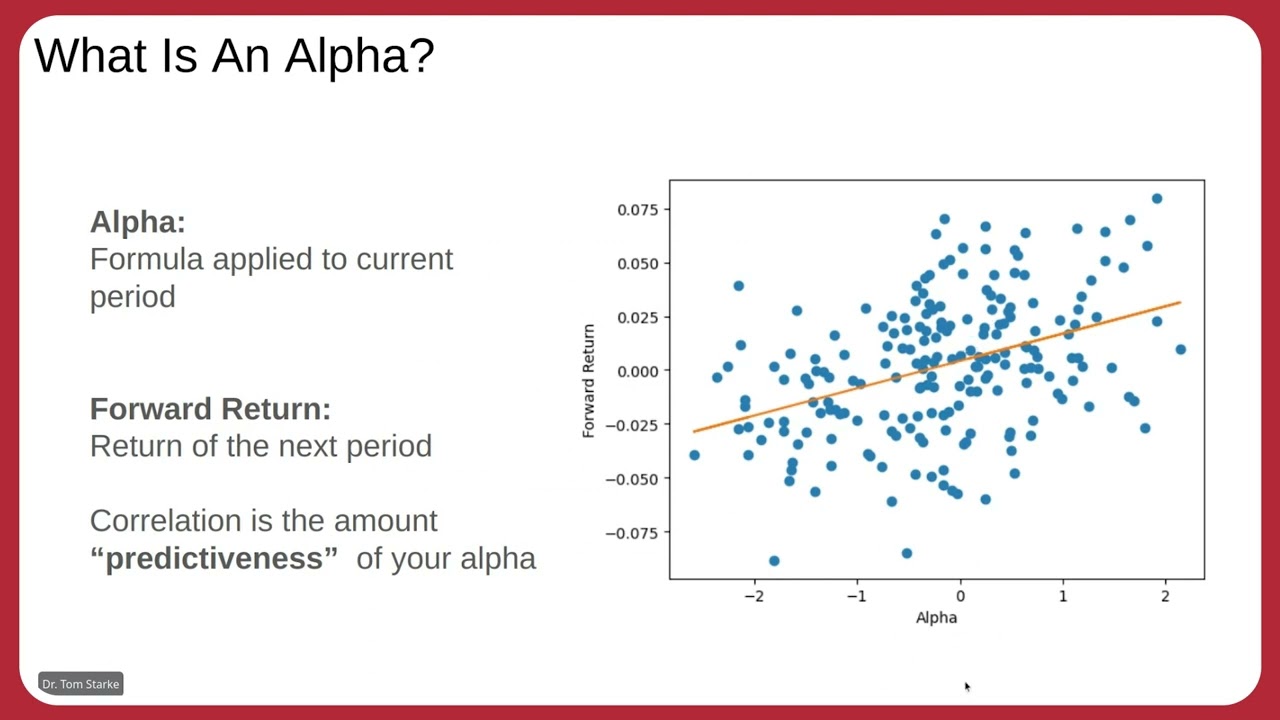
see what happens now my Approach um has definitely changed and you probably remember when the book uh about Jim Simons from rentech came out and it didn't reveal much about what they're doing but what it did reveal was that they're really using um a lot of interesting uh ideas that are really not Obvious or they don't have any obvious economic uh reasoning behind them but nevertheless they are interesting alphas and that leads to to a concept called micro Alphas really which means that that you have effectively a large number of little trading strategies that that
make you know that generate somewhat of a of a of a p&l or an alpha as we say for th those of you I'm not sure whether your readers are very familiar with the concept but well Basically is you try to have all these small strategies that are hopefully quite uncorrelated and you combine them and and uh what you find is that the combined performance of those actually provides you with a much much uh better performance than each of these individual strategies now when you do that uh there's a lot of we'd talk about that
in terms of we'd talk about that in terms of return Stream So each of these Alphas are producing a an uncorrelated return stream in relation to other return Stream So when we consolidate that um it produces a great portfolio result that's probably how we'd refer to it in our world yeah okay okay interesting um so for me I really see them now as as purely mathematical objects that are combined with some sort of mathematical uh uh operations and and those operations could be just a simple summation or a more complex say a mean Variance optimization
process or something something of that nature um and and you you basically then go okay each of these uh individual Alphas has is in nature just quite ma it's basically a mathematical formulation um and those those mathematical formulations are then combined and and the way to see that is almost like you have a you have a portfolio of of of of products then you Apply this this mathematical function to them which is effectively a trading strategy and this in itself creates a new type of product uh with certain behaviors and then you combine quite a
few of those uh together so it becomes really quite abstract and what's interesting is and I had this discussion before you you you completely let go of ideas of trend following or mean reversion or any of this it's just like okay we've got a um some Some sort of mathematical formulation that has a predictive element to it it may not be big but but many of them combined actually lead to very interesting uh performances it sounds a bit Tom as though it's a bit like weather forecasting using Ensemble models um to you know predict outcomes
of weather you know the broad phenomen of weather over a period of a short period of time you Know putting together these nonlinear equations together um that as an ensemble produce this output or this outcome is that the sort of thing you're talking about here it it is in a way um I am um one of the uh one of this quote unquote uh uh bibles if you will in um in quantitative Finance is grinold and KH active portfolio management you may have heard of this book and in there they have this famous it's called
the Golden Rule of asset management or or Portfolio management or something it basically says the information ratio which is effectively the sharp Ratio or the the risk adjusted return equals uh information coefficient which is the skill of of you as a manager or your your portfolio strategy times the square root of breadth and the breadth is how broad your your strategy cover so so if for example you have a large number of of products in there or you have a very narrow time frame like in High frequency trading with lots of Trades that means your
breath increases and then your information coefficient your skill doesn't have to be very strong and you still uh uh generate a good risk adjusted return now unfortunately my skill as a Trader is is very uh limited if if non-existent and so I need to I need to increase my breath to a large extent so I can get away with really small um information coefficients and and and That many alas yes lots of different mini Alphas all consolidating together correct how are you looking for new Alphas then Tom how are you is there um is there
a an AI or a machine learning approach to just harvesting these things while you're asleep at night or um are you going in with some ideas and and searching for those in further depth how are you discovering new uh factors well um there's there's a whole I could Obviously I could probably talk about this for for a long um for a long time um I've actually got a a a little course on on on a platform called Quant insy on micro Alphas so if anyone's interested uh it basically talks about a lot of how you
come up with ideas how you combine them how you structure them and so on um personally u i do I do read a lot I do re read a lot of uh research a lot of blogs uh YouTube videos and and one of the things I get ideas from I never Really dismiss an idea I get ideas from really um you know odd places and and for example I I actually remember uh I was I was at at a at some Traders event one day and then I was standing there with some other fund managers
and this slightly doky guy came and he he told us oh you guys with all your algorithms you're so wrong just just use this one little thing I think it was called an engulfing candle and you make a lot of Money and and you know like the other guy he was actually running a Sydney shop based on uh uh um artificial intelligence uh hedge fund and and we were a little bit dismissive of the guy and just smiling it's like yeah all right but but the next day I told one of my guys he's like
oh just just check out this this thing and see if it gives us anything and and lo and behold was actually quite interesting I mean I don't I don't tell anyone to use these Engulfing candles also but it wasn't like you couldn't dismiss it it was statistically significant and I thought wow you know you never know like like you should never dismiss an idea outright and what what I do personally is whenever there is a new idea I sit down on on my on my uh laptop I code it up I run some tests and
I've done this thousands of times I've every time I do it I'll just code up a quick back test uh run the idea through and and what This also does is it it gives me a dis of really taking any idea and and coding it up whatever it is and so because I've done this to such a large degree I can now you know just sit down and and even even the strangest ideas I can probably code up a really quick and dirty prototype within an hour or so no problem um and that would sort
of lend itself Tom to the idea though that you you code up the initial idea and and you do expect something to drop out of that Fairly quickly before you progress uh you don't expect to um have to look at that a thousand different ways and run 10,000 different permutations to find something so one sent it tells me you are starting with a certain expectation and and you're looking for at least a certain hurdle and then you'll progress is that fair yeah yes absolutely I mean uh interestingly the 10,000 permutation if you if you do
if your codes are really uh tight then the 10,000 Permutations are actually not that difficult uh you know like most back tests that that that I run just the dirty ones that the quick ones they run in in in its few tens of milliseconds so so 10,000 permutations of that are not difficult to achieve anyway so um I would say that that just just getting into routine to actually see ideas whether it's a scient or research paper that you found online or a Blog and just really sitting down every time and going Okay I want
to see what's behind that coding it up testing it it's it's a really really good practice and I think it's a bit like a num it's really a numbers game and and when you do that again and again and again you at some point it's it's a funny thing to say but but you start see the light a little bit or you start see similarities you start see what happens and I think most people never really go through that uh routine that generally become I don't know Trend Followers or something and and basically take one
specific idea and then try to optimize it as much as they can which is fine I mean I'm not dismissing that but my way was a bit different trying to basically play the numbers game and get getting as many ideas and then what I also do a lot is combining many ideas combining um all types of trend following pattern recognition uh mean reversion all into one strategy for Example it's very possible Tom um just just quickly so I I remember when I listened to your um interview with Aaron ffield um it was about six years
ago I believe you're talking about your use of alternative data sets to identify alpha or or factors um yes so and then I hear you now talking about the possibility of engulfing candles um within the price data itself so uh when when you're looking at the mix of where you're drawing your ideas from the data sources How much would be alternative data sources versus price data um well at the moment I'm actually I moved away from the alternative data sources quite a bit actually uh this was something I explored uh for quite a while and
and there is definitely a lot of uh opportunities in alternative data sources the interesting thing is that that you know because I am in some sense a bit mathematically minded I wouldn't call myself by any such good at maass or Anything but I still love uh doing that and I quite enjoy the challenge of um of actually going into it and and see if I can extract really useful information from really straightforward uh price uh series I actually I actually want to want to give you a little thought experiment just imagine um you take any
conceivable trading strategy out there and and you all uh you all test them so so there could be you know could be anything uh just just uh think about What could be the expected um what could be the expected performance out of sample so you you would you would test let's say a million or billion different strategies and and you obviously get a distribution of performances uh from each of these strategies what would actually be uh the the the best uh uh uh performance or the sort of top uh percentile that you could expect uh
in in an out of sample uh uh Test and it's it's quite interesting because because I've done uh uh something along those lines and the result was quite surprising to me and and I think um academically that's that's quite quite an interesting question because it's the question of how much predictiveness can you actually extract from a um from a historical time series Without uh let's say use uh any alternative data or Insider data uh at all but but how much how much Information can you really extract from historical time series and so so I did
I did a little bit of testing along those lines it's quite fascinating actually I haven't got conclusive you find did you find it did you find the at a very weak Edge uh that you can exploit or was it a stronger Edge than you anticipated what was the what was the degree of sort of predictability in that historical series good good question so so what I found was that it varies with the trading Frequency that you use so as the trading frequency increases the edge does drop off um that's and and so this is stuff
that you know that isn't really scientifically backed up I would say at this point at least I'm planning to maybe write a paper on this but I haven't yet but what I found was that the The Edge is actually to some extent lower than I expected so when I actually look at the distribution of like a large number of Charies um and we're talking at least hundreds of thousands the the the actual distribution and and what you see at the Tails especially at the right hand tail isn't as glamorous as I actually thought like I
expected there was some strategies that produce really really high sharp ratios but surprising to me it wasn't it wasn't that amazing actually um it's still pretty good but but I have a feeling so this is my my intuition on that that there is actually Some sort of limit of of the performance that you can really expect uh uh from from the from the information contained in pasttime series I mean of course you can in in sample you can produce strategies that give you a perfect straight line but but out of sample it's a different story
right yeah I think I think this is the implication also that Ed lorence found with forecasting weather ahead uh using You know um he found that there was a maximum limit of about 14 days for shortterm weather forecasts and uh yes I'd assume that uh in a way you're probably dealing with the sort of this sort of um this limit threshold of your your your forecasting into the future uh based on your historical um data series and uh yes you know dependent on the frequency you're trading um that might extend or contract or whatever but
um I I assume that due to the inherent Indeterminism of the market um there will always be this finite forecasting period uh that you can't exceed effectively um which means that the edges will always have to be um you always have to be continuously looking for new edges New Opportunities based on that that threshold limit if you know what I mean yes absolutely and I also you know believe that if if you which I haven't done if you look at this over time you would most likely see that that The edge over time decays because
the markets have become a lot more efficient so the uh specifically the right hand tail is probably going or also the left hand tail for that matter because you could technically reverse strategies uh is is probably um really getting narrow you know it's it's it's diminishing so so it it really tends towards uh the the zero line uh in in the in the extreme but of course that's not the case I mean there's still a Fairly you know a fairly sizable distribution of edges uh available uh but I I mean my guess is over time
they definitely narrow yeah Tom I know you um use Python and have built your own back testing engine I assume you do most of your uh process with your own software there is that the case and have you had any um use of other retail platforms say or even other institutional platforms that um you've had a good experience with or that are Uh that you recommend to people or you actually recommend people start building their own back testing engines in Python and learning to code in Python um that's that's a very philosophical question um now
um I personally like the discipline of actually coding everything up myself because it it really makes me you know makes me really go deep into into what I'm actually doing and also helps me to understand how Other people structure their platforms obviously over time uh there's been quite an evolution of the way I build my back tests by doing it over and over again and every time I run a back test I I start from scratch again I in Python I just go import numpy SMP I uh I do that by by hand basically um
sometimes I do copy and paste but hardly ever I I I'll literally start from scratch now it first of all it gives me good discipline and and Secondly I went through a lot of uh trading platforms and you know back testing platforms I tried a lot of them and none of them has really been very satisfactory why not so much because they're not good but you know each each strategy if you will has generally some idiosyncrasies in them that make them a special usea or or there needs to be some sort of special use case
and often adapting a Platform to that little idiosyncrasy that you have uh can take longer than than just coding it up yourself so so a lot of these platforms are really good if you do very standard stuff but and this is true for any software as soon as you want to do something a little bit non-standard it becomes very difficult and so in a way I I feel happier with that but having said that I mean you know there's there's clearly a lot of really Good uh platforms around and and uh you know I've I've
been pretty much through you know through an iteration of I don't know uh at least you know at least a couple of dozen of them and I would I can't really say there is one better than the other because they all do their very specific things and and some are good at some things and other good at other things and I guess everyone needs to find their own their own platform that suits them It's it's not always easy or you you just start from scratch that that's uh you know there's a book called learning Python
the Hard Way and I guess I I I I advocate learning I'll go trading the hard way uh but but fair enough you know having said that I have you know I have used you know I've been been quite engaged back in the times when kopian was still there and using their uh back tester quite a bit Uh but you know and and and others um and you know obviously I had clients that that asked me to build stuff on their platforms I even built a portfolio management system on metatrader which was quite a challenge
mt4 build complex stuff on mt4 um so so you know it's you know it's interesting it's good to good to understand how these platforms work and that also obviously helped me quite a bit of doing making my own work a lot better as Well with all of this getting to know different systems and and working with different things over time different types of strategies different ways of researching different tools different data sources data sets um have you gravitated toward this is the art versus the the science maybe but have you gravitated towards a certain pool
of um of things that you like the most say certain contracts or certain time frames um Certain strategy types um good question act actually no I in fact I'm I'm really trying hard to be very agnostic and open-minded about this so I've been I've been through quite a lot of different things you know and and so so during my Evolution you know I started with like really standard equities uh trading and then I got into into options uh did a lot with Futures uh also for wild Devil with high frequency trading Um and and you
know there's quite a few things and I I think that that it's nice to have a good understanding of of many different asset classes in a way and they all have their very specific uh features as you will and it's really important also to dive reasonably deep in into into what these asset classes actually do and once you once you understand a few of them it also makes it easier um to see a bigger picture in in because obviously if you take uh Equities stocks then they're not existing in a in an isolated Universe you
know there is a there's always a flow of of of funds uh from say Commodities into into equities and and out and and and then options can also have large impact on the price of equities or the volatility of equities and so on so understanding those Dynamics by understanding the underlying products is is quite important and so so really I mean in terms of of strategies And and products I'm I'm always trying to be really really as open-minded as I can I have in the past gravitated towards equities a little bit but I'm really trying
to not uh do that too much and so I I feel that it's nice to be really open-minded and and basically specifically if I don't understand something tackle that head on and go for it what about time frames sorry rich and then over to you what about time frames um Tom just in terms of are there some Time frame frames that are too short as in let's say high frequency for the non-institutional player to to bother with uh yeah I would say that it's it's an interesting one because uh you've probably seen those papers where
uh the performance of day Traders was assessed and they found that 98% of day Traders are unprofitable something like that and that's not a surprise to me because if you're retail and given the commission structure that that uh most Brokers have it's extremely difficult uh to have an edge in in that space I don't think it's necessarily the skill of the day traders that is the problem but but the commissions that that you pay as a as a retail Trader are pretty high and and so finding a profitable Edge is statistically very very difficult um
and even even when you work in an Institutional setting um finding Pro let let's say you just have a standard execution system you Know these um you know just uh whatever standard you know whatever R uh institutions use for their execution it's still sometimes difficult uh to find profitable edges in even even on a on a daily trading strategy and if you go uh to a a lower granularity than that if if you do hours or or even minutes you really have to be extremely tight in your execution to actually get profitable strategies I mean
of course These statements uh always have to be taken with a pinch of salt because you know some people have like a phenomenal Edge that they just found and and it really doesn't matter whether uh your execution is good or not but I would say that statistically speaking over a larger sample Set uh it becomes it becomes increasingly harder and and not just linearly I I think if you if you go below a daily uh strategy size just given the given the commission Structure you have to deal with especially as a retail Trader it becomes
very very difficult to be profitable but again I'm not saying it's not possible but there's there's still uh good edges to be had in in a longer time frame so I would say that if you are retail then then even you know if you have longer trading Horizons it doesn't mean you know you couldn't be profitable it's probably a higher probability that you will Be Tom let's now look at um uh your process today where uh you you're getting all of these mini Alphas many different mini Alphas maybe across different um instruments um but you've
got all of these mini Alphas together you're putting them together in a portfolio so um there's two aspects one is um how do you what what measures do you take for position sizing is this something based on you know your information coefficient for each of your Alphas or something that tells you the relative strength of them that determines your optimal position sizing or due to an equal waiting across all of your mini Alphas etc for your portfolio and then also talk about how you mitigate adverse risk at the portfolio level do you use stops do
you use shifting around of your your correlation structures in your portfolio um so talk talk to us about putting these many Alphas together into a portfolio your Position sizing in Risk Management yeah I mean obviously it's a it's a really important um point and I um I actually put out a YouTube video Once which was extremely controversial where I say oh don't do stop losses for risk management well I I you know I have to uh you know obviously that has to be taken with a pinch of salt because if if that's the best you
can do then then you should definitely you know you should definitely use that Because that's how you you know you need to manage your risk uh clearly but statistically speaking when you use stop losses for risk management uh on on anywhere but the very highest level of of your trading strategies where everything comes together then you can show statistically that this will have a fairly adverse reaction in your in your um in your trading performance so if you take like a a whole let let's say 20,000 different Trading strategies and you look at the uh
performance of them in terms of mean and variance so so the distribution and then you apply uh any sort of stop losses and you know that's what I did just random stop losses what actually happens is that your mean your so your average uh uh let's say your average sharp ratio decreases it goes down but the standard deviation of your uh profits and losses goes up and so uh those strategies are a lot less uh Controllable and therefore they they're definitely um um less desirable I would say and in a way you can see there's
a rationale behind it because what you're really doing is when you apply a stoploss you're actually adding another strategy to it with a more or less arbitrary uh with an arbitrary parameter and I mean adding parameters to the strategy in itself makes them inherently more unstable but then this parameter in most Cases is isn't really a very sophisticated parameter and and so the strategy is is chopped rather than letting it run its natural cause and that obviously can cause problems now when you look at it on the on the largest level let's say you have
a whole number of these strategies bundled and then you look at that and then something really goes badly wrong you definitely have to have a point where you effectively shut down your strategy so So you really or shut down everything so when when all of your basically all of your models combined show that you know your your returns are really on the on the left side of the distribution and they go really a few standard deviations away from what you expect then you really want to make sure that you you know you're switching off your
systems and look what happens um and and you could probably call it a stop loss basically closing out Everything but you you know I would say it's it's worth considering that with some caution but again that's my own personal opinion and I know that other people have very different opinions so I'm just talking about my own my own experience and I'm not saying this is how it should be um so I think it's important uh uh to to also take the advice from people like grinold and KH that and and and you know uh for
that Matter uh Harry marovitz good old Harry marovitz who said The only free lunch in in uh financial markets is diversification so I would say a diversified portfolio is a b much better risk management tool as a stoploss and so you may as well use the free lunch uh rather than the very expensive lunch uh to run your strategies and diversification is probably one of the best you can have Yeah the great thing about diversification is the more you diversify the smaller the bets that that you have and Mak sense small bets are probably your
best defense in uncertainty as opposed to a possible stop loss that can be you know swept through quite quickly in a in a highly volatile market so so Tom your your strategies are obviously looking at um correlations for your your Alpha so what do you do during periods Of uncertainty or periods of regime shift um so you mentioned how you might have maximum thresholds where you close the portfolio down or whatever like that but um given the degree of uncertainty in it how frequently are you venturing out into that left tail um and uh and
how do you mitigate how do you how do you deal with this process in very uncertain regimes um well generally you you obviously uh expect that that this is a Rare occurrence but it does happen and it's happened to me before and um to to be honest it's it's you you really have to make decisions on a case-by Case basis there's if if your strategy and and you know you've done all your diligence and everything and then your strategy nicely Ventures off track and you look at it um it's it's actually not like when you
really come to that point there isn't really a easy uh process uh for that Obviously I have my you know my my uh Tools in place to make sure this is actually a truly unexpected move and it's not something that I would expect uh given all the inputs that I've had so far if it does happen then there is a point where definitely um some some manual um some manual decision making has to be applied and it's it's interesting that for example if if again referring back to even to rentex uh a book where even
Even uh Jim Simons at some point on his yard uh when when the strategy started to really DK uh uh suggested that you know they they should interfere manually and of course they actually didn't do that and I I guess that the the best thing is to always uh trust your strategies but of course there are limits to that so so there is definitely a limit to to uh at when you know your your investors actually tell you no this is not acceptable anymore are there some Principles that you apply to work out model Decay
and to decide when a strategy should come offline because it is no longer performing as expected well well there are few there are few tools that you can use so for example when you when you look at a strategy you can for example calculate the uh probability of the increase of your draw Downs over time so when you know when you look at at strategies and the draw Downs of strateg IES then over time you expect them to to increase usually with with some some something like the square root of time or or some some
similar uh type of measure and so you can then say well you know obviously that's not a hard and fast rule but you could say well statistically we we expect the draw down to increase by a specific uh uh parameter and if the draw down um you Know increases significantly more than that you can then calculate the probability of of that being still within the uh expected uh draw down that that you can have of the strategy or if it's if it's way out and if it's way out then it means probably your your strategy
or your Alpha isn't working anymore so the interesting thing is you can actually uh do that on an individual Alpha level and that will give you an indication of Whether your Alpha is still useful or not now if you do that on an alpha level uh the interesting thing there is that let's just say you have a platform that runs and and it uses a lot of alphas and and you keep monitoring those different individual Alphas you can actually say well obviously this is not this is drawing down too much um it's it's not performing
as it should and and if for example uh uh that little Specific Alpha you know it's most likely has only a small contribution to the overall Alpha of your whole portfolio you can take it out and and and replace it with something that looks more promising at that point and um hopefully as you do that uh as you you do that process you know you keep updating your your beliefs about what the market should be over time and you know you're you're not adjustment of your position size is Is there a continual adjustment of your
position size according to like are you're monitoring your correlations in your portfolio on a day byday basis Etc and adjusting accordingly yeah I mean personally I don't I I move completely away from the idea of entries and exits um so a lot of people still work in that Paradigm this is the entry this is the exit um in in my own my own personal work I um all I see is just the portfolios Adjusting in size so you've got portfolios and the positions are adjusted up and down over time but there's no entries and exits
as such anymore is it's just a continuous change portfolio of Alphas yes yes it's just a continuous rebell bance is this uh yeah you got your your your products you got your alphas and then you got Alphas of Alphas so to speak and and all you see from the outside is just adjustments in in in Position sizes basically that that's what it looks like from the outside so I like it's a bit like an Adaptive system you know it's just a one big glorious adaptive system that just evolves you you could say that I suppose
what's some of the lwh hanging fruit then for a retail Trader so in terms of um having a portfolio of systems how many systems can they have and how simple can they be how could they begin To combine them I'll just just go with TiK ToK by low sell High um low hanging through easy um e the interview now or you want to or you want to do you want to make your life hard for yourself and not go with the Tik Tok guys and actually build something well I I don't think there is actually
really a limit to it it's it's uh it really depends a little bit on on how um how good your skills are in terms of of programming and and um you know Running building stuff now the the I I guess the tricky part is this you know everyone has their own specific specific skill set and and some people come from data science or AI some people come purely from Trading um some people are like physicists or whatever and and you know each of each of them has a different uh skill set but what we're really
dealing with is a very multidisciplinary uh thing you know Quantitative trading or automated systematic trading is very multidisciplinary so I guess what you need to do is really once you see your weaknesses you should start working on your weaknesses and then see if you can balance out your weaknesses with your strength and then once you do that I suppose there's not really a limit uh to to what you can do the limit is really just how much time are you able to spend on on what you're Doing and how you how you allocate your resources
because let's say you say oh you know I want to trade my my my super fund or my my the money that I make that that's great but if if you're actually doing a really good job most likely someone will probably offer you a really well-paid job managing some some other people's money and then you won't have time anymore to really uh at least at least not not to that extent to actually uh trade your Own money um and so on so so it's really a question of of where you at in your in your
process but even if you are a retail person I think there is actually especially with the technology that we have now that there's a huge amount of of of possibilities I mean for example if you know um and I I just say I'm not affiliated or anything with them but but for example interactive brokers offers you an AP API where you can trade a really wide range of different Products and if you you know if if you're if you're good enough you can build some pretty sophisticated uh strategies on top of of their API basically
and you know there's so how how sophisticated is how sophisticated does uh does the most simple strategy have to be like can there be simple strategies or um you know how how many degrees of uh How what degree of complexity is really required to get a robust and working model I don't know I I actually don't know I mean I find that there's people out there that use extremely simple stuff and they they do it very very profitably and it's it's good for them I mean they they obviously know something that that other people don't
they have a really good simple Edge uh personally I'm I'm not that smart so so I need to uh need to find something that that Works for me which is perhaps a little bit more complex um but it's also and this this is probably a really important part of this for me it's more fun to explore that because if you even if you have a really profitable Edge and you do it day in day out it just feels like you're going through the emotions is like work and it could actually become quite boring and and
I you know my my attention span is Probably not not as long as some other people's and um I'm definitely not someone who likes to work on a kind of conveyor belt so I always I always personally like to to come up with new ideas and new challenges uh rather than doing the same old stuff over and over again so it's really a lot of it really depends on your personality I would say I mean when you really look at and and I see this with different Traders and and what they do in in many
cases it's really a reflection of their personality and of their their way of thinking and and their character even and and obviously their their risk Avers risk friendliness or risk aversion so so really I mean this is the interesting part that that that building Trad trading strategies is really just an extension of your self to some degree as well and and I I really wouldn't even if If you told me oh I've got this amazing Edge uh you should trade it I probably look at it and go yeah I do it for a while and
maybe I get a little bit bored or or it's too risky and I go it's not for me it's it's really you know my it's it's it's my personality that determines what runs at the end of the day yeah I think your personality helps you work out what you you can validate like if it's not in your personality to be able to validate a particular thing As well then it's not you're not going to be able to create an edge there whereas if you've got the kind of personality to uh to persist with and validate
something you know in in a One Direction versus another then that's the direction you should go I guess yeah absolutely what what's actually really important is a lot of people really dismiss that and and I see this over and over again when um I get a lot of people Contacting me on YouTube uh on LinkedIn and what a lot of people actually say is oh can you please tell me what actually is a good strategy what what should it look like um I'm going wow because they see like a tear sheet from from their trading
platform and it's got all these different numbers and they look at him like is this good or is this bad is this what I want and actually the there should I I don't think there is actually any course out There that teaches people well this is actually what you should look out for given your circumstances because each performance report has all these like 20 or 30 different metrics or 50 you could even have 200 and each and all these together give you a fingerprint of this specific strategy that you just researched and what is good
for one person is totally inappropriate for another for example it makes a huge difference if you have say 10 grand Disposable money that that you just want to gamble or it's your I don't know your 150k super annuation fund yeah uh it makes it makes all the difference in the world and what is a good performance for one may absolutely not be a good performance for the other and I what I I tell often people and and what I also did with people who work with me is first you need to actually be able to
read and understand a tear sheet and what it actually tells you there's so Many intricacies uh reading a te sheet you know even stuff like the difference between your sharp ratio and your stino ratio even though they seem to be quite a similar thing but they can really tell you quite a bit of of interesting uh stories for example um if your satino ratio is much larger than your sharar ratio normally your stino should be probably somewhere about the square root of two larger than than your sharp ratio but if there's a big Divergence what
What you see is well the stino is basically um your your your expected uh returns divided by uh the standard deviation of your uh negative returns and so yeah if the stino is a lot larger that means your your your negative uh returns or the standard deviation of them is actually a lot smaller it means that you actually in your in your strategy you have quite a lot of large upward moves that that punish Shar ratio beneficial volatility yes that's right But they don't punish your stino and so if you see this you could say
well actually you know like like I've got a lot of really quite High large uh positive moves um and and that tells you something of you know your you know maybe maybe having another look at your strategy what's happening there you know what what you know why is AR as Trend followers often have to say when we have fairly low sharp ratios but uh what what You're talking about with we have beneficial volatility in that sharp ratio which is penalize so that's a standard argument we sort of um lay out when comparing to Alternative strategies
so yeah yeah absolutely and and and sometimes there's other met metrics that are actually better and characterizing uh a strategy like this like the The Profit Factor you know when when you have a you know your average wins or average positive returns divide or the Sum of your average of your returns divided by the sum of your negative returns and and that actually is sometimes can be quite large which means that maybe your Shar ratio isn't in fact that great and you know that because of that it doesn't mean you should dismiss that strategy for
example so yes let's say let's say you always have these big returns in in in periods where the market is highly uncertain that could really support other strategies that Actually have you know more more of a negative reaction to large Market volatility and so sometimes a lower sharp ratio strategy added to a portfolio of strategies can actually have a better effect than if you add another strategy which also has a high sharp ratio but is probably more or less similar or correlated to the strategies that you've already got there and um so are there some
other metrics or minimum uh hurdles That you use as a benchmark you know a certain minimum expectancy or profit factor or payoff or win rate things that you gravitate towards certain minimums that you like to see yeah it really depends on what you're trading um there isn't really there isn't really minimum values as such but you know you want to have uh at least a decent Alpha you know if if if your beta is is pretty high then then it's usually not very desirable because you know you you may Just go uh long only the
underlying products that you're trading so you want to you want to effectively uh look that that your Alpha is relatively uh speaking is is good and then of course the correlations between each of those strategies so usually what you do is you just look at a correlation M Matrix between them you want them to be uh reasonably low as well um then you know we've got Alpha Beta profit Factor you know there's a whole lot of other Strategies SK and and um skew of the strategy uh uh other other statistical metrics can be interesting of
course the compounded annual return CGR um you know there's a whole lot I mean it really it really depends when you when you look at all these Matrix and you effectively look at the fingerprint of them to to create a story around that uh other things are for example you your your profit per trade can be an Interesting one because if it's quite low compared to the commissions then maybe uh the back test looks quite great but there's very little room for error in there and so if if your profit per trade is is low
uh then that's also very dangerous and and even though everything might look really good when things change a little bit in the market suddenly all this Edge that you've had before drops off quite significantly so obviously there's this This itself is a you could talk for for hours about indeed Tom just quickly um we haven't got into it yet but um can you tell me what processes you're using these days uh to avoid overfitting it's a it's a very very uh tricky subject of course my my personal belief is that you cannot always fully avoid
overfitting there there's always is a danger of having some overfitting in there which is if someone claims oh I Can avoid that to to 100% I would say they're lying uh it's very very diff maybe a bit harsh uh but but it's actually really really really difficult to avoid overfitting completely but there's a few things you can do to at least uh you know mitigate it a little bit and and one that I use quite a bit is what you call system parameter permutation where you basically you know you have a say an alpha or
strategy and then what you do is you you just run it Through a large number of parameters and some of them you you basically then get a a in and out of sample performance and what you really want is no matter what your parameters are you want a correlation between the in Sample and out of sample performance so if you're you know regardless of regardless of what the parameters are and so if if you see that then it means your strategy uh past Informs the AO sample period to some so there's an information spill but
if this isn't there and and your your distribution of of performances is just a big round blob and and there is no correlation then you know you may pick the best the best result but it's it's highly unlike that going forward you you will actually get any decent performance out of that strategy so what so what people often do is they they do this optimization you know they grab the best Performing strategy or whatever and they but it's not it's not enough to do that I think it's it's really important to see whether that strategy
as a concept regardless of the parameters actually has a bearing on on on what the performance might be going forward so that's that's really that's really important and then of course uh in relation to this the concept of walk forward optimization so if you can if you basically do this And you set your strategy parameters and then you have basically a way of selecting your strategy parameters in a certain you know in a certain algorithmic or systematic way you can then basically that strategy in a in a walk forward setting and and then update your
beliefs on the market going forward and of course if if that correlation between out of sample or in Sample and out of sample performance holds to some Extent then your walk forward uh back test or process should also show you a as a profitability and that isn't a perfect way to process that gives you a window that that walk forward gives you a window where does a walk forward process give you a window to tell you how frequently you need to reoptimize the process Etc you're using that as well in you walk forward sure I
mean you Need basically a look back window so it's the the period of time that you look back and then you need a a window uh that you step forward in so so you have these two windows and obviously you need to make some decisions on on what these windows are but you know in in in a sense what that does is it forces you to have a systematic way of determining your system parameters as well rather than picking them manually out of thin air where you go oh yeah I just used This you actually
have to say well systematically or you need to put a systematic process in place that does that and and that gives you some discipline uh which will come in very handy later and and if that walk forward process gives you some decent results then then you can have at least some confident that your strategy will still work going forward of course you got to be quite careful when you program this it's very Easy still to introduce some really subtle biases um and that can always happen you know you probably you know I think most people
have that happened to and even even the pros that that I work with no one's actually immune to sometimes introducing a subtle bias in in in the programming and then you you run you test stuff for a month or two and then suddenly go oh my God I just did that and I have to start from scratching again that that is that is Always a possibility and it's it's difficult to go past that in a in that Institution in that institutional environment Tom is there a certain amount of time that a strategy generally has to
perform uh before actually taking it live um it actually really depends on the institution um mostly I mean there's uh some some places are more like have have more of a of an attitude of uh if it looks all Right don't don't fuzz around for too long uh just go for it and this is a lot with those more um agile prop trading firms they're they're rather just giving it a go and see what happens uh but there's other institutions that are a lot more conservative that you know where can take a year or even
longer to actually get a new strategy online and there's everything in between so I know of Institutions you can get a strategy up and running in a day um and there and And all of them are actually pretty pretty profitable um it really depends on the on the culture within the firm uh and I I've worked in in in in all of them basically so it really depends there's very broad spectrum and just as we start to wrap up uh Tom talk to us about whether you use AI uh and even if you'd like to
talk about Quantum Computing where you think maybe we're going with that but whether You use AI or other you know machine learning processes that you might use especially to help with the overfitting or with the strategy Discovery um well AI is really just a tool these days that that you just plug in I mean um it's it's used just just quite or or you know there's quite extensive uses now the problem with AI as such uh and we're talking about neural networks is always the they very high propensity to overfit Because of the large parameters
that these systems have so that is a very big problem and in over and in general it's it's actually difficult uh to get AI systems being robust enough uh to overcome that that overfitting problem there's obviously quite a lot of machine learning tools that have a lot less um they a lot less prone to overfitting uh for example um you know obviously linear regression is is like that just fits Linearly but also something like a support Vector machine or support Vector regression also has probably less uh of a of a probability of overfitting um and
and of course these um these systems are fairly standard now and a standard use and there's a whole host of them I would say that that you know most strategies have some element of at least machine learning in there if not some AI now when it comes to proper use of AI I would say that um it it can It can actually work so at the moment I'm actually I'm building a course for uh quantra where it's basically a portfolio management using neural networks or AI uh actually lstms um which is a type of Time
series based neural network and and I show in a course that that you know you can really uh improve on on your standard uh mean variance uh portfolio calculations quite a bit of actually using a a dynamic time series based uh calculation of your Position sizes and you can actually make that also quite robust out of sample with a few tweaks so again this this this is now you know something that can definitely be done and of course there is no end in in using AI systems creatively to achieve that but it's definitely not easy
and I think you know a lot of uh uh these days a lot of data scientists I think they underestimate The the financial markets in a sense are and they think oh this is fairly easy thing to do just apply all my knowledge to financial markets but financial markets operate in a very different way um most um most systems that data scientists look at uh they're what what mandle bro calls a type one chaos and so they're they're basically you know they're basically systems that don't change over time and but but financial markets are not
the same have you heard Of the uh this notion of the KE in Beauty contest it's it's basically the idea when you you have a beauty contest and let's just say for political correctness you look at how beautiful like you have a number of dogs that that you have to rank on how beautiful they are and so if you have a let's say a big audience and they all have to rank uh the doggies of of how beautiful they are what you normally will see is a very stable Distribution of your doggies um and so
you know you got the the most attractive one looks like uh you know you got the most votes and then it goes down but but this changes completely when you actually ask the audience to tell what everyone else thinks is the most beautiful so so if you instead of voting for the underlying subject you vote on on the people who are voting then you get what's called a type two chaos and what that means is is it Becomes yeah it it becomes extremely nonlinear and and it changes wildly uh from from one session to the
next so let's say you do this in different towns while if if you if you have the type one it's it's always going to be similar the type two suddenly is a com you know changes the result completely from one town to the next and um and that's what we're dealing with in financial Market I've traveled around a few towns in Australia and it is quite different I Can tell you but another compation I believe that you you know Queensland New South Wales um so that's so that's actually that's actually a really big that yeah
that's a really big hurdle that that that uh the daa science scientists often can't quite comprehend at first when they come into this field and it's something that's easily underestimated so I would say that that you know you got to be quite aware of that when you use those tools so that Was I think the first part of your question there was the second part which you may have to oh just whether you had any anything to uh to talk to around um Quantum Computing oh quantum computers well I'm a physicist so I love the
idea of a quantum computer now there was um you know many years ago they they held quite a bit of promise and actually in in 2014 we actually held the world's first uh hackaton on quantum computers so it Was the idea that oh yeah you know we have a lot of smart people coming in and writing uh code competitively for quantum computer and see whether they can do it was good fun but um you know the expectation that within 10 years uh the quantum computers would really be in a in a sort of General working
state that that people could use them that still hasn't it hasn't really materialized just yet but they do get quite a bit better and there Is definitely some interesting uh projects uh coming up and what people have done already is running very simple um quantitative Finance problems on quantum computers and getting Solutions now I would say you know the state of of quantum computers is you know like transistors in the 1940s or 50s you know you got these big computers with like one kilobyte of memory and obviously that's not it's not quite ideal yet and
you know we've got now I think is it 500 Cubits is the maximum uh that has been reached so that's obviously very small number still but it keeps getting better and it keeps evolving and while this is happening people already developing some very interesting processes on those uh or for those quantum computers so when they're ready we've already got the algorithms going uh to exploit those systems now we're not there yet but but I think we will be And I think just with normal computer systems the problem is I don't think anyone can really foresee
what is really going to happen uh with AI is it's so impossible to to predict and I mean you've got Elon Musk uh predicting some some quite scary things that that you know AI with quantum computers could be you know taking over the humans and and obliterate everything who knows I mean I'm I'm not a futurist I have no idea I mean I think this is very interesting te Happened before many years ago and we've actually rebuilt quite possibly Who would know you know Atlantis and so on who knows um but yeah we we we
don't really you know um and it does have a few scary aspects to it there's no doubt about that but obviously I'm I'm I'm not here and and I'm I'm also probably old enough to not worry about that too much um but I think there is definitely a lot of Promise in quantum computers and it's an Exciting subject I mean I have it has definitely reinvigorated my uh my interest in quantum physics again I've been quite recently sitting down you know going through my old books again and and actually doing going back through all the
calculations trying to understand what's happening there's also interestingly a few people that use those uh quantum physics formulations or the the the mathematics underpinning quantum physics for financial markets For example to find alternative ways of calculating options pricing and so on because what they say is they what that the argument is that the mathematics is really independent of the idea of quantum physics just as much as calculus as it was developed to calculate the uh trajectory of planets is not inherent just to uh uh uh astronomy or or anything like that but but it's a
tool that can be used for pretty much anything and so you could AR same I Think what what is it David oel David oel um he's WR quite a few books on um the relationship between quantum mechanics and and price mechanics and as as you say it's not it's not actually um saying that price mechanics is quantum mechanical in nature but it's using principles from quantum mechanics to really help sort of um explain price Discovery a lot better and that sort of thing so I find that fascinating correct correct and Tom any books that you
Recommend for people getting into Quantum uh physics to read um you know high level or just to to tantalize the taste buds are there any good books you found for the non-mathematician well actually actually there's a book by by a guy called Leonard zuskin who's been you know back back in the days he was like working on black holes like a big opponent of Stephen Hawking and he wrote a book I think it's called quantum physics theoretical minum something oh Yeah yeah no actually actually that's called a theoretical minimum and it's a really as much
as it is possible gentle introduction in the mathematics of quantum physics it's actually really nice books pretty well written and it it really do you know if you're mathematically inclined but haven't really touched that subject yet it gives a nice gentle introduction if if you're interested okay that sounds great but um other than that like you you mentioned These the papers of Orel I I think I need to to go back and actually actually look at them uh I think there's some interesting things but this is so far out of of conventional Finance I mean
if you're if you're really geeky and you really can't help it then that's something uh that's something but but I mean generally I think if you really want to make money in the markets it's good to actually start with more mundane stuff having said that though I mean Even even you know when you when you think about that that you know you've got electrons around the nuclear is like jumping from one shell to another you could say well prices are not uh for example uh that that they're not continuous either you know they jump from
one price level to the next uh that's great could could there be could there be something that you know that actually covers that discontinuity or could there be math that covers the Discontinuity in a very effective way and the first thing you think of as a physic oh maybe quantum physics could be something that actually does that to some extent but but uh you know unfortunately my my math isn't you know I just follow what other people do but coming up with new things I'm not there quite yet so I leave that to the academics
Rich did you have anything else you'd like to finish on no this has been fascinating Tom and Thank you very much for your time today um sure it's been wonderful you're welcome thanks for question we missed um yeah about a million things but that's okay we can't really avoid that um if you well there's only so much you can do in in an hour and a half isn't there exactly but if you have anything we can always run another one another session that would be great we'd love to do that sometime and meanwhile Tom if
people Want to get in touch with you so you mentioned your consulting firm at the beginning I know that's AAA quants AAA quant.com yes um if people wanted to get in touch with you should should we Direct direct them to LinkedIn uh or any other resources or the links to your uh training programs that you've mentioned your educational cont yeah I think I think um um LinkedIn is definitely uh the best way to get in contact with me um then yeah I have some some of my uh Some uh training programs uh on on my
own platform I also have a number of training programs with Quant iny which is a you know provider for for quantitative trading education uh there's there's three there's one on reinforcement learning for trading one on micro Alphas what we've also discussed and another one coming up very soon basically early early 2024 in a month or two on using uh AI for portfolio management so uh there's some Interesting stuff there Al quite a lot of what we've discussed is also covered to some extent in in those or to quite a large extent actually in those programs
I've also got a YouTube channel which I sometimes put out some things that are interesting and recently I started working with a guy who's a good programmer but never had any experience in quantitative Finance so I'll basically teach him the beginnings of quantitative Finance and and and and automated trading and basically just just put it on put it on YouTube for for people so they can get an idea of process instru stuff there it's I've noticed your python instructions yeah it's it's not it's it's it's really just a a conversational and and obviously coding uh
thing so it's nothing super slick or anything but I think it's it's got some really very interesting aspects in it uh so if anyone's interested check it out And what's that channel called again uh just Dr Tom star yeah I think it's it's Dr Tom star um actually I'm not I'm not exactly sure what the channel is called I think I'm pretty sure it's Dr Tom another name but I always find it by by that yeah yeah you you you you know if you go you'll probably find it if you Google so all the educational
stuff all the educational stuff's on quantin otherwise um Tri I've two I've got two actually there's my my uh I've got one This on podia as well um that's another what's the is that pia.com yes I I can send you the link um and then you've got Quant in as well so so there's there's several um okay just you know it's just evolved slowly over time with different things and um so it's a little bit here and there but that's okay um it's not it's just a side hustle so yeah excellent well people appreciate it
they they love following you um some of your previous Prr programs that got a lot of Watchers on YouTube so thanks so much Tom yeah send me through all the links to anything that you'd like to for me to include in the show notes which will be on YouTube or on our website as well so we can link to all of that uh a link back to your profile and your material but yeah we'd love to chat with you again sometime down the track see how you're going and we wish you all the best with
um the work you're you're Doing at the moment and uh yeah thanks once again for coming on have a great Christmas Tom same to you have a wonderful Christmas we should remind you that the conversations on this show are informal and for entertainment purposes only certainly any general advice you may hear is obviously not specific to your needs goals or objectives so nothing discussed on the show should be considered as investment advice if you Want that you'll need to actually do your own research and speak with your financial advisor remember trading can be extremely risky
and past performance is not necessarily indicative of future returns if you enjoyed the show Please Subscribe or leave us a review and if you have any questions or feedback we'd love to hear from you bye for [Music] now