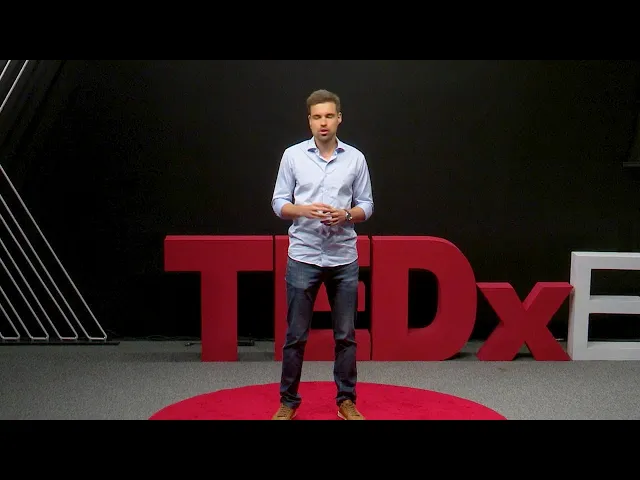
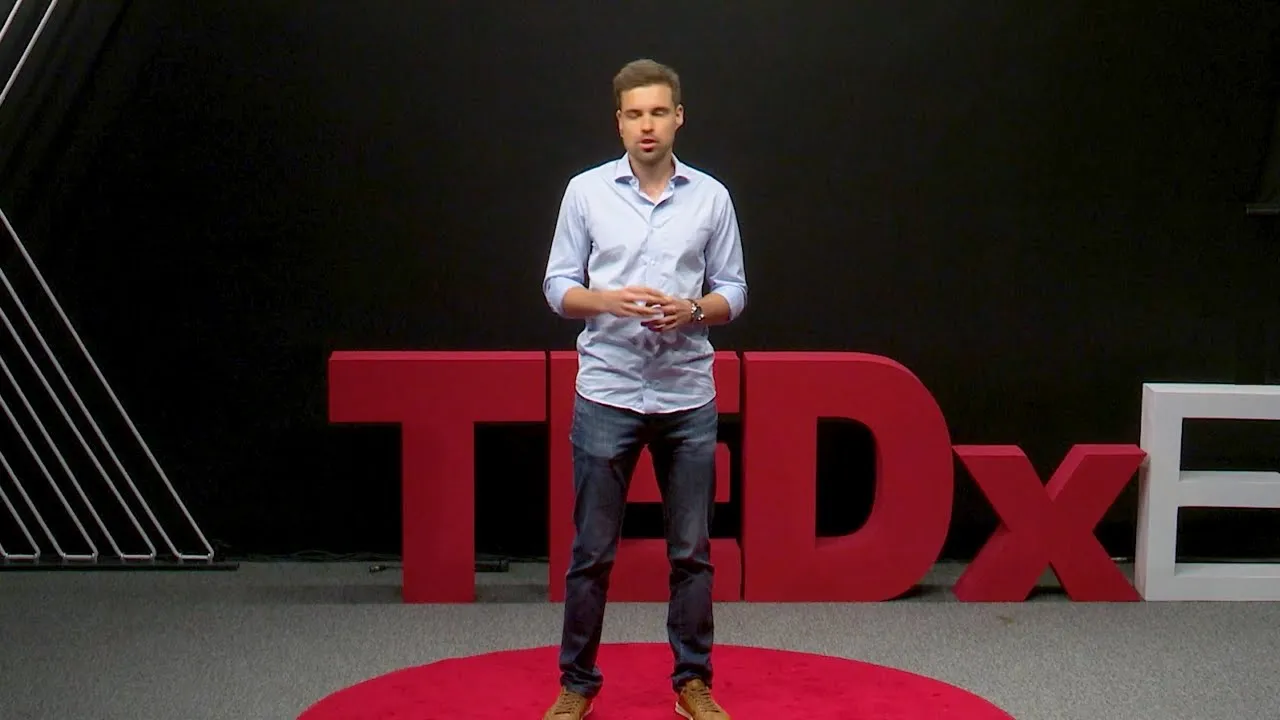
Translator: David DeRuwe Welcome to TEDx 2030. I want to begin by giving you a retrospective on recent years. In the photo, this young guy with the scared face is me, more or less 10 years ago, here on the same stage at the first TEDx promoted by the Superior School of Public Prosecution of the Union.
In that 2022 talk, I shared a dream with you, the dream of seeing public institutions as a place of encouragement for creativity and innovation, a place where a culture existed for people to experiment and mistakes were seen as part of the process. But at that time, my dream ran into some challenges. There wasn’t any incentive for public servants to experiment with new ways of doing their jobs, and they were afraid of the punishments they could suffer from management.
Workplaces seemed more like like veterinarians’ offices - anyway, a grand disservice to our society. The truth is that public institutions were seen to be holding back innovation. Remember what I told you about before?
On the innovation diffusion curve, we have the innovators who are the ones who experiment and are ready to do things differently; the early adopters who bet on the promoted change; the initial majority, who adopt innovation only if someone has tried it before; the late majority, who wait for innovation to consolidate before adopting it; and finally, the latecomers, who only adopt new technologies, new processes, and innovation because there is no other option - it’s impossible to get away from the change. And we have great examples for what I’m talking about with you: It’s the case of typewriters that turned into personal computers, of faxes that turned into e-mails, and more recently in our history, physical processes that turned into electronics. The COVID-19 pandemic itself left if very clear to us that, in fact, the public sector was a latecomer because without the pandemic, we wouldn’t have advanced so much in so little time.
Without it, I dare say that even today, we’d be dealing with kilos and kilos of paper. The problem we had in 2022 was that these institutions, besides not encouraging innovation, nurtured a culture of fear of punishment. Public servants didn’t seek to innovate in their work because they were afraid of the control they would suffer if their innovation didn’t have the intended result.
It turns out that innovating through experimentation is accepting that we’re going to spend time and money, knowing that sometimes the experiment will conclude in an unsatisfactory way. Sometimes this can even be confused with failure, but that’s not what it is. If the process is conducted well, we’ve invested in knowledge: in knowing new ways to do the same thing, in knowing new ways to resolve old challenges.
And it’s totally OK if errors were committed along the way; controlled error is responsible for part of the learning process. The big issue was that if this error would cost the public servant an accusation of a work violation, a fine from the auditor’s court, or even a lawsuit from the public prosecutor, they wouldn’t even try to do anything differently. And this was bad because it held public institutions captive in the past and prohibited new ideas from getting off the ground.
Facing this scenario, I began to ask myself why this culture existed in public institutions. Why did public servants behave in this way? And I realized I also was a latecomer.
I had also stopped trying to find new ways of doing my work, because I didn’t see the benefit in it, and I was afraid of punishment. I didn’t have a network that supported change and as we know, nobody makes changes alone. It was in 2019 that a ligament snapped in my knee during a basketball game, and that put me inside the recently-created innovation lab of the prosecutors office of the State of Rio de Janeiro.
I couldn’t travel to Barra Mansa, the interior city where I worked. I couldn’t attend the hearings, but I could think. I could comfortably develop my work from a distance, but I didn’t have an institutional structure and network that allowed it - after all, before the pandemic, nobody talked about remote work.
Distressed, I picked up the phone and called the only crazies I knew who would give me something to do remotely. And I didn’t need five minutes on the phone with the lab team to realize that this would take me from my condition as a latecomer and put me at the other end of the curve as an innovator. From that moment, I was no longer alone.
From that moment, I began to experience innovation. I began to relate to my work differently. I began to find pleasure simply searching for new opportunities and better results for what I did.
I realized that the existing culture in that small laboratory space must be spread to every corner of my institution. “Spark of Innovation” initiated there, a program that opened the laboratory doors for all who wanted to learn about new techniques and innovative tools to apply in their daily lives. It’s a program that even today encourages the search for collective efficiency, so no longer does anyone need to innovate alone, so no longer does anyone need to be afraid to innovate, so that one day, finally, the laboratory itself may cease to exist.
I’ve returned to this same stage, today, to let you know that this future isn’t only possible - it has already happened. Christopher Columbus tried a new route from Asia and arrived in the Americas. Alexander Fleming was cleaning his laboratory tools when he accidentally discovered penicillin.
Great achievements of mankind have their origins in trial and error. And for this dream I just shared with you to materialize, we need to do just like them. We just need to be ready to do things differently and not be afraid to make mistakes.
We need the “Spark of Innovation” spirit to spread itself to all public institutions, and for each public servant to innovate in their small daily functions. When you arrive to work tomorrow, ask yourselves why you do the things you automatically do. Ask yourself if there isn’t a better and more efficient way to do this.
Ask yourself why we don’t change our routine, why we still continue to be imprisoned by the comfort of “I do it this way because it’s always been done this way. ” And if you who are listening to me hold a leadership role, encourage your team to find new ways to do more with less, to do things differently and better. Create conditions so that everyone can innovate, experiment, and make mistakes responsibly, because these mistakes pave the way to innovation.
I won’t deny that doing everything the way it’s always been done brings comfort. I won’t deny that tradition has a weight and that innovating takes work. But the world needs people who want to have work.
The world needs people ready to question the past to construct the future, and it needs people who are ready to risk failure to reach success. So only two options remain: You can join this small group to help transform the word into a better place, or you can get up, give up your seats, and watch us make history. Thank you.