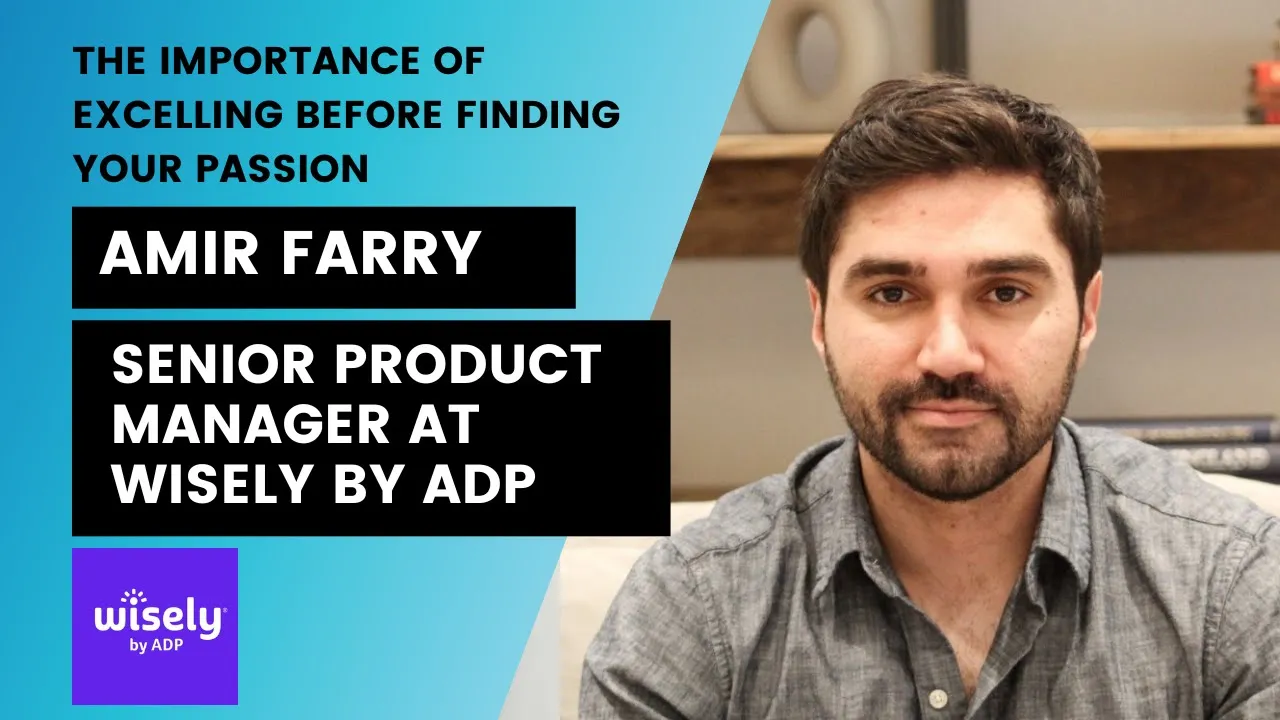
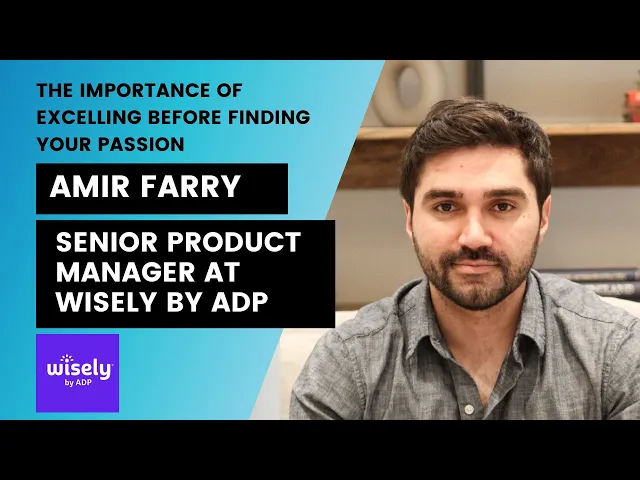
foreign we're so excited to have you on today's episode to learn more about your career Journey so thank you so much for being here I'll just jump right into the first question then so Amir how did your background in finance and investment baking shape your career path and influence your decision to transition into the fintech industry working in Investment Banking taught me a lot about the finance World generally from how Banks work to how Capital moves through the financial system you know how deals get made it taught me a lot of those interesting topics within
the finance world but I think after about three years of investment banking the work kind of started to become a bit repetitive to me and so I decided that I wanted a new challenge and I had some friends that had worked at a hedge fund they encouraged that I kind of tried making that transition and so I worked at a hedge fund for about two years after that and basically what I was doing was I was researching merger opportunities across all Industries and while I found this work to be more interesting than Investment Banking uh
and the hours but definitely better um they're ultimately three factors that made me decide that I wanted to transition to the fintech industry the first uh being purpose so the work that I was doing at the hedge fund while you know I found intellectually stimulating the impact that I was having on the world on the end consumer felt very indirect I ultimately wanted to help people that were in need and while you can argue that hedge funds do have investments from Pension funds and so they do kind of help people's retirement savings grow I think
the impact was a little bit too indirect for me and I wanted to actually create a strong impact directly on individuals that could really use it I think the other thing was just looking at the Legacy I was leaving behind right working at a hedge fund you're doing a lot of financial analysis to setting whether or not to invest in a particular company but I think when I Look Backwards at like what did I really build or create here it was kind of hard to pinpoint one thing and I think you know personally I like
to build things and kind of show something for all of my hard work I think lastly was just personal interest uh during the time that I was working at the hedge fund I was doing a lot of research and in 2019 in particular there was a lot of mergers that were happening in the payment space and so I had to speak to a lot of people in that industry we had access to expert networks where I was speaking to people that were basically at The Cutting Edge of the payment space and it taught me a
lot about that industry and I became really interested in that I think one thing in particular is that the industry has so many Legacy systems that even to this day a lot of areas that I think still will likely get disrupted at some point and I wanted to be in that space be in fintech be in payments and kind of see the evolution of that industry and so that's ultimately made me decide to transition to the fintech industry amazing I love that you were gauging what you wanted and different challenges along the way so that
you finally made your way to your dream career I think that's a really important message to send to our listeners so thank you for sharing that and I'd love to pass it on to Ayan to ask the next question thank you for that insightful response can you share some insights into the challenges you faced while transitioning from a more traditional Finance to the fintech sector and how you might have overcame them absolutely so there are some skills that overlap right that need to be resourceful the need to to look at data but I think ultimately
I knew that I would need to learn a new set of skills I think one of the mains ones that struck out to me was the ability to think from the user's perspective right because in finance we don't necessarily always think about user experience as much and so the first thing I actually did was I signed up for a 10-week boot camp for a general assembly it's a company that kind of focuses on these boot camps for career switchers and the boot camp is took was specifically for the user experience and so it taught me
how to think about things the user's receptive how to use some of the wireframing tools out there like figma and it really kind of helped shape the way I think a lot more outside of that I decided to take some computer science courses on my own you know I had used a little bit of coding in the finance world I used a lot of Excel and occasionally used some SQL and some python to to make things a bit more efficient But ultimately you know I never took the time to really understand how information systems work
right what's happening under the hood of a computer and I think taking some computer science courses to really close the gap around that from my understanding was incredibly helpful and lastly just getting internships I think ultimately I found it easier to land internships at startups they're willing to take more of a chance on their interns and so I did these internships started to understand what it means to be a product manager and how I'm able to really apply these skills from a day-to-day basis so what motivated you to pursue a master's degree in Business Administration
with a focus on technology management and how does this degree helped you in your career for those people that are looking to make career switches in particular career switches like from Finance into Tech it's possible without an MBA it's just a bit more indirect and they might need to take a couple of steps in between for me I wanted to really make a direct jump if possible and I found that taking two years off to really focus on the MBA and have the time to actually learn new skills get internships as well as take the
courses so at UCLA Anderson they have a specialty in technology management and it really allowed me to take courses on product management on fintech on payments on artificial intelligence right all areas that I use on a day-to-day basis in my role today and so the ability to take those courses and also have access to internship opportunities that I wouldn't have had otherwise so for example I spent the summer of my MBA between my first and second year interning at Amazon where it really helped refine my product skills and how to write really strong user specs
how to really be data driven in my decision making and I think an experience like that was only provided to me through the MBA and I think lastly just the access to the MBA Alumni network now UCLA has a lot of people that work in the tech industry and actually my current role I obtained through an Alum that's working at my company that had gone to UCLA so just accessing that Alumni network I think is really invaluable that's a very good Insight on how important networking and the people around you can be in a switching
careers as a senior product manager at wisely what are some of the key responsibilities and challenges that you face in shaping a better Payment Processing solution for paycheck receipt at wisely there are three areas I specifically focus on the first is managing our payment processor which in payments it's kind of a core of how payments work how they're processed how transactions are approved or denied so I manage the payment processor I also handle our fraud tools and make sure that we have robust fraud tools to catch fraudsters and lastly I manage our digital wallet offerings
right being able to add your cart Apple pay Google pay any Merchants that have their own digital wallets and just make payments a bit easier from that perspective in those three different areas I would say all three of them have a lot of challenges for payment processing in particular there's constant evolution in regulatory requirements the messaging standards that the card networks have and so we constantly have to figure out easy ways to adapt right and make sure that the systems can handle processing new information and the way that it's transmitted to us and sent from
us I would say on the fraud side fraudsters just always get smarter every day and from understanding how we can build fraud tools to stay one step ahead of them but I think ultimately across the finance industry it's always been a game of cat and mouse right fraudsters find a new way a new loophole to be able to access certain sensitive information and all the finance companies have to then work to get ahead of them right and continue to find new ways of curbing the the fraudsters attempts and so I find there's non stop challenges
in the fraud space and lastly with digital wallet offerings we find that individuals are less and less likely these days to have a physical card on them that they're going to use to transact with we find especially with the younger Generations a lot of them prefer just use their phone right Simplicity you can have everything in one place and so for us to make sure that we create a really strong user experience to be able to just pay with things using your phone but at the same time do it in a way that is still
sensitive to fraud and making sure we're not creating additional loopholes for fraudsters to get access I think is is really important and a big challenge for us that I'm really focused on a lot of people don't realize all the hassles that can come with the management position so how do you stay up to date with the latest trends and developments in the fintech industry and how do you incorporate them into your product management role definitely so I love listening to podcasts I find that podcasts are just a very easy medium to be able to consume
information especially if I'm driving or on the go my favorite podcast personally is the all-in podcast I find that the co-hosts bring a wealth of experience they all have years of operating experience and they all work currently as a very successful Venture capitalists and I find that even though the podcast isn't specific to fintech the co-host really focus on emerging defense and Technology a lot of which touch the fintech industry quite deeply and so I would say podcasts and then outside of that I love reading books I love reading newsletters attending networking events one book
that I'm currently reading is called Bank 4.0 just talks about the future of the fintech industry and the idea that will likely continue to decentralize that system as more and more companies get access to banking tools which we're seeing today in a lot of the big tech companies that are starting to offer payment tools and baking tools newsletters I love this week in fintech is a really good one really talks about all the different companies that are currently tackling with interesting problems in that space and yeah networking events I go to a lot of the
product manager networking events in La I went to the La Tech week about a month or two ago and that was really helpful for getting access to individuals in Industry I think ultimately just kind of firing on all cylinders to build your knowledge in that space is what it really takes to really focus on that space and thank you Amir for all those really amazing insights so we have one more question for you today so what advice would you give to individuals looking to transition into a different industry or role based on your own experience
it's really important to spend time to find your passion and I guess like what does that really mean right so there's this famous Professor of organizational Psychology from the University of Pennsylvania his name is Adam Grant and he has some really interesting lectures about this topic in particular one thing that he said that has really struck with me is the idea that passion is something that doesn't just find someone but something that an individual has to directly work toward to actually find and so I think the exact quote that he says is Passion often develops
as you master a certain field right so it's all about finding something that you think that you would enjoy and then actually spending the time and resources to really develop an expertise in it and then see is this something I'm actually passionate about right and if it's not don't be afraid to try something new right that's what I did and I think for me as I was deciding to leave finance and become a product manager in the fintech industry one resource that was really helpful there is this article it's a pretty long article but it
was absolutely very helpful to me it's by Tim Urban and it's called how to pick a career and maybe I can send you guys that uh link and maybe you can send it to the individuals that be interested in it but basically it asks you to really think deeply about all the different factors that come in choosing a career and how to rank the different factors to make sure that you find a career that you think could ultimately be interesting but like I said before until you actually try it until you put the effort in
you'll never know and if you decide after a few years that hey I gave this a go it's not really where my passions are don't be afraid to change you know Life's too short to not do something you actually enjoy definitely especially like what you mentioned about that Professor sometimes the passion isn't something that you've always just grown up with but something that maybe you excel in and then you find that passion because you're excelling in that specific industry so I think that's a really great message to send to our listeners so thank you for
answering that question and that concludes all of the podcast questions that we have for you today Amir so thank you so much for your time for being a guest on the cast I'm sure our listeners will really benefit from all of the amazing career Insight that you've shared today
![DAX Filter Context Basics [Full Course]](https://img.youtube.com/vi/Rpa8mDH7mes/maxresdefault.jpg)
![Comparison of a Successful vs. Failed Digital Transformation [Two Digital Strategy Case Studies]](https://img.youtube.com/vi/As_EZt3ht98/maxresdefault.jpg)