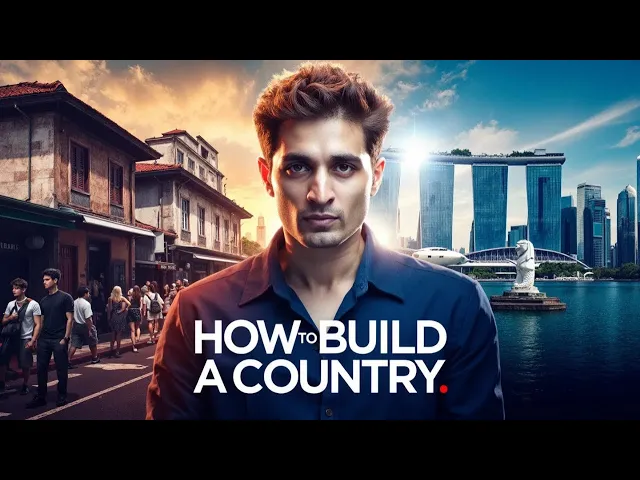
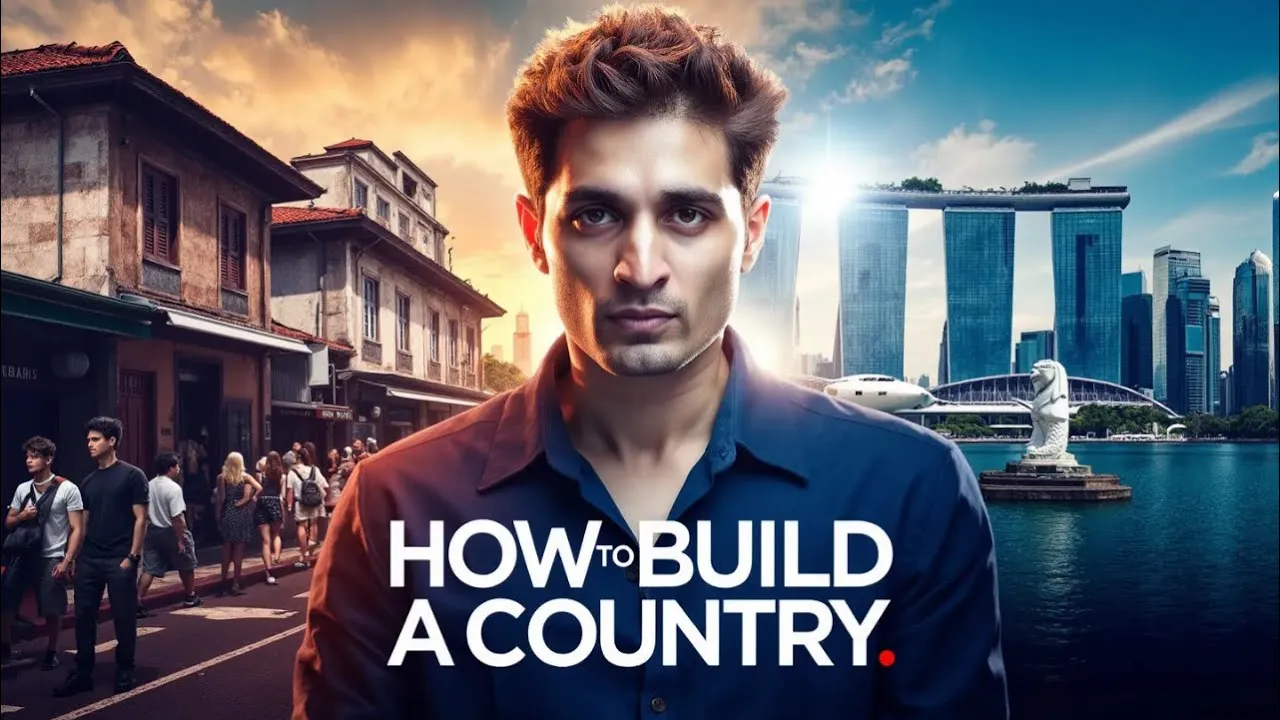
8 5 4 3 2 1 so I have my handy little spaceship here and as you can see that is Singapore in 1965 it's a tiny island nation it was unexpectedly expelled from Malaysia it had virtually no resources no natural wealth no standing army and the unemployment there was through the roof at that time it was even poorer than India most experts believed this country would fail warning calculating Quantum coordinates but instead as you can see it evolved into one of the wealthiest Nations on Earth within a single generation this was a mut flat swamp
today this is a modern city this is the story of Singapore more importantly it's a master class in creating something extraordinary out of nothing and this same blueprint can even guide entrepreneurs today Singapore wasn't built like a traditional country it was built like a startup leuan U the architect of this transformation approached nation building like a CEO scales his company the principles he deployed to turn Singapore around are the same principles you and I as entrepreneurs can apply to build businesses in this video I'll break down the lessons behind Singapore's transformation and actually show you
which parts of this you can take back into your entrepreneurial life this is my country this is my life this is my people now the of this video was made using the Intel Core Ultra laptops more on that later Singapore's Journey starts with Independence and it's a little bit of a complicated one at that point about 14% of singaporeans were unemployed the rest were kind of employed but not really in a way that contributed well to the economy and it was way worse than India at that time the economy mostly relied on being the middleman
in regional trade and you know that's a very risky thing because unless you produce your own Goods you'll always be the middleman helping trade goods between different nations now before independence the British military was basically a Lifeline for Singapore's economy it is estimated that around 40,000 people were directly employed by the British forces so when Britain announced in 1968 that they'd be completely withdrawing from Singapore by 1971 it puts Singapore under the threat of having even higher unemployment so what leanu figured out was that if they wanted to survive they need to do two things
first they had to leave from the region and create trade relations with the developed World they needed to connect with developed Nations and the path was to bring multinational companies which is mnc's to set up shop at that time just like now mnc's weren't exactly seen as Heroes if you go to social media today and see the concept of India bringing mnc's from outside here a lot of people think that there's a reputation for exploiting cheap labor and resources it feels like colonialism again which is why Indians and even singaporeans at that time had an
a verion to Bringing mnc's they're like yo this is exactly like bringing the British back isn't it but leanu knew he had a problem to solve so he couldn't be stuck in these theoretical debates he had to put food on the table of 2 million people lean you understood marketing and he realized that if he could position Singapore with first class standards in public security health education transportation and services it would not only attract professionals here to keep doing more of what they're doing to make more money but also the mnc's outside to come into
the city he needed to make the place look good they couldn't just be as good as their neighbors they had to be better they had to offer something extra to make it worthwhile for companies to set up shop so the government played a key role in attracting foreign investment they provided these mnc's with well planned commercial Estates incentives and even export promotions most importantly they established good Labor Relations which is what private Enterprise really wants and allows them to operate successfully one such example was the jurang Industrial estate it was 9,000 acres of land with
roads sewage drainage Power and Water all laid out in 1968 American Semiconductor Company Texas Instruments wanted to come set up a plant to assemble semiconductors which was a high-tech product at that time and still is and were able to start production within just 50 days soon followed another American company National semiconductors another one of these companies was HP every single story of how Singapore is so welcoming to mnc's brought the next mnc's these stories traveled through the boardrooms of American Electronics Industries and Investments started flowing in by the end of 1970 they had issued 390
Pioneer certificates to businesses and also offered them tax-free status for a bit this all sounds crazy why are incentivizing businesses so much but all of that led to the economy getting better this is the thing right when government offers subsidies or when they bring in mnc's most of of us don't like it in the short term but it's always the better decision in the long term because it creates jobs those jobs create disposable income creating more jobs for the next year of the country so Lee mentions in his book that visiting CEOs used to call
him before investing he says that the best way to convince them was to ensure that the roads from the airport to the hotel were clean and full of greenery so this is Lee's idea and it's so templatized now so if you see any new airport in any new city the distance between the airport and and the hotels is always covered in Greenery you want to show new people visiting that this is a good place to come invest your money and run your business but at that time this site was not common in developing countries he
wanted to show the world that singaporeans were competent reliable and disciplined he knew he had to Market this as a skill to the rest of the world and he also said these people are ready to do what is required by these mnc's and sure enough by 1971 just a few years after this massive effort had began the unemployment situation had been completely turned around even when the British pulled out and left 30,000 workers jobless unemployment did not Spike and by 1997 Singapore had nearly 200 American manufacturers investing over $19 billion the us became Singapore's largest
investor and the tech and Manufacturing Industries kept upgrading their skills and products which helped raise wages without sacrificing compared invests but it gets better just a few years after they had dealt with unemployment Lee removed any subsidies that were in place to protect local businesses and help them compete with mnc's you know what every country does they always give the local businesses more of a stimulus versus mnc's they say these are our own people we should make sure that we stimulate them so they produce more things internally but he understood something he understood that if
Singapore had to become a competitive first world country they could not have subsidized underperforming businesses but Lee didn't do this he did not hesitate to let their local businesses close down if they were not competent enough it's like the participation prize in a race right if as a parent you keep giving your kids participation prizes or keep letting them completely win races when they actually go out in the real world they're going to be useless so Lee knew this that if I keep stimulating these businesses and keep you know patting them on the back they're
not going to be very useful when the time comes where Singapore actually has to defend itself globally but of course you can't let your local businesses completely die so here's what he did and this is genius what he said was that when it came to develop new domestic Industries he picked the best students then sent them abroad to study at the best universities in Britain Canada Germany America he made them work in some mnc's and when they came back then they were given the opportunity to start companies like Neptune Orient lines which is a shipping
line and Singapore International Airlines he said let's take good talent let's send them abroad let's make them really really good then bring them back and give them entrepreneurial opportunities and subsidies these Enterprises were not run like government operated companies it was made clear that they had to be profitable and not be at the mercy of subsidies or be shut down again emphasizing the need for meritocracy both of these Enterprises went on to become highly profitable businesses by achieving all of this in a decade Le's government sent a clear message to everyone outside we are fair
we're competent we're trustworthy we get marketing okay so those were the economic decision that accelerated Singapore's growth but that wasn't enough you can't achieve ambitious goals as something like Singapore without instilling certain values in your people whether it's a company or a country it's all about culture see Lee believed in socialism early on he thought you know if you make 10 rupes it should be divided equally among everybody but over time he realized that personal motivation and rewards were essential for a productive economy some people are lazier and some people are more motivated to do
more work now his goal was to give every citizen a stake in the country and its future for example one of the things is he wanted a home owning Society he saw how poorly maintained and misused blocks of low rental apartments were compared to homes owned by proud homeowners he noticed that when someone owned a home they treated their home and to some extent their neighboring areas with care if everyone would own homes the streets would be clean and he saw this right he was like if somebody owned a home they' keep their house and
everything slightly outside clean now all 10 people on the Block own their own homes they' keep the entire Street clean if the entire country owned homes they would keep the country clean whereas on the other hand if someone rents they do not care much about their home and they definitely don't care about the street he was convinced that if everyone owned a home the country would be more stable when people own something they take care of it now the British government had started a central Provident fund it was a simple savings scheme for retirement 5%
of the wage was contributed by the employee and 5% was matched by the employer and this will be withdrawn at 55 quite similar to how it works in India but Lee decided to expand this compulsory scheme into a fund that will enable every worker to own a home in 1968 the compulsory Savings in the fund was increased and the Housing Development board or the hdb launched a new revamped home ownership scheme which with this workers were allowed to use their cpf savings to pay 20% of a home's cost as a down payment and pay the
remaining amount in Emi over 20 years they created beautiful housing with different layout options a community center and a food court the number of people who wanted to buy a new hdb apartment Grew From 3,000 when it began to 70,000 in 1996 by 1997 the country had 725,000 hdb apartments only only 9% of which were rented out the rest were all owner occupied if Lee had been more like a finance influencer and basically just been about renting it would have been a very different set of streets that you would be looking at on its journey
to becoming what it is today Singapore also had to deal with unions interestingly lewu himself started his political life fighting for unions as an adviser negotiator by the mid 1950s the Communists had gained control control of most unions in Singapore remember communism was on the rise at that time Russia China Cuba Vietnam were all adopting communism there was no way Singapore could attract capitalist Western Investments without freeing unions from communist control Lee points out that the consequences of unfair demands from unions were serious including unemployment poorly thought out demands led to ridiculous situations like cleaning
workers deliberately letting garbage pile up right before public holidays to ensure they'd get triple pay for working on those days if these practices continued no foreign business would have come to Singapore Lee insisted that union leaders must not kill the Golden Goose that lays the golden eggs he knew that workers needed New Attitudes you can't work in a company and say oh screw you pay me that's your responsibility he knew that they had to add value to the companies coming in Pay needed to align with performance not just time spent on the job Singapore's government
couldn't allow situations like go to jeopardize the country's survival this problem with unions still exists today recently the New York Times Tech Guild a union of over 600 Tech employees announced that they might organize a strike on Election Day if their demands aren't met these demands include a 4-day work week unlimited sick leave and leave to grieve if their pet dies remember the average salary of a tech employee at nyt is $190,000 if the company accept these demands it would cost them $100 million more than these problems were dealt with headon by the Singapore government
they laid out Provisions for rest days public holidays work cars and also made leave policies they made it illegal for a trade Union to call for a strike without holding an anonymous vote this stopped the practice of voting by open show of hands where those who didn't agree with the Union were intimidated into compliance this happens all the time if you allow everyone into Union to show their votes if somebody votes against a strike the union starts bullying that person inside the Union when it's blinded votes people can actually be honest because the government was
able to make these tough decisions early they avoided the entitled welfare mindset that many other countries have gotten into and were able to create a virtuous cycle of low expenditure High savings low welfare High investment where the people who worked in companies actually felt proud of what they did instead of constantly calling it exploitation and actually driving away the mnc's which eventually leads to a worse country at the end of it but none of these reforms would have been sustainable without Singapore's commitment to a clean and Incorruptible government leak wanu knew that corruption destroy the
country from within nobody understands this as much as we Indians Singapore was determined not to fall into the same trap to keep the government free from corruption Lee made a bold and controversial move he decided to pay government ministers and civil servants competitive private sector level wages like think about it right his rational is simple if Singapore wanted the best talent to run the country it had to compete with the private sector you want the best talent you don't want them going to a private sector job and getting paid five times more low pay would
only incentivize corruption by a getting incompetent people to apply for the roles and B making bribes more attractive he also understood that their highly qualified ministers would not stay in office for long if they made a fraction of what they could make in the private sector they had to be extremely well paid and this is the one thing that I don't understand about India which is if you want the best people to be in government pay them as well as the best companies would pay them that's the only way you're going to get the best
and that's the reason why you end up getting incompetent people who anyway end up taking bribes and end up cheating the system to make more money one more thing that Singapore did which I think is very relevant to India was that Singapore was able to create a sense of Oneness among people of different diverse backgrounds crucial for a country which was very very divided cuz see Singapore at this time there were no native people there were Native people but this very very small minority Singapore was actually composed of three factions the first one and the
largest one was the Chinese the second one was a bunch of Malaysians and third was Indians and these three just did not get along so how do you create National Unity when these three communities don't get along they were able to get them to work together despite communal tensions because of their choice of working language and that choice was English so remember I told you Singapore used to have a lot of communal rights a lot of that was dependent on language the Chinese couldn't really understand the Malaysians the Malaysians couldn't really understand the Indians very
well and it always felt like there were three different communities even so he knew that English was the best common language to use because it would prevent conflict he knew that all languages had some sentiment associated with them all regional languages has some sentiment so he said if you make the national language Chinese some people are going to end up feeling bad if you make it m other people are going to end up feeling bad so he just chose English he said the best thing that the britishers gave gave us was this language that nobody
is passionate towards no Regional Chinese person or no Regional Indian would go out there and defend English or fight for it so the fighting was reduced secondly it also happened to be the language of business it was the language of diplomacy Science and Technology all the papers were published in it so the fact that nobody was passionate about English and it was actually commercially valuable he said we're going to make this the language that all of us are kind of disappointed in but nobody really cares about enough to fight about if he had picked any
other language there would be communal tens because of this he also made all the schools change their language of teaching to English having said that there was still some Pockets where they encouraged Regional languages so that they didn't become completely westernized I'm speaking to you in English because I know you're not passionate about it cuz I know you're not going to get offended about it and we can just get information transfer which is what I do you know as a content creator I'm transferring information and stories to you I can do it in a language
that you're not going to attach your sentiment to or get offended by another one of the debatable aspects of leewan news policies was the way he went after his critics he viewed criticism not only as an attack on him on his leadership but also as a threat to Singapore's progress he was one of the few leaders of state to legally pursue those who made defamatory statements or published misleading information and would often use lawsuits as a means to maintain control over narrative he believed that allowing false accusations or unchecked media Freedom could destabilize the government
and erode public trust he felt that it was not in Singapore's interest to have every single policy taken apart and criticized he knew that Singapore had a big challenge ahead of it and he would have to make some unpopular decisions like for example getting the mnc's to the country some of which the masses would not agree with he argued against the Western notion of a free press criticizing what he saw as corruption and bias in the media system of the Western countries he believed that the Western press which was often idealized as a pillar of
democracy was not without its flaws it was susceptible to sensationalism corporate interests and of course political bias it's so easy to get a paid article out now imagine back in those times where things were far less transparent these problems of cancel culture and trial by the masses are not new things today it is almost impossible to reply to every criticism you face on the internet but he went after everyone almost everyone who he thought might have defamed him a lot of people debate whether he was too authoritarian but at the same time if you put
someone in a position where the only way to prove your innocence is by suing the newspapers or reducing their circulation people people who wrote critical articles about you you kind of also leave them with no choice having said that some of his actions in the media were definitely borderline dictatorship right at the end of the day we can all debate about this but we well aware of the effects of fake news on countries like ours as well where during elections we don't know what to believe and everyone seems strongly biased towards their side of the
story I see how susceptible it is to bias because I know some of the people that stories are being written off and I know they're totally different in real life versus what you know the story says so I've seen these differences to know enough that you should go and defend yourself and your integrity if absolutely necessary of course there's a level of scale Beyond which it doesn't make sense because there's just too many people saying it at least with the media piece my role here isn't to tell you whether it's right or wrong I wanted
to leave you with the story of Liu on youu and what it actually takes to take a developing country and make it a developed country Singapore succeeded because they were willing to make unpopular decisions that a lot of people don't agree with things like renting things like marriage a lot of people don't with a lot of that and he made these decisions for the long-term good of the country they did not Pander to the public just to win the next elections they did things that would benefit the country they realize that you can't have people
who want to live their entire life in the union mindset you cannot have people think that somehow if we all Bann together we would make money out of thin air it only comes through Enterprise he also ran the country like one should run a business from marketing to the economic policies to even with the way you deal with unions and the media it was run like a company it was run like a tight ship think about it making the roads green and filled with Greenery for MNC XX to come see was a marketing decision almost
nobody in the early days would bet on Singapore to succeed but Lee proved everyone Wrong by running it exactly like you would run a business but the key takeaway from Singapore success is not about the policies themselves but the values that underpin them personal responsibility meritocracy Integrity ownership Singapore thrived because its leaders dared to make difficult decisions there were two reasons I want to cover the story right one is because it shows you how much of Singapore's success is by doing things that the masses didn't fully agree with at that time and secondly I want
to show you how much of success is also Having the courage as one person Leu on you as one person to not listen to the masses and do what you think is right anyway right and to show you that if you do what you think is right for a particular cause for a very very long period of time get the right people involved and really work hard to make it happen then you have Miracles like Singapore so now I'm super excited to tell you how we made this beautiful intro you just saw when you see
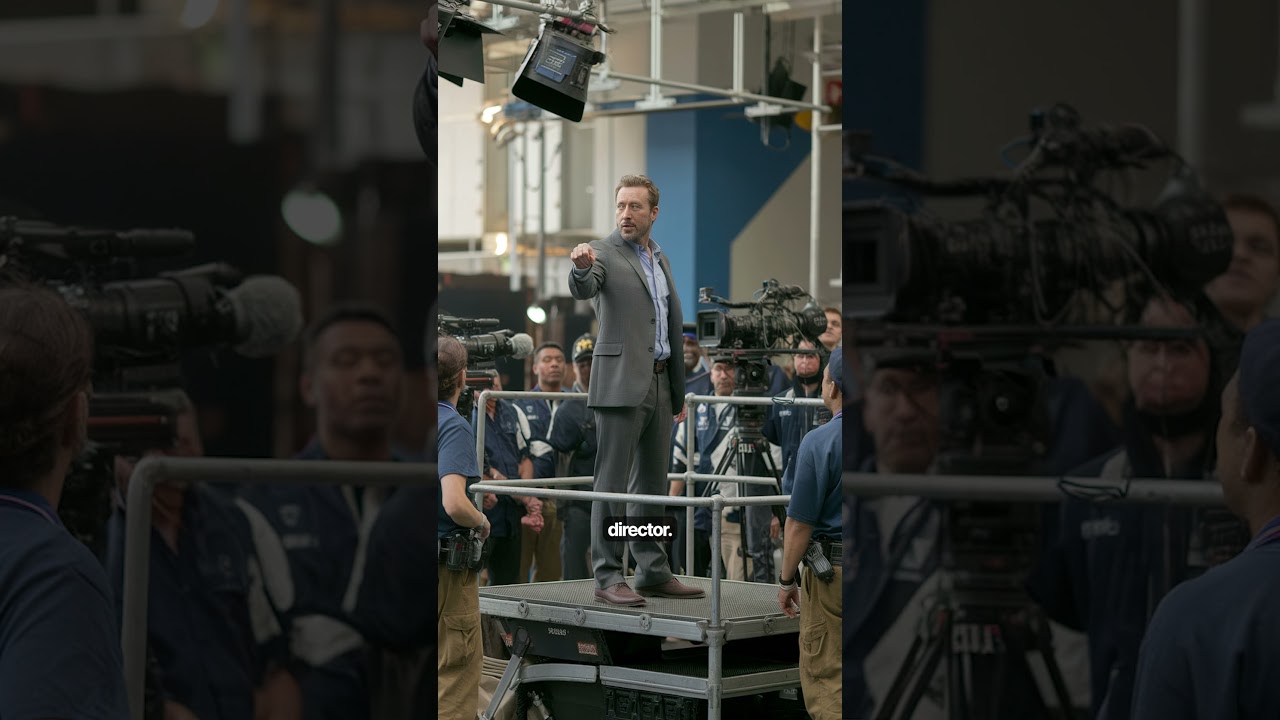
someone moving through an incredible CGI environment you're actually watching two completely different things merge together and let me show you how we did it on these Intel AI PCS so before we even started filming we used AI specifically stable diffusion to plan our shots we typed in our ideas and it helped us visualize exactly how we wanted our story to look now the first real challenge is to analyze our footage and match every single detail of how the light and color hit our subject this is crucial because it tells our AI PC exactly how to
make everything blend seamlessly but here's where it gets really cool we're using Unreal Engine to build our world it's incredible because it lets us see our digital environments in real time the clever part is matching our virtual camera to our real one we take the exact same lens data we used while filming and put it into unreal this makes sure our digital world moves and behaves exactly like our real footage finally we bring everything into After Effects that's where we composite all the elements together and add that final polish that makes your brain believe it's
all one perfect shot now what's incredible is how our aipc handles all this with its specialized Intel Core Ultra processors working together we can preview our environments instantly at Cinema quality even with complex Lighting in physics there's practically zero waiting time now what's really exciting is how this Tech is transforming content creation these new processors aren't just faster than specifically designed to handle compute intensive tasks that help creators like us work more efficiently it's amazing to see how far we've come from spending hours on manual edits to having intelligent tools that help us focus on
what matters most telling great stories