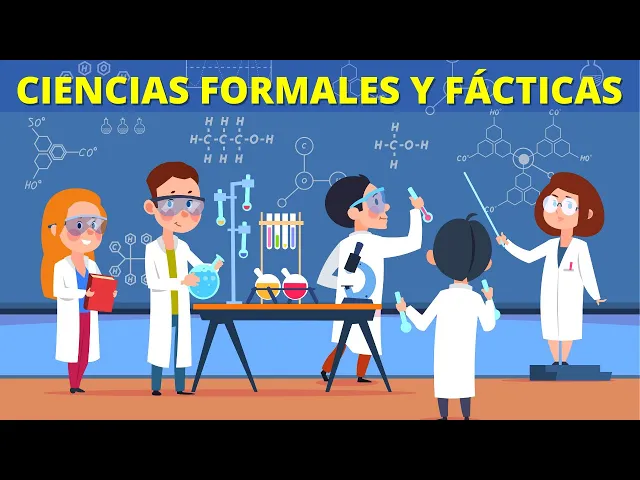
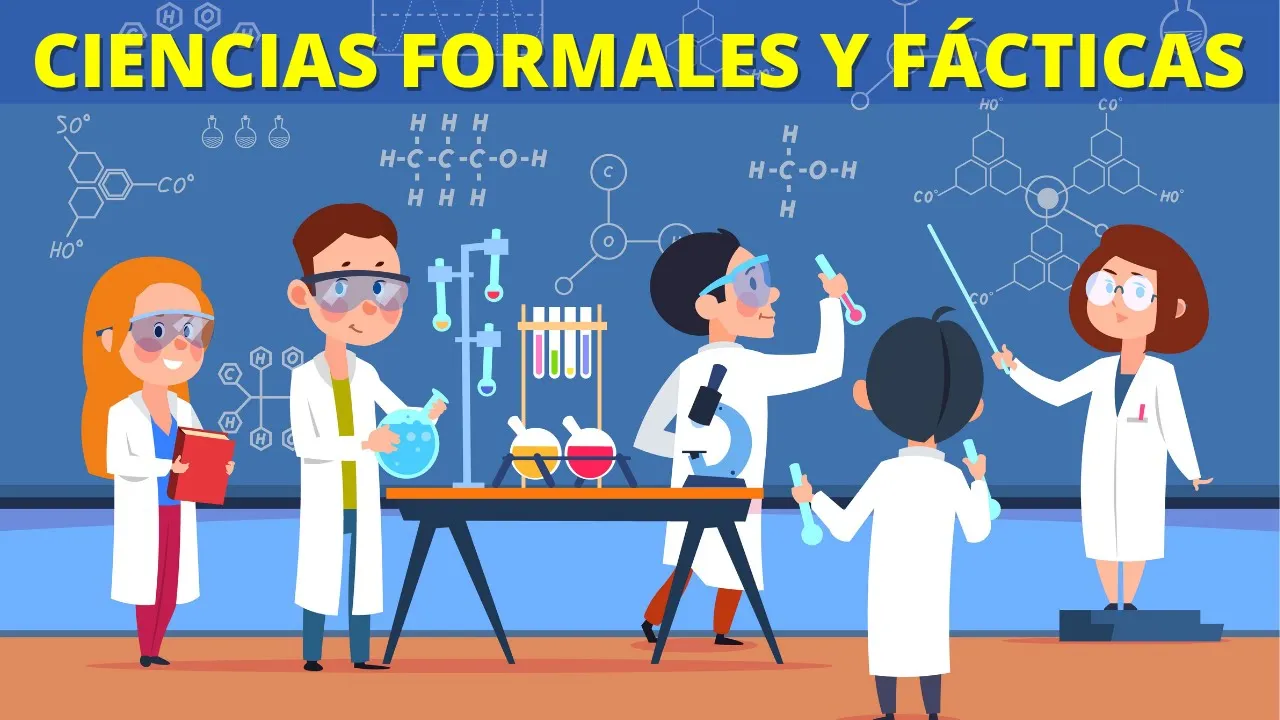
hello how are you today I will explain to you what are the formal sciences and the practical sciences that each one studies their differences and some examples of daily life where the formal sciences and factories are present and you had not realized that let's start studying the formal sciences the formal sciences are also called exact sciences are characterized by not being tangible, that is, their object of study is not present in reality but only in the ideas of brilliant minds, therefore it is subjective, the disciplines that fit into the formal sciences are characterized by being systematic rationales and their verifiable results do not require experiments to approve their knowledge are self-sufficient and are based on the use of formulas that are capable of being validated by logical reasoning an example of the formal sciences is mathematics that studies the practical sciences also called sciences current or empirical are those that can demonstrate r a phenomenon or reproduce it based on the analyzes and principles formulated through research and experimentation or what is the same derived from the scientific method in such a way that its nature is objective therefore it is responsible for studying all fact that is observable and experienceable, the first is considered a passive behavior and the second refers to an active behavior since it is capable of controlling the variables to continue observing the changes that occur and there that the word is practical comes from the Latin facto whose meaning is done while the Empirical word has Greek origin that translated more or less is pronounced in parakeets which means experienced other characteristics that practical sciences have is that they seek to verify or reject a hypothesis for their analysis can rely on formal science disciplines to quantify their results practical sciences are divided into two large groups sciences n Natural Sciences and Social Sciences The natural sciences are responsible for studying nature and its biological, physical and chemical aspects, while the social sciences are more related to studying everything that involves the human being, his behavior, his thoughts, his interactions in society and with The environment in which examples of disciplines in this area are developed is sociology, psychology, economics, history, literature, among many other differences between formal sciences and practical sciences. We are now going to study the differences between one and the other. Formal sciences have as object of study, non-real, non -tangible or abstract content, while the practices have the real world as their object of study, that is, what is perceptible in terms of the study method, the formal sciences are based on logical thinking, while the practices use the scientific method as tool formal sciences use axioms or what is the same propositions or statements that speak for themselves and that do not require demonstration as practical sciences as tools use experimentation and observation to reach a conclusion in terms of the search for truth formal sciences focus in finding theorems that give coherence to their components or systems while the practical sciences seek the truth through the acceptance or rejection of hypotheses in the formal sciences symbols are used that by themselves are empty data but can be interpreted for example x 5 is equal to 8 where x must be interpreted instead in the practical sciences the symbols have a meaning known in advance for example in the chemical formula of water we know that it is made up of h2o that it is already well known that the h means hydrogen the 2 indicates which are two molecules and the oms means oxygen and in another formula that contains the symbols ho the h will continue to mean hydrogen On the oxygen side, in the formal sciences, the results obey a theory, while in the practical sciences , the results are demonstrated after executing the experiments under specific and controlled conditions.
Another difference is that the results of the formal sciences are always the same, that is, the solving a problem its solution will always be the same example 8 + 8 will always be 16 on the other hand in quantum sciences its results are temporary, that is, they can change over time example if we determine the sensitivity of an antibiotic in a type of bacteria it is possible that at first it is sensitive but over the years it can become resistant both demonstrated with the same experiment examples of formal sciences mathematics statistics logic computing examples of basic sciences biology geography chemistry physics importance of these sciences From everything discussed here it can be concluded that both types of sciences are necessary for the construction of knowledge, in addition, the practical sciences are supported by the formal sciences to better deepen their results, on the other hand , from the combination of disciplines of both types of sciences, new areas of knowledge arise that can be considered multidisciplinary since they are composed of both types of knowledge such as economics we are going to give an example the income of a worker is seen in economics from two points of view as a concept or idea formal sciences and as a measurable guideline that depends on certain circumstances practical sciences well we have arrived at At the end of this video, we hope you liked it. If so, give it a like and subscribe to the channel. If you haven't already done so, you can also visit the lee feder dotcom page to investigate the topics you need.