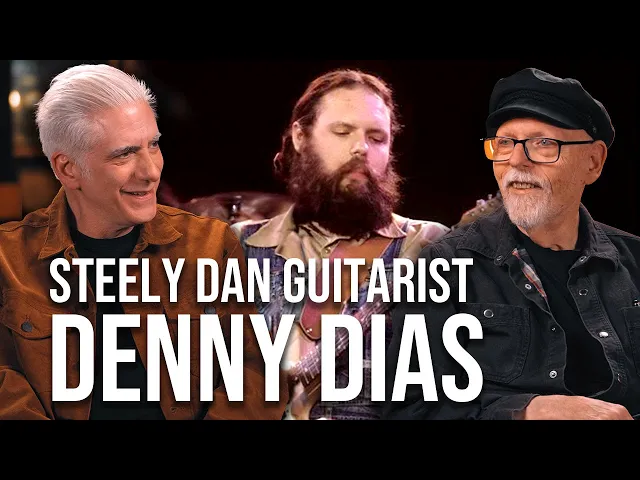
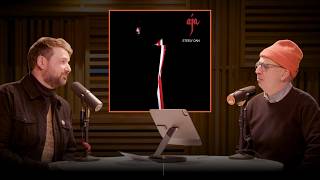
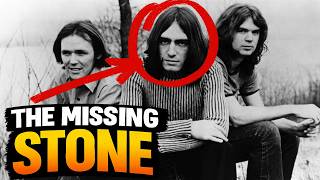
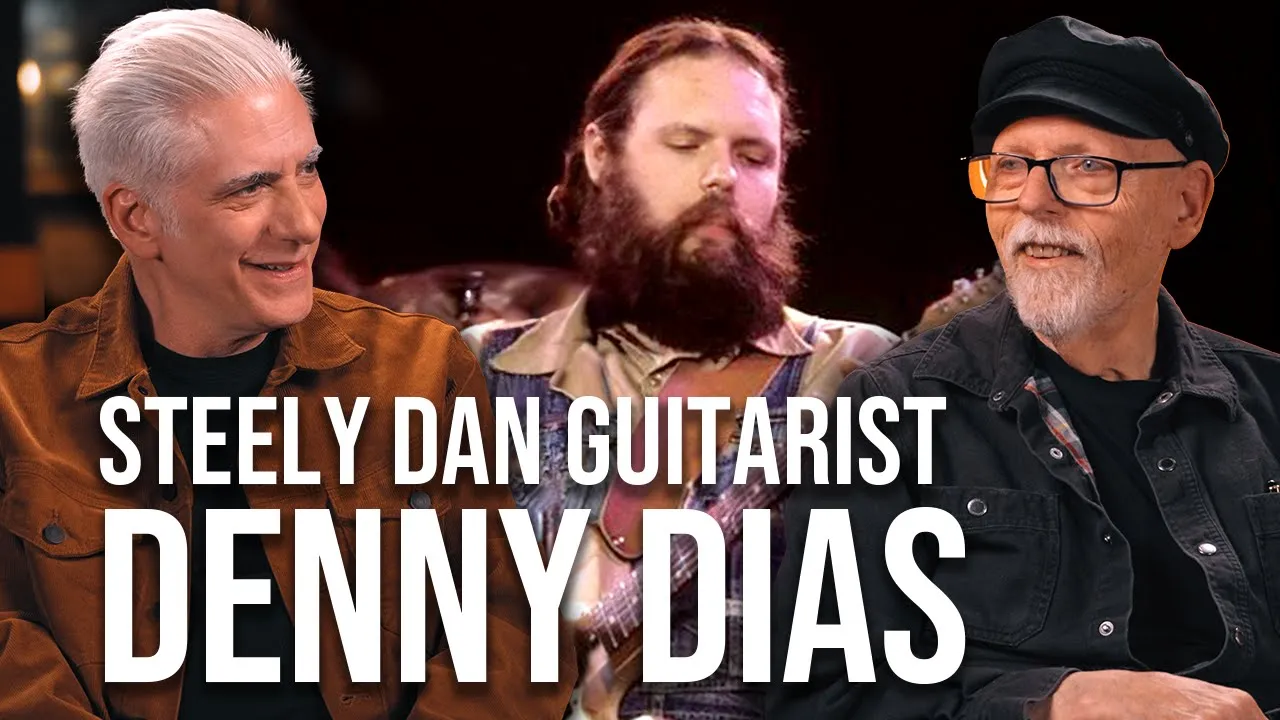
Hey everybody, I'm Rick Pato. In today's episode, I sit down with enigmatic Steely Dan guitarist and founding member Denny Diaz. Out of everyone that's played on Steely Dan Records.
He's pretty much the only one that I knew virtually nothing about. I was excited to ask him about his iconic solos like the electric sitar one on do it again or the Bbop inspired solo on Bod Safa or his really cool solos on green earrings or this one that's on Asia. Denny's work in these tracks really defined Steely Dan's guitar sound from the outset.
Here's my interview. Denny, welcome. Glad to be here.
I read somewhere that you were the one that initially put the ad in I guess the Village Voice Looking for a band that Donald Fagan and Walter Becker answered. Is that true? Sort of.
I had a band in Long Island. Mhm. Uh there were four of us.
The bass player quit. I thought we should have a piano, too. So, I uh I suggested we get a a piano player and a bass player.
And we had a manager at the time, a guy named Bruce Rothstein, and he put the ad in the paper. Okay. So, it was his wording, but uh we got a response and uh I must have talked with Walter on the phone for almost an hour before I met them.
And then uh they didn't have a car. Okay. So, I picked them both up in Brooklyn.
Okay. at Donald's apartment and I drove them back to my house in Hicksville. Okay.
And we set up and I remember Walter started just started walking the bass and well we were still setting up, you know, and then as everyone got set up, they joined in and we must have played for two, three hours without stopping. Wow. Did they have any songs at the time?
Uh, well, I'm sure they did, but you know, we didn't hear any at that time. Were you guys just doing covers at first? Yeah, we were playing clubs on Long Island, you know, and you had to play familiar songs.
Yeah. And what kind of songs would you guys play? Mostly, uh, the R&B, you know, Sam and Dave, Knock on Wood, uh, some Temptation stuff.
Did you consider yourself a jazz guitar player or a a rock guitar player at the time? Well, I studied jazz guitar. Mhm.
I liked playing rock and roll because you got to play with people, you know, for people your own age. Nobody liked jazz even then. Right.
Yeah. So, you know, I was playing the jazz guitar in a rock and roll band. And that's all I've ever done.
And this would have been what year? Late late 60s, early like Yeah, in the 60s. uh 67 89.
So, how did Steelely Dan actually form and when did you guys first start recording songs? After that day that we met, uh um you know, Donald and Walter were playing backup for J& Americans. Mhm.
And they would do an occasional recording session because, you know, they would always try to find some new artists and make some new song and uh and they would be writing songs for these odd people that were trying to make records and now and then they'd call me for a session and um you know that's all we were doing till one day they called me and said they got somebody who's offering them a record deal and they got to go to California and would I like to go? And I says, "Well, am I going to be able to live out there? " He said, "Well, you'll have a salary and you could probably get an apartment.
" And I said, "Okay, I'm in. " And that was it. Yeah.
I drove across the country with uh some other guy who would have otherwise taken an airplane. And uh he did most of the driving and then what happened next? Well, we did some rehearsals, you know, because they had a couple of other guys in in mind for the band, uh, including Baxter and Hotter.
And, uh, you know, Donald did not want to sing. Okay. So, he wanted to get a lead singer, uh, Baxter knew somebody, David Palmer.
Mhm. Who we invited to come join us. And, uh, you know, it took him a while to get to California.
And uh we started recording before he got here, but then when he did get here uh he was singing the songs live that Donald sang on the record. And after a couple of records, it it was obvious that Donald was the voice of the band. Mhm.
What were some of the first things that you guys recorded? What songs would they have been? Uh well, they had actually made a record before I even got here.
Okay. A tune called Dallas, and it was released as a single. Uh I don't know if you've heard it.
Mhm. But it would it predated the first [Music] day. My goddess I can't stay.
Should have been in the day by my daughter and I remember Jimmy Harter is a drummer. He sang that song and he sang some songs on the first record too. How come Donald did not like the sound of his voice?
Why didn't he want to sing? Well, he didn't have the endurance to carry a whole show. Mhm.
You know, it uh I mean, he knew that he would get out of breath quickly, you know. I mean, he could do it in the studio cuz you'd do like a verse at a time and take a minute and catch your breath, you know. He he just didn't have the lungs of a lead singer and he didn't want to do he didn't like doing it.
Uh he didn't want to be the front man, you know, and he he didn't uh do like what Nick Jagger does or Right. Yes. You know, he had the personality that uh you know that said what he wanted to say in the tunes that he wrote.
You know, nobody else could quite do that. I'd like to take a second to talk to you about this channel. Of the people that regularly watch my channel, 58% are actually not subscribed.
So, I encourage you to hit the subscribe button now. This will help me to get even more of my dream guests and continue to grow my channel. Thank you.
The songs on Camp by a Thrill, were all those songs recorded at the same time or was the album kind of put together over the course of a It was a constant effort. We went in the studio every day. Okay.
And worked until it was done. Trying to think. There's a few songs that Donald did not sing on on the record.
Maybe. Is it Midnight Cruiser? There's only a couple songs that that Jimmy Hotter singer.
Yeah. Yeah. That Donald does not sing on.
And And was that a uh once again a conscious choice? I mean, Donald obviously could have sung these tunes in the studio. Yeah.
I mean, if he could, he would have had somebody else sing all the songs. Okay. So, did he see himself more as a writer then and uh and a and a keyboard player?
Yeah. When I first met them, they thought that they could write songs uh of various types and have like a number of groups all recording their songs. Yeah.
Like songwriters. Songwriters. Yeah.
So, you have one of the most famous solos really of any of the Steely Dan uh records, which is the Do It Again solo that you play on Electric Sitar. Tell me about the recording of that song and and how that solo came about. You know, I get more questions about the Electric Sitar than anything else.
Mhm. And I've only seen it that once and just for about 2, three hours. Was it a rental?
It was a rental. Yep. It was a piece of crap.
Yeah. Basically a Dan Electro guitar with a special bridge that made it buzz and sound like a seatar. Yeah.
Uh we rented it because uh Donald thought he wanted to have like a droning seat, you know, like that Beatles song with the droning seat in it. And never knows. It just it wouldn't drone.
You need a real seatar and somebody that knows how to play one. Yeah. But yet when I picked the thing up and they started running the track, I just started improvising.
And then somebody said, "Well, why don't we just do the solo with with the seat? " Okay, you know, and uh we went through it a few times and that was it. I want to play it.
Do it again. Jack, do it again. Heat.
Heat. Heat. Heat.
[Music] [Applause] So that's just one pass on that. Yeah. Not the first take, but maybe the third take.
And when you finished it, did they say, "Oh, that's great. " And that was Well, the expression in the studio was, "Uh, I'll buy it. " Okay.
And you felt you felt good about it. Yeah. I mean, if they were happy with it.
What did the other takes sound like? Uh, a little, you know, stumbling here and there. Uh-huh.
I don't really remember. Denny, that is such an amazingly great solo that um the to have the flow of that all the way through really blows my mind. First of all, you play certain types of lines that I' I don't hear anyone play and it's some must be something about just the way that you put phrases together.
Well, when other guys are practicing blues licks, I'm playing scales and arpeggios. You're thinking more of this as playing just modal playing with some blues notes in it would you say? Yeah, I mean even listening to it uh I hear u you know the higher harmonies the sixth and ninth 13th and you know I was just thinking of extending the chords and playing more than the three notes that are in the chord.
When you would do solos like this would they be done in the control room with the amp out the other room typically? Yeah. And you run the wire out to the amplifier.
Now, one of the interesting things is is that this studio, maybe not this particular one because it wasn't built yet, it was done here, right? The Village Recorder. Uh, studio A.
Studio A. So, when you were going to meet me here today, you knew exactly where to go, right? Yeah.
You've been here a million times, I bet. Yeah, but not for 40 years, right? Was this one of the main places to go to record?
I don't know. They just said, "This is where we're going to be. is where the session is.
Yeah. I mean, I think Walter spent more time thinking about the uh the sound and the equipment that produced it and what studio made good records and cuz he would look at the records that he liked the sound of and uh he saw where they were recorded cuz it usually said so on the back and uh and they picked this place. What was your guitar rig at the time back then in the early 70s at the time?
Did you play a te telecaster? There was one before that. Uh I had a Dan Armstrong guitar.
Okay. You know, the clear plastic guitar with the the uh interchangeable pickup. Yeah.
And it was funny cuz Walter had Dan Armstrong bass. Okay. And what kind of amp did you play through?
Like a Fender Deluxe or something like everybody did back then? Uh you know, I don't remember what amp I had. I know that one of the first amps I bought was a Marshall.
Okay. you know, cuz I was trying to sound more like a rock and roll guitar player and less like a jazz guitar player. But before that, I don't know.
I mean, in the past, like on Long Island, I I had a custom, I had a Fender. I remember at one point we had a a a deal with custom. They actually gave us some amplifiers and we were using them for a while.
Well, there was one tour when we used them and uh Walter got really mad at my amp one time on stage and he just kicked it over. I hadn't even thought about that in years. When you guys were recording in the studios back then, how involved would you be as far as like getting your own tones?
You get your tone and then they just come up and mic the amps typically. Yeah, pretty much. It needed approval.
Okay. you know, so sometimes it was difficult to find the tone because, you know, the way I play it doesn't sound like when somebody else picks up the same guitar with the same amp in the same settings and has a whole different sound with other fingers. When do it Again was on the radio.
What did you think about that? Well, somebody said they're playing us on the radio and I says, "Yeah, what song? " I said, "Do it again.
" I said, "Oh, really? " I had no idea. Nobody thought that would be a single.
That must have been quite a shock. Yeah. And when it made it into the top 10, it was like, uh, this is not bad at all.
Especially a song that has a really long guitar solo in it. I That's a long guitar solo. Sitar solo.
Yeah, I was a little disappointed when they cut it down for the single, but uh, you know, it was really too long for a single. Well, I only remember it in its full length from when I was a kid. On the radio, they would play the full length.
Um, at least where I lived, they play the full length. You never heard the cut version? I've heard the cut version before.
Yeah, they cut the guitar solo short and completely eliminated the organ solo. Yeah. Is that Donald playing the organ solo on that?
Yeah, it's actually a synthesizer with an organ sound. But yeah, it's one weird solo. It's cool.
He's got I know. I I like his solo a lot. Yeah, it's really u uh an unusual like some really cool notes in it and kind of a uh Whoa.
Yeah, he he takes advantage of the echo and and the portimento. When you play a solo like that back then when you're working on a record, how much scrutiny would there be of the uh of it on this first record? Probably not not as much as later on.
Well, once it was done and they said, "That's it that, you know, we'll buy it. " It was just a question of the mixdown, that's all. And were you involved at all with that?
Were you there when they mix the stuff? Uh, yeah. I think it's written somewhere.
They called me the mix general. Okay. You know, cuz I would just take control of the board, you know, and Roger Nichols was a brilliant technician.
Mhm. But his taste and sound was not really to most of our likings. Okay.
You know, and u I was a hi-fi buff. Okay. And so was Walter, but I I I really did a lot of the uh you know, the panning and the uh EQ and stuff like that.
Wow. Until they could afford to hire somebody that really knew what they were doing. So on the first record, did you do a lot of the mixing?
Yeah. Even on the songs that you were not necessarily involved where you pretty much played on all the songs on the records. Not all but most of them.
Yeah. There's like a part or two and like a background part. So would you be there for for most of the tracking of the record then?
Oh, I was there every day. Wow. like on songs like uh Reeling in the Years, you and and Skunk would play those the single line parts and Elliot Randall did the uh did the solo when we wanted the guitars to blend perfectly in harmony.
Yep. Had the same guy do both parts. Got it.
That way the inflection would be the same. Let me pull up real in the ears here. [Music] Your everlasting summer.
You can see it fading out. So you grab a piece of something that you think is going to last. Well, you wouldn't even know a diamond if you held it in your hand.
The things you think are precious, I can't understand. Are you reeling in the years? Singing away the time.
Are you gathering up the de? So you would have mixed that then. It was a group effort.
Mhm. But I did have my hands on the board a lot. The blend of all the vocals on that song is incredibly good.
I mean, it's really they're so perfectly blended. Well, there's limiters involved. Mhm.
You know, and Roger Nichols had uh his formula. He uh he told me about it once. He he records at uh at one ratio of compression and plays back at a different rate of compression.
Uh I think he used the UA limiters. Do you know what kind of consoles in Studio A here? I'm sure it's different than it was then.
I mean, there was no automation at all, which is why it took five people with both hands to make all the changes from the verse to the chorus. Would you guys ever mix sections and then edit the the uh the two track together? We might have a couple of times, but most of the time uh you know it was a performance.
You know, you get to the next section of the tune and everybody had to make certain moves. You had the marks on the on the board. This is where the verse is and then bring it down to here for, you know, and the the the guitar comes into the center for the solo and it moves back.
So some people be controlling the pan and do doing all that. Yeah. Well, all by hand.
Wow. What did you What did you think when automation finally happened? You must have been Thank God, right?
Yeah. accept that our experience with automation was not what other people had. Cuz for us, you know, we'd get it just right and we come back the next time and everything was screwed up.
Did you ever think that that this was going to turn into something that people were going to be listening to this record or these songs? Well, you 50 years later, you hoped. you know, you try and cast your seeds and see what sprouts.
What are some of the other songs off that that first record that you that you enjoyed as songs? I was always partial to Turn That Heartbeat Over Again. Mhm.
Fire in the Hole. Yeah. Dirty Work or Midnight Cruiser.
Those songs did you like or Those were not my favorite. Okay. You like more of the uh maybe off thebeaten track kind of songs.
Yeah. I I once said to Walter, I said, "How do you write a song with such intricate harmony that sounds like it belongs on the AM radio? " Mhm.
He says, "Well, that's the beauty of it. " You know, the kids won't know that it's sophisticated. So, he was really aware of that then.
Oh, yeah. Yeah. Walter was brilliant.
U he wasn't the musical talent that Donald Fagan was, but he sure knew how to get the production done. Uh he spent a lot of time in investigating sound quality and I mean he brought um his own speakers into the studio. I mean we recorded like the the third and fourth records using Magnaplaners.
I don't know if you ever heard of them. Uh, but they're sort of like electrostatic speakers, but uh they're electromagnetic and they're just these monolithic sheets and uh they sounded like crystal clear. You could hear things on those that you couldn't hear on normal speakers.
And that was unusual for the time for people to do that. Well, nobody did it. I mean, you go into a studio, they have state-of-the-art equipment.
Why would you bring your own? Because you can. Yeah.
I remember going over to Walter's house and uh he says, "Check this out. " And he uh he he played uh Diamond Girl on a pair of uh quad electrostats. I'd never heard anything like it.
I mean, it sounded like transparent. Mhm. Is the problem with them is that they don't go very loud because if you turn them up too high, they blow up.
What did you used to listen to mixes on? Would you ever take stuff out of the studio and listen to your cars back then on cassette? You try to listen as many places as you can.
I mean, you've made records. You can't just listen on one set of speakers. You have to go see how does it sound on small speakers.
You know, every studio I've seen has a pair of small speakers on the console. You know, just so that you can see what's going to happen when there's no bottom end. And I'm always curious to know what people did.
You know, when you take something out of the studio to listen to your car, you're putting on a cassette changes the tone of it. So, it's not really an an exact representation of what it is that you're hearing off the uh off the half inch here. And also, how much time do you leave a mix up while you're checking it out?
Do you leave it up for a day? Do you and come back the next day? Oh, there were many times where we'd come back and uh you know, somebody would have a problem with certain sections.
Oh, like the the vocal was getting buried in this spot here and you know, at least on their speakers at their house. Yeah. you know, and we try to get it where it sounded good no matter where you were.
Would you do things like uh vocal up a DB and things like that where you do alternate mixes? I don't think there's anything we didn't do. Those guys were really uh wanted to cover all the bases.
It was more than that. They they covered all the bases and uh and the outfield and even the bleachers. There's another famous solo that you play on Bodita Safa.
[Music] [Music] Heat. Heat. [Music] Okay.
So, what kind of a sound is that? What are you playing through there? Is that a fuzzbox?
No, I think it's a Marshall. Okay. a Telecaster with a humucker, you know, replace you playing on the front pickup, the pickup by the neck.
Okay. I usually do, you know, I don't like the thin sound of the of the bridge pickup. Mhm.
Now, is that a In fact, I think on solo, I was playing through two amps. Okay. And uh Walter kept adjusting the sound, the balance of between the two and and it was recording on one track, but u he uh he engineered that sound.
Now, was that one one pass through? No, there's like I think three sections to that. Okay.
Made a mistake at one point and then I remember Donald saying, "Uh, why don't you play fourths? " And that's all I remember doing. those are fourths and uh and it continued there and then I think there was one other place where we punched in.
When I hear that I hear more of like a jazz player playing over like a kind of like a weird blues, but it's um but the way that you outline the chords, you outline them like a jazz musician would. Well, yeah. W used to call it running the changes.
Yeah. So, where did you learn to do that? Did you have you have lessons?
Do you have a jazz guitar teacher? Yeah, I studied with Billy Bower. Okay.
You heard of him? I've never heard of him. No.
Uh he played with um Woody Herman. Okay. Uh Lenny Tristano.
Mhm. And for a while he was the guitar player in the uh in the Tonight Show band. I think it was the Tonight Show.
It might have been one of the other networks, but it was a network orchestra where he had a regular job. and uh he taught me a lot of what I know, but he was more than just a teacher. He was a philosopher, okay?
You know, cuz when I would talk about uh you know, technique and playing fast and you know having a lot of facilities and stuff, he'd pick up his guitar, which was a D'Angelico u and he played the opening theme from Claire DeLoon. Okay? And he said, "Listen, how simple that is.
gave me a whole new outlook on music that uh you know you don't have to be fancy or fascinating. You just need to be uh emotional. Did you guys learn standards?
Do you teach you standards, jazz standards? Yeah, we we would play songs now and then. Uh he mostly uh showed me how to u he like the the fundamentals of music theory uh and uh and you know to where like uh my fingers would know where to go even when I wasn't thinking clearly.
Mhm. Scales and arpeggios. And that's where I learned to do that.
And uh and whenever I warm up, I'm still playing scales and arpeggios. There's one other thing he told me that that I have to share. I was complaining to him about the quality of music, you know, because it's mostly garbage.
You hear it on the radio and there's just nothing worthy. And he says, you know, these things have been going on for thousands of years, you know, someday someone will come along and change everything. And I've always thought that Donald Fagan is that guy, you know, because he expanded the scope of uh of popular music like no one before him.
Why do you think that there's nobody that can write songs like Donald Fagan anymore? Well, no one wants to. I'm sure there's people that want to, but they can't.
Well, they wish they could, but you know, I mean, he spends a lot of time looking for harmonies that nobody ever thought to use before, you know, he doesn't want to do something that he's heard somewhere else, you know, and that's like a a passion. You can't just uh instill that on somebody. You know, me and Walter and Gary Catz more than anybody else really appreciated the quality of the material we had to work with.
Can you tell me about tracking days? Um, if you were on the tracking tracking session, what that would be like? Well, after the original band and the first record, uh, I didn't really play on any of the tracks, especially once they started hiring all those mercenaries.
Mhm. You know, they didn't want me going up to works, you know, cuz you bring in pros and, uh, they get it right the first time and uh, but they still had you come back and play on on songs. Oh yeah, we do overdubs.
You know, me and uh and Baxter and you know, Walter played a lot of the guitar solos. I don't know if you're aware, but uh those were interesting. In what way?
Well, it would take 12 hours to get a threeminut solo because why he wanted to experiment or No, it's just that he understood the bass guitar very well. You know, he was a great bass player. Uh but when it came to the guitar, he uh I don't know, he had some kind of mental block, you know?
I mean, he would occasionally play some fabulous lick that was just, you know, perfect and then it it would fall apart. And so talking about punching in, you know, uh the solo on pretzel logic. Mhm.
You know, that's him. It it uh it took all night long. And when I talked to him years later, he says it still takes him all night to get a full solo down.
When I interviewed Bernard Perie, I talked about the song Green Earrings uh from Royal Scam. Um especially cuz he has this great high hat fill that happens right before your solo. This is one cool but weird song.
The music to this. Yeah, I did this all in one take, too. Okay.
Now, that's you playing that, right? D or you talking about the solo you did once the solo. Okay.
Who's playing that that part there? Do you know? Probably Larry Carlton.
Okay. I sat next to him on the airplane going to New York to record this uh the tracks. Okay.
I [Music] remember that look in your eyes. I don't mind. I don't mind.
[Music] [Applause] [Music] Heat. Heat. [Music] Are you doing a like a pinch harmonic there right at the very beginning of the solo?
Interesting. You should mention that I said I played this all at one time. That's not exactly true.
The first take I I played that lick and my thumb touched the string and brought out the harmonics. Yeah, I didn't do that deliberately. I can't do it deliberately.
But Donald really liked that. He said, "Uh, gee, that was a shame because that was really cool. " I says, "Well, I can play the lick and you know, you can splice it together.
" And so that was from a different thing. It's just those few notes, right? But I did play the lick.
Are you playing through a chorus or something like that? Uh, yeah. It's a Roland Jazz Chorus 120.
So you play through a Roland JC120 amp. Yeah, with a chorus on. With the chorus on, not just on with the chorus on, but uh Roger Nicholls heard what the amp is doing to make the chorus sound.
And it's unique to that amp. And it has two 12-in speakers. And when you flip on the chorus, it puts the speakers out of phase.
Interesting. Yeah. Most people don't know that.
So, he put two microphones, one in front of each speaker, and they're separated, you know, in the in stereo, uh, out of phase. It's actually not like a normal chorusing then. It's really interesting.
No, it's enhanced chorus. Yeah. Would anyone have cassettes of the solo section before they went in that you could kind of mess around beforehand?
Uh, I usually had a um a rough mix of the track. Okay. I remember when we recorded that track and and you know, Donald was really happy with Bernard's performance.
Oh, yeah. Yeah. And he looked at me, he says, "What do you think?
You think you can play a decent solo over that? " Yes. That's Bernard and Chuck.
So, this is a a New York rhythm section. Uh, some people were flown in. Why did they want to go there?
Well, they're from there. They remember the sounds of those studios. They They like them better than LA.
And when you're coming to plan a session like this, you you know the tune you're going to play on. I would get a a you know, a quarter inch tape. Mhm.
Uh but a two track. I have a two-track tape recorder. And you have any of those tapes lying around, you think?
Oh, yeah. So, basically just the rough mixes of the songs. I have a lot of rough mixes of a lot of songs.
Be interesting to hear. Well, you're welcome at my house. I'm going to take you up on that, Denny.
So, you show up to do a solo like this. Basic tracks are done. You go into the control room, get your amp miked up.
Once you're happy with the sound, what do you kind of mess around? It's like Roger works on the sounds or whoever's engineering gets it. Okay, so it's ready.
Let's Let's do it. the rolling amp and plugged it in. Roger Nichols heard it.
He put up the two microphones. I remember Walter uh going to the next room and uh and saying to Donald, he says, "Uh, Donald, you got to hear what Denny sounds like this year. I'm going to play something else here.
[Music] [Applause] [Music] [Music] guitar. That's the caster before it was modified. [Music] [Applause] is they can't you as they drag you by your feet but my head isn't hanging so they won't you won't back to it again back to it again.
When you see this, does it feel like a long time ago? Well, I don't remember having that much hair. Let me get a little get a little further in here.
[Music] Heat. Heat. [Music] [Music] Okay.
So, how old were you there, Denny? I don't know what year. 1974.
74. I was born in 46. So, what was that?
28. 28. Yeah.
28 years old. You know that that uh guitar was modified by Jeffrey Baxter. Really?
Yeah. He used to uh do work on guitars at the Valley Arts. He offered to do an upgrade for me and he put a second humucker on it.
uh coil fader switches. Mhm. Uh and did a complete fret job.
He did fret jobs even. That's amazing. He told me he worked in a guitar in as a guitar repairman.
That's what was one of his first jobs. Yeah. And you still have the guitar?
Yeah. With with the same mods in it. Yeah.
He replaced the pick guard with a black pick guard. So it's probably not long after this that he had it done, right? Within a year or two after that.
Did he recommend it to you or did you say, "Hey, can you do this for me? " He probably offered because I I wouldn't ask that. Steeling was a band at first, right?
I mean, you guys were part of the band. Yeah. When did they decide that they didn't want to do any more live live shows and wanted to be a studio band?
They never wanted to have a band. Okay. They wanted to be able to hire great musicians.
And as Donald Fagan used to say, he wanted to make perfect records. Okay, I always knew this, you know, but he needed to have a band in order to get a record deal, you know. So, uh once they got into a position where they could afford to uh, you know, stretch out and do things more like to their liking, it it u they just uh dissolved the band.
And how'd you feel about that? Well, you know, I I would have preferred a band myself. Yeah.
But I could see their point, you know, cuz the music was getting more and more difficult to play. It was like at the edge of our abilities. I thought that the the world is a better place with this music, you know, being produced the way they wanted it done.
So, you know, I say sure, whatever you want, you know, to have my support. Did you play in the Asia record? Yeah, I played on the title song.
Do you remember what part of the song it is that you play on? Uh, just a solo. Oh, I knew that.
Yeah. Let me find [Music] it. Heat.
Heat. [Music] Is that you on that part too? No.
But that's you on the first part of the solo, right? Yeah. I come back and on the next solo.
Yeah. Heat. Heat.
[Music] You had the chart for that beforehand. Oh, yeah. And Larry was the one that was that did all the charts for this.
Did the charts and I think he played that, you know, some of those other parts. Walter played some of the guitar parts, too. By this time, this is five records into their career or something like that.
Was it a different vibe when they were doing their recordings? Well, yeah. I mean, they didn't care how much it cost, you know, they had Bill Schneet.
Bill Schne could sit there and hold a conversation while he's manipulating the the faders, you know, like eliminating noise by bringing the fader down in between hits of the snare drum, you know. Yeah. When you got asked to play on like on this record, would they call you up and say, "Hey, we we have a couple songs we want you to play on.
Can you be here next Tuesday? " Or or was it a, "Hey, we're in the studio right now. Can you you want to come over?
" And it was never right now. I always had a week to practice. Okay.
And would they send a chart and say, "This is what you're going to be playing on. " A chart and a tape. Chart and a tape.
Once Steelely Dan ended, what did you do? Well, I I wrote some songs. And uh I actually had a a group of guys, three singers.
I thought if I had three singers, you know, they could each sing lead and uh and they harmonized well. And um we cut some demos, which was fortunate because Jeff Picaro had just built a recording studio and he needed somebody to make sure he got the kinks out and there was no bugs. Uh, so I had that thing like for a week or two.
Uh, and I made some demos which I didn't quite finish then. I I uh I did eventually manage to finish a few songs. I started about six or seven songs and managed to finish three of them.
I've always said that if I could have finished those demos the day that I started them, I could have had my pick of record companies. But by the time they were done, the worm had turned and we had the Sex Pistols and Culture Club and uh you know, it was a whole different world. Everybody that I knew that worked for a record company either got fired or demoted or they were afraid to uh to hire a new band that didn't look like the New Wave.
Mhm. You know, so uh uh I found another career which was programming computers. And you got into that when in the late 70s, early 80s.
It was the early 80s. I was still trying to work on songs and I heard about a guy who was uh writing an application that would let you play uh on a keyboard uh into a computer and it would print out lead sheets. Mhm.
I says, "Gee, that sounds great. " So, I bought all the hardware I needed to do that and uh ended up reading all the manuals and getting into the computers and programming languages. And uh actually I found a bug in a piece of software I was using and I sent the uh the proof of the bug to the people running that company and they offered me a job.
Who was that company? Uh that was Nantucket. They don't exist anymore.
uh they got bought up but they did a product called Clipper which is like a dbase compiler. What do you think of digital recording and things like ProTools and you know when I was in college in 1969 uh I I was studying computers in u uh in medical school. Mhm.
They had this college of health related professions and they knew that computers would help a great deal in uh in organizing data and statistics and things like that and uh I was one of four people in a class you know and it was such a small department that uh we had our room and the teachers would rotate we didn't go to other classroom so it was really intimate and uh these teachers They were all involved in research and they were uh you know the computers and things like that. One day I walked in and they had this twoft cube. It was like two feet on a side.
It was an actual cube and on the face of it was all of these uh you know electrical diagrams and holes for uh you know for plugs. And I said to one of the teachers, "What is that? " Oh, that's an analog computer.
Analog computers. What are you doing with that? He says, "Well, you know, when uh when you want to find the area under a curve on a digital computer, you have to divide it into little tiny rectangles and then add them all up.
And the smaller the rectangles, the closer you get to the real number. " Mhm. But with this, you just add the voltages and you know exactly what the area under the curve is.
Oh, well, that's convenient. He says, "Yeah, but uh we're working on an analog to digital converter because we can't uh use the data unless we can get it into digital form. " And I thought about that and I says, "I don't like digital.
" I says, "You know, you can make a tape recorder that can record music with no tape hiss. " And he thought of it. He says, "You know, you could.
" So, uh I I invented the digital tape machine. Um, but I never produced one and it was like two, three years later that they uh started talking about it. Did you ever think that it would get this sophisticated when you when you were uh in 1969 when you were working with computers that the world would be where it is now?
No, because the speed of the computers was so limited, you couldn't process that much that I mean the things that you do every day on that iPhone would have taken weeks and weeks just to show you what the list was for, you know, but they kept on making the chips faster and faster and uh, you know, now they're talking about quantum computing and things that that normally would take 20 years to process to being able to do it in less than an hour. I haven't seen any of that yet, but it's coming. Yeah.
What are you working on right now? Well, I got a bunch of songs. I've been working on the lyrics and uh uh and putting together a a studio with some decent equipment where I can u you know make some more records.
And I plan on doing that, you know, since the music business has changed yet again. Yep. And nobody makes records anymore.
You just put it on a streaming service. Is that good or bad? Well, it depends if you can make money, right?
And uh I know it's possible because since they started doing that, my royalties from Steely Dan has gone up, which is where I got the money to build the studio. There you go. Well, I uh I look forward to checking out your music that uh that you gave me today and um I really appreciate you spending the time coming down here.
It's really honored to meet you. Well, likewise. You know, I've enjoyed watching your other interviews.
Thanks for all the great music. Really appreciate it. Yeah.
Well, you know, it's always interesting when uh you can make money on work that you've done 50 years ago, right? That's a good thing. Thank you, Denny.