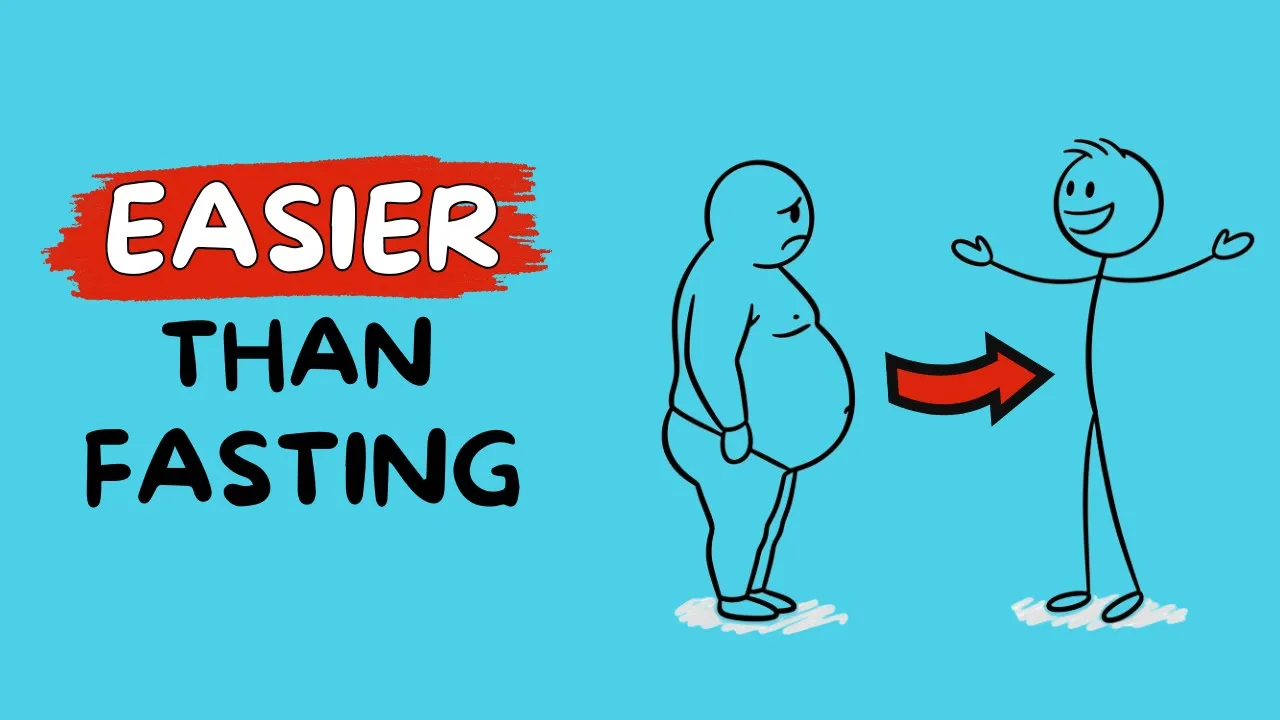
You have been lied to about weight loss. For decades, the fitness industry has sold you a simple mathematical equation. Calories in minus calories out equals fat loss.
They treat your body like a bank account. They tell you that if you are overweight, it is a character flaw, a failure of willpower or an inability to count numbers. But biology is not a bank account.
Biology is a chemistry lab. And in this lab, there is one chemical that dictates whether you burn fat or store it. It is not a calorie.
It is a hormone called insulin. Here is the uncomfortable truth. You can eat a restrictive low calorie diet and still fail to lose significant body fat if your insulin remains high.
Conversely, you can eat more food and lose weight if you learn to manipulate this hormone correctly. The trick is not about starving yourself. It is about understanding the instruction manual of your cells.
To understand why 99% of people fail, we have to look at what insulin actually is. Most people think of it simply as the blood sugar hormone. But its real job is much more profound.
Insulin is a storage controller. It is the switch that determines energy flow. Imagine your body has two fuel tanks.
The first tank is small and easy to access. This is the glycogen in your liver and muscles. It's like the cash in your wallet.
The second tank is massive and harder to unlock. This is your body fat. It's like the money in a savings account.
Insulin is the bank manager. When insulin is high, the bank is on depositon mode. It takes energy from your food and locks it into your fat cells.
But here's the critical part that most people miss. When insulin is high, it physically blocks the exit doors of your fat cells. You cannot withdraw money from the savings account while the bank manager is accepting deposits.
This means that if you have high circulating insulin, it is biologically impossible to burn body fat. Your body is chemically forbidden from accessing its own reserves. This leads to the phenomenon of being hungry and heavy.
You have thousands of calories stored on your waist, but your cells are starving because the insulin blockade won't let that energy out. So, your brain screams at you to eat more. You are not gluttonous.
You are caught in a hormonal trap. The vast majority of people get this wrong because they focus on what they eat, ignoring how they eat. They graze throughout the day or they start their meals with carbohydrates, keeping their insulin chronically spiked.
They are constantly pressing the store fat button. So, how do we flip the switch? How do we lower insulin without starving?
The answer lies in a biological hack known as food sequencing and gastric emptying manipulation. This is the trick that changes everything. When you sit down to eat, your stomach acts like a mixing bowl.
If you eat bread, pasta, or sugar first, these simple carbohydrates rush into your small intestine. They are absorbed rapidly, causing a massive spike in blood glucose. In response, your pancreas floods your system with insulin to save your life.
This spike puts you immediately into fat storage mode. Later, when the sugar crashes, you experience reactive hypoglycemia, the afternoon slump, and crave more sugar. It's a roller coaster.
However, we can flatten this curve without changing the food itself simply by changing the order in which it enters your system. Phase one, the fiber firewall. The first thing that should touch your lips at any meal is fibrous vegetables.
broccoli, spinach, asparagus, or a simple green salad. Fiber is indigestible. When it hits your stomach, it does not spike insulin.
Instead, it creates a viscous mesh, a physical web that coats the lining of your upper intestine. This mesh acts like a filter. Phase two, the protein and healthy fats anchor.
Next, you eat your protein and healthy fats. The steak, the chicken, the eggs, the avocado. Protein triggers a hormone called GLP1, glucagon like peptide 1.
You might recognize this name because it's the mechanism behind popular weight loss drugs like ompic, but you can trigger it naturally. GLP1 slows down gastric emptying. It tells your stomach to hold on to food longer.
It signals the brain that you are full. Phase three, the carbohydrate. Finally, you eat the starches, the rice, the potato, the pasta.
Because you have already built a fiber firewall and slowed digestion with protein. These carbohydrates now land in a slowmoving environment. Instead of rushing into your bloodstream like a tsunami, the glucose drips in like a slow stream.
Studies show that eating in this specific order, fiber, then protein, then carbs, can reduce the post-meal glucose spike by up to 73% and the insulin spike by 48%. You are eating the exact same meal, the exact same calories, but your hormonal response is completely different. You have turned a fattorring meal into a metabolic neutral meal.
But there's another layer to this trick. A biochemical amplifier, acetic acid. Acetic acid is the active component in vinegar, specifically apple cider vinegar.
For centuries, vinegar was used as a digestive aid, but modern science has revealed why it works. Acetic acid inhibits the enzyme alpha amalayase. This is the enzyme in your saliva and stomach that breaks down starch into sugar.
When you consume a tablespoon of vinegar diluted in water before a meal, you are essentially temporarily paralyzing the enzymes that turn bread into glucose. Furthermore, acetic acid improves the sensitivity of the insulin receptors in your muscles. It acts like a hearing aid for your cells.
If you are insulin resistant, your cells are deaf to insulin's knock, forcing the pancreas to shout louder and produce more insulin. Vinegar helps the cells hear the message, allowing insulin levels to drop faster. Now, let's address the 99% get it wrong aspect regarding movement.
Most people try to burn calories by doing cardio before breakfast or hours after eating. But to maximize this insulin trick, timing is everything. The most critical time to move is not at 5:00 a.
m. , but immediately after you eat. When you consume carbohydrates, glucose enters the blood.
It needs a place to go. If you sit on the couch, that glucose has nowhere to go but into fat cells via insulin. However, muscle contraction operates a separate side door for glucose absorption called glut 4.
When you walk for just 10 minutes after a meal, your contracting muscles pull glucose directly from the bloodstream without needing as much insulin. You are physically vacuuming the sugar out of your blood to use as immediate fuel. This blunts the insulin spike even further.
You don't need to run a marathon. You just need to activate the muscles. This leads us to the concept of basil insulin versus bolus insulin.
Most diets focus on the bolus, the spike from food. But if you are overweight, your basil insulin, your baseline level while you sleep, is likely too high. High basil insulin is the reason you wake up hungry.
It is the reason you cannot access body fat even when fasting. To lower basil insulin, you must increase the window of time where insulin is at zero. This is where intermittent fasting aligns with our strategy.
But it is not just about skipping breakfast. It is about gut rest. Every time you put food in your mouth, you trigger the digestive process and raise insulin slightly.
The habit of grazing, eating six small meals a day, keeps your insulin simmering all day long. You never allow the bank manager to go home so the vault can open. By combining timerestricted eating, eating within an 8-hour window, with the food sequencing hack we just discussed, you create a powerful synergy.
You reduce the number of insulin spikes per day, and you drastically reduce the height of those spikes when they do happen. Let's put this into a realworld protocol. Imagine your next dinner.
Instead of diving into the bread basket immediately, you drink a glass of water with a tablespoon of apple cider vinegar. You wait 5 minutes. You then eat a large serving of roasted vegetables or a salad with olive oil.
Next, you eat the salmon or the steak. Finally, you enjoy the mashed potatoes or the dessert. After the meal, instead of sitting in front of the TV, you go for a 15-minute walk.
In this scenario, you have consumed a full satisfying dinner. You have not deprived yourself. Yet biochemically, your body is in a completely different state than the person who ate the same food in the wrong order and sat down.
Their insulin is skyhigh, locking away fat. Yours is under control, allowing your metabolism to remain flexible. This approach fixes the root cause, insulin resistance.
Insulin resistance is like a callus. If you rub your skin constantly, it gets thick and hard to protect itself. If you bombard your cells with insulin constantly, they build a callous.
They resist the hormone. The only way to heal a callus is to stop the friction. By flattening the glucose curves through sequencing and vinegar, and by clearing the glucose through walking, you remove the friction.
Slowly your cells become sensitive again. The callus disappears. And when your insulin sensitivity returns, your body naturally wants to be at a healthy weight.
You must stop fighting your biology with willpower and start working with it through biochemistry. Weight loss is not about morality. It is about molecules.
It is about understanding that food is not just fuel. It is information. Every bite tells your hormones what to do.
So the next time you sit down to eat, remember you are the chemist of your own body. Use the fiber firewall. Use the protein anchor.
Use the acetic acid hack and unlock the doors that have been keeping your energy trapped for years. The trick was never about eating less. It was about eating smarter.