if you search online for hard problem you won't find an unsolved math equation or a cosmological issue the top hits will be none other than the hard problem of consciousness because there really isn't a greater problem out there how is it that a world of lifeless matter creates conscious beings that are self-aware and can introspect about their own existence in other words the hard problem is simply trying to explain how matter could become or create consciousness but perhaps it is only a problem because we assume we have to get consciousness from matter if you watch
the previous video we argued there is very good evidence from neuroscience the mind is not reducible to matter but on top of this there are good arguments from the hard problem itself that suggests consciousness cannot reduce to matter that is it's logically improbable to suggest the mind emerges from matter first I want to be clear defining consciousness is not easy much like the color yellow it is better to know what it is by experiencing it rather than explaining it if you were to define consciousness it would be in relation to other things but consciousness is
unlike anything else in existence in fact it would be fair to say that consciousness is in its own category and not just another thing for example things are experienced in consciousness so how could consciousness be just another thing processes are experienced in consciousness but is consciousness just another process consciousness is hard to define because intuitively it seems like something else entirely a category of its own if you take a second and think about your own consciousness as if it is another thing you cannot fully contain it in one thought because you are currently conscious of
your own consciousness so your consciousness extends beyond what you can think of in other words you can never fully step outside of what it is to be conscious all thoughts and experiences happen in consciousness as cognitive scientist Donald Hoffman says no conscious agent can describe itself completely the very attempt adds more experiences to the agent which multiplies the complexity of its decisions and actions in light of those new experiences which requires yet more experiences to capture those more complex decisions and actions an agent cannot experience itself in its entirety no matter how large its repertoire
of experiences so consciousness doesn't seem to be another thing function phenomenon or process it simply is consciousness a category of its own the best definition I can come up with is being a self-aware mind consciousness is to be self-aware but in reality we all know what consciousness is intuitively and experientially just like how we all know what the color yellow is even if we can't put words to it another word I want to cover is soul over the past few years I've grown to dislike this word because it's thrown around to mean a lot of
different things but for the sake of my video series I want to define soul as that which you are becoming your soul evolved over time it is your personality your thoughts dreams emotions memories desires goals etc the soul is the person you a conscious mind are becoming over time it is contingent on the mind and is malleable so your soul came into existence at conception and changes and evolves throughout your life so you are a conscious mind building a soul to be conscious is to be a mind the heart problem for physicalists is how does
this mysterious consciousness arise from matter specifically the brain there are too many philosophical problems that make it nearly impossible to suggest we will ever be able to demonstrate consciousness or rising from matter and I'll argue the reason is because consciousness doesn't arise from the brain but is merely correlated with the brain no one denies conscious states in brain states are correlated whether you're an idealist substance duelist or a physicalist but mere correlations alone do not prove one causes the other let alone offer an explanation the correlations are the very thing that needs to be explained
in fact it doesn't logically seem they are the same or that brain states could possibly create mental states if you throw a pebble in a pond and it creates a ripple the trajectory of the pebble and the ripples it produces are correlated but pebbles and the ripples are not the same thing and when it comes to brain processes and conscious states this causal relationship breaks down for instance we all have beliefs which can be true or false but it doesn't make sense to say my brain chemistry is true or false no one looks at a
neural pattern in my brain and describes it as right or wrong because neural processes in my brain are just patterns in the intensity in the direction of firing of different sets of neurons however we can describe the brain in terms of things like mass and size whereas it makes no sense to describe thoughts or beliefs with these physical parameters thoughts do not have dimensions or weight it doesn't seem logical to describe beliefs as being next to one another or on top of one another within the brain your inner mental world is quite devoid of the
physical properties of your brain but this presents a problem for physicalism because physically emergent properties cannot just lose their emergent properties when they're embedded in a larger structure now someone might use my definitions and argue that the conscious mind is just reading aspects of the soul like a belief they could just be a pattern in the brain similar to how a CD player reads bumps and grooves on a CD and creates music but a pattern within the brain or not cannot be about something like a belief is about something if a belief is only stored
as a pattern it only becomes a belief in a mind a neural pattern alone cannot be a belief just like bumps on a CD or not music or like how ink and paper are not the same thing as the message they merely transfer meaning that only makes sense when read by a mind without a mind there is no meaning on the page so beliefs themselves are not logically identical to patterns within the brain they are merely correlated like ink on a page and a message another aspect is something like a unified visual experience that we
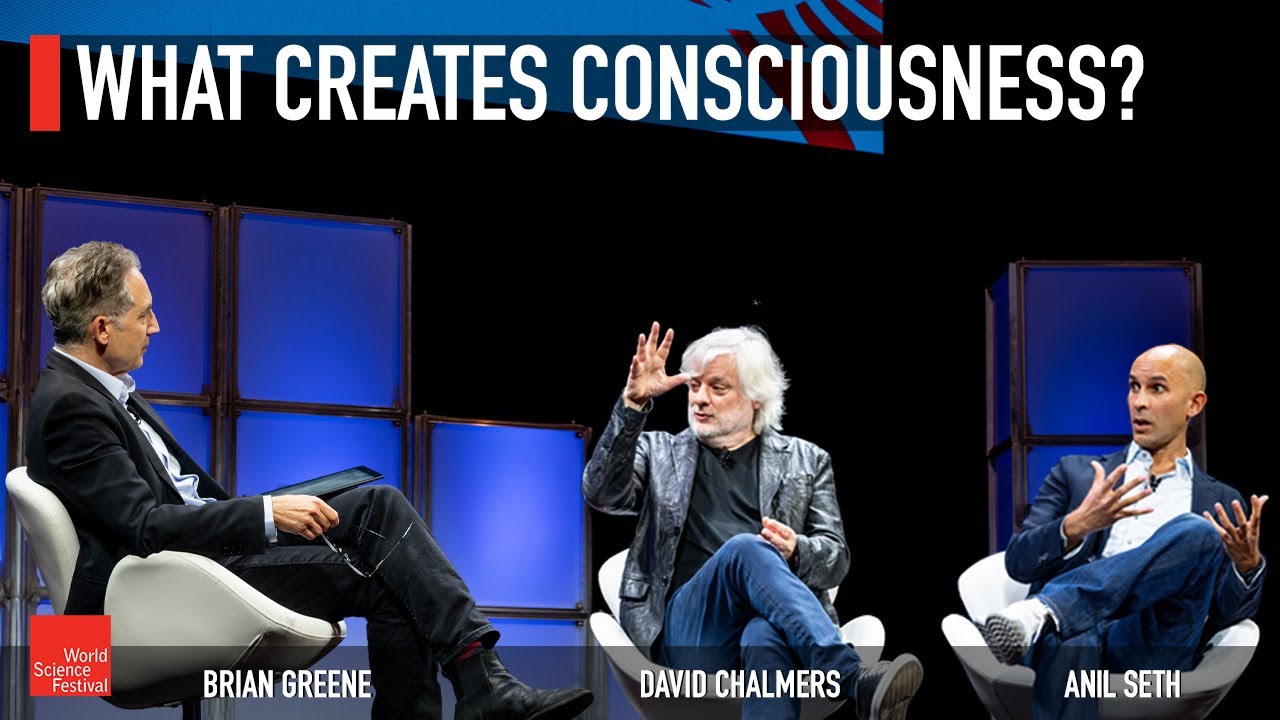
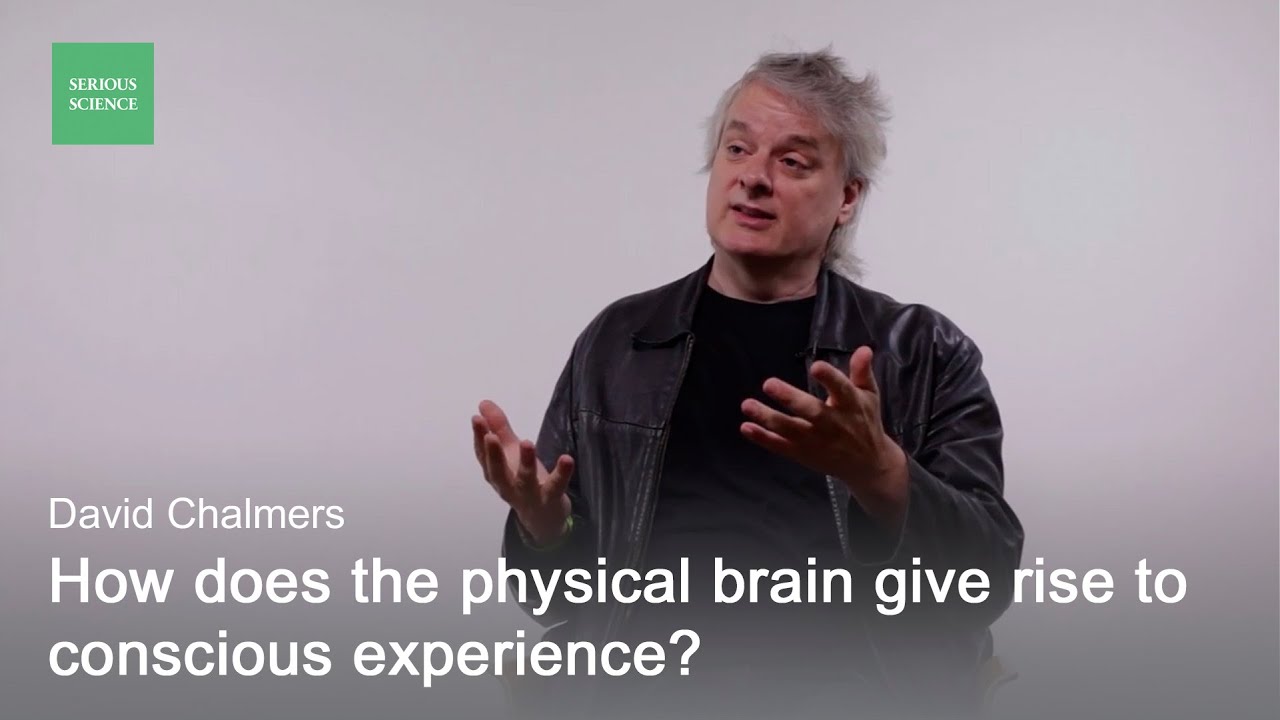
have within our consciousness but the neural pattern which correlates with the visual experience is not the same according to the law of identity two things are identical if they have the same properties but since mental states can have the property of being round or be about something while the neural processes lack these properties they cannot be identical David Chalmers who coined the phrase hard problem admits the failure of materialism leads to a kind of dualism there are both physical and non-physical features of the world yay Gwang Kim says it strikes many of us that there
is a fundamental seemingly unbridgeable gulf between mental and physical phenomena and that this makes there apparently intimate relationships puzzling and mysterious Frank Jackson highlights an issue for physicalists called the location problem on the presupposition scientific explanations are always superior the naturalist is committed to natural explanations for how things came to be thus the naturalist must supply the physical property of location and so must locate or find the place of the mind or eliminate it altogether if the mind is a result of physical processes it ought to be describable by physical properties but consciousness and mental
states lack such properties to begin with let alone have clear locations in the brain yet we cannot deny such things exist as they are the basis of all our experience as William Hasker says who or what is aware of the conscious state as a whole for it is a fact that you are aware of your conscious state at any given moment as a unitary whole so we have this question for the materialist when I am aware of a complex conscious state what physical entity is it that is aware of that state this question I am
convinced does not and cannot receive a plausible answer so naturalistic understandings of consciousness don't seem to be able to get off the ground as they seem to have to describe mental states in terms of physical properties which is a category error now on the reverse we can experience physical properties through qualy an experience or we can imagine an illusionary physical environment an abstract thought but these seem to emerge from mental states whereas the reverse doesn't seem to happen the mental states themselves are distinct from the physical brain in properties quality and appearance in other words
the world within your consciousness doesn't it all equate to the properties or descriptions of the brain even neuroscientist Sam Harris admits this problem there's nothing about introspection that leads you to sense that your subjectivity is at all dependent or even related to voltage changes and chemical interactions going on inside your head okay you can you can feel you can drop acid you can meditate for a year you can do whatever you want to perturb your nervous system you can you can feel yourself to be one with the universe and at no point in that transformation
do you get a glimpse that there's a hundred trillion neurons in your head or synapses in your head that are doing anything thus we can begin to see how the hard problem plays out your inner mental world doesn't introspectively reduce the brain chemistry the brain chemistry seems to be something that only correlates with your mental states instead of actually generating the mental states or being the same thing as mental states in fact the philosopher Colin McGann has to admit that naturalistic explanations for how the brain will create consciousness seem like a fond of sorcery or
a miracle itself consciousness is also intuitively irreducible the brain is composed of smaller parts that ultimately reduce to subatomic particles however conscious experience cannot be broken in half or reduced to smaller parts it cannot be that you as a mind can be divided even if you lose a memory you simply lost a memory process by your conscious mind but you as a mine are still irreducible that processes the information of the soul functionalist like Daniel Dennett believed there isn't a single headquarters in the brain that creates consciousness rather in our brains there is a cobbled-together
collection of specialist brain circuits which thanks to a family of habits encoded partly by culture and partly by individual self exploration conspire together to produce them more or less orderly more or less effective more or less well-designed virtual machine it creates a virtual captain of the crew without elevating any one of them to long term dictatorial power but Dennett never explains how this could happen he only speculates this has a possibility there is never presented a reasonable path to explain how a collection of parts could create a unity of consciousness David Barnett presents an analogy
to help explain this imagine a billion tiny men working together each man has given a simple set of instructions if a given symbol is posted then if certain lights are illuminated pressed a given button together the billions of men function on a relevant level just as a normal human brain functions yet the idea that this collection of tiny men might itself be conscious is absurd in other words a billion tiny people working together each providing one piece of information doesn't equal one single consciousness as a whole it would be absurd to suggest all these men
together equal the creation of a single consciousness likewise the idea of smaller parts processing small bits of physical information somehow building a unified consciousness and mental world is sheer magic furthermore certain individuals have had parts of their brains removed and they are still a person they don't become 90% of a person or 50% of a person they may lose functions abilities or memories but the mind is not divided if a collection of parts within the brain creates consciousness how come removing parts of the brain doesn't change consciousness itself it simply doesn't make sense experientially or
intuitively to speak of consciousness as divided or reducible to smaller parts so since you cannot be divided as a mind but your brain and body can it follows that it as probable your mind is not identical to the brain or contingent on the brain your mind simply doesn't act or behave as if it is a brain however the hard problem does seem to reveal that consciousness is not another physical object or a function property or phenomena of the physical there is no clear path to explain any causal link and the reason seems to be that
we're looking for something that doesn't exist that there is no physical basis for consciousness because it's not physical but consciousness is something we cannot deny exists because it is the basis of what we are conscious beings and through which we experience all other things yet everything we intuitively or experientially know about our own consciousness suggests it is not physical but something other in something fundamental to our very existence if we begin with what we know is real and cannot deny instead of trying to start with a physical and build our fundamental nature from that the
hard problem dissipates consciousness simply is in the physical is either contingent on mine or a separate substance that interacts with mine the problem was physicalism in materialism is they try to construct consciousness out of things that refuse to add up to consciousness trying to build first-person experience of things experienced within our first-person experience it is like trying to construct an eye out of colors whereas the reverse is quite easy as matter can intuitively reduce to elements of the mind physicists Andre Linda says let us remember that our knowledge of the world begins not with matter
but with perceptions I know for sure that my pain exists my Green exists and my sweet exists everything else is a theory so we can't predict any attempt to solve the hard problem through naturalistic explanations we'll never succeed because our perceptions simply don't add up to consciousness they are experienced in consciousness and can never escape such a construct thus the hard problem at its core suggests consciousness does not reduce to matter [Music]