Welcome all. In my last lecture we were talking about the accounting process, where I discussed with you that, what includes the accounting process. From where the accounting process starts and where it ends.
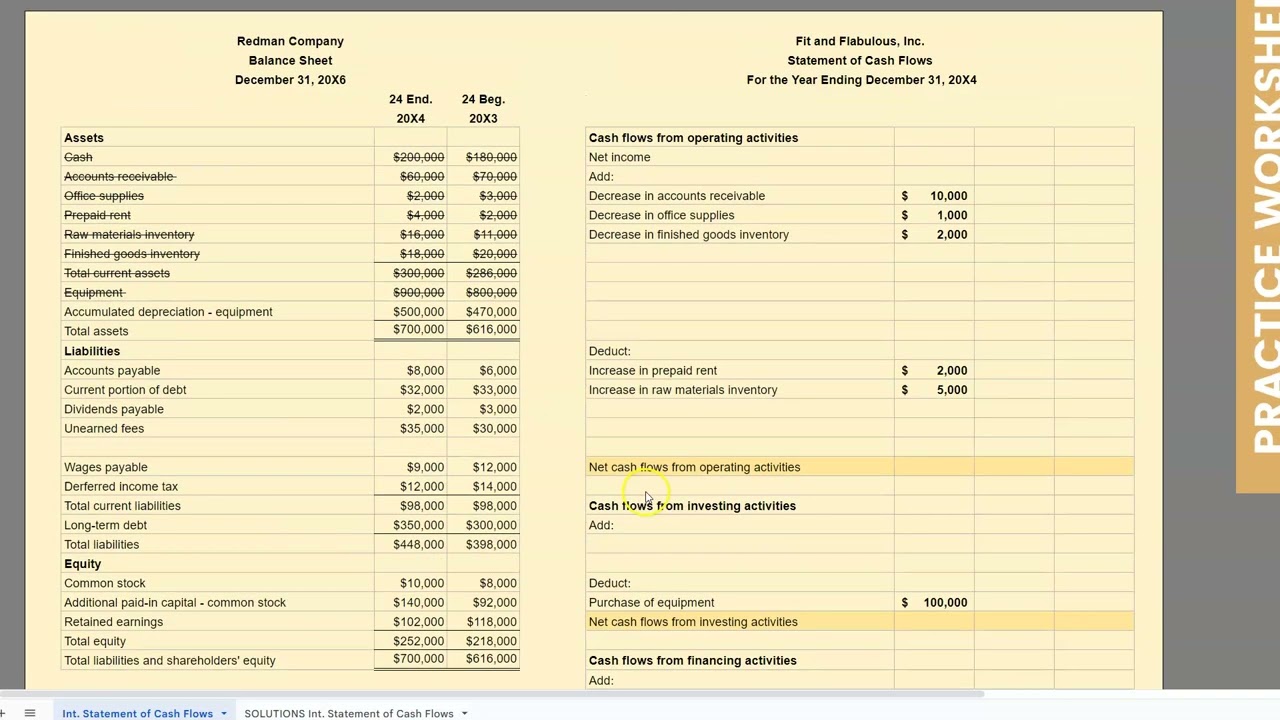
So, I told you yesterday that accounting process starts with the first thing that is, transaction and it ends with the balance sheet. Normally it ends with the balance sheet, and after that the third statement is also required to be prepared, which will be generally prepared from the profit and loss account and balance sheet which is called as the cash flow statement. So, cash flow statement has also from 1997 onwards.
In India the cash flow statement also has become a mandatory statement to be prepared by companies by the firms. In 1994, International Accounting Standard Committee accepted this statement, that apart from the trading and profit and loss account and balance sheet. Firms must also prepare the cash flow statement.
And in India institute of chartered accountants of India accepted this statement in 1997 that in India also now cash flow statement will be the statutory requirement, along with the first two statements that is profit and loss account and the balance sheet. So, these are the three important statements. We will learn how to prepare all these statements in our later part.
Now, apart from these three statements, I was talking to you about the one more statement that is called as the profit and loss appropriation account. Sometimes some firms prepare the profit and loss appropriation account as a separate account, or in some firms it is prepared as the extended version of the profit and loss account. So, the basic difference between these two statement is, profit and loss account helps us to work out the profit or loss of the firm.
On the one side you put all the incomes, direct and indirect incomes. On the other side you put all the expenses, direct and indirect expenses. And finally, the difference of these two is calculated the net operating profit before tax.
Then we subtract the tax part, how much tax will be paid, as a corporate tax, corporate tax will be paid to the government, after subtracting that calculate the net operating profit after tax. So, profit and loss account stops here. Now next thing is that whatever the profit is earned by the firms that profit has to be shared amongst the different stake holders.
As I told you that if it is a public limited company, then large number of the shareholders are there, and they expect dividend from the companies at the end of the year. So, one part of the profit will go to the shareholders as dividend. Another part of the profit can be kept as reserve for some specific purpose.
The reserve say for example, the company has issued the debentures, and they are becoming due to be paid in the next year, and for that we need the funds. And if the profit or the part of the profit is going to be sufficient, then part of the profit can be kept reserve for redemption of the debentures next year. So, that reserve will be called as a specific reserve, debenture redemption reserve.
Then we create another reserve which is called as general reserve, which can be used for any unforeseen purpose or any unforeseen requirement. If we do not have any other source of funds for that, we can use the general reserve. So, one part with the profit is kept as general reserve.
So, these are the three parts; one is dividend to the shareholders, second is the specific reserve, third is the general reserve, and still if some profit is left then that profit is passed on to the balance sheet and added in the capital. So, now, that statement is called as the profit and loss appropriation account, because that statement helps to apportion the profit earned by the firm to the different stakeholders or for the different requirements. So, that is a additional statement, sometime it is a extended version of the profit and loss account or sometime it is prepared separately.
After this, there is another statement which is called as the funds flow statement. Funds flow statement is a kind of a cash flow statement, but a enlarged version of the cash flow statement. In the cash flow statement we talk only those assets and liabilities which affect cash, but in fund flow statement, we include almost all the assets and liabilities, because in the long run, everything all the liabilities and assets can be converted into cash.
So, sometime we prepare the funds flow statement also, but that is not a mandatory requirement, that is only exercising the internal control in the firms, and to know the funds position in the firm, sometime the funds flow statement can be prepared, but the statutory statements are only three; that is profit and loss account, balance sheet and cash flow statement. And profit and loss appropriation account is prepared as extended version of the profit and loss account, which helps us to distribute the profit, earned by the firm and calculate it with the help of profit and loss account. So, yesterday I have talked to you about the profit and loss account and balance sheet in detail and showed you the proforma’s also, that how to prepare the profit and loss account and the balance sheet.
Now I will take you little back as I told you that accounting process starts with transaction, and that first means the book of accounts where that transaction goes, is the journal. Now I will take you little further with the journal that journal has different types, that book, original book of accounts journal that has different types. As a student of accounting we must understand; what are the different types of journals.
So, I will discuss with you the different type of journals, because you should be knowing it about that what is journal, and what are the different types of the journals, and what is the basic difference among these different types. Now for example, we have different type of journals like; 1 2 3 4 5 6 7 8 type of the journals. 8 type of the journals, 8 type of the basic books of entries, where the different types of the transactions means, because we have the different types of the transactions in the business, and those different types of the transactions have to be taken to the journal, to the different type of the journals.
So that it becomes easier to handle all these transactions, and at any point of time if you want to know about any transaction that has taken place in the business, we need not open a big voluminous book, rather we can go to a specific journal, we can open that journal, we can open that book and we can get to know that what is there in, what is the situation or what is the position of that transaction, or with regard to the transaction. So, different type of the journals are here; like first journal is purchase book, then we have the second journal sale book, then we have purchase return book, then we have sales return book, then we have bills receivable book, then we have bills payable book, and then we have cash book, and last journal is called as the journal proper. So, I will discuss with you all these different type of the journals, and you will understand why these different specific types of the books, specific type of the journals are required.
So, here first journal is purchase book. purchase book means, this is the journal, this is the book of accounts, original first book of accounts, which records those transactions, where the purchases of any kind, basically the purchases of the merchandising nature, means it records those transactions which are of the merchandising in nature, and which have been done on credit. We have not we have purchased something, but we have not paid the cash for that.
Those kinds of the transactions will be recorded in the purchase journal or purchase book. For example, firm purchases the raw material. Now that raw material I told you that only those purchases will be recorded in the purchase book, which are of the merchandising in nature Now, what is the meaning of merchandising nature?
Merchandising nature of the purchases are like; which are purchased for reselling in the market. We purchase something, we process that something, we add value in that and after that we resell that product in the market. For example, now it is a raw material I am talking to you, raw material we purchase, we process that raw material, convert that raw material into a finished product, and that finished product is sold in the market.
On the other side there is another purchase; for example, we talk about stationery purchased by the firm for it is use in the firm. Now, the stationery, firm is not going to sell that stationery back in the market, that stationery is being purchased and that stationery will be used by the firm and that is finished. So, that is not for the merchandise, that is the purchase of the stationery is not for the merchandising purpose, say material is for the merchandising purpose, anything which is purchased by the firm with objective of reselling in the market, is the item of the merchandising nature, and if it is purchased on credit not on cash, then it will be recorded in the first journal, which is called as the purchase book or the purchase journal.
Second journal is the sale book or the sale journals. All kind of the sales made by the firms which are on credit basis; all kind of sales made by the firms on the credit basis where for example, firm has sold the finished material in the market. For example, a company is manufacturing this color TV and selling it in the market.
So, the firm selling these color TVs in the market on a credit basis, selling the material today and the cash will be received after 1 month, 2 months, or may be 3 months. Then those all kind of the sales will be known as the sales on credit, and will be recorded in a separate journal in a separate book of accounts, which is called as the sales book; so independent book, independent journal. Then we have third journal purchase return book.
in this journal we will record those transactions or those purchases, which were purchased earlier, but because of certain reasons, either the supplied material to the firm is defective, or it was not ordered or it was not according to the specifications, whatever the reasons, because of any reason if any material purchased by the firm has to be returned back to the supplier, any kind of the material purchased by the firm has to be returned back to the supplier, in that case all those purchases which are returned, because of any reason will be recorded in the purchase return book, then means a separate journal for the return of the purchases. Now, fourth journal is sales return book. as I am talking to you that if the firm when they are buying something, and because of any reason they are returning it back to the supplier; similarly, the firm which we are talking about firm in question.
If they have sold something in the market, may be as a fence product. if some TVs, 10 TVs are sold in the market to some dealer by this firm, or by Samsung, L G, or any other firm, and part two out of the 10 T Vs are defected, and that dealer returns two T V s back to L G or to Samsung or to any other company, then those returns will be called as sale returns, and they will be recorded in a different journal, different books of accounts, and independent journal, independent book of accounts, which only will record all the transactions relating to the sales, which are returned by the buyers, who had bought it from the firm on credit. Now, after that we have the bills receivable book.
Now what is the first of all you must know that what is a bill receivable. Bill receivable is basically a document which verifies that firm X has sold some material to firm y, and firm Y has to pay that amount back to firm X after a certain period of time. Now when the firm X is selling the material to firm y, they need some proof that they have sold this material to firm y, and firm Y has to pay us after 30 days 45 days or 60 days.
So, what they do, on the one hand they sell the material to firm y, and on the other hand firm X will prepare bill, that bill is basically a legal document, prepared on a legal paper which is called as a judicial paper, and on that it is written like that material worth this much of rupees is sold by us, by X company to the Y company, and the credit period given to the Y company is say 60 days, and the Y company will make the payment to us after 60 days, or on the 60th day. So, that everything will be done, a document will be prepared, and along with the material that document will be sent to the firm y. So, on the one hand firm Y will receive the material that is say for example, color t v s, and on the other they will.
They are not paying cash, if they are paying cash back to the firm X then this bill is not required, but they are not paying cash, they will pay it after 60 days. So, firm X needs some security, some proof of the credit sales on the other side, along with the supply of material they will present this document this bill to the firm y, who is the buyer, and they firm Y will put their authorized signature, will put their signature on the bill. It means it is a proof that the firm X has sold to firm y, and the firm Y has received the material, and firm Y has to pay to firm X after 60 days.
So, that is called as the bill receivable for the firm x. So, it will be called as a bill receivable for the firm x, who has to receive that bill after signing it back, and on the due date after 60 days, they have to receive back the cash for the 10 TVs they have sold to firm y. And to firm Y this bill becomes the bill payable.
The firm Y has to pay this bill after 60 days, the amount written in this bill on which they have put their signature then they accepted, that yes we will have to pay to the firm x. So, for the one firm, firm X this bill is called as the bill receivable, and for the firm Y this bill is called as the bill payable. So, we have the two different journals specific journals bill receivable book all the bills which will be received by the firm for it is credit sales, after some period of time will be recorded in the bill receivable book.
And likewise if this firm is selling in the market, it means it is obvious that they are also buying from the market. So, when they are selling on credit they are also buying on credit. So, when they are selling on credit they are getting the bill received, recording in the bill receivable book, and similarly when they are buying on credit, then their supplier is getting the bill received from the firm x, because they are the buyer now of the raw material.
So, now they will accept that bill put the signature and return that bill back to the supplier and that bill will become to firm X as bill payable. So, for different means, payment which means the amount which we have to receive, that will be recorded in the bills receivable book, and the amount which we have to pay to their suppliers they will be recorded under the bills payable book. Then we have other document which is very very important document and that is called as the cash book.
Cash book is a that kind of journal, that kind of the book, that kind of the book of original entries, which records all the transactions happening on cash. As I told you say for example, in purchase book, when we purchase anything on credit we record those in the purchase book, but when we buy anything on cash, then that purchase will not go to the purchase book, that will go to the cash book. So, any transaction, because of which the cash is getting affected, will be recorded in the cash book.
Irrespective of the fact that whether it is of the merchandising nature or it is of the non merchandising nature. Any kind of the transactions taking place, who are affecting the cash that is called as, all those transactions they are the subject matter of the cash book, and they will be recorded in the specific journal which is called as the cash journal or in a business language we call it as the cash book. And last journal is the journal proper.
What is journal proper? Journal proper means any transaction which is not recordable in any other book of accounts, in any of the first six journals, whether means neither it is recordable in the purchase book, nor it is recordable in the sale book, nor it is recordable in the purchase return book, nor it is recordable in the sale return book, neither it is a bill of exchange, means a bill receivable, or it is a bill payable. In that case that transaction will be recorded in the journal proper.
For example, I was talking to you that purchase of stationery. Now purchase of stationery if it is on cash, then it will be recorded in the cash book, but if it is on credit, then it will be recorded in the journal proper, because it is on credit and it is not of the merchandising nature. So, those transactions which are not recordable in the first six books,, then that will be recorded in the or in the first seven books you can say, that will be now the subject matter of the last book which is called as the journal proper.
So, these are the different 8 type of the journals, 8 type of the books of accounts and it is better always to maintain different journals, different book of accounts for the different transactions. So, that at any point of time if you want to know about any transaction that has taken place in the business, we need not open a voluminous book we have to go to a specific journals, specific book,, open that journal open that book and we will get to know about the transactions. For example now how the problem comes.
Yesterday I talked to you about one statement that is called as the trial balance right. So, what is trial balance, as I told you in my previous lecture, that trial balance is basically intervening statement. Trial balance is basically a intervening statement, and in that intervening statement what we do.
We first record the transactions in the journal, any kind of the journal. Then we post them in the ledger for proper classification, and from the ledger that all those transactions have to go to the profit and loss account and balance sheet. But we ensure that in the, whatever the information is going to profit and loss account and balance sheet, that should be a correct information nothing incorrect, and the profit depicted by the profit and loss account is a correct profit, and the balance depicted by the balance sheet, balance of the asset and liabilities, predicted by the balance sheet, shown by the balance sheet is a correct balance.
So, for that we prepare the intervening statement; that is a connection between ledger and the profit and loss account and balance sheet, we prepare a trial balance. Now, trial balance as I told you in my previous lecture that we put debit balances on the one side, credit balances on the other side. So, we are following a double entry accounting system, it means the total of debit balances should be equal to the total of credit balances.
So, when both the balances are equal, it means we can say that at least there is no arithmetical mistake; there is no numerical mistake, as far as the recording of the transactions is concerned and posting of these transactions in the ledger is concerned. There can be other mistakes, journal is not the proof, sole proof of the complete accuracy of the transactions recorded in the journal and classified in the ledger. It is not a sole proof, it is only a proof of the arithmetical accuracy, but there can be still the trial balance tallies, but still there can be other mistakes, still there and trial balance cannot check those mistakes.
Now, for example, what kind of the mistakes can be there? The mistake is kind of say for example, some material is purchased from Mr Ram by the firm, he is a supplier and he has supplied the material to this firm, while recording this transaction in the books of accounts in the purchased journal, unmindfully the person who is recording it he has recorded it in the account of Shyam, not in the account of ram. So it means That is a you can call it as error of commission, one person is a supplier, but wrongfully it is recorded in the account of the other person.
So, trial balance will only look that material say for purchased is for 10,000 rupees, 10,000 is debited, 10,000 is credited and both the sides balances are equal, but it will not check that whether it is ram is a supplier or Shyam is a supplier; that is not possible, trial balance cannot check. Similarly, there could be another error which is called as error of omission, completely omitting some transaction. Firm purchased the material from ram, he is a supplier, but the person who had to record that in the purchase book, and he completely forgot it to record that transaction in the purchase book.
Now neither anything is debited nor anything is credited, both the sides are equal, and Ram’s account is not given the due credit. So, it is a kind of a error which is we call it as the error of omission, this is called as the error of omission. Then we have other kind of errors say for example, error of principle, error of principle is kind of they say that firm purchased machinery, and that machinery required some little minor repair before installing it for it is use right.
Now when that machinery is purchased, I told you yesterday, we have two kind of expenses; revenue expenses and capital expenses. When the machinery is being purchased, machinery is a long term asset, it is a fixed asset. So, any expense incurred to purchase that machinery is called as a capital expense, because the benefit of that expense will be enjoyed by the firm for a period of more than 1 year, but minor repair to that machinery which was required, because it got defective on the way, it came from a very distant place on the way when it reached at the place then it had to be repaired, some defect came up and it had to be repaired, now that repair is of a short term nature, that is of a revenue nature.
But if you consider both the items, both the expenses as a capital expenses ;one is revenue, repair is a revenue nature expense, and the machine is the, or the purchase of the machine is of the capital nature, but if you feel that both are of the capital nature or both are of the revenue nature, if you take the entire amount of the purchase of machine and repair to the profit and loss account, even then it is wrong, and if you take it to the balance sheet as a asset even then it is wrong, but so it will be there, there will be two accounts one will be repair account and second will be the machinery account, but if you are not segregating these two accounts, then trial balance will not be able to detect this error, because this is a error of principle, means revenue difference, means recognizing that expense of revenue and the capital nature, we have not been able to do that, and because of that trial balance is not going to, means pick up that that problem, that defect, and that error and trial balance will tally. So, there are some errors as I told you, errors of omission, errors of commission, and errors of principle. All these errors cannot be detected by the trial balance.
Trial balance can only detect the errors which are numerical errors, errors of arithmetical nature. So, all these journals we will prepare first. So, my purpose of say talking to you about the trial balance today was, that why this different type of the journals are important, because if the some error comes up in the trial balance, trial balance is not tallying it means now you have to refer back to the first two books, either you have to go back to the ledger or you have to go back to the journal to find out their difference.
Now, that difference is not locatable easily if all the transactions are recorded in the one book of account, it is a voluminous book, finally get out on which page where it is recorded, it is very difficult, but if you have created the proper books of accounts, in that case you can simply go, if it is a purchase related problem or first you can check the purchase book, or you can check the sale book, or you can check the purchase return, sale return, bill receivable book, bills payable book, or if it is related to cash, then the cash book and you will be, miscomparatably easily you will be able to find out the problem, the difference. And one more thing I would like to discuss here with you that for example, we have checked all the records, and we are not able to detect that error in the trial balance, that defect in the; that means, you can call it as a mismatch figure in the trial balance, then what to do, because you have to prepare the profit and loss account and balance sheet on the last day of your accounting period, and that period is approaching, and we are not able to tally the trial balance. So, what we do.
Temporarily you put that difference in one account in the trial balance, that account is called as the suspense account, and with that suspense account we prepare the profit and loss account, we tally the balance sheet, and once that everything is done, and last date is over this accounting period is over, then in the next year, in the beginning of the next year first we detect that error, remove that suspense account from the trial balance, remove that error from the profit and loss account or the balance sheet, and finally, that suspense account has to be removed from the previous year’s trial balance, and that error also has to be removed from the profit and loss account or from the balance sheet, but temporarily solution is that we can put that difference in the suspense account. So, this all is about the accounting process I have already talked to you about the profit and loss account, balance sheet, and all these things in my previous class. So, till now what we could discuss is, the basics of accounting, accounting gaap, different types of accounts their rules, concepts, conventions and accounting process.
Now how to learn, how to prepare the journal and ledger, and go up to the balance sheet that I will discuss with you in the next class. Thank you very much.




![Accounting Basics for Small Business Owners [By a CPA]](https://img.youtube.com/vi/3KeG7hHzUy4/maxresdefault.jpg)