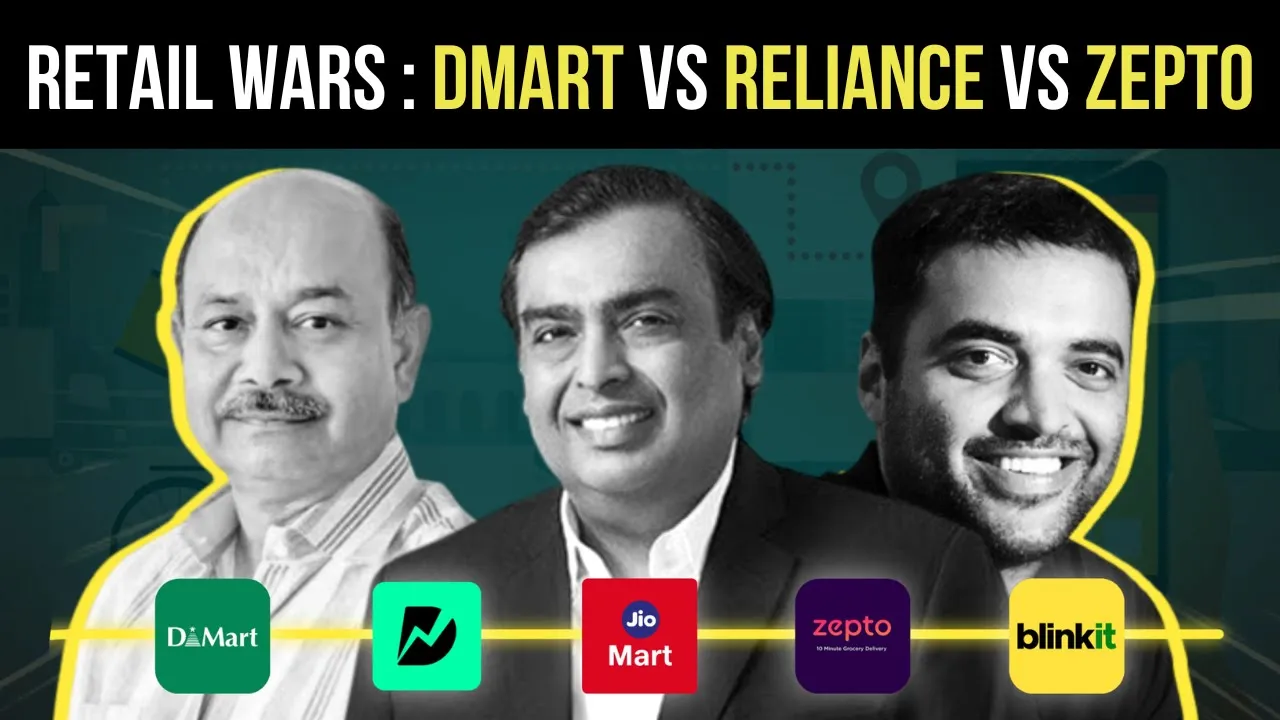
[Music] instant food delivery segment many questions were raised about delivery partner safety as well as the 10-minute food delivery whether it's even possible or is it simply a marketing gimmick over the last 10 years e-commerce Market has seen the evolution of quick Commerce is one of its most in-demand verticals while experts will find that this was a natural progression for online retailers as we've seen with all the d2c players post pandemic CAC or customer acquisition cost has increased as well so then how does it make sense for uh you know someone to be in business like this and be profitable hi everybody the quick Commerce wave has taken the entire e-commerce industry by surprise what once looked like a fancy marketing gimmick of 10 minutes delivery now the same space has million dollar companies like tanzo zepto swiggy and even zomato and not just that even the big guns like Reliance are so Keen about the space that Reliance has invested 200 million dollars into dunzo and even dmart is slowly sneaking into this space but on one side while this looks like a logistical Miracle on the other side as of now it seems to be an economic nightmare with all these companies reporting hundreds of crores of losses every single quarter so in this episode today let's try to understand how have these quick Commerce companies Master the logistic system to give you a 10 minutes delivery how do they intend to become profitable and most importantly how could these quick Commerce companies go on to threaten the positions of giants like Reliance and D mud this video is brought to you by Golden pie but more on this at the end of the video [Music] foreign wave and the landscape of Indian e-commerce lies in this wise coining of words by aviral bhatnagar wherein he categorizes e-commerce with three words cost convenience and catalog and in the race of offering one of these Seas companies are more likely to compromise on the other two Seas so you'll see that while misho offers cost big basket offers a great catalog and swiggy instamart offers convenience and Amazon offers both catalog and cost which is why it's clearly one of the most powerful players in the market so if you look at quick Commerce the quick Commerce game is a convenience game and you will choose to order from dunzo even though it's not cheaper than Tmart even though it does not offer a vast catalog like big basket why because while demand and big basket might take anywhere between 4 hours to one day to deliver tanzo will be able to deliver the products in less than 30 minutes now the question over here is how are these companies able to deliver groceries so fast and how do they intend to become profitable well these companies use something called the dark store model and if you've already read about it you know that it's nothing but a micro Warehouse wherein you have some two to three thousand products stored these warehouses are just like a kirana store but they do not sell to walk-in customers and are specially designed to act as a super efficient micro warehouse and all thanks to data analytics these tools are so strategically located that they're as close as 1. 5 to 4 kilometers away from the customer base so as soon as you place the order with the app the logistics is designed in such a way that every single action of the delivery staff and the warehouse system are curated such that they can give you the fastest delivery possible so if this is very very clear to you let's have a look at some numbers and see what exactly is their scope of profit according to this Economic Times article it costs anywhere between 25 to 40 lakhs to set up a dark store and a typical dark store is 2000 to 2500 square feet large it has a total of 13 to 14 staff in the store who are mostly Packers and the average order value is 350 to 400 rupees for the industry and here's the most critical part of all the gross profit margins of these companies are anywhere between 15 to 20 percent now what is gross margin it's your total revenue minus the cost of goods and services divided by the revenue so if you shop for 400 rupees which includes bread milk and vegetables then the gross margin is the revenue which is 400 rupees minus the cost price of the products divided by 400. so here if it's 20 margin then the cost of products to the company is 320 rupees and the gross margin is 80 rupees so this is pretty excellent right 80 rupees profit per order and thousands of orders going out every single day from each one of these drug stores so these dark stores are practically a cash machine right right well not really because this is not net profit but gross profit margin so this 80 rupees margin does not include the indirect fixed cost like office expenses rent administrative cost or even delivery cost and this last mile delivery is one of the most expensive cost variables in the chain because if you do the math a delivery buyer gets a salary anywhere ranging between 25 to 35 000 and on an average a rider clocks 20 to 30 deliveries a day as of now so let's take a safe average of 30 000 rupees salary with 25 deliveries a day so we have 750 deliveries a month and the cost per delivery is 40 rupees and sometimes this cost could even go up to 60 rupees per order because of the inefficiencies in the delivery allocation but right now let's not get into that and consider this to be 40 rupees now if you take out 40 rupees delivery charge from a gross margin of 80 rupees we only have 40 rupees margin left per order now according to money control Pro's research this dark stone in Mumbai touches 600 orders a day so assuming 600 orders per day they would have 18 000 orders a month so with 18 000 orders in a month with a 40 rupees margin excluding the delivery charge that leaves the store 7.
2 lakh rupees per month but this store has 34 employees with salaries ranging between 18 to 20 000. so even if you take the lower limit of 18 000 rupees the salary cost itself amounts to 6. 12 lakh rupees and now if you start taking out rent or installment of the place along with electricity bills software marketing and maintenance you will see that it's very less likely that this dark store is profitable so this really looks like a cash rate right but you know what guys the best part is that in order to turn profitable this variable of average order value just needs to go up by another 100 to 150 rupees and suddenly the same dark store will become a money machine so let's go ahead and do the math again but this time let's increase the average order value to 560 rupees and now if you do the math with 600 orders a day and 18 000 orders a month a 20 gross margin would be 112 rupees deducting delivery cost of 40 rupees we have 72 rupees per order multiply that by 18 000 orders we suddenly have 12.
96 lakh rupees and gross margins excluding the delivery charges and now if you take out salaries we have a comfortable 6. 84 lakhs in margins to pay for maintenance marketing rent or installment software and other expenses and when it comes to software Services if you have 100 to 200 profitable dark stores then the cost incurred per store decreases by a large extent so it's basically a game of skill this is how a dark store could actually become profitable with its given capacity and the reason why all these quick Commerce companies are racing those groceries is because you would shop for electronics probably only 10 times a year you would shop for personal care products probably once or twice a month but you would order groceries four to five times a month and that too on a planned schedule and if this is unplanned this frequency could even go up to 12 to 15 times a month so this way the dark stools frequency operation makes it profitable the employee's time is fully utilized and most importantly with consistent orders you have a moving inventory which eventually becomes predictable now the question over here is these numbers look fantastic right then why are these companies incurring so much losses and what exactly are the challenges that could actually fail most of these companies in the quick Commerce industry of India [Music] well if you look at the calculation the first challenge for the quick Commerce companies would be to achieve 20 gross margin which is extremely idealistic because if you see even a giant like d Mart has a gross margin of only 16. 34 as of June 2022.
secondly achieving Peak efficiency with delivery staff is extremely challenging and this number that we have taken to be 40 rupees per delivery that could even go up to 60 to 100 rupees per delivery and then that order is no longer profitable but the challenge over here is that the delivery boys keep on leaving and joining the company so if you look at the attrition rate the monthly attrition rate in this industry is 18 to 20 per month so one in every five of your delivery boys in your company will leave every single month and this is the reason why they have to recruit extra delivery staff so that they could make up for the attrition at the same time keep up with the demand and because of this extra delivery stuff the cost per delivery sometimes increases to 60 to even 100 rupees the third challenge is about achieving an extraordinary number of orders per day because you see guys this quick Commerce concept actually comes in the US wherein the average distance between an American house from the closest local grocer is around three to four kilometers similarly Walmart is 6.