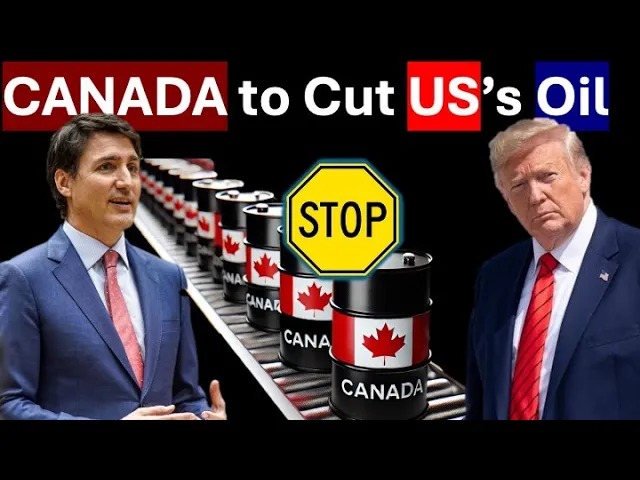
Donald Trump's election as the President of the United States introduced considerable uncertainty in international trade especially with prominent North American Allies one of President Trump's most debated commitments was his pledge to implement a 25% tariff on imports from Canada and Mexico including crude oil two of the United States primary oil providers this strategy intended to safeguard domestic businesses and correct trade imbalances has sparked worries about its possible econ e omic effects on both Nations now shortly after taking office he has reaffirmed his pledge announcing that the tariffs on Canada and Mexico will commence on February 1st Which is less than 10 days away that isn't the only executive order signed by the new US president on his first day in office one of the notable orders directed The reinstatement of over 8,000 military personnel who had been dismissed for refusing the covid-19 vaccine this directive included Provisions for back pay aiming to address grievances related to the previous mandate critics argued that this move could undermine military health protocols and set a precedent affecting future vaccination policies in an effort to combat illegal immigration narcotics trafficking and human smuggling president Trump ordered the deployment of troops to the US Mexico border additionally he designated Mexican drug cartels as foreign terrorist organizations opponents raised concerns about the militarization of border control and potential diploma tensions with Mexico signaling a shift in Environmental Policy another executive order facilitated the United States withdrawal from the Paris climate Accord the administration also lifted restrictions on fossil fuel extraction and halted new offshore Wind Farm projects environmental Advocates warned that these actions could exacerbate the climate crisis and hinder progress towards sustainable energy solutions president Trump issued pardons for approximately 1500 individuals connected to the January 6th C Capital attack this decision was met with criticism from those who believed it undermined accountability for actions against Democratic institutions and could embolden future unlawful conduct an executive order revoked several Dei initiatives implemented by the previous administration the order aimed to eliminate what was termed radical political theories from federal policies critics contended that this roll back could reverse progress made in addressing systemic inequalities and promoting inclusivity within Federal institutions in a move affecting gender identity recognition president Trump signed the defending women from gender ideology extremism and restoring biological truth to the federal government executive order this order established strict binary definitions of sex and mandated their use across federal agencies effectively rolling back protections for transgender and non-binary individuals advocacy groups condemned the order stating it denied the existence of transgender people and Stripped Away essential rights and protections another significant order directed the withdrawal of the United States from the World Health Organization the administration cited dissatisfaction with the who's handling of the co9 pandemic and alleged political interference Health experts criticized the decision emphasizing that it could hinder Global Health initiatives and the country's ability to respond to International Health crisis in this video we explore the tariffs imposed on Canada and the retaliatory measures considered by Canada which could have an adverse impact on the US economy Canada and Mexico trade with the US Canada and Mexico together make up over half of all us crude oil imports with Canada alone providing roughly 3. 8 million barrels per day exceeding 50% of total Imports Mexico as the second largest supplier delivers billions of dollars worth of heavy crude oil each year to us refineries which depend significantly on these Imports to satisfy domestic energy needs the suggested tariffs pose a threat to this essential Supply supply chain potentially leading to increased energy prices for American consumers and businesses while also endangering the economic stability of two crucial us trading partners additionally the tariffs might strain the long-established economic relationships nurtured under the usmca or United States Mexico Canada agreement and provoke retaliatory actions with both Canada and Mexico contemplating countermeasures to safeguard their national interests this emerging trade conflict highlights the intricate interdependence of the North American Energy sector and emphasizes the broader dangers of escalating protectionist policies within a highly interconnected global economy Canada is currently assessing possible counteractions in response to the proposed us tariffs one major option under consideration is reducing or stopping oil exports to the US a decision that could have extensive consequences Ontario Premier Doug Ford has been a strong advocate for using energy as Leverage suggesting the cessation of electricity exports to the US which could impact around 1 A5 million American consumers particularly in States like Michigan and Wisconsin that heavily rely on Canadian energy in Alberta the perspective is more complex Alberta Premier Danielle Smith has opposed the idea of cutting oil exports stating it would severely damage the Canadian economy since Alberta produces the majority of the crude oil exported to the US her stance is crucial Smith has CAU that such a move could destabilize Canada's energy sector leading to revenue losses job reductions and possible disruptions in domestic politics prime minister Justin Trudeau has adopted a cautious stance stressing the need for a balanced and measured response the federal government is exploring alternative retaliatory measures including targeted tariffs on us Goods like steel aluminum and orange juice this multifaceted strategy reflects an attempt to protect Canada's economic interest without unnecessarily escalating the conflict reducing or halting oil exports to the us would have deep economic and political repercussions for both Nations for the United States this action would disrupt energy Supply chains and raise costs for consumers states such as Michigan Minnesota and Wisconsin which are heavily dependent on Canadian crude oil and electricity would encounter shortages and higher energy prices these disturbances could have a ripple effect on the US economy especially in Industries reliant on affordable energy for Canada the economic impacts would be equally significant crude oil exports are a major Revenue source and any substantial reduction could slow GDP growth increase unemployment in the energy sector and pressure provincial budgets Alberta in particular would suffer the most potentially heightening tensions between the province and the federal government the economic downturn could also trigger a rise in inflation further complicating Canada's domestic economic situation politically the the consequences could be equally destabilizing cutting oil exports would likely strain Canada US relations undermining The Cooperative framework of the usmca this could result in retaliatory actions from the US further intensifying the trade dispute and diminishing the chances for a negotiated settlement given the substantial risks of cutting oil exports Canada is exploring other measures one prominent option is imposing retaliatory tariffs on us Goods critical to specific Pacific States this approach mirrors Canada's response to us tariffs on steel and aluminum in 2018 where similar duties were applied to American products like bourbon orange juice and steel items another strategy involves diversifying energy Markets Canada has been investing in infrastructure projects such as the Trans Mountain pipeline expansion to enhance access to global markets especially in Asia this would lessen Canada's dependence on the US as its main Energy customer offering more Flex ability in future trade negotiations enhancing domestic energy security is also a priority by investing in renewable energy and improving Energy Efficiency Canada could decrease its Reliance on fossil fuel exports while positioning itself as a leader in the global shift to clean energy these actions would not only mitigate the impact of trade disputes but also align with Canada's long-term environmental objectives in reaction to president Donald Trump's proposal to Levy a 25% tariff on Mexican Imports aimed at reducing migrant arrivals and the influx of synthetic fenel Mexico is considering several countermeasures to protect its economic interests and maintain the trade balance between the two countries Mexican president Claudia Shin bomb has indicated that Mexico might impose reciprocal tariffs on us Goods if the proposed us tariffs are enforced she highlighted that such actions could lead to a tit fortat escalation potentially harming businesses operating in both countries Shin Bal stated one tariff would be followed by another in response and so on until we put at risk common businesses emphasizing the interconnected nature of the US and Mexican economies Beyond potential retaliatory tariffs Mexico is proactively working to strengthen its economic position by reducing its trade deficit with Nations like China and attracting foreign investment president Shin bomb introduced the plan Mexico which aims to replace a portion of reports with domestic production and develop key sectors such as automotive and Aerospace this plan is designed to enhance Mexico's economic resilience amid external trade pressures The Mexican government has cautioned that the proposed us tariffs could lead to significant Economic Consequences including the potential loss of around 400,000 us jobs and higher prices for American consumers these concerns arise from the deep integration of Supply chains especially in Industries like Automotive manufacturing where components often cross the US Mexico border multiple times during production let's take a quick pause if you've enjoyed the video so far could we ask a small favor hitting the like button helps us reach a broader audience and sharing your thoughts or feedback in the comments makes an even bigger impact thank you for watching now let's dive back in Mexico's economy Minister Marcelo ebrard has expressed a commit commment to finding a diplomatic solution to prevent the implementation of us tariffs drawing on experiences from previous trade negotiations during Trump's first term ebrard emphasized the importance of cooperation and mutual understanding in tackling shared challenges such as migration and drug trafficking he also criticized renewed protectionist threats asserting that they would significantly harm both economies in addition to possible retaliatory tariffs Mexico is actively seeking to bolster its economic position by decreasing its trade deficit with countries like China and attracting foreign investment president Shin bomb unveiled the plan Mexico which aims to substitute a portion of imports with domestic production and develop key sectors like automotive and Aerospace this strategy is intended to strengthen Mexico's economic resilience amid external trade pressures Canada has consistently been the leading supplier of crude oil to the United States a position it has reinforced over the years years by 2023 the US imported approximately 3. 8 million barrels per day from Canada accounting for over 50% of all us crude oil imports this figure has steadily increased from around 2.
4 million barrels per day in 2010 driven by the growth of Canada's oil sands production and the development of crossb pipeline infrastructure such as the Keystone Pipeline system the rise in Canadian Imports has been facilitated by the geographical proximity between the two countries and the compatibility of Canadian heavy crude oil with us refining capabilities refineries in the US Midwest and Gulf Coast are optimized to process heavier crude types which are plentiful in Canada's oil sands the value of crude oil imports from Canada reached 97. 18 billion in 2023 highlighting its crucial role in US Energy security Mexico stands as the second largest supplier of crude oil to the United States in 2023 the US imported 4261 billion cubic meters of crude oil from Mexico valued at 2035 billion although Mexico's crude oil exports to the US have decreased from their Peak levels in the early 2000s due to domestic production challenges it remains a vital supplier Mexican crude oil primarily the heavier Maya blend is well suited for us refineries designed to handle such grades the shared border and trade agreements like the usmca have further cemented Mexico's role as a Dependable energy partner for the US however concerns about Mexico's declining production capacity and policy shifts favoring domestic consumption have raised doubts about its ability to sustain export levels in the long run Saudi Arabia has traditionally been a significant source of crude oil for the United States in 2023 the US imported 19. 98 billion cubic meters of Saudi crude valued at $0.
81 billion while imports from Saudi Arabia have decreased from their peak in the early 2000s the country remains an important supplier due to its production capacity ability to swiftly adjust output and the high quality of its crude oil the reduction in imports from Saudi Arabia can be attributed to several factors including increased us domestic production from Shale resources a shift toward North American suppliers and changing geopolitical priorities nonetheless Saudi Arabia's role in stabilizing global oil markets through its leadership in OPEC continues to influence its trade relations with the US several other nations contribute to us crude oil imports each with varying Trends over the years in 2023 the US imported 1241 billion cubic meters of crude oil from Iraq valued at $ 6. 01 billion imports from Iraq have fluctuated due to Regional instability and production challenges though Iraq remains a notable supplier imports from Brazil reach 10. 65 billion cubic me in 2023 worth $5.
90 billion Brazil's role as a supplier has grown in recent years due to its expanding offshore production capacity in the pre-salt basins Nigeria provided 8. 43 billion cubic meters of crude oil in 2023 valued at $ 4. 73 billion Nigerian light sweet crude is particularly prized for its ease of refining though import volumes have declined due to increased us Shale production us us imports from Venezuela have significantly decreased in recent years largely because of sanctions and political turmoil in 2023 the US imported 7.
59 billion cubic meters from Venezuela a sharp drop from historical highs president Donald Trump's proposed tariffs on Canada Mexico China and other major trading partners have ignited widespread concern regarding their potential economic repercussions not only for the targeted Nations but also for the United States and the global economy the interconnected nature of modern trade amplifies the effects of protectionist policies leading to retaliatory measures and cascading disruptions as details about the planned tariffs and responses from us trading partners emerge it is evident that the consequences could be substantial extensive and enduring Canada the largest supplier of crude oil to the United States represents approximately 62% of us oil imports equ to about 3. 8 million barrels per day the Canadian government is contemplating a significant countermeasure cutting oil exports to the US this action would disrupt a deeply integrated energy Market especially in States like Michigan Wisconsin and Minnesota which heavily depend on Canadian energy the economic impacts for the US would be severe oil prices could rise sharply increasing costs for consumers and industries moreover retaliatory tariffs on American Goods such as steel and agricultural products would intensify the economic pressure potentially leading to losses in GDP and employment in both Nations Canada's trade with the US reached approximately $1. 1 trillion in 2023 underscoring the high stakes for both economies Mexico the second largest supplier of crude oil to the US and a major trading partner has indicated its willingness to impose reciprocal tariffs on us Goods The Mexican government has warned that Trump's proposed 25 5% tariffs could result in the loss of 400,000 us jobs and a significant increase in prices for American consumers key Industries at risk include Automotive manufacturing where components frequently cross the US Mexico border multiple times before final assembly retaliatory measures from Mexico could Target us agricultural exports particularly corn soybeans and meat which are essential for American farmers Mexico is one of the largest importers of us agricultural goods and any tariffs or restrictions on these products would further exacerbate the economic impact especially in rural areas dependent on farming China another major Target of Trump's trade policy has suggested halting or limiting exports to the US While redirecting its trade to other markets with a diverse Global Network China can afford to shift its focus to Europe Asia and Africa reducing its Reliance on the US market in 2023 the US China trade volume reached approximately $600 billion with the US running a trade deficit of nearly $350 billion any restrictions on Chinese exports such as Electronics machinery and rare earth materials could disrupt American Industries that rely on these Imports China's retaliatory actions might include tariffs on us agricultural products and high value Goods like aircraft potentially targeting politically sensitive Industries this would strain key American sectors and heighten economic tensions the European Union one of the United States largest trading partners could also Implement retaliatory measures in 2023 the US EU trade volume surpassed 1.