All right, I'm here at 789 South, 1100 East in Salt Lake City. This is Jaden with Ballpark Engineering. I'm a licensed professional engineer.
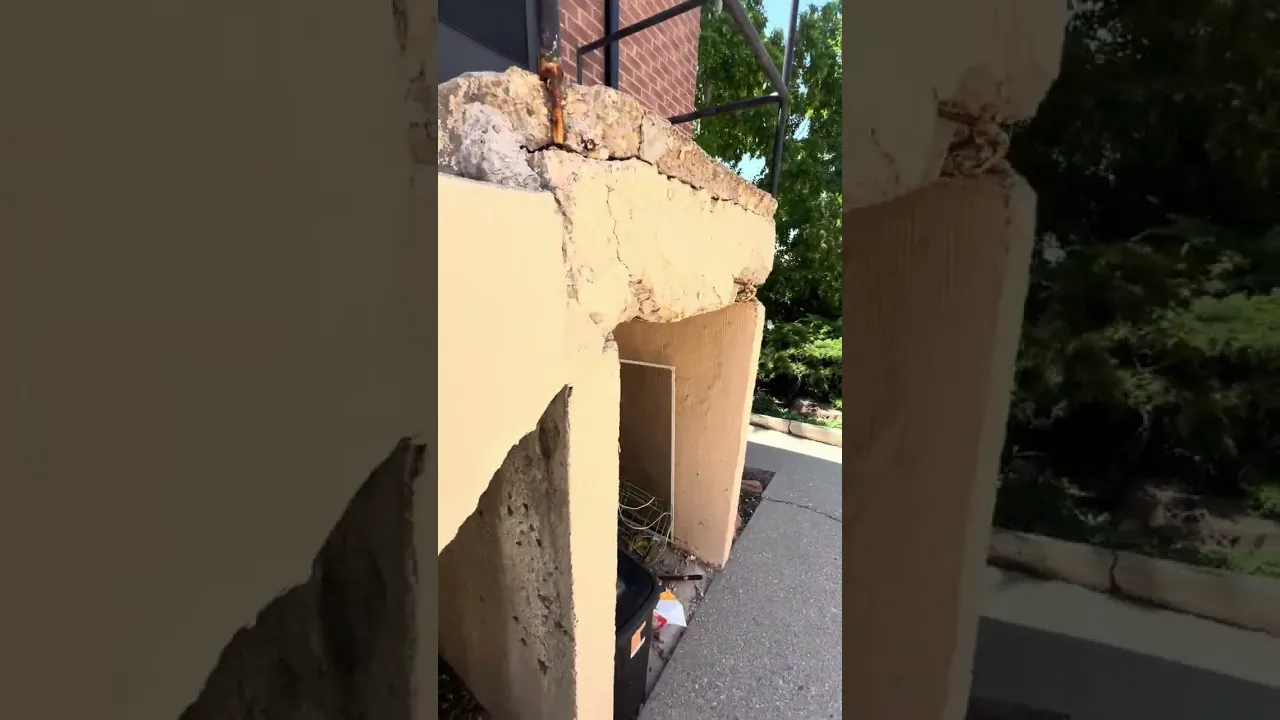
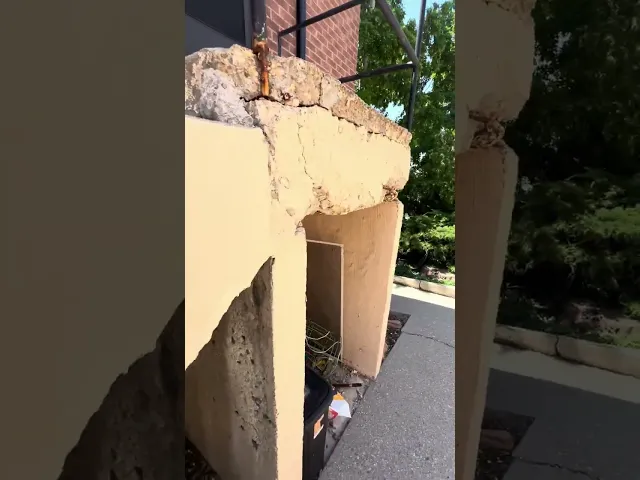
Um, I'm here looking at cracking on site retaining walls out and around the property as well as cracking through uh the retaining walls below this uh garage. Um, right off the bat, this uh this horizontal crack running the length of the top of the wall is an indication that this garage is slab on grade, which we kind of anticipate. But essentially what this is is a cold joint.
So this section of concrete down was poured first and they back filled all the dirt and then they poured the slab on on top of it. So this joint is an expected joint to occur. Uh, usually this is just going to occur in the surface coat or the skim coat.
You can see right here. This is the skim coat. This is the skim coat right here.
Um, this is a loose piece. This is all like the stucco skim coat. This is the structural concrete behind.
So that cold joint that's expected. Um, don't have any problems with that crack. We get some other cracking through here like this.
Um, this could be surface coat, skim coat. um likely uh that uh the sprinklers through here are spraying on this foundation wall, saturating the concrete, could be causing some corrosion in the rebar as it gets saturated, whether it's horizontal or vertical. Um this could be a long-term problem if if there is excess moisture uh penetrating this wall, which there is evidence that suggests that it may be.
So, it may be prudent to take like a grinder, grind this off, clean it up, expose the rebar, and maybe put like a new structural concrete patch there. Um, generally, I mean, the wall looks like it's in pretty good shape. I don't think it's going anywhere.
It's just a matter of fixing this corroded rebar. I just picked corroded rebar here, corroded rebar horizontal here, corroded vertical here. This one's probably corroded vertical.
But again, this joint totally anticipated. Um, new skim coat's going to take that a long ways. Making sure sprinklers aren't hitting the wall, all that kind of stuff.
Now, coming around to the south side here, we do get into some kind of interesting territory here. Um, in Salt Lake City, frost depth is the depth of the footing below grade that uh helps us prevent frostie or freeze thaw cycles. Um, this is the rake side of the roof, meaning there's no direct load bearing here.
But I do have a concern that this slab does not have a frost protected footing that extends 30 in below grade. Uh, this is an indication that possibly we've got problems across the front of the garage, too. without that.
Um, the way this was probably built, if I had to guess, is that we are going to have a frost protected footing across the loadbearing portion of this where the roof joists come down and bear on this wall. We probably got a footing here. Probably have a footing there, a footing there, and a footing here.
But we don't have the frost protection along this side. It's allowing for corrosion. It could allow for frost eve.
It's going to allow that slab to crack and move. I'm unable to get inside of the garage to see what the slab's doing, but that is a concern to me that there's not frost protected footings on that rake end or the excuse me, north and south face of this garage. The retaining wall, like I said, in good shape.
There's some maintenance stuff that needs to be addressed. Maybe a structural patch on some of these verticals. Uh let's go look around here.
We got some pretty significant corrosion on these concrete stairs. Uh, this building's fairly old. I do think that there is some justification to rebuild these.
Um, I've seen these built out of wood. I've seen these built rebuilt out of concrete. Wood's typically the cheaper option, but they are reaching near the end of life.
The problem that we get with these old stairs is they are exposed to the elements. You get salt on top of there which is corrosive to the concrete and it's damaging to the concrete structure itself. So if they use a lot of ice melt, you are going to get some pretty substantial corrosion, some cracking.
Um, and we are seeing evidence of all that along here. Um, I I would probably recommend particularly this one. that one, not so much.
But redoing, reppouring this concrete, and even if it's just from, you know, here up would be okay. The stairs actually look like they're in decent shape, which is surprising giving that given their age. But yeah, this slab portion needs to be redone.
Um, let's keep walking through here. I'm assuming that this whole garage is not your structure, not your property. So, I'm not addressing anything here.
We have some substantial sight retaining walls surrounding this property. It's an 8 in concrete foundation or retaining wall that extends upwards of 6 to 7 ft above grade. Um I think it's pretty obvious to say that the amount of concrete cover on this bar was not adequate.
code requires one and a half inches of concrete cover to maintain enough concrete on the outside face to engage that bar. This essentially means that that rebar is not contributing to the tensile capacity of that wall when it wants to overturn. Normally though, there's going to be a second mat of rebar that sits on the inside face because that's where the majority of the the tensile force is.
So, your rebar is located on the outside face here that we can see. I'm anticipating a second layer of rebar on the inside face, hopefully an inch and a half from the outside. So, this rebar isn't necessarily contributing substantially to the strength of the concrete.
We get cracks like this. These are considered normal uh really just shrinkage cracks because we don't have expansion cracks that are factored into here. We got a vertical crack here.
Going to have one back here somewhere probably. maybe painted over. It's right here.
Vertical crack. And then one more between here and the end of the wall. Yeah, right here.
So, that's expected shrinkage cracking. This is a diagonal crack still in plane. Not a huge lateral offset.
Um, essentially this crack occurs because I get lots of rotation out this way. That diagonal crack occurring just from movement. Um, really I think the wall is in great shape for as old as it is.
The biggest concern that I have is the cracking and the rebar on these walls is an opportunity for moisture to ingress into this wall. You're going to get the majority of that moisture from the backside of this from your sprinkler system, your drip system, saturating that concrete, causing major corrosion. Uh, that's going to cause long-term problems.
Um, if we were to specify and build this wall to today's standard, you'd get a 12-in gravel bed that goes from grade down to the bottom of the concrete wall with a perforated drainage pipe that's going to run it out downhill. Um, that's not the way this was built, but it is holding up really well for as old as it is and for the type of construction. You can see that this piece of rebar was cut off just way too close to the surface here.
Um, my recommendation here, like I think it's in good shape. I think you're it's not actively moving that we can tell. It is cracked.
There's a lot to be desired with it, but with its condition and the way that it is. I think you're going to get more life out of this. Um, and it's not going to be worth the squeeze to try and fix it.
I I think I think I' I'd rather see you extend the life of this wall until it is failing. Uh rather than try and repair and replace it right now. So, I would just continue to keep good paint on it.
Make sure that you get a good skim coat on it. Uh protect this, cover it up. It is probably going to fail in 10 to 15 years, but I think you've got 10 to 15 years left in it at least.
And then maybe look at replacing it then. um it's not desirable, but more than anything, it's just an opportunity for water to get in. So, I would just want to see this protected.
Um but yeah, that's my opinion of everything that's going on. If you have questions, please let me know. I'm happy to take phone calls and give you my opinion on things.
I am going to provide a written report on all this. Yeah, let me know. Thank you.





![Gravitation' by Richard Feynman [1080p HD Video with clear audio]](https://img.youtube.com/vi/q_edsSpDzHg/maxresdefault.jpg)