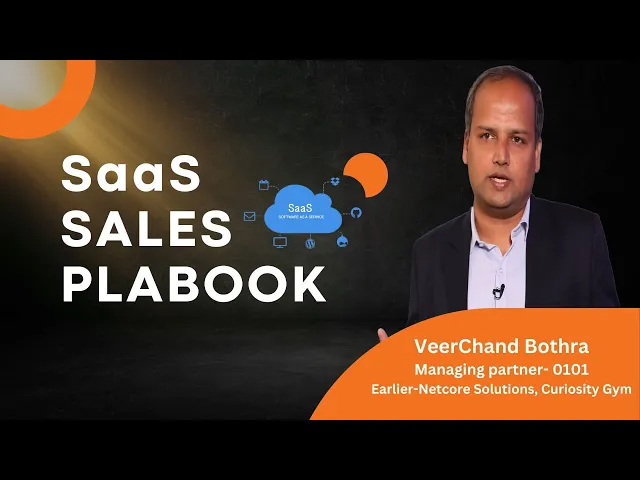
[Music] it's good to be here I would like to start with an introduction I am a managing partner at zero one zero one today it is a martech agency we provide Market solutions to the Enterprises and Brands right from Consulting to manage service around marketing technology that is what we do at zero one zero one today previously I have been actually a product guide Building Products Especially in zero to one categories so that means new categories you know which are in the market that has been my specialization the last product that I built was a
b2c product at curiosity gym which was like a LinkedIn for students prior to that I was an entrepreneur at netcore building scoop.ai which is a conversation analytics product uh which is what gave me a deep Insight because the conversation analytics product worked primarily around on site sales Conversations so it gave me a good deep insight about SAS sales inside sales and that is the kind of topic method that to talk about today prior to that I was a head of product at netcore where I build a marketing automation product so yes zero to one product
person learning the SAS sales in the last five years what what exactly says sales uh having built a product for inside sales team so that is where my insights around and understanding around you know SAS uh Sales and insight sales comes from I would like to just start with you know kind of a quick understanding from the group because I'm not going to elaborate on what is SAS because I think every Everybody people understand what is SAS which is software as a service being offered across the globe through primarily through a browser paste or mobile
app based interface uh but I think we are all aware there are many products like whether it is Salesforce.com which was a Pioneer you know in software as a service uh to many other products today you know they are SAS products so I'm not going to talk about SAS uh but if a quick show of hands you know how many people in the room uh has anybody you know any understanding of what is SAS sales what is a SAS business not software as a service we know what is software as a service but what is
a SAS business and how does it differ uh from a traditional Business let's say uh so and and anybody wants to take a quick shot at it in case people are aware about this please SAS is a software service the service here is provided on the basis of monthly subscriptions right so the main difference is here the subscription based model which makes the sash difference and second thing is the whole module or the whole fundamental is basically on the web you don't have to install anything you are good to go just Plug and play a
type of stuff right Fanta signaling so that is correct so SAS is essentially a web-based nothing to install kind of a software that is a SAS product as a business it is either primarily subscription driven you know most of the SAS products most you know are basically they charge yourself either they are free or freemium and if they are premium or paid then they charge you a subscription fee for using their service okay so that's pay for use And subscription-based products that's great I think uh good uh to get the definition out of the way
so what is SAS sales you know you have to contrast it with traditional sales right so uh typically if you if you look at it customers buy I'm talking about B2B customers right they traditionally buy uh through a sales team right a sales team would kind of reach out to them they would visit the customer physically uh then they would do demos uh there Would be multiple rounds of meetings and there would be proposals and quotations shared and there would be negotiations and then you would close this deal right that is what let's say a
typical vendor or a product company would do as to sell their product this so they would hire field sales teams they would be you know in touch with the customer and they would do prospecting and then meetings and then enclosures right that has been the traditional uh sales Playbook and it Continues yeah many product products which require field sales teams to kind of do this that is how the traditional sales Playbook is uh but what is SAS sales SAS sales you should also read a concept which is what is called as product LED sales and
they are intertwined you know these the the concept so you know what I was saying was that the traditional sales relies on a sales team uh driven interactions where uh the sales team would be you Know generally going out and you know physically meeting customers uh but a SAS product you know lead sales they also the one of the key differentiating factors is they rely on a product LED sales model that means there are there's a product which is online you would have a very engaging website which is there there's a free trial of that
website product web-based product a product LED sales versus a traditional uh sales differences that SAS company would rely On the product to sell itself more okay so there is a very important component where the product or plays uh it is not just marketing or sales but the the product team also comes into the equation so traditionally it is marketing teams which generates the leads and sales teams which closes the lead right through the the field sales method uh primarily but in a SAS scenario there's a third entity which comes into the mix which is the
product Team because many a times the product is the first you know it's mostly a free trial product it's a try and buy method you would basically let the buyer decide because one of the things you know we need to realize is that in large Enterprises there used to be a difference between a buyer and a user that means the buyer would be different and the people who would buy would be actually interacting with the traditional sales team and they would Make the decisions and the users would be different but today what has happened in
the last five to ten years is like we all do in our personal lives where we actually go and research online and then buy offline many times or research online and buy online right so that buyer Behavior has changed and so has B2B buyer Behavior changed so people go they research online about the products there are many review websites like g2.com uh you know you would that's one Of the most famous ones where you would go and and research about a business product okay what what is you know Salesforce uh you know what are the
reviews of actual users of Salesforce so you would actually go and research even if you're a B2B buyer you would go and research online okay that's the first step that a B2B buyer does and when they research online they come across this product website because it's a SAS product so the website is there it is Full fully you know content uh heavy that it would explain to you about their uh you know product in a way very detailed manner so the buyer actually also becomes very familiar uh with the product online through the product website
okay once the buyer has generated interest then they would also go and actually do a free trial many a time so now you would have tried canva for example right there's a you would read about canva you would research About canva but then canva allows you to use the product for free there are certain products which are time bound uh so it's a premium model uh and uh and certain products which are not time-bound and premium but you know only Advanced features you have to pay for so there are the products for example in an
SEO industry there are products uh like ehref which would say that okay what the entire product is free but for seven days and then you would buy but what it Does for the buyer it allows you to do a try and buy right so that's again a major difference between traditional sales and NSS sale so as I said the first thing is in the mix in traditional there is only marketing sales in in a SAS sales or a model it is a mix of product marketing and sales and why I've already explained to you because
that is the buy buyer Journey uh where the buyer likes to research online do a try and buy and then actually uh make the real Purchase decision in this scenario that is developing for B2B products it could be by the way a 10 000 rupees product per month it could be a million dollar product but uh you know in million dollar products are today being purchased in this methodology so that is the difference between our traditional sales and and and uh SAS sale method are there any questions at this stage [Music] see the pricing doesn't
matter right Because you could say that there is a SAS product which doesn't do subscription pricing nobody can stop anybody on the pricing right we can say that okay mostly people follow subscription pricing uh but uh there needs to be a product I used to use on my iPad color as bad or you know I'm forgetting the name uh that product if for some reason they only charged me once and I've been using you know that I used to use that But the pricing it's a characteristic of SAS that you know you know almost all
SAS products are subscription based uh the what defines is uh how do you basic sell and what is this marketing and sales methodology so uh what what we have seen and you would see as we proceed what is a SAS business uh part of which that SAS businesses inside sales and inbound marketing and these different functions and different methodologies that are there so what are The characteristics of a SAS business yes subscription pricing is one of them how the product or so you know is served to you is is another how do you sell and
Market is another what I would say is in traditional uh business and traditional marketing and sales the method was there's a marketing team which through its own events and other methods would generate and do a you know advertising Etc generate demand then that uh then those leads will be passed on to sales Team sales team there would be a typical structure they would you know kind of reach out to them uh and then they would do physical meetings uh so what I'm trying to say is the pricing does not necessarily Define it is the entire
sales and marketing process which defines you know the traditional sales versus SAS sales or product line sales let's look at something very specific within SAS sales which is inside sales right sales is the ability to convert a Demand into business right that means there's a demand for your product or there is an interest in your product that is marketing's job once the demand is captured the sales team converts the demand into Revenue that means they close that customer that Prospect and you know that Prospect is turned into a customer that is a sales job now
the sales could be field sales or it could be remote sales that means I'm basically saying that you know even in a in a SAS Product what prevents me to go and sell it that SAS product to a customer doing field sales nothing and by the way there are many SAS products which are sold by you know also going to the sales field by visiting customers many many because they are like uh you know very high ticket sales and you know there's a complexity of sales involved so there is no hard and fast Rule and
that is what you know I was answering earlier that the pricing doesn't you know necessarily Define uh this so uh similarly it is not that all all SAS sales are remote No in fact there are many companies which have realized that to close very large accounts it's a very large Fortune 500 company a large Enterprise so they actually have field sales teams to sell their SAS products so if you talk about large companies I will cover some of them like fresh works and Zoho and others they realize that yes they can do SMB to Mid
Market you Know completely you know remotely but when when you talk about large Enterprises they have to also do field sales to sell their products okay so that that has been a realization for many of these uh SAS companies so what I'm trying to say is SAS sales Playbook doesn't necessarily mean that you don't have field sales no it could be there for certain segment of customers but largely largely SAS sales Playbook that I'm going to talk about today is product LED inside sales and inbound marketing okay that means you have to have a great
product by the way it has to be a DIY product so that's a given you cannot not have a DIY product okay as I said why because the buyer journey is such they want to kind of look at your product they want to use the product by themselves uh so the first requisite for a SAS business is a DIY product right web-based product is a technical part of It but it should be a DIY product that's a UI ux and the way the product is designed uh and built so DIY product the second important prevalent
characteristic is that there is inbound marketing so we'll talk about that slightly later I want to talk about inside sales first okay because our session is around sales so large most of the companies cater to the SMD segment and the mid-market segment of customers through inside sales I'm talking about Largely the SAS companies okay and when I say SAS companies I'm sure you know many of you have heard of Zoho and freshworks and charge bees they are the ICONic companies and for some reason uh they started out of Chennai most of them are based out
of Chennai but there are many companies out of Mumbai and other places as well but uh the the big success so Chennai has become like the SAS capital of India because of Zoho so primarily Zoho Started this you know uh 10 plus years back out of that you know some employees left and then they you know started fresh works and out of that then charge B and you know then it became ecosystem and a Chennai uh became a center of uh SAS and all these companies sitting out of Chennai okay they sold to the world
okay sitting out of Chennai okay and then when they started catering those when they captured the SMB and mid Market fairly well then they started Going to large Enterprises then they created You Know Field sales teams in U.S and Europe and other markets okay but till the time they were catering to SMB business and and a part of a bit Market business they sold out of Chennai okay so the SAS sales Playbook that I'm going to talk about today is primarily a learning from them they were kind enough to you know share their insights and
knowledge with others and they created this sassiest book uh Playbook through Which other people learned that okay how sitting out of India you can build a product that product is then uh kind of used by everybody else in the world okay not only used but it is also sold so built in India sell from India and serve from India okay so the customer success teams Etc so everything is in India right so that's in the market lends itself very well to this part of the mid Market also lends itself very well to this only in
the large Enterprise uh you Know segment do you really need to have a physical presence Etc otherwise this is a model perfected out of India and thanks to the Zoho uh gang and Chennai companies uh yeah so that is uh that is the background of this uh I'm now going to talk about inside sales because as part of this uh says Playbook inside series is a very important function uh apart from uh inbound marketing okay so inbound marketing I'll cover in the Subsequent slides uh let's discuss what is inside sales right so I think it's
fairly clear it does it doesn't need much elaboration that you know sitting you know from your office instead of going physically you do these sales tasks right so researching about your prospect building a prospect database connecting with your prospects okay all this is done you know sitting from the office okay without uh physically uh going and meeting the customers okay so This entire process right from researching to prospecting to connecting to meetings everything is done remotely okay so it's also called as remote sales not just inside sales remote sales now what does what do you
do obviously you know uh the the kind of cost uh in terms of uh you know sales costs are reduced because you don't have travel costs you don't have you know you can do multiple meetings in a day as a result because you're doing online you can do so There's a lot of the the cost of inside sales is much lower uh and that is why it is very useful for startups and other companies and even large companies to do inside sales but you have to have a process of inside sales which we are going
to discuss later in the next slides okay so the inside sales is this there's the definition of inside sales now let's look at this sales method right as I said you have to have a method so there's this Playbook this This methodology that we are going to talk about so how do you structure inside sales you know what is inside sales okay just people calling people up so isn't that Delhi Sales Event b2c customers been doing a lot of Telly sales right so how is this SAS inside sales different from uh you know telecallers that
are there so we'll see that you know and because what we're going to discuss today is primarily the says is Method and which is applicable You know largely to B2B right so we're not talking about telecallers doing b2c Etc that's a very different process so what is this B2B SAS sales method okay so now uh you know map that I've borrowed from the internet I like I like this particularly so this is the life cycle okay so right from up you know you there are two you know uh things that you need to see on
top you you'd see that what happens right Customers become aware about your product then you have to educate them about your product then they you know go to the selection stage and then once they become a customer then the rest of the stages they are onboarded as a customer okay that means you actually like welcome them into your your organization and then you help them kind of you know get started with your product then they actually start using your product and you deliver impact uh To them and then you grow right through that customer either
the customer gives you more business or they refer other other customers because they are happy with you okay so that's really the uh the what happens with the customer uh and the bottom you'll see uh like Prospect and qlsql these are your internal definitions right if you start with a prospect that means you have a prospect database the prospect then becomes a marketing qualified lead so What's a lead the way I Define very clearly otherwise these are very confusing terms many times Prospect is somebody whom you think could be interested in your in your product
okay they they they're just checking out sometimes you don't know right uh whether they are really interested or interested but once they express explicit interest that means you know what I am interested in your product or service then they become a Lead okay so that's the difference between a prospect and a lead a lead is someone who has said who has expressed explicit interest that means hey I am interested that means if I'm downloading your ebook from a website I'm not told you that I'm interested in your product explicitly right it's implicit that I am
interested in your product uh but I would treat that as a prospect because they have not given you explicit interest hey I'm interested in your Product please get in touch with me okay so when somebody does that that becomes a mql and what is SQL so till the time marketing treats it uh as a lead it is mql they qualified and they say yeah yeah this person has expressed interest in our product or service so they are mql once the mql is given to us the same team and then they do their own round of
qualification you would have heard from other speakers right band Etc there are Frameworks that sales team uses uh to Qualify that yeah yeah out of those 10 leads that I got from marketing team only eight are really sales as per sales team they are qualified others too or not so that is SQL then people comment right they say I'm going to buy your product they purchase the product they pay they pay for it then they go live with your product and then there is mrr and LTV which I'll cover later you know what exactly are
these but if you see the process okay this is what a typical Process looks like online the buying Journey looks like they come to the website they they read the content on the website the prospects then they then you educate them that means what you actually uh kind of uh you know give them content around you know which is which is let's say you know more about details about the product that are there Etc and then it goes into selection stage that means you are demoing to them they are Comparing you with other competitors then
they are negotiating the pricing Etc right so that's the entire marketing and sales process once that is done then the onboarding process starts in SAS this onboarding is a very very important stage okay the why because you're because it's a web-based product customers are supposed to use a DIY so if you don't onboard them properly okay that means you don't train them you don't you know handle them it could be Done automatically through you know software it could be done by a customer success team okay but you do a proper onboarding so that they become
power users because if they don't use the product then they will not renew and as you rightly said SAS is more about subscriptions and removal right because that is where you can get continual Revenue that's a Salient point so if you don't onboard the usage will not happen which is the next step and if you don't If the usage doesn't happen then the renewal doesn't happen and therefore the no subscription fees right so that is what happens if you use Netflix and if you don't watch movies you know you after purchase for three months the
fourth month you won't won't renew because you'll say hey there's no uses why should I renew so that is why the renewal and the subscription revenues are dependent on proper onboarding okay either automated onboarding or customer Success team driven onboarding and then there is usage and adoption and then expansion you know uh so this is the life cycle typically SAS companies you know follow any questions on this before we go to the next stage [Music] if I get it rightly see customer success comes in men's you know the the customer has bought your product they've
become a customer And uh if you are if you're a business model if your margins support a customer success team then you would have a team right that means you would have somebody kind of mailing the customer maybe doing a call with the customer meeting online meeting with the customer explaining how to you know onboard that's a still a manual intervention where they can customize based you know customers need but if it is if your if your margins don't support that then you would have An automated process that means it is still an onboarding process
but it is automated there are product walkthroughs there are automated you know you could have case studies being sent you would have use cases being you know send so it's a entire entire custom onboarding process is automated by giving the right content Etc showing them the right videos this that product walkthroughs once they sign in for the you know the product for the first time so either it Is automated or it is manual through customer success chatbot or you know any of those interactions are an interface so if you if you have automated process the
chatbot will be a automated chatbot if you don't have if you have a customer's system then it will be a live chat okay there are live chat tools with all the chat interface does is it gives you a synchronous time with the customer that means if it is a live chat and a customer success team it gives you a Synchronous time that's all there's no other kind of you know uh thing that we need to discuss at this point in time a live chat is nothing uh chatbot is for automated customer body onboarding or automated
customer support Live Chat is for manual customer support or customer success okay that's the only thing only thing live chat interface allows you to do is uh asynchronous therefore ability to handle many parallel conversations for the same number of uh team members Let us now discuss now let's go to the inbound marketing and then we go into depth so I would have covered two important things inside say inside sales and says sales what introduction to that now introduction to inbound marketing okay this this is the combo as I said that this is the the real
combo that uh is part of the SAS sales Playbook inside sales teams and inbound marketing okay uh the third piece I told you was productive but I don't think that's in Our topic of discussion so what is involved marketing right uh again a lot more much because I can I'm using all these industry terms you can go and enter you know note this down if you want more details go search on the net you'll find all these terms being used in more marketing is primarily you know earning attention right this is very very important that
means organically through your content okay primarily through content okay so that is the Basic part again see look at this otherwise marketing involves traditional marketing involves doing paid advertising you know uh reaching out to customers uh through paid media Etc inbound marketing is primarily about content why again it goes back to the same point customers today do research online they do di buyers you know users and buyers are nearly the same and you know as far as SAS is concerned the final signing Authority may be different but people who are researching online are actually Venture
users so they are the people who are searching and searching you know about uh what about what the problem statement is uh and then they would found find articles blogs videos uh around their problem okay you're not so what is the difference between content marketing and marketing content marketing content is who I am this is what I am this is my Product I'm good okay content marketing is about the customer that means hey if you have this problem then this is the solution okay it is about helping the customer through your content you're not selling
okay in that content you are actually educating you're telling the customer that you know what if you have a problem and so and so uh category of uh business then this is what you should do so you actually give them free you know advice free content uh which helps Them okay that's the the most important part uh as part of that content you also then obviously you can talk about your how your product helps in that Etc so the primary thing about content marketing is through all this and what you see on the on the
on the on the screen on the right side there are various ways to you know uh publish your content Etc but what is common thing in that is that it it basically is helping the user with the content it's not a Sales content okay uh and and and this generates because people are searching online people are researching they would discover your content because they discover your content they they form a positive view about your brand uh and because you help them understand something it's all a problem right and then they you know you gain top
of Mind recall your brand becomes familiar uh you you generate trust okay with your customers that uh you know because of All you know all the help that you have given them and that is why then they become favorable to your brand and and then they uh then they say hey I was searching for a good CRM for uh for uh Diamond industry now you have a list which says you know what is the best way to evaluate a CRM for Diamond industry okay it and then they then they would discover your website on which
the content is there they would check out your website they they see that you also A product in that uh category then say then there will be a book a demo for your product or try your product you know by signing up for a month for free something of that sort right so that is the flow in bond marketing content marketing through that you generate leads and those leads are then passed to the sales process which will cover later right so inbound marketing is again very important right we talked about inside sales uh reducing The
cost similarly uh inbound marketing reduces the cost right because otherwise when you do paid Etc there are a lot of uh costs involved the cost of customer acquisition becomes very high but when when you're talking about inbound marketing uh the the cost per lead is you know comparatively very low you know as opposed to paid marketing so again you know SAS sales because you know all these companies that I talked about they were startups and they were Challengers So they didn't have a lot of money to burn so they adopted this inbound marketing techniques to
generate demand to generate leads at a lower CAC and then they used inside sales with again a lower cost of sale right uh because it's an inside sales team to convert those uh leads into into customers so again the cost effectiveness of these methods of inbound marketing and inside sales are also should be noted one of the most important thing you know that is uh Advised when we when we talk about uh involved marketing and uh and and inside sales uh processes is to start with defining your ideal customer profile okay it is called as
ICP okay and again the SAS companies kind of tend to do this okay there is this ICP now ICP again is a you know common term you should search for it what you can see on screen right you start by creating a sample ICP you know profile that you can see is something similar you create Different personas if that is what suits your business you would have different personas uh in your business but these this is a very very important exercise okay when you do inbound marketing and when you do inside sales please start by
creating an ICT okay this will lend a lot of clarity in you know in your marketing process and in your sales process because your content will be created around these your sales when people when they have uh sales Conversations they will basically uh do this around uh you know the ICP or the personas right because they they know if this is that kind of persona then this should be my talking track for other personalized my script should be different right so your sales and marketing process uh need to start by creating an ICP and personas
another important concept you know and I think this is my last slide on marketing is account based marketing uh this is Useful when your company has a product which is or a service which is targeted towards large customers okay that means named defined customers so this is again a very important part of SAS marketing so you could say no my product is not for smbs it is not for model or to mid-size companies but it is mid to large size companies and I have you know a universe of 200 companies that would buy my product
then you would need something like account based marketing Why because you on the right side you see right you identify Target companies that means not everybody is your customer anybody who generates is not customer but you have this 200 500 list of customers uh that would be your Target customers then because it's a limited set your inside sales team would start engaging them that means they would add them on LinkedIn then they would follow they will build a relationship with those customers Because they know a lot about those customers because it's a defined set of
customers and this is useful for account based marketing okay for large customers because then now it feels right content marketing etc for uh inboard marketing for SMB to Mid uh and account based marketing from bid to large right so this helps you cover this entire uh spectrum of marketing uh when we talk about SAS companies now let's go to the process so what is this process Okay the sales process that we are talking about which includes which starts with marketing so first is this cool stage right uh that that who is defined by ICP and
personas okay you start with that who does that basically internally to your organization to attract those your prospects is your marketing team what does a marketing team do they do SEO webinars PR and is that and what is the kpi they are measured on this marketing team it is The mql right marketing qualified leads that they generate is that clear uh that means the first step is to attract your prospects okay how do you attract by doing a webinar this is this is all if you look at it this is largely most of them are
on the in you know inbound marketing side when you do a webinar uh people would come and attract you know join your webinar because you're talking about uh uh content which is useful to them SEO is anyway useful content uh PR uh is uh maybe not useful content but social uh content that you post organic leads that you would generate only paid is where the paid part comes in but this is the stage where you attract your prospects and the kpi to really bother there is the app here uh then you would convert right food
convert your sales team would convert and close so convert to what convert to leads right so that is the second stage convert your Prospect to leads uh is the marketing job convert your mql to SQL is is your sales team job okay uh now there is this concept that is getting introduced here DDR okay Business Development representative I'll I'll talk about that okay uh that is also there in the subscript subsequent slide uh which is the team structure this is very important by the way when we talk about uh SAS sales method the real meet
of the discussion is between these two slides If you if you if you understand this you would understand is between traditional sales and the SAS sales methodology so first stage is marketing we have discussed that what does marketing do but once marketing gives you prospects that these 100 people are have expressed explicit interest in our product that's a lead now there are two things here bdr or SDR okay if some people call it sales development Representatives some people Call It Business Development Representatives so the the lead first goes to a bdr or an SDR this
slide helps you understand a little better so inbound leads from marketing okay that's the starting stage who this leads goes to the sales development rep or I SDR or bdr those sdrs and bdr what do they do they qualify the lead that means somebody filled a form they came to your website they downloaded a PDF or ebook and in The filter form now that's a lead and the marketing team would give that lead to the SDR the SDR would call them up email them call them have that initial conversation okay sayings are okay you know
what what kind of organization is yours what is your interest okay so the little bit of band qualification would happen there the sales person might realize that hey you know what we are interested in Marxism startup so They will not qualify it but if they call it why that means this person seems to be interested they really have a immediate need the author sales per the lead could say no I downloaded your thing but you know what I'm not really looking to buy right now I'm just researching so then the SDI would put that in
a different marketing funnel saying that let's nurture that lead over a period but I would drop that lead right now that means you do not go Beyond the SDR stage so a lead comes from marketing goes to SDR SDR does the initial conversation and qualification and if if the SDR qualifies that lead then yes this is a you know says lead that you know that could convert they give it to what they call as account Executives okay so there are two terms that you know are getting introduced SDR and a okay a is the account
executive that means marketing team gives the lead to SDR SDR does the initial qualification and conversation and then gives it to the AE person okay the account executive what does that person do that person gives a demo they have a deeper conversation they do quoting and pricing this is that and they close Okay so the the the closure job is of account exhibited and once the closure happens it goes to the customer success team right so this is what you have to understand the first step is my Marketing team second step is SDR third step
is AE and fourth step is customer success team this is what you see here also okay convert so a marketing team that is attract convert which is the SDR or bdr close which is the account executive job and activate which is the customer success team shop right this is the SAS sales methodology okay now we are going to spend a little time on these two slides because this is something that needs to be understood [Music] see you have to understand that the first level of SDR is not where the conversion happens SDR only thing it
does they do is they actually help qualify from a sales point of view the conversion happens at the account executive level in a in a assesses uh you know Playbook method the account executive's job actually the core strength of an account executive is to close Okay that means how you know they know all the sales they are hardcore sales people by the way SDR are also hardcore sales people but even the account executives are supposed to be you know sales you know very good at sales why because they like to have a conversation with people
they develop their relationship with those people even though remotely they understand the problem statement they kind of help do the demo and you know the selling the Salient points you know of their product or service uh uh you know so it's almost like solution selling okay uh where you actually don't just say this is my product this is my pricing please buy no the account executed is job is to convince the customer that you know for their problems companies product is the best solution for their problems and when you talk about challenging sales Etc right
say sales the there are two parts to sales Gaining Trust and providing a solution okay then the actual all the commercial discussions you know are easy if you gain Trust of the customer that means what you know that that the sales person is really acting in the interest of the buyer so the sales person should be kind of you know ready to uh be able to uh tell doesn't suit you you should try this out so it is almost that the sales person first just to grain that trust of the Customer because there's no trust
I won't buy from you how a grade your product is however good you are if I don't trust you okay so the the first job of a sales person is to gain trust because all other conversations are dependent in that if you first you gain trust how do you gain trust by where the customer knows that you are acting their best interest okay you're not just trying to kind of convert them you know through any means over charge them no so First is gaining trust second is providing a solution to the problem [Music] see this
this always happens in sales there are certain people who are only interested in price because they have done all the other research they only come to your website they will ask for your prize but you as a sales person you need to understand the background you need to know a little bit more about the customer before giving a price because The price might be too less or too high because you're not understood what exactly the customer wants so it is absolutely fine to kind of ask them a little detail which will help you decide the
pricing okay uh uh people ghost that is absolutely you know Common there's nothing new in this you need to have a proper sales Playbook that means if a person goes even if they don't goes they tell you sorry I'm not interested right now I am Interested later there would be many dispositions as they are called okay you need to put those people into the right buckets so that marketing can happen to them that means your sales has given up on them right now because that either the person is ghosted or said no or said you
know later but marketing team can continue to nurture them right until unless they sign out of your marketing uh communication unsubscribe so all I would suggest is there's nothing wrong You did not do anything wrong you need a little background before giving pricing that is absolutely fine uh my suggestion here is to talk to your marketing team and create buckets and Journeys so that these people who uh drop in some of the other manner they have put into the right marketing Journeys foreign [Music] to connect that means the job of social media is to connect
people so now what you need to do is the sales Cycles are longer but you need to establish a relationship comment on their posts like their post ask questions generally not not in a in a manner very fake it okay generally engage with them like that don't try to say that you know what they said Hi and then you next immediately you pitch to them and then they they would not reply right because they are not there to be sold to right everybody is coming to add to everyone to just sell try to build a
Relationship okay the and then give it some time uh have once you have a relationship some sort of a relationship in place uh where you try to gain some trust then you can sell otherwise most of them will not respond because just because you wanted to sell [Music] [Music] it is just that in the SAS sales methodology they're called as sdrs Because because there is a certain way sdrs are trained you you can research on internet because you don't have that much time uh but SDR training SDR is a the role of an SDR the
kras kpis of SDR the training of sdrs is different account executive role training kpis are different okay both are sales people it is just that in the sales Playbook SAS Playbook they are called as account executives [Music] But please remember I told two methods in the beginning one is field sales and the other is inside sales so if you are for example selling to large customers there are two things again I've covered that that one method is account based marketing so you actually have the accounts and instead of relying only on references our references are
there and you would still do fast things through references absolutely fine this is just a way of Generating leads but another way which is more prevalent if you don't have references you can't rely on references alone so you do something proactive which is called as account based marketing which means you have 100 named accounts you uh figure out those companies employees which are the right employees for you uh whichever Department you are targeting then you build a relationship what I was asking uh what I was answering earlier uh to I Think Rajiv was you go
that market storming equivalent is online is you go there is webinars you join webinars with them you ask if there are WhatsApp groups you join WhatsApp groups of those people if there are Facebook groups LinkedIn groups you be part of that you just try to build a relationship wherever your customers are present that is an inside sales uh method of Market surrounding field sales method of Market forming in sales is events a lot of Events that these people you know attend offline whether it's a Gartner event or other any other industry and that is there
you go there I strongly recommend if you if you are doing Enterprise uh sales then either you do ABM okay not either you do ABM for sure and you also attend events where you have FaceTime with the customers you actually go that is the equivalent of Market storming in you know this uh technology and SAS uh references are everywhere there's Nothing as I told you if somebody refers uh to you right uh you know in my subsequent slides I think we are already out of time but uh I'll just uh tell you something from my
subsequent uh slide yeah this one right the SAS tools see SAS sales teams are you know they're like those and of the world and all them they've perfected this tools okay so they just don't rely on email and calling even for emailing there are tools okay so do is you need to start Using some of these tools in a very you know structured way so uh for even for reference management even for kind of you know reaching out to your references you might reach out to your references through an email saying hey we'll refer to
you and that you know uh we will give you a reference and send it you know you uh you have a certain need around this and if it starts the conversation it's a like any other way there's no separate thing for SAS sales okay uh but uh Suppose it's a weak reference suppose you know the person uh doesn't really engage with you at that time what do you do now in SAS sales their people are actually given a lot of importance to using tools why because you're dealing with everybody in our remote way right I've
told you mostly I'm going to talk about remote sales inside sales uh because that is what is relevant for most of uh you know most of you some People some of you may be selling to large Enterprises but this tools what you see here data enrichment tools right if you go to Lucia or Zoom inform you can put in my name you may know of zero one zero one today I need to kind of he could be a prospect uh he could be a customer for me but I don't have any contact details a you
would use a sales intelligence tool like says insights is like LinkedIn sales Navigator very very popular too okay or and you could Connect with me on LinkedIn and all but if you want to call me if you want to email me then what will you do then there are tools which enrich the data Lucia's Zoom info they would give you contact details of their business is that so that data enrichment tools then there are sales intelligence tools okay like says LinkedIn says Navigator Etc then this is automation tools very important category what it does is
you have 100 prospects whom would you Remember then I need to send this case study first because either tool you have to be useful right you have to understand the value of content marketing then you have to have follow-ups that you know I need to follow up in that so there's a sales Cadence okay that once a lead comes in I try to there's a journey that you build first send an email then wait for two days then send another email then wait for five days if the person doesn't Respond and send that person a
case study okay PDF all this CO2 automate because there are 100 prospects if you are good at it you can do it manually but you can't so there are tools sales automation tools like Outreach Etc which have been created to help you uh put together that sales Cadence you know automated there and then there are crms which are different you know from salesforces of the world uh for inbound marketing there's an excellent tool Which is uh kind of free to a good extent which is up spot then there are pipe drives if you have a
large base of customers that you are targeting so this this great SAS sales you know tool kit that is there and most of these companies who do you know SAS sales use many of these tools or not it is very prevalent in the industry so I I think I have answered the reference question that it's not really references question that I don't think that's really Different here and there's no something and I don't think any there is anything specific in the SAS uh sales method around references they have to be dealt in any other way
but I would use these tools to kind of uh reach out to those uh references only thing I would do is if somebody is given a reference of somebody there is a personal connect I would reach out to those people on LinkedIn you know that is what my business is most of my prospects and Customers are available on LinkedIn so in addition to emailing whatsapping I would also reach out to them on LinkedIn uh and uh I I kind of create this multi uh connect touch points I would start interacting with them on their LinkedIn
on their posts Etc the earlier answer I gave you should build a relationship uh is is what my uh only comment here is okay in the interest of time I'll leave this yeah uh just just a minute so uh thanks a lot For the detailed answer and I feel that this is some totally other Universe of sales uh coming from traditional sales background would you have some recommendations uh for any go-to blogs any resources for SAS sales oh yes yes I will I will give that okay yeah the very good material by the way all
these people who have been you know contributed to the Sassy's book the Chennai guys in a world over also they're very kind they're very you know Uh they have this Spirit of giving you'd find Excellent content you know uh online uh around these no death of that [Music] what I understand is you are saying I'm writing something uh I'm having a Blog my point is if your ICP is clear based on the icp's pain points Etc you you should create content okay those content should be done in such a way through inbound marketing you should
read a book around in marketing around you know Content marketing then you'll realize that the keywords that you're using in the content are not the ones that your people are searching so there are two ways first go to places forums where your prospects are spending time second write content in using those keywords which your prospects are searching so do keyword research okay uh read about what you know how Ico works read about inbound marketing but these are all connected these are not silos Please understand all these things very clearly based on your ICP you would
figure out what those people are interested in based on that you will figure out what are they searching where are they spending dying which forums are they doing once you have all those clears don't start immediately by writing something and posting something and then you will realize yeah why are people not responding because you know they are not interested in those topics They are not really searching for those topics so that is why you may not be getting a response I can give you just a generic answer right now I hope it is useful in
some way all right so fine thank you sir okay so uh yeah this is I I don't think we have time for this but uh these are different matrix by the way uh so uh these are invented by the SAS companies Okay the globally mrr okay new mrr expansion mrr and like Mr is your monthly recurring Revenue somebody mentioned right in the beginning right that one of the defining things is subscription subscription is what it repeats every month every quarter or every year you would have the revenue so if your revenues monthly recurring that is
called monthly recurring Revenue uh otherwise it is ARR okay but monthly recurring Revenue new MRI is how much The new subscription Revenue did you gain in a month expansion mrr is from existing customers what more Revenue were you able to gain and there are so many of them you know like one of them one of the most important thing is you see the annual contract value it is like you know in a year you know my contract with so and so customer gives me so much revenue okay you may not have realized that Revenue but
it is just saying that this contract means that I will earn a Million dollars from this customer in this year okay that is easy second thing very important you know is read about clv so first for cl we have to define the lifetime of the customer that on an average a customer spends three years with me so that's a lifetime and then in that three years what is the overall lifetime value that you will gain out of that customer that is Customer because that allows you this if you see this last but second clv cat
ratio and if you Have a high clv then you can have a higher CAC okay because you cannot have a CAC is that customer acquisition cost cost of acquisition you cannot have a high uh CAC but very you know low clb you may not and then there is payback period that means you acquired a customer for 10 000 rupees for the first three months you just recover the CAC and then the fourth month onwards that you know you'd start getting Surplus revenue and uh and then over a lifetime I will get so much revenue that
is clv so these are very important things by the way these are your modern ways of measurement please read about all of these things you know and try to understand you know uh What uh what these tricks are yes Navin uh hi just a quick question uh as you discussed that uh reaching like uh reaching uh sales is basing about reaching through emails content marketing and all of this stuff so I was Curious that business writing as it extends how should we form our content how should we uh you know uh better or business writing
skills for that no there are two different questions how you should skills is a very personal thing that how do you get better at this right and the other is how to create more compelling content more Con in content which your Customers are interested in these are two different questions which one are you talking about I'm talking about basically see when we reach out on LinkedIn when we draft our emails for that purpose only on the reaching out purpose that sort of business writing skills I'm talking about how to you know uh everything is different
by the way uh so see content writing skills are very different now content writing skills is what you you Want me to read your content which is which will take me 10 minutes of my life so if you want me to read your content for which I have to give 10 minutes of my life that it should be useful for me right that is about content that whatever content you are creating okay you created a video you created infographic you've created a Blog whatever it may be but if you want to spend my life's 10
Minutes on that content it better be useful to me you can just sell to me you know just keep describing your product features no that is the content marketing part when you are reaching out to customers on LinkedIn Etc that is more of a prospecting skill okay that's not content skill that is how do I reach out to Veer or LinkedIn so you would place a LinkedIn request many senior people today don't accept LinkedIn requests if you don't put a note along with it saying that why would you like to connect then a lot of
people make this mistake of putting cut and paste everybody I found your profile to be very interesting and you know I think we can have some mutual interest in another that's it you don't you think that people don't realize that this is a cut and paste they realize that but if you spend that time two minutes of some or looking at my past post my past Experience uh on LinkedIn and then you put one custom customized sentence in that I I I will note that you know you took the trouble and interest to write something
which was uh customized and then I'll accept okay similarly if you you know message if you comment on my post what I was telling the earlier participant also nobody comes on LinkedIn to be sold to people come on LinkedIn or Facebook or Instagram to connect with other human Beings and that connect could be at a superficial level at a deeper level so try and gain that in a genuine way try to come and try to like try to engage those people will notice so it takes time there is no shortcut right so imagine yourself the
way I tell people by the way when you think about social media think about your community uh Gathering somebody you know you gathered at a place either in your building Society for you know 15th August or Rakhi uh function or you know some celebration ganpati celebration or you have you're meeting people in a social gathering at a wedding or some uh function somebody just pulls out his business card and say hey I'm this and we sell this wouldn't it look odd today this is a social setting why are you just you know kind of selling
to me right now think what social medias are like that people are there on social media doesn't Mean that you just keep you know kind of awkwardly selling to them you just establish a connect if possible establish a relationship and then kind of reach out to them and say that you know give it some time don't be you know hurry to kind of because most of those hurried you know sales uh uh reach outs don't work you kind of have to kind of you know give it some time and then I think it works that
is my belief we are a very good interactive session I I like These kind of sessions where you know the speaker also gets feedback questions you could be critical of what I'm saying you don't have to always kind of you know accept whatever I have said so it's good to have this kind of counter questions and uh interactions uh I I also kind of enjoyed this session a lot I hope this has been useful uh there is a big contrast between how this SAS companies have grown uh whether it is Indian size companies or other
you know SAS companies across the world they've really evolved this SAS sales uh Playbook and overall SAS business uh methodology uh and anybody who's interested in this sales as a career should read more about this I use industry terms so hopefully you can go online and research more about [Music] but see there are multiple tools uh and the answer again is basically are you a small company large company what kind of Database you have so I'll give you a few popular ones which are there there are Indian tools okay uh which are for little mid
to large companies like net core or or uh you know uh there are international tools like send grid if you want apis okay if you want to send transactional emails there is a send grid uh then if you want to send promotional emails there is MailChimp okay uh Indian tools which are automation related are is net core which Is uh email uh you know very popular for email but there are multiple other tools online active contact Etc you know you you again based on the kind of need that you have uh there are various categories
but just start with the likes of scent grid MailChimp or net core and then if you do online research you will find their Alternatives go to Google and say oh alternative to send grid alternative to MailChimp alternative to uh net core you'll find the rest of them you know There [Music]