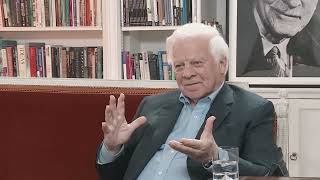
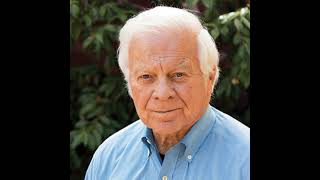
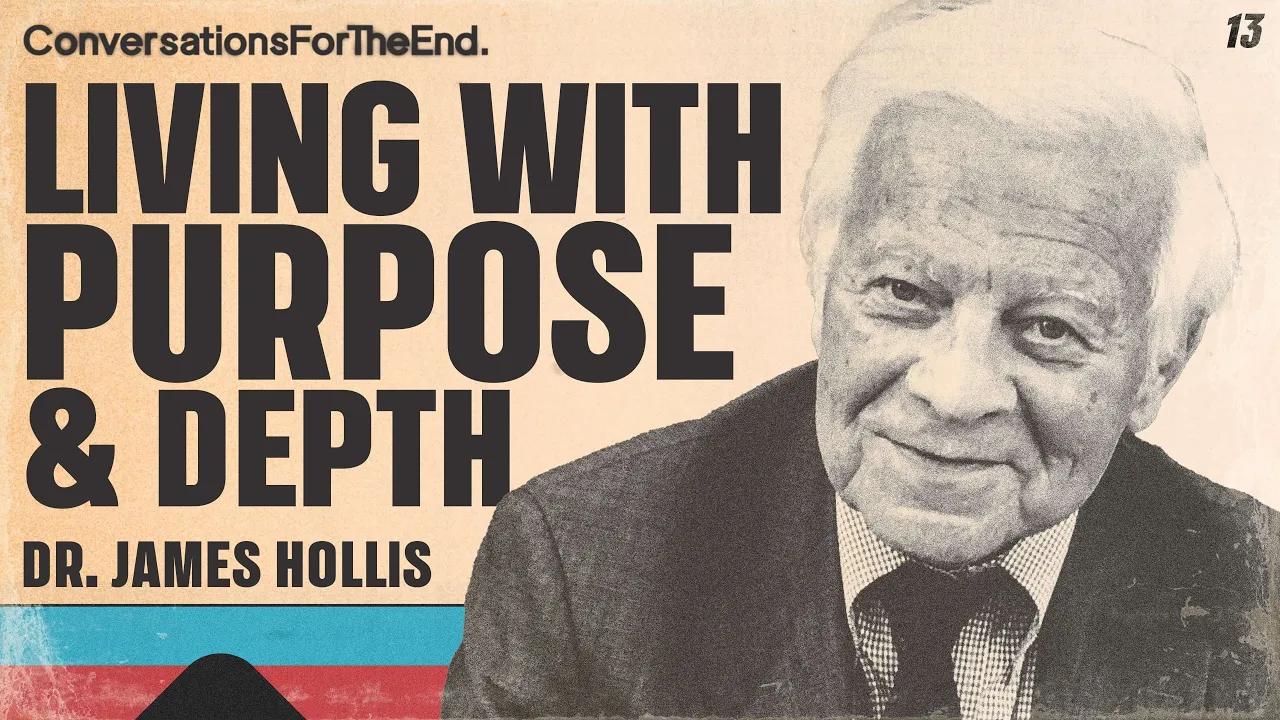
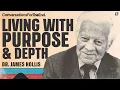
Welcome to episode number 13 of Conversations for the End. Today's guest is Dr. James Hollis. Dr. Hollis was born in Springfield, Illinois, and graduated from Manchester University in 1962 and Drew University in 1967. He taught humanities for 26 years in various colleges and universities before retraining as a Yian analyst at the Yung Institute of Zurich, Switzerland. He is presently a licensed Yian analyst In private practice in Washington DC. He served as executive director of the Yung Educational Center in Houston, Texas for many years and was executive director of the Yung Society of Washington until 2019
and now serves on the JSW board of directors. He is a retired senior training analyst for the interregional society of yungian analysts was director of training of the Philadelphia young institute and is vice president emeritus of the filerman foundation. Additionally He is a professor of yian studies for sabbrook university of San Francisco Houston. Dr. Hollis has written a total of 20 books in 21 languages with more work to be released. This episode really was the most special episode for me to be honest. All these episodes are great and I feel so incredibly grateful to get
to have conversations with you know fantastic people every two weeks. Um but Dr. Hollis his work is is something that I have been reading for some time. It is one of the reasons why I got into the sort of academic field I did and and studied the things that I studied. Um yeah, and it really sort of fueled my passion for reading um more about this stuff and learning more about this stuff. Um and I I never thought I'd um be able to get him on this podcast to be totally honest with you. So um
it's absolutely fantastic that I managed to and I'm so grateful For him for taking the time to to have a conversation with me. Yeah. Um we talk about meaning, we talk about facing your fears in life, we talk about the importance of kind of initiation. Um you know for young men and women for sort of transitioning through life stages and kind of learning to take on responsibility and endure the suffering that life can often put in front of us and cause us difficulties. Um yeah, I'm Not going to rattle on too much. Please, if you're
listening anywhere, be it YouTube, Spotify, Apple Podcasts. Um please subscribe, please follow. More conversations like this in the back catalog, more conversations like this to come. Um if you follow on, if you want to follow on Instagram and Tik Tok, you know, there's clips, we clip the podcast, and there's other content that I'm doing at the moment as well. You know, I do these kind of sort of reals. I like talking to camera about certain subjects. Um, and I've just done the first video essay. Um, I'm trying to do more of them. Um, I really
enjoy doing them. They do take a bit more time, but I am trying to do more. So, yeah, check that out on the channel as well. Yeah, subscribe. Um, yeah, go out, do something nice for someone. Think about what matters to you. What is your calling in life? Do not put it off. As you will see the message from Dr. Hollis, facial fears. Hope you all enjoy. Yeah. Okay. Here we go. Without further ado, Dr. James Hollis. [Music] [Music] Dr. Hollis, welcome to the show. >> Thank you, Chris. Pleasure to be with you. >> So,
I want to I want to jump sort of straight into things. Um, I've seen you talk about how people perhaps don't live to their fullest potential in life Because they feel like they don't have permission to live their own life. And one of the things I talk about on the show quite a lot is Jung had that quote where he said men have mythical fates as much as the Greek heroes do and how often people don't realize they might be they might be living in a in a tragedy. Um what are some ways that you
feel like people may be able to spot the myths they might be living in one way or another? Well, let's start with the first part of your question. Why is it we don't live to our potential? And of course, none of us does. Uh, no one is superhuman. We all have our fears, misgivings, doubts, and forces in the field around us to deal with, of course. But I I think often it's the legacy of having been very tiny, dependent, vulnerable, looking to the world around us for clues. And often we've had impulsive and perhaps grounded
in our nature uh Decisions or acts as children and we learned that that was not acceptable or sometimes children experience that when I do express myself things somehow get worse out here. So they they become their own monitors. In effect, our need for approval, our need to belong, our need to stay out of harm's way are profound because we are tiny, dependent, and vulnerable. So, we can overlearn the question of am I entitled to feel what I feel, desire what I desire, Pursue, pursue what I want to pursue and so forth. Life is conditional and
to some degree uh as children we learn to meet those conditions whether it's in school or with our playmates or at home or wherever. But but secondly it's a far deeper question the personal myth. And when we use the word myth we're not talking falsehood here. We're talking about the charged images, the charged ideas, if you will, that you've absorbed from your family or from your Culture or from the era in which fate has placed you that um often dictate our values, our sense of who we are, what our marching orders might be. But there
are also elements unique to each one of us. Our core nature of course that is given by nature. It's our instinctual orientation and the question you raised is really a profound question and that is to what degree are we free independent uh it beings who can choose and to what degree Are we serving in some way the will of the gods as they may have spoken it in previous generations where we are in some way unfolding whether we know it or not the um sort life that is inherent within us. You know, the Greeks made
a big difference or distinction between fate and destiny. We sometimes confuse them, but fate represents the givens, the body you're given, the DNA, the family, the cultural influences, but it's also part of your Inherent life. It's your it it's your innate drive, so to speak, that which is seeking expression through you, we might put it that way. And destiny is what is capable in each of us. What can we achieve? And many times we find factors in the society that uh inhibit that or say you can't do that, you can't be that or there's a
cost for that and so forth. And so when we start discerning that's part of what psychoanalysis is about is to say what kind of myth have you been Serving again not myth is falsehood but what kind of charged images inherent scripts uh have you been serving and what are the ones that are being pushed aside that are neglected and so forth to choose a cliched example let's say a person has a artistic talent a musical talent but they're born into a family or a culture that has no interest in music. And so you're always going
to be then peripheralized. You're always going to feel like you're an outsider or maybe Something's wrong with you or you may even be actively persecuted as sometimes people are because of their lifestyles, their sexual preferences, etc., etc. And and then there's a very deep deep wound to the soul and that wound shows up as psychopathology. That is to say, our our our symptoms. From the standpoint of psychoanalysis, we tend not to ask how quickly do I get rid of the symptoms. We we'd rather ask what are they telling us? What is it that is being
addressed Intracychically that I need to pay more attention to? Because a symptom is the autonomous response of our psyche as to how it's being treated. And it would be foolish then not to pay attention to that. I myself started on this path back in my mid30s right on schedule. I was an academic. I I was a professor of humanities, taught literature and philosophy and at midlife had a very serious depression. Well, like anyone else, I'd like to sort of get rid of that depression, move on with uh life's tasks as as smoothly as possible. But
I came finally to ask the question and this is a completely different way of reframing things. Why has my psyche autonomously withdrawn its approval, its support, its energy from the places where I'm putting my investments of of my life, you see and and what what is it that I'm being called to here? That's a different Question altogether. And it's at that point one has a meeting potentially with one's true myth. That is to say the images that are charged with energy. We have scripts so to speak of goals. Um what is it that they are
wanting from me? So if if we were just creatures of adaptation and we survive through adaptation so we have to recognize its importance. But if we were just that then we wouldn't have emotional difficulties. we would just fit in and Become cogs in this cosmic machine. But we have independent souls. Psyche is the Greek word for soul. We have independent psyches. And when it's violated, it shows up sometimes in our behavior, sometimes in our emotional life, sometimes in our bodies. And those symptoms are important clues as to something deep within each of us that's been
neglected, offended, or violated. And then that becomes a summons to consciousness to pay attention. And That's what therapy means from the Greek. It means to listen or pay attention to. So in a sense, it's what psychotherapy is about. You don't have to be seeing a therapist for this to be important for you. How do I pay attention to what my own soul is saying to me? And it will say speak to me in many different arenas, including our dreams, our symptoms, and and so forth. So, some of a long-winded answer to your question, but you
>> No, it's it's good. It's good. I I think it's a to me that's that's a hopeful message to anyone that is perhaps listening right now and maybe feeling themselves in what they might refer to as a depression is that, you know, perhaps it's not just some defunct element of yourself. It's it's a beckoning to being to becoming something else which is um you know very mythorientated. It's the sort of call to adventure of of your life, right? Which I is fantastically positive. Um I want to bring up there's a quote that you mentioned sort
of linked to this. It was a toll story quote on a on another podcast and I think thought it was quite interesting um just in how I initially interpreted it. So it was the quote everything is flowing the way it is supposed to be and it was this line about you were sort of referring to it as Toltoy will writes it multiple times in the text and it's kind of saying that This character this everyday man was kind of doing what was expected of him maybe not living to his fullest potential climbing up spending his
life trying to climb a ladder I think as you refer to it and then realizing he was climbing the wrong ladder and the way I initially interpret it and perhaps this is me spending too much time reading Jung um was this idea of almost like an the archetypal fate. Everything is flowing the way it is supposed to be. For better or for worse, you are you are in a myth. You perhaps cannot escape the fact that you are living in a myth and whether it un unfolds tragically or into more the kind of idea of
destiny that you were speaking of and so be it. that is that is the unfolding of of being and I just thought it was quite interesting how that came up for me. So you talked a little bit about you touched on sort of like wounds wounding there and I kind of want to start segueing towards this um This idea of of wounding and the kind of necessary wounding. So you write a lot about men. Um you've spoken quite a lot about masculinity recently, you know, with um sort of Andrew Huberman um drawing attention to your
work, which is fantastic. Um tell me about this necessary wounding, this kind of idea of initiation that you perhaps think we are we are lacking in modern culture and why is it important for people listening? Mhm. Well, again, There's that's a loaded question with many pieces to pull apart and more than we have time for. But you referenced the death of Ivan Ilich, the Toltoy novella. Ivonne was a creature wholly lived this the messages from his time and culture. His wounding was his sudden recognition that he was not only mortal but dying. And it was
the kind of wounding that brought consciousness to him. Um, by wounding, we're not talking about overt cruelty or random violence. We're Talking about something that in a way stuns us into a greater awareness. Um, in traditional cultures, there were several stages and this is true around the world with with local variations of of course that the child is not invited to leave home. It's taken away sometimes violently. It engages in a ceremony of death because the old being, the childish psychology we would put it, the childish Assumptions and behaviors are are in a sense terminated
and and then there's that sort of difficult in between. And then there's teaching. And that's partly what's missing too in our culture where we say to a young person, well, just go to here to here to here and oh, by the way, you maybe want to go to university and pick up some computer skills and and do this over here or join the workforce here or whatever you're going to do. And and There's no real development of the person. It's all about adaptation and and the the ritual wounding. And I I skipped that for a
moment. That was the second stage was a ritual wounding. Um, and I won't go into the details of that, but it wasn't pretty always. And its purpose was to signal to the psyche of the child in a sense its free ride is over. And if you want something in your life, you're going to have to pay for it. It's not just delivered to you. You Have to pay for that. you know, the Gutama, the the who became the Buddha. Um, his wounding was he escaped his parents' pleasure palace and walked out into the world and
saw a person who was ill. He saw a person who was hungry. He saw a corpse and for the first time the reality of the world hit him and that was a wounding to his consciousness and sent him into a tail spin for for seven years before he reached enlightenment. And again, the point was The wounding is an invitation to consciousness. I wrote a book years ago called Swamplands of the Soul, and it deals with depression and anxiety and loss and betrayal and addiction and so forth. And I say many times, no matter how well
we are, life comes and hits us hard and hurts us. And we find ourselves asking, "What's that about?" We feel like victims. and and perhaps we are victims. But in every one of those swampland visitations, There is a task the identification of which and the addressing of which over time will lead one into a active participation in one's life. You know, I things can happen to me, but they don't have to define me. How am I to live my life? This is the way I put it often to to clients. and I'm now 85 and
I'm I'm because of health considerations I'm living in a retirement center. I'm surrounded by people who have medical handicaps and so forth. I have some Myself. Um the question I always ask them and this is true of a person in any time in their life. How now in the face of that over which you have no external powers will you conduct your life? And you see the addressing of that question may not appear immediately obvious to you but if you would keep addressing it it will lead you to a place of personal empowerment a place
of personal dignity and a place of personal psychosspiritual Freedom in the face of whatever the situation really is. This is not some kind of polyiana talk. This is this is about maintaining your own sense of integrity, your own sense of freedom even when there are circumstances that curtail that freedom. So wounding is not something that um we we solicit. But you must admit, I think most people who are of a certain age would look back and say some of the most painful experiences were the ones where They learned the most about who they were or
what they needed to do with their lives, where they had to pull themselves up to get off the floor and show up the next day with as much courage and dignity as they could. And that's what gives us our sense of of personal ownership. Otherwise, we're either creatures of adaptation, as Ivan Ilage was, or we live fugitive lives, constantly avoiding stepping into the journey that life asks of each of us. And what I wonder again it feels positive to take this stance that when suffering arises inevitably in life that one can attune adapt um reflect
and and grow from it in terms of obviously those situations will arise in life and people can sometimes in fact I'll give the quote um from from yourself you say the double-edged sword of wounding. There are wounds that crush the soul, distort And misdirect the energy of life and those that prompt us to grow. Now, it feels like a high stakes game if we are met with these uh events of sort of suffering that could crush the soul and and lead us away from destiny into you know a tragic mythical fate. Perhaps a lot of
what the older cultures, other cultures perhaps have are these initiation rights with the the especially for young boys and adolescence perhaps is these elders, These um the sort of males of the of the culture kind of uh as part of ritual introducing these you know younger men to cross that threshold as you sort of put it to to go into a new world that is perhaps more dangerous to prepare them for when those unexpected events of suffering arise. I'm curious as to where now in your life as you, you know, have sort of lived lived
a life and and see where we're at culturally Where you think these kind of ritualistic initiations that kind of prepare perhaps young men and young women for for these times in life can arise. I know you've talked about, you know, how important you realize your time on the football field as a as a younger man was to to engage with with danger and risk and injury. Um, and to sort of buster yourself sort of psychologically. Where do you think now that young people can Perhaps maybe look for for the elders for the for the male
role role models to help? >> Again, you ask uh omnibus questions there, Chris. Um and they're good questions. Um first of all, one of the things that's missing in our time by and large is not young people looking for for get guidance. It's elders. Where are the elders of our time? You see, they weren't initiated by their personal Fathers. They the fathers were part of that which had to be left as well. They were initiated by the wise souls of the tribe that by the elders. And so part of what is it we're to be
initiated into now? Just become more effective uh economic production units. What what's what's the point here? Um yes, I I was never a big person. But I I and I was afraid I was afraid of getting beat up by the big guy. So you know, brilliant as I am, I I went and played football, Right? It's the worst thing you could do. But I also I loved it and I feared it at the same time. and and I knew something inside of me was pushing me to do that. And then in my my sophomore year
at university, uh I suffered some injuries and so forth. When they did some surgery, they found that I suffered from a bone disorder and surgeon said by the time you're 40, you won't even be walking. Forget sports. And I am still walking. But uh I remember lying in bed And thinking to myself, well, what am I going to do with my life now? I was literally kind of a mindless young person living for um uh sports and then that was taken away and and I remember I finally one day while still in the hospital I
said well I am at the university I suppose I could become a student couldn't I so that opened a whole new area of of life that I didn't quite know was even waiting for me but it was an example of saying you know how Now in the face of this over which I I have no control on my to conduct my life to make my choices and the biggest obstacle everyone has to face is the contention with one's own fears. And part of what the rights of initiation did because that included orals and tests the
young person had to go through was he or she learn you can draw upon resources within you. It's no shame to be afraid. It's something else though to live a a Fearful life. That's a different matter. And frankly, a good part of our daily activity is management of our fears from denial to anesthetizing to distracting to all kinds of behaviors that are in service to avoiding our fears. And that's normal and natural. Life is lethal and sooner or later will kill you. So there it's not paranoid. However, do you want your life governed by your
fears? And I think once it's put in that way, there's a part in us that Says no, that's not that's not acceptable. All right, then what is it you have to face? What do you need to do? Now, young people can still have experiences that cause them to leave home psychologically. You know, if you leave home and go to the university or to the military, it often uh you know you you change one authority for another authority and so forth. Although in the military, part of what their desire is to say to the young Person,
you know, you you you're no longer defined by your comfort desires. This is about showing up and getting a job done. And and that's a useful message. On the other hand, underneath all of this is the question, what do I need to do to face the tasks in my life? and where do I see that modeled around me? Where do I get help with that? That's often the role of a therapist, by the way. It's it's not that the therapist is there to tell us What to do. It's to help a person understand what it
is that is standing in the way of his or her further development. And Jung put it this way. He said the opus meaning the work of living your life, individuation, which is not individualism. It's about serving what is wanting to live in the world through you. It's not about your ego desires for success or pleasure or whatever. That's ultimately trivial and Narcotic in nature. It's more about what is worthy of your service. If you don't ask that question, sooner or later you're going to be serving something quite inadequate for your life and it will show
up again symptomatically. But then to ask the question and he said the work of life requires three things of which psychology or therapy can only provide the first which is to give some insight or philosophy or the tribal mythology or Whatever that insight comes from. Secondly he said is courage to face what needs to be faced. And third he said is endurance sticking it out over time. And I often think about that. It's very simplistic, but at the same time, it's profound. You need to figure out what you're struggling with. Find the resources, the wherewithal
within, even if you're frightened or or intimidated, and you step into it, and you stick it out. You Push through. I've I've often decided or concluded, I should say, that whatever I've accomplished my life wasn't out of particularly of talent or anything like that. It was just I I learned not to quit, to push it through, to stick with it until something emerged. And and that wasn't that was counter to my, you know, ego's intentions. We'd like clarity. We'd like control. We'd like outcomes rather quickly. The important things are of life don't work That way.
They're often something you have to live with and live through over a certain length of time. And having done that, you you you draw upon more resources within your life that you uh didn't know were there, such as courage and such as persistence. And when you do, that was the purpose of those rights of initiation to separate separate the youth from the dependency upon the hearth or even upon the tribe to find in the in the dark forest or on the plains Or wherever the environment was that you have resources within you. And no matter
what your feelings might be at the moment, you you you need to access that those resources and you know push through what you need to push through. And when you do that, you see your life gets larger psychologically speaking. And you're not governed by the fear. Again, it's no shame to have fear. That's a person with no fear would just walk into traffic, for example. You have To have fears. They're protective. Part of nature protecting you. However, to be governed by that is a choice and that's where one has to in some way step into
it rather than run from it because sooner or later it shows up in different arenas whether we know it or not. Yeah, I think you know especially that it's a great message and especially that part about the perseverance you know I'd say to anyone listening if you want a lesson in perseverance uh to Start a podcast because it's uh it's a it's a slow a slow burn and you have to do it you have to do it because you you enjoy engaging with the becoming of the process the you know in the in the doing
of it is is where the kind of um the boons and the treasure is to be found I guess. Okay, brilliant. I want to as we've sort of briefly talked there about um men um and that kind of initiation. Um, I wanted to ask a question about about Women because I feel as if one of the things that I see in contemporary culture and it may be perhaps because this is an element of projection because I think this is somewhat part of my myth that I've had to notice and and develop out of is this
idea of the kind of forever child. um you know particularly in in relationships and you've talked a lot about relationships is as well this sort of modern idea modern version of Don Juanism the projection of a kind of divine image over multiple partners forever seeking a kind of godlike image um only to be disappointed when a person kind of reveals that they are a fallible human being and I think we see this we see this a lot In contemporary dating culture with the introduction of dating apps, you know, the ability to swipe to sort of
know that there is a plethora of different people just, you know, in the in the magical object that is your your Phone waiting to be discovered if you start to grow tiresome of the person you were already with. Um, so we see that with men. I want to draw it to women. So there's I think it's Sally Porterfield. She has a fantastic uh essay on the kind of forever child archetype in women nowadays. And you talk I'm kind of linking these two points. So you talk an initiation for women that in the past for women
initiation often meant replicating their Mother's world. So they sort of had that there as a as an example. Nowadays we are maybe seeing sort of women less inclined to follow that path of motherhood. And I guess since the since the sexual revolution and women in the workplace, women are pursuing some might argue more sort of traditionally in the past more masculine pursuits. She has this quote where she talks about Wendy in Peter Pan and how Wendy acts as a mother figure to to the Lost Boys, Sort of convincing them that they are living this fantastic
life when really they're just being motherthered still. Um, and she says, "But what if Wendy had given up and joined the Lost Boys in their quinzotic pursuit of eternal youth? Who indeed could blame her since her mature feminine qualities of nurturer and caretaker go unrewarded? And I wonder in contemporary culture perhaps we are seeing uh a less of a sort of positive Um look for young. you know that the idea of being a mother and a stay-at-home caretaker is actually not looked upon as fondly and perhaps that is putting women off and leading them into
these different paths. What what are your thoughts on that? Do you have any thoughts on that? I don't want to put words in your in your mouth. Do you think the the the rights of initiation perhaps need to adapt for women in the contemp, you know, contemporary society? Well, again, a very good question and we have to remember that the rights of passage for women in traditional cultures, preodern cultures, was to circle back into the hearth and be the caretaker of the hearth. So, they were in some way tutored by the wise women of their
culture. Um, today that that paradigm has broken open to the great opportunity of women to pursue careers that were closed. Unfortunately for women as Recently as you know 50 to 100 years ago and that has opened you know for them the rich and wonderful prospects of of um living a a more fulfilling life. My my daughter for example is works in a corporation a financial corporation and she loves her work. She's a project manager, but she's raised three children, too. And she's had both sides of that. And both of them were rich experiences. And that
wouldn't have been possible in another era. And I Shudder to think that that potential in her could not have been might not have been, you know, valued or or achieved. But but you see, let's back up a little bit. You you mentioned on the one hand the Don Juan there's the puer turnist the eternal boy too the Peter Pan syndrome that for for many boys because they're uninitiated they haven't developed a sense of their inner life they project too much upon women so there's the Don Juan who's Looking for the uh perfect woman who doesn't
exist except in his fantasy life and he goes from woman to woman to woman and ends up with a kind of sterile emptiness And then there's the puary eternis uh the the boy who wants to be taken care of by the woman and that keeps him locked into a kind of psychological dependency all of his life and women today who if they have a sense of themselves don't want to play either one Of those roles and and and of course they shouldn't. So I I I think women are way ahead of men at this point
in most women let's put it that way. I understand there are parts of the world where traditional roles are still dominant and religious definitions of the genders are still um still very strong in their culture. that for most people at least in the so-called first world nations it it's it's an open door and that's a good thing which leads back To the fact because women have to develop that inner sense of drive that sense of legitimate ambition that and by ambition I mean simply finding out who you are what you can do with your life
don't you want to know more about that where your strengths are where your capacities are where your talents are where you need to grow and develop. That historically was a male prerogative in the past and and today women have grabbed hold of that. Men are a drift Because in part the traditional roles have have pretty much disintegrated on the one hand, but again because they're uninitiated. They're they're you know have no idea where to go. And so they often regress into these pseudo masculine roles, the macho cultures in direct proportion to the degree that the
man's insecurity is dominant in his life. That's why he adopts this militant external persona. And wherever you see macho behavior, you're seeing Essentially a frightened, insecure person. But their whole life is spent trying to keep that fact from you. You see, so at some level, and I I I don't want to overly generalize here, at some level, it's richer being a woman in our culture today than it is a man. Because again, men are a draft and don't know where they want to go. And there tons of little gurus and militant leaders here and there
who who exercise an inordinate influence on men's psyche because they Offer them a path of some kind. But in most cases, it's it's a path that narrows their life, doesn't broaden it. Because the the great frontier for men today is the encounter with the inner life. It was always out there, the the mountain to be climbed, the frontier to be to be crossed. Today the the the great adventure is self-awareness, examining your fears, looking at what are the engines that are driving you and challenging them and so forth. And most Men remain terrified of that.
That's why they're so much invested in sports out there and politics because it's out there and they're terrified of being in here and that's their dilemma. So generally speaking, even though there are many relics of u, you know, gender suppression and definition of women that they have to fight through today, by and large, they're in a far healthier environment psychologically speaking than than than men. And men have to Realize sooner or later the great adventure is inside of you. And I don't mean by that naval gazing. I I mean addressing your fears, addressing what uh
what the call is from outside of you, finding what your soul is asking of you and and finding the courage to live that. And if you do that, something inside will support you. It rises to support you. And that's part of what the rights of passage that are missing for for boys today. One of the things they learned is when you're doing what's right for you, something inside supports you. And if you don't know that energy is there, then you're going to always be obeying the the loudest noise in your environment or or living a
fugitive life. >> Yeah. I mean I you talk about the various uh figures and groups that kind of pop up offering that um that guidance when it's like you say it often narrows The experience um and narrows men's lives. when I was reading um obviously your your fantastic book here again. I've read it many times in my in my life and I was reading some of the descriptions of those types of men. Obviously, you wrote it in the 90s, I believe, but it was describing, you know, figures, I'm not sure if you're aware, like Andrew
Tate and people like that in what they call this modern manosphere, which is where men are Gravitating towards, which, you know, does hold on the surface guidance and kind of the message of you need to take responsibility and get your life together, which appears positive, but then the underlying surface is insecurity. It's materialistic. It's misogynistic. It's homophobic. And it it has a very, you know, deep shadow side that I guess isn't that hidden. It's quite apparent once you once you get into it. So, I think it's Really shows how prevalent this is for our times,
but also I really liked what you said there about there's an internal element of you that is going to support you. And I think that is difficult for many men to build that relationship to to their their feminine qualities to recognize that it is not perhaps the the narrow view of of the feminine that perhaps the culture has betrayed to them or their life has betrayed to them in their life. It is a deeply powerful Deeply you know insightful source of wisdom. You know we think of this archetype of Sophia. Um, yeah, I think that's
something I think more men, you know, would would certainly benefit. I know I have benefited on from from engaging with that part of my psyche. And I I was a Don Juan for many years, and I still wrestle with that myth, I think. Um, but yeah, I think once you once you can have that relationship with that inner feminine quality, again, the Idea that you're supported by something internally, I think, is is is fantastic. Okay. So, I'd like to Yeah, I mentioned it. Go ahead. I'm sorry. Please. >> No, you you go, please. Please. >>
Well, you you mentioned that book under Saturn shadow and I um mentioned there an incident where a man walked in once because his wife had said, "Either you go to therapy or I'm ending this marriage." So, he was very hostile and very resistant as you can imagine. He Walked in and he saw a box of tissue here and he just stared at it contemptuously and I knew what he was saying to me but I acted as if I didn't. So since he thought I'd missed the queue, he kept focusing on it and I said, "What?
What's what's going on here?" And he said, "I won't be needing that, you know." And I said, "Well, don't you know that every man carries a mountain of anger inside of him and a lake of tears?" Not me. I said that's What he said. and and um I thought the prognosis isn't good here because he's afraid of a box of tissue. Seriously, it was like you're not going to get me to look within. That's a jungle in there and I'm going to get lost in there. And he was very much into his macho presentation. and
he only lasted three or four sessions because he just wasn't able to take the risk of looking within terms of what was driving him, you know, >> and you know, that's that's a very sad situation. I I say this without judgment, but I I I have sympathy. However, I could imagine he's been through several relationships since because you can't be in a better relationship with another person than you're in relationship to yourself. and whatever you're avoiding things or wherever you're caught in certain kinds of complexes, they're going to keep spilling into that relationship. So, it's
not narcissistic. It's it's the best thing you can do for relationship. When when Jung said, "The greatest burden a child must bear is the unlived life of the parent," I think that's profound because what he's saying is wherever I'm stuck as a parent, my children are going to be stuck or they'll spend their life trying to get unstuck. Either way, my my being is internalized by each child as that is always the case to some degree. You Either repeat it, you run it for it from it, or you're you're trying to fix it in some
way. And so, you know, macho culture and the culture of distraction that we have are are, you know, very ineffective uh fix strategies and they don't work very well. So, again, the frontier within for you can put it this way and this is a gross overgeneralization. The frontier for today for women, most women is out there. Step into the world out there. see what you can do. In in America, at least the majority of applicants for medical school and law school are women now. And and good for them. They're saying, "I I I want to
see what I can do with these talents and capacities and and so forth." And men are over here on the side moaning about things or complaining or engaged in macho pursuits or anesthetizing themselves. So, it's not a pretty picture. And underneath all of That is a summons to show up and face the life that you've been given. We're here a short time. What are you going to do with this life and in service to what? That's where everybody is very much alone. Yes, you can learn by o from others. You can you can be inspired
perhaps by others. But ultimately you have to decide is this short life of value to me other than just you know having more breaths before the day I Stop breathing. What is it in service to? What what matters to me enough to give myself to that? Now that will vary from stages of our lives. There's a place where learning to walk for the child is its appropriate agenda or or you know being in a responsible relationship etc. or finding the capacity to support oneself. All of these are legitimate social and psychological tasks. And if a
person doesn't address them, then there's Something still unformed within them. But then you get to a point where you have to ask the question, all right, but what is the larger purposes for me to be? How how do I spend my energy and where do I invest my my soul's stuff in in this journey? And if you don't ask that, you're chances are you're on automatic pilot, you know, or you're simply going back and forth like a pingpong ball between the complexes that you've carried from within from family Of origin and popular culture. So there's
there's a summons here to a personhood. It's not a pretty word, but it's may be useful for the moment. becoming the person, the human being that you're you have as a capability, as a as a possibility, what stands in your way? And most of the time it's the failure of imagination or intimidation by the project and and something doesn't then happen in this world and it's not in service to the Ego. Now, here's another overgeneralization, but I think there's truth to it. The first half of life, it's about ego development. you could leave your folks,
step out of the world, form relationship, become a parent, perhaps a citizen, um, and become a self-sufficient individual. All right? So, if a truck runs over you, say you serve the message of your culture as well as you could for those first 35, 45 years, whatever. But then if you don't, if you're still around, then you have to ask the question, but why am I here really? Who am I apart from my roles? Who am I apart from what happened to me? Who am I apart from my accomplishments or failures? And and that's where you
have a summons to a meeting with your soul and not everybody shows up. And what happens when I see people in in analysis and I'm only working at the moment with people. I have only one person in first Half of life. everybody else is in the second half. Loosely speaking, um they've had a collision some point between the messages of their culture and their their own personal histories on the one hand and the dissatisfactions of the soul on the other hand. This this collision again between fate and destiny, between myths, if you will. And maybe
they they get that early or maybe it takes a while to figure that out. But but it's it's about moving then from Being socialized into the world that we live in to really the question that is at heart religious or philosophical. What is of enduring value to you? What is it that you really want to care about most of all? And and what is meant to be serving? Because if you're not again asking that question, you'll be serving, you know, your history or your complexes or the loudest demands in your environment. And and that's why
we look to our symptoms. We pay attention to People's dreams. That's why we try to analyze what the the true feeling state that's going on behind. We can rationalize anything, but what's really going on beneath the surface? Until we begin to address that part of our journey, you know, we're going to be living a kind of adaptive life, perhaps a false life, not intentionally, but reflexively. And that's why sometimes that collision has to hit. It happened to me, as I Mentioned, at midlife. That's what moved me out of the university into the realm of psychotherapy,
working in a psychiatric hospital and so forth. And that wasn't my career choice. That was something that was waiting for me. I knew nothing about until I had to address that in my own life. And that's why I really have two different professional lives and two different uh um biographies, if you will. Um because each was appropriate to the stage of the Journey, but I couldn't know that at the time. You have to go through that in some way. Again, I I love that message that those turbulent times in life that feel all-encompassing in their
in their suffering, you know, be it a depression, you know, some form of illness perhaps. Seeing them as >> doorways to to reflect and to like you say, where kind of fate and destiny cross over. Seeing them as those opportunities to understand who you are supposed to be and what is truly of value to you. I think that's such an important message to get across. You know, I I do I work with people um who are having sort of mental health struggles to varying degrees and and often what I see with people is a crisis
of meaning. you know, it's it's sort of a not sure where their life is. And many of them, going back to the idea of elders and sort of role Models, they've never seemed to have been encouraged remotely and they will speak of this great existential burden that they are feeling and give you all the kind of modern-day health language that they've seen on the internet or whatever it may be. But as soon as you encourage them, you know, you say, "Oh, have you considered pursuing that thing that you really enjoy doing all the time, they
they light up, you know, and all of a sudden they start to solve Their own problems. They start to find the answers to to the things that have been strug, you know, a struggle for for a long time. So I think it's such an important message to recognize that you know if you are listening right now and you're in a difficult period of your life like you say perhaps it's an opportunity to go inwards to reflect. Um yeah Dr. Hollis it's it's such a fantastic message. I'm so grateful for your time. I also think it's
I briefly Mentioned obviously you've had interactions with Dr. Andrew Huberman as of the last sort of year or so. And I just thought that was fantastic to to see you on a platform like that, you know, one of the biggest sort of podcast platforms in the world. And I am somewhat intrigued with um Dr. Huberman and this kind of uh influx of interest in the kind of biohacking transcending one's limits that we've seen in the culture that he's very much been at the Forefront of. Um there's an idea that I'm working on called the hubermanch
which is this uh this idea that people are perhaps gravitating towards that. But what I've loved about your episode in particular is having that conversation about going inward. You know, I think Andrew's platform, a lot of what he speaks about is ways of kind of optimizing the material and to have you on talking about the symbolic life effectively and going inward to look at Those aspects of your psyche of your soul um was fantastic and it's great to see you, you know, speaking to, you know, an audience like that. It's it's much needed. I would
urge everyone if you're a man, even if you're a woman, any anyone to purchase this book to to read your work. Um, yeah, because it truly is fantastic and it helped me a lot. One of those books where you read it and I start to be confronted with my personal myth in a in a scary way. um But in a in a way that like we talked about beckons to becoming someone hopefully better attuned with life. So um I I thank you for that. And the last thing I want to say before we before we
finish here, um when I initially emailed you about coming on the show, um you you were very busy at the time. you you had commitments and and I you know obviously I appreciate that but you really did fall into the role of of elder very well there. You gave me um you promised to You know you would touch base with me in the summer about you know finding some time to do this but you encouraged me in what I was doing with this podcast and as I mentioned earlier this is it's a slow process of
growth and the the words of encouragement don't actually come that often. Um, and yeah, I think you you really did fall into that role of sort of the wise elder and the words of encouragement that you gave me in that initial email really meant a lot. Um, so I I thank you for that. I wanted to thank you for that and I thank you for your time today. Where can where can people uh find you? >> Um, there Excuse me. I'll just interrupt you for one second here. I'm sorry. Um I sensed in your initial
invitation to me that you felt some calling to do this and while I was overrun at that time um I I didn't forget that. So that's why I suggested we reconnect later and here we are today and um you know that is a Calling. We may have different callings at different stages of our journey but it's very important to know that one does have callings in life. That's that's comes from the Latin voc vocatus vocal. Vocation. Vocation is what your soul is called to. That's not the same as earning money. You know, that's called a
job. You know, you figure out a way to support your life. But to do something that matters to you, that's the key. And that's That's something that people forget. They assume that making a lot of money and that works when you're young for a certain point but then you know you know lots of wealthy people are pretty miserable human beings not only to themselves but to others of course but you you you I sense that calling in you and I'm glad you're finding the courage and the resourcefulness and the endurance to pursue it. Who knows
where it'll take you. I'll just give you an Example. In the first half of my life as I mentioned I was an academic and I loved learning. I still do. I've loved teaching or we wouldn't be having this interview. But I also felt as a result of my own personal therapy that I had to go deeper somewhere in my life. And I would never have imagined as a young person I would spend my life listening to people suffering. And yet as a child I was particularly Impressed with the world of suffering around us. And today
I can't imagine not doing this work because it's it's profoundly meaningful to be in that kind of soulto-sole relationship with a human being. And and I I love it through teaching of course, but this takes it a step or two deeper. And that's where you get into the realm where your own resources are drawn upon and and that's where you find what your own soul is longing for. And that's where you you Know engage the mystery whatever it is. Jung said one's life is a short pause between two great mysteries. So then the question is
how are you going to spend that pause? And that's not job counseling although sometimes that can be very helpful. It's it's rather what is life asking of me? That's the vocation the vocatus and that's what I heard in your initial communication. >> Yeah you're not wrong. You're not wrong. it's uh beckoned to me and and also a Note on you know you mentioned fear there was a lot I probably spent a year and a half sort of thinking over whether I should do this and all of the doubts come in of do I have anything
to say you know do people really want to hear from me am I ready to be sort of facing the world in this way to be putting myself out there um you know that rattles around constantly for a long time and And then eventually there is that facing of the fear to say I can't stop thinking About the idea of doing this. I need to step out across the threshold, you know, and and do it. So, um, yeah. Well, thank you again for for your words. You're not wrong. And like I say, the the encouragement
really goes really went a long way. And this conversation has been really really special for me. Like I say, I've I I read read your work. um when I first started getting into Yung and I obviously went on to study Yung and do my masters in Yian and post Yungian studies and I'll be going to do a PhD in all of this and I think your work played a a pivotal role in in sort of opening me up to these ideas and like I say to helping me reflect on my own personal myth and I
have a long way to go and it's a continuing journey of development and reflection But who knows where I would be if I had not made those initial reflections and not had the had the tools. So again, I thank you. I thank you for that. Um, Where can people find you currently? Um, your work and and things that you're working on, if you're working on anything right now. >> Well, I am. Yes. I'm I've just finished the manuscript of conversation with a friend of mine. um the painter sallaya where we address questions about um the
relationship between suffering and creativity, personal resilience, how it is we do our work, etc. And I also just finished the first draft of a book on Aging. Uh I've written about midlife when I was at midlife. It's time to talk about aging at this point now for reasons that are pretty obvious. And um so I I'm still writing because that's a way I figure out what's really going on for me that uh you don't there's an old saying you don't know something until you can begin to teach it to somebody else. Well, you don't know
anything about yourself either until you're forced to bring it up and and see what What that other within you is saying to you. what how it responds and how this doesn't feel right but then maybe this does or you see it now from a different angle. So it's a process of personal growth and and discovery you know I mean I know the subject I'm writing about but I don't know what I'm going to say when I start. So there's something organic in that process and who knows what comes to the surface but that's that's exactly
what makes it interesting. what comes to The surface will ultimately be enlarging. Not always pleasant but be enlarging to your psychic uh experience to your life journey and and that's the richest thing you can get really >> and I think that's a perfect place to leave it the the beauty in the the becoming of of the doing. Brilliant. Dr. Hollis, thank you again so much. Um again so grateful for your time. Um, yeah. >> You're welcome. >> Thank you so much. [Music]