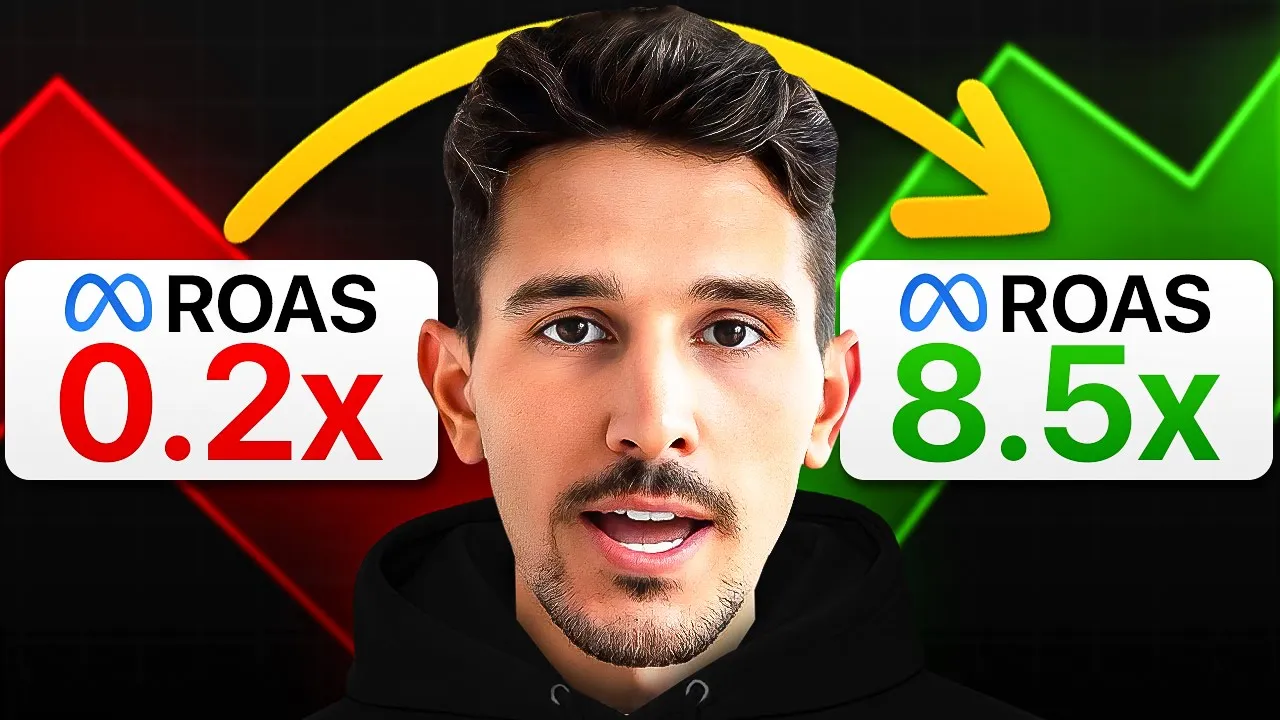
so many people get caught up in different ways to optimize their ad special structures different creatives Dynamic optimizations Advantage plus there's 101 things that you're being told every single day that you have to do in order to get your business from $8 million to $9 million to $10 million or even from $0 to your first $1 transaction there's a Hidden Gem in your account already that you should be looking at to actually guide your performance in a much better much more cohesive way I'm going to show you how we implemented this exact strategy for a new client that we onboarded and how the results have impacted their overall business I'm also going to show you the exact report that we use on our side and I'm going to show you how you can get this exact same report in the Facebook ads platform completely free we started with this client at the beginning of February if we compare February 1st to February 29th versus the previous month what we have here is a 33. 4 n% increase in Raz and we have a 15% increase in purchase conversion Value First we're comparing February 2024 to the previous month January 3rd to Janu 31st and we took over this specific client account on February 1st at the very beginning of the month and what we can see here is that through this single optimization we improve the return on ad spend by 33. 4 n% month over month we have this huge sheet that we like to use that is the client breakdown sheet that Aggregates all of our reports into one place and we can just enter the client's account name right here and it'll show us all of the breakdowns color-coded everything that we need what I'm actually going to show you is how you can get this exact data in your Facebook ads platform free what you do is when you in your ads manager all you need to do is click on ads reporting create new report name your report whatever you would like and find your ad account make sure you're using the pivot table and click continue and then once you're in here they're going to default you to a bunch of random columns most of which are going to be ignored for this sake we're just going to start this from scratch so I'm actually going to go in and just get rid of all of these columns what we're going to start with is an age breakdown we have age and we're going to go to metrics and we're going to use amount spent impression and then we're going to get our purchase metrics in here so we're going to actually just type in purchase and we would like to get purchases cost per purchase purchase conversion value and purchases row as it's going to give us a breakdown of where is the spend going and what is the return on ad spend for each of these cohorts now what you're going to notice right off the bat for some reason in this account Facebook was spending a ton of money in the 65 plus age group at a 1.
67 row as that is heavily weighing down our return on ad spend what we did here instead was we looked at 18 to 24 25 to 34 35 to 44 and check out these return on ad spend 3. 77 2. 04 4.
16 these have less overall spend as these scale up we're probably going to see some of this Raz drop down but it's not even close to 1. 67 what we're going to do here and what we already did to improve this account we focused on these three age ranges we're literally just saying Facebook spend less on 65 plus spend more on 18 to 44 now you might say wait but what what about scale I don't want to miss all those customers if you're doing $1 to $50 million in Revenue you might be right and you might have to expand upon these if you're under $10 million in Revenue I promise you there are $10 million out there in these three age groups these three age groups are plenty of room for you you might see the opposite impact you might see 65 plus is your dominant age group in that case you should really focus on that 65 plus and then you could start to tune your marketing to that specific age group it doesn't end here because the first breakdown we did was age and this client in particular age was our biggest win by far next piece is actually gender and what we noticed here is that male actually outperformed female by a decently sizable margin so we have a 1. 99 row eyes on female and a 2.
86 on male historically this is a female oriented brand so what our conclusion was was that men are actually purchasing either partially for themselves but mostly for their female counterparts instead of completely removing female here to sacrifice all of this volume all we did was create a male specific audience and drive a few extra dollars to it to actually increase the total volume that we're getting on men you would think that Facebook pushing Advantage Plus and really the entire industry pushing broad audiences would fix this for us already it would not spend our money where it's least likely to make money for the most part it does do this pretty effectively now you have to get into these breakdowns to actually understand what's happening where is your money going to make sure Facebook is guiding in the right direction the next piece that you're going to want to look at is actually platform in this case we don't have a a very clear winner in platform for this brand in particular but what I want to call out is that from time to time with clients that we work with we'll see Instagram or Facebook work tremendously different than the other in this case Facebook is dominant at $20,000 in ad spend over the last two months at a 2. 2 return on ad spend Instagram has only spent 4,600 at A2 I have no problem running both of these letting Advantage Plus placements continue to run that's just where we allow all our targeting to fall on any platform if you see something like a four return on ad SP versus a one or versus a 2 you need to have the conversation with yourself for where does the brand fit the most don't fall in the trap for making a change on a 10% difference like 2. 2 versus 2.
03 and definitely don't fall in the trap for any of these breakdowns if you don't have enough data to support this analysis you should have dozens and dozens if not hundreds of purchases to really support making a decision like this because you are limiting your scope of advertising which could improve or change your cpms your cpc's your click-through rates and overall making sure your marketing dollars are most impactful and effective the final and one of my favorite breakdowns that we like to do is the day of week analysis what we tend to see is that across the industry no matter what brand you are there are certain days of the week where your brand converts better I'm going to give you a few examples if you're in the petare industry there's a really high chance that whatever day you spend most with that pet let's just say it's dogs so the most common days to spend the most amount of time with dogs would be Friday Saturday and Sundays you will see conversion rate go up because the person who is buying is actually thinking about the dog and therefore making purchase decisions for their animal now you might see the opposite for different Industries so you just need to be mindful of when does the purchase actually occur for the consumer and not just let meta or Facebook ads spend all your money at the same rate every single day all you need to do is go to day the hard part here is you then need to export this out and push it into a pivot table and what we noticed is we could see Thursday Friday and Saturday we see dominance in our return on ADP we see 2. 6 2. 2 and 2.
![Facebook Ads Retargeting Tutorial 2024 [Step-by-Step Facebook Ads Retargeting]](https://img.youtube.com/vi/Tg18Rm-TpGY/maxresdefault.jpg)


![Improve Facebook Ad ROAS Overnight! [Here's How]](https://img.youtube.com/vi/mwUG7HAx5TM/maxresdefault.jpg)


![How to RUN Facebook & Instagram Ads for E-commerce Business [2024] - Full Guide](https://img.youtube.com/vi/EmQf1J29Z58/maxresdefault.jpg)