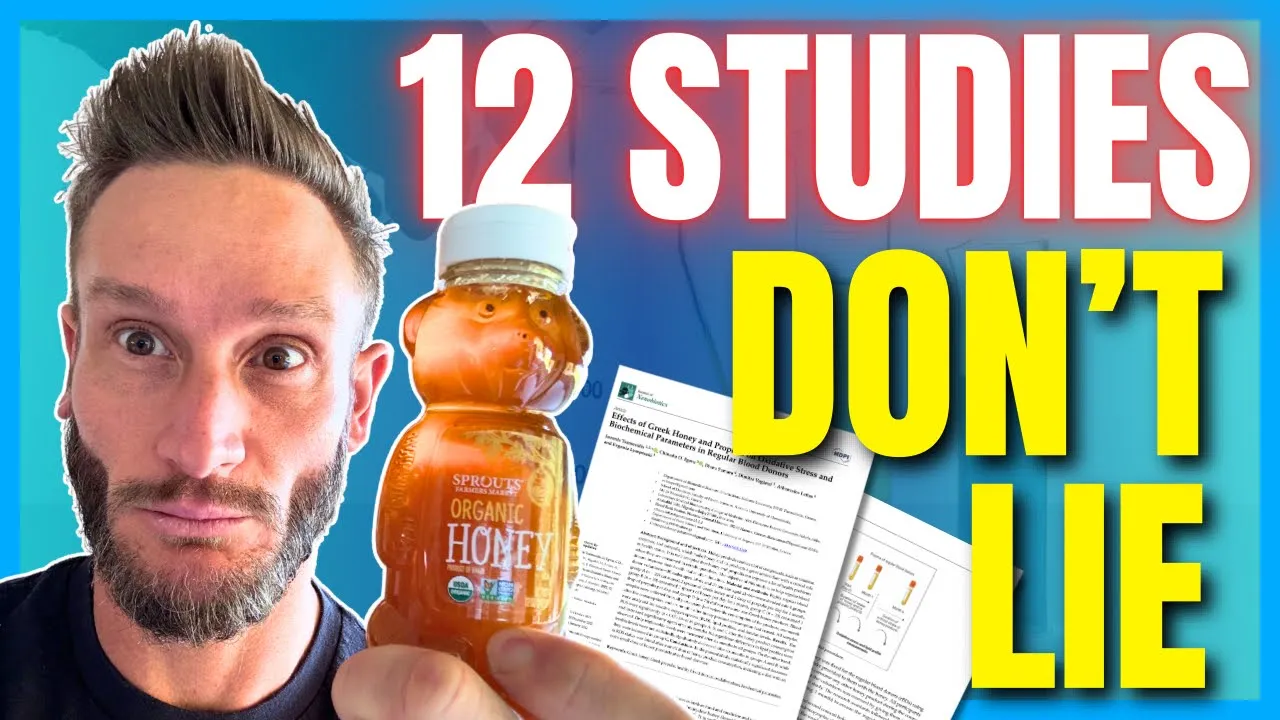
yes it has sugar in it but no one is telling you to have it all the time treat it like a supplement don't treat it like your sole source of carbohydrates I'm talking about honey now there's a reason that tribes all over the world and why so many people in history have touted honey as being something powerful it's not woo woo Witch Doctor weird stuff it's legit and there's actually science and there's large trials to back this stuff up seven reasons why honey is legit number one it's a heck of a lot better than refined
sugar and this is not just me saying it there's actual literature the Journal of medicinal Foods had published a paper was pretty wild they took a look at Honey compared to varying ratios of sucrose and dextrose over different periods of time both acutely all the way ranging to like 15 days after consumption what it would do to the body they found that most importantly honey ended up having a significantly lower plasma glucose response than any other sweetener so even though it has a decent amount of sugar in it somehow it wasn't spiking glucose nearly as
high especially in those that were diabetic or insulin resistant this is what's Wild it possibly has to do with the chemical composition of honey in the first place just the way it's molecularly structured it might break down a little bit different additionally it's also high in fructose compared to a lot of other sweeteners it's about 45% fructose and don't get me wrong we have to be real with fructose like fructose can certainly contribute to a fatty liver fructose can certainly be metabolically problematic but we're not talking about eating gallons of honey here we're talking about
a tablespoon or two and in this particular case us as a sweetener the fructose doesn't put stress on like a demand for insulin so you're going to have a little bit less of that issue especially if you're insulin resistant number two is its effect on lipids and the Saudi medical journal had published a metaanalysis looking at seven different different trials and the consensus of these trials was that consuming honey increased HDL decreased LDL decreased triglycerides and most importantly decreased oxidized LDL oxidized LDL is the real real problem most of the mechanistic and molecular research points
to something that are called niin like substances these are compounds in Honey various compounds that have effects on apoprotein B Because ni impacts Appo protein B Appo protein B is what forces or allows V LDL very lowdensity lipoproteins to essentially aggregate this is when LDL becomes a problem when it's in a very low density form and it Aggregates and it's very hard for the body to in very simple Essence break it down so although more literature needs to come out to understand the true mechanisms we can see in the larger scale clinical data and the
trials that some something is happening here when subjects consume honey number three is the antioxidant effect there's a study published in oxidative medicine and Longevity this is really interesting I'm going to read you an excerpt from this particular study sugars proteins amino acids keratin organic acids Mard reaction products production of reactive oxygen species all contribute to the antioxidant Effect of honey so essentially there's all these different compounds in honey that seem to have antioxidant effects but one of the most power ful effects is that it seems to drive up the antioxidant capabilities of our own
body's antioxidants so yeah you're adding external antioxidants but you're also increasing the potency of your body's internal antioxidants which to be totally fair are probably more important they're more powerful and they know our bodies inside and out compared to an external antioxidant there's a study that's published in the journal xenobiotics took a look at 80 people had them consume honey for a period of 6 months and they took their blood before they started taking honey at one month and then again at the end they found that their level of reactive oxygen species and oxidative stress
went down significantly over that six-month period when they were consuming honey but here's what's Wild as soon as they stopped consuming honey the oxidative stress went back up so there's something going on there again we can't put our finger on everything we don't know everything there is to know about honey but there's something going on that's pretty powerful there now FYI I put a link down below for Thrive Market that's a 30% off discount link I mentioned them because I think it's relevant because they've got a wide variety of different Honeys that you can choose
from now I am not sponsored by a honey company I have had Thrive Market as a sponsor on this channel for over half of a decade and they just so happen to have a lot of brands of honey and I think it makes sense to mention it with this video so you can take a look at all the different kinds that they have they have flavored kinds whatever you name it so if you want to start adding it to your coffee or do it like I do it I treat it like a supplement if I
feel like a little cold coming on or something like that I will take a spoonful of it if I want to have a little bit of a different antioxidant effect after a workout I might mix it into some yogurt or a protein shake anyhow that link down below saves you 30% off whatever you want to get from Thrive Market whether it's honey or not whatever groceries you want and a free $60 gift so use that link in the top line of the description and stock up your groceries number four is its powerful impact on metabolic
Health by driving up what is called adiponectin now adiponectin is something that increases the utilization of glucose improves glucose metabolism but also increases fatty acid oxidation in the muscles so what's interesting is if you look at the rodent model research granted it's been seen in human data too but there's interesting rodent model research that paints it very clearly this particular study was published in the Journal of Pharmacy and pharmacology and it did take a look at rodents and it found that when they were given honey they had increases in their serum adipine levels but they
also had decreases in their glucose levels and increases in fatty acid oxidation now it would make sense that the increases in adiponectin would drive up fat utilization okay fat burning fat oxidation and consequently drive down glucose levels but then when we look at a study that was published in nutrients we also see that when you have increases in adipine nectin as well as consuming honey you have decreases in systemic inflammation and increases an insulin sensitivity so consuming a honey even though it's a sugar seems to improve insulin sensitivity by way of potentially modulating inflammation inflammation
sort of acts as almost like this static that could impede the action of insulin therefore making you more insulin resistant if you can clear the inflammation which it seems as though honey has an impact on you actually improve insulin sensitivity so we can't put the cart before the horse all the time and say hey hey just because it's sugar it's going to be bad honey is very unique in the fact that it might actually even though it's sugar it gives you like a almost one step back two steps forward if you want to put it
like that now we get into the interesting stuff with wound healing there was a large scale metaanalysis pulled out of the Cochran library that took a look at 26 different trials particularly on like wound healing first and foremost they found that honey would increase postoperative wound healing sign ific anly faster than even antiseptic like uh washes so after an operation they would get better healing effect by using the honey and there was even quote highquality evidence that it would heal partial thickness Burns significantly faster now when we see highquality evidence out of a large scale
meta analysis that's pretty promising stuff okay now from the wound healing side there's a couple different ways this could be working for one honey is sticky okay so you're getting some moisture retention there that could certainly help but you're also getting a potential antimicrobial effect there there's an antibacterial effect antimicrobial effect that clearly has some potency since the literature is suggesting it's more powerful than an antiseptic rinse what exactly is going on there and what particular bacteria and antimicrobial effects we don't really know again that's kind of the interesting thing about honey we don't know
everything we just know that it's doing something cool but when you look at some of the stuff we do know about honey for instance increases hydrogen peroxide production so its ability to do that if you've ever put hydrogen peroxide on a wound before you know it gets all foamy and kind of weird right if you put honey on a wound you would see the same kind of thing so you're almost getting like a sustained effect with this hydrogen peroxide that the body can produce and kind of it creates in some ways out of thin air
the next one is some newer literature that came out of the frontier aging Neuroscience in 2023 and this is talking about the effect on the brain now this is very preliminary data so we can't take it to the bank but I wanted to include it in this video because it's promising what we're finding is that Honey's ability to drive down oxidative stress in the brain is so powerful that it might actually inhibit what are called apoptopic signals in neurons so it may stop neurons from prematurely dying so what this means for you is as we
get older and our brain cells begin to naturally die because as we get older the rate at which they die is much faster a lot of it has to do with the oxidative stress in our brain not to mention we've established that honey has anti-inflammatory properties so when we reduce neuroinflammation we improve the actual signaling and the ability for fuel to be properly used in the brain if there's less inflammation then glucose signaling can be better insulin signaling and receiving can be better so you're getting better overall energetics in the brain but you're also getting
less oxidative stress and less damage in the brain and lastly a huge one respiratory tract infections so there was a study published in the bmj took a look at 14 different studies it found that when it came down to respiratory tract infections honey not only improved the symptom score like the severity of symptoms but also decreased the severity of the cough and the frequency of a cough now why is this the case again there's two kind of theories here one is the more mechanical Theory and that's the fact that honey is thick and viscous and
maybe it's stopping the coughing from happening that's certainly a realistic thing but doesn't explain the severity of the symptoms overall and there's other studies that demonstrate actually shortening of the life of a cold too so perhaps that has more to do with the antimicrobial antibacterial effects but also the reduction in inflammation that we've seen across other studies maybe just reducing that inflammation is allowing for a better feeling and reduction of severity anyhow as always keep it locked in here on my channel and see you tomorrow