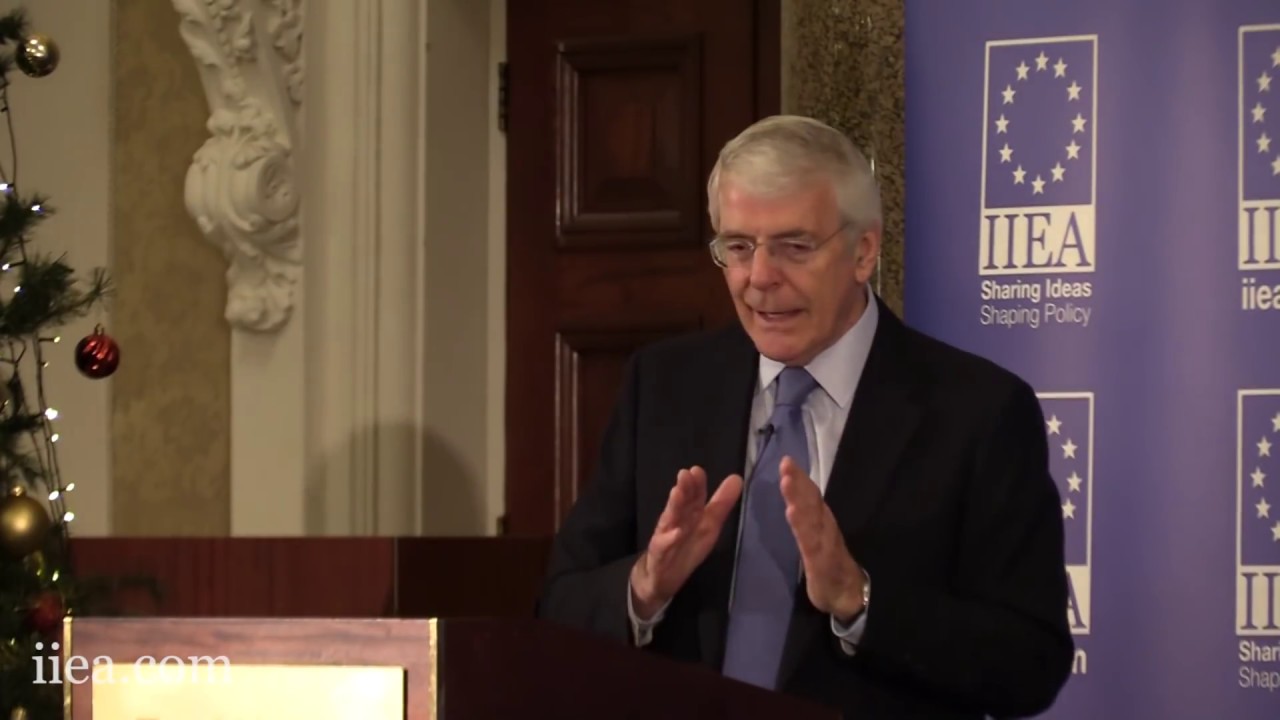
[Music] you're all very welcome my name is colleague Marcin and could that it argue for a star to follow me and fix your homes to seven I should tell you also that you are free to tweet we're very fortunate today to have professor Terry Brown with us here has been here previously twice at least which is one reason why we wanted him back because we value his expertise he's going to talk about the world according to Xi Jinping we were talking before we came up about the change in the atmosphere in relation to Chinese relations
with the West I think we have all registered over the last five years with this person over the last three years I've everybody remember because Terry Brown remembers Nixon's visit to China and 68 but after they change in China what don't shopping Robert Zoellick in 2005 spoke about having China as a responsible partner in the international system I think things have moved on it since then only March this year the Commission of the European Union pronounced that the EU and China were systemic rivals as far as what they call governance is concerned and somebody was
mentioning downstairs a comment earlier this week by Martin wolf who talked about the problems posed by setting confrontation with China as the governing principle our relations with China this is I think certainly true one of the problems is the extreme size of the Chinese phenomenon and world scene and at the center of us is Xi Jinping of course who has multiplied officers not only secretary terms of the Communist Party he has also removed and he time limits on his period and office and what is even more striking he has brought it about that Xi Jinping
thought has been assumed into the Chinese Constitution this is a reason why we are particularly grateful to have Cary Brown who is director of the Lao Qi Chinese institution King's College London he will speak about the world according to precisely Xi Jinping thank you thank you very much it's good to be back here happy if you have actually been to China right okay so I'm talking to a group of people who probably know more than me so I shall be brief then so basically I sort of talked for about 20 minutes and then it'll be
good to hear your perspectives so I'm gonna do this because a huge subject um as a chair sort of said China kind of factors into all sorts of things now so um I I will sort of do this on a kind of very simple sort of model of one two three four and I will navigate through the issues I'm going to talk about for the next 20 or so minutes with that very simple kind of framework it's always good to sort of think about China by starting from within I mean like anywhere domestic politics are
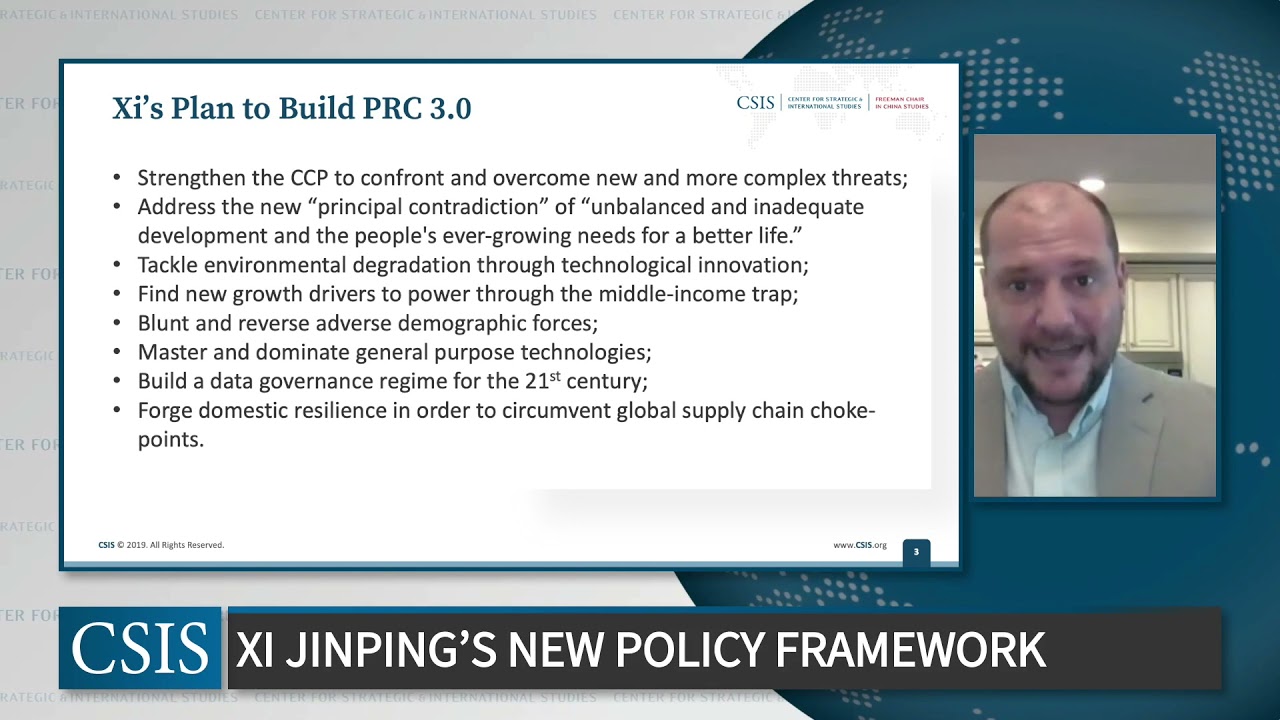
really important and if we kind of think of what is the Prince of poor task of the XI Jingping administration since 2012-2013 you know what is the one thing that they have to achieve what I think is pretty simple it is to make one party we're all sustainable and that is an amazingly important thing because it hasn't really happened elsewhere the communist system in the u.s. I think sort of lasted for 74 years you could argue that the DPRK North Korea is also making one-party rule sustainable but I mean that's really one family rule and
so the system in China is really of a corporate party trying to make its rule perpetual that it will not ever go away that it will be a part of the sort of political reality of China forever and so I think that's sort of the real core thing that you see in every word that Chinese leaders from cheating ping down say to make one party you're sustainable it is the kind of heart of everything else domestic and international policy and when you kind of take these things and put them within a party rubric they sort
of make sense so this is you know an extraordinary organization with 90 million members and it has a sort of very distinctive ideology everything is with Chinese characteristics it is really sort of indigenized you know kind of Marxist Leninist you know ideology Xi Jinping thought which has just been added a couple of years ago to the state constitution all these iterations but they are tools to make this organization this institution than the Communist Party sustainable and that has not been done anywhere else so what is the sort of you know the the number two the
two things that are kind of important to the party so the Communist Party of China has a story we're living in the ear of storytellers politicians I believe principally are storytellers and stories get capture people's imaginations they capture people's emotions and everyone seems to be telling a story now though you could and I promised I won't say this by name that you could say the story we're telling us in the UK does involve a lot of sort of you know pigs flying but that's a totally different thing the story in China I think there's two
things that are really really important about this story there are two millennia centennial goals 2021 which is the time when the Commerce Party of China celebrates his centenary and then 2049 when the People's Republic of China celebrates its centenary and these structure history and they I think betray the fact that the party has firstly an idea of history which is of perpetual progress and this philosophy of history is that is always about tomorrow being better than today it is always optimistic done sharping i believe in the 1980 said as a communist he was always optimistic
and I think this optimism is shown by the fact that China believes that you know history is gonna have a good outcome and that these two Centennial goals are the sort of big big moments in which they can celebrate modernity with Chinese characteristics which means that China has come through a sort of terrifying modern history in which it has suffered very badly under colonization it has suffered terribly in the sino-japanese war and now it is finally on the cusp of grasping you know this great historic Renaissance when you go around China you can see you
know these kind of characters that talk about you know the kind of great Renaissance of the Chinese nation so this is the sort of extraordinary you know kind of resurrection a national resurrection and it's not remotely in the future it's not you know a thousand years at a time 100 years time it is two years time you know it's kind of the 2020 one the first goal and so these are incredibly mobilizing and so when people say you know do Chinese people really believe in Marx and Lenin ISM you know kind of these things probably
not but they certainly believe in that historic mission and they believe that the party as a tool to deliver that is really really kind of you know has use and so I think that's what we really have to remember when we think of how often politically the Communist Party of China you know seems very alien why is it that Chinese people might be supportive of it well the fact that it has you know kind of got China so close all that's that's it's sort of narrative is his story is that it's got China so this
great moment I think is very powerful and that's why most people I believe do believe in that mission and that kind of you know sort of great national Renaissance whatever they might think you know ideologically and so these two goals really kind of give a structure to history and they kind of manifest this sort of positive idea of historic progress but the second thing they do which i think is important for the outside world to understand is they also show that this history this historical kind of vision is a moral one that China's Renaissance is
something it is morally owed that it was victimized and betrayed and bullied and pushed around in modern history and done you know kind of treated unfairly and it is its moral right to have the sort of you know kind of moments of Renaissance and the 20 21 20 49 are part of a moral history a sort of moral process and therefore in kind of contesting them or trying to stop them the outside world is also kind of getting involved in these arguments of whether it you know kind of regard China is not allowed to have
this moment of moral Renaissance and so I think it kind of is a very complicated thing when we look at Chinese leaders talking about you know the Renaissance of China that you know kind of this idea that it is it's morally owed these moments and that it feels that this is really a kind of great rectification after it's very very tragic and difficult history from the middle of the 19th century onwards in the sino-japanese war in the middle of the last century so that's the sort of two now the three I suppose that I'm going
to talk about are structural issues because the rise of China kind of involves profound structural readjustments to the world in which we live and I think that there are three dimensions of those that everyone needs to really pay attention to and they involve not just China but the way we look at China outside of the country the first is that in modern history until now we've never had to deal with the strong China a strong China is a new phenomenon we are intensely and I say that as you know Europeans or Americans Australians the outside
world its mindset is intensely used to uncomfortable with a marginalized largely victimized largely remote China China which sort of inhabited a particular space and didn't really kind of have much global impact or reach and the China we see today under Xi Jinping particularly since 2012 is a strong sounding China and in fact it is strong I mean its military expenditure is huge its economic imprint in the world as we all know is massive it's the world's biggest exporter it's the second biggest importer it's most kind of economic indicators show that it is incredibly important it
is something like a fifth of the world's economy now and it is likely sometime in the next decade and maybe even before it's become the world's biggest economy and so these are huge signs of China's strength but one really has to wonder whether the world is actually used to thinking of China as a sort of you know strong power I think our mindsets are still this is gonna fail that you know at some point it's gonna hit the skin you know kind of here's kids that it's not going to really ever be you know kind
of a truly strong modern nation but as of today you have to say that the likelihood is that Wiz is coming a powerful strong nation and it is fulfilling its dream of being you know kind of powerful and strong so a strong China is part of our geopolitical reality now and we need to kind of build it into our understanding of international affairs the second is really about how China manifests its power in modern history until recently we have never had to deal with the naval China and I mean in the very early period of
the Ming Dynasty with the eunuch Admiral Jung ha we had a kind of very brief period about 15 years and 1402 in China had a Navy that reached the sort of eastern side of Africa and kind of archaeologists have found parts you know kind of of the goods that these navies sort of carried down to Indonesia but that disappeared and you would say that really in modern times until the nineteen eighties China did not have any naval capacity at all suddenly under an general den lil watching China built you know kind of this Navy which
is now in terms of vessels the world's biggest I mean technologically still far behind the United States but it has something like five hundred different kinds of vessels and so these are tangible manifestations of China's power I mean you can see them you can see them in the high seas last week in Sydney Harbor you know three I think Chinese warships appeared I mean obviously as part of a planned visit well that's what the Prime Minister of Australia said a part of an unexpected planned visit I think that was his works very strange he's obviously
still recovering from his unexpected victory in the election so we'll grant him that little bit of verbal looseness but I mean you know it's extraordinary had also a frigate come I think to the UK last year from China and so this is really new and I guess the thing that the outside world has to work out really quickly is what what does this mean what does this manifestation of China's power mean is it really likely that the Wars of the future going to be fought on the high seas I mean is it just a distraction
I mean some people would you know interpret this is a big big distraction this is a power which since 1979 has not had any conflict at all I mean it had a very brief conflict with Vietnam then it hasn't really had any international combat experience since the 1950s really in the Korean War and so the fights about the fact that China has a big military it's sort of not used it it's not really kind of gone on the offensive so is it that we are being haunted by a kind of manifestation of China's power that
is actually not really where the action is and that really where China's had most potency is in the virtual realm where I mean it's been incredibly effective according to most analysis it's kind of virtual you know ability to penetrate virtual space has been incredibly effective very very powerful and therefore as a sort of French analyst and right about China said China's power it doesn't act it has a ghostly sort of presence but it's not really easy to pin it down and while we're kind of all busy staring at the kind of naval assets are these
really where the things are going to happen so a naval China and how we interpret that as a manifestation of China's power now is a really really important and big thing but the third aspect of these structural changes is the big one it's the big big big one and I'm afraid I'm going to have to use the V word values no one in Beijing or anywhere in the world knows what a world run according to Chinese values looks like we are kind of finding out a little bit for the belton road and other ideas but
we still really don't know what a world with this set of values is like what our Chinese values well we can get into a very very long and complicated conversations the only two things I can say are Chinese leaders clearly believed there is such a thing as Chinese values Xi Jinping has asserted the importance of observing these values and the importance of resisting Western values so as a leader with a hugely influential position he has taken that position just because of that we have to somehow work out what he is resisting and what he is
asserting but I suppose secondly we can understand this question that's been on the minds of West's really for 400 years since the Jesuits went to China really in the 16th 17th century and what the Chinese the Chinese people believed and the answer to that has always been a hybrid that very hybrid answer Chinese values are hybrid they are diverse they're not easily encapsulated they are the kind of you know three great teachings of Taoism Confucianism and Buddhism and now they accommodate Marxism Leninism they accommodate Xi Jinping thought they accommodate capitalism all of these things have
got the you know kind of little attachment with Chinese characteristics and I think what that means is that this is a very hybrid inflexible worldview and I guess that is really the heart of the problem the West with the Enlightenment values it has are often deeply wedded to the idea of the universal the idea of these values morally and otherwise philosophically being universal and having a kind of principle of generality and I think China can test that it's the great dissenter and because of the scale because of the fact that it's in the position it's
now in we have to take this seriously it's there is no evidence whatsoever that China is going to embrace Western political and other kinds of values there are plenty of people in China who do find Western values very attractive but I think they're in an open relationship with them they don't really demand you know they don't really give these values a sort of a lot of faithfulness and fidelity they they think that they're useful you know sometimes but they're certainly particularly flexible in kind of embracing other sorts of values and I think that is a
very significant kind of different world view and I think it's one that America in particular is finding difficult to kind of embrace and deal with and I think that's really underneath all of the discussion of tariffs and sort of trade issues the bedrock of the problems between the United States and China at the moment are about values and it's very hard to find a easy policy language to talk about these because this is the realm of philosophers and cultural theorists and they're not really often involved in politics and so alas you know we have now
you know kind of this whole discussion being led by more trade sort of interested political figures like Trump and others but really what they're talking about is code for these profound philosophical differences and those are not going to be easy to deal with because they deal with identity and issues of you know who people are and why they are and you can't really kind of the ghosts out those away this is something we all know in Europe very well too so this sort of issue of values the third of this kind of trilogy of big
structural changes is a really really huge one I think it's going to take most of effort and time for the next considerable period of time to work out and I will come back to that right at the end when I have just dealt with the kind of you know what does China think of the world internationally how does it see the world internationally um so that's the four that I've come to so the four basically are that China I think has a sort of very structured view of the world almost like a hierarchical view of
the world when you go to Beijing you know it has these ring roads around it I think there's six now you know the sort of old ring roads which used to be where the city walls are and then there's kind of another set of ring roads and it goes right out to the sort of six set of ring road where you can kind of you know race your Ferrari at the weekend if you're so inclined and because it's usually pretty empty and they're probably building a seventh Ring Road now somewhere in China so you know
these kind of ring roads so I think China's diplomacy has six ring roads the first ring road of course the most important one the closest is the United States for all sorts of reasons for trade for the number of bilateral kind of discussions it has military reasons you know China has tried to craft a narrative about the United States for the last 40 45 years since rapprochement really formally started in 1972 so you know this is a relationship it has invested a lot in and I think what it wants from this relationship is parity it
wants equality it does not want contestation it knows militarily that America is still supremely powerful but it wants strategic space around it in its region so that's why I think the South needs to China see who's important they carve out strategic space and it wants some kind of equality and so the story that Xi Jinping is the chief storyteller in China at the moment is saying is to the United States he said this since 2013 when he went to sunny lands to talk to Obama and a new power of a new model of major power
relations and anything that just means that China and the US are those major powers and they have to have a kind of equality and they have different kinds of space where they're going for sort of primacy and China doesn't want the military space so much but it wants an economic space and it wants a kind of strategic space regional dominants maybe because that's the most important for it but it does want to have equality in these spaces and it does want to have a sort of you know kind of a recognition from the United States
that its claims on this equality are legitimate the second ring road is the Belton road and the Belton Road is China's story to its region now the region that it lives in is a tough neighborhood it has 14 borders with really really difficult countries North Korea Pakistan Afghanistan you know kind of India these are really really complicated sets of relationships and so the Belton Row broadly is to create an area of economic commonality where everyone is invited to think of the benefits that come to them from engaging with the Chinese economy and you know the
sort of growth that can come from that it is also an area in which China is trying to export its technology high-speed trains and things like that and it is also an area in which China is trying to create more knowledge about it and more sympathy towards it so there is a propaganda purpose of course why not I mean everyone's kind of up to sort of trying to message and get favorable press so China is also doing that it is trying to create all sorts of linkages and connectivities in this region you know this belt
and road region though I think he's a kind of story of you know what China means to its immediate geographical neighborhood although of course everyone at the moment talks that themselves being on the belton Road I think the real key partners are you know in the Chinese geography that China inhabits what is the final thing that the belton road is it is a vision of a world without the United States the United States is not there the United States does not attend the big jamberries in Beijing about the belton Road the United States and Japan
are kind of by their own choice excluded they're not members of the Asia infrastructure investment bank that China initiated the International Bank that it set up America is not there so this is China's vision of a world where kind of America disappears but of course America doesn't disappear and it's not easy to exclude a mirror in the way the China wants but I think that's what it's trying to do the third ring road is Europe why does your matter to China so it's a huge market for sure it's a huge economic power that's true but
I think Europe really matters because Xi Jinping sort of figured this when he came to Brussels and made a speech in 2014 it is an intellectual superpower it has enormous technological assets and it has been the biggest transfer of technology to China apart from Japan in the last 40 years so you could say that without technology transfer from German and other companies and British and sure Irish companies and other companies without that China would not be in the position it's in today and so that kind of technological relationship is hugely important and that's why seizing
pings story about Europe is that it is a civilizational partner that's the word he uses so it's obviously not state to state relationship it's more complicated than that but this really sort of kind of explains why Europe and China have similarities they are civilizations I mean China sees itself often as a civilization rather than the country so they have that kind of in common what is strategically Europe's sort of opportunity having had this kind of relationship with China over the last 40 years we are moving into the era now in which it is no longer
a sort of technology surplus on the side of Europe China is now becoming an authentic innovator in many areas and so I suppose the question for Europe is are we now going to get the same kinds of benefits that have accrued from all the investment we put technologically into China coming back to us are we gonna be able to kind of you know core on the favors and the sort of political capital that we've built up because of course none of this is spelled out in any agreements by now becoming technology partners of China that
get things back so that's a big big question and I suppose that's behind some of the strategic documents that the EU has been issuing like more recently a more fair deal in getting back some of that kind of technological largesse that we once gave to China because now we are the ones that are probably more increasingly in need of help and then the fourth region beyond that that's the rest of the world China is the global power this is an ear in which China is in the Arctic Circle it sits on the Arctic counts as
an observer it is an ear in which China has five research stations in the Antarctic because an era in which China has massive relations with Europe with Africa maybe a million Chinese working and living in Africa it's an era in which China is active in Latin America it's active in the Pacific Islands it's active everywhere so the ear of global China is truly here so the fourth ring road is really the rest of the planet so just sort of finally I guess I'm going to kind of conclude having dealt with one two three four the
one the sort of you know the political sustainability of the party the two millennial goals the three sort of big structural issues that we're having to think about China strength its Navy and values and then the four ring roads around China so you know kind of a conclusion I suppose is well where are we heading so I believe you had your visitor from Washington here yesterday and I saw the splendid kind of inflatable dole of him kind of floating above the sort of streets of Dublin you know with the protesters yesterday I mean so what
does this all mean well I think we're moving into a kind of bipolar world and it's already kind of here what I mean by that is that we no longer kind of sitting comfortable neutrality kind of principle security partner as Europeans America is going to come and is coming more and more to say if you kind of you know do these things with China you will have consequences and it's going to be impossible to walk away from America's security blanket but it's also going to be impossible to walk away from the enormous benefits that might
come to us from dealing with China's economic you know kind of economic that the gains of dealing with China economically and this sort of conundrum is one that I was in Australia for three and a half years before coming here I mean that's very sort of common there to kind of try and figure out how do you balance your biggest trading partnership with one power has such different values but you're kind of you know most important security relationship is completely elsewhere you are now totally divided the happy moment when economics and security all one partner
is pretty much over China is now the largest trading partner of 125 countries so the unipolar world is is gone so bipolar world what does it look like it is one in which we are perpetually balancing is one in which we have to be very very flexible it is one in which we will have to at some point make some pretty hard choices about companies like highway and others as we sort of are told on the one hand by one partner and not having to do with them on the other to say look we have
to kind of have something to do with them because so important to it this bipolar world means that there are kind of no universal and common values we kind of have to accept that one power which is a fifth sixth fifth of humanity does not subscribe to that vision that power however is not saying to us that it wants us to change to its world view it is saying it's fine for us to have our enlightenment values it's fine for us to kind of have you know a particular view of the world but it doesn't
subscribe to it so it's kind of validating our universalism for ourselves but of course universalism which is local is somewhat paradoxical more positively beyond you know kind of moving into this bipolar world but all of the very very big sort of strategic quandary this kind of present us with is also probably quite liberating we are now you know kind of having a whole sort of view of the world which is profoundly different to the one that has prevailed I suppose in the last four to five hundred years and so that's kind of actually quite exciting
but of course it's also terribly unsettling so China is not going to you know the ass it's not about and I mean this just very finally this is not about the guys using ping it's not about the political structure in China it's not about particularly you know anything kind of really about China as a country it is this brute fact that a fifth of humanity cannot be told to go away they're not going to magically disappear we can slap tariffs left Center on this group but you know the ones who are really in charge of
this story are at the moment the 300-400 million rising middle class in China but they are probably gonna cry rise to about 700 million as China grows richer in the next few years and this group are gonna be the ones that write this story this group are going to be the ones that come into our environment as tourists as businesspeople and students in our schools but also as partners know sorts of different eras it's an incredibly complicated new era and one in which we will I think have enormous opportunities but also some pretty stark strategic
choices in the words of Joseph Heller in catch-22 relax it's hopeless thank you [Applause] [Music]