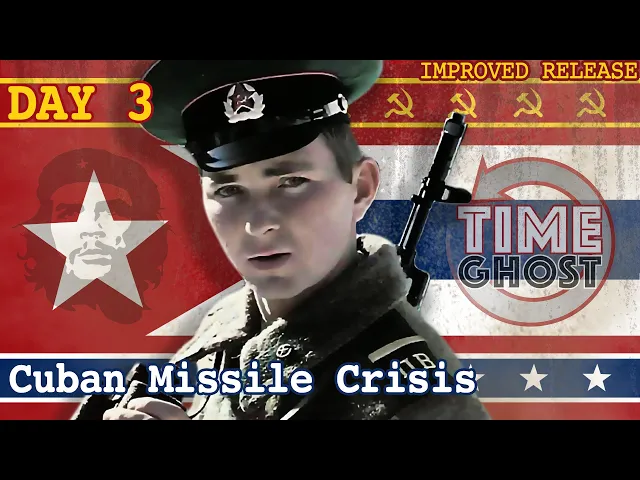
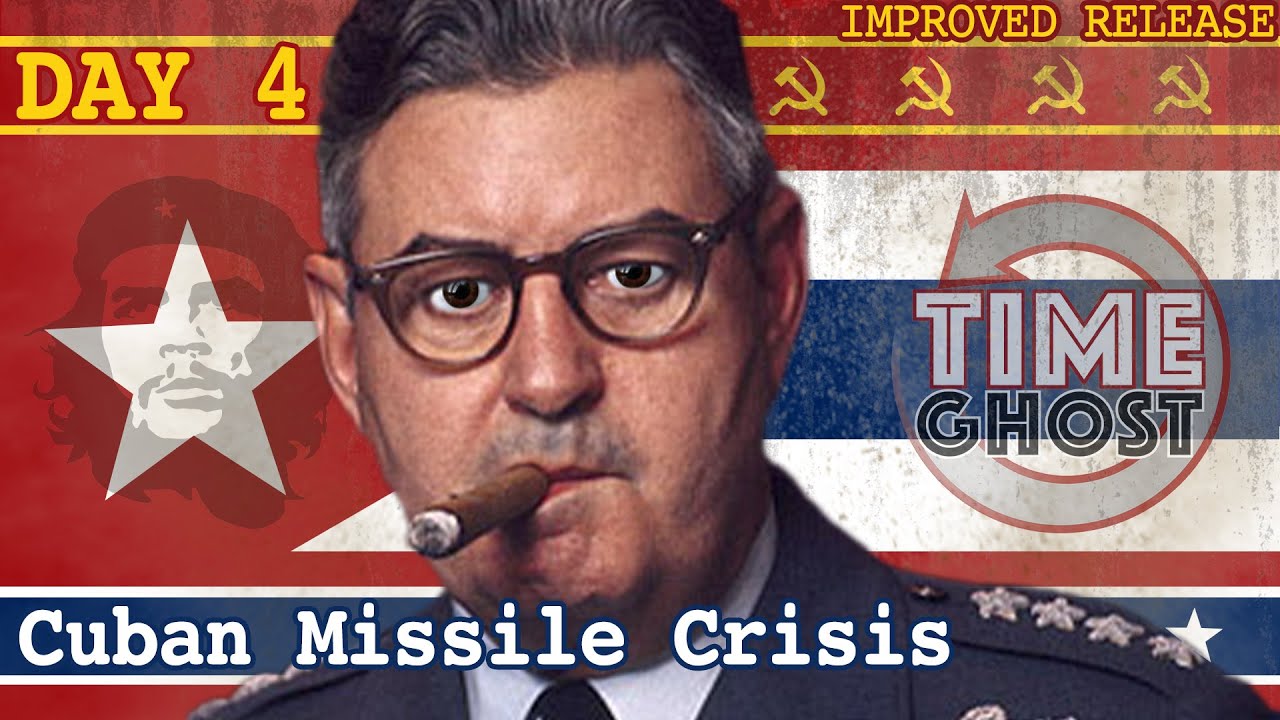
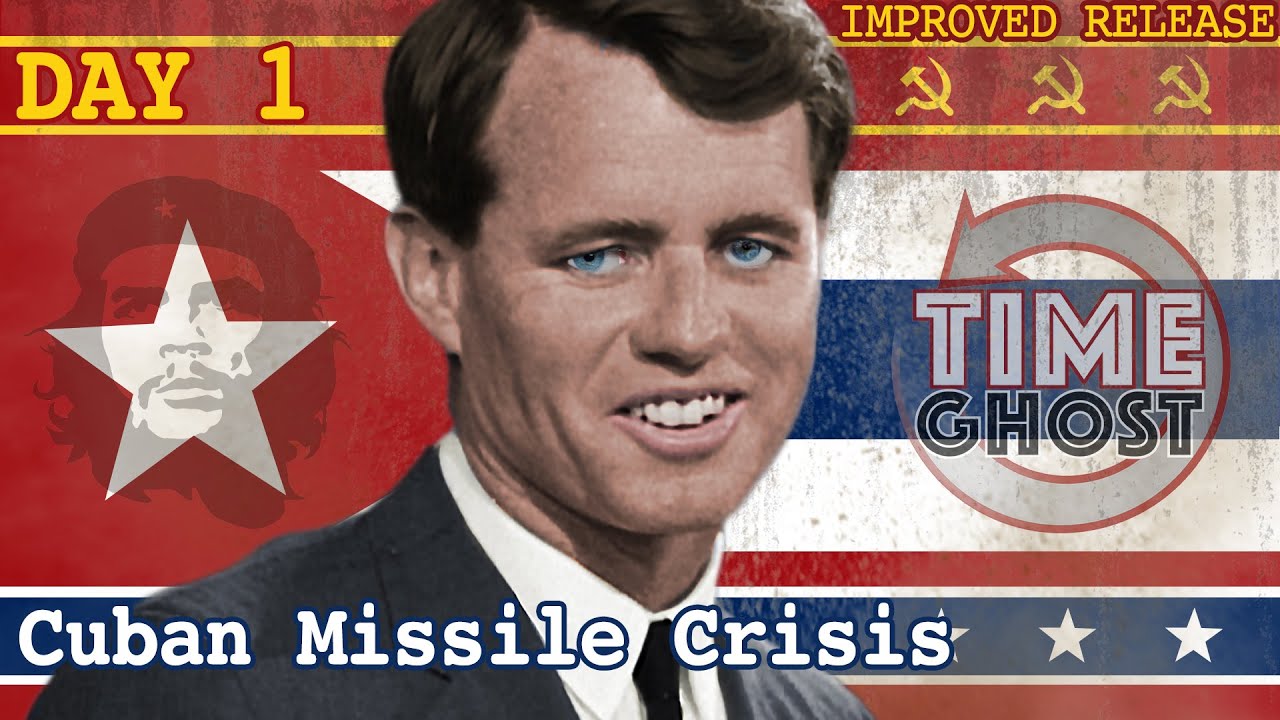
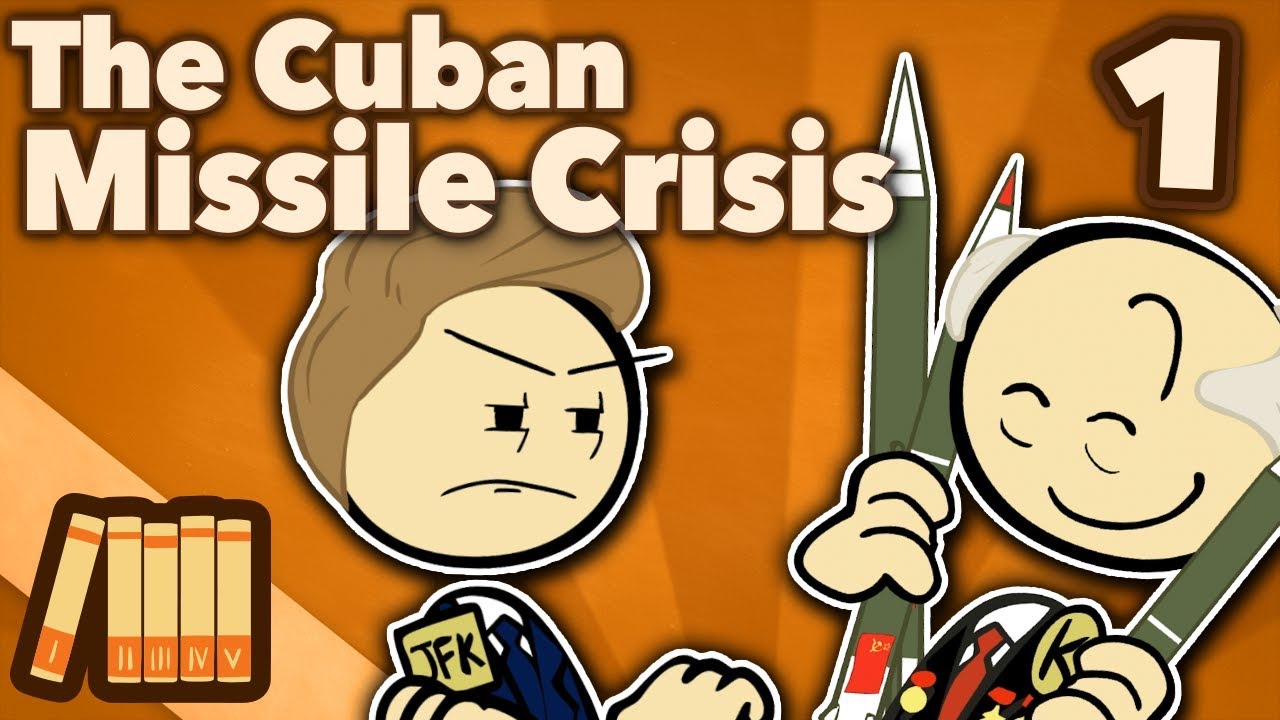
Day 3 Diplomacy can be an art based on telling the truth the way that best serves your own interests - outside the diplomatic corps, this is usually known as lying. And when you’re playing diplomacy with nuclear warheads at your back, such lies can prove very dangerous. Hi I’m Indy Neidell; this is TimeGhost with the Cuban Missile Crisis.
On October 18th, 1962, US army Taskforce 8 detonates a nuclear bomb called Thumbelina over the Johnston Atoll in the Pacific Ocean. This bomb is an attempt to make nuclear arms smaller and more deployable, but still, at 1. 8 megatons, it would, for example, kill about 2 million people and injure another 3.
4 million if detonated over Paris. President John F. Kennedy’s focus today, though, and the topic of discussions within EXCOMM, his group dealing with the missile crisis, is the meeting with Soviet Foreign Minister Andrei Gromyko for later in the afternoon.
The meeting was set up well before the eruption of the crisis, but now presents itself as an opportunity to finally take the Soviets’ pulse. Yesterday, EXCOMM became divided into three factions, a minority spearheaded by Secretary of State Rusk favoring a diplomatic approach, a majority under CIA director McCone favoring decisive military action, and growing support for a blockade, driven by Defense Secretary McNamara. This happened despite the general consensus that the missiles on Cuba do not upset the American nuclear power advantage over the Soviets in any significant way.
Why then are the Americans driving so hard towards confrontation? Three main reasons emerge when you read the records: First, an elimination of Fidel Castro and his communist regime just 90 miles off the US coast had been a priority already under the previous administration. Ridding Cuba of Castro also has broad support in the current administration.
Second, letting the USSR get away with a provocation of this sort would be sign of a weakness that could worsen the chances of keeping them in check in other regions. This is part of a principle that emerged during World War Two and is still in place in 2020. See, the US sees itself as the main guardian of peace and stability for a free market economy driven world.
Somewhat undermining this principle, to maintain that peace the US will threaten and even launch pre-emptive wars on its opponents. AND, to maintain this principle, the US must maintain global military superiority. Third, for President Kennedy this is now a domestic political issue that he believes will threaten his chances for reelection.
In his recorded and written notes from the crisis, he repeatedly expresses his dismay at Khrushchev’s lack of understanding for what this does to JFK’s own domestic political standing. Kennedy is under pressure to show that he is hard on communism and that he is aggressively pushing US interests in the world, especially in the Americas. Remember- he publicly stated in early September that nuclear arms on Cuba would not be tolerated and would be met with an aggressive response, and now he feels he has to deliver on that threat, no matter how senseless.
The situation doesn’t get any easier when analysis of spy plane footage reveals more alarming details of the Soviet build up on Cuba, so preparations for war go ahead while Kennedy receives Gromyko at the White House. Kennedy repeats his public statements from September and directly confronts Gromyko about a Soviet build-up on Cuba and if they have nuclear arms there. Gromyko is evasive and refuses to acknowledge the existence of missiles.
He says that any Soviet military support for Cuba is purely for defensive purposes to maintain Cuban sovereignty and independence. Strictly speaking he isn’t lying; he’s just not telling the truth. The Soviets had two reasons to put missiles on Cuba, and one of them is in fact to prop up Castro and defend Cuba from a US invasion.
According to his own memoirs, Khrushchev finalized the whole missile plan personally during a lonely walk through the labyrinth of a seaside park at the Bulgarian Black Sea resort Varna back in May. It had been brainstormed a few days before that as a possible response to the problem of the immediate threat posed by mid and intermediate range missiles pointed at the USSR in places like England, Italy and Turkey. Khrushchev runs his plan by Gromyko and Gromyko comes on board.
When they run it by the Central Committee of the Communist Party, though, it is presented as a defense plan for Cuba. The only one who objects to the plan as being too dangerous is Deputy Chairman Anastas Mikoyan. Khrushchev does admit that a miscalculation in such a plan could in fact lead to nuclear war, but in his view the benefits outweigh the risks.
The Minister of Defense and the commander of the strategic missile forces are both enthusiastic and the plan is set in motion. They begin executing it, though, without actually asking Castro – only at the end of May does a delegation travel to Cuba to persuade the Cubans to accept their ‘gift’. Some sources say that Castro was enthusiastically on board immediately, while the Soviet Ambassador to Havana at the time claims that Castro was ‘stunned and flabbergasted’ at first, and it was only when they pointed out the inevitability of a US invasion and promised increased economic support that he came around.
Be that as it may, the Cubans do agree and the Soviets start moving in. Mikoyan suggests a dependable WWII veteran, General Issa Pliev, as commander of the operation. Pliev receives a new official identity as an "agricultural specialist" named Ivan Aleksandrovich Pavlov.
The original plan for a few missiles goes into action, but the scope soon massively increases, and they decide that they will deploy both medium and intermediate range missiles, totaling several hundred warheads, supported by 44,000 men, with rocket personnel, guard units, anti-aircraft batteries, tactical navy bombers, fighter jets, high-speed missile-carrying boats, and even tanks. This force will not only guard the missiles, but will also repel any attempt by the US to invade Cuba. A headquarters will be created for intelligence, ballistics, topography, meteorological services, human resources, and accounting with a staff of 133 people.
There will even be a bread factory, an engineering unit, and a mining crew. Two anti-aircraft missile divisions with three squadrons each, with an anti-aircraft personnel of 10,000, will be deployed across the missile sites. The Soviet Air Force will bring in 40 MiG-21 fighter jets, 36 helicopters, and six Il-28 nuclear capable bombers with support personnel of 5,000 people.
Four mobile infantry squadrons numbering 10,000 men will be the core of the operation, armed with 16 missile launchers with nuclear-tipped cruise missiles for tactical defense. Last, but not least, the Soviet Navy contributes 36 more Il-28’s as mine and torpedo aircraft, 12 R-183 speedboats also carrying nuclear cruise missiles, two squadrons of cruisers with eight launchers each and a Sopka coast-guard squadron with six launchers- a naval force of 5,000 people. To escort it all will be an undisclosed number of nuclear armed submarines.
A huge force, armed to their teeth with nuclear missiles and short range nuclear tactical arms, that has to be shipped secretly thousand and thousands of kilometers to Cuba. When you look at how they go about this gigantic task, it’s like straight out of a cold war spy movie. The whole mess is loaded on civilian ships- hospital ships, transports, passenger ships, and tugboats, in four different ports on the Black Sea and in the Baltic.
A total of 111 trains loaded with men and equipment are sent on detours inland before they inconspicuously head to the ports. The soldiers are not told where they’re going, and to avoid suspicion they’re fully equipped, so they carry winter boots and heavy coats into the tropics. Once on the ships, enlisted men are only allowed to take meals and go above deck at night.
The summer weather and lack of air conditioning pushes the temperatures below deck above 50 degrees Celsius-122 degrees Fahrenheit. Inevitably, with such a large force under these conditions, a few people die - the corpses are unceremoniously thrown overboard. Officers have it better, as they are transported as civilians on passenger ships.
End of July: the first ships carrying missiles arrive on Cuba, but the warheads are still in Russia. The soldiers must learn commands in Spanish. All the Red Army uniforms are discarded and they dress either as civilians or in Cuban army uniforms.
The heavily guarded unloading takes place under extreme secrecy, mostly at night. The Cuban police even fake traffic accidents to block roads to allow the convoys through, out of sight of the Cuban population, which is rife with counter-revolutionary insurgents and CIA informants. At first, the intention is to set up the missile sites deep in the inland jungles.
But an assessment by the Soviets concludes that the lack of roads and the extensive counter-revolutionary activity in those parts makes that undoable. The locations they select instead are substantially less concealed and this, combined with the impossibility of housing so many men in the existing structures, will be instrumental in the US discovery of the sites. In fact, the first thing that strikes the Americans as odd when analyzing the U-2 pictures from October 14th is the unusual amounts of tents that have been set up as housing.
Last month on September 16th, the civilian cargo vessel Indigirka, retrofitted with two 37-millimeter anti-aircraft guns with 1,200 rounds of ammunition, leaves the Soviet port of Severomorsk carrying 160 nuclear charges. The ship arrives on Cuba on October 4th, and by the 15th the warheads are in a secret warehouse. The plan is to ready them Allin stages for deployment by January 1st, 1963, but the first missile units will already be loaded and active some time before the end of October.
There are, though, already loads of tactical nuclear arms ready to deploy on the island. Now, tactical nuclear arms are bombs, artillery pieces, and cruise missiles in the kiloton range, and are intended to destroy personnel and equipment in direct confrontation. They are mobile and can be used on the ground, fired from tanks, small ships, or planes.
As far as we can tell from the somewhat limited and very secretive Soviet records, the total megatonnage of just these tactical nuclear arms amounts to over 100 Hiroshima bombs. Today, October 18, when Kennedy meets Gromyko, the Americans only know about the missiles, the anti-aircraft support, and a limited Soviet force. They have no idea that should they invade Cuba, they will be faced by tens of thousand of well trained Red Army soldiers armed with tactical nuclear arms, which they will without a doubt use to drive back the US forces, killing tens of thousands of Americans.
This in turn will inevitably have to lead to an American response and full on nuclear war. At the end of the day, Kennedy tapes his own conclusions. His advisors are still divided between diplomatic actions and direct military action, including an invasion.
Kennedy himself is wary of a state of war and feels that he has consensus around an intermediary solution. The consensus was that we should go ahead with the blockade beginning on Sunday night. Originally we should begin by blockading Soviets against the shipment of additional offensive capacity, that we could tighten the blockade as the situation requires.
I was most anxious that we not have to announce a state of war existing, because it would obviously be bad to have the word go out that we were having a war rather than that it was a limited blockade for a limited purpose. Although Kennedy hopes that this is what he will achieve, his military is still preparing for war, and the Soviets continue arming the missiles on Cuba. And a blockade might still end with war, as we will soon see.
See you tomorrow on Day 4, as Kennedy tries and fails to maintain his regular schedule to not set off any alarms. All of our programming like this is financed by the TG Army, so please join us at TG. tv or patreon.
com so we can make more awesome series like this, and do not forget to subscribe. Good night and good luck.