US infantry captain Matt Urban was desperate to get out of the hospital. He knew his unit was in trouble back in Normandy, but until he had completely recovered from the wounds he’d picked up there the previous month, the doctors weren’t letting him go anywhere. That is unless he could find an excuse to leave.
Suddenly, he saw his ticket out of there. A rag-tag group of felons, draft dodgers, and pre-war deserters had been bunched together as a makeshift unit. Urban begged to train them, knowing the time would soon come when they were sent to the continent, and he would go with them.
His plan worked, and two weeks later, he was on his way back across the English Channel. Arriving in France, the men had served their purpose, and Urban had no intentions of fighting alongside the unwilling. Leaving them on the beach, he hitchhiked his way to the front lines.
The situation was as bad as he had imagined - his unit was pinned down by an onslaught of German bullets coming from high on a ridge. The soldiers could barely believe their eyes as the indomitable Urban limped toward them, one hand resting on an improvised crutch and the other waving around a . 45 caliber pistol.
As he pulled a wounded soldier from a burning tank, he yelled: (QUOTE) “Who’s in charge here? ” No reply. If they didn’t get out of there fast, they were done for.
Everyone present knew there was only one man for the job… The son of a Polish immigrant plumbing contractor, Matt Urban was born Matthew Louis Urbanowitz in Buffalo, New York, on August 25, 1919. By the time he graduated from Cornell University in the summer of 1941, the 21-year-old had been watching the war unfold in Europe and could see which way the wind was blowing for the still-neutral United States. Eager to do his part should the moment come, he enlisted in the Army, entering active duty as a lieutenant with the 60th Infantry Regiment on July 2 at Fort Bragg, North Carolina.
He quickly realized he had found his calling in life, saying: [QUOTE] “Immediately, I loved the military. ” His new comrades soon discovered he was not only a fine soldier but also an excellent boxer. University champion in three weight classes, Urbanowitz, now known as Urban, was appointed as Fort Bragg’s boxing coach.
His ability to roll with the punches and knack for getting back up when knocked down would prove just as useful on the battlefield as in the ring. The attack on Pearl Harbor in December 1941 pushed the US into the war, and by November of the following year, Lieutenant Urban was being shipped out to take part in Operation Torch, the Allied invasion of North Africa. However, much to his disappointment, his status as boxing coach now counted against him; separated from the rest of his regiment, he was told he was being held back for recreation assignments.
He would, therefore, not participate in the initial phases of the invasion. Stuck on board their troop ship off Morocco, he and another sergeant in the same situation asked to join the rest of the soldiers on the beach, but their request was denied. Refusing to take no for an answer, the two men leaped in a small rubber raft anyway and headed for the shore.
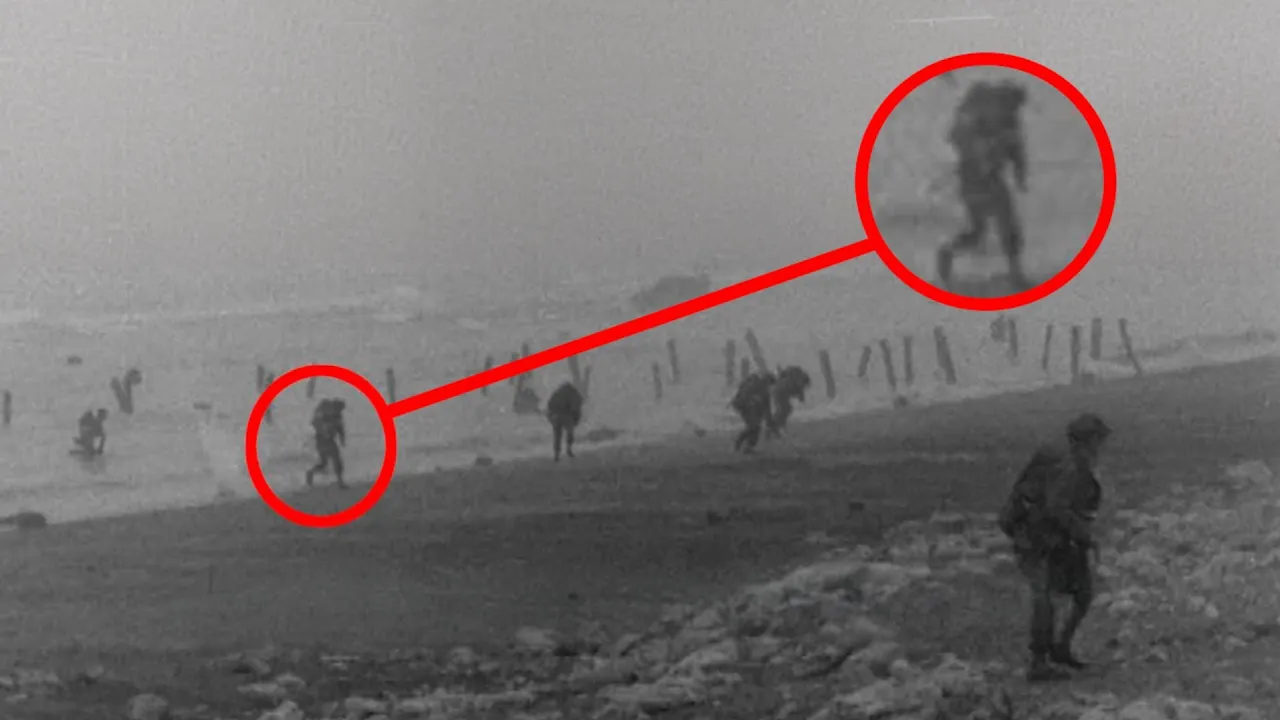
Along the way, they noticed some soldiers wading through the waves, almost drowning, their heavy packs dragging them under. With the sergeant’s help, Urban pulled the struggling men out of the water and got them to the beach. It was his first heroic act of the war, but it certainly wouldn’t be his last.
Reunited with his unit, Urban would get his introduction to the realities of combat later that day in a hard-fought battle that cost the US many lives but ended in the capture of the Port Lyautey airfield. Over the next few months, the young lieutenant cut his teeth fighting against Field Marshal Erwin Rommel’s infamous Afrika Korps, quickly earning a reputation for his courage and leadership. The campaign ended in an Allied victory in May 1943, and Urban was awarded a Silver Star and oak leaf cluster for his bravery, as well as a Purple Heart, having been wounded three times.
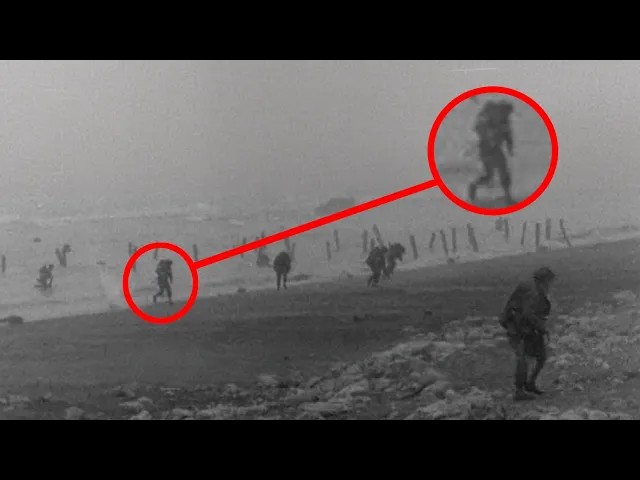
After a brief recovery period, Urban’s next stop was Sicily, landing at Palermo on August 1. The three-month campaign would see the American infantry having to move swiftly and stealthily in full camouflage to evade detection by the Germans; becoming a strong advocate for these tactics, it was around this time that Urban picked up his nickname of “The Ghost”: Once again, the Allies emerged victorious, and Urban was sent to England to prepare for the upcoming invasion of Normandy. Urban, now captain, arrived on Utah Beach on June 11, 1944, five days after the initial D-day landings; his company was sent to provide reinforcements for the troops currently pinned down by German fire in hedgerows outside Renouf, a village to the south.
The situation was dire as two German tanks and relentless small-arms fire wreaked havoc, causing severe losses. Fearing for the survival of his company, Urban seized a bazooka from a wounded comrade and, along with an ammunition carrier, maneuvered under heavy fire to a vantage point near the enemy panzers. Fearlessly standing up, he took aim and destroyed both tanks with precision.
Inspired by his bravery, his men surged forward, overwhelming the Germans. Later that day, near the village of Orglandes, Urban spotted another panzer. Attempting to leap through a hedgerow, he was struck in the leg by a 37-millimeter tank shell.
Refusing evacuation, he led his men to secure their objective—a critical road junction—and established defensive positions for the night. At dawn, he spearheaded another assault, only to be wounded again an hour later. One of these injuries was severe, necessitating that Urban be carried on a litter.
Upon examination by the battalion surgeon, the seriousness of his condition meant he was ordered to evacuate immediately, but Urban again refused. Reluctantly, Urban was finally persuaded to leave and was transported to a hospital in England. While Captain Urban was restlessly recuperating for several weeks, his regiment played a pivotal role in the 9th Infantry Division's final assault on Cherbourg in late June.
Seeing his men return wounded weighed heavily on Urban, who attributed the losses to the absence of experienced combat officers like himself. He was sure he could make a difference, but he still found walking a challenge, and the doctors ordered him to stay put. Nevertheless, he was determined to find a way out of the hospital and back to the front.
As July dragged on, he suddenly saw his opportunity. One day, while sitting in the hospital courtyard, he noticed a motley crew of 40 disheveled-looking soldiers from a nearby camp. It turned out these men had been pulled out of military stockades and told they would be pardoned for their offenses if they went to war.
They were a rowdy, undisciplined bunch with no respect for authority. No officer wanted to go near them. Urban knew these men, whom he called the “dirty forty,” would soon be sent off to France and realized that if he took on responsibility for them, he would get to go with them.
After pleading with the colonel in charge for the chance to train these unkempt misfits, he got the job, and two weeks later, despite still being far from full health, he headed back to Normandy, arriving on the morning of July 25. Handing the dirty forty over to an unsuspecting lieutenant, he made a quick escape, hitching a ride from an ambulance followed by another from a mail jeep until he reached his unit’s position near Saint-Lo, where they were taking part in the first phase of Operation Cobra. He found the men frozen on their stomachs with fear as the Germans fired down on them from a ridge.
The troops thought the still-injured Urban was crazy, but his presence instantly boosted their morale. After rescuing a wounded soldier from a burning tank, Urban quickly assumed control of the unit. Realizing they would soon be overwhelmed if they stayed put, he directed the troops into new positions out of the line of fire.
Later that evening, the battalion initiated an offensive on the ridge, but a barrage of intense fire brought them to a halt. The need for armored support was dire. Two Sherman medium tanks lay destroyed, and a third remained intact but immobilized in a hedgerow.
With his men still pinned down and the enemy fire intensifying, Urban knew decisive action was required. When a tank lieutenant and a sergeant were gunned down trying to reach the operational tank, Urban took it upon himself to act. Crawling forward with his trademark stealth, he reached the tank and climbed aboard.
Enemy rounds clattered off the armor as he lifted his head from the turret, armed the . 50-caliber machine gun, and unleashed precise bursts at the German positions. Tears filled Urban's eyes, convinced he was facing certain doom.
He muttered a tearful farewell to the world, praying for divine help. Yet, he remained unharmed and kept firing. A crew climbed aboard the Sherman and successfully got it moving again.
With its 75-millimeter cannon blazing, the tank advanced up the ridge. Urban’s fearless actions galvanized his men; they rose and followed his lead, giving the enemy everything they had until the Germans were completely overpowered. Thanks to the captain’s incredible skill and courage, the US infantry had managed to snatch victory from the jaws of defeat.
On August 2, Urban was wounded again when shell fragments struck him in the chest. Despite the serious injury, he once again refused evacuation. Just four days later, the 2nd Battalion's commander was incapacitated, and Urban, defying the typical hierarchy, was chosen over more senior and older officers to take command.
The relentless Urban led another assault on August 15, only to be wounded for the sixth time. Even then, he ignored the advice of the battalion surgeon and steadfastly remained with his men. While advancing through France and into Belgium, Urban and his battalion dug in on a slope near the River Meuse.
They spotted several Germans in a command car scouting the area. Urban instructed his men to hold fire until the car was near the river. As the Germans approached, Urban’s men ambushed them, catching them off guard.
The Germans attempted to flee but were quickly taken down by M-1 rifle fire. A quick-thinking sergeant then commandeered the vehicle and brought it back to Urban, proudly announcing they had acquired new transportation. Urban, still struggling with mobility, appreciated the gesture.
The car was put to immediate use, and wearing an Army Air Forces jacket he had traded for a Luger pistol, Urban was later driven to a battalion commanders' meeting by the sergeant. The River Meuse was a strategic point in the Allies' push towards Germany. The bridge near the town of Heer had been destroyed, and Urban's battalion was tasked with establishing an alternative crossing under heavy enemy concentration.
On the morning of September 3, they began their crossing but were met with intense artillery, mortar, and small-arms fire, which disrupted their advance. Captain Urban, abandoning his command post, led his disorganized troops across the river and toward Phillipsville. Their progress was halted by a German machine-gun nest, which took down a sergeant attempting to neutralize it.
Urban then spearheaded a charge, moving swiftly and throwing grenades, successfully hitting the target. However, he was severely wounded by a machine gun round that tore through his neck. Despite his injury, Urban remained conscious but was bleeding heavily.
Under fire, he was dragged to a ditch where the battalion surgeon performed an emergency tracheotomy before placing him on the hood of a jeep and transporting him to a field hospital tent. Urban’s battalion didn’t think he had survived; even he doubted he would pull through. While they pressed on without him, he stayed in the field hospital for six weeks, unable to speak.
Once the doctors determined that his condition was no longer life-threatening, he was transferred to a hospital in England. Though thankful to be alive, Urban knew he couldn’t stay there long. He’d already talked his way out of an English hospital to rejoin his men once, and now he was determined to do so again.
Despite his severe injuries, Urban convinced doctors to grant him a five-day convalescent pass to Scotland. Of course, in reality, he had no intention of heading to the Highlands; he wanted to be back on the frontline with his men. Instead, still voiceless and in pain, he endured two nights sleeping on a bench while seeking a way to hitch a flight to France.
Unauthorized flights were banned following the disappearance of famous big band leader Major Glenn Miller over the English Channel, but Urban managed to secure a spot by befriending some accommodating Air Corps members who helped him stow away on a plane. Once in France, Urban, still unable to speak, communicated through written notes as he hitched rides in trucks and jeeps to reach his battalion, which was advancing towards Berlin. The journey was arduous, but he eventually caught up with his troops in Amsterdam.
Upon seeing their captain, the men were incredulous. Believing he had been lost at the River Meuse, they wondered if perhaps he really was a “ghost” after all! Yet, while the shock soon turned to happiness as the reality of the situation became apparent, it would be a fleeting reunion.
The regimental commander decided Urban had endured enough, allowing him to spend five days with his unit before sending him back to England, marking the end of his active combat in World War 2. Though Urban’s vocal cords were left with permanent damage that gave him a raspy voice, he recovered from his wounds. In October 1945, Urban was promoted to lieutenant colonel and received a medical discharge five months later.
By that time, Urban's decorations were numerous, including the Bronze Star with two clusters, the Combat Infantryman Badge, the Legion of Merit, two Croix de Guerre medals, a Presidential Unit Citation, the Silver Star with an oak leaf cluster, the Belgian Fourragere, and the Purple Heart with six clusters. However, the ultimate military recognition still eluded him - the Medal of Honor. In fact, Urban had been recommended for the Medal of Honor in July 1945, but the letter was lost.
It wasn't until a 9th Infantry Division veterans' reunion in 1977 that Urban learned of the recommendation. This discovery spurred a campaign supported by the Disabled American Veterans and the Polish-American Congress, which prompted the Defense Department to review his combat record. President Carter personally ensured that Urban received the Medal of Honor after recognizing his heroic actions had been overlooked, calling him: [QUOTE] “The greatest soldier in American history.
” This brought his total of medals and decorations to an incredible 29, making him one of the most decorated US soldiers of all time. Urban eventually passed away in 1995 at the age of 75 from a collapsed lung, which some say was caused by his war wounds. His dogged determination, inspirational bravery, and remarkable leadership have ensured that his legacy will live on for many years to come.