[Music] [Music] [Music] the recently concluded Ana Avatar xprize technology contest with $10 million prize fund aims to catalyze a new phase in robotics development and various other innovative ideas and Technologies a vast number of teams from different countries participated competing to showcase the most technologically advanced robot Avatar one of the most interesting and promising developments was brought by the Japanese team Janis a joint team based on the Japanese and French Laboratories jrl and lmm the staff of these Laboratories have extensive knowledge and experience in creating humanoid robots for their Avatar the Janis team uses a
bipedal gynoid robot called hrp 4C also known as the robot girl meme this robot was previously developed by aist in collaboration with kada Industries hrp 4C is considered Ed one of the most humanoid robots among existing humanoid robots worldwide it has a natural gate can effectively manipulate objects and can recognize facial expressions the robot impressed both the jury and the general audience interested in high technology the winner of the $10 million prize fund x-prize Avatar contest was the Nim row team from the autonomous intelligence systems group at at the University of bond Germany with their
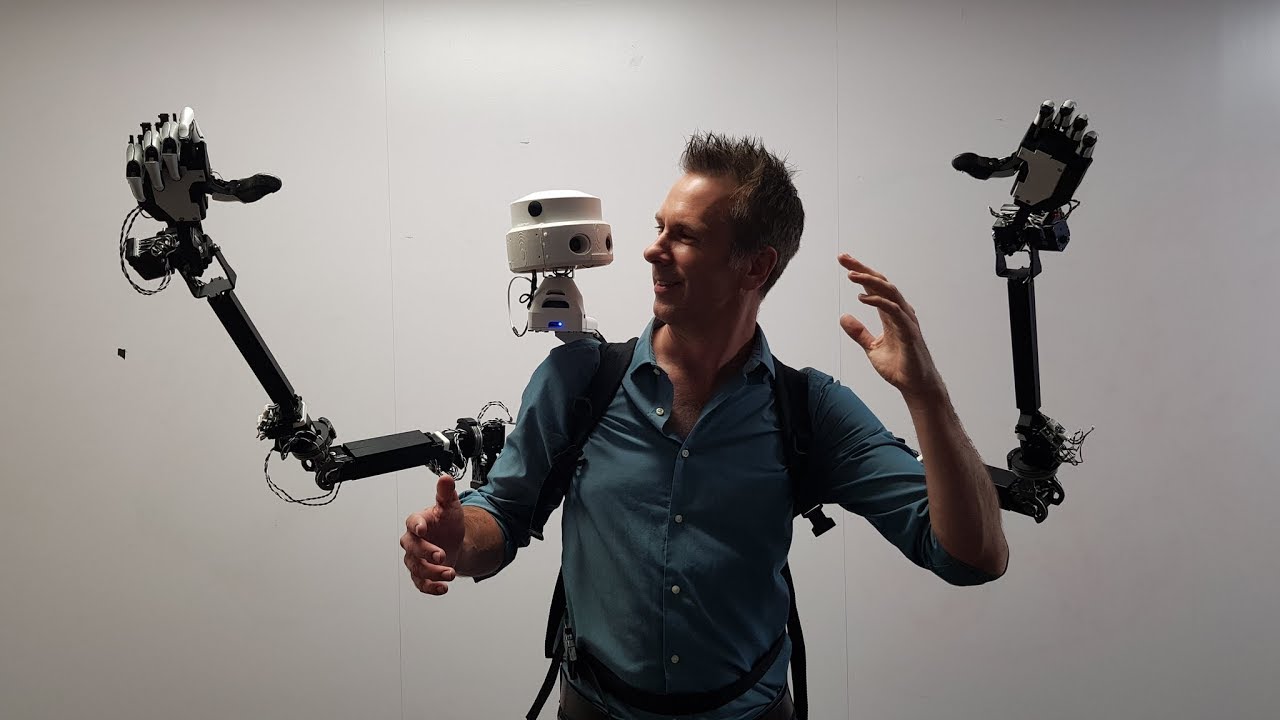
remotely controlled robot project operated through VR glasses and an exoskeleton their prize of $5 million is comparable to a substantial investment round and could serve as a springboard for creating a major company the nimro robot features five fingered hands and its head is mounted on a robotic arm allowing for freedom of movement the operator uses virtual reality glasses and the exoskeleton trans trans mits the movements of the operator's arms and fingers with the correct Force providing tactile feedback the machine underwent a test in which it had to remotely complete 10 tasks including activating a switch
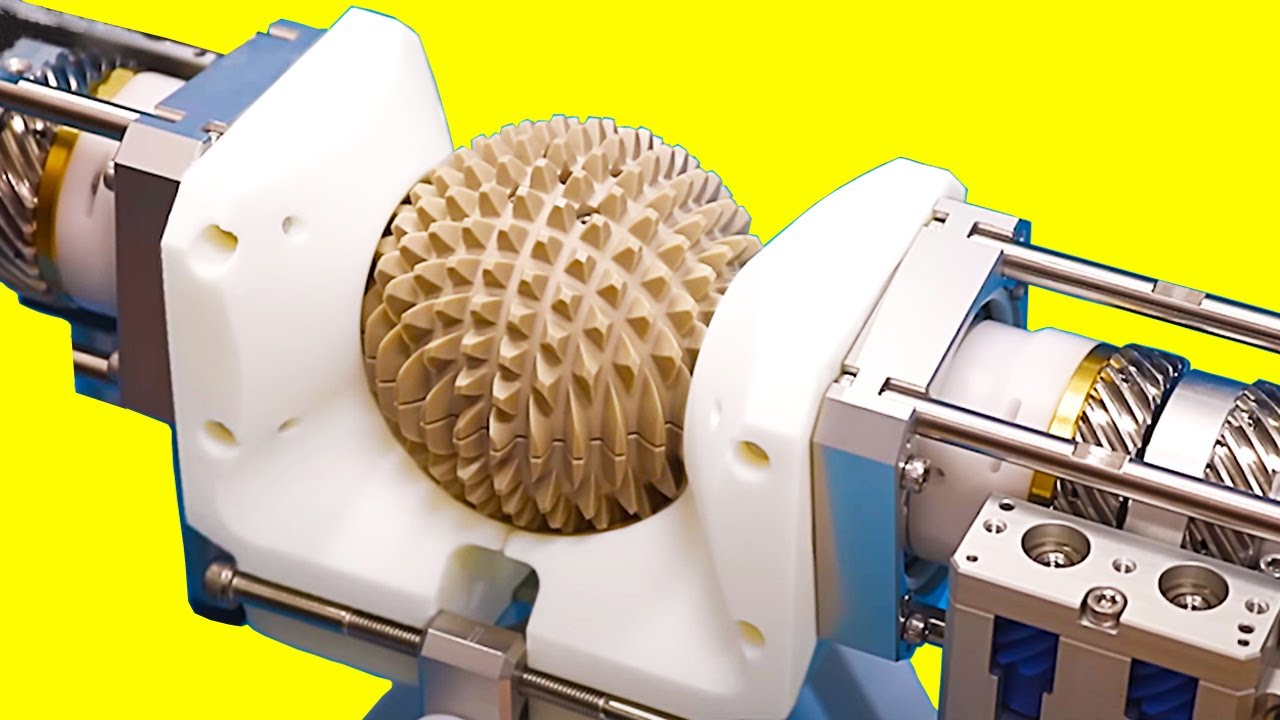
using a drill to open a door and identifying objects of various textures and weights the nimro team completed the task in 5 minutes and 50 seconds American engineer has developed a robotic hand with capability similar to a human hand this highly dextrous robotic hand is lightweight making it suitable for mounting on a robot's body the robotic hand operates on a lever driven mechanism that allows it to move like a human hand the engineer began his work by studying existing robotic hands analyzing their strengths and weaknesses he then compiled a list of desired features for the
new hand including sufficient fingertip strength high controllability low cost and high maneuverability researchers describe the system as an anthropomorphic hand with integrated dexterity it has five fingers each with three movable joints with sensors being placed at the fingertips the hand measures only 22 cm in length and weighs about 1.1 kg it includes 20 joints and can exert a force of 34 Newtons the scientist has created several videos demonstrating the capabilities of the robotic hand Engineers from the University of Tokyo have released a video featuring their humanoid robot moushi sitting in the driver's seat and operating
a 2012 Toyota comms electric vehicle the researchers aim to present an alternative future where you don't need to drive your car not because it drives itself but because a robot is at the wheel moushi is a musculosceletal humanoid developed by the research team in 2019 as a test bed for control system training musculosceletal in this context means that the robot accurately mimics an average human not only in height and weight but also in body structure in the humanoids head are two highresolution video cameras one for each eye which can move similarly to human eyes its
five-fingered hands turn the steering wheel according to the training software and sensor data and can also Engage The handbrake turn the ignition key and operate the turn signals the robot's Nimble feet can press the brake and accelerator pedals as needed the project team has equipped the vehicle with a Wi-Fi router and an Intel nuc personal computer which runs a module for image recognition of the surroundings and a Servo motor in the future all this technology is expected to be integrated into the humanoid robot's body which would you prefer a car with no steering wheel and
an autopilot or a humanoid robot at the wheel of your car new humanoid robots are appearing almost every week and some of them are already being mass-produced however these are just bodies to make them useful systems that allow them to be easily trained for new tasks are necessary last week researchers presented several approaches that they demonstrated on the affordable humanoid platform H1 from unry robotics company Stanford Engineers showcased how the human plus system works enabling robots to learn new movements and autonomous skills based on videos of people specifically the researchers first conducted reinforcement learning for
low-level policy in a simulation using data on human movements collected from 40 hours of video then they transferred this policy to the real world allowing humanoid robots to track human body and hand movements in real time using only an RGB camera the robot then imitated human actions and people could correct its movements as needed through teley operation Engineers from Carnegie melon University's Soft Robotics laboratory also shared their research with the same robot they introduced Omni H2O a system for teley operation and autonomous full-body humanoid robot control based on learning it uses the human kinematic pose
as a universal control interface this allows controlling a full-sized humanoid robot in various ways including real-time teleoperation via a VR headset verbal instructions and an RGB camera after training through teleoperated demonstrations Omni H2O enables the robot to operate autonomously Additionally the system can be connected to GPT 4 the engineers also presented W Coco which stands stands for whole body contact control this system is based on reinforcement learning a trial and error learning method the results achieved with woco using the H1 robot from unitary robotics include various jumps clapping moving boxes and other tricks the Chinese
company unry has demonstrated the development process of their latest creation the robotic dog goto this Rob spot attracts potential customers with its low price of $1,600 which sets it apart from competitors like spot from Boston Dynamics priced at $75,000 standing 40.6 cm tall 68.6 cm long and weighing 15 kg unitri go2 boasts impressive features it is equipped with a camera flashlight and a 360° rotating lar sensor additionally the robot dog is powered by 12 Motors three on each leg allowing it to maneuver smoothly on various surfaces and perform tricks similar to those of a real
dog an 8,000 mamp hours battery provides the unitary goto with a decent 1 to 2 hours of autonomous operation with a maximum speed of 2.5 m/ second the robot can navigate complex terrains including stairs and rocky surfaces [Music] if you enjoyed the video don't forget to subscribe to our Channel and leave a like see you next time