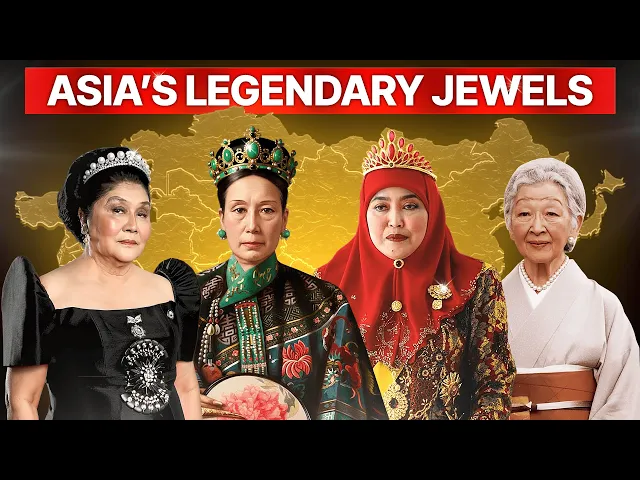
Empress Micho, the first commoner to become the empress of the world's oldest monarchy and a noble member of the imperial house of Japan, is famous for her elegance and grace. The mother of the current emperor has been admired for her sophisticated sense of style and her choices in jewelry. Today, we'll browse some of her stunning jewelry pieces with deep historical and cultural significance and impeccable craftsmanship.
From gorgeous tiaras to magnificent necklaces and sophisticated brooches to fascinating earrings, Empress Miko's jewelry reflects a balance between tradition and modernity. Tiarara's The Japanese Crown Princely Wedding Tiara. Empress Mitiko's first tiara was this elaborate Japanese crown princely wedding tiara she wore for the formal audience with her parents-in-law on her wedding day in 1959.
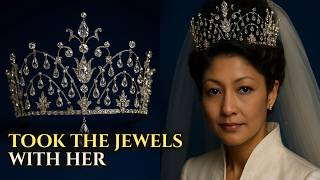
The tiara was a remodeled version of one that had belonged to her husband's grandmother, Empress Sado. It reportedly contains 1,000 diamonds set in platinum. The charming design boasts large curling diamond scrolls and diamond ribbons hugging the stroll base.
The tiny buttons come to the point where the scrolls are joined. These buttons recall chrysanthemums, a timeless symbol of the Japanese monarchy. Empress Mitiko showed off the crown princely wedding tiara with the matching necklace during the westernstyle part of the wedding and a carriage procession through the streets of Tokyo.
She had worn the dazzling tiara with the matching necklace for several years and had handed the sparkler to her daughter-in-law, Crown Princess Masako in 1993. The Japanese crown princely wedding tiara is special. It was worn at two of the most important royal weddings of the 20th century.
In 1993, Masako Aada, Empress Michiko's daughter-in-law, married Crown Prince Naruito. The bride wore the same wedding peru tiara and necklace as Empress Michiko for the westernstyle part of the wedding festivities. The pearl sunburst tiara.
The Imperial vaults also have another stunning diadem, which is this modern pearl sunburst tiara. Empress Mitiko began wearing the sparkler and the coordinating jewels after her marriage. She boasted a stunning piece during a famous outing for dinner at the Eisenhower White House in 1960.
The magnificent diadem of top-notch diamonds and Mickeyoto pearls was created earlier that year. When American President Reagan visited Japan in the 1980s, then Crown Princess Macho also wore this gorgeous tiara and a matching brooch. Its intricate design beautifully reflects the innovative side of Japanese culture.
Today, Crown Princess Masako wears the glittering pearl sunburst tiara. She wore it with a matching mirrored necklace at the Dutch state banquet in Tokyo in 2014. Crown Princess Masako chose the pearl sunburst tiara as her primary diadem, and it's still among her longtime favorites.
The Maji tiara. This grand diamond tiara, likely made by a European jeweler in the late 19th century, is one of the most significant westernstyle jewels in the Japanese imperial vaults. The Magi tiara can be worn with various toppers, such as a set of diamond stars.
The sparkling piece is specially reserved for the empress. So, Empress Michiko started wearing it after her husband's accession in 1989. She wore the diadem for numerous important events such as state banquetss, official portraits, and the wedding of Crown Prince Naruhito and Crown Princess Masako in 1993.
Empress Mitiko's favorite way to wear the Maji tiara was with the round diamond toppers. However, when she developed health problems, wearing a heavy tiara became highly uncomfortable. So, she exchanged it for lighter diadems.
The imperial chrysanthemum tiara. This alldiamond tiara's design features the chrosanthemum flower, one of the most important symbols of the Japanese imperial family. Initially, it was a favorite tiara of Empress Nagako, Empress Miko's mother-in-law, who wore it on her son's wedding day in 1959.
Empress Mitiko has often picked this glittering piece for important banquetss, including the Guild Hall banquet during a state visit to the United Kingdom in 1998. She also wore the imperial chrysanthemum tiara on the wedding day of Prince Akashino, her younger son, which took place in 1990. She often paired the gorgeous sparkler with her charming diamond chrysanthemum earrings, which we'll examine a bit later.
Since Empress Michiko suffered from neck health problems, the platinum chrysanthemum tiara was among her favorites. It was considerably light. As we've already mentioned, she had to stop wearing the Maji tiara for years.
The chrysanthemum tiara's design allowed the empress to evenly distribute its weight on the head when she wore it in the headband style. The Japanese [music] honeysuckle tiara. This lovely tiara features stylized honeysuckles in its design and Empress Michiko often reached for it in later years.
The sparkler originally belonged to Princess Chi-Chibu, her husband's aunt, who wore it on her wedding day in 1928. Empress Macho preferred a more open style as the precious headpiece features an adjustable frame. She wore it for a visit to Sweden in 2007.
Empress Mitiko had been regularly wearing the Japanese honeysuckle tiara before her health problems made her stop wearing tiaras altogether several years ago. Then she gave preference to elaborate necklaces and brooches when appearing at significant garas. For example, for the visit to the mosoleum in 2019, Empress Mitiko wore a charming strand of pearls and a gorgeous brooch adorned with round multicolored pearls.
Necklaces. Empress Miko's golden pearl necklace. Empress Mijiko of Japan has a fascinating necklace composed of golden and white pearls in her opulent jewelry collection.
In 2009, she wore it to a state banquet in honor of the president of Singapore in Tokyo. She complimented the necklace with a lovely diamond pendant on a simple chain. Pearl necklaces are a staple in Japanese imperial jewelry.
And Empress Mitiko is known for her elegant pieces. She often wears this five strand pearl necklace for formal occasions. Empress Miko's pearl and diamond necklace.
Empress Mitiko of Japan also has an amazing pearl necklace complete with a diamond enhancer which she has been wearing since the early 1990s. She put it on during Emperor Akihito's 75th birthday celebrations at the Imperial Palace in Tokyo in 2008. Empress Micho's diamond necklace.
Empress Micho frequently wore this dazzling diamond necklace during her reign. The intricate jewel highlighted her elegance and regality. Unfortunately, its manufacturer hasn't been revealed.
The modern design features paved diamond abstract scrolls. Remarkably, the necklace is among a few of Empress Macho's personal diamond jewelry pieces. She paired it with the diamond scroll tiara in her official portrait in 1971.
The necklace also looked stunning with the pearl sunburst tiara at a state dinner during US President Reagan's state visit in 1986. Empress Michiko's diamond [music] pendant. It's a classic small diamond cluster pendant of unknown provenence.
Empress Michiko first showed it off in the early 1970s. She wore it with her diamond necklace from which this circular pendant was suspended. When Empress Mitiko stopped wearing tiaras for health issues, this diamond pendant and the diamond Rivier became her go-to jewels for various gala occasions, including the Dutch and Spanish state visits to Japan.
Empress Michiko bres. Empress Michiko's jewelry box also contains intricate brooches for a touch of sparkle and sophistication. Her brooch collection is highly imposing.
It boasts some opulent pieces such as an enormous diamond brooch worn by Empress Michiko at the annual New Year reception at the imperial palace and a sophisticated diamond brooch with leaf and star designs. She has a whole bunch of imperial jewels. For instance, while celebrating the emperor's birthday in 2002, Empress Macho wore the already mentioned pearl and diamond necklace, a simple gold bracelet, and a sophisticated diamond-shaped brooch of a plattered design.
While waving to the public during the annual New Year greetings in 2003, she accentuated her look with a feminine diamond flower brooch, a pearl necklace, and the matching pearl earrings. Opulent brooches of various shapes, materials, and designs accompany Empress Michiko on different important occasions. Whether visiting a nursery school in Tokyo or celebrating her daughter's wedding, Empress Michiko's tastes in precious brooches are impeccable.
Her jewels are elegant daytime pieces, mostly made of prestigious white stones following the Japanese royal tradition. The diamond brooches showcase a sophisticated design that complements both traditional and contemporary outfits. Earrings.
Diamond chrysanthemum earrings. Since we've already mentioned Empress Mitico's striking pair of diamond chrysanthemum earrings, let us describe it in more detail. She started wearing these sparkly earrings in the 1990s.
They feature a modern diamond cluster shaped like a chrysanthemum making them very symbolic. Elegant diamond chrysanthemum earrings are a Japanese crown heirloom. Therefore, Empress Michiko passed them to Empress Masico.
Empress Michiko's jewelry collection boasts several prominent pieces that reflect traditional Japanese elegance and modern sophistication. They highlight Empress Michiko's refined taste and her role in representing the Japanese imperial family with grace and dignity. She carefully chooses each piece to reflect the ceremonial importance of her position.
Pearls. Pearls are a significant part of Empress Mitiko's jewelry collection, reflecting the Japanese tradition of pearl cultivation. She is frequently seen wearing simple yet elegant pearl necklaces, earrings, and brooches.
Pearls are associated with purity and are often chosen for their understated beauty, making them perfect for both formal and semiformal occasions. Empress Michiko's jewelry often carries deep cultural significance with many pieces inspired by traditional Japanese motifs and symbols. For instance, she has been seen wearing delicate pieces featuring motifs like sakura, cherry blossoms, chrysanthemums, and cranes, which are deeply symbolic in Japanese culture.
These designs not only highlight the beauty of Japan's nature, but also embody values like longevity, purity, and resilience. As we've reviewed her several notable jewels, which of them has impressed you the most? Please leave your comments.
If you enjoyed this video, consider subscribing for more content like this. The jewels of Alda Marcos, former first lady of the Philippines, represent one of the most infamous collections of wealth amassed through alleged corruption. This extensive jewelry collection was confiscated after the Marcos family fled the Philippines in 1986 following the People Power Revolution.
[music] The jewels are valued at around $21 million and include extravagant items such as a 25 karat pink diamond and other pieces adorned with diamonds, rubies, emeralds, and pearls. Emlda Marcos, the former first lady of the Philippines, is known for leading an opulent lifestyle and having an immensely rich and extravagant jewelry collection in the past. Her magnificent jewelry symbolizes the excesses of her time and testifies to the outstanding wealth amassed throughout the Marcos regime.
In this video, we'll explore the amazing world of Ala Marcos's jewelry and touch on its origins, significance, and the controversy around its acquisition. Prepare to be catapulted onto a scene of luxury and excess. [music] Emldda Marcos's gemstone collection is far from modest.
Stay until the end to see the most outstanding pieces from the Romelottese collection, the most expensive Emlda Marcos ever possessed. Born into a lawyer family as the sixth of 11 kids, Alda Marcos initially wasn't that rich. She gained access to immense wealth after marrying Ferdinand Marcos, the future president of the Philippines, and becoming the first lady of the country.
That's when her affinity for jewelry flourished. Her glittering collection significantly grew [music] during the 21-year rule of Ferdinand Marcos. She owned numerous spectacular pieces [music] starting from rare gemstones to exquisite creations from iconic worldwide jewelers.
[music] Her necklaces, bracelets, rings and tiaras boasted top-notch diamonds, sapphires, emeralds, [music] and pearls. Marcos has said in interviews that if you know how rich you are, you are not rich. [music] But me, I am not aware of the extent of my wealth.
That's how rich we are. Let's start our sparkling overview with Emlddis' gorgeous tiaras. Tiaras of Emldda Marcos.
Emldda Marcos collected a whopping amount of jewelry at the expense of the Filipino people. So after her and her husband's downfall, the government confiscated the precious pieces with her artwork, shoes, and gold bricks. These unique tiaras were confiscated from the Marcos family when they fled the country in 1986.
Alda Marcos has long denied embezzlement, but it's been revealed that the family has amassed over 10 billion in jewelry, property, cash, and other assets throughout their time in power. Known for her love of luxury, Alda [music] owned several outstanding tiaras, including Drp Pearl Koshnik. This gorgeous sparkler was made in 1841 by the house of Bolan, one of the oldest companies specializing in jewelry and silverware.
Today, Bolan is famous as a jeweler and silver smith to his majesty the king of Sweden. The glittering piece boasts 144 top-notch diamonds and 25 pearls. Emlda Marcos acquired the diadem from an unknown London jeweler who bought it at auction in 1978.
[music] The tiara was further confiscated by the Philippine government in 1986 and a year later a replica of it was made [music] for the diamond fund. Now the opulent headpiece belongs to the central bank of the Philippines. Pearl and diamond tiara.
This tiara set in silver and gold is the brainchild of the famous London silvermith catchpole and Williams diamond tiara. The precious headpiece boasts an intricate design and was reportedly made by the French brand Cartier. The bell poke diamond tiara is set in platinum and the French marks imply its high-end origin.
Remarkably, as part of an anti-corruption campaign in the Philippines, its value has been estimated as [music] can fund for the treatment of nearly 12,000 cases of tuberculosis. This means that the piece could have been used to improve the lives of people in the Philippines. The government emphasized it would remind the present generation of the excesses of the Marcos reign.
Ruby and pearl tiara. The antique cababashon ruby diamond and made pearl tiara is set in silver and topped in gold. As for its practical value, except for adorning the lady's head, it could also finance the college education, 4-year tuition of nearly 2,000 students in a Philippine state university.
Small diamond tiara. This brilliant baguette and oval baguette coronet in white gold with a comb looks breathtaking. However, think of its value from a different angle.
The cost equals building eight one-story classrooms in the Philippines. This is only part of a striking tiara collection that belonged to Emlda Marcos and it gives us a glimpse of how luxurious it was. All her pieces were divided into three separate collections based on where they had been found.
They were [music] named the Hawaii Malakanyang and Romelotees collections. These three collections have been stored at the Central Bank of the Philippines for the past 30 years. The Hawaii collection.
Customs officials took these particular pieces of jewelry from Marcos's luggage when the family arrived in Hawaii. Now they are under the jurisdiction of the Presidential Commission on Good Government. The collection reportedly comprises 300 striking pieces, a true highlight of which is an intense antique [music] pink gconda diamond.
25 karat pink diamond. The exceptional 25 karat pink diamond was seized from Alda Marcos three decades ago. The Indian pink diamond was reportedly cut in the 18th century and cost at least $5 million.
The barrel-shaped pink brilliant [music] originates from India's famous Golconda region, famous for its rare finds like a 500 karat diamond that is part of the British crown [music] jewels and the hope diamond. Pink diamonds are exceptionally rare. For instance, a 16 karat vivid [music] pink diamond was sold by Christies in Geneva in July 2004 for $28.
5 [music] million. The price of Alda's pink sparkler equals the combined budget for the construction of Beol International Airport and the renovation of Sanga Sanga Airport. It's [music] as tiny as a one peso coin.
The Malakanyang collection. These sparkling jewels were taken from the official residence of the president of the Philippines, Malakanyang Palace. Now the collection comprising 400 opulent pieces is under the jurisdiction of the office of the president.
The Romelottes collection. The jewelry was taken from a close Emldda's associate Ditrio Romelottes who was trying to smuggle them out of the Philippines for the Marcos family. The collection counts 60 magnificent pieces, [music] including opulent necklaces, impressive brooches, sophisticated earrings, and bold bracelets, which are under the jurisdiction of the Bureau of Customs.
Though it's the smallest, it's also famous as the most expensive of the three Marco's collections. Brooches. The former first lady of the Philippines had an array of dazzling brooches in her rumlottes collection, including a large gray pearl surrounded by clear diamonds with a 10 karat canary diamond framed by clear white diamonds dangling below.
Other exceptional brooches included one with a feminine flower design, a sophisticated diamond brooch, an emerald and diamond brooch, and a lucky themed brooch with a 20 karat emerald cababashon, a two karat ruby cababashon, and diamonds in white gold. Let's pay more attention to Marcus's diamond and blue sapphire bow brooch. Diamond and blue sapphire bow brooch.
This iconic bow design complemented by pure diamonds will never go out of style. The Alda Marco's bow brooch featured seven carats of sapphires and nearly [music] 47 carats of diamonds. The piece looks royal worthy and it is necklaces.
Emldda's Romellott's collection also boasts outstanding necklaces such as a gorgeous 35 karat sea green emerald and diamond necklace, an adorable exotic diamond necklace with [music] ruby embellishments and an opulent necklace with over 100 carats of yellow canary and [music] pinkish diamonds of different shapes, sizes, and cuts. Her antique son sapphire and diamond necklace mounted in silver and gold was reportedly made in 1880. [music] Its estimated worth equals the electricity provided to nearly 2,300 households in off-grid areas through the Philippines governmental [music] program.
The Romelottes. Emldda's most iconic piece was the so-called Romelottes, a necklace with 60 diamonds and a 95 karat Burmese ruby. It is a stunning testament to craftsmanship and a symbol of the excesses of the Marcos regime.
Ala picked extravagant jewelry to showcase the Philippines as a wealthy and prosperous nation under Ferdinand Marcos's leadership. The ruby necklace with diamonds from Van Clee and Apples also had a complimenting brooch of raw ruby clusters surrounded by diamonds in the center. Among Alda's favorites was this butcherati necklace made by the famous Italian jewelry house which she matched with the yellow diamond earrings.
The earrings are equally gorgeous. Each of the heart-shaped yellow diamonds is five carats, while the barrel diamonds are 10 carats each. Bachelotti necklace.
This [music] gorgeous yellow gold choker necklace features one center yellow dangling diamond measuring nearly 15 carats complemented by smaller yellow and rosecut diamonds. It wasn't the only piece the former first lady of the Philippines frequently wore. She also had a ponchaw for this ruby necklace with diamonds and gold [music] setting, emerald and diamond bib type necklace and emerald and diamond opera length necklace earrings.
Van Clee and Arpel's emerald earrings are a true highlight of Emldda's Romello's collection. Each emerald of exceptionally rare clarity, color, and quality counts three carats, while diamond droplets are three carats each. Experts even needed further research to set a value for this magnificent pair.
Emldda also liked showing off this elegant ruby and diamond earring and ring set and cultured pearl and diamond ear clips, brooch and ring [music] in yellow gold which price is equivalent to the annual income of 15 Filipinos. Bracelets. The nearly 31 karat bracelet from Bulgari was among Alda's most expensive pieces.
It cost around $1 million. The following ruby and diamond bracelet by Van Clee and Apples boasts [music] 10 5karat pigeon blood red rubies framed by smaller rubies and diamonds in yellow gold. Alda also had a stunning South Sea pearl and diamond bracelet in the Romello collection.
Though the next accessory doesn't fit into any category we've already described, a 50 karat emerald compact powder case stands alone. Now that you have a general understanding of all three collections of Alda Marcos, it's time to reveal how much all this splendor cost. In 2016, the government of the Philippines announced that these jewels had been appraised at about $21 million.
[music] The Hawaii, Malakanyang, and Romelote's collections are troves of opulence and glittering enigmas that once adorned the Marco's regime. Alda used her magnificent jewelry as a personal adorement and a symbol of power, [music] influence, and prestige. She carefully chose the most extravagant pieces to make a statement at state visits, [music] diplomatic events, and public appearances.
These dazzling jewels had to project an image of affluence and grandeur both in the Philippines and worldwide, and they perfectly coped with the task. After the Marco's regime fell, Emldda's extensive jewelry collection caused numerous legal battles and investigations ensued to trace and recover assets. Some pieces have returned to the Philippines, but a great portion is still globally scattered.
[music] Once a source of pride, Emldda's extravagant jewels recall a period characterized by corruption and power abuse. However, with their sophisticated designs and rare gemstones, her glittering pieces represent a fusion of various artistic traditions and exceptional craftsmanship. Alda loved the jewelry from Western designers and pieces inspired by Filipino culture which incorporated indigenous materials and techniques.
Her collection can be called a blend of glamorous high-end jewelry with traditional Filipino craftsmanship which highlights the Philippines rich artistic heritage on the [music] global stage. Remarkably, when David Warren, who headed a Christiey's auction house team inspecting the jewelry, saw Emldda's opulent gemstones, he said, "If I didn't know where the collection came from, I would probably say it could have come from a royal person. " The collection not only symbolizes the excesses of the Marcos regime, but also represents a significant chapter in Philippine history, reflecting the period's political and economic turmoil.
The opulent jewelry collection of Emldda Marcos remains a symbol of the extravagant lifestyle and corruption of the Marcos era, serving as a historical reminder and a point of ongoing legal and political contention in the Philippines. Which piece has impressed you to the very heart? What do you think of the hidden value behind such an abundant collection of dazzling jewels?
Please share your thoughts with us. If you enjoyed this video, consider subscribing for more content like this. Top 10 Brunai's tiara collection.
Queen Sala of Brunai. Queen of Brunai is the world's longest serving queen consort. Now, the wife of Sultan Hassan Bulkia, one of the wealthiest people in the world, is often dipped in astonishing jewels.
Today we'll explore the cream of her massive jewelry collection, her gorgeous tiaras. Crafting a contemporary tiara for royalty is usually shrouded in extreme secrecy. So the royal family of Brunai almost never names the jewelers making their pieces.
However, we'll reveal one maker among the top 10 Queen's tiaras today. She usually wears her magnificent tiaras with a hajjib, contributing to the allure and fascination surrounding Brunai's royal jewelry traditions. The highlight of her tiara compilation is undoubtedly the opulent colored diamond tiara.
Queen Sala's colored diamond tiara. This massive tiara is composed of large diamonds in various colors. Sultan Hassanal Bulkia of Brunai reportedly acquired it as a generous gift for his wife, Queen Sala.
She started wearing the colored diamond tiara in 1992 and posed for her official portrait. This sparkling tiara is different from her other headpieces. The Queen of Brunai has loaned it only once to family members.
It happened in 1996 when her elder daughter, Princess Rashida Sadatul of Brunai, wore it for her wedding. Queen Sala often wears the colored diamond tiara for spectacular state banquetss and annual birthday celebrations. Recently, she showed off the tiara in 2006 for the Sultan's 60th birthday, [music] which was celebrated at the Istana Nurul Iman.
the official residence of the Sultan of Brunai and the seat of the Brunai government. Queen Slea's diamond jubilee tiara. The Jubilee tiara was named this way as Queena wore it to celebrate the golden jubilee of the Sultan of Brunai in 2017.
She made a statement in the glittering diamonds at a royal procession in Bandari Beawan, Brunai's capital and largest city. The glittering piece was reportedly commissioned to commemorate the Sultan's Hassanal Bulkia Diamond Jubilee as Brunai's ruler. Queen Salah's showstoppping jubilee tiara features an incredible pear-shaped stone at its center.
The sparkling effect was heightened with even more diamonds, numerous broochstyle ornaments pinned to the queen's gown, glittering bracelets, and huge rings on her hands. The combination looked spectacular and matched her clothing's golden shades. Diamond Jubilee tiara is one of the most prominent tiaras in Queen Sala's jewelry collection.
Its intricate design with diamonds reflects both the luxury and cultural significance of Brunai. Queen Sala's diamond upright tiara. This imposing tiara boasts large pear-shaped diamonds.
Queen Sala has been wearing it since the 1980s, and her daughter, Princess Majida, wore it at her wedding in 2007. Like other Queen Sales tiaras, this one holds high historical value, representing tradition and the contemporary stature of Brunai's royal family. This grand piece in Queen Slea's collection was crafted to make a statement at ceremonial occasions.
Queen's emerald tiara. The emerald and diamond tiara is another jeweler masterpiece in Queen Sala's collection. The magnificent piece showcases a blend of luxurious gemstones in its design.
It features six big emeralds [music] that nicely contrast the top-notch diamonds. The Queen's daughters, Princess Rashida Sardatur, Princess Majida Nurul, and Princess Huffiza Surul have loaned the tiara for public appearances, as has her daughter-in-law, Princess Rabiatul Adawiya. This tiara is relatively new.
It was created sometime before 1996. Queen's Diamond Flame Tiara. This tiara is among the oldest in Queen Slea's collection.
[music] She has been wearing it for state banquet since the 1970s. The opulent tiara features a huge heart-shaped diamond. The sparkling headpiece was occasionally loaned to crown princess Sarah for a pre-wedding event.
Princess Hafizuru, Princess Huda Bahal, and Princess Nashikin also wore the diamond flame tiara on important occasions. Queen Sala's diamond heart tiara. This spectacular tiara boasts a large heart-shaped diamond.
Queen wore it at the Dutch state banquet in Brunai and later loaned it to her daughter, Princess Hafiza Sururu. Most recently, Princess Ama Natul of Brunai wore Queen Sala's diamond heart tiara at her wedding reception to Prince Bahar Bulkia in 2023. The design is a mix of colorless diamonds with pink and blue diamonds.
The biggest pear-shaped diamond is interchangeable. A heart-shaped diamond surrounded by pink diamonds and alternating pink and blue diamonds can be added to each side's top. Flower diamond tiara.
This sophisticated diamond tiara belongs to Queen Sallea of Brunai. But Princess Anisha Rosna also famously wore it to the banquet, marking her wedding to Prince Matine of Brunai in 2024. Royal bride Rosna's white gown was decorated with a silver diamond motif.
This striking look was complemented by a pair of diamond earrings, a statement diamond necklace, and a small diamond bouquet from the royal family's collection. The opulent tiara worn over the white veil finished her lovely look. The immensely lavish festivities lasted 10 days.
They included many elaborate traditional and religious ceremonies. The tiara was made by Singapore jeweler Flower Diamond, who specializes in fine and timeless jewelry that every woman deserves. They have a range of collections such as rings, earrings, and necklaces.
It was originally commissioned for Princess Azima's wedding. The intricate headpiece comprises 838 diamonds in various cuts totaling 132 carats set entirely in 18 karat white gold. The design looks light and modern.
The whole process from start to finish took the jeweler 8 months. That's relatively swift for a tiara as sourcing the right gemstones and accumulating them to match can take years. Flower Diamonds creative [music] director took a month to prepare three tiara sketches for Princess Azima.
The maker strived to adjust sourcing diamonds of different sizes that consistently matched in shape and quality and the result appeared stunning. Princess Fadzila also wore the astonishing sparkler for her wedding ceremony in 2022. Queen Sala of Brunai's yellow diamond tiara.
This gorgeous tiara boasts exceptionally rare white and yellow diamonds. Its design is completely flat as the sparkling headpiece doesn't curve to the wearer's head at all. sitting on top of the head.
As you can see, Queen Sala is very generous, loaning out her tiaras to the brides of the royal family. She has loaned her jewelry not only to her daughters, but even her husband's nieces and nephews brides. The Queen of Brunai seems to loan the diadem she has already stopped wearing.
The bridal loaners include the Crescent Star Tiara and CP Sarah's Diamond Lily tiara. Queen Slea of Brunai's Crescent Star Tiara. This magnificent tiara boasts a sophisticated celestial design with diamonds laid in the form of a crescent and star.
It looks imposing, [music] adding a flare of splendor to the queen's look. She has also loaned the piece to other royal wearers including Princess Huda Bahal of Brunai at her 2006 wedding to Muhammad Sui, Princess Rabi Atul Adawi of Brunai at her 2015 wedding to Prince Abdul Malik, Princess Mujaba Safal of Brunai at her 2015 wedding to Amir Zarane and others. This stunning tiara is characterized by intricate design incorporating the motifs inspired by Brunayian culture.
The arrangements of precious gemstones highlight the monarchy's wealth and status. Queen Salah of Brunai's ruby tiara. This striking tiara boasts a scattering of precious rubies and diamonds.
Except for Queen Salah, Princess Rabi Adul Adawiya of Brunai also wore it at her 2015 wedding to Prince Abdul Malik. As we've rounded up the top 10 of Queen Sallea of Brunai magnificent tiaras, we have prepared a tiny bonus for you. Let's glimpse one of her most controversial tiaras in terms of design.
This piece has raised numerous comments around the web. Queen Sallea of Brunai's Diamond Crescent Tiara. This tiara design is somewhat contradictory.
Some tiara fans find it graceful and interesting, and others say it's too bold and suffers from excessive height. Please share your opinion on which camp you are in. Whether you are among the tiara afficionados or haters, the opulent tiara collection of Queen Sallea of Brunai is a notable part of Brunai's royal jewelry heritage.
The tiaras worn by Queen Sala and generously loaned by her to other Brunai royal ladies are not only pieces of jewelry, but they carry symbolic and historical meanings. These diadems help the queen make a statement at royal weddings, state banquetss, and other formal occasions representing the monarchy's wealth, heritage, and tradition. They not only adorn Queen Slea with elegance and grace, but also are a potent symbol of her role and status within the Brunayian monarchy.
Brunai's royal family is known for its opulence and grandeur with Queen Sala at the heart of its regal elegance. Her tiara collection is a stunning testament to the country's wealth and the queen's impeccable taste. Which of the top 10 tiaras examined today do you like the most?
And which design do you find the least favorable? What do you think about her diamond crescent tiara? Please share your thoughts with us.
If you enjoyed this video, consider subscribing for more content like this. Loved to stuff into her hair, but also items that hold great significance in shaping her worldwide image. From the imperial jades to her well-known extraordinary pearl cape, you can learn more about Chinese jewelry and dive into the world ofQing Dynasty.
Shall we start? Whether it was a pair of JD8 pendant earrings or pearl hair pins framing her hair, the Empress Daajager Sixie was one of the most well-known patrons of Jadiots and pearls. And her imperial attire was adorned with white pearls and rich green jade.
Her Imperial death chamber was said to have a 7-in thick quilt of pearls, two carved jadeite watermelons, two carved jadeite cabbages, a jadeite lotus leaf, four carved jadeite melons, a demon quelling wand, and a magnificent pair of JD Bengals according to the IUX1 notebook, which is said to have been written by Lee Leying, the head unic of her court. JD at Bengals. In Chinese history, Empress Daajager Sixie was a brilliant, shrewd, and skillful politician who was able to choose, appoint, and influence skilled officials as well as carry out reforms across the country.
But she also had a knack for starting imperial coups, which allowed her to seize total authority over the empire. And it's hard to imagine a Chinese empress without a couple of JD8 bangles. The bangles, which she wore on her wrists for the remainder of her life and eventually carried to her grave, were thought to have been a gift from Emperor Jeanfang when she was appointed the imperial concubine.
While green jaite isn't a rare gem, she had one more multiolor bracelet. According to legend, Emperor Shianf Fang was overjoyed that young Sixie got pregnant with the dragon born and gave her a beautiful present. This colorful bracelet is purple and white and is made of gold cast jadeite which is said to bring blessings and longevity.
The five hues of yellow, red and green give this bracelet even more opulence. The bracelet is entirely etched and cast in gold. This splendid jewel which perfectly embodies Emperor Cianfang's love accompanied Empress Daajager till her last days.
Drgon hairpin. Living a life of luxury, Jadiite was her favorite gem for jewelry and furnishings. She filled her Chenchan palace with all kinds of jadiate items.
When drinking tea, her teapot would be made of jade. And when eating, she would use jade chopsticks and of course in her outfit, she would have a jadeite hairpiece. In most cases, in the form of a hairpin.
Among the many pieces of jewelry that Sixie preferred, there was this jade dragon hair pin. The color is clear and transparent, which can be regarded as a rare top quality. In October 2008, this jade dragon hair pin was auctioned for 8 million Hong Kong dollars.
As stated by Christies, the entire hairpin is boldly carved from a single piece of highly translucent material. The vivid green jade vein forming a dragon coiled amidst clouds around an earpick style hairpin chasing a large pearl sewn to a platform designed as a flaming oral with the eyes inlaid with further pearls and two rubies mounted tremblent on gold springs emanating from its nostrils. Only from the depiction can we say it is a magnificent piece of history.
Don't you think? Gilded fingernail guards. She is dripping with pearls and stones and is dressed in silk robes embroidered with butterflies, dragons, and flowers in the pictures.
Her fingernails too, seeks gold fingernail covers were customarily worn in theQing court and were part of her bejeweled symbol of power. The pair is made of gilded goldplated silver and features fine filigree arranged in a trellis style representing the Chinese cash theme. Each is additionally embellished with blue orchid and butterfly designs.
Segments of blue kingfisher feathers were carefully attached to create the blue instead of using enamel. The book the dragon empress life and times of tsusi empress daajager of China features color illustrations of these specific fingernail guards which come from Verer Foreman's estate. Indeed, the Daajager Empress promoted the fashion of long nails and elaborate nail guards.
She's said to have had almost 600 silkline trays filled with jewelry shelved along a wall in a room that adjoined her sleeping chamber in the Forbidden City. In the same famous portrait, she has also been wearing 6-in high bejeweled platform shoes on her feet. The platforms you see are affixed to each shoe in the middle of the sole.
They resemble high heels but are located in the middle of the foot. Manurion kings ruled during theQing dynasty and Sixie and other Manchu women did not bind their feet. These platforms were made to look like the little shoes of Hanchinese women.
The Imperial Pearl. What's more interesting to jewelry fans? Over her lifetime, she accumulated over 3,000 boxes of everyday jewelry, mostly gifts from admirers and those seeking her favor.
They range from gold, pearl, and jade bracelets to gem encrusted hair pins. But one item makes us even more curious. The imperial pearl.
After Empress Daajager's death, an enormous pearl the size of a robin's egg was placed in her mouth in keeping with Chinese imperial custom to protect the corpse from decomposition. The Imperial Hong Kong pearl, also known as the miracle of the sea, is an enormous silvery white baroque pearl with an irregular drop shape equivalent to 127. 5 carats or 510 grains.
One of the biggest nacreus pearls ever found. It is thought to have come from a species of saltwater oyster called Pintata Maxima, which is widespread in the South Seas between southern China and northern Australia. Today, the Imperial Hong Kong Pearl is set in a pendant made of platinum and diamonds.
The irregular drop-shaped pearl is encrusted at the top with a platinum foliage design, creating a composite layout that resembles a fruit and foliage setting and is reminiscent of Renaissance jewelry designs. The Pearl Cape. In addition to her rich robes and elaborate headdresses, she wore a cape covered with 3,500 canary egg-sized pearls secured by clasps.
According to Princess Dar Ling, the lady in waiting, her cape was made of roughly 1,500 pearls the size of a canary bird's egg, all exactly alike in color and perfectly round. It was made on the fishnet pattern and had a fringe of jade pendants and was joined with two pure jade clasps. Sadly, we won't be able to enjoy 6's pearl cape in real life as it was looted by warlord's son Dian and his soldiers.
However, her pearl cape is hinted at in television episodes. For instance, despite the fact that she and Sixie lived in separate times, Ga Feay from Story of Yanchi Palace both wear pearl capes. This gives us an idea of how it would have looked in real life.
Empress's festive headdress. As an empress, Sixie would go to wear an imperial crown or in Chinese, cowwan. While the headpiece doesn't look like the crowns from European monarchs, it is often called a headdress.
She had multiple pieces during her reign. Yet, the one that stays authentic is now part of the collection of the Walters Art Museum. The ceremonial hat of Empress 6E had a unique prestige because it was composed of numerous priceless elements.
The base was a complex construction made of silkcoed wire to which gilded silver components were affixed. The small phoenixes emerging from the surface represent the empress. Precious stones and pearls which stood for riches and authority were also employed as decorations.
In Chinese tradition, pearls were linked to perfection and purity while precious stones were linked to everlasting beauty and eternity. But there is actually a crown with towering phoenixes that is also associated with the empress's daager phoenix cowan. In theQing dynasty, the custom of wearing a crown or phoenix coronet for the female was reserved.
When the empress and imperial concubines took part in celebration ceremonies, they would wear a folded brim bonnet decorated with 10 gold phoenixes. Gold imperial necklace. A figure of considerable notoriety, Sixie would also wear a necklace with a phoenix to match her crown.
The phoenix is considered the second of the four miraculous creatures of Chinese tradition and symbolizes the empress. No wonder it would often be featured in imperial jewels. One particular necklace is this rare Chinese gold imperial necklace that was auctioned in 2008 to an unknown buyer.
Designed as a row of 22 karat gold oval and shaped rectangular plaques, each applied with filigreed three-dimensional phoenixes attached by double length chains with central plaque. The necklace dates back to the 1870 year. Regretfully, fewer images are available to enjoy the rare piece.
Imperial rock crystal seal. And as a final piece of ourqing dynasty journey to the imperial jewels of Sixie, we want you to have a look at the seal she used to sign important state orders and treaties. This rare rock crystal seal is well carved in relief with four characters reading Jian Kong Hangping, which can be translated as to maintain fairness and balance.
Designed of square section, the translucent stone is surmounted by a well-carved mythical beast crouching on its powerful claws. But during theqing dynasty, it was common practice for emperors to order multiple imperial seals to be made with the same face characters. Thus, there is the same smaller imperial seal in the palace museum, Beijing.
Today, the jewelry of Empress Daajager Siki is considered to be highly valuable and is often displayed in museums and private collections around the world. These pieces continue to be admired for their beauty and historical significance. And we wonder if you admire Chinese traditional jewelry.
If yes, let us know and we can make one more video about the Chinese style of jewels and symbolism. We value your thoughts and want to hear from you. Don't forget to subscribe and see you on our next brilliant journey.