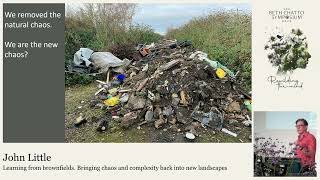
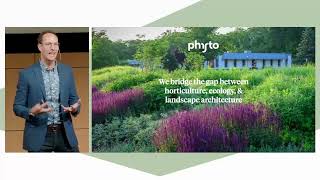
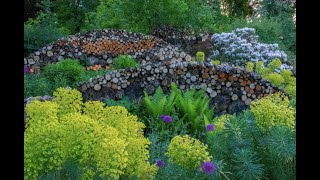
Um so our last speaker before lunch is Tom Stewart Smith lot of people isn't it wonderful there's so many people interested in this I mean I think it's amazing that there are so many people here um I'm I'm going to tighten the focus a little bit um it was wonderful to have that macro View um I'm going to talk about Gardens um and there are going to be lots of pictures of plants just to sort of you Know give you an appetite for lunch um and I want to start start start with probably the biggest
project I've been involved in in my in my life as a designer which is this one here this is Bridgewater rhs Bridgewater um this is in 2017 I'd known the site for some time actually before because I it was owned by um this very robust Northwestern property develop peel um they couldn't get permission to to do what they wanted with the site which was to make a Ridder Cup golf course and to um to to to build a five-star hotel and um and in the nick of time the rhs came along with an incredibly enlightened
local Authority So speaking to to what we were just talking about you know some a local Authority which certainly in my part of the world had a vision which is unimaginable and sford put 16 million into this project the idea of s dovin's District Council where I come putting 50p into the you know the Surroundings of the churchard it just seems completely foreign but anyway they did this and they enabled this extraordinary project because they saw it as a way of uh of bringing nature to um the many many people in in sford and greater
Manchester who do not have access to Nature and that was really enshrined in the master plan for the for the project which was um had a sort of garden design cocoon if you like you know in the sort of rhs mode you know we Are talking The Royal Horticultural Society so we have to have quite a lot of plants um but surrounding this was actually this this sort of carapace of Community Gardens which make up a very major part of the garden so I want to show you a little bit of um this is what
this is what the site looked like before it was a historic house the house was demolished in the in the um 1940s and there was this 11 acre wall Garden um quite remote from the house which had Been used for productive Horticulture these are hedges of leand Cyprus and and this was an area which was full of Nursery production so it had every weed you can imagine in it um the garden which was wonderfully transformed by um Charlotte Harris and Hugo bug into the into the vegetable and and foraging and uh Garden um had incredibly
high levels of arsenic because it had been a Victorian wall Garden it had it had a lot of problems this site but what it Did have was it was um 6 miles from the middle of sford and it's on this amazing Moss land so the the soils the soils are intrinsically rather amazing so this was a this was a um this is the master plan drawing um I had fun doing this it's about 8 foot long um and there was a wonderful moment at the rhs committee meeting where I was able to sort of roll
it out on on the table um and the principle of it was that the first phase of the of the Garden would be the devel M of the of the wall Garden but the long-term Vision which has very much now been endorsed by Manchester City Council Andy Burnham and sford is that the the the site of the old house which you can see overlooking the lake on the yes the right of the picture should be the site for a for a school of horiculture and God don't we need one we need another one um so
the really the focus of of my work was was on the the setting of the new visitor Building um and then the development of the the of the of the master plan and how people were going to move around the site and a key to that was the was the idea that um we would create a new Lake that that that um connected to the Old Lake and this would be a way of in the future getting people through the core of the site because people love to follow a stream um this is a this
is another sketch looking looking at the slightly More of the closeup of the um of the garden of course one can always make a car park look very plaus by making it look more like an orchard but it is a it is a huge car park and a very expensive and difficult car park to make because it was over the Moss so a lot of stabilization of Pete very expensive not very ecological but a little unavoidable um and the the building is is located in this position where it's very close to the wall Garden but
it Leads people into the into the wider Garden this is an early sketch of the of the um of the heart part of the of the of the wall garden and you can see these two main compartments with the extraordinary um Boiler House of the old Walled Garden on the left with that with that huge chimney um and I I um was allowed to design the central piece which is this Paradise Garden um I wanted to sort of revive the oldest Trope in the in the history of enclosed Gardens which is the Persian Paradise Garden
um and this was just a space filler um apologies to of Charlotte and Hugo um for for that because it was before they invol they were involved of a vegetable garden and then you can see this this wrap around um to the to the right and to the top which are the Community Gardens which are um all run by well they're run by the rhs but with a great number of volunteers and actually before the before the pandemic So this would be a photograph taken in the middle of the pandemic before the pandemic there were
750 volunteers involved at rhs Bridgewater which was pretty pretty incredible and every time you go there there would be a team of 40 clearing out the road to dendrum ponum or there' be another team of 20 working in the therapeutic Garden double digging the you know it was really very very impressive and of course um quite relieved to know that's not the one Going off in my pocket um uh of course Co put Co put a stop to this for for for a year and the opening of The Garden was Del L year and it
was a real body blow to this buildup of of of um of community engagement which had brought this this Amazing Project into people's lives um I just want to show you some of what the Garden is like now this is a garden which is planned on on very rich linear basis it's based on a it's based on a Persian Paradise Garden but I I saw that it had to answer two very important demands one one is that I have this feeling it may be a bit of a sort of gardener geeky feeling that a lot
of people when they're in a garden they they they want to have a certain amount of spatial privacy and a sense that they're engaging direct not with the the the the 300 other people who are in the garden but with the materiality of the garden itself so actually having a very complex Webike layout lends itself to this it also lends itself to huge complexity and I'm I'm a sort of I'm I mean we're at a Rew Wilding conference why wouldn't one be a a passionate advocate of complexity um but I I I I really did
set myself the challenge of trying to make this planting as complex as I reasonably could and actually in the planting which we did at Bridgewater there are just over a thousand taxa of plants which is quite a lot to fit into a garden um and I think you can only really do this if you have a very if you have a very fragmented layout and that means that um the other great thing about a fragmented layout a sort of web layout is that kind of in a way everybody has their own different way of experiencing
the garden you know if you have an omad if you have a sort of formal kind of grand scheme with big open space spaces and big sweeping beds and you know there's probably three four five you know ways To go around it if if we take the the example of of you know rasham that amazing Garden in oxfa or many of the gardens that that um are created by people who love plants which are fragmented then suddenly by creating a webway of going around a garden the the the ways you can experience this thing are
infantes complex and there is no way around the garden if anybody ask ever ask me about which which the way I'm supposed to go around your garden I say I say don't ask me you know you you you that's part of the experience you've got to decide for yourself and I think that that these Gardens should be designed in a way that that somebody discovers them they're not told how to look at them they're not told how to enter them where to go what to do they just move through a space and then are LED
on to different experiences and that is part of you know trusting trusting your audience and actually and actually letting them have The primary experience not trying to mediate this thing too much um so actually all these photographs look look relatively disorganized and I'm pretty happy about that but there's there's a sort of underlying logic to the to the layout and and in many ways that's the kind of tension that we that we create as designers that tension between between Chaos and Order that there may be Underneath It All and there probably is some underlying structure
which Somebody can stand back and look at but actually it's much better as if it's not perceptible on on the face that this is something that people can get to when they've when they've gone into the sort of granular nature of the of the composition it's not sitting it's not confronting them um right from the outset so more lovely photographs I think from these are from Jason Ingram just this year showing how in two years this Garden has really really developed And this is this is part of the Mediterranean aspect I I gave myself a
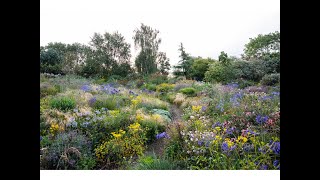
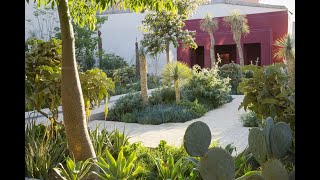
a constraint of of um planting the the the Paradise Garden by bi geographically so so 1/3 of it is Asian 1/3 of it is American 1/3 of it is is Mediterranean in the broadest sense of the Mediterranean categorization and in this Garden we we um Incorporated six Ines of grit into the top I'd be very happy to have planted it through the grit as a we can have lots of grit sand con Conversations later I'm sure we will um but what it does is it is it just suddenly diversity explodes you know if you impoverish
the soil you just get greater diversity and greater complexity of vegetation of this I am convinced and and passionate Advocate and it makes gardening so much more interesting if you can have 10 species per square meter rather than one in the Asian part of the garden which is largely devoted to sort of chinese vietnamese you know um Japanese plants we we took the view that the the primary kind of language would be of semi- Woodland and quite wellfed soils and generally yes we get we get like you know one one species per square meter one
species per two meters and it has a kind of aesthetic its own but it's oh this is you can see something so this is this is a planting plan of the of the Mediterranean garden and you can see it's pretty complex um most of these clumps would be a meter or less and then There's an overlay of other species through them so so some of those green spots I don't know what on Earth they are but they might be let's say santalina is planted through time so so there are there are several layers of of
complexity in the planting and it was really quite traumatic for me that I didn't um it's the first project I've ever done where I didn't set out a single plant because it was all in coid I wasn't allowed to go and fortunately I Had um I'd actually been you know quite disciplined about this and and had done extremely accurate planting plans which the which the rhs followed with amazing meticulous um exactness and so it didn't it didn't really it didn't really matter that much um in fact they did they did did a wonderful job and
probably much better than if I had been up there setting it up myself I should think then the then the other part of the garden is the sort of you know the the bigger open Space around this is um this is the the the visitor building um which I think is a very successful quite Green Building it looks a bit like a sort of airport in in in sort of a minor Finnish provincial City perhaps but it it it it it's a very airy um space of of welcoming lots of people in and then they
come through this some some people may recognize this space frame thing from a a sort of precursor Garden I did at Chelsea to sort of you know to Hype the whole idea Of of of Bridgewater being around the corner and then it kind of wasn't around the corner because it was delayed by by a year um and this and the planting here this is on the Pete so it's um so it's bigger groups Bolder Bolder groups of planting um things like you know you can see over veronicastrum liths um euphobia that kind of thing things
that are inevitably are going to are going to occupy a given space um they they they like a particular type of soil not a lot Of point in trying to impoverish the um impol the soil and again you can see on a bigger scale than in the garden in the in the wall enclosure this kind of web pattern um it's actually this is actually based on a voro pattern which some some of you know imagine a giraffe skin which is actually can be calculated by a mathematical formula of of taking points and then and then
the paths are affected ly equidistant between the points bit more elaborate than that but That's the sort of basic schema and it means that this Garden can absorb a lot of people who have the illusion that they're in in an environment you know on on their own connecting with this place um not looking at the back of of of 30 other people who got there before them um so this this is um I'm talk going to talk about three projects in in the north of England it seemed to be a period of time when I
was working a lot in the north this now that is about as Unwi as you can get so that's a that's a 1940s photograph aerial photograph of the river CER in Wakefield and uh the site of the the site of the heworth gallery David chipperfield's Gallery is pretty much next to that bridge on that sort of little promet of land that comes forward to the to you can see the big wear and the bit of land that that um do we I don't think I have a pointer um I hope I could describe it that
little tongue of Land that comes forward to the wear and and the bit of land that we H we had to play with was was the slice of land there completely covered by buildings um between that and the and those rather impressive um Mill buildings and nature had been I mean you can see nature um as it was um around around the gallery I mean generally confined to to um Himalayan balson and a few willow trees along the river um and the and the g the site of the garden Which was the back of the
gallery was was typical Municipal landscape and this was was um never intended to be a public open space when when the gallery was built it was always envisioned that this would be built on um but the the gallery made this incredibly impressively bold move and I I don't I mean it'd be interesting I'd love to know other examples of this so this is a this is an institution okay it's largely funded by uh Arts Council by the local Authority By private donations they decided they wanted to take ownership of this this space so they talked
to the local Council and said we're going to raise ra a bunch of money and we are going to curate this space and and it's going to be a free 24/7 Garden for the people of Wakefield and the people who are visiting the the gallery and it's going to be part of our extended Museum space and the only other example I can think of this I mean I think it probably Happens in Europe the whole time but I mean the only other one I which I hope happens is the one that Dian is working on
at the Garden Museum um Lamberth green where the garden museum has done a Sim similar thing with Lamberth they've said you know we're living in a bit of a Heap let's do something something about it let let's transform our environment and that that's what the hewe did and um it was a you know it's a pretty bland space I mean that's all That happened in it people just there was one diagonal path across it um amazingly that little shed in the distance is a is a listed building um as is as as is I'm not
referring to the thing on the big thing as a listed shed but that that is also listed um so we had to keep that as our little coffee bar and I started looking actually at bar heworth sculpture to find to find a sort of language of of um because I felt sandwiched in between this very Powerfully architectural Museum and this Mill building this this Garden couldn't just be a doormat it had to have a it also had to have a pretty strong language of its own and this is the least wild of all the gardens
I'm going to show you and I think there is a reason for that you know that that Wakefield is not a very wild City it's a it's it's a very you know it's a city uh it's got a very fine Town Center the area where the where the gallery is is Pretty degraded it's got the river running through it which is amazing but it has a lot of sheds a lot of garages and it has a six Lane Highway going past one end um and there is very little nature literacy in the community around it
um so it's probably was never going to be a site for a for a wild a re wilded wild kind of garden it always wanted to be something that was quite structured quite quite um quite designed perhaps that would be What I would say or maybe maybe in 20 years time it could be more wilded you know as we begin to change our views on these things I think we're on a we're on a journey aren't we it all started with Pete Ador telling us we could love dead plants and and you know we're getting
now we're loving we're loving you know it all piled on top of each other um so this is a this is a a Barbara heworth sculpture um torso in the in the in the um in the heworth collection and I and I Was interested looking at the Lang language of of everything being unparallel this sort of awkward clunky naturalism that I mean this a very atypical Barbara he because of course most of her stuff is abstract but it was this a very early piece and I started looking at the at the language of you know
this is the comp kind of crumpled box language of the of the of the architecture and trying to find a kind of a an intermediate language that had As it were the sort of softened architecture of the building in a way and came up with this sort of Patchwork um Patchwork language of um of of spaces now some of these spaces are planted some of them are hard so that they can have different sort of events in them some of them are little Lawns so that that families can to have picnics okay that seems in
my language it's a bit didactic to sort of say you're going to Sit here and have a picnic but I mean this is quite a small space it's it's uh 40 m wide 120 M long something like that so it's not a big it's not a big Garden but I think because it's so out of place and that's part of the excitement of it you know we always talk about things being in place and being of the spirit of the place this is definitely not this is absolutely not it couldn't be more out of place
you don't see Gardens like this in the middle of in the middle of Wakefield and that's part of its power because it's so unexpected and part of the key thing of it this is a a sketch I did of the garden was that we needed to make it actually a separate space so the most controversial aspect of this Garden was um was a uh a 4 meter high insitu concrete wall that we put along the highway to block out the highway from the road because without this you were just on a Motorway Verge just impossible
And actually somebody in the planning department did try to stop us when we were in the middle of constructing this wall um tried to put um all sorts of um of obstructions in our way which caused the 9 month delay of the construction and cost the the gallery and the fundraises about £100,000 completely disgraceful um malfunctioning of the of the planning system actually not planners it was a it was an engineer um so you're [Laughter] saved we love planners you know that you know that you know that um I don't know whether any of know
this one I always think about it when I think about planners and Architects and how we all relate to each other that wonderful Freudian phrase about the narcissism of minor differences how Architects are at the top like sort of you know Starry gods there are time planners then some way below them there are Landscape Architects then there are gardeners on the bom and actually the more we do in our lives to invert that so that Gardener is at the top and then landscape designers somewhere below them and [Applause] then so I'm going to show you
I'm going to show you some there obviously a lot of gardeners here um so I'm so some photographs of this is actually in its first year so This was this was in the lockdown year and um a lot of the success I don't if Katie is here is Katie here Katie is here wonderful okay well Katie is a star um a lot of the success of this Garden I put down to having a great great Gardener who was there throughout lockdown and when um this place could have been this mysterious arrival from outter space suddenly
was this space identified with a person not me absolutely not but with Katie because She was there every day and people would come to the garden and they would say things like in July Oh Katie you changed all the planting you know I talk about the level of you know plant literacy people literally thought that she had you know over the weekend taken all the plants out and and brought another lot in because different ones were in flower and they had no conception that this could happen in a garden I mean quite surprising and she
Was obviously such a star that people would bicycle from Bolton with ice creams for her which would be rather horribly melted by the time they arve but so there there I think you may maybe see some of this sort of the awkward naturalism of the typology that I was talking about the way that you know paths are not parallel they maybe maybe there are places where a path swells which suggests you know that people might stop and have a chat there are Places where it's narrow where you you know shuffle past but there are lots
of just random different opportunities and of course the gallery the the garden is a setting for sculpture what's rather nice is that it's it's a rotating rotating exhibition and it was beautiful when they had the amazing heworth show last year that they filled the garden with her sculptures and that sort of felt like a real you know kind of coming home um and I think that in Winter Autumn and winter like all our Gardens you know because because Katie leaves everything standing um it it does take on this this Wilder more more sort of slightly
feral thing and I think that because people have got used to the you know they've had the Tulips very nice and ordered Wakefield of course is the is the city of the oldest tulip Society in Britain so it's was very important to have tulips um and then then the sort of tidiness and the and the Very Organized Nature of the planting really in summer and then and then in Winter and autumn and winter it really starts to sort of fall apart and become there's the there's the infamous wall after a shower of rain um and
and in Winter it really does start to feel quite you know quite quite wild um and I'd be interested I mean um maybe maybe Katie can comment on this at some point um you know whether whether response to this kind of aesthetic is is Mediated by the fact that people can connect it to the to the previous you know the summer the summer look if you just presented this I think a lot of people who who've lived in a city all their life would just think this is just dead you know this is just awful
what's going to happen you know um and there in case you want to mob her in the interv there there's there's Katie in amongst the EAS doing Her doing her bit um so this this is at a rather different social scale I suppose so this is Chatsworth where Dan and I have been I mean not working together but we've both been doing stuff there now for um for the um for the the Duke and Duchess I mean I say for the Duke and Duchess the thing that is I think most remarkable about Chatsworth is is
is the social philosophy that goes with it in that they I think they regard themselves as Custodians of this great place and they regard themselves as custodians of the sort of public um the sort of public inheritance of the place you know the place has 700,000 visitors a year it is a public place and they um you know remarkably this landscape which so many of us know um has these heroic extraordinary bones but actually relatively little detail it was not a place you went to to I mean you went there for these Sublime vistas of
of of hills and the dreaded sheep and all you know but you didn't go there for for a for a sort of close connection with with um sort of small scale Beauty perhaps other than other than the house which of course has great sort of works of art there wasn't that there wasn't that parallel in the house and and and in in the landscape and and that's really what our project has been about um it's there been two projects really one this is a This is Chatsworth from the air it's this sort of heavier green
area um above the sort of central the central barock Garden I showed that previous picture I didn't say anything about it that's the CX view which is 17 1790 sorry 16 only 100 years out 1690 1699 um show showing the showing the great formal Garden done by the second Duke which was then which was then sort of rough and tumbled by by cap Brown and then Paxton came along in um in uh 1840 And just sort of broke all the rules and he he um made this completely crazy Rockery which was not a Rockery in
a Victorian sense of the word it was a it was intended as a kind of Similac of landscape so very much ahead of its time in a way and it and should be considered much more in terms of the picturesque rather than in the terms of of Victorian Rock gardening um and it's in this area if you see the Round Pond pretty much in the middle of it which which is part of The Brock Garden um and this if you walked up from the Ron this is how you used to experience the the the Rockery
so it was a kind of culture Clash you know you came out of this barck garden and you arrived at this kind of it just looked as if Giants had played you know chuckar around after a drunken party I mean it was just it was just you know not very great and the and the and the way the Two Worlds met of the polite linear axial um 17th century and the Rumbustious mid 19th century just it was just a car crash and and so quite a lot of what we were doing in the in the
Rockery was about making the making the experience much more dramatic and intense and close um and also making this transformation the way you experience it and arrive at it from the landscape very very different and and more exciting so this is when you arrive from the house you walk through this along this path three and a half meters Wide with these yorkstone edges you might be wearing a dressing an arrine you know you don't get to within sort of 10 yards of plant unless it's duranium Johnson blue you have your purple corner on the right
you know the aelas on the left the little Trio of of junipers you know it's all very composed and gardeny and and what our strategy was was to make it um immersive is an overused word but to make it more a piece of scene setting so to use things on a very big Scale and and to think about it in terms of much more in terms of of the picturesque in terms of in terms of painterliness and and the sense that you would just come into this garden and you just be on a different planet
and there was nothing to there was nothing to sort of push it back like there is here you know the fact that this is a straight path just seems to me strange we did have these rather amazing historical records in photographs of what it was Like at the end of the 19th century beginning of the 20th century this is the Wellington rock where water in in the in a frost with with all the water Frozen so that was an interesting thing to go on and that showed that actually Paxton did plant it with a lot
of native plants and then put in a lot of things like Kia not not terribly exciting really I think and then and then it sort of you know it moved over the years and so we I was Looking at these two entrances this is the one the one I showed you up from the ring Pond you know the one which came from the Barack Garden the idea that you would come into this space with a sort dramatic portal of of rocks and then and and you would suddenly it would just be like a yes okay
it's a bit theme Parky but you you there' be a moment when you would be transported away from your your normal life into some completely different area And the way we we we worked on this to convince them that it was a good idea is we made a a model out of clay um to show how you know so you could really imagine what it was going to be like to be in this dramatic space and then this was the view the other view I showed you you know the one with the demure little yorkstone
edges by the side of the path get rid of those put a bend in the path you know you have to arrive in this place and you can't Just drive straight on you know as if nothing has happened you've you've got to put something in in people's way so they are literally arrested by what's going on and they have to sort of go around it I think you know Gardens where we where we are so polite that we don't it's all health and safety isn't it but where we don't make people duck under trees where
we don't make people have to touch stuff you know it's it's it's pretty Depressing um so this is a view in the middle of in the in when we started um when we started our planting and and um I mean I should have said it with the heworth you know where where where Katie has a great team of volunteers at at Chatsworth all all this planting was done by the garden team but but couldn't have happened without their team of volunteers they have about 75 volunteers who go there regularly and are and are really increasingly
sort of an essential Part of the team and for those for those horticulturalist amongst us they might we might be interested in the way we went around this we we we did use the dreaded r o u n d u p to to um to kill off what was here initially and I I I think it'd be quite hard to imagine doing what we did without it we couldn't have smothered it with with plastic or or or got pigs in you know while you've got a garden open for 600,000 people so we we we killed
it off and then we and Then we spread green waste we' never touch the soil never never dug anything because this is on a this is on a a sort of Stony uh shayy ground difficult ground and uh so we put we put a layer of of 6 in of green waste and then always planted directly into that sometimes with problem some species don't particularly like it but it it also means that if you're asking volunteers to plant you're not asking them to break their wrists by by Planting into something which is difficult so this
is in the this is in the first year again this was a this was a path that went straight through before so we've blocked that all off so you you you make it impossible for people to walk in straight lines behind other people people are confronted by things they have to go different routes they have to discover for themselves make up their own own decisions about about where they're going to go there is no There is no route um this is I think just just in the end of the first year so I just show
you some some examples about about how how it does create a sort of kind of a separate World which is pretty exciting and still you know the children climb all over the Rocks they jump off them that's accepted as part of the you know part of the part of the thing um God Alone knows what it looks like now after four months of no rign I Mean it's completely unheard of in the peep District not to not to have any rain over summer um I show I showed this one because this that we then we
then after the Rockery we did we did this project called Arcadia which is which is a a very meaningful word in a way because it's about you know the the the the desire we all have in our lives to um to have this other place you know to to to go to somewhere where the normal Norms of life don't seem to matter and I Think Chatsworth does do this big time you know as as do so many of the sort of great Gardens of the world you're just taken into another another world and um the
most of the people in this in this shot are are volunteers working on the planting we organized this a year in advance and we decided we would do this planting which is about uh 25,000 plants we decided we' do it we we could we had the time to do it Pete free and plastic free but it was a real real sweat um so You have to get you know so you've got to get you've got to get the big grower like the Rin beaks of this world in Holland you've got to be a whole year
in advance to say you are going to grow them in these pots which we will source for you because they don't have them Unfortunately they are rice pots supplied from China they seem to be the only people I mean maybe there are n Alternatives I'm sure this is going to be a gap that's filled in the market but It's not a gap that's easy to um because cor doesn't really work because everything Roots through it and then you can't you can't pick up the pot um and uh so about 25 about 30% of all the
planting here was be root which of course is a fantasttic you know we all ought to use much much more be root planting very difficult in a contractural municipal setting but in in private Gardens we just ought to try and do that much more it's just so much Lower carbon and more efficient and you get a most of the time you get a better plant um and and then all the rest the the actually I can see some plastic pots in the foreground but I promise you that that that about 95% of all the plants
in it were grown in these little dinky rice pots um which which last for about a year and a half and um this is this is not actually the the plastic free Glade this is one of the this is one of the The Glades of Shame made with um with with plastic pots um but what what it what it is given as these these these very very extensive I think the area of planting there um I think it's probably several several hectares of planting and then there's one Glade where James hitchmo who I I collaborate
with a lot has done a seeded Glade which last time I saw it was just full of buttercups but he assures me is going to be Fantastic um and this is the the the 100 steps Glade um you can see big drifts of of Iris s and um I mean quite simple things this is this is quite early on in the year but it but it gives it gives this planting on a scale that is just um who used the word or about about butterflies I mean it but it is it is um it is
rather wonderful to see some to to to be in a landscape of this kind of of this kind of scale I think also there's something really remarkable which we've Not really touched on anybody yet is and I think is particularly important in the context of of the heworth garden is the importance of of care and looking after spaces and and that is a that can be a problem with the whole Wilding you know debate that Wilding as an aesthetic concept is quite a sophisticated sort of 21st century one and for a lot of people you
know in in a in a in a pretty gritty Urban context where where the other is not a beautifully manicured front garden But is actually just a deric you know sidewalk full of rubbish um the the the rewed look is is still is still quite challenging and um and to have a to have a garden which is quite evidently beautifully looked after sometimes has a very very key place in our in our psychology and our our sort of you know the context of where we live um if if everything is this sort of you know
this kind of Guardsman me mentality where you you just try to make look it look as if Nothing you know no effort hasn't been an effort at all oh it just happens you know which seems to be a lot of what our gardening style is about you just want to make it look seamless and effortless despite the fact that it's a bloody sweat um actually seeing a garden that is quite evidently you know intensively maintained for production or for beauty is is a very beautiful thing and we shouldn't lose sight of that and a lot
of that beauty is just simply that You're aware that somebody's looking after it and and it's cared for and and loved by people and it's and it's a complete connection with with um with you know Society um rather than this slightly more abstract um elyan concept you know shown shown here and this is this is the view going looking in the other direction um and another one there we are looking down I mean part part of the project was about um opening up these Views over the over the darbishire landscape so that instead of um
what it was before this walk in the woods with these very um very beautiful but it was sort of slightly more of the same you suddenly have these what cap Brown would have called bursts you know when you're walking along in a wood and then suddenly the thing opens out and you you know you see this this incredible landscape opening out in front of you um so the the the last proper Project I'm going to talk about is um what when do I when do I when do I turn into a pumpkin or fairy pum
1 1314 okay right great so the the last project is not this one but this was a means to how we got there I I um I met Charlie barl I think about 10 years ago because we both simultaneously had a really really bad idea which we thought was a really good idea which was to scan a um one of the Oaks in winds Great Park and and then put it up in the middle of the city it's kind of quite beautiful idea in a way but then we didn't really think about the sort of
carbon footprint and the fact that it would be bit weird to do a project about trying to connect people to Nature um which actually involved um you know sort of 150 tons of bronze and a carbon footprint about the size of a herd of elephants so so we realized quite and and also the didn't didn't the the the The wobbly Bridge teach us a lesson perhaps I mean it would have been an amazing thing but the way it was handled it came across as this as this sort of you know the the the nobless bestowing
this thing on a on a on a public who should be very very grateful thank you and it was a bit of a shock when you I remember walking through that bit of South London to South of the bridge and seeing all you know almost every door every doorway had this thing saying no To the bridge and you just thought you know this is something has been has gone wrong here in in just the handling of this as an idea um which in many ways you know is quite is quite sad because I think it
could have be it could have been an amazing project I I'm sure lots of views on this anyway so so we realized that to plunk a lump of bronze in a big city was not a very good idea um if the idea of it was to bring greater awareness to people about um we Were both interested in in making people aware of of the decline of forests and the crisis of trees fortunately um we realized it was a bad idea in time um and we mutated this concept into an idea of of of setting up
a a group of people who would who would support the idea of using art to promote connection to Nature and working particularly with Miles Richardson at University of Derby um uh who has all the metrics on this um we uh we managed to Cobble together Enough money um in collaboration with Yorkshire Sculpture Park to commission this amazing work whichever if you're ever in York you have to go and see it it's a a Sublime it's like a if you can imagine it's like a Buddhist temple for nature and it's a it's a circular space built
out of entirely biodegradable materials by um Ivan and Morrison and Heather um to Artis space in Wales all the wood is from their own Plantation the Heather Came from some somewhere um and the and the base is ramed Earth built from all the excavations of other sculptures installed on ysp where they had to dig it out to put these massive concrete footings in so this is so this is a this is a um a community Gathering space around built around a clump of trees which will gradually rot down into the ground um it's the only
picture I've I've I've got of it um off the website at 6:30 this morning when I suddenly Thought you know that is the link um and it's a it's a it's a project about bringing people together in nature and getting them to be quiet the project is called silence which so says it all you go into this space and immediately your blood pressure goes down you sit down there just a just a clump of trees in there but it's just it's just a homage to this ordinariness of this of this piece of nature anyway so
so we had been talking a lot about this um and then one Day he said to me look I think we Izzy and I have just Isabella tree um who he's married to a bit confusing isn't it Charlie Burl Isabella tree the power couple um so they they the big embarrassment we all have embarrassments hidden away mine is my compost heap I think probably um their their big embarrassment was their Walled Garden you know the rest of NEP is just pretty astonishing then you go behind the wall Garden this is not what you expect the
Sort of moan lawn um the neatly clip box the croaky lawn and and and the worst bit is behind you the swimming pool chlorine everything you know I mean just um amazingly this had this had rare spiders in it um so we we we sort of sat down a bit and thought about how how would you what do you do if you're going to rewi this kind of space amazingly this is two wall Gardens so there we could do two different things and we had this very very August committee so we Had um Mick Crawley
who some of you will know professor of ecology at um Imperial College amazing man um known at NEP as God because he knows everything when I first met him um I said um yeah I've got six minutes um is that right yes um he said where do you live Tom and I said well I live I live in I live near near Watford um which I always do when I'm trying to be a bit disingenuous sounds much better than St orin's um and he said well where near Watford Well near bedmond where near bedmond well
Dan sergal Lane ah you you know that little clump of um white vior rorat on the verge I mean he is a nutcase and he's he is doing he's doing this Flora of 25 miles around London and he literally you know knows things to that level of detail it's pretty pretty overpowering anyway so he he was on our committee and and James hitch and and me and Charlie and Izzy and we decided that what we should do is Make two there two separate Garden spaces this is a this is a Nash Castle a wall Garden
built slightly after that time but the Garden on the left which was largely built largely designed 10 years ago by a very good designer called Georgina lton uh and had all the paths laid out that we would just really rough it up and it would be a garden about foraging and about soil health and and Productivity um and uh and we' just sort of give it a good you know as if it spent the night in the bushes as it were and and that's probably a rather loose description of it and then and then the
other one would be about floral biodiversity and that we would just we would just cram as much stuff in there as we possibly could and then see how it got along with itself and the the the central thing the central point is that you cannot achieve floral biodiversity On a flat cro so so we we made it into a moonscape so we built up hills there was a there was a a farm which they demolishing so we got 300 cubic meters of crushed concrete to build up these Hills and to um as a as a
sort of Lair to plant into so in some areas we're planting into 8 in of crushed concrete um then we generally modify that with a bit of sand so there's not so much of a risk of the of the concrete sticking together which it Can can do um and then we went down uh down up to near 2 m so there's a there's a 3 and 1/2 M height difference I think so um sorry that was that was a little sketch to sort of show the the idea of doing a sketch of a real wildy
Garden is mad really because I mean it's going to go the way it's going to go but you know it's nice to have an image and I had a bit of time to spare Christmas so i i s thought so this is a garden um this is a plan of the of the of the productive Garden where we um we we think we invented the concept of the dirty path so we changed all the Lawns because they were all you saw those lawns in the picture we took the Lawns out and then we actually just
put put uh crushed Limestone on top of the soil and then planted through the well the middle section would be a pure path you know so it doesn't grow into a forest but then the sides were um were this path through which all the herbs would grow so really Really nice growing medium for the SS and then we took out all the rose beds made them into um no dig beds um and this is an aerial photograph of it in very early days so you can see the noig beds on the on the on the
right and and the dirty Paths of this sort of thing which looks as if it's breaking out into a um a sort of rash um with all these all these you know herbs which don't like growing in soil much happier growing in in a path um and this is um This is it early in the I think all these These are mixture of Charlie Harper who's the who's now running the garden there um Charlie used to work for me and he abandoned me to go and work at Nev I'm still getting it but um um
and so this this is a photograph of the productive Garden you can see not not a lot of production going on there but I mean but the the the the the um the productive bit is actually you can see the P sticks in the distance there We are in the evening light um and this is a this is a drawing showing this is the top half is the croak lawn as found and the bottom half shows you the hot bits on the top where we can grow AG Garis and all sorts of sort of Mexican
stuff stuff you know that's that's why you get James hitch more involved because he gets plants in that you've never even heard of um and then and then we've got these sort of low sunken bits like area three which had a meter of a Meter 3/4 of meter of water in it over winter of course now completely baked dry um what plant can cope with that and here we are sort of the the aerial photograph looking at this kind of Moon moonscape very very exciting kind of moonscape um and that there we are in the
in the wider context of NE and this is what it's beginning to look like um pretty hairy and um Charlie has the role of the um the disturbance agent in re Wilding terms so he's there To make all these micro decisions about what if I had the hand yet to right um that okay he's there to make all these sort of micro decisions about what survives what doesn't survives bringing allowing quite a lot of annuals to come in feed feed plants for various he would he would describe this so much much better than me he's
now does these rewilding safaris through the garden um and oh there he is look um uh with with this chaos unfurling behind Him so I just I in my last two minutes I'm going to talk about a very very unwi project which is about a kind of wider social rewilding that Sue and I are doing um Su Smith is over there talk later um that we're doing at our home we got planning permission um uh about 3 years ago uh to make a community uh Garden on some land that I bought from my sister and
um so we we decided after many after a number of false starts that That the center piece of this Garden was going to be this concept of a plant Library so at the moment it's it's a collection of about a thousand plants and the reason why we did this is is to do with what I was talking a little bit about what I was talking about earlier about webs and Nets that it's a non-h hierarchical system as as soon as you're looking after somebody's Garden that they've designed there's an implicit there's an implicit hierarchy in
it you There's a designer up here telling people what to do the glory about this system is it's just a collection and um 2third of it's planted through sand through six Ines of sand so it's like being on the beach we have at the moment we have 15 volunteers it's still a building site as you can see this is the this is the kind of community resource center you just describe it as where we will have um we'll do number of things we'll have everything from from um People who are working in in Horticultural therapy
coming here to meet we might have local people coming to do a yoga night um we'll have my my team my my um staff colleagues will will use it um as a as a great learning tool and we'll have parties in that um but but primarily it's about it's about engaging people who might otherwise feel that they don't know much about plants or or um are afraid of plants to get them familiar with it and a key part Of it is that we're going to have we're going to set up this Nursery with an amazing
local charity called sunniside who works with autistic and particularly autistic and asperges adults who will propagate plants from the garden and other plants from seed and then and then maybe sell them back to us or our clients or or back into system so there's a kind of circularity and the garden be can become this kind of shared Focus for you know social coming Together um but also just bringing bringing nature okay in quite a structured way but we are in this in this crazy place where we have 380,000 people living within eight miles of us
thanks to green belt laws but almost nobody within a mile of us you know we live in this you know lovely bit of landscape and it's completely unequitable which is why we're why we're why we're doing this project so I hope this is a kind of little model I think You could do these things in but they ought to be in the middle of cities the rhs should be doing projects like this without our great institutions and our planning departments actually initiating this kind of thing we don't stand a chance so I hope that there's
a you know people might take up the initiative in in these world and and this this could be a little model for for um for something like that in the future thank you thank you very much I stay My