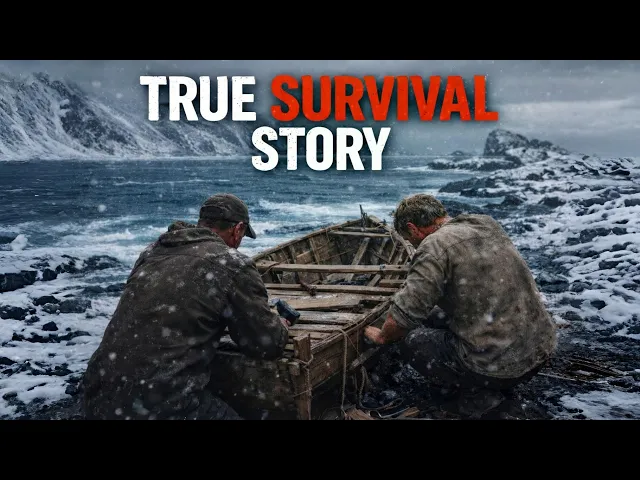
In 1865, three men climbed into a rebuilt 17 ft boat and pushed into the southern ocean where waves could erase them without a trace. And they weren't explorers chasing glory. They were castaways who'd spent 19 months trapped on a sub Antarctic island with no rescue coming.
With only improvised tools and stubborn discipline, they built their escape and gambled everything on a strip of land beyond the storms. It began far from the furious 50s under a clearer sky. On December 12th, 1863, the schooner Grafton sat in Sydney Harbor taking on supplies.
She was a modest trading vessel, just over 80 tons, two masts, a hole meant for coastal work, not the violence of the southern ocean. Her captain, Thomas Musgrave, supervised the loading with the careful attention of a man who trusted order more than luck. Musgrave was 42, American by birth, a sailor by trade and temperament, with more than 20 years at sea.
He was meticulous in ways that seemed fussy until you understood what that meticulousness was for. He kept notes. He made lists.
He recorded bearings. He wrote down days and distances the way other men counted prayers. Later those habits would become a lifeline.
First for his crews sanity and then for history itself. Four men sailed with him. Franuis Rea was French, 31, trained as a scientist and engineer with a particular competence in metallurgy and mechanics.
Rea wasn't the sort of passenger captains usually welcomed on speculative voyages into hostile latitudes. Educated men often brought theories but not stamina. But Musgrave quickly learned Rainol possessed a rare combination, technical imagination and a willingness to work until his hands bled.
Alexander Alec McLaren, 35, Scottish, served as mate, practical, steady, the kind of sailor who could endure misery without dramatizing it. George Harris, Portuguese, 25, was strong and adept at hunting and killing. Henry fores Norwegian, 28, was quieter, mechanically inclined, and less seasoned than the others.
But he listened well and learned fast. It was a small crew for a risky venture. Yet small crews have an advantage.
Fewer mouths to feed, fewer egos to manage, fewer fractures when the world starts to break. The mission was tin. The Auckland Islands, remote, wind lashed, and infamous, had a reputation for mineral promise, and men with money had begun to believe that promise might be turned into profit.
Musgrave and his backers were chasing reports that the islands held deposits worth extracting. It was the kind of venture that seems rational only when you consider how the sea works on the human mind. It offers distance from ordinary life, and with that distance comes a sense that ordinary rules of safety, of prudence can be bent.
The voyage south began quietly. They made their way down into colder latitudes, where the air sharpened and the sea took on a darker color, and by late December, the Auckland Islands appeared as a smudge of green and black in the mist. They lie around 50° south within the belt sailors call the furious 50s where westerlys circle the globe with little interruption from land.
In those latitudes storms are not exceptional, they are routine. The weather does not change so much as it rearranges its violence. As Grafton neared the islands, the wind freshened and then rose into something harsher.
Rain slanted in sheets. Visibility collapsed. Musgrave searched for shelter along the southern coast of Auckland Island, aiming for an inlet that offered at least the suggestion of protection.
The place is now known as Carnley Harbor. But names are not comforting when the sea begins to decide. Musgrave ordered anchor dropped.
The anchor dragged. Through the night of January 3rd, 1864, the five men fought a losing battle. Resetting lines, working sails, trying to keep the schooner from being pushed onto rock.
They were exhausted, soaked, cold in a wet way that seeped into the bones. Near dawn, they heard the sound every sailor knows before he knows it. A sickening crack and grind as wood meets stone.
The hull shuddered. Water began to pour in. Musgrave made the only call left to him.
Abandoned ship. There is a particular kind of terror in watching your vessel die. A ship is not just transport.
It is shelter, tool, and guarantee against the void. When it breaks apart, your world narrows to whatever you can carry, and whatever land, if land exists, will allow you to stand on it. The crew salvaged what they could before the sea finished the job.
the ship's dinghy, a compass, a quadrant, a watch, a gun with limited ammunition, canvas, tools, and provisions snatched in haste. They made sure and turned back to see Grafton shattered against the rocks, timber, and rigging torn apart as if by an indifferent machine. The Auckland Islands are not a place that welcomes human bodies.
Rain falls there most of the year. Summer is cold, winter is colder. The wind never quite stops.
Dense scrub tangles the slopes and bogs swallow the unwary. Cliffs drop straight into the sea, which pounds the coast with the steady violence of a factory press. Few ships approached the islands in the 19th century, and fewer still lingered.
Rescue was not merely unlikely. It was a fantasy men entertained because the alternative felt too final. Their first night ashore was a wet, miserable huddle under canvas.
The wind worked at the edges of their shelter like fingers trying to peel it apart. The men did not sleep so much as drift in and out of shivering awareness, listening to the trees groan. At dawn, Musgrave gathered them and spoke without ceremony.
Their situation was grave, he said, but it was not hopeless. They could wait for rescue and probably die, or they could build a life, however rough, until rescue came, or until they made rescue happen. The distinction mattered.
Waiting is passive. It invites despair. Building, even clumsily, creates momentum.
It gives men a reason to wake up. From the first week, Musgrave imposed routine. He remained captain, but he did not rule by humiliation or threat.
Decisions were discussed. Tasks were assigned based on skill. The men ate together.
They kept a calendar. Sundays were observed not because the island cared for their religion, but because ritual is a brace against chaos. Cleanliness was required.
Disputes were argued out and settled. These choices might sound small, but in isolated survival scenarios, small choices become structural beams. When people stop washing, stop counting days, stop gathering at a shared fire, they don't merely get dirtier.
They begin to dissolve. They explored their bay and found what they needed to survive. Fresh water from a stream, timber from the forest, and seals along the shore.
The seals were crucial. They were food, fat, skin, senue. Harris proved his worth in the hunt, and the others learned quickly.
Killing a bull seal is not elegant work. The animal is huge and stubbornly alive. But the men were hungry, and hunger focuses the mind.
They began to render fat for oil, smoke meat, save hides. Real with a technician's instinct, looked at the seal not as a meal, but as a supply depot. Musgrave insisted they build a proper house.
Not a tent, not a leanto, a structure that could withstand the winter that was inevitably coming. Using salvaged tools and sheer persistence, they felled trees and hauled logs, split timbers, and built a cabin near their stream. They named it epic weight, a word Musgrave had encountered in his earlier life and remembered as meaning a refuge, an idea more than a place.
They built a stone fireplace and arranged sleeping platforms. The cabin was not comfortable in any modern sense, but it was dry, and dryness in that climate was a kind of luxury. Then they began to build industry.
This is where Rol's mind changed the story. Many shipwrecks end with men clinging to bare survival, eating what they can, sleeping when they can, shrinking into the hope that a sail might appear. The Grafton crew did something else.
They started manufacturing. With stone and clay and a stubborn grasp of physics, Rol constructed a crude forge. He made bellows from seal skin stretched over a wooden frame and fashioned valves from salvaged scraps.
It was not pretty. It worked. With heat came repair.
With repair came improvement. They sharpened tools. They forged new fasteners.
They hammered broken metal into usable shapes. When they needed light, they built lamps fueled by seal oil and wicked with moss. When they needed soap, they combined rendered fat with costic ash.
When they needed waterproof clothing, they tanned skins and stitched them into garments that could resist the constant wet. When Musgrave needed to keep his journal, because keeping a journal was another way of keeping his mind intact, they even made ink from what they had. As winter deepened, the island tightened around them.
Storms tore at the coast. Rain turned paths to mud. Darkness seemed to swallow the afternoons.
Yet inside Epiguate, they remained functional. They repaired the roof, kept their firef, maintained their routine. Depression came in waves, the kind that feel less like sadness than like the disappearance of meaning.
But they responded with discipline. Work, conversation, shared meals, planned diversions. Ray now gave informal lessons, explaining principles of mechanics and chemistry.
Musgrave read aloud from what little they had. They played games using bones. It wasn't entertainment.
It was maintenance. It kept the mind from turning inward until it began to eat itself. Months passed.
No ship arrived. The men began to understand that rescue, if it came, might come too late. And so the idea that had probably formed in all their minds quietly, guilty, like a forbidden thought, moved to the center of their life.
They would leave the island by their own design. They had the dinghy. As it was, it was far too small for the open ocean.
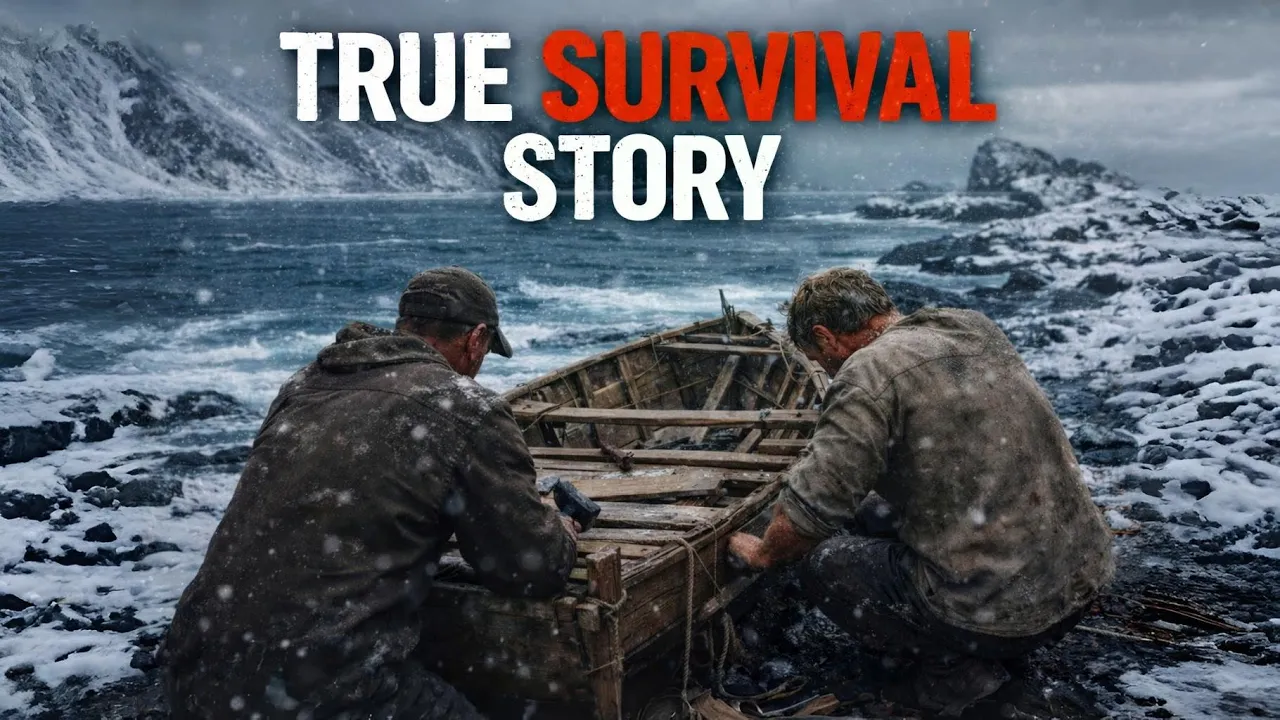
But Rol proposed a plan that was half madness and half genius. They would rebuild it into a larger craft by cutting and extending it, reinforcing the keel, adding deck and shelter, and rigging it with sail and rudder robust enough to survive heavy seas. In a shipyard with proper tools, this would be ambitious.
On an isolated island with improvised equipment, it was nearly impossible. But impossible is a word that loses its authority when death is the alternative. They began by making better tools.
The forge became the heart of the project. Metal fittings salvaged from the wreck, broken hinges, hoops from barrels, anything that could be hammered became nails, spikes, clamps, and blades. With each new tool, their capacity expanded.
They moved the dinghy to a flat area near the cabin and began the delicate work of cutting and altering her. They extended the hole to about 17 ft. They built a new keel.
They reinforced stress points. They tested seams. For cocking, they used a mixture of seal, fur, and fat combined with resin drawn from local trees, worked into the joints until the boat held water the way it needed to.
A storm nearly ruined everything. Flood water warped wood and cracked a section of hole. The men looked at the damage and for a moment the project 10 months of labor seemed to sag under the weight of the seas indifference.
It was McLaren who spoke first in the plain voice of a sailor who has learned that emotion is useless unless it produces action. Then they would begin again. They repaired, improved drainage around the work site, reinforced what had failed, and pushed on.
By mid 1865, their boat was nearly finished. They named it Rescue, a name that carried both hope and a kind of defiance. It had a small deck and a tiny cabin to shed water.
It had a mast and sail cut from salvaged canvas. It had rigging twisted from senue and fibers treated with fat to resist water. It had ballast and reinforcement meant to help it recover when waves tried to roll it.
It was still dangerously small, but it was real. Then came the problem that every lifeboat plan faces. Capacity.
With supplies for an ocean crossing, rescue could not safely carry all five men. someone would have to stay behind. The choice was not made with melodrama.
It was discussed, argued, and settled with the bleak practicality their situation demanded. Musgrave would go because he could navigate, and because he would be listened to in ports. Real would go because he understood the boat's design and could repair what broke.
Foresh would go because three men were the minimum needed to manage sail, steer, and bail through heavy seas. McLaren and Harris would remain at Epiguate and keep the place functioning until rescue returned because rescue, if it happened, would have to be organized by the men who reached civilization. On July 19th, 1865, after 19 months on Auckland Island, they launched Rescue.
The farewell between men who have survived together is rarely sentimental in the way outsiders imagine. It is quieter, a long grip of the hand, a look that says more than words could manage. Then Musgrave, Reol, and Forier shoved off, and the boat slipped into the gray.
The first day offered a deceptive mercy, manageable seas, wind that allowed them to test the rig without immediate catastrophe. Then the weather turned, as it almost always does in that latitude. Clouds lowered, the wind sharpened.
The ocean began to build, swell upon swell, stacking into steep, punishing waves. By night they were in a full gale. Musgrave held the tiller with the sailor's instinct for angle and timing, trying to keep the boat oriented in a way that would not invite a roll.
Real and fores bailed constantly, their hands raw, their shoulders burning as water came over the sides faster than it could drain away. Sleep became a few minutes here and there, brief collapses into exhaustion interrupted by the next wave. At some point a larger wave struck them broadside, and the boat leaned hard, mast groaning, the sea pouring in.
For a moment it seemed certain the ocean would finish when it had started 18 months earlier. Then the boat writed itself. The design held.
The seams did not burst. The mast stayed upright. They lived.
Navigation was a problem that grew worse by the hour. With cloud cover, celestial sites were unreliable. Dead reckoning.
Estimating position based on course and speed was compromised by wind, current, and the simple fact that small boats do not move through the sea with predictable efficiency. Musgrave aimed for Steuart Island, the southern outpost of New Zealand, roughly 280 mi away. miss it and there was nothing but more ocean and [clears throat] the possibility of being driven into even higher latitudes where cold becomes a killer.
On the fifth day, conditions eased just enough to offer visibility. A break opened in the gray and fores scanning the horizon saw something that did not move like cloud land. The silhouette of Steuart Island rose low and dark.
It was the kind of sight that can make hardened men feel weak. They were not safe yet. Coastal waters are treacherous, and exhaustion makes simple decisions dangerous.
But the site meant their crossing had not been a pointless march toward oblivion. [clears throat] They made landfall on July 24th, 1865. Their clothes were stiff with salt.
Their hands were swollen and split. They were hollowed out by fatigue and cold, but they were alive. They found local nari who fed them and offered shelter.
And from there, Musgrave made his way to the nearest European settlement. Once he could stand upright long enough to be heard, he began the next task with the same stubborn discipline that had carried him through the island. He had to go back.
In ports, sympathy is not the same as assistance. The Auckland Islands had a reputation for swallowing ships, and it was winter. Captains did not want to risk their vessels, their crews, and their livelihoods on a rescue mission that might fail.
There was no formal search and rescue apparatus. Humanitarian duty existed, but it often lost arguments to economics and fear. Musgrave pushed anyway.
He argued, he pleaded, he promised. He insisted that two men were alive on that island and that he would not leave them to die after they had trusted him to return. Eventually, he secured a schooner, the Flying Scud, and insisted on serving as pilot.
Real, still weakened from the crossing, contributed what he could, giving Musgrave precise descriptions of Carnley Harbor's hazards and safe approaches. In early September 1865, less than 2 months after rescue landed, the Flying Scud headed south. When they reached Auckland Island, fog and harsh weather tried to hide the coastline, but Musgrave had stared at that shore too long to be fooled by it.
He guided the schooner into Carnley Harbor. As they rounded the last headland toward the cove where Epiguate stood, Musgrave lifted a glass and scanned the treeine. For a few seconds, there was nothing.
Then two figures emerged, small against the dark green scrub, running, waving, alive. McLaren and Harris had kept the routine. They hunted seals, maintained the cabin, repaired storm damage as best they could, and kept a signal fire ready, but hope is a resource that drains when it is not replenished.
Weeks passed with no sail, no smoke, no sign. They did not know whether Musgrave's boat had reached New Zealand or vanished. They did not know whether rescue would come, or whether the island had claimed their companions, as it claimed so many others.
When the Flying Scud entered the bay, the relief was not dramatic. It was physical, like a weight lifted from the chest. All five men left the island together.
Before departing, Musgrave gathered what mattered. His journal, the tools they had made, the evidence of what they had built. The crew of the Flying Scud stared at Epiguate in disbelief.
The cabin, the forge, the remnants of a small functioning world carved out of wet rock and relentless wind. It was proof that survival can be engineered, not merely endured. Back in civilization, their stories spread quickly, as such stories do when they contain something people want to believe about themselves.
Musgrave published his diary. Real wrote his own account with technical detail that made the achievement harder to dismiss as embellishment. Newspapers repeated the essentials.
Shipwreck, 19 months on a sub Antarctic island, a forged tool shipyard, a 17- ft boat that crossed a murderous sea, and a captain who returned for the men he left behind. What makes the Grafton Castaways different from so many shipwreck stories is not simply that they lived, it is how they lived. They did not survive by luck alone, though luck played its part.
They survived through structure, shared responsibility, and a refusal to let despair set the terms. The Auckland Islands are still cold and wet and indifferent. The Southern Ocean still kills, but for 19 months on that remote shore, five men built a refuge, a workshop, and finally a boat.
then drove it into the furious 50s and came out the other side. In an age that likes to imagine the past as either romantic or primitive, their accomplishment stands in quieter relief. Not romance, not primitive heroism, but something more unsettling and more human.
competence under pressure, reason in the face of fear, and the stubborn decision made day after day to keep building when it would have been easier to give up. If this story moved you, challenged you, or made you rethink what humans are capable of under pressure, please take a moment to like the video. It really helps the channel reach more people.
And if you want more true stories of survival, exploration, and the thin line between failure and triumph, make sure to subscribe. Thanks for watching, and I'll see you in the next story.