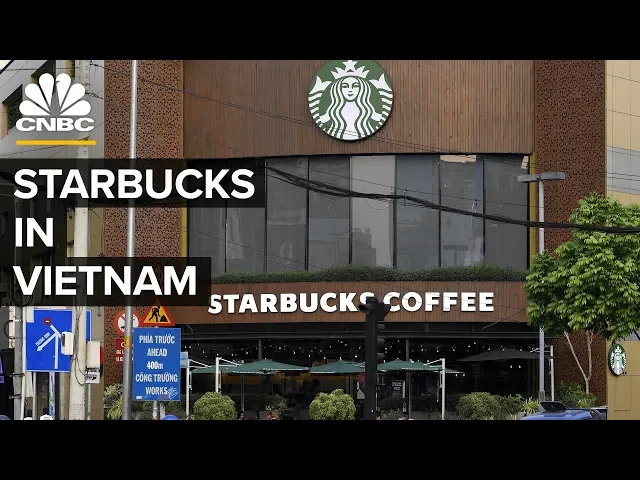
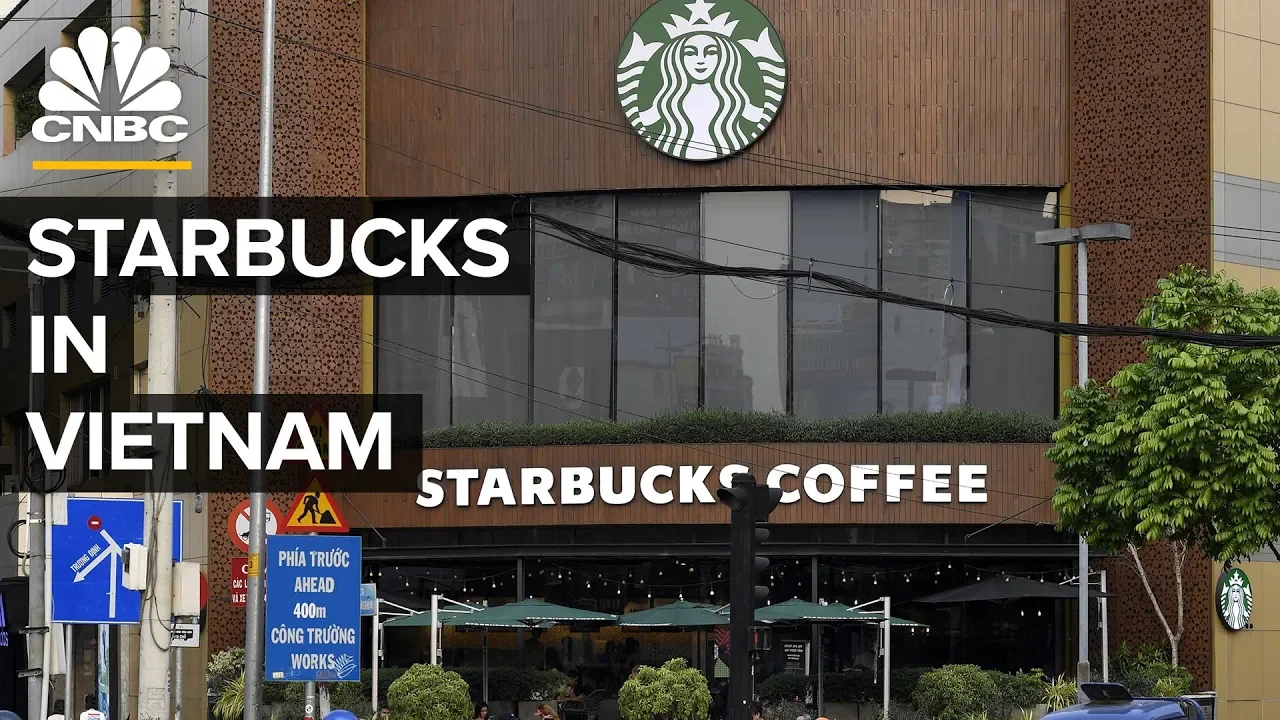
Vietnam knows it's coffee it's famous for a thick heavy brew sweetened with condensed milk a cup of traditional cafe sudah is made with robusta beans which have a sharper bitter flavour and higher caffeine content than more mild Arabica beans the drink is available all over Vietnam served at roadside cafes restaurants and at home but you won't find the traditional style in a Starbucks that's because most international coffee chains only serve Arabica beans which are more mild than robusta beans and while that may work for customers in many countries in Vietnam serving only Arabica is a
problem it's one reason big coffee chains have struggled to grow there despite the country's more than 1 billion dollar market for specialty coffee and tea shops Starbucks is a global brand with more than 30 thousand stores around the world Australian chain Gloria Jean's coffees has close to 760 cafes in over 55 countries but they haven't cracked the market in Vietnam Gloria Jean's exited Vietnam entirely in 2017 after 10 years in the market while Starbucks has grown since it entered Vietnam in 2013 the number of Starbucks per capita is low compared to neighboring markets there is
just one Starbucks per 1.7 million people in Vietnam that means the competition is fierce as international chains go head-to-head with local chains on the whole local chains are expanding faster and performing better than their international counterparts with its long coffee history and abundance of high-quality Joe on every corner coffee in Vietnam is a way of life with mom-and-pop coffee shops still occupying a large share of the coffee market in Vietnam a big question remains do international chains stand a chance in Vietnam living in the world's second largest coffee exporter Vietnamese people have tons of local
options when it comes to coffee the market is highly fragmented with small family-owned and dependent shops making up the bulk of coffee sales there are over 540 thousand restaurants in Vietnam and over four hundred and thirty thousand of them are street stalls even the five largest coffee chains in Vietnam collectively hold just a fraction of the market 15.3% the popular highlands copy tops the list with 7.2 percent Filipino fast-food giant Jollibee has a majority stake in highlands and even though Starbucks holds the number two spot in sales it's still less than three percent of the
entire coffee market in Vietnam at those small roadside shops coffee costs less than a dollar they're fast and some provide services like Wi-Fi and shoeshines and their biggest advantage there are thousands of them analysts say a cup of coffee at a Vietnamese Starbucks typically costs substantially more than a similar drink at a local chain like Highlands in general Vietnamese consumers spend about two-and-a-half times more money at Western outlets than they do at Asian outlets office workers are able to afford a cup of Starbucks coffee they are also willing to pay a premium for Starbucks unique
in-store experience and especially so if it's like a way to pamper oneself every once in a while and on the other hand the local coffee players would have cost enjoy higher purchasing frequencies as the coffee is much more affordable than a Starbucks coffee Vietnam has developed rapidly over the last thirty years from one of the world's poorest countries to a lower middle-income country the middle class is growing too but it's still small compared to other countries part of Gloria Jean's problem in Vietnam was failing to recognize that middle to upper-class consumers were still a relatively
small segment of the population and I think that when the international brands when they come to Vietnam they bring very new coffee enjoyment cultures but we still love our tradition Viet Nam's economic transformation is thanks to a policy called dawn oi which was a series of economic and political reforms that led to rapid growth it also introduced a set of policies that encouraged international companies to set up shop in Vietnam despite strong population growth and urbanization Vietnam is predominantly agricultural and rural outside of cities experts say coffee culture looks a little different it's easy to
say Ho Chi Minh City Saigon is the focus of of coffee consumption or Hanoi is the new focus of coffee consumption or some of these growing cities on the Central Coast these are coffee consuming cities in Vietnam but to do that is to forget that there's a lot of people who don't live in those cities and there's a lot of people in Vietnam who don't have the money to spend add even a tune win or a Highlands Cafe which are relatively expensive compared to those streets I cafes or a local cafe there are two main
types of coffee bean traded internationally Arabica and robusta vietnam is famous for its robusta coffee which has a sharper flavour and a higher caffeine content than the more mild Arabica bean most coffee consumed from chains in the US is brewed from Arabica beans robusta beans typically costs less than Arabica beans because producing them is less resource intensive in Vietnam robusta beans account for about 97 percent of the country's total coffee production but international chains like Starbucks and Gloria Jean's have long shunned the use of robusta beans it's perceived as a lower quality cheaper alternative to
Arabica and is often used in instant coffee and espresso blends but most Vietnamese consumers look for the taste and energy both of high caffeine robusta beans not to mention the fact that many drinks sold at international chains like lattes and flat whites don't resemble anything close to traditional Vietnamese coffee Vietnamese coffee offers more variety than just cafe sudha there are varieties made with egg yolk yogurt and even fruit while some chains attempted to adapt to local tastes they didn't go for it 100% of the way for instance Gloria Jean's added condensed milk to replicate traditional
drinks but it still served Arabica bean coffee which lacks the punch of robusta Starbucks also added Arabica bean coffee with condensed milk and ice to its menu this is just anecdotal but my friends in Vietnam when we walk into a Starbucks there's really nothing that they want to drink on the menu but there's a shift in some corners of Vietnamese coffee culture thanks to the so called third wave coffee movement that's a global coffee trend that focuses on quality and sourcing of the coffee bean third wavers in Vietnam for example are experimenting with the Arabica
bean to add variety to their coffee habit in Viet Nam's urban centers like Ho Chi Minh City and Hanoi analysts say the interest in third wave coffee and specialty cafes is on the rise but it's still a small portion of the population but there's still a lot of people who who aren't that kind of consumer and they are at that class level or socioeconomic status yet so I think I think you're right there's a lot of street side coffee consumption local cafes and that you know those are still small pieces of the market but they're
important pieces of the market and menu differences between local and international chains go beyond just the type of bean I think local chain understand a customer much better than international chains and hence they are more responsive to adapting change when customer preference involved was shift so I think this flexibility of the local chains over the International has been reflected in in the frequency of changing the menus for example I said that new form to your peach tea was super popular three or four years ago and then the local chains like Hal cafe or the coffeehouse
that the two most popular cuppa chance at the moment they were very prompted to input this favorite drink into the menus in Vietnam some of consumers top reasons to visit Western chains are to try something new celebrate a special occasion or treat themselves Asian chains are visited due to convenient location and good value for the price in other words Western outlets are visited less frequently than Asian outlets across the board according to research firm decision lab when locals do go to international chains to spend a lot on fancy coffee they're also paying for the experience
analysts say a recognizable brand name and instagram elects perience draws in curious customers it's high-profile brand may have been what set Starbucks apart from some of its other international competitors Starbucks brand recognition gives it an edge on other foreign chains in Vietnam so Coffee Bean & Tea Leaf has not been doing very well and the key reason is that coffee bean does not have a unique brand position in the country so from a price perspective coffee bean is not as affordable as local place like Highlands Coffee and neither does it offer as many seasonal drinks
or events like Starbucks in order to justify a price premium Starbucks loyalty program and smartphone app also appeal to young tech-savvy Vietnamese consumers Starbucks unique and welcoming environment remains one of its distinguishing features in a crowded market while Starbucks doesn't break out financial results by country it's been adding new stores in Vietnam slowly and steadily building its presence there so what does the future look like for international coffee chains in Vietnam the vietnamese jens e consumers who were born between 1994 and 2002 spent a higher proportion of their money on eating out about $40 a
month they're also more likely to try foreign chains but there is bad news for coffee chains that generation drinks more tea and milk than coffee according to research firm decision lab Gen Z consumers are responsible for the boom in bubble tea in Vietnam a product most international copy chains don't offer and local chains have another advantage here it's easier for them to adapt their menu quickly to local tastes Vietnam is a coffee market full of challenges and competition and it's not just the type of being that international chains can change to appeal to consumers you