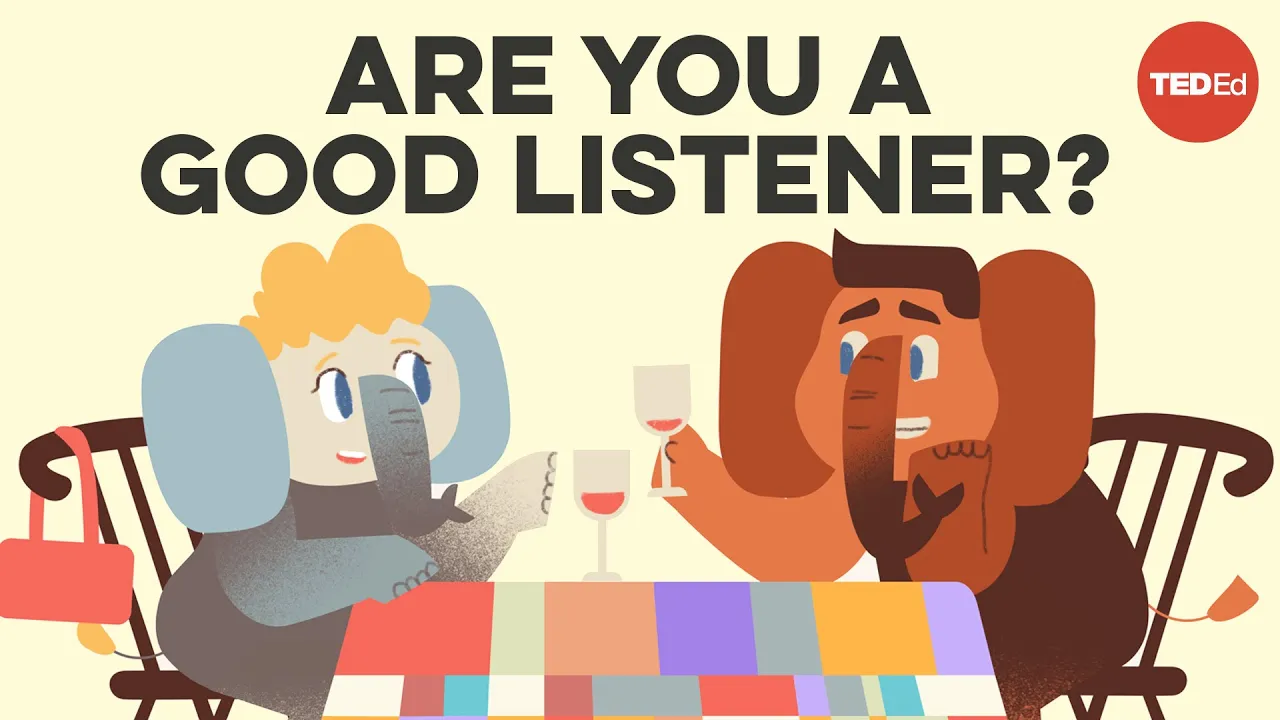
It's easy to tell when someone's not paying attention, but it can be surprisingly tricky to know what truly excellent listening looks like. Behavioral scientists have found that good listening is one of the most important things we can do to improve our relationships, develop our worldview, and potentially even change people's minds. So, what can we do to become better listeners?
At its core, listening in a one-on-one conversation is about taking an interest in another person and making them feel understood. There’s no universally agreed-upon definition of high-quality listening, but some recurring features include attentiveness, conveying understanding, and showing a positive intention towards the speaker. This doesn’t mean you can simply go through the motions—researchers have found that merely smiling and nodding at set intervals doesn’t quite work.
However, there is something slightly performative about listening in that it’s important to show you’re doing it. So, in addition to actively attending to a speaker’s words, good listeners also use questions and body language that indicate their understanding and their desire to understand. This might feel awkward at first, and what’s most effective might depend on your relationship with the speaker.
But with time and practice, you can internalize these basic behaviors. So let’s say a good friend wants to tell you about an issue they’re having with their partner. Before even starting your conversation, remove any distractions in the environment.
Turn off the TV, take off your headphones, and put your phone away—far away. One study showed that even the visible presence of a phone made conversations feel less intimate and fulfilling to those involved. Once the conversation begins, one of the most important things you can do is also the most obvious—try not to interrupt.
This doesn’t mean you need to stay completely silent. But if you do interject, look for natural pauses to ask open-ended questions that benefit the speaker, not just your curiosity. Questions like “What happened next?
” or “How did that make you feel? ” confirm that you’re following the story while also helping the speaker dive deeper into their own thoughts. Another great way to show your understanding is by summarizing what you just heard and asking if you’ve missed anything.
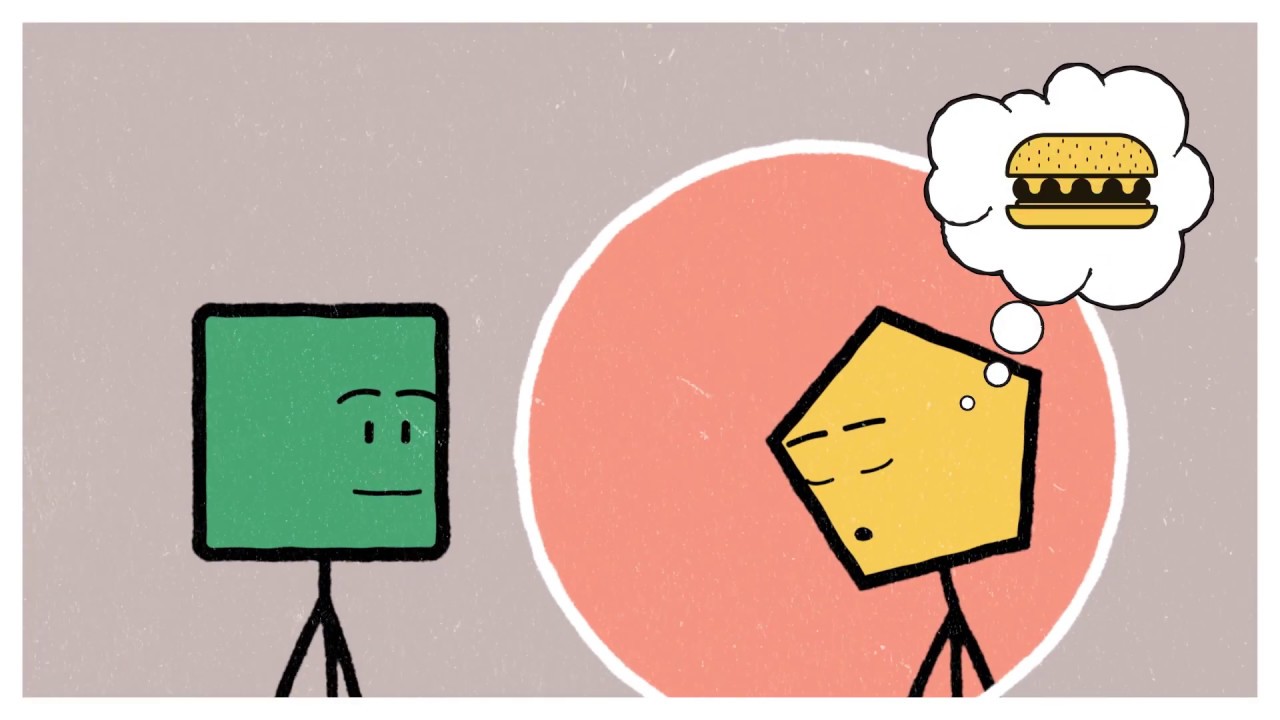
Summaries like this show the speaker that you're truly trying to understand them rather than just waiting for your turn to talk. Speaking of which, while a good conversation requires back and forth, planning out your response while the speaker is talking is a common way to miss what’s being said. So, try to stay present, and if you lose focus, don't be shy about asking the speaker to repeat what you missed.
This might feel embarrassing, but asking for clarification actually shows that you’re committed to understanding. Finally, don’t be afraid of silence. It’s okay to ask for a moment to formulate your response, and taking a beat to think can help speakers reflect on their speech as well.
These might seem like small changes, but together they make a big difference. And when people feel heard, they report more satisfaction, trust, and connection in their relationships. In the workplace, employees who feel heard generally experience less burnout and perceive the managers who listened to them more favorably.
Unfortunately, while it might be easy to listen to some people, it can be hard to muster all this focus and attention if you disagree with or dislike the speaker. But these situations might actually benefit most from your efforts to listen openly. The theory of psychological reactance suggests that trying to force someone to change their mind makes them more likely to defend their point of view.
However, recent studies suggest that high-quality listening fosters open-mindedness by creating a non-judgmental and psychologically safe environment. Of course, truly open-minded listening isn’t about changing people’s minds. Good listening is not the same as agreeing, and conversations don’t have to end with a happy resolution.
But even during a disagreement, sometimes being heard is enough to start a deeper conversation.