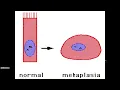
thank you very much you there still 10 10 slides from the other lecture right ready to go so where did we arrive meture right okay so we have talked aboutum everybody this can you hear me at the end sure all right so um so we are going to be talking about metaplasia right so this is what I mentioned to you as the Reinventing of the cell itself a completely new sell you're no longer dealing with the old what they what do they say they say you know out of the old and in with the new
right so that's exactly what it is you are really Reinventing yourself enable to be able to like to have better chance at surviving the insult that is happening all right so where does it happen it does not happen at the final level so let's talk about let's say you have Sous cells at the lower is when there is going to be a you know a metaplasia you know these cells are not the ones that would switch and becomes you know colum it is the base of s so they go back to the drawing board to
the basil to the basal cayer call it you call it the you know the pbsc the important stem cell called the stem cell whatever it is they go back to basics and they really actually you know differentiate into a new line of differentiation all right so so we will see that this is actually true every time so why is it happening I think this is an important one bad part about that is we don't see the actual like uh laser so I don't know all right so uh it's a cell type sensitive to a particular
stress that has to switch this is the really the reason why it's happening this is every time is the case and it is an Adaptive response meaning when you remove actually the stressor the cell will go back to normal okay now if you leave it on happening like for an extended period of time it the changes may become permanent in the sense that the cell will move from metaplasia and into displasia okay so it is adaptive for a while so speak after that things you may go all the way to the end where do you
see that example of that what you see at the level of the bronch epithelium with the you know with the influx of smoking you will see that those colar cells are become are going to become scous and then eventually they may go all the way to become cancer so before it does that plasia itself so forget about forget about the forget about forget about the displasia metaplasia by itself is actually revers important all right so so it's true that the metaplastic tissue that is going to happen that's going to result from this process will have
what you called survival advantages but at the same time it will lose you know so it will get some and it will lose some unfortunately for example of that you know you will see that the cular emotion that is going to be you know a distinctive part of the columnar eum of the of the bronch tree is going to be lost so the CIA will be lost and as a result of that the CIA emotion be lost as well what would that result in in your opinion muc not heavy all kinds of buildup right because
you're no longer putting it out right it's all staying in so there will be there will be like you know fluid actually that's going to and when you see when you say fluid accumulating what what is that equivalent to infection nothing to make infection every time like water you know water is the starting point of everything living so including bugs and bacteria and fungi and everything else so from that point in time you will start to see infection okay so imagine this you traded one for the other right you traded The Fragile C epithelium for
a much stuffer you knowum but the end result is going to be that you're also you know the patient is also getting chronic bronchitis with this all right now chronic bronchitis so you see like it's a fous cycle so he's getting chronic Bron with this chronic bronchitis itself is going to further accelerate the metaplastic process okay chronic bronchitis The Chronic irritation that is going to result from you know the build up of you know mucus and fluids in the in the bronal tree is going eventually to result in chronic bronchitis chronic bronchitis will accelerate met
metaplasia metaplasia will accelerate the again you know the buildup of nugus which will accelerate chronic inflammation it's an ongoing process right a vicious cycle so to speak very hard to break now unfortunately the way that this is going to be broken is going to be by some of these cells going all the way to becoming a typical or dispas because what happened so these cells are actually still facing the music the music in this case is the carcinogens and the toxin that are coming with the with the cigarette smoke right now some of these cells
are you know are you know going the metaplastic way but then eventually they will die because there is continuous influx of toxins and carogen so as a result of that you know there is sell death what will happen after sell death sell rebirths right death rebirth and the cell is actually dividing going through this very rapid cell cycle overwhelming the genomic mechanisms of you know of ensuring that there are no mutations that are that are introduced into the genome at one point in time at one point in time you will see that so like how
many how many usually how many uh how many mutations happen in this case in your opot how about this 9999999999 of them are all with you call nonfunctional mutations they will simply the simply the cell will die away only one turned out to be it's a matter of Lu only one turned out to be a translatable mutation a meaningful mutation this cell will become transformed cell transformed is another you know name for this plastic or malignant cell this cell is enough to give rise to a okay the same EX that thing happens everywhere you know
you will see in the St in the lower isus with the influx of acid so acid coming into the lower isobus what's the lining of the lower isus right so after a while I mean the acid that is coming in is really eroding this layer okay you know scus scus tissue does not do well with acid and the tissue you know takes points or takes heat from from the gastri mosa because the Gast mosa deal with acid in a better way right of course it's really the wrong conclusion why because in the in the gastric
you know mosal wall there are other mechanisms other than the you know columia that is taking care of business what are the other mechanisms mucus layer right the very thick mucus layer that is secreted by the fabular cells that would ensure a proper actually you know what do you call it uh almost like a seal really it's very thick lay before that there's a bicarbonate as well that is secreted by what by also the fabular cells the H the H3 that is secreted with the by the fabular cells that are intermixed with the with the
mucus correct and then there is also a very very rich blood Network in the gastro wall that will make sure that whatever acid that actually leak between the cells is going to be taken up by these blood vessels and it away from the Gast to ensure that the Gast does not get damaged does that happen in the does not so but Theus takes let's say you know will take only one criteria of this which is the col okay now it will take it for while so you will see you will start to see what's known
as you know glandular metaplasia of the lower isov also known as you guys heard that word before b a r e t e t all right so now B esophagus you know is showing up with the intestinal metaplasia and a go CIA okay and somehow it's able actually to take acid better than this Sous but this is going to continue if you don't treat it if you don't interrupt this process this process will continue for a long long time okay eventually one of these cells again is going to be in getting this translatable mutation translatable
meaningful mutation that will make it a meaningful that that will make it a transform cell from which a cancer may arise so the same story that you see everywhere else now what's nice about this I mean you if you can think about it as a nice thing is that you the student of medicine are learning three types of you know quote unquote adaptive mechanisms in one whether it is the stomach whether it is the you know the uh the bronchial epia the first thing that the cell is going to do let's say the poor you
know palar cell that is going to do when it's facing this influx of toxins and carcinogen with the tobacco smoking is that it's going to divide in higher number of cells okay to ensure that you know the Bron lium becomes thicker and I mean its mind it's thinking that this is going to mitigate whatever effect the you know the smoking is going to have on the Bron TR right does it work it does not work so it moves then from hyperplasia into metaplasia right this is two and then eventually if this continues on uncorrected eventually
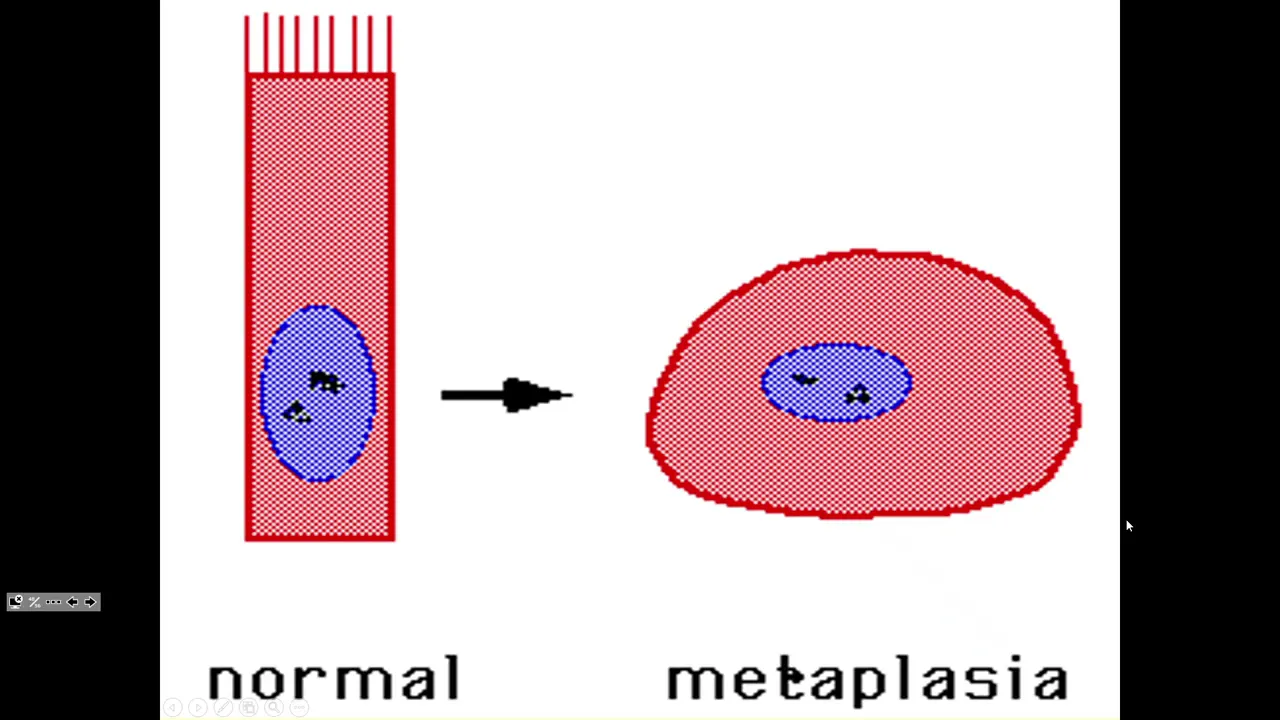
this is going to go into from metaplasia into this right so the three processes you see it in one see it in the lower esophagus you see it in the Bron tree you see it you will see it in the urinary bladder you see it in the in the in theal pelvis you see it pretty much everywhere you go you know so it's showing you actually that the cell is trying to use all the different mechanisms at its disposal in order to supply okay all right so this is the you know columnar Cellar cell with
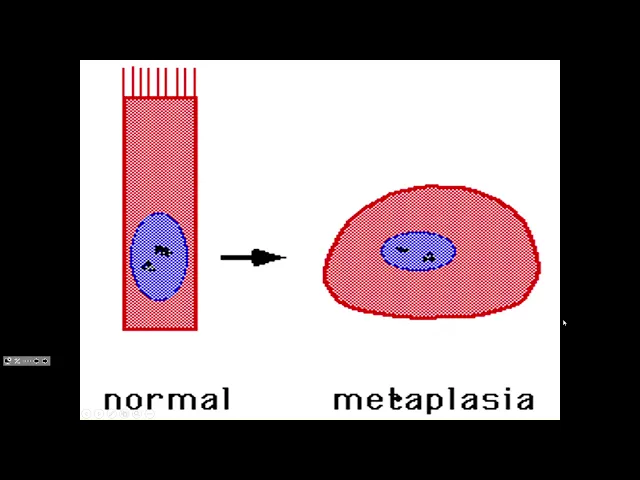
the Celia on the top you can see that right you know with the c CIA at the top and then this cell is going to turn into this you know scra cell a much tougher cell smaller cell much much more compact if you this the cyto Des is much more Compact and is more able actually to take the you know the uh the stuff the good stuff that are in toac than the ask always no no it can be anything depending on the tissue and depending what best what best for that you know for that
specific you know stressor or pressure that it's not like this it is really one usually it's one way meaning like if it's going to be Sous and then if that does not reverse back to colum then it will go into okay meaning that there will be no at least not that I know of that there is a like an inter interchange from one metaplasia to the second do I mention the same so so the becomes so let's talk about this so this is the metaplastic look at the size of to the size of the Theus
is so The Rao small small right what happen is that in a transformed cell in C you will see that the nucleus is going to go into a hyperal division at least for the large you know for the majority of the cell decided by the number of division of the cell okay so the cell would go into higher hyper Drive division for that to happen the nucleus has to be much larger size right has to be going into mosis you know continuous corre so what happen to the becomes bigger right so the NC ratio in
this case would become high this is one of the feature ofal secondly you will see that the is going in some tumors become prominent thirdly you will start to see that you know some of the tumors as well that the is being sh because now you know the you know how does how does a transformed cell becomes transformed it's really actually it is a genetic mutation once there is a genetic mutation in the genome then the you know the brain of the cell which is the nucleus of the cell where the genome is is busted
so there will be no normal regulatory mechanisms one of them is the maturation of the cyop the protein arm of the cell is not going to be no long going to be AI so a lot of these cells May shed some of the as a result of that the NC ratio will become even more evident also the maintenance of the membrane will also be you know interrupted or defected so as a result of that you look at the nuclear membrane and it be irregular and you look at the you know the plasma M the same
okay you know then there is for example you know know they the nucleus itself will start to take abnormal shapes some of them actually will start to have like groups you see for example some thyroid T some of them would have some of them would have you know you know you would see that some of these cells would have you know abnormal structures the cytoplasm such as what you see our so depending on the tumor you know it's very but is very it's a very abnormal because the nucleus is no Long Function why is the
nucleus not functioning right because cancer is a genetic disease that's a very important and once you remember that you can all right so let's talk about spous so like I said it's usually like one type of that the cell would change can you speak speak up please ciac disease ciac disease is going to result actually in the nuding of the intestinal mosite is that correct as a result of the immune you know immune response right but the type of tumor that will result from Cal disease I believe it's some form of uh I I think
it's a blood you know malignant blood tumors I believe it is aant blood tumors but which type you know that is I don't remember it now I'll remember it in the next few what's your question another type of I think the recovery the recovery it's a gluten sensitivity right so you know with the gluten sensitivity you know when there is recovery the recovery has to happen by the same type of of tissue if you if you find that recover is happening by another type of tissue bring me the source would love to read about I'm
doing a paper actually now you know about you know uh about glutino glutin opathy you know two actually two people one about glopes and Celia disease and the second one is non Celiac non celiac disease related because there are one that is ciac the actual ciac you know entity and the second one is non ciac entities but also related to gluten in gluten effect uh I don't recall that you know I I don't Rec that anything that but if you find the source bring it on board okay yeah um so metaplasia types of mapasia depending
on where you are in the tissue so let's let's talk about actually the lower esophagus you will see the scram to glandular I just mentioned can wait finish so glandular so scram to glandular then actually glandular to glandular to glandular is this what you asking about no I was asking if you have more than actually one met no it's usually one okay but this is one glandular tissue is actually switching to another vular tissue as a result of the hpor infection then because the the mucus of the stomach is not intes of the intestinal timee
okay but you know as a result of the infection with the hpor the the glandular tinium of the stomach will also take you know the intestinal it will become intestinal like Epi like the that is present in the intestine okay now there's also you know there's the metapure from glandular to mucus as I mentioned to you and then you know for example there is one that where you see that the eggs of the parasites you know gets gets embedded into the lamin appropria of the urinary blood resulting in chronic inflammation and then eventually into transformation
into transformation into cancer you know this is what you see with bharan infection also known as chal infection and I'm sure you know who died actually as a result of chomal infection Einstein Einstein did not die as a of Napoleon no it's not napole much more colorful thanp huh some Egyptian guy yes okay so so scum if you're wondering is one of the actually main types of mapasia in the body you see it in like in different tissue so you see it in the bronch tree with smoking you see it in the cervical as a
result of HPV infection you see it in the blood epithelium as a result of shal infection and you see in the coral epithelium as a result of vitamin A deficiency now here is one very important point so that is something that to remember so when the switch happen this is the normal colaria when the S happen it does not happen from it does not happen at this level these cells do not change okay these are fully mature cells they have reached the end of this their mature process what's going to happen is that the you
know the equium is going to do the switch at this level right here at the Bas C Level and from it you can see that you know there's going to be the rising of the [Music] scream Ecto indos so now we are talking about the Ecto surfix become okay all right so here's actually answering your question here are you know actually this sorry this is the endocervix The endocervix Becoming SC sorry sorry so this is the glandular EP that's a very important point because sometimes you know like in the Esopus for example you know what
is so I'm telling you that there will be something known as glandular metap right of the lower is now when you do a scope you put in the scope you know and then you sample some areas and the area you know those areas come back actually as glandular tissue you have to be you have to make sure actually that those samples are taken from the lower isus and not from the stomach because if you take it what what would you see in the stomach right so this is why it's very important to actually make sure
that you look at specific feature this is why you know you will see that you know the older pathologist we are really the real Sol pathology used to be to call it barus they will look not for one actually for one you know metaplasia which is you know this is what everybody look for which is intestinal metaplasia they will look for intestinal metaplasia dou cell metaplasia and Panet cell metaplasia to call it complete complete bar to make sure that they are in the lower well you know like this is what you call your you're definitely
running away that's called atrophy remember that you know like the the example that I gave you but because if this cell actually is going to undergo apoptosis who's gonna who's gonna fight nobody needs to fight it's better nobody nobody did to f let the acid do its work go through this tissue perforate the esophagus and you know let's let's get done with this guy right I I don't I don't but you like I think yours is a new way new adaptive mechanism I should say you know don't be upset but but but it's really like
completely you know like running away from facing the music really yeah up to a certain point and so I know and chance of developing a c and then I can just switch to apoptosis okay I'm not develop canc look honestly I think it's if you think about it it's giving you an it's giving you time really it's buying you time do you understand it's buying you not the patient you the physician time to intervene and treat because if you intervene you're going to stop all of that all of this are reversible right so so in
a way actually it's a blessing really yeah you cannot really think about it except a blessing you know but to allow it to happen like this and and cut a run I think that would be really bad all right guys let's uh finish this what time is it 30 okay so now you can see actually some so this is you are in the Endo sub like your good friend mentioned you will see glands here right this is the glands the normal GL of the end now this is the scus epia Theus epithelia the scus metaplastic
tissue and you will know that it is resulting from HP how do you know that isting you see this actually H around the nucleus you see this this is what's known one of the features of H infection known as coyes coil sites the other feature that tells you that you are dealing with HP what does this nucleus remind you right see I can I don't know how to make this you see this what is this what do the fruit raisin that's what they called resinoid nucleus or resinoid nuclei another feature of HPV infection thirdly you
start to see that there's increased sickness of the of the EP a third feature of HPV infection so from this from this morphologic features you can tell that the changes are happening as a result of hvv infection here's another example this is the normal osia right normal osum and you can see that the lamin proia have very little very little inflammatory cells you know it does have some inflammatory cells but we call standby inflammatory infiltrate you see it in everywhere in the body waiting for any kind of infection or inflammation to happen compare this to
this you know you see the SE of cells all these cells what are these cells these cells are as you can see they are very dark you know and they very little cytoplasm that's actually these are lymphocytes sure lymphocytes and they there is a lot of them there's a very intense information happening here as a result of the presence of these Str what are these structures these are the edgs of the shal parasite so embedded in the Lin appropriate resulting in very intense chronic inflammation and you can see that the overlying tinium have turned from
the columna into Sous okay so this isus metaplasia resulting from you know the bharal infection here is actually another you know now let's go back if this continues on and evated and stop and hinder it did not intervene to change it eventually this is going to become neoplastic at one point in time and it will be actually become truma SC carcinoma of the urinary blood okay now the same exact thing right here here it is the renal pelvis what is the lining of Theo telvis also your atherial right transitional Epal there is simply as simple
as a urinary a urinary a ccul calculus kidney stones so much so that this actually all of this intense inflammation is happening as a result of the presence of this stone that is going that changed the normal urinary epithelium into what is thisam metaplasia scam tissue okay so again spous metaplasia resulting from chronic inflammation okay each one of the chronic inflammation here is an example of the bar that I mentioned this is the scus epithelium in the lower isus and beneath it and nearby there is actually these glands these glands I can show you only
two types of metaplasia here third one is very hard to be seen so you have the intestinal metaplasia okay and you have also what are these cells goell so intestinal and go cellation okay so that's actually valid this if this Contin and you can see the inflammation also you know in the bity if this continues unated it's going to result in tumor development again adoc carcinoma of the lower is at the end okay adoc carca the lower is so now I'm telling you every time there is a chronic inflammation there is actually tumor development what
conclusion do you make out of that that chronic inflammation is aisk pre-neoplastic risk factor or a pre pre neoplastic condition for cancer anywhere in the body one of the rules that you should always remember okay how does it do it it does it at the level of the progeny cells at the level of the stem cells reprogramming the stem cells to give a new line of differentiation a new line of tissue that is able to take on you know whatever coming its way better than the rest all right guys so I need to move on
you have a question about this very quickly please yes you have to have absolutely all right so let's talk now about about CER we have talked about C adaptation let's talk about now so we have done you know the adaptation arm right now we're going to be talking about the C injury itself what are the causes of sin injury there is a long list of causes of C injury hypoxia is the most common cause hypoxia as we as we will see happens through many different mechanisms now there's physical agents how about crushing injury how about
the frost pip how about Burns all of these are what you called physical you know causes of cell injuries chemical agents toxic carcinogens you know sometimes normal stuff oxygen itself can oxygen cause injury who can who can actually get inj oxygen can cause injury to anybody have you heard about the you know the uh the ards adult respiratory distress Sy where did you hear abouts not you guys were not were not around you know two or three years ago four years ago during the 19 not here about ards right so ards what is one of
the causes of ards oxygen believe it or not okay oxygen therapy so it may cause actually itself you're giving the patient oxygen to breathe it may cause itself you know ards now you know infectious agents may be the same okay so let's talk about infectious agents sometimes the infection cell such as the prons where do you see the prons cjd very good ja how does it do its work aggregating misfolded proteins aggregating misfolded proteins probably there a big part of it like this but how does it really do action exactly it takes a normal prot
and do what misfold them I know that you know at least the way that you know i' again done another is that actually it takes the normal takes the normal protein and makes it like it it now could you could you buy this does a can can a protein does a protein have a brain it does not how could a protein take another protein and mix it like it I'll tell you what it mean it means we don't understand really what's going that there is still a lot to the story that would be that would
be you know still left to be said left to be told so at the end of the day you know now that it is recruiting and you know converting other proteins to become like it what happens to this you know misfolded protein how does it how does it actually get accumulated in the cell what would Happ happen to the create vacuums this is why you call Spong right Bine Spong Form ecopy B all right and the spongy form come from the sponge because it creates these holes in the CNS so what happen when you have
these holes communication does not happen anymore right everything will be interrupted so there will be no communication and you know simply the CNS is no more so that's one way for it you know the organism itself will cause it okay now another way for you know for infections to be causing it is when the infection will cause an inflammation and the inflammation will cause this which will make us actually talk now about immunologic reactions how can how can you know inflammation cause you know damage is absolutely good so you you heard about Cy stor from
the 19 which is good all right right so how about but like you know let's go back to basics are there cells you know inflammatory cells that that cause you know that rake Havoc what inflammator inflammat that micr and neutr right neutr what do neutr do how do neutr cause damage one of two ways first is oxygen dependent mechanism second one is non oxygen dependent mechanism how about the non oxygen dependent me how does it cause it in the non oxygen dependent mechanism by the enzymes right it's loaded with enzymes you know one of them
is proteases right what do proteases do they cut right but they CLE they destroy all right so that's actually one way for for inflammation to cause it how about actually is there another way for inflammation to cause issue damage toward but that's not really the word start with a c c complement activation compliment activation once the compliment gets activated by a specific Factor What happened to the tisue it will be no more right it will be destroyed whole Cale and a third one is the autoimmune reaction how does the cell gets you know injured in
autoimmune reaction that's when the immune system Target the self okay there are many mechanism for that to happen okay now nutritional imbalance you see it with a lot of you see it with a lot of actually you know like more actually excesses than than especially with obesity youis the whole you know metabolic syndrome you know pandemic really if you want to call it that has reached pandemic level worldwi now genetic derangement how about actually a form of hemoglobinopathy when there is a you know a point mutation in the v chain in the beta chain of
the hog a examples cell anemia and Andia right I to the same all right so how about actually some storage diseases give me examples of some storage diseases that you have studied in say okay very huh dise mardal disease pompe disease okay so it happen systemic diseases right because the enzymes is missed system systematically so there's accumulation of this you know this substance pretty much everywhere in the body you know makes for a very nice question on exams but very hard very tough diagnosis to be made all right so what decides if injury is going
to happen or not to a cell firstly is going to be really the type of the cell so for example you would see that skeletal you know skeletal muscle cell is able to take esia for three to four hours three hours four hours we have talked that myocardial cells is much less than that right up to 20 minutes and how about neural cells not even not even in the minutes right probably a minute maybe maybe more maybe so the type of cell is going to be very important and then the nutritional status of the cell
before the injury happens a cell that is replete with you know with oxygen with you know atps and with glycogen can take on and can use this reserves to its own Advantage so when it hit a snag what it does what what what does it do it's able to use this reserves in order for example to enter a cellular adaptation you know as opposed to going into full-blown injury all right and the opposite is true as well now genetic makeup you guys have heard about slow acors and fast have you no Gene so so aors
entrusted to an enzyme known an an transfer coded by a gene called n n the N now there are variants of this gen different people have different variants of this okay some of them you know have what we call a low acate low form of the gene because of a homozygous or heterozygous you know changes that happen in the in this gen in the na na tisue so you will see that those people you know uh if you give them for example a drug example that I read yesterday was you know the iside Dr you
give them let's say nine of theide is the that used to tuulos very good so you give the in and then you know for the fast acat four four hours down the road they have one microgram in their in their blood okay one microgram per m in their blood which is nothing for the slow aors they will have about four to five this is so mean a lot more who's going to be more prone to have cell damage the F the slow assat because they they their blood level of whatever it is is going to
be rising high right is going to be higher than those who are who are fast as cators who are able to go through and destroy the toxin or the drug you know fair and square right and the same exact thing happens to alcohol I'm sure you heard that a lot of people hope you not that a lot of people who are actually fast aat they can drink massive amount of alcohol and will never appear on them and the opposite is true right some other people will drink a small very small amount of you know of
alcohol and they are going to be actually completely drunk or they may even show signs of toxicity so what are the systems that are susceptible again the systems that you expect to be you know affected by this and this is really a very interconnected you know network if you will so for someone who does not have ATP right he will not be able to build cell membrane will not be able to make protein Sy in a protein synthesis and will not be able to maintain the genetic apparatus the same is true if someone you know
get H at the genomic level right once the brain of the cell is decommissioned what happen to the cell the cell is no more will not be able to produce ATP because of the Cross St between the gene and the mitochondria so that you can forget about that will not be able to to make any components for the C membranes and will not be producing any protein and so on and so forth so it's a one system get hit the rest of the systems will be hit you cannot really separate them from each other you
know this is why it's so hard to save a cell from damage okay you're not talking about like a one entity that you can separate and you're talking about a wholesome you know Factory if you will that is you know very much interconnected all right so what are the mechanism of s inury starting with ATP dition again you don't have ATP you're not able to do anything very simple and straightforward very important very critical to cell injury is the influx of calcium calcium is meant to be outside it's never meant to enter the cell the
reason for this is that calcium is used by a lot of enzymes a lot of degradated enzymes the proteases the lipat the ATP a you know the dnas all of them use calcium as a co-actor once they see calcium what happen to them they get activated and they will start chop chop you know breaking down the cell one piece at a time so it's a matter of policy to keep the calcium outside you you you you definitely it has to stay outside anything that will let it in whether from outside the cell or from inside
the cell is calcium present in the cell yes where is is it present in the C everywhere it's present in the mitochondria and in the G and in the small small reticul right and into what in the in the it's present and in the nucleus it's present everywhere in the cell if those cells have leaking membranes and they start to leak this calcium inside the cell that is also going to do the same damage as if the calcium is coming from outside the C all right so and then there's mondria damage this is where you
know you need to think about the mitochondria as the powerhouses this is where ATP is being made right and also big part of the free radicals are being made okay so very important two things one you know to save to save the cell which is the ATP and two to destroy the cell which is the free radical both of them are being made in the same place now the free radicals are made also by other you know by other components of the in including the r plas particular the the G everywhere else right but definitely
the the the mitochondria is right there at the top of this process increased cell membrane permeability this includes the plasma membrane this includes the LOM membrane the nuclear membrane you can imagine what happens if those membranes become leaky again that's very detrimental to the cell survival and finally the start of the process is the production of the r the reactive oxygen species and also the RNs the reative nitrogen species what time is it now stop here I promised myself that I would never take the you know the full one hour so that you guys can
actually have five minutes break so we'll continue inah next week uh on on Thursday and I want to meet your uh uh you know your uh what it yeah the B the BLC because I believe next week is what how many lectures next week for me one or two is it one if it's one you know is there a possibility we can make it this week I would appreciate that if it's is one only so so only two lectures left there's one on Wednesday and one on Sunday that's it that means you know we need
to hurry up oh there's also one week after one so so so three lectures no this is good so but the the the week after if we can make it next week this is what I wanted to ask thank you uh